
Solar Power Integration: The Role of Voltage Stabilizers in Photovoltaic Systems
A voltage fluctuation exceeding 10% can cause photovoltaic inverters to shut down, resulting in significant energy losses and reduced system efficiency. As solar installations continue to proliferate worldwide, voltage instability has emerged as a critical challenge affecting both grid performance and ROI for solar investments. This guide examines the technical foundations of voltage regulation in photovoltaic systems, the solutions available, and how to select the right voltage stabilizer photovoltaic applications require for optimal performance.
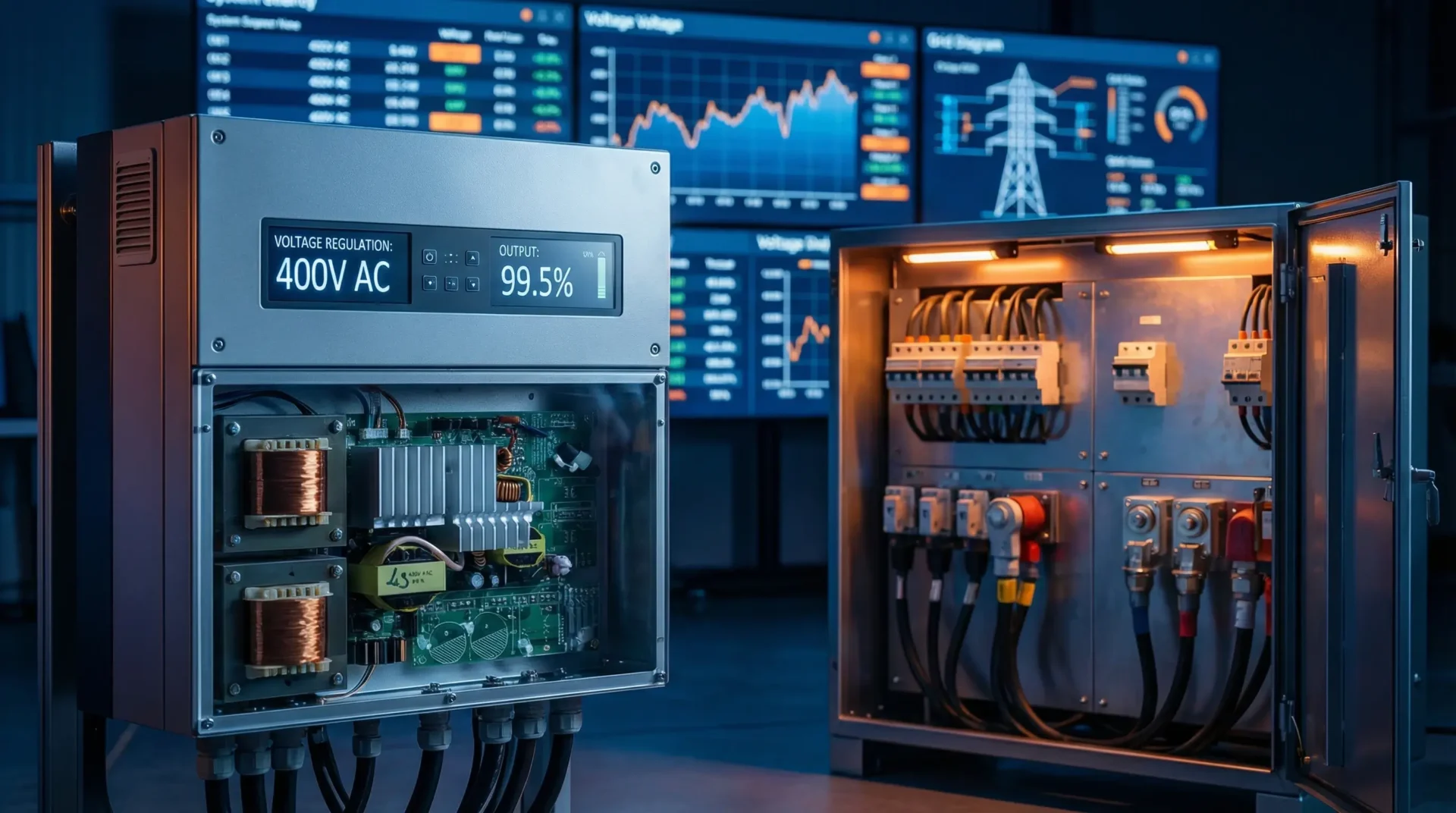
Understanding the Voltage Challenge in PV Systems
Photovoltaic systems introduce unique voltage management challenges that traditional power grids did not face. When solar generation reaches high penetration levels, several factors contribute to voltage instability:
Reverse Power Flow: Traditional distribution systems were designed for unidirectional power flow from substations to consumers. PV systems inject power at the distribution level, causing voltage to rise along the feeder rather than drop. This reverse flow is particularly problematic during peak solar production when demand may be low.
Rapid Voltage Variations: Cloud transients can cause sudden drops in PV output, creating voltage fluctuations that occur in seconds rather than the minutes or hours that traditional voltage regulation equipment was designed to handle. This dynamic behavior places stress on both mechanical tap changers and sensitive loads.
Grid Impedance Characteristics: Distribution feeders with high resistance-to-reactance (R/X) ratios experience more pronounced voltage rise from reverse power flow. In residential areas with long feeders and small conductor sizes, this effect becomes even more significant.
Research from Oak Ridge National Laboratory using the IEEE 13-node test feeder demonstrates quantifiable impacts. As PV penetration increases from 0% to 100%, load tap changer (LTC) operations increase substantially—Phase A operations rise from 600 to 1,000 per year, Phase B from 240 to 580, and Phase C from 750 to 1,100. This mechanical stress represents increased maintenance costs and potential failure points in grid infrastructure.
The Impact on PV System Performance
Voltage instability manifests in several costly ways for PV system owners and operators:
Inverter Shutdowns: Grid-tied inverters are designed to disconnect when voltage exceeds safe operating limits. According to international standards (EN50160 and IEEE 1547), acceptable voltage range is typically 10% of nominal voltage. For single-phase 230V systems, inverters must shut down below 195.5V or above 253V. For three-phase 400V systems, the limits are 340V to 440V. In developed countries with relatively stable grids, overvoltage is the most common cause of inverter shutdowns.
Reduced Energy Harvest: Each shutdown event represents lost generation. For commercial and utility-scale installations, these cumulative losses can amount to thousands of kilowatt-hours annually, directly impacting financial returns.
Equipment Stress: Repeated voltage cycling causes thermal stress on power electronics, reducing inverter lifespan. The cost of premature inverter replacement significantly affects total cost of ownership.
Power Factor Degradation: Some PV systems can cause power factor deterioration, leading to utility penalties and inefficient power delivery. This issue often necessitates additional power factor correction equipment.
Key point: PV voltage regulation is not optional equipment—it is essential for reliable operation and financial viability of PV systems.
Voltage Stabilizer Technologies and Working Principles
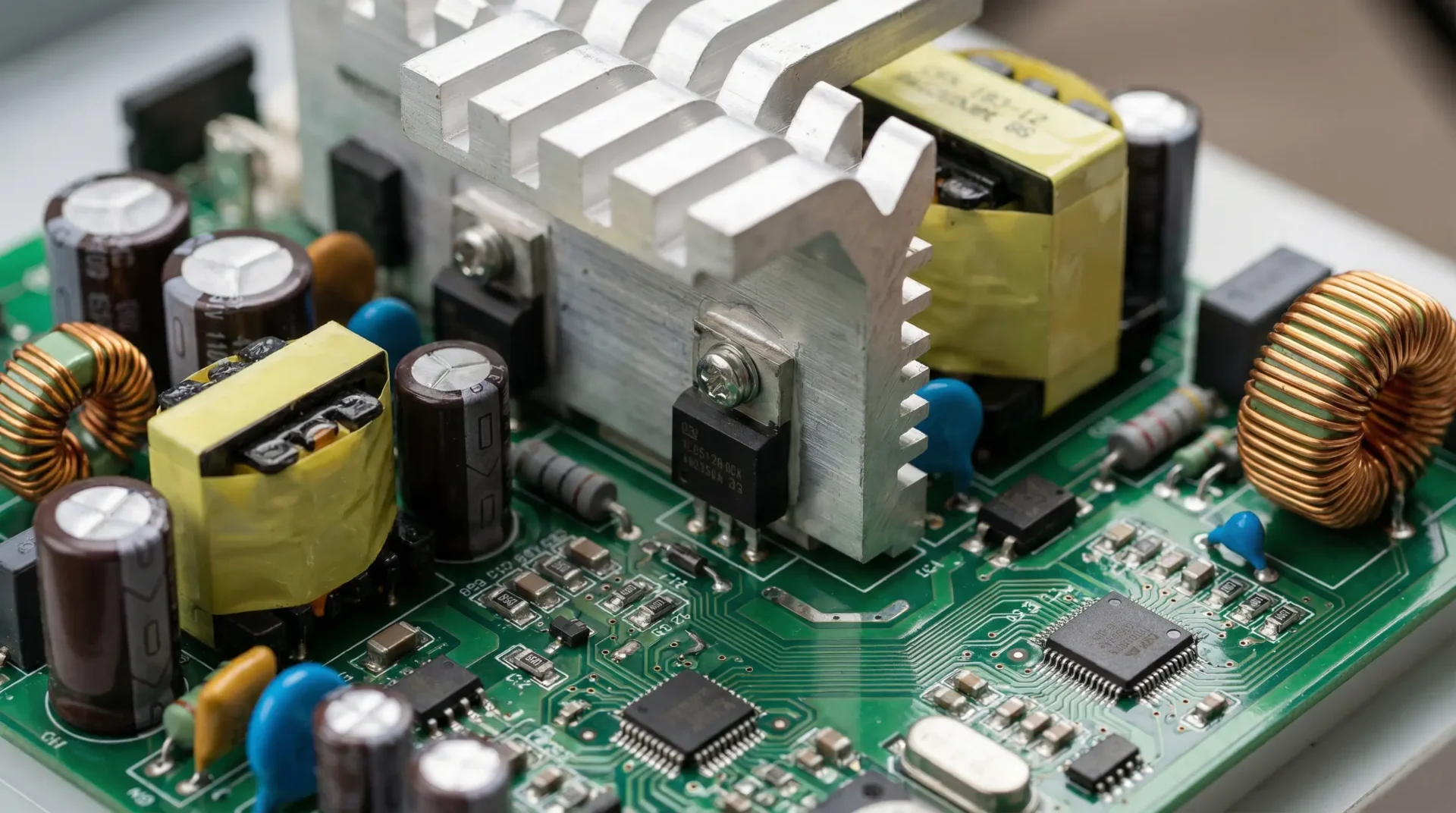
Voltage stabilizers and Automatic Voltage Regulators (AVRs) address these challenges through different technological approaches. Understanding the distinctions is critical for proper selection.
Buck/Boost Operation Principle
All voltage stabilizers operate on the fundamental principle of Buck (step-down) and Boost (step-up) transformation:
– Boost Mode: When input voltage falls below the set threshold, the stabilizer increases voltage to the nominal level. This is essential during periods of high grid demand or when PV output cannot support local loads.
– Buck Mode: When input voltage exceeds acceptable limits, the stabilizer reduces voltage to protect equipment. This addresses the overvoltage conditions common in high-penetration PV scenarios.
Modern stabilizers continuously monitor input voltage and make instantaneous corrections, maintaining output within tight tolerances regardless of input variations.
Static Voltage Stabilizers
Static stabilizers represent the most advanced technology for PV applications:
Technology: Utilizing IGBT (Insulated-Gate Bipolar Transistor) power converters, static stabilizers eliminate moving parts entirely. Voltage regulation is achieved through solid-state switching at high frequencies.
Advantages:
– Compact size compared to mechanical alternatives
– Extremely fast response time (typically under 50ms)
– Precise regulation (1% accuracy or better)
– Minimal maintenance requirements
– High efficiency across the operating range
– Superior reliability in harsh environments
Applications: Ideal for PV systems due to their ability to handle rapid voltage variations without wear and maintenance concerns. The absence of mechanical components makes them particularly suitable for remote or hard-to-access installations.
Servo-Controlled Voltage Stabilizers
Servo-controlled stabilizers use traditional electromechanical technology:
Technology: A servo motor adjusts a variable autotransformer (variac) to change the output voltage. Tap changers or rolling contacts provide stepped voltage regulation.
Characteristics:
– Regulation accuracy: 1%
– Moderate response speed (100-500ms)
– Lower initial cost compared to static units
– Established technology with proven track record
– Maintenance requirements for moving parts
Applications: Suitable for applications where cost sensitivity is higher and response speed requirements are moderate. May be appropriate for smaller residential or commercial PV installations with less dynamic grid conditions.
Relay-Type Voltage Stabilizers
Relay-type units provide basic voltage correction:
Technology: Electromechanical relays switch between transformer taps to adjust voltage in discrete steps.
Characteristics:
– Regulation accuracy: 5% to 10%
– Lower cost
– Slower response time
– Stepwise correction rather than continuous
– More maintenance requirements
Applications: Generally not recommended for PV applications due to coarse regulation and slower response. May be suitable for basic protection in cost-sensitive scenarios with stable grid conditions.
Modern Solutions and Smart Grid Integration

The solar power voltage stability landscape is evolving rapidly, with new technologies emerging alongside traditional stabilizers:
Smart PV Inverters with Voltage Regulation
Traditional PV inverters focused solely on converting DC to AC power. The concept of smart inverters introduces advanced grid-support functions:
Dynamic Reactive Power Control: Smart inverters can inject or absorb reactive power (VARs) to influence local voltage. This capability helps mitigate voltage rise during peak production periods.
Voltage Regulation Functions: Modern inverters incorporate algorithms that adjust real and reactive power output based on local voltage measurements, functioning similarly to traditional voltage regulation equipment.
IEEE 1547 Standard Evolution: The comprehensive revision of IEEE 1547 is enabling or mandating these advanced grid support functions. As of 2018, the standard requires inverters to provide voltage and frequency ride-through, voltage regulation, and other grid-support capabilities.
The critical factor is that smart inverters and traditional voltage stabilizers are complementary technologies, not mutually exclusive alternatives.
Three-Layer Coordinated Control Strategy
Research published in 2023 proposed an innovative three-layer coordinated control strategy for PV inverter AVR applications:
Top Layer: Coordination control entity that manages overall system voltage profile and optimizes reactive power distribution across multiple inverters.
Middle Layer: Local Volt/VAR controllers that receive setpoints from the top layer and manage individual inverter operation based on local measurements.
Bottom Layer: Inner-loop controllers within PV inverters that execute the power electronic switching required to achieve commanded voltage and reactive power outputs.
This hierarchical approach improves grid voltage quality while efficiently managing reactive power output across distributed PV resources. The strategy has been validated on a representative Danish low-voltage feeder using Opal-RT real-time simulation, demonstrating effective control of PV inverters with lower sensitivity values near substations.
Digital Twin Technology
The integration of digital twin technology represents the cutting edge of voltage regulation:
System Architecture: Digital twins incorporate real-time digital simulators, ICT hardware, and high-speed Ethernet/LAN communication to create virtual representations of physical systems.
Applications: The cyber-physical system interacts with actual control systems, ensuring proper operation through continuous validation. Digital twins enable predictive control strategies and optimize voltage regulation performance based on real-time conditions.
Benefits: This technology allows for scenario testing, performance optimization, and fault prediction without disrupting actual system operation, representing a significant advancement in PV system management.
Grid Edge Technologies
Small-scale distributed Volt/VAR compensation devices utilizing power electronics are emerging as alternatives to traditional mechanical voltage regulation equipment:
Solid-State Transformers: These advanced power transformers use power electronic converters to provide voltage transformation and regulation in a single device, offering unprecedented control and functionality.
Static Compensators (STATCOMs): Fast-acting power electronic devices that inject or absorb reactive power to regulate voltage more dynamically than traditional capacitor banks or mechanical tap changers.
Advantages: Rapid response, precise control, reduced maintenance, and enhanced grid support capabilities compared to mechanical solutions.
Application Scenarios and Selection Framework
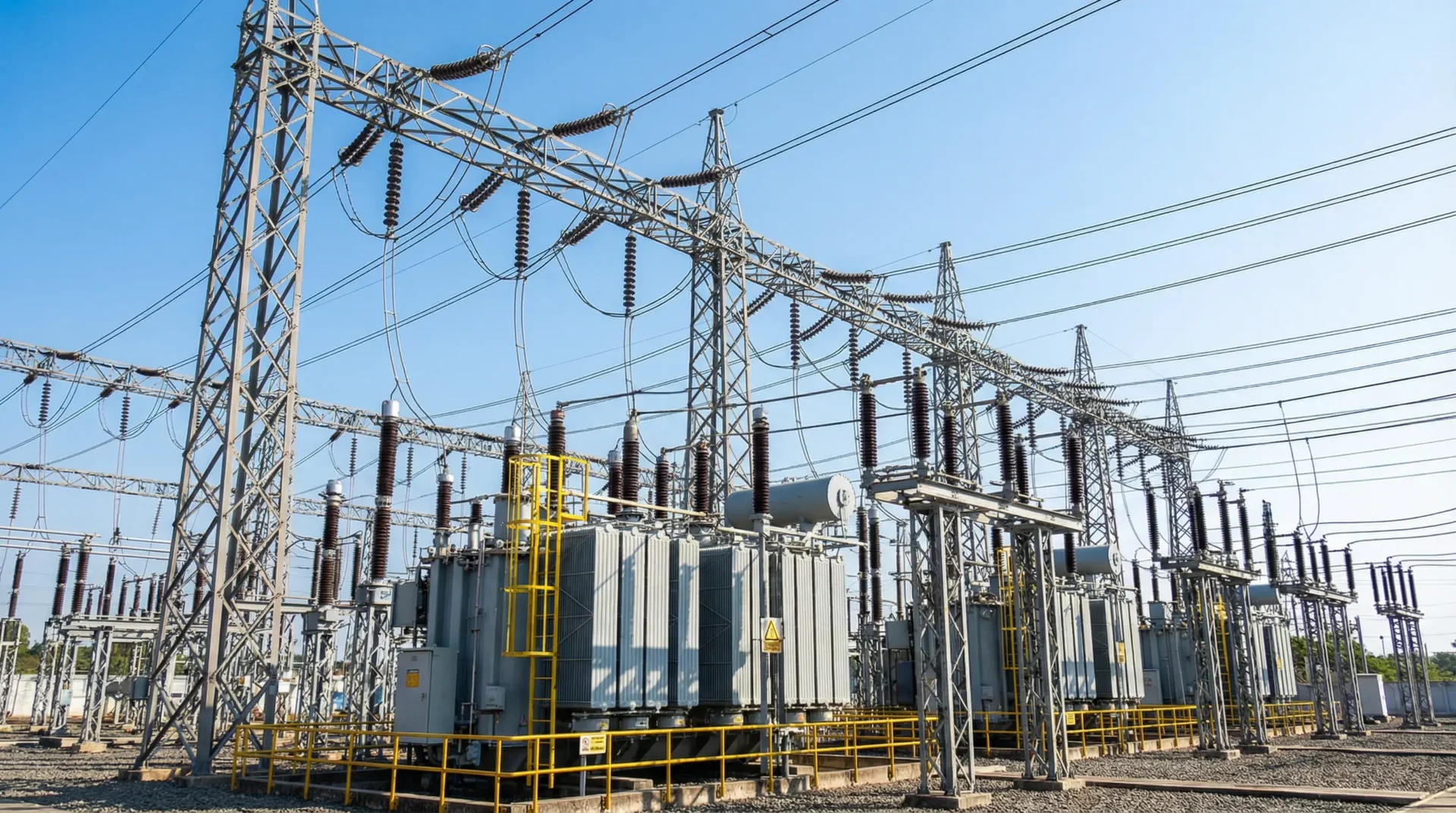 Different PV applications require different voltage regulation approaches. The following framework guides selection based on application requirements.
Residential PV Systems (1-20 kW)
Characteristics: Single-phase, grid-interactive, located at end of distribution feeder, high voltage rise potential.
Recommended Solution:
– For stable grids: Servo-controlled stabilizer (10-15 kVA) with 1% regulation accuracy
– For variable grids: Static voltage stabilizer for superior response speed and reliability
– Consider smart inverter capabilities if upgrading inverter equipment
Key Specifications:
– Response time: Under 100ms preferred
– Voltage accuracy: 1% of nominal
– Maintenance-free design advantageous for residential locations
Commercial and Industrial Systems (20-500 kW)
Characteristics: Three-phase typically, higher power levels, greater financial impact from shutdowns, may have sensitive loads.
Recommended Solution:
– Static voltage stabilizer strongly recommended
– Three-phase units with balanced regulation across all phases
– Consider integrated power factor correction if power quality issues exist
Key Specifications:
– Response time: Under 50ms
– Regulation accuracy: 1% or better
– Input voltage range: 15-20% to accommodate significant variations
– Overload capacity for motor starting if industrial loads present
Utility-Scale Systems (500 kW to multi-MW)
Characteristics: Multiple inverter arrays, point-of-common-coupling requirements, grid code compliance mandatory, significant financial consequences from outages.
Recommended Solution:
– Comprehensive approach combining:
– Smart inverters with grid-support functions
– Static voltage stabilization at critical points
– Coordination with utility LTC equipment
– Advanced monitoring and control systems
Key Considerations:
– Utility interconnection requirements and grid codes
– SCADA integration for monitoring and control
– Redundancy and maintainability for high-availability requirements
– Coordination with utility voltage regulation equipment
Selection Criteria and Decision Factors
When selecting voltage stabilization equipment, evaluate the following factors systematically:
Technical Specifications
Input Voltage Range: Match to actual grid conditions. Measure voltage over time to document minimum, maximum, and typical values. Equipment should handle documented extremes plus margin.
Output Voltage Accuracy: For PV applications, 1% accuracy is recommended. Coarser regulation (5-10%) may not prevent inverter shutdowns effectively.
Response Time: Critical for PV applications due to rapid variations. Static stabilizers (under 50ms) outperform servo-controlled units (100-500ms) and relay types (slower still).
Power Rating: Size based on total inverter output plus 20-30% margin. Undersized equipment will fail prematurely; oversized equipment represents unnecessary capital expenditure.
Environmental Considerations
Operating Temperature Range: Outdoor installations in extreme climates require wide temperature range ratings. Equipment derating at high temperatures affects actual capacity.
Enclosure Protection: IP ratings must match installation environment. IP21 for indoor clean environments, IP54 for general outdoor use, IP65 for harsh environments with dust and water exposure.
Altitude Derating: High-altitude installations require derating due to reduced cooling air density. Verify manufacturer ratings for specific altitude.
Economic Factors
Total cost of ownership matters more than initial price. Evaluate:
Initial Equipment Cost: Static stabilizers typically cost 30-50% more than servo-controlled units.
Maintenance Costs: Static units have minimal maintenance; servo units require periodic inspection and potential replacement of moving parts.
Energy Efficiency: Static stabilizers typically achieve 95-98% efficiency; servo units slightly lower due to motor losses.
Reliability Impact: Calculate cost of energy losses during inverter shutdowns prevented by voltage stabilization. For utility-scale installations, this often provides justification for premium equipment.
Lifespan: Static units often exceed 15-20 years; servo units typically 10-15 years with proper maintenance.
Common Mistakes to Avoid
Avoid these frequent errors in voltage regulation for PV systems:
1. Underestimating Voltage Variations: Assuming grid voltage is stable based on brief measurements. Conduct extended monitoring (minimum 1-2 weeks) across different seasons and load conditions.
2. Confusing Surge Protection with Voltage Regulation: Surge protectors (SPDs) protect against transient spikes, not sustained overvoltage or undervoltage conditions. Separate solutions are required for each problem.
3. Oversizing Based on Inverter Rating Only: Consider actual maximum output, not nameplate capacity. PV arrays rarely produce rated output; sizing based on nameplate results in significant oversizing and wasted investment.
4. Ignoring Power Factor Issues: Voltage problems often accompany power factor degradation. Address both issues simultaneously for optimal solution.
5. Neglecting Utility Coordination: For larger systems, coordinate with utility on voltage regulation strategy. Uncoordinated equipment can conflict with utility tap changers and capacitor switching.
6. Choosing Based on Price Alone: The lowest-cost solution often proves most expensive in total cost of ownership. Evaluate lifecycle costs, not just initial purchase price.
7. Failing to Plan for Growth: Installations often expand over time. Select equipment with modularity or capacity for future expansion.
8. Improper Installation: Voltage stabilizers must be installed correctly per manufacturer specifications, including proper conductor sizing, grounding, and protection coordination. Improper installation compromises performance and creates safety hazards.
Summary and Action Items
PV voltage regulation is a critical but often overlooked aspect of photovoltaic system design and operation. As PV penetration increases globally, voltage instability issues will become more prevalent, making proper voltage stabilization essential for reliable operation and optimal financial returns.
Key Takeaways:
– Voltage fluctuations exceeding 10% cause PV inverter shutdowns and significant energy losses
– Reverse power flow from PV systems creates voltage rise not present in traditional grid configurations
– Static voltage stabilizers offer superior performance for PV applications: fast response, high accuracy, minimal maintenance
– Smart inverters and voltage stabilizers are complementary technologies, not alternatives
– Selection must consider technical specifications, environmental factors, and total cost of ownership
Action Checklist for PV System Owners and Designers:
– [ ] Conduct extended voltage monitoring at proposed installation site (minimum 1-2 weeks)
– [ ] Document minimum, maximum, and typical voltage values with timestamps
– [ ] Identify voltage-related problems in existing installations: inverter shutdowns, error logs, energy losses
– [ ] Calculate financial impact of voltage-related downtime
– [ ] Match voltage stabilization technology to application requirements (residential/commercial/utility)
– [ ] Specify response time under 100ms for PV applications (under 50ms preferred)
– [ ] Verify regulation accuracy of 1% for effective inverter protection
– [ ] Evaluate environmental requirements: temperature range, enclosure protection, altitude derating
– [ ] Calculate total cost of ownership including maintenance, efficiency losses, and expected lifespan
– [ ] Coordinate with utility for larger installations to ensure compatibility with grid equipment
– [ ] Plan for system expansion with modular or scalable equipment
– [ ] Verify installer qualifications and experience with voltage stabilization equipment
– [ ] Establish maintenance schedule based on manufacturer recommendations
– [ ] Install monitoring to track voltage regulation performance and energy recovery
Remember: Specifications must match actual operating conditions, not nominal ratings. Measurement before selection prevents costly mistakes.
—
About YIY
Zhejiang Yiyen Holding Group Co., Ltd. (YIY) is a professional voltage stabilizer manufacturer with 16+ years of experience. With a 30,000㎡ modern facility and an annual production capacity of 100,000+ units, our products are exported to 130+ countries. We provide OEM/ODM customization services and are ISO 9001:2015 certified, committed to delivering stable and reliable voltage protection solutions to global customers.
Our product portfolio includes:
– SBW Series: Three-phase compensation type high-power voltage stabilizers
– YSVP Series: Servo motor controlled voltage stabilizers
– PWR Series: Precision AC voltage stabilizers for sensitive equipment
– AVR Series: Automatic voltage regulators for specialized applications
Contact Us
For technical consultation and customized solutions:
📧 Email: [email protected]
📞 Phone/WhatsApp: +86 13587452904
🌐 Website: https://www.yiyavr.com/
If you found this article helpful or have specific voltage regulation challenges in your photovoltaic application, contact our engineering team for expert guidance and solution design.
