
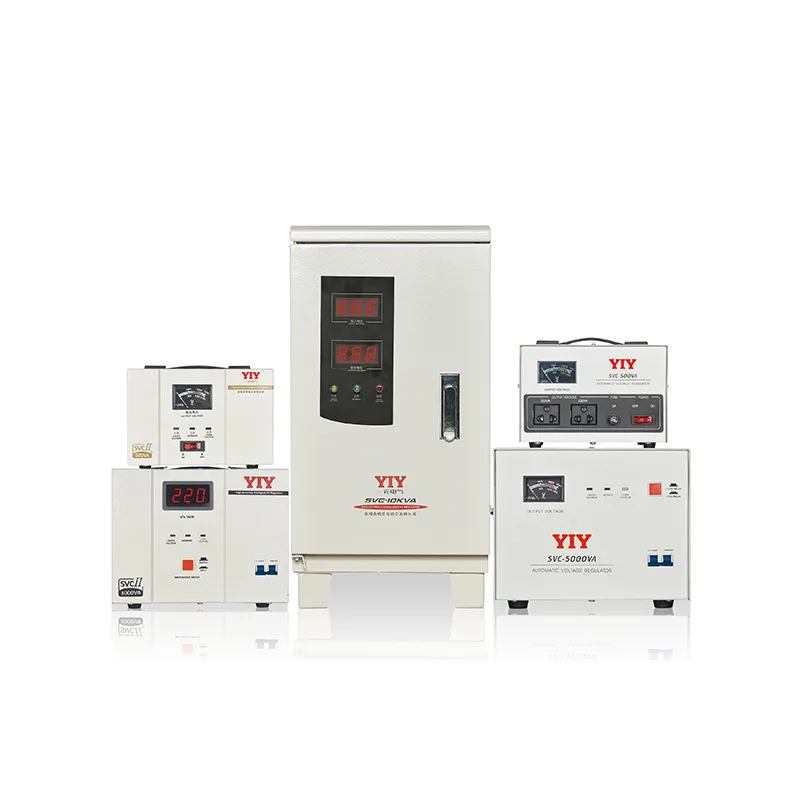
SVC Servo Voltage Stabilizer
Professional single phase voltage stabilizers for US 120V & Europe 220V/230V systems. Advanced servo & IGBT technology, 500VA-30KVA capacity. 15+ years manufacturing experience serving 130+ countries.



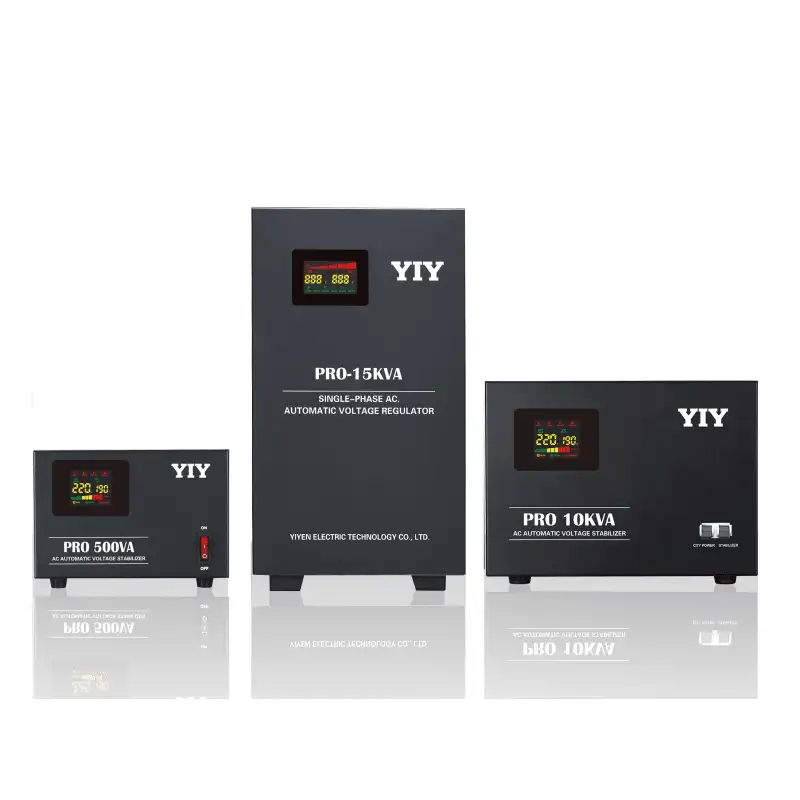


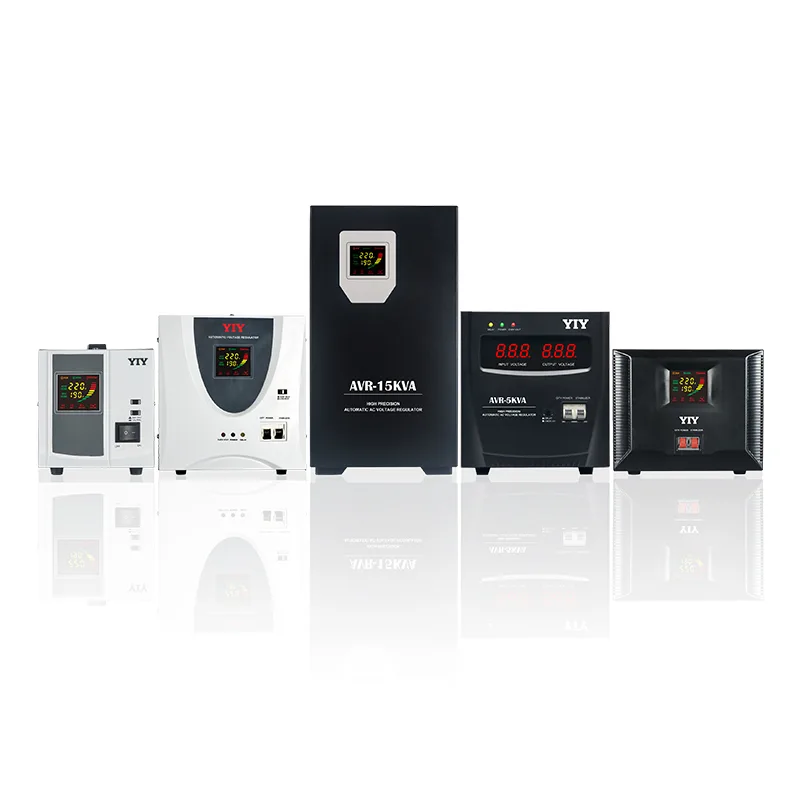
| Series | Type | Power Range | Input Voltage (European) | Input Voltage (American) | Output Accuracy | Response Time |
|---|---|---|---|---|---|---|
| SVC | Servo | 500VA-50KVA | 150V-250V/176V-264V | 105V-149V | ±3% | ≤2s |
| PRO | Servo | 500VA-50KVA | 150V-250V/176V-264V | 105V-149V | ±2% | 0.5-1s |
| PWR | Servo | 15KVA-100KVA | 165V-275V/154V-286V | 88V-132V/82V-137V/77V-143V | ±3% | ≤10ms |
| TSS | Servo | 5KVA-30KVA | 80V-280V | 90V-140V | ±3% | ≤2s |
| AVR | Relay | 500VA-20KVA | 70V-270V/90V-270V/140V-260V | N/A | ±8%~10% | 60ms |


Selection guide
Single-phase stabilizers protect loads fed by one live conductor and neutral: homes, shops, offices, clinics and light workshops. Four decisions narrow the choice: the nominal voltage of your market, the output tolerance your equipment needs, the capacity, and the installation format.
Output tolerance is the clearest dividing line. Relay models hold ±8–10%, servo models ±2–3%, and the CVCF IGBT model ±0.5% with a 10ms correction time. Capacity runs from 500VA plug-in units to the 100kVA PWR, the largest single-phase rating YIY lists.
Format matters for installation cost. Wall-mounted TWS, TSS, TRS and SWR units suit fixed mainline installation. SVC, PRO and AVR are desktop or tower units, and PR is portable. For loads that combine sensitive electronics with a generator supply, the CVCF accepts 35–70Hz input frequency and 85–270V input.
| Model | Technology | Ratings | Input range | Output |
|---|---|---|---|---|
| SVC Servo Voltage Stabilizer | Servo | 500VA–30kVA | 150–250V or 105–149V (≤5kVA) | 220V or 127V ±3% |
| PRO Servo Voltage Stabilizer | Servo | 500VA–30kVA | 150–250V or 105–149V (≤5kVA) | 220V or 127V ±2% (≤5kVA) |
| TWS Wall-Mounted Single-Phase Servo Stabilizer | Servo, wall-mounted | 3–30kVA | 80–260V | 220/230V ±3% |
| PWR High Power Voltage Stabilizer | Servo | 15–100kVA | 165–275V / 88–132V | 220/230V or 110/120V ±2% |
| PWR-2 Dual-Phase Servo Stabilizer | Servo, dual phase | 10–60kVA | 96–144V | 120/240V ±3% |
| AVR Single-Phase Relay Stabilizer | Relay | 500VA–20kVA | 70–270V / 90–270V / 140–260V | 220V ±8–10% |
| TRS Wall-Mounted Relay Stabilizer | Relay, wall-mounted | 0.5–20kVA | 90–270V (45–270V on 5–20kVA) | 220/230V ±10% |
| CVCF IGBT Voltage & Frequency Stabilizer | IGBT | 5kVA, 10kVA | 85–270V, 35–70Hz | 220/230/240V ±0.5%, 10ms |
Values copied from each product page’s specification table. SWR and PR relay models are covered on the relay category page.
TWS servo and TRS or SWR relay wall units are sized for the whole incoming supply, from 3kVA to 30kVA.
CVCF (±0.5%, THD<3%, RS485) or PRO (±2% up to 5kVA) hold the tight output band that analysers and test benches expect.
PWR covers 15kVA to 100kVA on a single phase, with MCU overload protection (120% for 3s) and surge protection listed.
PWR (110/120V ±2%), SVC and PRO (127V) and PWR-2 (120/240V) cover low-voltage markets without step-up transformers.
The PWR series goes up to 100kVA single-phase, listed at 80,000W output with 220/230V or 110/120V ±2% regulation.
The PWR-2 dual-phase servo stabilizer, rated 10kVA to 60kVA, with a 96–144V input and 120/240V ±3% output.
Start from the tolerance your equipment needs: ±8–10% points to relay, ±2–3% to servo, ±0.5% with 10ms correction to the CVCF IGBT model.
For servo, TWS lists 80–260V. For relay, TRS lists 45–270V on 5–20kVA models. The CVCF IGBT model lists 85–270V and 35–70Hz input.
Match the stabilizer to the supply. On a single-phase supply, TWS, SVC/PRO tower, AVR, TRS and PWR models all reach 20kVA or more. On a three-phase supply with three-phase loads, use SVC-3, PRO-3 or PWR-3.
A: Servo type stabilizers typically last 8-10 years with minimal maintenance (annual cleaning, carbon brush inspection). IGBT types last 10+ years and are virtually maintenance-free due to no moving parts.
A: Yes, we offer full customization including input/output voltages, special connectors, enclosure designs, and mounting options. MOQ applies for custom orders with 15-30 day delivery.
A: Standard protections include over-voltage, under-voltage, overload, short-circuit, and over-temperature. Premium models add surge protection, phase loss detection, and remote monitoring capabilities.
A: Yes, we provide comprehensive technical support including installation guides, wiring diagrams, commissioning assistance, and remote troubleshooting. Training services available for distributor partners.
A: All products include 2-year comprehensive warranty covering parts and labor. Extended warranties available. We maintain service centers in major markets and provide 24/7 technical support hotline.
A: 120V models are designed for North American standards with specific input ranges (85-145V), while 220V/230V models are optimized for European standards (170-280V input). The internal circuitry and components are specifically engineered for each voltage standard.
A: No, voltage stabilizers are specifically designed for their rated voltage systems. Using the wrong voltage model can damage both the stabilizer and connected equipment. Always match the stabilizer to your local power system.
A: IGBT stabilizers offer faster response (≤10ms vs 0.5-2s), higher accuracy (±1% vs ±2-3%), no mechanical wear, silent operation, and better performance with non-linear loads. Servo types are more cost-effective for basic applications.
A: Calculate total load power and add 20-30% safety margin. For inductive loads (motors, transformers), multiply by 1.5-2. Our engineering team can provide free load analysis and sizing recommendations.
A: Yes, our US standard models have UL listing and FCC certification. European models are CE marked and RoHS compliant. We can provide additional certifications like CSA for Canada upon request.
Follow Our Social Media
Use this navigation block to compare low-capacity single-phase paths, confirm factory capability, and download technical materials before final model selection.