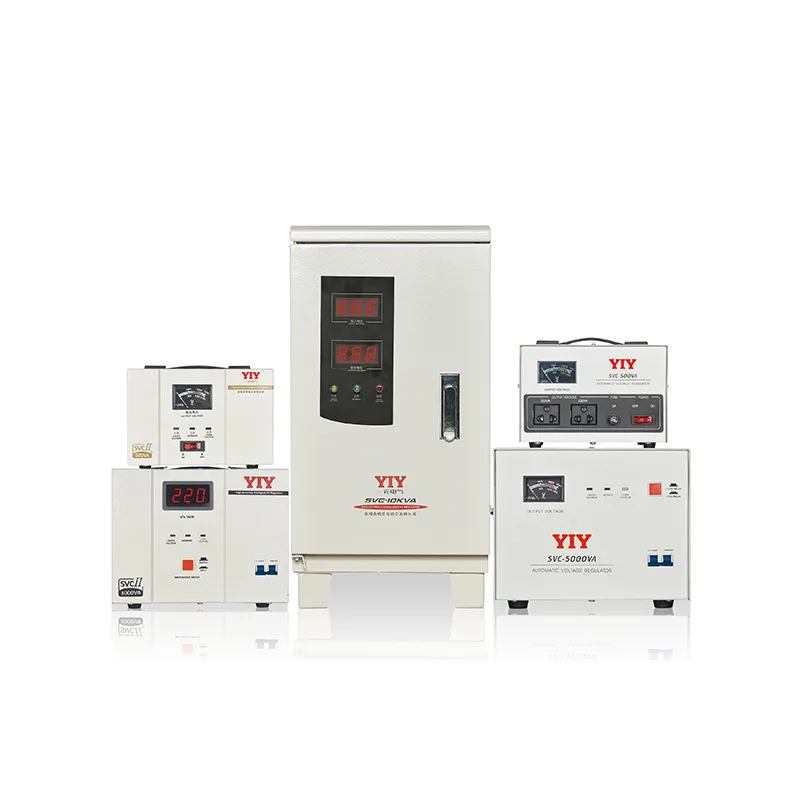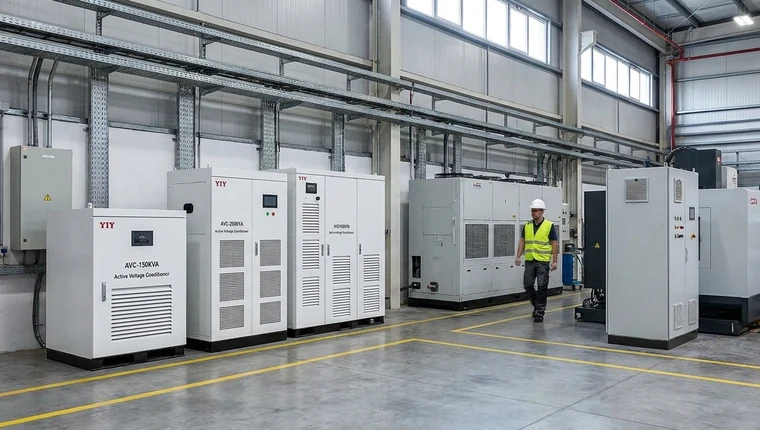
Before buying a 20 kva stabilizer single phase, compare your real load kVA/kW, power factor, startup current, measured input-voltage range, output accuracy, AVR technology, protection package, installation environment, compliance evidence, and supplier engineering support.
A 20 kVA nameplate alone does not prove the unit will handle your site voltage, motor inrush, generator behavior, or sensitive controls.
This guide will help you decide whether this capacity tier fits your load, how to size it correctly, which relay/servo/IGBT technology makes sense, what documents to request from suppliers, and what to include in your RFQ before you buy.
Why Does Your 20 kVA Single-Phase Load Need More Than a Generic Stabilizer?
You need a correctly specified AVR because a generic stabilizer can match the nameplate rating while still failing on input range, startup current, correction accuracy, or thermal design.

A 20 kVA single-phase voltage stabilizer maintains a more stable output voltage for single-phase loads when the incoming supply rises, drops, or fluctuates. In practice, it protects your production equipment, commercial HVAC, compressors, medical devices, CNC auxiliaries, telecom loads, office IT, or mixed distribution panel from abnormal voltage conditions.
Our single-phase voltage stabilizers page shows which series reach 20kVA and above, with input window and output accuracy for each.
For your specification work, 20 kVA is only the starting point. You also need to know the actual running kW, load power factor, starting current, fluctuation pattern, voltage sensitivity, protection needs, and installation environment. If you skip those checks, the stabilizer may overheat, trip, correct too slowly, or fail to protect the load during weak-grid or generator operation.
Nominal-voltage planning should be aligned with IEC 60038 standard voltages, which defines standardized voltage references used in low-voltage equipment planning. For you, that means a nominal 230 V site cannot be treated as a perfect 230 V supply; your AVR input range should be based on measured minimum and maximum voltage, not only the panel label.
If your application is a cost-sensitive mixed load with moderate accuracy needs, a relay voltage stabilizer may be enough. If your equipment needs tighter voltage control or smoother correction, you should compare servo or static/IGBT options before you issue the purchase order.
What Should You Check Before Requesting a Quotation?
You should collect measured load and site data before requesting a quotation, because “20 kVA single phase” is not enough information for an engineering-fit stabilizer.
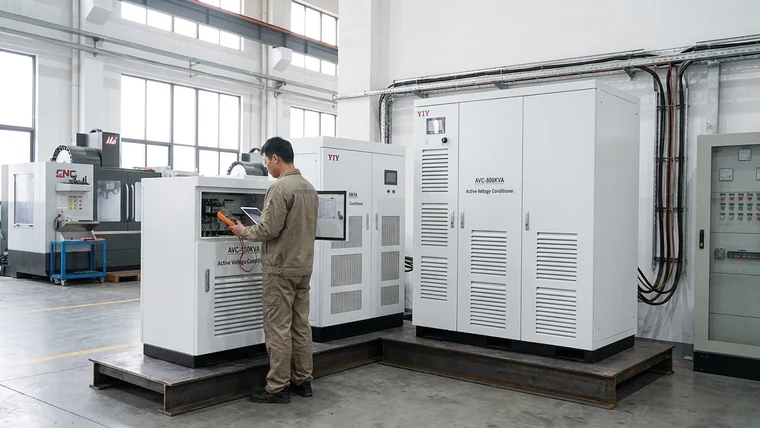
A supplier can only recommend the right unit when your RFQ explains what the stabilizer must carry, how the load starts, how unstable the grid is, and where the equipment will be installed. This is especially important for motors, pumps, compressors, CNC controls, medical devices, test equipment, and mixed commercial panels.
Check Why it matters If you skip it Connected load and running load Connected load shows maximum possible demand; running load shows typical duty. You may buy an oversized unit or, worse, an undersized one. kW, kVA, and power factor kVA = kW ÷ power factor. A low power factor means the AVR carries more apparent power than the useful work output suggests. A load that looks acceptable by kW may overload a 20 kVA AVR. Startup current Motors, compressors, pumps, and transformers can draw several times running current at startup. The stabilizer may trip or allow voltage collapse during starting. Load sequence Loads that start together create a higher peak than loads started one by one. Your sizing margin may be unrealistic. Input-voltage range The AVR must regulate the actual lowest and highest site voltage. It may stop correcting when your grid is at its worst. Output accuracy Sensitive controls may need tighter voltage tolerance than general loads. You may protect the panel but still see resets or process errors. Environment Dust, humidity, heat, airflow, and cabinet placement affect reliability. The electrical rating may be correct while the unit fails thermally. Protection package Over/under-voltage, overload, short-circuit, thermal, time delay, bypass, and surge protection reduce operational risk. Your maintenance team may face preventable trips or equipment stress. Monitoring needs Alarms, fault indication, bypass status, event logs, and remote signals help diagnostics. Troubleshooting takes longer after voltage events. Documentation Datasheets, wiring diagrams, test reports, certificates, and manuals support acceptance. Procurement and commissioning become harder to verify.
For deeper capacity-level context, compare your single-phase requirement against a broader 20kva voltage stabilizer selection framework. That helps you separate the capacity decision from the phase, topology, and protection decisions.
How Should You Size a 20kVA Single Phase AVR?
You should size the AVR from real apparent power, startup behavior, and future margin—not from the largest equipment nameplate alone.
Start with the load list. For each item, record running kW, power factor, starting method, duty cycle, and whether it starts alone or with other loads. Then convert real power to apparent power:
kVA = kW ÷ power factor
For example, a 14 kW load at 0.8 power factor requires 17.5 kVA apparent power before margin. That means a 20 kVA unit may appear suitable for steady operation, but you still need to check startup current, ambient temperature, future expansion, and whether the AVR can handle temporary overload without nuisance trips.
A practical safety margin is often 10–25%, depending on load type and project uncertainty. For you, the lower end may fit stable electronic or resistive loads. The higher end is safer when your panel includes motors, compressors, pumps, transformers, or future expansion.
Load profile Sizing implication Practical meaning for you Stable electronics or lighting Lower surge, predictable current A smaller margin may be acceptable if voltage sensitivity is moderate. Motors, pumps, compressors High inrush and starting voltage drop You should verify temporary overload capacity and starting sequence. CNC controls or medical/test loads Higher sensitivity to voltage deviation You may need tighter accuracy and better monitoring. Mixed distribution panel Several load behaviors on one AVR You should list each load and avoid sizing only by total breaker rating. Generator-backed site Wider voltage and frequency variation You should confirm generator compatibility and neutral/earthing conditions.
If your procurement team is also comparing single-phase and three-phase systems, do not treat them as interchangeable. Phase configuration changes current, wiring, protection, balancing, and installation logic. Use a separate 3 phase main line stabilizer sizing reference when your project may shift from single-phase to three-phase supply.
Which Technology Fits Your Precision and Budget Requirements?
You should choose relay for simpler cost-sensitive loads, servo for tighter industrial voltage control, and IGBT/static regulation for fast correction, sensitive equipment, or more demanding grid conditions.
The best technology is not automatically the most expensive one. It is the topology that matches your load tolerance, voltage fluctuation speed, maintenance preference, and downtime risk.
YIY technical documentation describes relay stabilizers as electromagnetic tap-switching designs, servo stabilizers as motor-driven autotransformer correction designs, and IGBT/static designs as electronic regulation systems. Typical internal reference ranges are ±5% to ±8% output precision for relay, ±0.5% to ±3% for servo, and around ±0.5% for IGBT/static designs, depending on configuration. Practically, tighter accuracy means your equipment sees a narrower voltage band; faster correction means the AVR can respond sooner to sags or surges.
Technology How it regulates Typical fit Watch-outs Relay AVR Switches transformer taps using electromagnetic relays General commercial loads, lighting, less sensitive mixed panels Step correction, relay wear, audible switching, lower precision Servo AVR Uses a motor-driven brush on an autotransformer Industrial loads needing smoother and tighter voltage correction Mechanical maintenance; response may be slower than static designs IGBT/static AVR Uses electronic regulation depending on design Sensitive electronics, medical/test equipment, unstable grids Higher cost, thermal design, EMC and service-skill review
A single phase voltage stabilizer 20kva for a workshop compressor does not need the same response behavior as one feeding medical equipment or precision control electronics. If your load can tolerate moderate voltage deviation, relay may be practical. If your equipment trips or resets during voltage dips, servo or static regulation may justify the higher specification.
What Compliance and Supplier Evidence Should You Verify?
You should verify supplier capability with documents, not claims on a brochure.
Your supplier comparison should cover capacity range, technology options, factory testing, certificate scope, customization ability, after-sales support, and engineering review quality. YIY documentation indicates stabilizer coverage from 0.5 kVA to 3000 kVA, relay/servo/IGBT technology options, OEM/ODM support, and exports to 130+ countries. For you, this matters because one supplier can review whether your project fits a relay AVR, servo AVR, or static configuration instead of forcing every application into one product type.
What to verify Evidence to request Why it matters for your purchase Technology range Product matrix, model catalog, application notes Confirms the supplier can recommend by load profile. Quality system ISO certificate scope, issuing body, expiry date Confirms the quality process applies to stabilizer design or manufacturing. Product compliance CE declaration where relevant, test basis, routine test report Supports import review, commissioning, and acceptance. Factory testing Output accuracy, protection checks, insulation test, load test where applicable Shows the unit was verified before shipment. Customization Input range, output voltage, enclosure, bypass, alarms, meters, terminals Helps the unit match your real site. Documentation Datasheet, wiring diagram, manual, packing dimensions, maintenance guide Helps your panel builder install and service the AVR correctly. Service support Warranty terms, spare parts path, troubleshooting process Reduces downtime after a voltage event or component fault.
If a supplier cites ISO 9001:2015 quality management systems or ISO 14001 environmental management, ask for the exact certificate, scope, expiry date, and issuing organization. A certificate only helps you when it applies to the stabilizer-related operation you are buying from.
Also ask for the wiring diagram and routine test report before acceptance. This gives you a concrete verification action: match the model number, serial number, input/output voltage, rated capacity, protection functions, and certificate references against the proforma invoice and nameplate before shipment.
What Should Your Final RFQ Specification Include?
Your RFQ should turn your site checks into a short engineering specification that defines capacity, voltage range, technology, protection, environment, documents, and review requirements.
A strong RFQ prevents suppliers from quoting different assumptions. It also helps procurement compare offers line by line instead of comparing only the lowest price.
Specification line What to write Why it matters in practice Rated capacity 20 kVA single-phase; include running kW, power factor, and required margin Prevents nameplate-only sizing. Input/output Single-phase input/output; 220/230/240 V as applicable; 50/60 Hz Prevents wrong transformer or control configuration. Input range State measured lowest and highest voltage, plus duration Ensures the AVR can regulate your real supply. Output accuracy State required tolerance, such as ±5%, ±3%, or tighter Aligns technology choice with load sensitivity. Startup current List motor/compressor/pump inrush or starting method Prevents nuisance trips during startup. Technology Relay, servo, IGBT/static, or supplier recommendation based on load list Lets engineering fit guide the topology. Protections Over/under-voltage, overload, short-circuit, thermal, delay, bypass, surge protection Reduces equipment stress and downtime risk. Site conditions Dust, humidity, ambient heat, ventilation, cabinet placement, IP requirement Prevents thermal or enclosure mismatch. Monitoring Alarms, fault indication, bypass status, event logs, remote signal if needed Speeds up troubleshooting. Documents Datasheet, manual, wiring diagram, test report, certificates, packing data Supports procurement, installation, and acceptance.
For a broader plant-level method, use an industrial voltage stabilizer selection process before you lock the purchase request. That helps you convert maintenance complaints, load data, and voltage measurements into a supplier-ready specification.
Add one final acceptance line to your RFQ: “Supplier shall review the load list, startup current, power factor, measured input-voltage range, generator use, and installation conditions before confirming the model.” This line protects you from a catalog-only quote and gives the supplier a clear engineering responsibility.
Frequently Asked Questions
How Should You Compare Pricing for 20 kVA Stabilizer 3 Phase?
Compare three-phase stabilizer pricing only after you match kVA rating, input range, output accuracy, technology, protection package, enclosure, bypass, metering, documentation, and test reports. A lower price may exclude copper content, surge protection, factory testing, manuals, or customization. Your verification action is to request the same RFQ sheet from each supplier and compare the datasheet, wiring diagram, nameplate rating, and routine test report line by line.
Can One 20 kVA Voltage Stabilizer Protect Mixed Loads on a Distribution Panel?
One 20 kVA stabilizer can protect mixed loads if the total kVA, starting current, load sequence, and equipment sensitivity stay within the unit’s design limits. You should list each load, running kW, power factor, inrush current, and duty cycle before connecting the whole panel to one AVR. Mixed panels become risky when compressors, motors, lighting, and electronics start together.
How Much Safety Margin Should You Add When Sizing a 20kVA Single Phase AVR?
Size the margin to the load, not to a fixed rule. Keep it modest for steady electronic or resistive panels and widen it when motors, compressors, pumps, transformers or uncertain growth are involved. After calculating kVA from kW and power factor, verify temporary overload capability with the supplier.
What Affects the Price Difference Between Single-Phase and Three-Phase 20 kVA Stabilizers?
The price difference comes from transformer design, current rating, phase configuration, control system, protection functions, cabinet size, cooling, metering, and documentation scope. Three-phase units often require phase monitoring and balancing protection, while single-phase units may be simpler but still carry high current. Check whether installation accessories, manuals, packing dimensions, and certificates are included before comparing prices.
When Should You Choose Servo or IGBT Instead of Relay for This Capacity Tier?
Choose servo when your load needs tighter voltage correction than a relay design typically provides, especially for mixed industrial equipment or controls sensitive to sustained voltage deviation. Consider IGBT/static regulation when your site has fast fluctuations, sensitive electronics, or a need for more advanced correction behavior. Before upgrading, verify the actual input-voltage waveform, trip history, load sensitivity, and acceptable output tolerance.
What Is the Safest Next Step Before You Buy?
You should make the purchase decision only after your quotation reflects the real load, measured voltage range, technology fit, protection package, installation environment, and acceptance documents.

If your site includes motors, compressors, CNC controls, medical devices, generator backup, or mixed panels, a low-price quote can become expensive through trips, overheating, delayed commissioning, or early replacement. Price becomes meaningful only after every supplier quotes against the same engineering assumptions.
If you are moving from this 20 kVA requirement toward a larger project, the same engineering-fit logic applies when you compare before buying a voltage stabilizer at higher capacities.
A low-friction next step is to ask YIY for a quick sizing review based on your load list, starting current, input-voltage window, and installation conditions. You can begin with a short checklist before preparing detailed logs or full internal datasets.
—
About YIY
Zhejiang Yiyen Holding Group Co., Ltd. (YIY) is a professional voltage stabilizer manufacturer with documented experience in relay, servo, and IGBT voltage stabilization solutions. YIY supports OEM/ODM customization and provides voltage protection products for global customers.
Contact Us Email: yiyen@yiyen.com Phone/WhatsApp: +86 13587452904 Website: https://www.yiyavr.com/