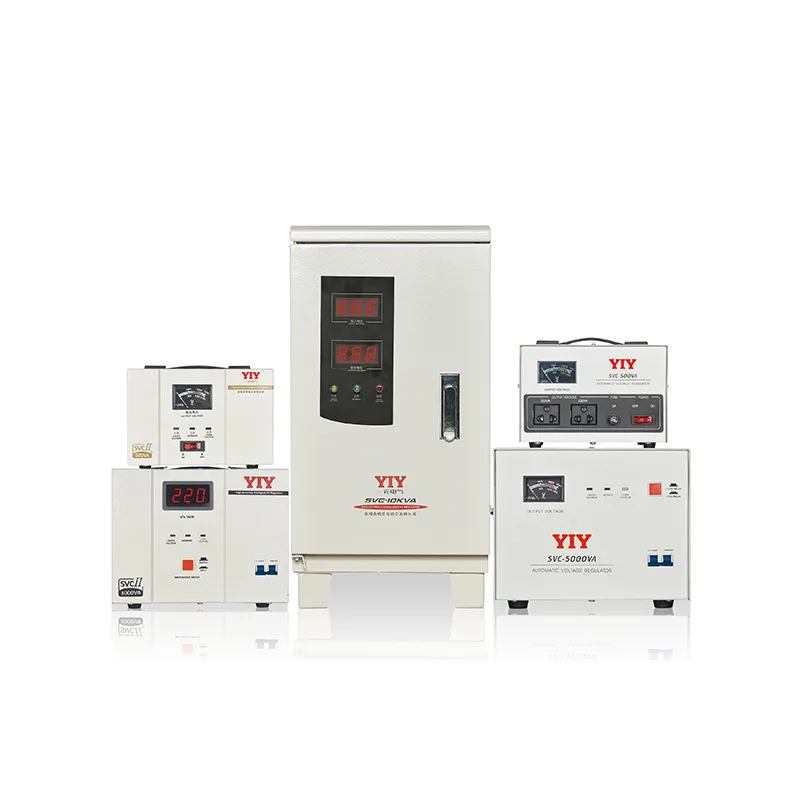
A stabilizer 10kva single phase fits when your verified one-phase load sits safely within the 10kVA class, your grid voltage rises or falls often enough to disturb equipment, and you need regulated output rather than only surge diversion or backup power.
Before you request a quote, this guide will help you decide whether 10kVA is enough, whether single-phase is the right topology, which relay/servo/IGBT technology fits your load, and what proof you should ask for before approving a supplier.
After confirming load current, starting surge, and mains tolerance, compare the single-phase voltage stabilizer range for 120/220/230 V to shortlist the appropriate relay or servo platform.
When Does a Stabilizer 10kVA Single Phase Make Sense for Your Load?
You should choose this capacity tier when your single-phase load is below the 10kVA limit after sizing margin, and voltage fluctuation is a recurring operating risk. A 10kVA single-phase voltage stabilizer, also called an AVR or automatic voltage regulator, corrects unstable input voltage so your connected equipment receives a steadier output.
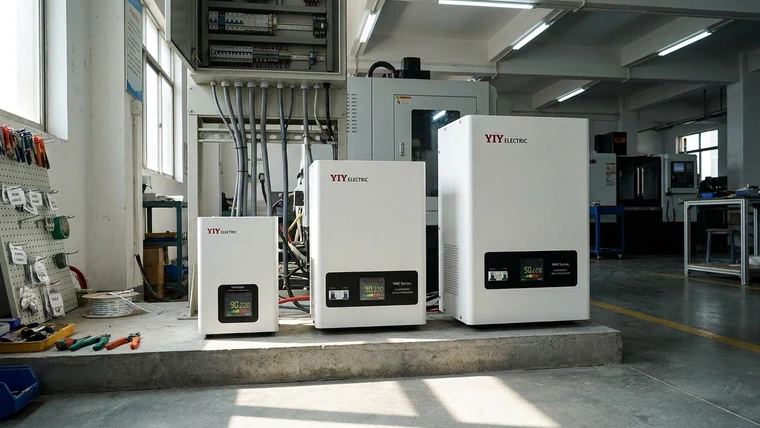
Your practical trigger is not the kVA label alone. The better question is whether voltage sags, over-voltage, brownouts, startup dips, or unstable utility supply can cause nuisance trips, overheating, control faults, inaccurate operation, or shortened component life.
Common loads in this class include:
- CNC auxiliaries and control panels
- Office and commercial equipment circuits
- Lighting panels
- Lab devices and test equipment
- Small production machines
- Pumps, fans, and machine auxiliaries with moderate starting demand
- PLC, relay, and control electronics on a dedicated one-phase supply
IEC defines nominal system voltage expectations in IEC 60038 standard voltages. In practical terms, if your nominal supply is 220/230/240V and your real site voltage regularly moves outside the tolerance your equipment can handle, you should treat voltage regulation as an uptime issue rather than a comfort accessory.
Phase selection matters early. If your supply and connected load are truly single-phase, stay with a single-phase AVR. If your load becomes three-phase, includes balanced three-phase motor loads, or your distribution point protects a larger industrial panel, evaluate three-phase stabilizers instead.
What Does a 10kVA Single-Phase AVR Actually Protect You from?
You use a 10kVA single-phase AVR to correct sustained voltage variation; you do not use it as a substitute for every power-protection device. It helps your equipment ride through over-voltage and under-voltage conditions by regulating output, but it does not provide long battery runtime like a UPS.

| Device | Main job | What it does not do | When it fits your site |
|---|---|---|---|
| Voltage stabilizer / AVR | Regulates fluctuating input voltage to a steadier output | Does not provide long backup runtime | Repeated sags, brownouts, high voltage, unstable grid |
| Surge protector | Diverts short high-energy spikes | Does not correct long low-voltage conditions | Lightning or switching surge layer |
| Transformer | Changes voltage ratio or provides isolation, depending on design | Usually does not actively regulate changing input | Step-up, step-down, or isolation needs |
| UPS | Supplies temporary battery power during outages | May not be economical for full-load industrial runtime | Computers, controls, shutdown time, critical electronics |
This distinction matters for your budget. If your problem is repeated low voltage, a surge protector alone will not solve it. If your problem is long power outages, an AVR alone will not keep your equipment running without a backup source.
IEC 61000-4-11 covers voltage dip and interruption immunity testing for electrical and electronic equipment. For your site, that means dips and short variations can be real reliability problems even when nothing visibly burns out.
Which Technology Fits Your Precision, Response, and Budget Requirements?
Relay, servo, and IGBT/static stabilizers all regulate voltage, but they suit different sensitivity levels and grid conditions. Your best choice depends on how tightly your equipment needs voltage controlled, how unstable your input supply is, and how much maintenance tolerance you have.
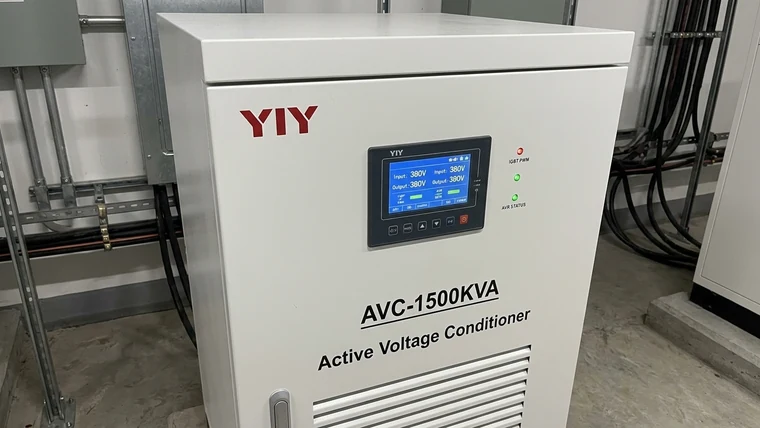
| Technology | How it works | Typical output precision | Best fit | What it means for you |
|---|---|---|---|---|
| Relay stabilizer | Uses electromagnetic relays to switch transformer taps | ±5–8% | General commercial loads, lighting, office equipment, less-sensitive auxiliaries | Lower complexity and fast tap action, but stepped correction and relay wear may not suit sensitive electronics |
| Servo stabilizer | Uses a servo motor and autotransformer to adjust voltage continuously | ±0.5–3%, often about ≤1–2s response | CNC auxiliaries, control panels, lab devices, mixed commercial loads | Better voltage accuracy for sensitive loads, but moving parts need inspection |
| IGBT/static stabilizer | Uses IGBT power electronics and PWM conversion | ±0.5% | Sensitive electronics, automation, medical/lab equipment, highly unstable grids | Tightest regulation and fast electronic correction, usually with higher upfront cost |
A relay voltage stabilizer can be appropriate when your load tolerates wider voltage movement and you want a simpler regulation method. For more sensitive equipment, a single phase servo voltage stabilizer or IGBT/static AVR gives you tighter output control.
The precision numbers are not just technical decoration. ±0.5% means the output stays very close to the target voltage, which helps sensitive electronics and control systems. ±5–8% may be acceptable for less-sensitive equipment, but it gives your load a wider voltage band to absorb.
Response time is also practical. If your grid changes slowly, servo correction may be sufficient. If your site sees rapid swings, generator transitions, or frequent dips, electronic correction may be a better fit.
How Should You Size a 10kVA Stabilizer Single Phase Before Requesting Pricing?
You should size from measured load, power factor, startup current, voltage range, and a 20–30% safety margin before you compare quotes. A useful first-pass formula is:
Required AVR capacity = total running load × 1.2–1.3
That margin means your stabilizer is not operating at its limit every day. If your measured running load is 7.5–8kVA, the margin gives about 9.0–10.4kVA, so a 10kVA unit may fit if startup current is moderate. If your running load is already 9–10kVA, or if motors start frequently, this class is likely too tight.
For a broader procurement workflow, use an industrial voltage stabilizer selection process that checks load, power factor, startup current, input range, phase type, and application sensitivity together.
| Check | Why it matters | If you skip it |
|---|---|---|
| Running load in kW/kVA | Confirms real demand | You may undersize the AVR |
| Power factor | Converts kW to kVA correctly | Capacity can be understated |
| Startup current | Captures motor inrush | The unit may trip or sag at startup |
| Input voltage range | Matches the real grid problem | The AVR may not correct deep sags |
| Target output voltage | Confirms 220/230/240V requirement | Your equipment may receive the wrong output |
| Phase type | Confirms one-phase supply and load | The wrong topology may be quoted |
| Frequency | Matches 50/60Hz site power | Heating or regulation errors may occur |
| Duty cycle | Shows continuous vs intermittent use | Thermal stress may be underestimated |
| Ambient temperature | Affects cooling and derating | Components may age faster |
| Dust and humidity | Determines enclosure and condensation needs | Corrosion, tracking, or faults may occur |
| Protection functions | Covers over/under-voltage, overload, bypass | Fault containment is weaker |
| Metering and alarms | Gives your maintenance workflow visibility | Voltage events stay unexplained |
| Certificates and documents | Supports procurement approval | Compliance review may be delayed |
If you are moving from a dedicated single-phase load to a larger distribution point, do not stretch this same sizing logic too far. Larger three-phase panels need a separate 3 phase main line stabilizer sizing review because load balance, neutral current, motor starting, and panel-level protection change the specification.
What Quote Details Should You Verify Before You Approve a Supplier?
You should approve a quote only after the supplier confirms the electrical specification, protection package, enclosure, documentation, and support terms in writing. The lowest price is difficult to compare if one quotation omits bypass, metering, cabinet protection, certificate copies, or shipping details.
| Check | Why it matters | If you skip it |
|---|---|---|
| Rated kVA and overload rule | Confirms capacity under real load | You may buy a unit that trips under normal use |
| Input voltage range | Defines what the AVR can correct | Deep low voltage may remain unresolved |
| Output accuracy | Shows regulation precision | Sensitive equipment may still misoperate |
| Protection functions | Reduces damage during fault conditions | Faults can transfer more risk to your load |
| Bypass arrangement | Supports service and maintenance | Downtime may be longer during faults |
| Metering and event indication | Helps diagnose voltage problems | Your team may not know what happened |
| Enclosure/IP details | Matches dust, heat, and humidity | The cabinet may fail early in harsh rooms |
| Cooling clearance | Prevents thermal stress | Components may overheat |
| Warranty terms | Defines support responsibility | Lifecycle risk stays unclear |
| Test report or inspection record | Confirms factory verification | Procurement has less evidence |
| Certificates | Supports compliance review | Approval may stall |
| Packing and shipping terms | Prevents landed-cost surprises | Quotes may not be comparable |
For quality-system documentation, ask whether the supplier can provide relevant certificates such as ISO 9001 quality management certification and applicable market-access documents such as CE where required. Your verification action is simple: request certificate copies, confirm the legal manufacturer name, check certificate validity where possible, and match the quoted product category to the document scope.
Pricing for a 10 kva servo stabilizer single phase is usually affected by correction range, output accuracy, copper or aluminum design, cabinet construction, protection functions, metering, customization, certification, and logistics. Treat price as a specification result, not just a number beside “10kVA.”
How Should You Decide Between Single-Phase and Three-Phase?
You should choose single-phase only when both your supply and connected load are single-phase. Three-phase is better only when your site distribution and equipment require it.
A single-phase stabilizer regulates one-phase power, typically for smaller commercial circuits, dedicated equipment, lighting, office loads, control panels, and light-industrial auxiliaries. A three-phase stabilizer regulates three-phase distribution for larger industrial loads, motors, and panels.
Your concrete verification action is to check:
- Incoming breaker type
- Cable arrangement
- Equipment nameplates
- Whether neutral is required
- Load distribution across phases
- Wiring diagram for the protected circuit
- Future expansion plans
If your present load is one-phase but your next expansion moves toward plant-level protection, compare phase and capacity assumptions before buying a voltage stabilizer for a larger class. The decision path in compare before buying a voltage stabilizer can help you avoid carrying a 10kVA assumption into a much larger procurement.
Frequently Asked Questions
What Is a Single Phase Servo Controlled Voltage Stabilizer?
A single phase servo controlled voltage stabilizer is an AVR in which a motor-driven brush moves along an autotransformer winding to hold one-phase AC output steady. It corrects over-voltage and under-voltage for single-phase loads such as controls, office panels, lab devices, lighting, and small machine auxiliaries. Before you buy, verify the nameplate input range, output voltage, frequency, rated kVA, protection functions, and wiring diagram against your site supply.
How Should You Compare Pricing for Servo Stabilizer Single Phase?
Compare single-phase servo stabilizer pricing by specification, not by kVA label alone. Ask each supplier for the same input range, output accuracy, protection functions, enclosure, bypass, metering, warranty, certificates, and shipping terms. Your practical check is to place the quotes side by side and mark whether accessories, testing documents, customization, and freight are included or excluded.
Is It Better to Have 3 Phase or Single-Phase?
Choose three-phase only if both the incoming supply and the connected loads are three-phase. Single-phase is the right fit for one-phase circuits, smaller commercial loads, dedicated equipment, and many control or auxiliary systems. Before approving the topology, verify the incoming breaker, cable arrangement, load nameplates, neutral requirement, and wiring diagram.
What Affects Servo Stabilizer 10kVA Price Single Phase?
Servo stabilizer 10kVA price single phase is affected by correction range, voltage accuracy, copper or aluminum design, enclosure, metering, protection functions, certification, customization, and logistics. Wider input correction, tighter output accuracy, stronger cabinet protection, alarms, bypass, and documentation usually raise cost. For procurement, request a datasheet, test report, warranty terms, certificate copies, and a confirmed packing/shipping quote.
What Should You Check in a Single-Phase Servo Stabilizer Manual?
Check the wiring diagram, input voltage range, output setting, bypass method, overload limit, over/under-voltage protection, time delay, earthing instructions, maintenance schedule, and nameplate data. If your site is dusty, humid, or hot, also confirm enclosure rating, ventilation clearance, condensation control, and alarm or event-log availability.
Final Decision: When Should You Choose This 10kVA Single-Phase Setup?
You should choose this setup when your measured one-phase load stays safely within the 10kVA class, voltage instability is a real operating problem, and the selected relay, servo, or IGBT technology matches your equipment sensitivity. Do not choose it just because the label sounds close to your load; choose it because your load calculation, input range, startup behavior, phase type, and site environment all support the decision.
For a low-friction next step, start with a quick-fit review. Share your load profile, site voltage behavior, phase type, installation environment, and target output requirements with YIY, and the team can recommend whether a 10kVA single-phase AVR, a different technology, or a larger capacity is the safer fit.
About YIY
Zhejiang Yiyen Holding Group Co., Ltd. (YIY) is a professional voltage stabilizer manufacturer with 16+ years of experience. With a 30,000sqm modern facility and an annual production capacity of 1,000,000+ units, YIY products are exported to 130+ countries. YIY provides OEM/ODM customization services and ISO 9001:2015-certified manufacturing support for stable voltage protection solutions.
Contact Us
Email: yiyen@yiyen.com
Phone/WhatsApp: +86 13587452904
Website: https://www.yiyavr.com/