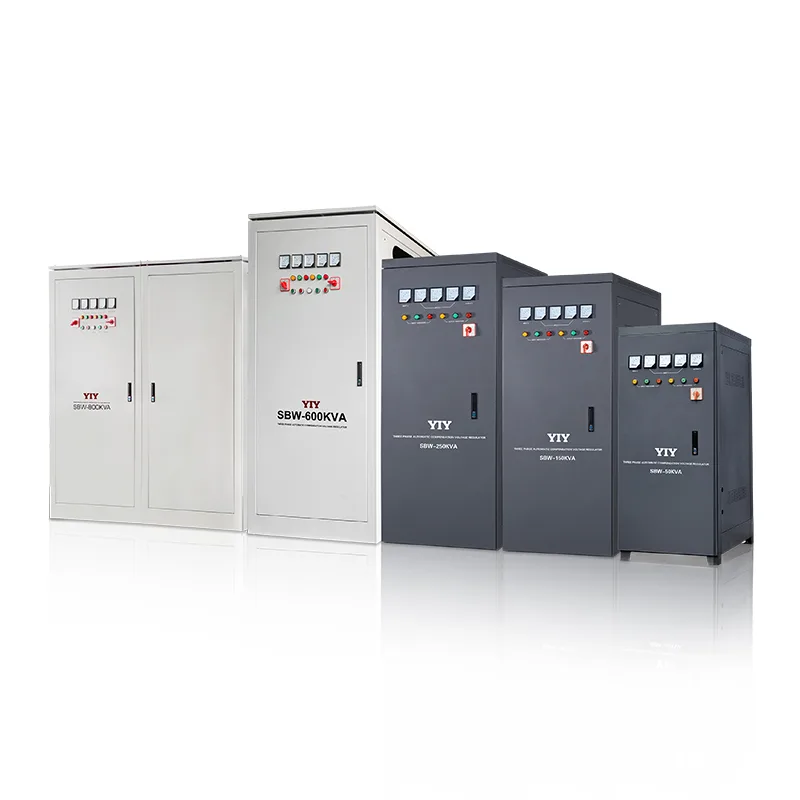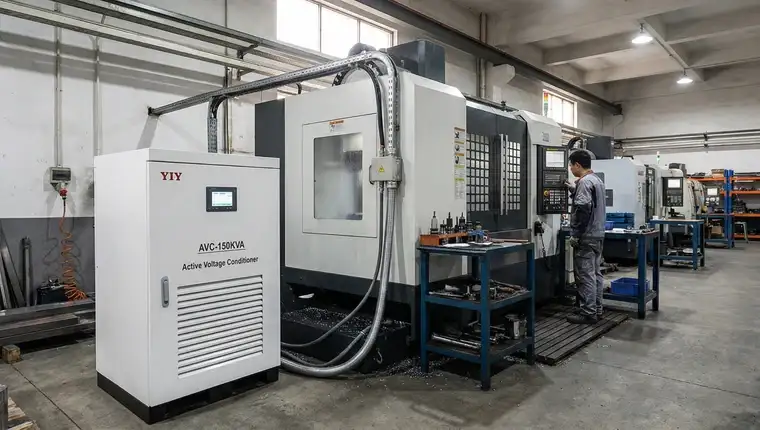
Industrial equipment operating in the 15-20kW range—CNC machines, production lighting, auxiliary systems—faces a common threat: voltage instability from utility grids causes unplanned downtime, component damage, and production losses. A 20kVA voltage stabilizer addresses this by maintaining constant output despite input fluctuations, but selecting the right unit requires evaluating three competing technologies (relay, servo, IGBT), calculating proper safety margins, and matching precision requirements to actual load profiles.
This guide walks engineers and procurement teams through the technical decision framework: how to size a 20kVA unit correctly, which technology fits which application, what standards and certifications matter for global deployment, and where manufacturer capabilities—technology range, OEM/ODM support, compliance documentation—separate viable suppliers from limited options.
What a 20kVA Voltage Stabilizer Is and Why It Matters
A 20kVA voltage stabilizer is an automatic voltage regulation (AVR) device that maintains constant output voltage regardless of input fluctuations, sized to protect industrial equipment loads in the 16-20kW range with appropriate safety margins. The “20kVA” rating indicates the maximum apparent power capacity the unit can handle continuously, making it suitable for mid-sized industrial installations where voltage instability threatens equipment reliability and production uptime.
The Problem: Grid Voltage Instability
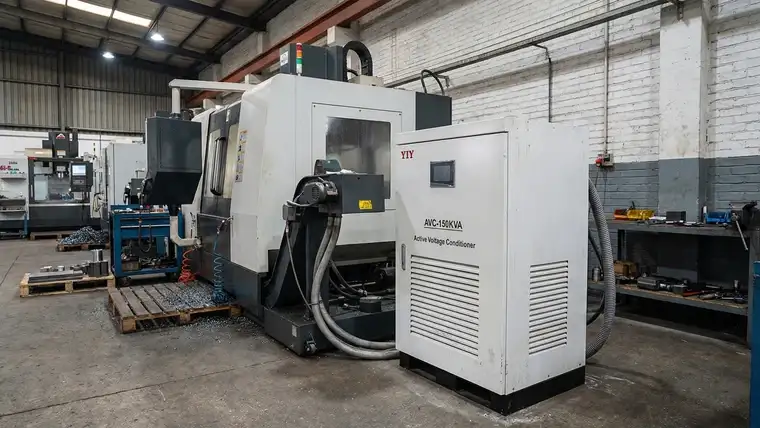
Utility grids commonly experience voltage sags (brownouts), surges, and sustained over/under-voltage conditions caused by load switching, transformer tap changes, or infrastructure limitations. These fluctuations damage sensitive electronics, cause motor overheating, trigger nuisance shutdowns, and reduce equipment lifespan. Without voltage protection, a CNC machine operating on unstable power may produce out-of-spec parts, while lighting systems experience flicker and premature ballast failure.
Three Technology Approaches
20kVA stabilizers are available in three distinct technologies, each trading precision for cost and response characteristics. Relay-type stabilizers use electromagnetic relays to switch transformer taps, delivering ±5-8% output precision with fast response times—suitable for general industrial loads where moderate voltage tolerance is acceptable. Servo stabilizers employ a motor-driven variable transformer (variac) to provide continuous voltage correction, balancing industrial-grade precision (typically ±1-3%) with reliability and cost—the most common choice for CNC machines, injection molding, and process equipment. IGBT-based stabilizers use solid-state switching to achieve ±0.5% precision with 10ms correction speed, reserved for mission-critical applications like medical equipment, data centers, or precision manufacturing where voltage deviation cannot be tolerated.
Typical Applications
The 20kVA capacity range commonly protects CNC machining centers (15kW spindle + auxiliaries), industrial lighting circuits (multiple high-bay fixtures), packaging line controllers, and auxiliary equipment clusters where combined loads fall within the 16-20kW envelope after applying 1.2-1.3× safety margins.
Who Needs 20kVA Protection and What to Evaluate
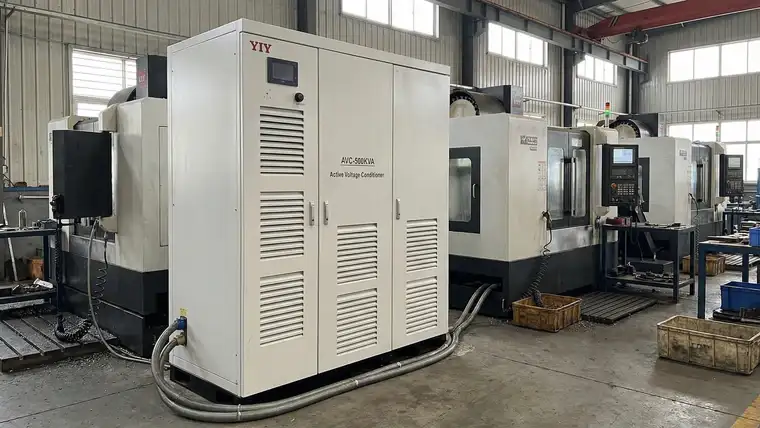
Industrial engineers sizing voltage protection for 15-20kW equipment installations face a practical buying job: preventing unplanned downtime and component damage from grid voltage instability. Facility managers responsible for CNC machining centers, production lighting circuits, packaging lines, and auxiliary equipment clusters in this power range must evaluate stabilizer options against four critical dimensions: load profile characteristics, site voltage conditions, environmental factors, and application criticality.
The decision context centers on risk mitigation rather than feature comparison. A CNC machine operating on unstable power produces out-of-specification parts and triggers costly production stops; lighting systems experience flicker and premature ballast failure; process controllers reset unexpectedly. Procurement teams evaluating 20kVA stabilizers must match technology precision to actual tolerance requirements—relay-type units (±5-8% output precision) suit general industrial loads where moderate voltage variation is acceptable, servo stabilizers (±1-3% precision) balance industrial-grade accuracy with reliability for most CNC and process equipment, while IGBT-based units (±0.5% precision, 10ms correction) address mission-critical applications where voltage deviation cannot be tolerated.
Load profile analysis drives proper sizing: calculate total connected load (e.g., 15kW CNC spindle + 2kW lighting + 3kW auxiliaries = 20kW), apply 1.2-1.3× safety margin (20kW × 1.25 = 25kVA), then select the next standard capacity up (30kVA). Site voltage range—input fluctuation severity, frequency of sags/surges, presence of harmonics—determines required input tolerance and correction speed. Environmental conditions (temperature, humidity, dust, altitude) affect derating and enclosure requirements. Application criticality establishes acceptable downtime risk and precision thresholds.
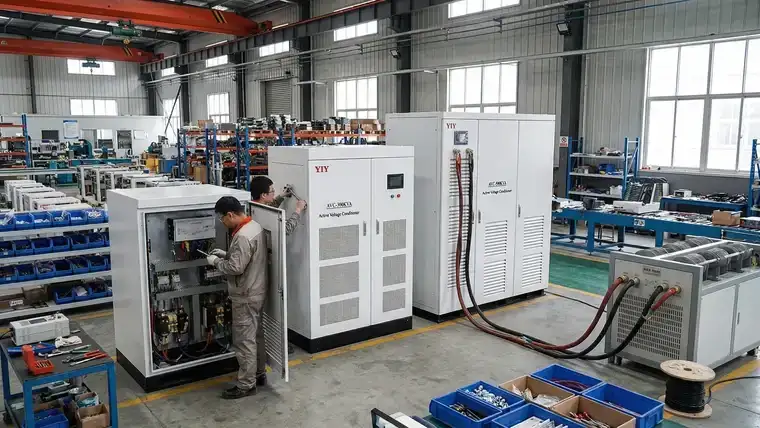
For detailed Voltage Stabilizer 20kva Price Guidevoltage stabilizer 20kva pricing evaluation that balances technology selection with procurement budgets, procurement teams should consider total cost of ownership including installation, maintenance, and downtime risk rather than initial purchase price alone.
Sizing Methodology and Technology Selection
Proper 20kVA stabilizer sizing follows a straightforward formula: calculate total connected load, then apply a 1.2-1.3× safety margin to account for inrush current, future expansion, and load diversity. This margin prevents overloading during startup transients and provides headroom for equipment additions without requiring immediate capacity upgrades. For comprehensive Voltage Stabilizer 3 Kva Sizing Guidevoltage stabilizer sizing methodology applicable across capacities, the same principles apply whether sizing 3kVA or 20kVA units.
Worked Sizing Example
Consider a typical industrial installation: a 15kW CNC machining center, 2kW of production lighting, and 3kW of auxiliary equipment (controllers, cooling fans, monitoring systems). Total connected load equals 20kW. Applying the standard 1.25× safety factor yields 25kVA apparent power requirement. Since stabilizers are sold in standard capacities, select the next size up—in this case, a 30kVA unit—to ensure adequate margin under all operating conditions.
Technology Selection Framework
Three stabilizer technologies address different precision and cost requirements. For detailed 20kva Voltage Regulator Guide20kVA voltage regulator comparison specific to this capacity, buyers should evaluate relay, servo, and IGBT options against application-specific voltage tolerance requirements.
| Technology | Output Precision | Response Time | Best Application | Cost Level |
|---|---|---|---|---|
| Relay | ±5-8% | <1 second | General industrial loads, lighting circuits | Low |
| Servo | ±1-3% | 20-50ms | CNC machines, injection molding, process control | Medium |
| IGBT | ±0.5% | 10ms | Medical equipment, data centers, precision manufacturing | High |
Relay-type stabilizers use electromagnetic contactors to switch transformer taps, delivering ±5-8% output precision with response times under one second—suitable for general industrial loads where moderate voltage tolerance is acceptable and cost efficiency matters. Servo stabilizers employ motor-driven variable transformers (variacs) for continuous voltage correction, providing ±1-3% precision with balanced cost and reliability—the standard choice for CNC machines, injection molding equipment, and process control systems requiring industrial-grade accuracy. IGBT-based stabilizers use solid-state switching to achieve ±0.5% precision with 10ms correction speed, reserved for mission-critical applications like medical equipment, data centers, or precision manufacturing where voltage deviation directly impacts product quality or safety.
Input Range and Phase Configuration
Input voltage range determines stabilizer capability to handle grid fluctuations—units supporting wider input ranges (e.g., 160-260V versus 190-250V) provide better protection in areas with severe voltage instability but typically cost more. Output precision requirements should match equipment sensitivity: general machinery tolerates ±5% variation, while sensitive electronics require ±1% or tighter. Phase configuration depends on load type: single-phase stabilizers suit lighting circuits and small equipment up to 20kW, while 3 Phase Voltage Stabilizer 20kva Type Selectionthree-phase voltage stabilizer sizing becomes mandatory for motors, industrial machinery, and balanced loads exceeding 15kW to prevent phase imbalance and neutral current issues.
Standards, Certifications, and Quality Evidence
Industrial voltage stabilizer procurement decisions require documented compliance with international standards and third-party certifications that validate design quality, manufacturing consistency, and regulatory conformance. For 20kVA units deployed across multiple jurisdictions, the right certifications reduce procurement risk, simplify customs clearance, and provide audit-ready documentation for facility compliance reviews.
IEC 60038 Voltage Standards Compliance
153IEC 60038 standard defines standard voltage ranges for electrical installations worldwide, establishing the technical baseline for voltage stabilizer input tolerance and output regulation. Compliant 20kVA stabilizers accept input voltage variations within ±10% of nominal (e.g., 198-242V for 220V systems, 108-132V for 120V systems) and maintain stable output within specified limits. Units meeting this standard include automatic alarm functions that trigger when input voltage exceeds the ±10% tolerance window, protecting downstream equipment from out-of-specification conditions that could cause damage or malfunction.
ISO 9001:2015 Quality Management
62085.htmlISO 9001:2015 quality management standard certification validates that the manufacturer maintains documented quality management systems covering design, production, testing, and service processes. For voltage stabilizers, this certification ensures consistent manufacturing practices, traceability of components, calibration of test equipment, and systematic handling of non-conformances. Procurement teams should verify that ISO 9001 scope explicitly covers voltage stabilizer design and manufacturing, not just general electrical products.
Environmental and Market Access Certifications
ISO 14001 environmental management certification demonstrates systematic control of manufacturing environmental impacts—relevant for buyers with supplier sustainability requirements or ESG reporting obligations. CE marking is mandatory for voltage stabilizers sold in EU markets, confirming conformance with Low Voltage Directive (LVD) and Electromagnetic Compatibility (EMC) Directive requirements. For global deployments, verify that the manufacturer holds certifications for target markets rather than relying on self-declared compliance.
Factory Testing and Validation
Industrial 20kVA stabilizers require factory acceptance testing (FAT) before shipment: full-load burn-in testing (typically 4-8 hours), input voltage range verification across the specified tolerance band, output regulation accuracy measurement under varying loads, and protection function validation (over-voltage, under-voltage, overload, short-circuit). Request test reports and witness testing for high-value orders or mission-critical applications.
YIY’s 20kVA Solutions and Implementation Support
YIY addresses the 20kVA voltage stabilization requirement across all three technology platforms—relay, servo, and IGBT—allowing buyers to match precision, response characteristics, and cost to actual application needs rather than forcing load requirements into available product constraints. This full-spectrum capability, combined with global deployment experience and OEM/ODM customization services, positions YIY differently from competitors offering single-technology solutions or limited capacity ranges.
Complete Technology Range in 20kVA Capacity
YIY manufactures 20kVA stabilizers in relay-type (±5-8% precision, fast tap switching), servo-motor (±1-3% precision, continuous correction), and IGBT-based (±0.5% precision, 10ms response) configurations. Buyers evaluating CNC machines, production lighting, or auxiliary equipment clusters can select the technology that matches equipment voltage tolerance without over-specifying precision or accepting inadequate protection. When Related pageevaluating industrial voltage stabilizer manufacturers, procurement teams should assess technology breadth, global deployment experience, and OEM/ODM capabilities rather than accepting single-technology constraints.
Global Deployment and Manufacturing Scale
With 16+ years specializing in voltage stabilization technology, YIY has deployed stabilizers to 130+ countries, accumulating field experience across utility grid conditions, environmental extremes, and regulatory frameworks. The company operates a 30,000㎡ manufacturing facility with 1,000,000+ unit annual production capacity, supporting both standard product delivery and custom OEM/ODM projects. This scale and geographic reach provide access to application data, failure mode analysis, and design refinements that inform product reliability—particularly relevant for buyers deploying 20kVA units in regions with severe voltage instability or harsh operating environments.
OEM/ODM Customization vs. Standard-Only Offerings
YIY provides OEM/ODM customization services for 20kVA stabilizers, allowing buyers to specify input voltage ranges, output precision, enclosure ratings (IP protection), communication protocols, and branding requirements. This capability addresses procurement scenarios where standard catalog products do not match site-specific voltage conditions, space constraints, or integration requirements with existing control systems. Competitors offering only standard configurations force buyers to accept specification compromises or pursue costly field modifications after delivery.
Engineering Consultation and Implementation Support
YIY’s technical team provides site assessment services to evaluate input voltage range, load profile characteristics, environmental conditions, and installation requirements before recommending specific 20kVA models. Implementation support includes installation guidance, commissioning procedures, and functional testing protocols to verify voltage regulation performance under actual site conditions. This engineering consultation reduces deployment risk for buyers unfamiliar with voltage stabilizer sizing or facing complex multi-equipment installations where load diversity and startup sequencing affect stabilizer selection.
Frequently Asked Questions
What load calculation method should I use to size a 20kVA voltage stabilizer?
Calculate total connected load in kilowatts (e.g., 15kW CNC machine + 2kW lighting + 3kW auxiliaries = 20kW), then apply a 1.2-1.3× safety margin to account for inrush current and future expansion. For this example: 20kW × 1.25 = 25kVA apparent power requirement. Select the next standard capacity up (30kVA) to ensure adequate margin under all operating conditions, including motor startup transients and simultaneous equipment operation.
How do I choose between Relay, Servo, and IGBT technology for 20kVA applications?
Match technology precision to equipment voltage tolerance requirements. Relay-type stabilizers (±5-8% output precision) suit general industrial loads where cost efficiency matters. Servo stabilizers (±1-3% precision) provide the industrial balance of accuracy, reliability, and cost for CNC machines and process equipment. IGBT-based units (±0.5% precision, 10ms correction) address mission-critical applications like medical equipment or precision manufacturing where voltage deviation directly impacts product quality or safety.
What certifications and standards should a 20kVA industrial stabilizer meet?
IEC 60038 compliance ensures the unit accepts ±10% input voltage variation and maintains stable output within specified limits. ISO 9001:2015 certification validates consistent manufacturing quality and traceability. CE marking is mandatory for EU markets, confirming Low Voltage Directive and EMC compliance. For global deployments, verify the manufacturer holds certifications for your target markets and can provide factory acceptance test reports documenting full-load performance, input range verification, and protection function validation.
Final Thoughts
Selecting a 20kVA voltage stabilizer comes down to matching technology precision to equipment tolerance requirements, calculating proper safety margins, and verifying manufacturer capabilities against deployment needs. The decision framework is straightforward: relay-type units suit general industrial loads where ±5-8% variation is acceptable, servo stabilizers provide the industrial balance of ±1-3% precision with reliability for CNC and process equipment, and IGBT-based units deliver ±0.5% precision for mission-critical applications. Sizing follows a consistent formula—total connected load multiplied by 1.2-1.3× safety margin, then selecting the next standard capacity up.
The evidence reviewed here establishes the technical selection criteria and standards requirements (IEC 60038, ISO 9001/14001, CE marking), but lacks exact 20kVA model specifications for input voltage range, phase configuration, and pricing from YIY’s product line. These details matter for final procurement decisions and site-specific deployment planning.
If your facility operates equipment in the 15-20kW range and faces voltage instability, share your load profile, site voltage conditions, and output precision requirements with YIY’s engineering team. They can recommend the specific model configuration—technology type, input range, phase setup—that matches your application rather than forcing your requirements into standard catalog constraints.
About YIY
Zhejiang Yiyen Holding Group Co., Ltd. (YIY) is a professional voltage stabilizer manufacturer with 16+ years of experience. With a 30,000sqm modern facility and an annual production capacity of 1,000,000+ units, our products are exported to 130+ countries. We provide OEM/ODM customization services and are ISO 9001:2015 certified, committed to delivering stable and reliable voltage protection solutions to global customers.
Contact Us
Email: yiyen@yiyen.com
Phone/WhatsApp: +86 13587452904
Website: https://www.yiyavr.com/
If you found this article helpful, contact us for a sizing review or customized solution.