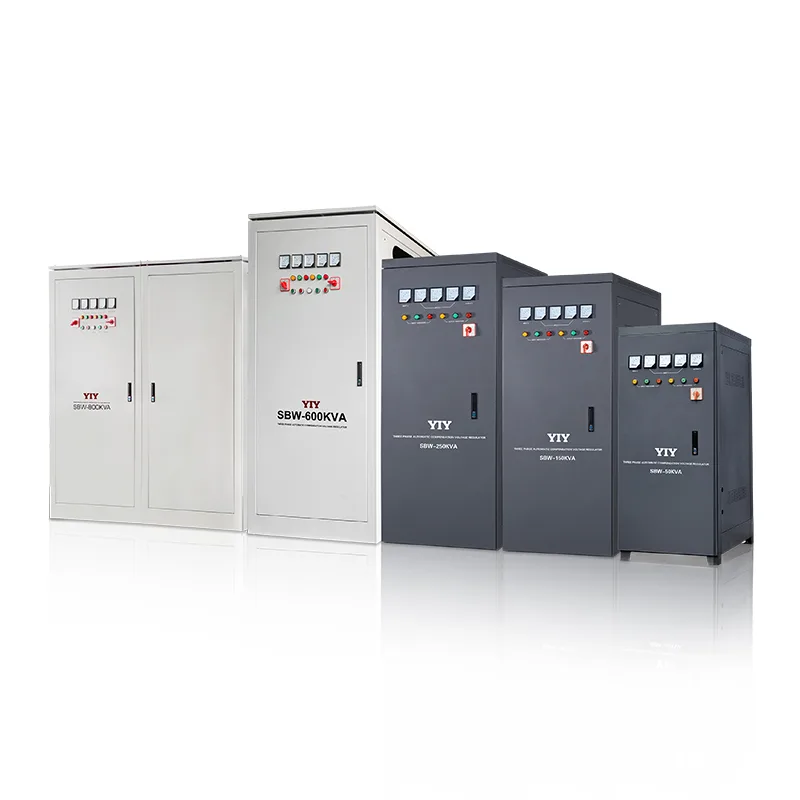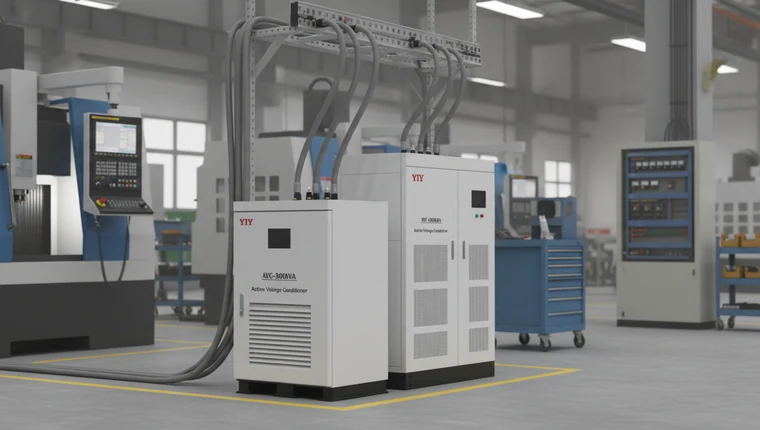
If you are comparing voltage stabilizer 20kva price only by the number at the bottom of a quotation, you are taking more risk than you think. In this capacity range, a cheap offer often hides a narrow input window, unclear duty-cycle assumptions, light-duty components, or almost no engineering support after shipment. Procurement teams do not need the lowest figure. They need a quote that matches the real load, the real site voltage, and the real service expectations of the project.
Price is easy to compare. Specification integrity is where projects are won or lost.
Why voltage stabilizer 20kva price is not a simple commodity number
A 20 kVA stabilizer sits in an awkward but important middle band. It is large enough to protect value-critical loads such as CNC cells, printing equipment, packaging lines, laboratory devices, and mixed commercial panels. It is also small enough that many suppliers market it as a standard product even when the application is not standard at all.
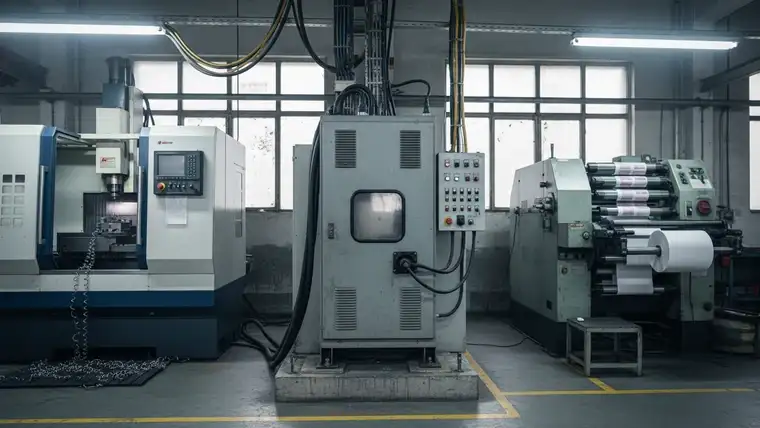
That is why voltage stabilizer 20kva price varies so much from supplier to supplier. The price changes with phase type, voltage range, technology, output accuracy, overload tolerance, enclosure level, and whether the supplier is quoting a real factory-built unit or a generic trading item. When buyers compare offers without normalizing those variables, they are not comparing like for like.
For a sourcing team, the first job is to define the buying context:
- Is the project single-phase or three-phase?
- Is the load mostly resistive, mixed, or motor-heavy?
- What is the worst-case input voltage range on site?
- Does the line need servo, relay, or static control logic?
- Is the unit for continuous industrial duty or only occasional correction?
Those questions matter more than the headline price. They also explain why procurement teams often cross-check content about industrial voltage stabilizer manufacturers before they issue an RFQ.
The specification items that should exist before you compare quotes
Before asking for a price, build a short technical brief. A stabilizer that protects a stable office feeder is not the same product as one supporting a noisy production line. The same 20 kVA label can describe very different machines.
At minimum, your RFQ should state load power, phase type, nominal voltage, expected input fluctuation, ambient temperature, installation location, and overload behavior. If you skip those items, suppliers will fill the gaps with assumptions that make their offer look competitive.
The sizing rule from YIY’s internal guidance is straightforward: total connected load should normally be multiplied by 1.2 to 1.3 to provide a working margin. A 20 kW mixed load therefore often points to a 25-30 kVA stabilizer instead of a true 20 kVA unit. This is especially relevant when the project includes motors, compressors, or rapid load variation.
Here is the practical checklist procurement teams can use before requesting a final quotation:
| RFQ item | Why it changes price | What a qualified supplier should provide |
|---|---|---|
| Input voltage range | Wider ranges require heavier design and different control strategy | A stated operating range and correction behavior |
| Phase type | Three-phase units need different architecture and balancing logic | Single-phase or three-phase confirmation |
| Output accuracy | Tight tolerance raises control and component requirements | A clear accuracy figure such as +/-1%, +/-2%, or +/-3% |
| Load profile | Motor starting and cyclic loads affect sizing | Recommended capacity with margin explanation |
| Technology | Servo, relay, and IGBT do not carry the same cost or maintenance profile | Technology recommendation tied to the application |
| Compliance | IEC-aligned design, CE, and quality certification affect long-term trust | Documentation package and test records |
| Service terms | Support, spare parts, and warranty shape total project cost | Response scope, spare policy, and lead time |
Many buyers search voltage stabilizer selection advice at this point, because the pricing question is really a selection question in disguise.
How to read market price references without being misled
Public listings can be useful as rough market context, but they are a weak foundation for a sourcing decision. In the current research set, outside price references for 20 kVA units are disputed rather than fully confirmed. One listing shows a much higher single-phase benchmark, while open marketplace listings show much lower figures for generic products. That gap tells you less about the “correct” price and more about how inconsistent the underlying products are.
Use public pricing only for directional checks:
- Treat open listing prices as a starting signal, not a purchasing standard.
- Ask what is excluded: freight, taxes, bypass, enclosure rating, accessories, testing, and documentation.
- Confirm whether the listed unit is single-phase or three-phase.
- Verify whether the accuracy claim applies across the full input range.
- Check if the seller is a manufacturer, assembler, or reseller.
The real question is not whether one quote is 15% lower. The real question is whether that 15% discount comes from a narrower design envelope, lighter component selection, weaker QA, or missing after-sales responsibility.
The cheapest quote is often just the least complete quote.
How technology choice changes procurement value
A meaningful voltage stabilizer 20kva price review also has to account for topology. YIY’s confirmed internal documentation distinguishes three common paths: servo, relay, and IGBT.
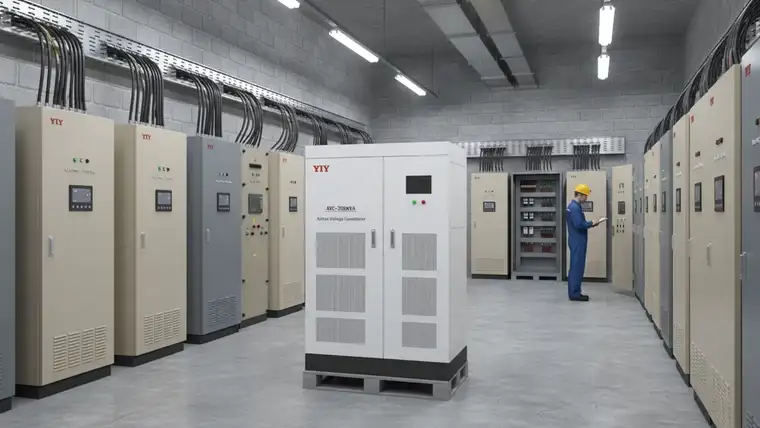
Servo stabilizers are usually the industrial balance point. They offer good accuracy, wide voltage adaptability, and proven behavior in mixed-load environments. For plants that need stable correction without jumping to the cost of a static platform, servo remains the most common answer.
Relay stabilizers are more cost-sensitive. They can work when the load is lighter, the tolerance band is looser, and the buyer wants a faster, lower-cost correction method. But problem projects start when buyers use a relay design in a site that actually needs tighter regulation or heavier-duty operation.
IGBT or static platforms fit the high-precision end. They make sense when the project involves sensitive electronics, critical automation, or a process where correction speed and output quality justify a higher initial budget. If the team needs a deeper engineering comparison, a technical article on servo vs. IGBT technology is often the right follow-up before finalizing the vendor shortlist.
In other words, price should be compared inside the right technology bucket. A relay offer beating a servo quote on price is not a discovery. It is just a different product category.
Questions that separate a qualified factory from a risky supplier
Procurement teams should evaluate supplier capability with the same discipline they use for component approval. A vendor quoting a stabilizer is not automatically a manufacturer with controlled production, application engineering, and repeatable QA.
Here are the checkpoints that matter most:
- Can the supplier explain recommended capacity instead of only repeating the requested kVA?
- Can they map the application to a suitable control technology?
- Can they provide incoming inspection, routine test, and final test documentation?
- Can they explain how the product aligns with IEC 60038 nominal voltage expectations?
- Can they discuss electromagnetic compatibility and design implications connected to IEC 61000 requirements?
- Can they show quality-system evidence such as ISO 9001:2015 and relevant export certifications?
This is where previously published content on power issues in manufacturing facilities becomes useful. It helps buyers see whether the supplier understands real site conditions such as brownouts, unstable feeders, and mixed industrial loads instead of only publishing polished catalog copy.
If your project includes machine tools, another smart check is whether the supplier can talk concretely about servo stabilizer for CNC machines. Buyers do not need theory alone. They need proof that the vendor has already solved similar load behavior in the field.
A practical quotation comparison framework for sourcing teams
When the quotations arrive, normalize them line by line. A simple spreadsheet can hide critical differences if it only compares unit price, lead time, and payment terms.
Use a review structure like this:
| Comparison point | Supplier A | Supplier B | What procurement should ask |
|---|---|---|---|
| Rated capacity basis | 20 kVA | 20 kVA | Was margin included or not? |
| Phase and voltage | Single-phase 220V | Three-phase 380V | Are we even comparing the same application? |
| Input range | 160-250V | 304-456V | Which one matches the site survey? |
| Accuracy | +/-3% | +/-1 to 2% | Does the process require tighter control? |
| Technology | Relay | Servo | Is the lower-cost option acceptable for duty cycle? |
| Compliance docs | Basic CE statement | Full test + quality docs | Which one satisfies customer approval? |
| Support | Email only | Engineering review + spare advice | Which one reduces commissioning risk? |
This type of table changes the internal conversation. Instead of asking “Which quote is cheapest?” the team starts asking “Which quote is complete, supportable, and aligned with the plant requirement?”
That is exactly how procurement avoids false savings.
How YIY supports RFQ review for 20 kVA projects
YIY’s industrial positioning is not built around one model only. The company manufactures across servo, relay, and precision-focused platforms, with a broader capacity range from 0.5 kVA to 3000 kVA and export experience across 130+ countries. For a buyer, that matters because the supplier can review the project before forcing it into one narrow catalog slot.
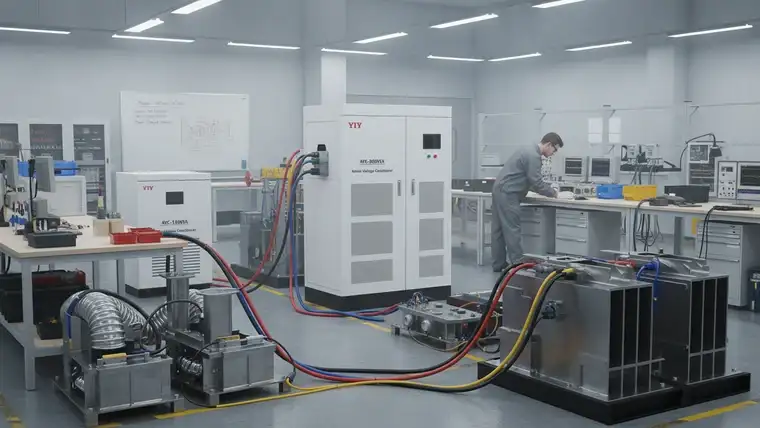
In a typical 20 kVA sourcing workflow, YIY engineering will first confirm the actual load profile, site voltage range, and phase configuration. Then the team matches the project to the correct technology path and clarifies whether the requested 20 kVA is the working size or whether a 25-30 kVA recommendation is safer. That process is much closer to technical support than to blind quotation.
For procurement managers, this is the practical value of working with a manufacturer instead of a copy-and-paste trader:
- The quotation can reflect the actual duty profile.
- The documentation package can support customer approval.
- The product family can be adjusted if the project changes.
- OEM or ODM requirements can be discussed before production starts.
If your team is already comparing industrial voltage stabilizer manufacturers, that is the lens to keep. The supplier should help de-risk the RFQ, not simply respond to it.
FAQ: what procurement teams usually ask
What should buyers evaluate before choosing voltage stabilizer 20kva price?
Start with phase type, input voltage range, load profile, and required output accuracy. Then verify technology, compliance documents, testing scope, and after-sales support. Price only becomes meaningful after those items are normalized.
When is voltage stabilizer 20kva price a useful search term?
It is useful at the shortlist stage, when buyers want budget direction and supplier comparison. It is less useful during final approval unless the RFQ already defines the true technical requirement.
How should voltage stabilizer 20kva price be sized or specified?
Use total connected load plus a 20-30% margin as the starting rule. If the site includes motors or unstable supply conditions, validate the final capacity with an engineering review instead of relying on nominal load alone.
Is a public marketplace listing enough to benchmark a purchase?
No. Public listings are best treated as directional references because the product scope, phase type, included features, and duty assumptions are often inconsistent across vendors.
Final Thoughts
The smartest way to evaluate voltage stabilizer 20kva price is to stop treating it as a catalog number and start treating it as a sourcing risk question. Once the application, technology, standards, and support scope are clear, the right quote usually becomes obvious.
The core procurement principle is simple: compare complete solutions, not incomplete numbers. That mindset protects margin, commissioning schedules, and customer trust.
If you are preparing an RFQ, send YIY your load profile, voltage range, target market, and compliance requirements. The engineering team can help confirm whether a 20 kVA design is correct, whether a larger margin is safer, and which product route will make the quotation truly comparable.
About YIY
Zhejiang Yiyen Holding Group Co., Ltd. (YIY) is a professional voltage stabilizer manufacturer with 16+ years of experience. With a 30,000 sqm modern facility and an annual production capacity of 1,000,000+ units, our products are exported to 130+ countries. We provide OEM/ODM customization services and are backed by ISO 9001:2015 quality management.
Contact Us
Email: yiyen@yiyen.com
Phone/WhatsApp: +86 13587452904
Website: https://www.yiyavr.com/