
Three Phase vs Single Phase Voltage Stabilizer: A Comprehensive Guide

Three Phase vs Single Phase Voltage Stabilizer: Which Is Right for You?
An objective comparison to guide your voltage stabilization choice

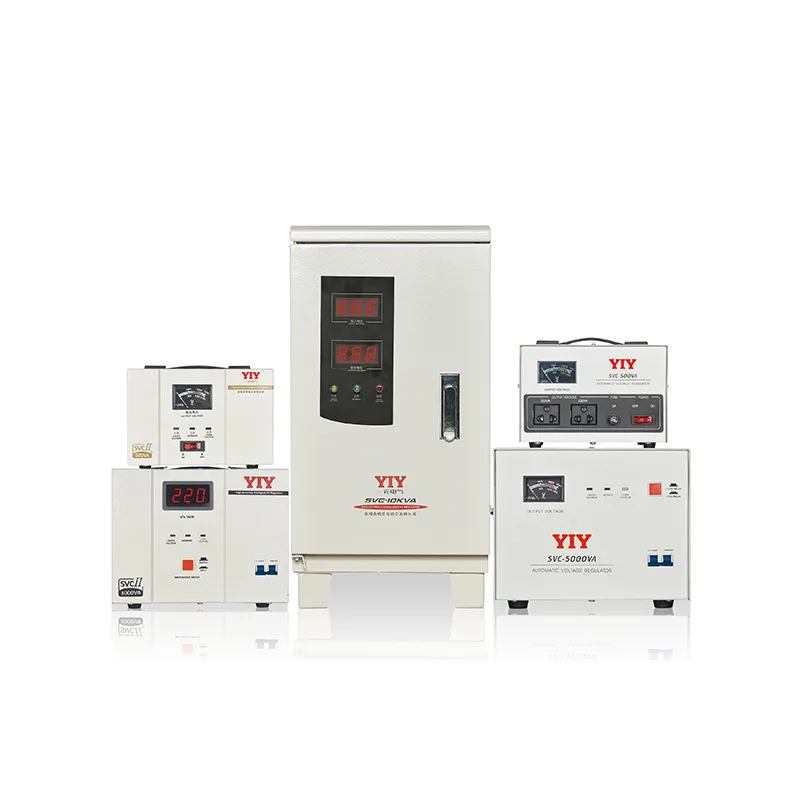
Detailed Comparison: Three Phase vs Single Phase Voltage Stabilizers
Voltage stabilizers are crucial for protecting electrical equipment from grid fluctuations. The choice between a Three Phase and Single Phase unit depends primarily on the electrical supply system and the connected load requirements. This analysis outlines the technical and practical distinctions to assist in selecting the appropriate stabilizer.
| Criterion | Three Phase | Single Phase | Winner |
|---|---|---|---|
| Power Supply System |
3-wire or 4-wire AC system
Designed for electrical systems where power is distributed using three alternating currents, typically 120 degrees out of phase with each other. Common in industrial, commercial, and large residential applications.
|
2-wire AC system (phase and neutral)
Suitable for electrical systems where power is supplied through a single alternating current. Predominantly used in small residential, office, and light commercial settings.
|
Tie |
| Capacity Range |
Typically 10KVA to 3000KVA
Optimized for high-power applications, capable of handling substantial loads. YIY offers capacities up to 3000KVA for industrial machinery, data centers, and entire facilities.
|
Typically 500VA to 50KVA
Suited for lower power requirements, protecting individual appliances or small clusters of equipment. YIY provides units from 500VA for domestic and small office use.
|
A |
| Load Type |
Heavy industrial machinery, HVAC systems, elevators, data centers
Handles balanced and unbalanced three-phase loads, essential for motors, pumps, and other high-power equipment that rely on three-phase input for efficient operation.
|
Household appliances, office equipment, lighting, small motors
Designed for resistive, inductive, and capacitive loads commonly found in single-phase applications, such as refrigerators, computers, televisions, and small air conditioners.
|
Tie |
| Output Voltage Stability |
Independent phase regulation or common regulation
Advanced models offer independent phase regulation, ensuring each phase’s output voltage is stabilized individually, critical for sensitive three-phase equipment and unbalanced loads. YIY’s SBW/PWR series exemplifies this.
|
Direct regulation of single output voltage
Regulates the single output voltage to a stable level, protecting connected single-phase devices from sags and surges. YIY’s SVC/AVR series provides precise single-phase stabilization.
|
A |
| Cost & Complexity |
Higher initial cost, more complex installation
Due to increased components, larger transformers, and sophisticated control systems for three phases, these units generally have a higher purchase price and require professional installation.
|
Lower initial cost, simpler installation
With fewer components and simpler circuitry, single-phase stabilizers are typically more affordable and easier to install, often plug-and-play for lower capacities.
|
B |
| Physical Footprint |
Larger and heavier
Their robust construction and higher capacity necessitate a larger physical size and weight, often requiring dedicated space and sturdy installation.
|
Compact and lighter
Designed for smaller loads, these units are more compact and lighter, making them suitable for desktop use or wall mounting in limited spaces.
|
B |
Product Lineup Side-by-Side
Which Should You Choose?
Choose Three Phase When…
- Your facility operates on a three-phase power supply.
- You need to protect heavy industrial machinery, large HVAC systems, or data centers.
- Your total power requirement exceeds 10KVA and involves motor loads.
- Voltage fluctuations across different phases are a concern, requiring independent phase regulation.
Choose Single Phase When…
- Your power supply is single phase (standard residential or small office).
- You need to protect individual household appliances, office equipment, or small electronic devices.
- Your total power requirement is below 50KVA.
- Cost-effectiveness and compact size are primary considerations for smaller loads.
Customized Capacity Recommendations
Need Assistance with Your Choice?
Our experts are ready to help you specify the ideal voltage stabilizer.
Request QuoteFrequently Asked Questions
What is the primary difference between Three Phase and Single Phase power?
Can a single-phase stabilizer be used on a three-phase supply?
Can a three-phase stabilizer stabilize an unbalanced load?
What are the common applications for Three Phase voltage stabilizers?
What are the common applications for Single Phase voltage stabilizers?
Does YIY offer both Three Phase and Single Phase voltage stabilizers?
How do I determine if I need a Three Phase or Single Phase stabilizer?
Explore More Voltage Stabilizer Solutions
Browse other selection dimensions to find the right fit for your project.
By Industry
By Technology
By Country
Get Expert Recommendation
Tell us your application and load profile — our engineers will recommend the right technology for your project.
Error: Contact form not found.