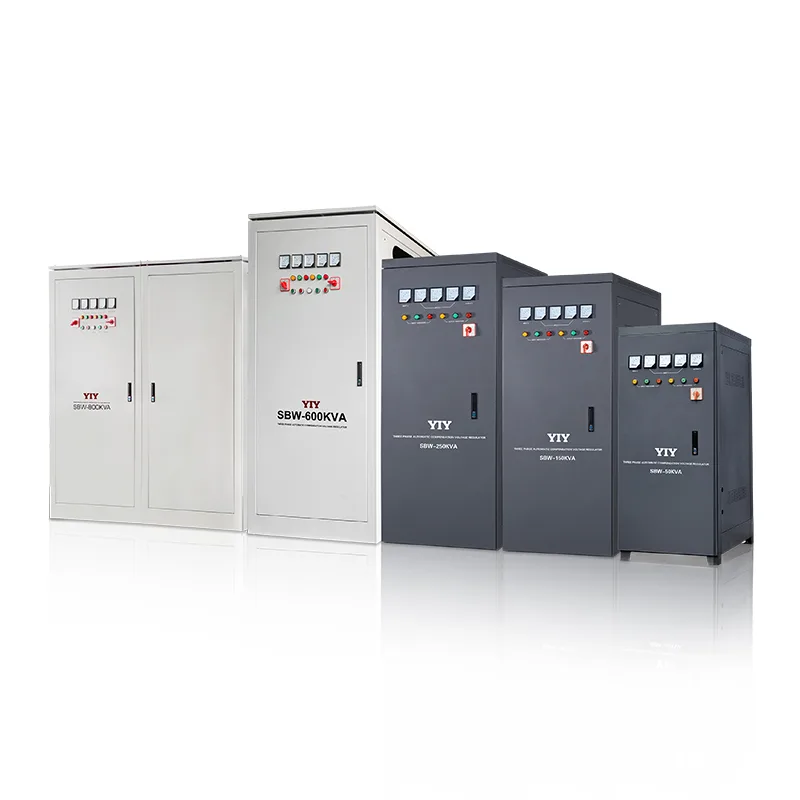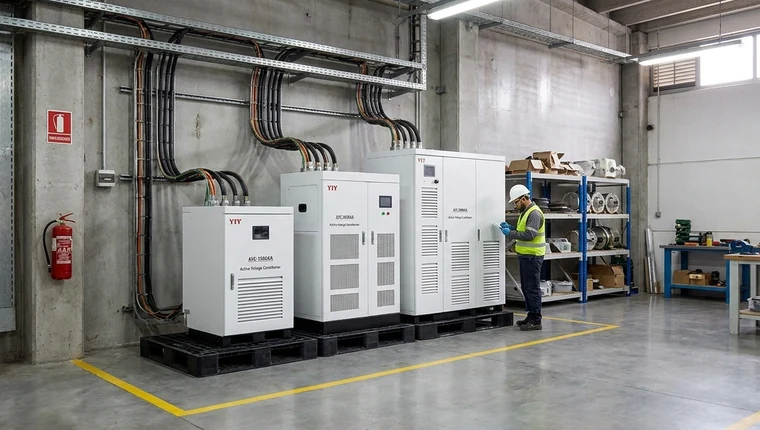
An AC voltage conditioner for generators should be checked for voltage range, load sensitivity, correction technology, response time, bypass and protection design, site environment, and standards alignment before procurement, especially when generator AVR control is not enough for sensitive loads.
If your generator feeds CNC machines, medical equipment, telecom systems, or other voltage-sensitive loads, the decision is not just “conditioner or no conditioner”; it is whether a voltage stabilizer, active voltage conditioner, line voltage conditioner, or power conditioner matches the real fault pattern. IEC 60038 defines standard voltage tolerances around ±10%, while IEC 61000-4-30 supports power quality measurement methods for verifying sags, swells, and interruptions. Next, we will map problem fit, conditioning options, working principles with generator AVRs, sizing checks, and final FAQ decisions.
When does generator output need external voltage conditioning?
Generator output needs external voltage conditioning when your built-in AVR is good enough for basic regulation but not fast, precise, or protective enough for sensitive loads, unstable loading, severe voltage fluctuation, or generator-to-grid transfer events. If your generator feeds CNC machines, medical devices, telecom racks, HVAC controls, elevators, process lines, or PLC-based systems, the buying question is not “does the generator have AVR?” but “does the load tolerate what the AVR cannot correct?”
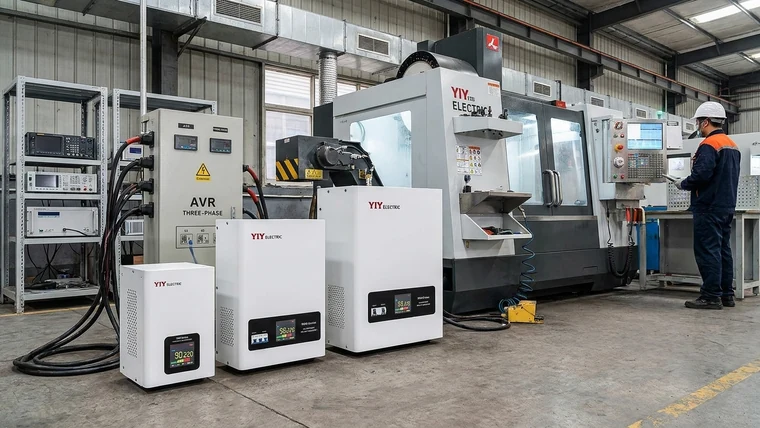
A generator AVR normally works through a sense-compare-adjust excitation loop: it senses output voltage, compares it with a reference, then adjusts alternator excitation. That is useful for steady voltage control, but it may not catch fast sags, surges, swells, phase unbalance, brief voltage interruption, or instability caused by motor starting, step loading, poor fuel response, or weak grid return.
An AC voltage conditioner, line voltage conditioner, or active voltage stabilizer sits between the generator and your protected load. In practice, it monitors incoming power and corrects voltage quality before the disturbance becomes nuisance trips, rejected production, overheated components, emergency service calls, or avoidable downtime.
| Symptom | Likely cause | Conditioner relevance |
|---|---|---|
| CNC alarms or PLC resets | Fast sag, swell, or brief interruption | Choose fast correction and event logging |
| Motor heat or elevator faults | 3-phase unbalance or unstable loading | Use three-phase balancing and protection |
| Telecom or medical faults | Sensitive electronics, surge exposure | Consider tighter output tolerance and surge protection |
| HVAC trips during startup | Inrush current and generator droop | Size with starting load margin |
| Random faults after grid return | Unstable grid-generator transition | Add bypass, alarms, and recorded fault history |
For reference, IEC 61000-4-30 power quality measurement methods defines how voltage dips, swells, interruptions, and related power quality events are measured.
Plainly: if you cannot measure the disturbance, you may overspec the equipment or miss the real fault.
Regional context also matters. In Nigeria, documented grid fluctuation can reach around ±35%, and many sites rely heavily on diesel generators as primary or backup supply; that operating profile makes external conditioning more than a comfort feature.
Use a short decision check before procurement:
- Add conditioning if your acceptable voltage window is tighter than ±10% or your process cannot tolerate resets.
- Specify protection for dust, humidity, heat, ventilation limits, enclosure/IP rating, and corrosive environments.
- Prefer monitoring, alarms, event logs, and BMS/SCADA visibility where downtime investigations affect maintenance workflow.
- Treat repeated trips as business risk: the conditioner cost is often easier to justify than recurring lost batches, site visits, and unplanned shutdowns.
What type of voltage conditioner fits generator-backed loads?
You should choose relay, servo, static, or IGBT conditioning based on your load sensitivity, voltage deviation, required correction speed, and whether you need voltage stabilization only or UPS-like stored-energy backup. In practice, the wrong category creates two costs: overspending on features your load does not need, or accepting nuisance trips, rejected batches, and service calls that cost more than the conditioner.
| Option | Best fit | Key limit |
|---|---|---|
| Relay stabilizer | Basic loads, non-critical equipment, wider tolerance | Step-based correction, not ideal for tight precision |
| Servo voltage stabilizer | Industrial loads needing continuous correction | Mechanical response, usually not for ultra-fast events |
| Static / IGBT stabilizer | CNC, medical, telecom, PLC, sensitive electronics | Higher specification and project cost |
| UPS system | Loads needing ride-through during outage | Requires battery/inverter scope, not just conditioning |
A relay stabilizer is the basic choice when your generator voltage moves slowly and the protected load can tolerate stepped adjustment. It is suitable where tight precision is not critical, but it should not be your default for CNC controls, diagnostic equipment, or lines where one trip stops production.
A servo voltage stabilizer gives continuous correction and is often the industrial balance point. Typical precision can range from +/-0.5% to +/-3%, with response around <=1-2s; plainly, this means it can smooth many generator voltage swings before they become equipment faults, but it is not the same as instant electronic correction. For three-phase generator-backed loads, compare capacity, phase balance, bypass, and enclosure options against Three-Phase Voltage Stabilizers.
Static or IGBT stabilizers fit highly sensitive loads because they use faster electronic correction, often based on DSP/PWM control or double-conversion-style isolation principles. If your process cannot tolerate short sags, swells, or voltage interruption, this power class usually deserves closer engineering review.
Do not confuse the categories. Surge protection is event protection, conditioning is voltage-quality correction, and a UPS adds stored energy only when battery backup is included.
For international projects, align voltage assumptions with IEC 60038 standard voltages, which defines recognized supply voltage levels for low-voltage systems.
For you, that means the RFQ should state nominal voltage, acceptable tolerance, generator behavior, and load type instead of asking for a generic “power conditioner.”
YIY should be specified conservatively as a voltage stabilization and grid-isolation supplier with broad capacity coverage, not as a UPS substitute by default. If you need battery ride-through, state that separately in the RFQ, along with dust, humidity, heat, ventilation, IP enclosure expectations, alarms, event logs, and any BMS/SCADA visibility your maintenance workflow requires.
How does an active voltage conditioner work with a generator AVR?
Your generator AVR stabilizes voltage at the alternator by controlling excitation, while an active voltage conditioner works downstream by monitoring delivered power and correcting what your loads actually receive. In practice, the AVR is the source-side baseline controller; the conditioner is the load-side power quality buffer, not necessarily a digitally integrated device talking to the AVR.
A generator AVR senses output voltage, compares it with a reference value, then adjusts the alternator excitation field to raise or lower generator voltage. That loop is essential for baseline voltage control, especially under normal load changes, but it is still limited by generator dynamics, engine response, excitation limits, and sudden step loads.
The external conditioner sits between the generator output and your protected equipment. It watches the input waveform, detects deviations such as sag, swell, phase imbalance, or short voltage interruption, then corrects the output before sensitive electronics, drives, PLCs, telecom racks, or medical devices see the disturbance.
| Control layer | What it does | What it means for you |
|---|---|---|
| Generator AVR | Controls excitation at the source | Keeps generator voltage generally stable |
| Active conditioner | Corrects delivered voltage near the load | Protects equipment from residual fluctuation |
| Monitoring/logging | Records events, alarms, and deviations | Helps maintenance trace nuisance trips faster |
Servo and static correction principles
A servo conditioner typically uses a motor-driven autotransformer or transformer-based regulation system for continuous output correction. Typical servo precision can be around +/-0.5% to +/-3%, with response often near <=1-2 seconds; plainly, that is suitable for many motors, HVAC loads, and general industrial machines, but not always enough for high-speed electronics.
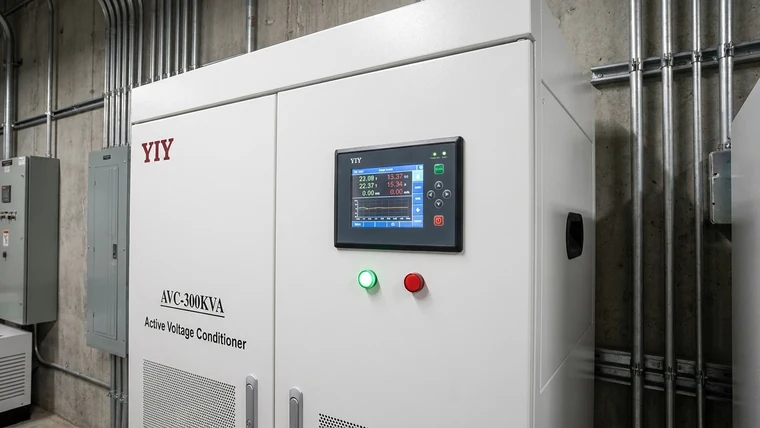
A static or IGBT-based conditioner uses electronic switching, DSP/PWM control, and in some designs AC-DC-AC isolation for tighter and faster correction. If your load trips on brief sags or control-board resets, correction accuracy and response time matter more than the generator kVA rating alone.
For international specifications, align nominal voltage with IEC 60038 standard voltages and verify disturbance measurement methods against IEC 61000-4-30 power quality measurement methods.
For your RFQ, state input voltage range, output tolerance, response time, load type, temperature, dust/humidity exposure, enclosure/IP needs, ventilation limits, alarm visibility, event logs, and any BMS/SCADA workflow requirements. Skipping these details can turn a low-cost stabilizer purchase into repeat downtime, unexplained trips, and avoidable service visits.
What should you check before specifying a generator voltage conditioner?
Specify the unit from your measured voltage behavior, kVA load profile, phase configuration, load sensitivity, installation environment, protection design, and compliance evidence, not from generator capacity alone. If your generator is 200 kVA but your protected load has high inrush, poor power factor, or sensitive controls, the right line voltage conditioner may be smaller, larger, or faster than a simple generator-nameplate match suggests.
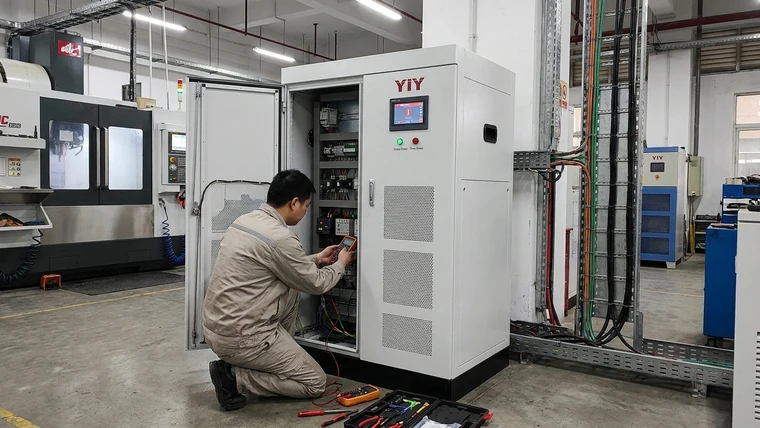
Before sizing, collect total kVA, continuous running load, peak/inrush current, motor starting profile, nonlinear loads, power factor, single-phase or three-phase supply, and a future expansion margin. In practice, this tells you whether you need a standard servo stabilizer, a faster static or IGBT voltage stabilizer, or a rugged power conditioner for unstable generator output.
IEC 60038 defines standard voltage systems, while IEC 61000-4-30 defines power quality measurement methods for events such as voltage dips, swells, and interruptions; use IEC 60038 standard voltages and IEC 61000-4-30 power quality measurement methods as reference points. Plainly, this means your RFQ should be based on measured input range and disturbance history, not verbal descriptions like “unstable voltage.”
| Check | Why it matters | If you skip it |
|---|---|---|
| Load kVA, inrush, power factor | Prevents undersizing during motor starts and nonlinear load peaks | Trips, overheating, or poor correction under real load |
| Input window and output tolerance | Confirms the conditioner can correct your generator’s actual sag/swell range | A unit may bypass, alarm, or fail to stabilize voltage |
| Correction speed and waveform quality | Protects CNC, PLC, telecom, medical, and control electronics | Sensitive loads may still reset during fast events |
| Bypass and protection package | Look for overload, short-circuit, phase loss, over/under-voltage, alarms, and event logging | Faults become harder to diagnose and downtime lasts longer |
| Environment and enclosure | Dust, humidity, heat, vibration, ventilation, IP rating, cooling, and outdoor telecom cabinets affect service life | Clean-room specs may fail in a hot, dusty generator room |
| Procurement proof | Request certificates, factory tests, spare parts, warranty, OEM labeling, lead time, and local support terms | Low purchase price can turn into slow recovery after failure |
For modern industrial sites, alarm visibility and event logs are not extras; they help your maintenance workflow prove whether the generator, load, or conditioner caused the event. If downtime stops production, rejected batches and emergency service calls can outweigh the savings from a lightly specified unit.
For YIY evaluation, match the application against its 0.5KVA-3000KVA range, ISO 9001:2015, ISO 14001, CE documentation, exports to 130+ countries, and 1,000,000+ annual capacity as brand proof, then still verify the exact model against your site data.
What final checks should you complete before you decide?
You should make the final decision only after confirming the conditioner type, measured generator voltage behavior, load kVA, protection design, environment, and operating instructions match your site conditions. Treat the last check as a risk screen: if one voltage interruption can stop production, reset controls, or trigger a service call, your specification should be based on measurements, not assumptions.
What is an active voltage conditioner?
An active voltage conditioner monitors incoming power and corrects sags, swells, and unstable voltage before your protected load sees them. Check whether the supplier states input range, output tolerance, correction response, and three-phase balancing capability. For measurement language, align site testing with IEC 61000-4-30 power quality measurement methods, so your RFQ describes real events, not vague “bad power.”
How does a voltage conditioner work?
A voltage conditioner works between your generator and load, correcting delivered voltage after the generator AVR has done its source-side regulation. Verify the wiring diagram, bypass path, overload protection, phase-loss protection, and alarm contacts before approval. In practice, this tells you whether the stabilizer fails safely or creates another downtime point.
Is a power conditioner better than a surge protector?
A power conditioner is broader than a surge protector when your problem is ongoing voltage fluctuation, not just short surge events. Check your power-quality log for sags, swells, phase unbalance, and voltage interruption; if those appear repeatedly, surge protection alone is not enough. A surge protector absorbs events, while a conditioner stabilizes usable voltage.
Should I leave my power conditioner on all the time?
Whether you leave it on depends on site wiring, load criticality, bypass design, ventilation, and the manufacturer’s instructions. Confirm the operating mode for generator start-up, transfer switching, no-load periods, and maintenance bypass. Also check heat, dust, humidity, enclosure/IP rating, and airflow, because continuous operation in a hot generator room needs conservative thermal margin.
What does a voltage conditioner do?
A voltage conditioner helps deliver steadier voltage to sensitive loads such as CNC controls, PLCs, telecom racks, medical devices, and HVAC controls. Before purchasing, record total kVA, inrush current, power factor, phase configuration, and future expansion margin. Prefer models with visible alarms, event logs, and maintenance or plant-control integration when downtime diagnosis matters.
Frequently Asked Questions
How does a voltage conditioner work with a generator supply?
A voltage conditioner works by monitoring generator output and correcting voltage before it reaches protected loads. It sits downstream of the generator AVR, so it handles residual sags, swells, phase imbalance, and brief voltage instability that the AVR may not correct fast enough. Before approval, verify the wiring diagram, bypass route, overload protection, and alarm contacts against your generator panel and load distribution.
What does a voltage conditioner do for sensitive industrial equipment?
A voltage conditioner delivers steadier usable voltage to equipment that may trip, reset, or overheat during generator voltage fluctuation. For CNC machines, PLCs, telecom racks, medical devices, HVAC controls, and elevators, the practical value is fewer nuisance faults and easier downtime diagnosis. Check total kVA, inrush current, power factor, phase configuration, and required output tolerance before selecting a model.
Is a power conditioner better than a surge protector for generator-backed loads?
A power conditioner is better than a surge protector when your problem is repeated voltage fluctuation rather than isolated surge events. A surge protector mainly absorbs transient overvoltage, while a conditioner can correct ongoing sags, swells, and unstable generator output. Review your power-quality log for voltage dips, swells, phase unbalance, and voltage interruption before deciding whether surge protection alone is enough.
What is an active voltage conditioner in generator applications?
An active voltage conditioner is a fast correction device that continuously monitors incoming voltage and compensates for power-quality deviations. In generator applications, it is useful when sensitive loads need tighter response than a basic AVR or relay stabilizer can provide. For procurement, request the stated input range, output tolerance, correction response, and test method aligned with IEC 61000-4-30 power quality measurement methods.
Final Thoughts
An AC voltage conditioner for generators is worth evaluating when unstable generator or grid conditions create measurable risk for sensitive loads, not as a default add-on for every site. Your decision should follow the fault pattern: voltage range, sag or swell frequency, phase configuration, load sensitivity, bypass design, and site environment. If the issue is only occasional surge exposure, surge protection may be enough; if resets, overheating, nuisance trips, or voltage interruption affect operations, conditioning becomes a business continuity decision.
The practical cost is not only equipment failure. It is downtime, rejected output, service calls, and slower fault diagnosis. Start with a quick-fit checklist or first-pass engineering review. Then share your operating environment, protected loads, voltage behavior, phase setup, and generator details so YIY can recommend a suitable deployment path.
About YIY
Zhejiang Yiyen Holding Group Co., Ltd. (YIY) is a professional voltage stabilizer manufacturer with 16+ years of experience. With a 30,000sqm modern facility and an annual production capacity of 1,000,000+ units, our products are exported to 130+ countries. We provide OEM/ODM customization services and are ISO 9001:2015 certified, committed to delivering stable and reliable voltage protection solutions to global customers.
Contact Us
Email: yiyen@yiyen.com
Phone/WhatsApp: +86 13587452904
Website: https://www.yiyavr.com/
If you found this article helpful, contact us for a sizing review or customized solution.