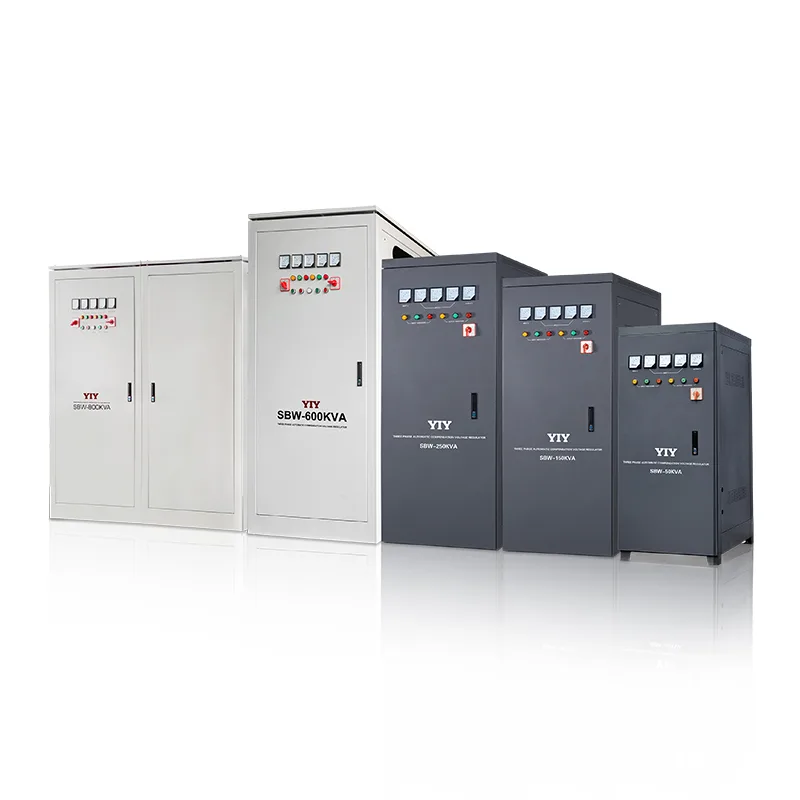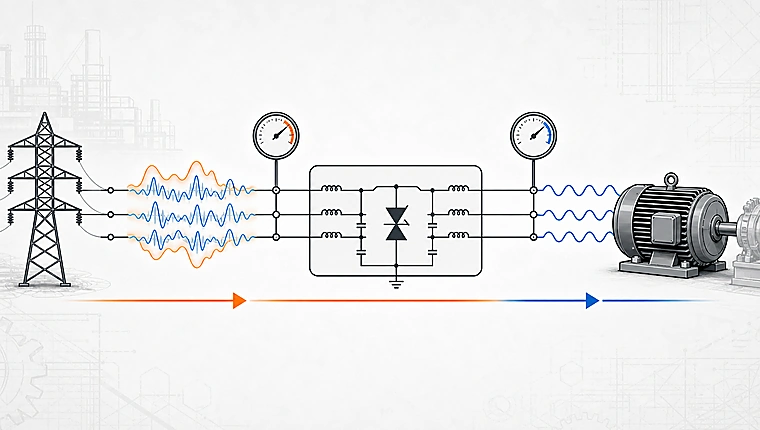
Choose a line voltage conditioner when measured sags, swells, unstable mains, generator fluctuation, or repeated voltage variation threaten your uptime, process quality, or sensitive equipment.
Nominal voltage references such as IEC 60038 standard voltages help you define the target system, but your buying decision should start with what your equipment actually sees at the load terminals.
You will get the best result when you treat this as an engineering fit decision, not a product-label decision. This guide will help you decide when conditioning is necessary, how it compares with surge protection and UPS systems, which technology fits your load, how to size the unit, and what to verify before RFQ.
When Should You Choose a Line Voltage Conditioner?
You should choose a line voltage conditioner when your voltage problem is recurring, measurable, and tied to equipment risk rather than a one-time disturbance. If your CNC machine, medical support load, UPS input, HVAC plant, pump line, automation panel, or OEM cabinet trips during voltage dips or generator load changes, conditioning may be the more practical answer than replacing downstream equipment.
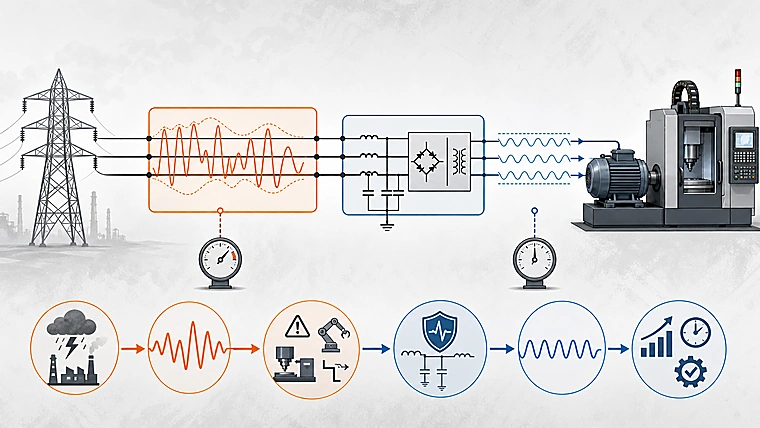
Voltage instability becomes a business risk when you see repeated nuisance trips, motor overheating, PLC faults, rejected output, servo-drive alarms, unexplained maintenance calls, or delayed commissioning. At that point, you are no longer dealing with a vague “power quality” complaint. You are dealing with a supply condition that can affect your uptime, warranty position, and production consistency.
For industrial three-phase feeders, your first orientation check is phase and load structure. If your load is a production line, machine tool group, pump system, elevator, HVAC plant, or main distribution feeder, compare available three-phase stabilizers before you lock your specification, because the wrong phase configuration can create more problems than it solves.
Common decision signals include:
- Your utility voltage drops during peak demand.
- Your generator voltage swings during load steps.
- Your long cable run causes voltage drop at the machine terminals.
- Your rural or weak-grid supply has frequent sag and swell events.
- Your load includes CNC, PLC, medical, lab, UPS, refrigeration, or automation equipment.
- Your export project must work across mixed nominal voltage systems.
- Your equipment warranty or commissioning acceptance depends on stable input voltage.
Not every site needs a conditioner. If your measured supply stays inside the load’s tolerance, your equipment runs reliably, and the main risk is only short transient overvoltage, a surge protective device and standard distribution protection may be enough.
What Does a Conditioner Solve That Basic Protection Does Not?
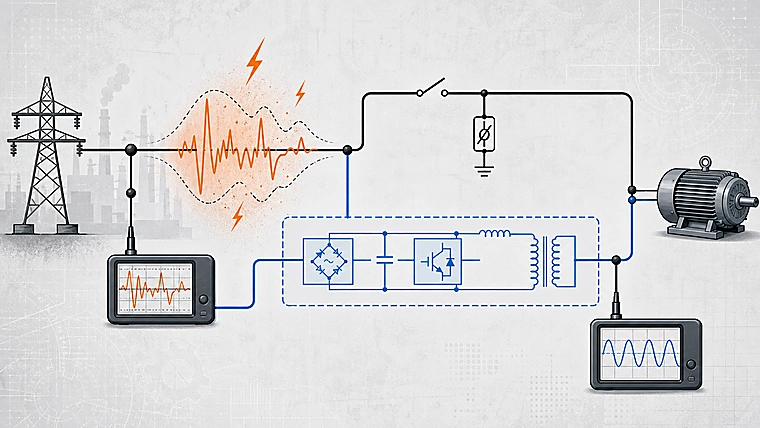
A conditioner solves sustained voltage instability that basic surge protection normally cannot correct. A surge protector clamps short overvoltage spikes; it does not usually lift a weak feeder back into range during minutes of low voltage or stabilize a generator that moves up and down with the load.
A mains voltage conditioner may regulate voltage, filter noise, suppress some disturbances, or provide active correction depending on the design. That “depending” matters. You should ask each supplier to define exactly what the unit corrects, what it only protects against, and what it does not address.
| Option | Main job | Best fit | Practical limit for you |
|---|---|---|---|
| Surge protector / SPD | Clamps short transient overvoltage | Lightning-related or switching spike exposure | Does not correct sustained low/high voltage |
| Isolation transformer | Separates circuits and can reduce common-mode noise | Noise-sensitive panels, grounding separation, project isolation needs | Does not regulate voltage unless designed to do so |
| AVR / voltage stabilizer | Corrects high or low voltage to a target output | Repeated mains fluctuation, motor loads, industrial feeders | Does not provide battery runtime |
| Power conditioner | Broad category for regulation, filtering, suppression, or isolation | Mixed power-quality concerns | Scope varies widely by model |
| UPS | Provides backup power during outages | IT, control systems, ride-through requirements | Can be oversized or costly if the main issue is voltage fluctuation |
| Active voltage conditioner | Fast sag/swell and disturbance compensation | Sensitive industrial and commercial loads | Needs careful kVA, topology, and integration review |
For your procurement file, the key difference is event duration. A spike may last microseconds; a sag, swell, or unstable generator output may last cycles, seconds, minutes, or longer. That difference decides whether you need clamping, regulation, active compensation, or backup power.
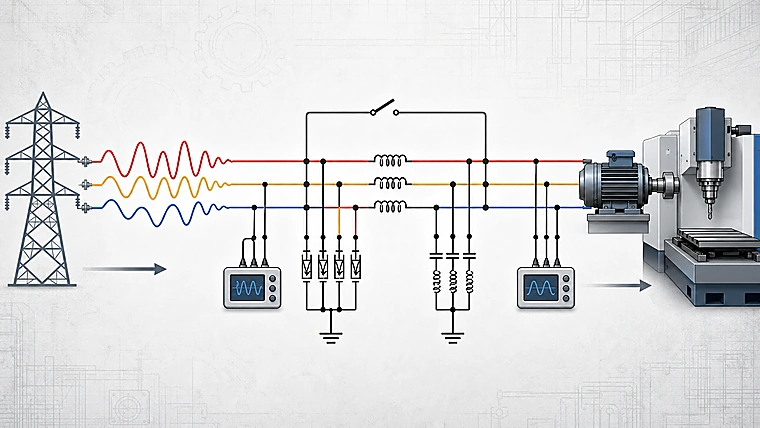
Equipment immunity also has a standards context. IEC 61000-4-11 voltage dip and variation immunity testing covers voltage dips, short interruptions, and voltage variations for immunity evaluation. For you, this means “the machine should tolerate poor power” is not a specification; you should compare recorded site events with the load’s stated immunity and warranty limits.
How Does Voltage Conditioning Work?
You get voltage conditioning through a closed-loop control process: the unit senses incoming AC voltage, compares it with the target output, corrects the deviation, and protects the load when conditions exceed safe limits. In simple terms, the control path is sense -> compare -> correct -> protect.
The sensing circuit monitors input voltage, output voltage, and often phase status, frequency, temperature, overload, or fault conditions. The controller then commands the correction method: relay tap switching, servo motor adjustment, static IGBT/PWM control, or active compensation. After correction, protection functions handle abnormal events such as phase loss, over-temperature, short circuit, severe over/under-voltage, or overload.
Important specifications translate into practical decisions:
| Specification | What it means | What it means for your site |
|---|---|---|
| Input voltage range | Lowest and highest voltage the unit can correct | Your recorded sag/swell must fit inside this range |
| Output accuracy | How tightly the output is held near target voltage | Sensitive loads need tighter control than rugged motors |
| Response time | How quickly the unit reacts to deviation | Fast-tripping electronics may need static or active correction |
| Rated kVA/kW | Continuous load capacity | Your running load and power factor must fit with margin |
| Overload capacity | Short-term tolerance for starts and inrush | Motors, transformers, and compressors may need extra headroom |
| Bypass mode | Maintenance or fault bypass path | Your operation can be serviced without unnecessary shutdown |
| Protection functions | Fault handling and alarm behavior | Your plant reduces fault escalation and troubleshooting time |
A relay design can be economical, but it changes voltage in steps and uses mechanical contacts. A servo-driven stabilizer gives smoother regulation and is widely used for industrial loads, but it has moving parts that need maintenance access. A static or IGBT voltage stabilizer can respond faster and suit sensitive lines, but you should review thermal design, overload behavior, bypass, and service support.
An active voltage conditioner is usually the faster electronic option for sag, swell, and disturbance mitigation. Because vendors use the term differently, verify whether “active” means IGBT/static compensation, PWM control, active sag correction, or simply a filtered power conditioner.
Which Technology Fits Your Precision and Budget Requirements?
Your best technology choice depends on disturbance speed, load sensitivity, maintenance expectations, and budget. A rugged motor feeder may not need the same response speed as a UPS input, semiconductor tool, medical support load, or precision CNC line.
| Technology | Typical strength | Watch-out | Better fit |
|---|---|---|---|
| Relay tap switching | Lower cost and simple voltage correction | Step changes, slower precision, relay wear | Light commercial or non-critical loads |
| Servo regulation | Smooth correction and strong industrial fit | Brush/servo maintenance, slower than static systems | Motors, CNC, pumps, production feeders |
| Static IGBT/PWM | Fast response, high precision, no mechanical tap movement | Higher cost and thermal design requirements | Sensitive electronics, UPS input, precision processes |
| Active voltage conditioner | Fast sag/swell compensation and disturbance mitigation | Application-specific sizing and integration | Critical industrial loads, weak grids, generator-backed sites |
For your budget review, do not compare only purchase price. Include downtime exposure, spare parts, maintenance access, installation complexity, bypass design, warranty terms, and whether the unit gives you alarms or event records. A lower-cost conditioner can be correct for a tolerant load; it becomes expensive when it cannot react quickly enough or trips during normal starts.
If your application uses generator supply, check load-step behavior carefully. An AC voltage conditioner for generators should be reviewed against generator capacity, voltage regulator behavior, frequency stability, inrush current, nonlinear loads, and neutral/grounding arrangement. The conditioner cannot fix every generator problem, but the right configuration can reduce nuisance trips caused by voltage movement.
How Should You Size and Specify the Unit?
You should size the unit from real load behavior, not from total nameplate kVA alone. Your sizing file should include running load, power factor, inrush, duty cycle, nonlinear loads, expansion margin, measured input range, ambient conditions, and phase balance.
A practical sizing sequence is:
- Measure voltage at the load during normal running, startup, peak demand, and generator transfer if applicable.
- Record running current, starting current, power factor, and duty cycle.
- Separate linear loads from nonlinear loads such as VFDs, UPS inputs, rectifiers, and welding equipment.
- Confirm single-phase or three-phase supply, neutral requirements, phase balance, and wiring method.
- Add margin for future expansion and derating for heat, altitude, dust, or enclosure restrictions.
- Verify correction speed, protection functions, bypass, alarms, and maintenance access.
| Check | Why it matters | If you skip it |
|---|---|---|
| Running kW/kVA and power factor | Shows continuous demand under real conditions | The unit may overheat or run near limit |
| Motor or transformer inrush | Starting current can be several times running current | Output may dip during startup |
| Measured input range | Confirms how deep the sag or swell gets | The conditioner may not regulate your worst case |
| Phase system and balance | Prevents wrong wiring and phase overload | You may create imbalance or phase faults |
| Correction speed | Matches response to load sensitivity | Sensitive equipment may trip before correction |
| Cooling and enclosure | Protects reliability in heat, dust, or humidity | Fans, boards, or windings may fail early |
| Bypass and alarms | Supports maintenance and troubleshooting | Fault recovery takes longer |
| Documentation | Supports QA, import, and commissioning approval | Procurement or acceptance may be delayed |
For three-phase main feeders, use a more detailed sizing worksheet when loads include motors, compressors, lifts, CNC groups, or expansion plans. The 3 phase main line stabilizer sizing guide is a useful next step when your project needs a feeder-level calculation rather than a single-machine estimate.
Before final specification, compare your load and site assumptions with a broader industrial voltage stabilizer selection framework. That helps you check environment, protection, topology, and application fit before the RFQ becomes too narrow.
What Procurement Checks Protect You Before RFQ?
You protect your project by verifying the supplier’s technical fit, documentation, customization ability, testing process, and after-sales support before you compare prices. A conditioner that looks acceptable on a datasheet can still fail your site if the supplier cannot support wiring, protection logic, spare parts, or commissioning questions.
Use this procurement screen before you approve a quote:
| Check | Why it matters | If you skip it |
|---|---|---|
| Wiring diagram | Confirms input, output, neutral, bypass, and grounding | Installation errors become more likely |
| Factory test record | Shows the actual unit was checked before shipment | You rely only on catalog claims |
| Correction range and speed | Verifies fit against measured site events | The unit may underperform during real disturbances |
| Protection list | Confirms phase loss, overload, over/under-voltage, short circuit, and temperature handling | Faults may escalate downstream |
| Bypass method | Supports maintenance and continuity planning | A simple service task can stop production |
| Alarm and monitoring outputs | Helps your maintenance team diagnose events | Voltage problems remain invisible |
| Spare parts and warranty | Reduces recovery time after failure | Downtime depends on uncertain support |
| OEM/ODM capability | Supports special voltage, enclosure, transformer, or interface needs | Your project may need field modifications |
Some vendors emphasize government, railway, or isolation transformer references. Those references can matter, but you should still verify global support, digital/IGBT capability, OEM/ODM flexibility, production capacity, and documentation quality. Your risk is rarely just the electrical design; it is the whole path from specification to installation to service.
When procurement moves from technical screening to supplier comparison, use a structured commercial review such as compare before buying a voltage stabilizer so your team checks warranty, lead time, customization, diagrams, and support in the same decision file.
What Should You Ask YIY to Review?
You can start with a quick-fit review instead of preparing a full technical dossier first. Share the load type, phase system, rated kVA/kW, measured input voltage range, target output, inrush behavior, site environment, and whether the supply is utility, generator, or mixed.
YIY can then help narrow the likely model type: servo, relay, static/IGBT, active conditioning, isolation transformer configuration, or a customized stabilizer cabinet. For harsh sites, include ambient temperature, dust, humidity, ventilation limits, altitude, enclosure/IP expectations, alarm requirements, and whether you need bypass, surge suppression, phase protection, or monitoring outputs.
Zhejiang Yiyen Holding Group Co., Ltd. (YIY) manufactures voltage stabilization products and supports OEM/ODM customization for global B2B projects. Where your project requires quality-system evidence, verify the current certificate scope against the official ISO 9001:2015 quality management systems reference and request supplier documentation for the exact factory and product line.
Frequently Asked Questions
How Does a Voltage Conditioner Work?
It measures the incoming supply against the set output level and corrects sags, swells, or fluctuations before the load receives unstable power. Depending on the design, correction may use transformer taps, servo control, static electronics, or active compensation.
For verification, ask the supplier for input range, output accuracy, response time, overload capacity, bypass design, wiring diagram, protection functions, and test scope.
Do Power Line Conditioners Really Work?
Power line conditioners work when they match the actual disturbance type, load profile, kVA rating, correction range, response speed, and installation environment. They do not solve every power-quality issue automatically.
Before buying, record voltage at the load for several operating cycles, including startup and peak demand, then compare those logs with the unit’s correction range and response time.
Is a Power Conditioner Better Than a Surge Protector?
A power conditioner is better when your issue is sustained voltage instability, while a surge protector is mainly for short transient overvoltage events. If your machines trip during peak demand, generator load steps, or weak-grid operation, you should check voltage logs before assuming an SPD is enough.
A concrete check is simple: if the voltage remains too low or too high for seconds or minutes, you likely need regulation or conditioning, not only surge clamping.
What Is an Active Voltage Conditioner?
An active voltage conditioner is a fast electronic system that compensates for sags, swells, and voltage disturbances for sensitive industrial or commercial loads. It is often used where response speed matters more than the lowest initial price.
Get the supplier to spell out which correction method its “active” label refers to, and request the datasheet section that states correction speed and topology.
Can You Leave a Power Conditioner on All the Time?
Yes, many industrial conditioners are designed for continuous operation when installed within rated load, temperature, ventilation, and maintenance limits. Continuous operation is common for CNC lines, UPS inputs, process equipment, and critical feeders.
Before commissioning, verify ambient heat, dust level, humidity, enclosure rating, fan clearance, terminal torque, filter cleaning interval, bypass operation, and alarm visibility.
Final Thoughts
A line voltage conditioner is the right choice when your measured voltage problems affect uptime, precision, equipment reliability, or commissioning confidence. Your decision should follow the load: measure the supply, confirm kVA/kW and inrush behavior, compare relay, servo, static, or active topology, then verify environment, protection, bypass, alarms, and service support.
Start with a quick-fit checklist or first-pass application review. Share your load profile, site conditions, and target output requirements so YIY can recommend the right model without forcing you into a full engineering package at the first conversation.
About YIY
Zhejiang Yiyen Holding Group Co., Ltd. (YIY) is a professional voltage stabilizer manufacturer with 16+ years of experience. With a 30,000 sqm modern facility and an annual production capacity of 1,000,000+ units, YIY products are exported to 130+ countries. YIY provides OEM/ODM customization services and voltage protection solutions for global industrial customers.
Contact Us
Email: yiyen at yiyen.com
Phone/WhatsApp: +86 13587452904
Website: https://www.yiyavr.com/