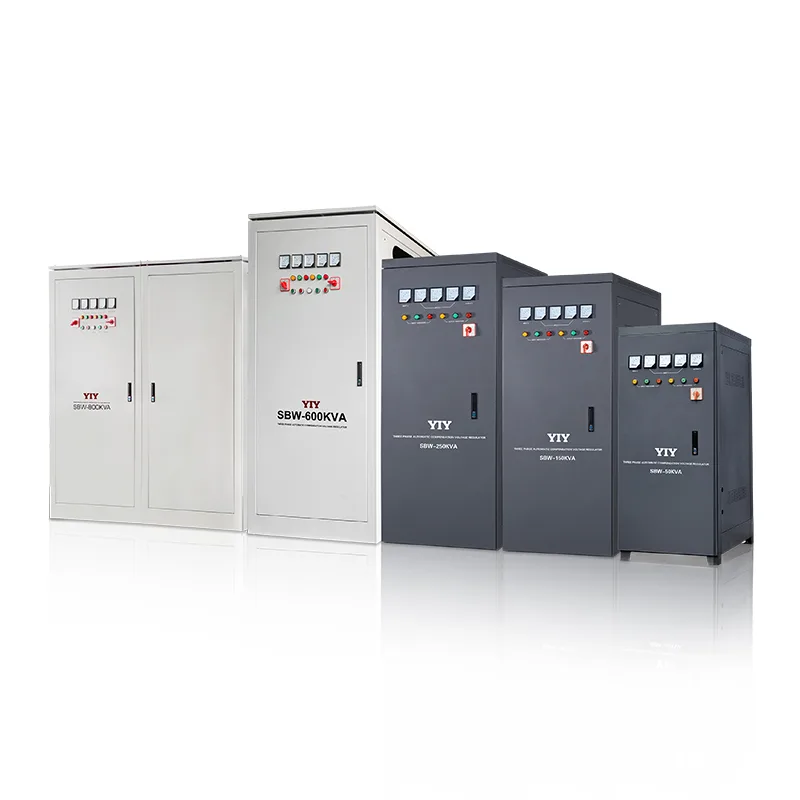
Before buying a 240v voltage conditioner, compare your measured input-voltage window, real load kVA, starting current, correction speed, topology, protection functions, installation environment, and supplier proof. Those checks decide whether the unit will protect your actual equipment or only match a nominal 240V label.
This article walks you through when conditioning is necessary, how to size the unit, which technology fits your disturbance profile, what standards and documents to verify, and how to turn your site data into a sourcing-ready RFQ.
When Does a 240V Voltage Conditioner Become Necessary?
You should consider a 240V voltage conditioner when voltage variation is already affecting uptime, product quality, control reliability, or equipment service life. The strongest buying signal is not the 240V label itself; it is a pattern of measured sags, swells, generator fluctuation, nuisance trips, PLC resets, CNC faults, or motor-start problems.

A voltage conditioner, line voltage conditioner, mains voltage conditioner, AVR, or voltage stabilizer monitors incoming voltage and corrects the output before it reaches your load. For your panel, that means sensitive equipment sees a steadier supply than the raw grid or generator can provide.
Nominal voltage standards are a reference point, not a guarantee of site stability. IEC 60038 standard voltages gives nominal-voltage context for public supply systems; for you, that means the nameplate value helps define the system, but your selection still needs logged high/low voltage, event duration, and load behavior.
| Site symptom | Likely electrical issue | What it means for your purchase |
|---|---|---|
| Motors stall, trip, or heat during startup | Voltage sag under inrush current | Size above running load and verify overload capacity |
| PLCs or CNC controls reset | Short dips, swells, or unstable mains | Compare correction speed and event-logging capability |
| Generator-fed panels drift | Generator regulation or load-step variation | Confirm input range, frequency tolerance, and generator compatibility |
| Failures increase in hot or dusty rooms | Thermal stress, contamination, poor ventilation | Specify enclosure, cooling clearance, filters, and service access |
| Test, lab, or automation equipment behaves inconsistently | Load tolerance is tighter than supply quality | Look at tighter output accuracy or active/static correction |
If your site has high ambient temperature, dust, humidity, unstable rural mains, or poor ventilation, the threshold for conditioning arrives earlier. A correctly rated unit can still fail early if your enclosure, cooling, anti-corrosion treatment, or maintenance access does not match the room where it will operate.
What Should You Compare in a 240V Voltage Conditioner Specification?
You should shortlist only units whose correction range, capacity, topology, response behavior, and protection design match your measured site conditions. A catalogue rating can start the discussion, but your final specification should come from the equipment you will protect and the disturbances you have observed.
| Check | Why it matters | If you skip it |
|---|---|---|
| Input-voltage window | Confirms the unit can correct your lowest sag and highest swell. Your measured range should sit inside the correction window with margin. | The conditioner may trip, bypass, or fail to correct the events you bought it to solve. |
| Output accuracy | Indicates how tightly the output is held after correction, and the achievable tolerance depends on topology. Ask for the figure in writing; it matters for PLCs, CNC systems, test equipment, and process controls. | Sensitive loads may still reset, drift, or reject production. |
| Correction speed | Determines whether the unit reacts before contactors, drives, or controllers drop out. | Short disturbances can still become downtime. |
| Load kVA and inrush current | Motors, compressors, pumps, and transformers can draw much more current at startup than during steady running. | A unit sized only to running load may overheat, overload, or shorten its service life. |
| Bypass and protection | Manual/automatic bypass, overload protection, surge protection, thermal protection, and alarm contacts determine how safely the system behaves during faults. | One electrical fault can become a wider production stoppage. |
| Environment rating | Dust, heat, humidity, airflow, and enclosure protection affect reliability. | A technically correct conditioner can fail because the installation environment was ignored. |
| Maintenance access | Fans, filters, terminals, indicators, and bypass access affect long-term service. | Maintenance becomes slower and more disruptive. |
For sizing, start with your connected load list, running kW or kVA, power factor if known, starting current, duty cycle, and future expansion. Add a sizing margin after the real load calculation when startup current and operating variation call for it. In practical terms, that margin helps your conditioner handle normal growth, heat, and transient demand instead of running at its limit.
If your load is close to a common industrial capacity tier, a 20kva voltage stabilizer reference can help you translate load data into a realistic shortlist. For broader specification work, compare your load list with industrial voltage stabilizer selection so your RFQ reflects measured voltage range, starting current, and site conditions rather than only the nominal panel voltage.
Which Technology Fits Your Voltage Problem?
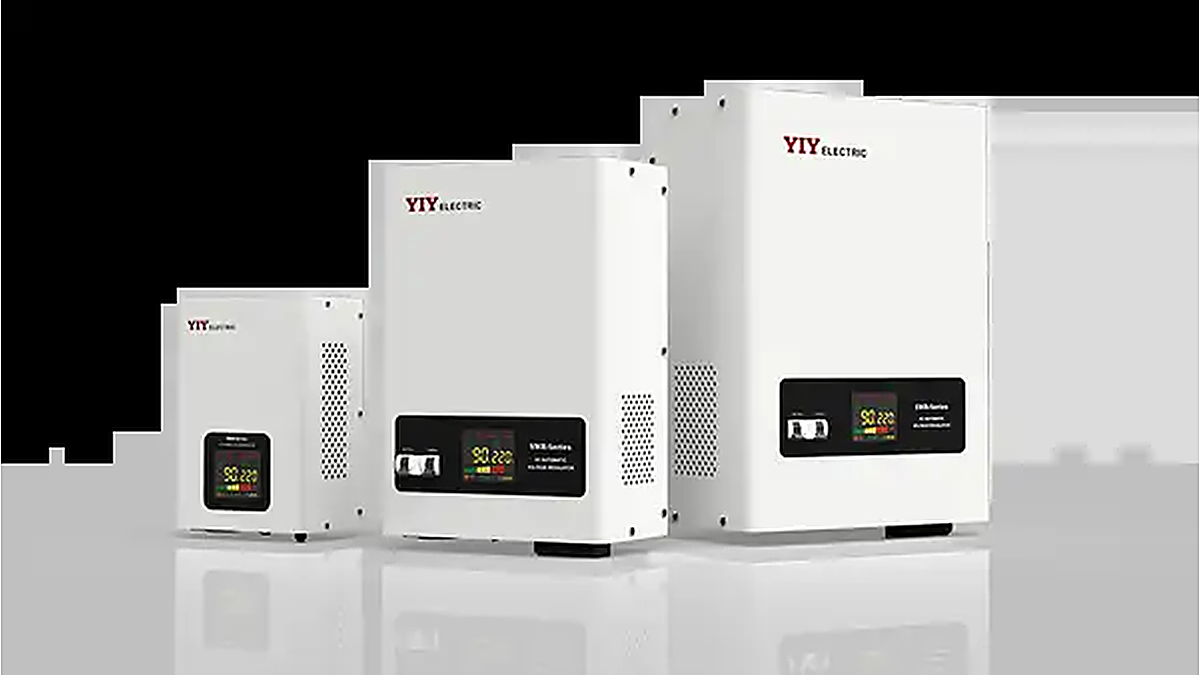
You should choose the technology by matching the disturbance profile first, then compare price. Relay, servo, active voltage conditioner, and IGBT/static designs all regulate voltage, but they do not respond in the same way or fit the same risk level.
| Technology | Strong fit | Watch-outs | Best question to ask |
|---|---|---|---|
| Relay voltage stabilizer | Cost-sensitive, less sensitive loads with moderate fluctuation | Step correction and switching wear in frequent events | “Is stepped correction acceptable for this load?” |
| Servo voltage stabilizer | Industrial loads needing smooth correction and practical serviceability | Mechanical movement is not instant; service access matters | “Will this protect mixed workshop loads without excessive cost?” |
| Active voltage conditioner | Sensitive loads exposed to sags, swells, and short disturbances | Confirm sizing, bypass design, heat, and event visibility | “Will it correct before my controls trip?” |
| IGBT/static AVR | High-sensitivity automation, CNC, medical, laboratory, or process loads | Higher upfront cost; diagnostics and cooling matter | “Does fast electronic correction justify the investment?” |
A relay stabilizer can be adequate when your load is simple and tolerant of stepped regulation. A servo AVR often fits industrial panels where you want smoother correction, proven serviceability, and balanced cost. An IGBT/static AVR uses semiconductor switching and digital control for faster correction, which is valuable when short voltage events are enough to reset your control system.
An active voltage conditioner is usually selected when voltage sags, swells, and brief disturbances create unacceptable downtime. Published active voltage conditioner research provides technical context for active conditioning behavior; for your purchase, the practical point is simple: ask how the proposed unit responds to the specific sag depth, swell level, event duration, and load type at your site.
The “power conditioner vs stabilizer” question should not be treated as a label contest. If your problem is slow voltage drift, a stabilizer or AVR may be enough. If your problem includes fast dips, generator instability, transient events, or sensitive controls, you may need broader conditioning plus surge protection and monitoring.
Generator-fed panels deserve extra caution. The conditioner has to ride through voltage drift, load steps, heat, and sometimes frequency variation, so get the supplier to confirm compatibility with your generator rating and load-step behavior before you approve a model.
How Should You Size and Implement the Unit?
You should size from measured load behavior, not from steady-state nameplate data alone. Your implementation plan should connect electrical capacity, phase configuration, installation clearance, protection settings, and maintenance access into one specification.
Start with this sequence:
- List every protected load.
- Record running kW, kVA, voltage, phase, and power factor where available.
- Identify motors, compressors, pumps, transformers, welders, drives, and other high-inrush loads.
- Log the lowest and highest incoming voltage during normal production and startup.
- Confirm whether the source is utility mains, generator, solar-hybrid supply, or a mixed system.
- Add a practical sizing margin for startup current, future load, heat, and duty cycle.
- Confirm bypass, protection, enclosure, cooling, and alarm requirements before the RFQ.
For a single-phase 240V panel, your concern is usually total protected load, startup current, and neutral/grounding arrangement.
Check whether the site is true single-phase, split-phase, or derived from a three-phase system, since that changes the wiring and protection plan. For a three-phase project, phase balance, line-to-line voltage, neutral needs, and main-line installation become more important. If your conditioner sits inside a wider three-phase distribution design, use 3 phase main line stabilizer sizing to check phase configuration, main-line placement, and installation boundaries.
| Implementation check | What you verify | Practical meaning for you |
|---|---|---|
| Capacity tier | Running load plus inrush and margin | The conditioner can start and run the load without living at overload |
| Input range | Site low/high voltage against correction window | The unit corrects your real events, not only nominal variation |
| Wiring and phase | Single-phase, split-phase, or three-phase arrangement | The terminals, neutral, grounding, and protection match your panel |
| Bypass | Manual or automatic bypass arrangement | You can maintain or isolate the unit without stopping more equipment than necessary |
| Cooling | Ambient temperature, airflow, filters, clearance | Heat does not become the next failure cause |
| Monitoring | Alarms, event logs, dry contacts, remote signals | Your maintenance workflow can see what happened after a trip |
After each sizing number, translate it into an installation action. A 14 kVA running load does not automatically mean a 14 kVA conditioner; if your motor inrush, expansion plan, and ambient heat are significant, your shortlist should move to a higher capacity tier. A logged 198-255V input range does not simply describe the site; it tells you the correction window the supplier must cover.
What Proof Should You Request From Suppliers?
You should validate the supplier before you compare the final price. The goal is to confirm that the supplier can explain the sizing logic, prove the proposed topology, and support the unit after installation.
Ask for a complete RFQ response that includes:
- Load calculation sheet with assumptions, safety margin, phase balance, and starting-current treatment.
- Recommended topology: relay, servo, active conditioner, static/IGBT AVR, or customized configuration.
- Datasheet showing input range, output accuracy, response behavior, overload capacity, bypass mode, and protection functions.
- Factory test report with inspection process and pass/fail criteria for the proposed model.
- Wiring drawing showing terminals, grounding, bypass, ventilation clearance, enclosure, and maintenance access.
- Quality-system evidence, including ISO 9001:2015 quality management systems if the supplier claims ISO 9001 certification.
- After-sales workflow covering troubleshooting, spare parts, warranty scope, and escalation path.
For harsh sites, ask specifically about dust, humidity, high heat, poor ventilation, generator fluctuation, unstable grids, and enclosure/IP options. That is not extra paperwork; it determines whether your line voltage conditioner survives the environment where it must operate every day.
Supplier capability also includes customization and support. If your project needs OEM/ODM adjustment, special cabinet dimensions, alarm integration, bypass coordination, or generator-specific behavior, compare industrial voltage stabilizer manufacturers on engineering evidence, test documentation, and after-sales workflow instead of brand claims alone.
YIY has built voltage stabilizers since 2008, runs a 30,000 m² factory with 1,000,000+ units of annual capacity, and exports to 130+ countries. For your procurement file, treat company-level proof as supporting evidence; the final approval should still depend on model-specific sizing, test documents, and installation fit.
How Can You Turn Site Data Into a Shortlist?
You should convert symptoms into measurable requirements before you ask for a quotation. A useful shortlist should define capacity tier, input range, technology type, protection package, enclosure requirements, and supplier documentation.
Consider an illustrative 240V control-panel project:
| Input reviewed | Example site note | Shortlist impact |
|---|---|---|
| Measured input range | 198-255V during production | Requires correction range that covers both sag and swell |
| Running load | 14 kVA total protected load | Points to a capacity tier above steady-state demand |
| Starting current | Pump motor inrush during startup | Requires overload margin and startup-current review |
| Source | Utility mains plus weekend generator | Requires generator compatibility and load-step behavior check |
| Environment | Heat, dust, humidity, tight panel room | Adds enclosure, ventilation, filter, and service-clearance requirements |
For a generator-fed 240V panel, pair each load step with its voltage and frequency record. For PLC/CNC resets, ask the supplier to match the recorded dip or swell to the proposed correction behavior. Review motor-start current and the input-voltage window together; a running-load-only quotation doesn’t address the startup event.
If you are comparing larger capacity projects or building a procurement template, use compare before buying a voltage stabilizer as a broader pre-RFQ reference before you finalize the commercial shortlist.
What Final Procurement Checks Should You Complete?
You should approve the purchase only after each technical risk has a documented answer. The easiest way to avoid a weak RFQ is to use the same decision structure for every supplier.
| Check | Why it matters | If you skip it |
|---|---|---|
| Confirm measured input range | Proves the unit can correct your actual low/high voltage | The conditioner may fail during the real disturbance |
| Confirm load and inrush | Prevents steady-state undersizing | Startup trips, overheating, or short service life |
| Confirm topology | Matches correction behavior to load sensitivity | You may buy a slower or less precise unit than your process needs |
| Confirm bypass and protection | Keeps maintenance and fault handling manageable | A small fault can stop a larger part of your plant |
| Confirm enclosure and cooling | Matches the unit to heat, dust, humidity, and airflow | Early failure despite correct electrical sizing |
| Confirm test evidence | Verifies the quoted model, not just the supplier brochure | Procurement has no proof before commissioning |
| Confirm after-sales path | Clarifies service, spare parts, and escalation | Downtime becomes harder to resolve |
A low-friction next step is to run a first-pass fit review with YIY using your load list, starting current, measured input-voltage window, phase configuration, and installation conditions. From there, you can decide whether a relay stabilizer, servo AVR, active voltage conditioner, or static/IGBT solution belongs on your shortlist.
Frequently Asked Questions
How Does a Voltage Conditioner Work in an Industrial 240V Panel?
It reads the panel voltage continuously and adjusts the output through one of four mechanisms: relay taps, a servo-driven variac, transformer regulation, or IGBT electronics. Each reacts at a different speed. Hand the supplier your logged lowest sag, highest swell, motor inrush, and generator notes, and ask them to mark where those values fall on the datasheet’s correction window.
Is a Power Conditioner Better Than a Surge Protector for Sensitive Equipment?
A power conditioner is better when your problem includes voltage instability, while a surge protector mainly handles short transient spikes. If your PLCs, CNC machines, or control panels reset during sags or swells, conditioning matters more than surge clamping alone. Check whether the quoted unit includes both voltage regulation and surge protection, then verify the protection ratings in the supplier documentation.
What Is an Active Voltage Conditioner Used For?
An active voltage conditioner is used to correct sags, swells, and short voltage disturbances for sensitive loads. It fits sites where slower correction may not prevent nuisance trips, rejected batches, or control-system resets. Before shortlisting one, verify correction range, response behavior, overload capacity, bypass design, heat dissipation, alarm outputs, and event logging.
Can You Leave a Power Conditioner On All the Time?
You can leave an industrial power conditioner on continuously if it is rated for 24/7 duty, correctly sized, ventilated, and installed within its ambient-temperature limits. Your verification action is to check the continuous-duty rating, ambient-temperature limit, ventilation clearance, fan or filter access, overload tolerance, and bypass mode in the supplier documents.
What Is the Difference Between an AVR and a Power Conditioner?
An AVR mainly regulates voltage level, while a power conditioner may also address sags, swells, transients, noise, and generator-related disturbances depending on design. For your RFQ, define the disturbance you need solved before accepting the label. Ask the supplier to state whether the proposed unit only regulates voltage or also includes surge protection, filtering, active correction, monitoring, and bypass behavior.
Final Thoughts
Pick a 240V voltage conditioner from your logged input window, running and startup load, and site conditions, then compare price. Price-first buying is how undersized or wrong-topology units end up in the panel. Start with YIY’s single-phase stabilizers.