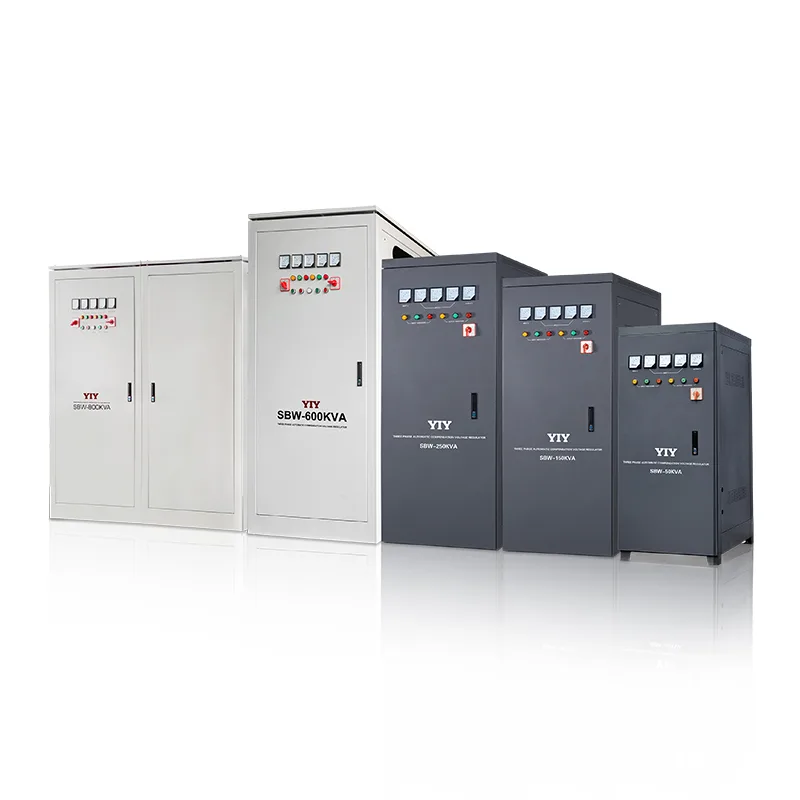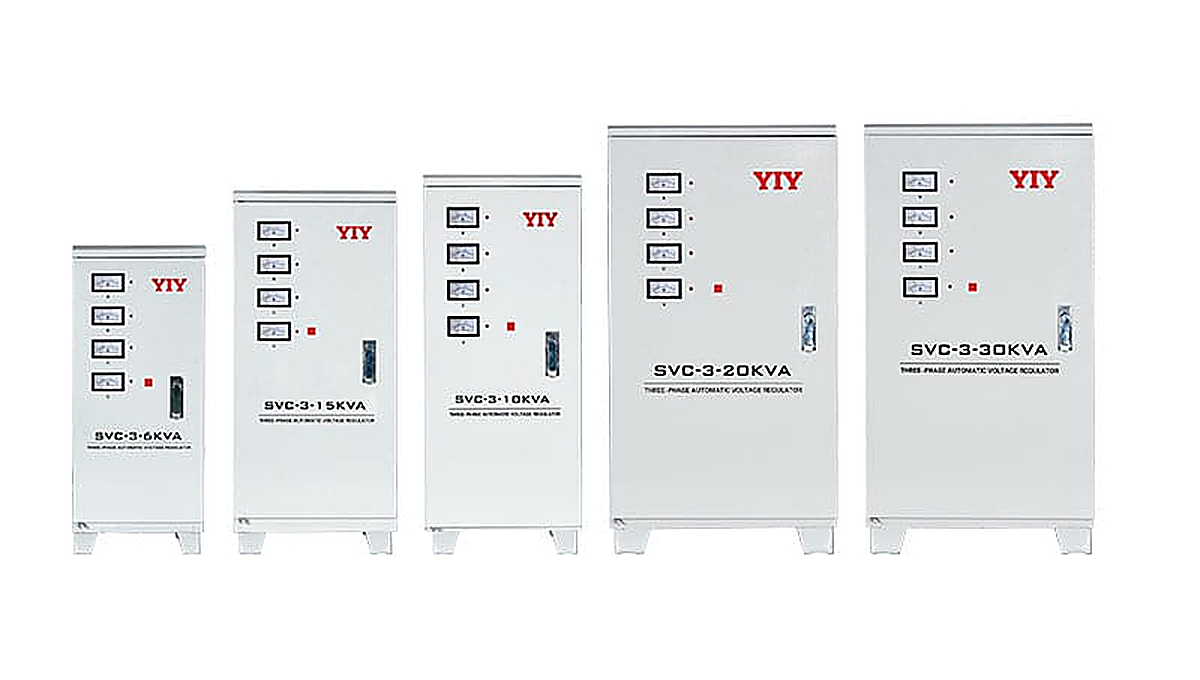
Before you buy a three phase servo stabilizer oil cooled, compare load profile, input-voltage range, phase unbalance, cooling duty, bypass, protection, and service access. These seven checks decide whether your stabilizer supports production reliably or becomes an undersized maintenance risk.
This guide walks you through technology fit, sizing inputs, oil-cooling implications, supplier evaluation, and the RFQ details that help you compare units in this power class with fewer surprises.
If you need the broader industrial path behind this topic, start with three-phase stabilizers.
When Should You Choose Servo Instead of Relay or Static Regulation?
You should choose a servo design when your three-phase industrial load needs smoother voltage correction, higher capacity options, and better phase-unbalance handling than relay stabilizers, but does not require the fastest static AVR response.
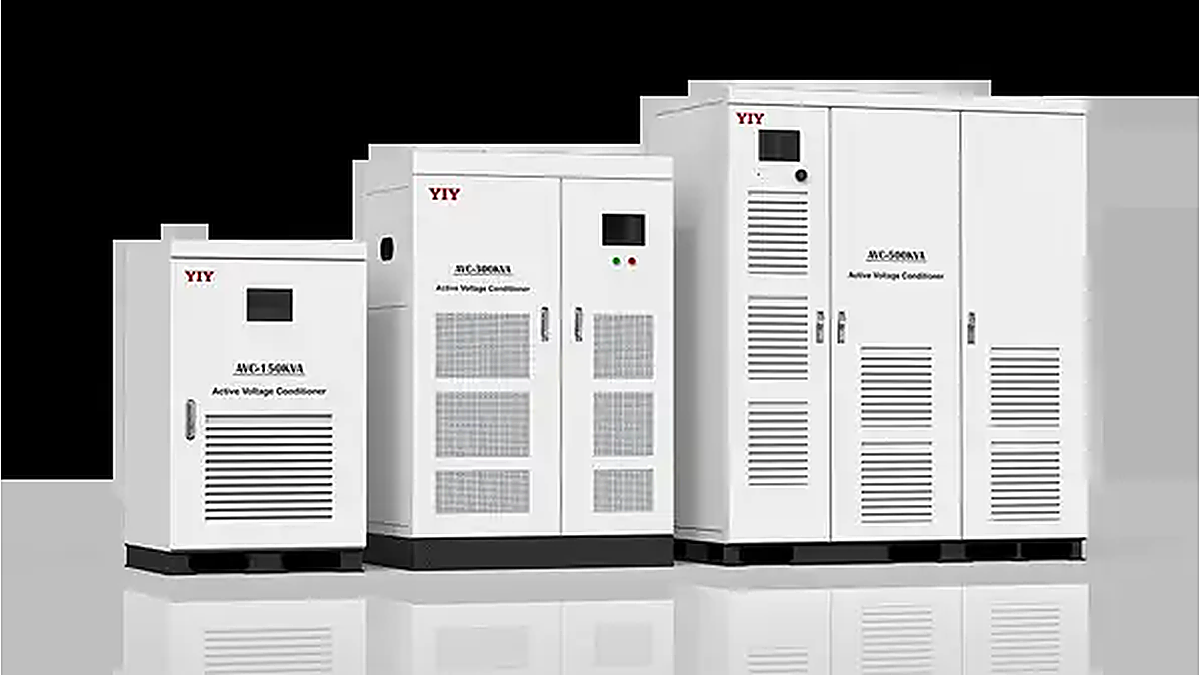
For your shortlist, start by separating voltage drift from fast disturbance events. A three-phase servo voltage stabilizer typically uses sensing circuits, a controller, a servo motor, and an autotransformer brush system to raise or lower output voltage continuously. Common servo response is around ≤1–2 seconds, depending on model and site conditions. Practically, that can fit CNC machines, compressors, pumps, production lines, machine rooms, and lab equipment exposed to slow or moderate grid fluctuation.
If your process is highly sensitive to dips or short interruptions, compare the requirement against IEC 61000-4-11 voltage dips and interruptions immunity testing. That standard does not “approve” a stabilizer by itself, but it gives you useful language when your equipment vendor asks how voltage events should be tested or tolerated.
For broader three-phase product orientation, review YIY’s three-phase stabilizers before narrowing the RFQ to an oil-cooled servo configuration.
| Technology | Best Fit For Your Load | What To Watch Before RFQ |
|---|---|---|
| Relay Stabilizer | Light-duty or cost-sensitive loads | Coarser step correction and less suitability for precision industrial equipment |
| Servo Stabilizer | Industrial loads needing ±0.5–3% class regulation and high kVA options | Brush, servo mechanism, oil, terminals, and cooling need maintenance access |
| Static / IGBT AVR | Ultra-sensitive loads needing very fast correction | Higher cost, stricter thermal design, and more detailed event requirements |
The practical meaning is simple: if your grid drifts slowly and your load needs stable output, servo is often a balanced industrial choice. If your equipment shuts down during millisecond-level dips, you may need static regulation, UPS support, or a different protection strategy.
Before you finalize sizing or implementation details, review Three-Phase Voltage Stabilizer Guide: 10–25 KVA Industrial Sizing & Selection.
What Does Oil Cooling Change in Your Selection?
Oil cooling matters when your load, duty cycle, ambient heat, and enclosure conditions push the stabilizer beyond light-duty air-cooled expectations.
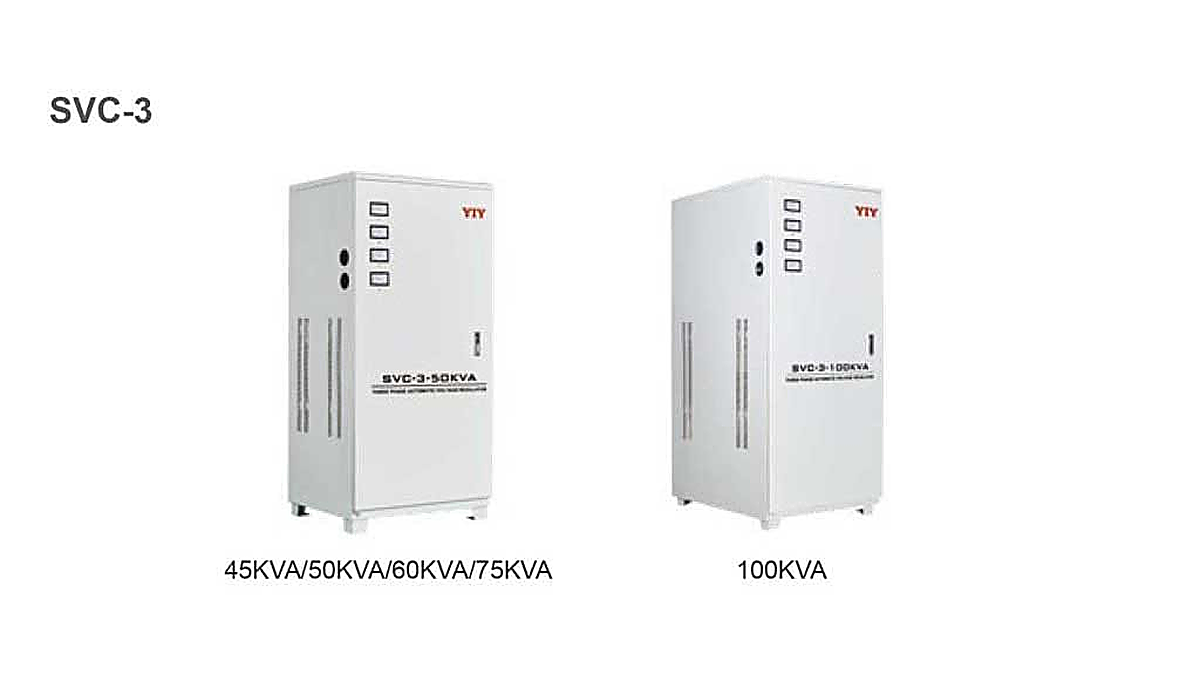
An oil cooled three phase servo voltage stabilizer uses oil to transfer heat from transformer components more effectively in higher-capacity or continuous-duty applications. For you, that usually means better thermal headroom for machine rooms, production lines, compressor banks, large mixed loads, and sites where the stabilizer may run for long hours near rated capacity.
Do not treat “oil cooled” as a universal upgrade. It also adds checks for oil condition, tank sealing, temperature rise, clearances, handling weight, and maintenance procedure. If your site has dust, humidity, weak ventilation, or high ambient temperature, these details are just as important as the kVA number.
| Oil-Cooled Selection Point | What It Means For You |
|---|---|
| 30–100KVA+ Or Higher Load Classes | Oil cooling can support heavier thermal duty than many compact air-cooled layouts |
| Continuous Operation | You should confirm temperature rise, ventilation clearance, and duty cycle |
| Harsh Electrical Conditions | Low input voltage increases current stress, so cooling margin becomes more important |
| Maintenance Access | Your service team needs safe access for inspection, terminals, oil checks, and bypass operation |
If your load falls into a medium industrial range, compare adjacent capacity families such as Medium Capacity Voltage Stabilizers (15-100KVA) to understand how capacity tiers, enclosure options, and installation conditions affect the final specification.
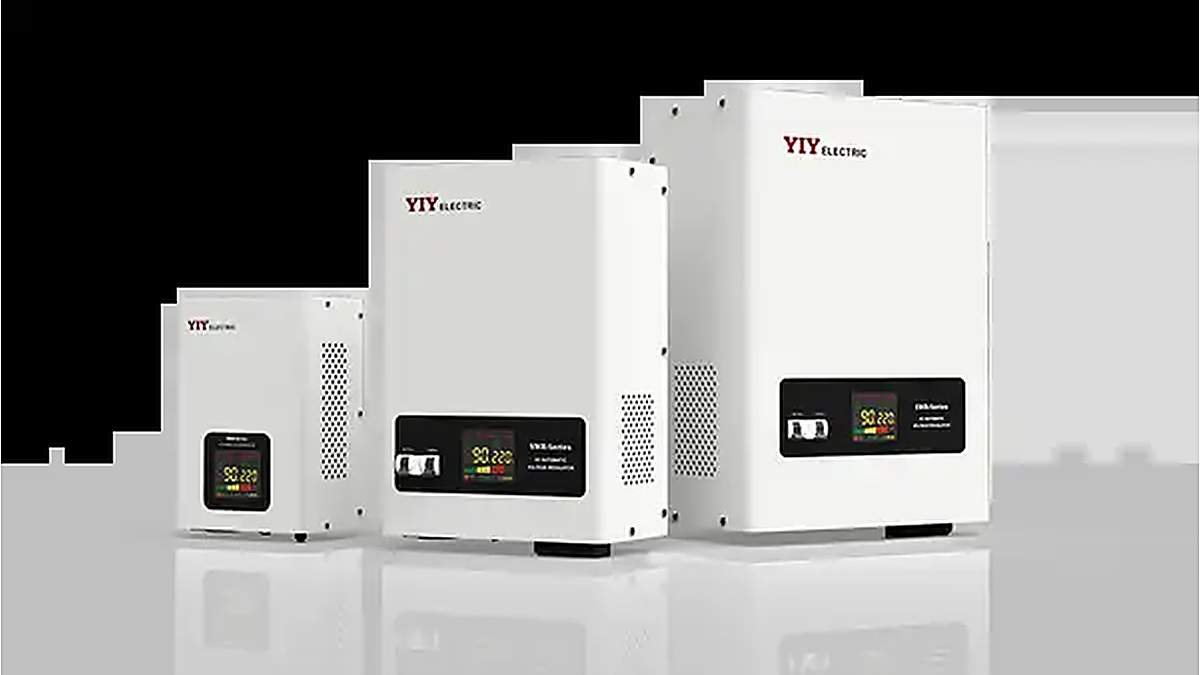
For a concrete product reference while you compare options, review SVC-3 Three-Phase Servo Motor Type Voltage Stabilizer.
Which Seven RFQ Checks Matter Most?
Your RFQ should be built around measured site conditions, not only a desired kVA rating.
Use the table below as a procurement screen before you compare suppliers. It keeps the discussion focused on the factors that change performance, serviceability, and cost.
| Check | Why It Matters | If You Skip It |
|---|---|---|
| Load List And Real Current | Confirms actual kVA/kW demand, motor mix, UPS loads, heaters, and duty cycle | The unit may be undersized despite matching the headline capacity |
| Starting Current | Motors and compressors can draw high inrush current | Voltage may sag, protection may trip, or the stabilizer may overheat |
| Input-Voltage Window | Low and high voltage limits determine correction range | A unit may work on paper but trip during weak-grid conditions |
| Phase-By-Phase Current | Three-phase loads are often unbalanced | One phase may overload while total kVA looks acceptable |
| Output Accuracy | ±0.5–3% or ≤2% classes affect sensitive equipment | Precision loads may still see too much voltage variation |
| Bypass And Protection | Maintenance bypass, overload, phase loss, surge, and delay logic affect uptime | Service work may stop production unnecessarily |
| Service Access And Cooling | Oil, terminals, ventilation, alarms, and enclosure rating affect life cycle reliability | Maintenance becomes difficult, delayed, or unsafe |
For nominal voltage assumptions, align your project baseline with IEC 60038 standard voltages. In practice, this helps you avoid treating a 380V/220V site as if it were automatically equivalent to a 400V/230V or 415V system without tolerance review.
When you need a detailed sizing structure, use the Three-Phase Voltage Stabilizer Guide: 10–25 KVA Industrial Sizing & Selection as an execution reference for load lists, input range, and phase-current review.
How Should You Size an Oil-Cooled Three-Phase Servo Stabilizer?
You should size this three-phase servo setup from real current, starting demand, input-voltage variation, power factor, duty cycle, and phase balance—not from total kW alone.
A simple sizing conversation starts with this formula:
kVA ≈ (√3 × line voltage × line current) ÷ 1000
For you, the formula means a three-phase unit must be matched to line voltage and current together. If your machine list shows only kW, ask for current, power factor, and starting method before you finalize the stabilizer rating. A motor-heavy load with low power factor or high inrush can need more headroom than a resistive load with the same kW.
Also review the correction range. A 3 phase oil cooled servo stabilizer rated for a wide input window may cost more, but it can be necessary if your grid drops severely during peak demand. Conversely, buying an unnecessarily wide range can increase cost without solving your real site problem.
For product-fit comparison, YIY’s SVC-3 (TNS) Three-Phase Servo Motor Type Voltage Stabilizer is relevant when your application involves three-phase unbalanced loads and industrial servo regulation. For precision applications, confirm whether the project needs a model class with ≤2% output accuracy, MCU control, display visibility, and alarm options.
How Do You Evaluate Supplier Claims?
You should evaluate supplier claims by asking for verifiable specifications, quality-system evidence, service terms, and application-fit proof.
Capacity alone is not enough. Some suppliers emphasize high kVA oil-cooled models, some focus on local market availability, and others highlight outdoor or extreme-environment designs. Your comparison should return to your operating context: measured voltage, phase imbalance, load sensitivity, ambient heat, bypass needs, and available service support.
| Supplier Claim | What To Ask For | Practical Meaning For You |
|---|---|---|
| “Wide Input Range” | Minimum/maximum input voltage, derating rules, and protection behavior | Confirms whether the unit survives your worst grid condition |
| “High Precision” | Output tolerance at rated load and low input voltage | Shows whether sensitive equipment gets a stable voltage band |
| “100% Unbalanced Load” | Phase-wise regulation method and current limits | Helps avoid hidden overload on one phase |
| “Industrial Duty” | Cooling data, enclosure rating, terminals, bypass, and service intervals | Converts a marketing phrase into maintainable equipment |
| “Certified Factory” | Current certification scope and audit validity | Reduces procurement risk for OEM and export projects |
For quality-system review, use ISO 9001:2015 quality management requirements as the reference point when a supplier claims ISO 9001 certification. Ask for the certificate scope, issuing body, expiration date, and whether stabilizer design, manufacturing, and service are covered.
Competitor positioning should stay practical. Servomax has strong India-market visibility; your question is whether you need broader export support and MCU-based precision control. TSI Power emphasizes harsh or outdoor environments; your counter-check is whether your enclosure, IP rating, alarms, and ventilation requirements are actually documented. India-based oil-cooled suppliers may offer high capacities, but you still need phase-unbalance data, protection logic, bypass design, and after-sales support before comparing price.
What Should Your Final Shortlist Include?
Your final shortlist should include only models that match your measured voltage window, load behavior, phase balance, cooling duty, bypass plan, and maintenance access.
Before you send the RFQ, prepare a short technical pack:
- Load list with kW, kVA, current, power factor, and operating duty where available
- Highest starting current or starting method for motors and compressors
- Minimum and maximum measured input voltage, phase by phase
- Phase-current readings under normal and peak operating conditions
- Ambient temperature, dust, humidity, ventilation, and installation photos
- Preferred bypass method, protection functions, alarm contacts, and monitoring needs
- Required output voltage, output accuracy, enclosure rating, and cable-entry direction
This is also where a general Voltage Stabilizer sizing path can help you compare the stabilizer category before committing to one technology or capacity tier.
For low-friction next steps, ask YIY for a first-pass fit review using your load list, starting current, input-voltage window, and installation conditions. If the preliminary match is close, you can then add detailed voltage logs, panel photos, protection requirements, and bypass preferences for final model validation. If you are evaluating a smaller three-phase servo unit, the checklist in Compare Before Buying a Servo Stabilizer 15KVA 3 Phase can support your final comparison.
Frequently Asked Questions
How Does A 3 Phase Stabilizer Work?
A 3 phase stabilizer regulates incoming line voltage before it reaches your equipment. In a servo design, sensors read the supply, the controller compares it with the target output, and the servo-driven transformer adjustment raises or lowers voltage.
For your next check, ask the supplier whether correction is phase-wise or common three-phase correction, then request a wiring diagram and response-time data for the exact model.
What Happens If You Wire 3-Phase Wrong?
Wrong 3-phase wiring can cause reverse motor rotation, phase loss faults, overheating, control-board damage, or immediate protection trips. It can also create a dangerous commissioning condition if neutral and earth assumptions are wrong.
Before energizing, use a phase rotation meter, verify L1-L2-L3 sequence, measure line-to-line and line-to-neutral voltage, confirm earthing continuity, and compare every terminal against the supplier drawing.
How Should an Oil-Cooled Three-Phase Servo Stabilizer Be Sized for an Rfq?
Size it from measured current, starting demand, power factor, input-voltage variation, duty cycle, phase imbalance, ambient temperature, and expected expansion. Total kW is only a starting point.
For unresolved cases, send a one-line diagram, load schedule, voltage records, and installation photos to the supplier, then ask for the recommended kVA rating, correction range, derating assumptions, and bypass design in writing.
How Do You Connect A 3 Phase Stabilizer Safely?
A qualified electrician should connect the stabilizer between the incoming supply and the protected load panel after isolating power, confirming phase sequence, matching terminals, torquing cables correctly, and checking earth continuity.
After connection, test output voltage with no load, add load gradually, record phase currents, and keep the commissioning sheet with your maintenance file for future troubleshooting.
Final Thoughts
You get the safest RFQ when you compare the stabilizer against your actual load, voltage window, unbalance, thermal conditions, bypass needs, and service workflow.
A three-phase oil-cooled servo unit should not be selected by kVA alone. The right model is the one that fits your worst operating condition, gives your maintenance team safe access, and provides enough monitoring to catch voltage problems before production stops.
Start with a quick sizing review. Share your load list, starting current, input-voltage range, phase-current readings, ambient conditions, and installation location with YIY, then use the response to refine your technical RFQ.
About YIY
Zhejiang Yiyen Holding Group Co., Ltd. (YIY) is a professional voltage stabilizer manufacturer with 16+ years of experience. With a 30,000sqm modern facility and an annual production capacity of 1,000,000+ units, our products are exported to 130+ countries. We provide OEM/ODM customization services and are ISO 9001:2015 certified, committed to delivering stable and reliable voltage protection solutions to global customers.
Contact Us
Email: yiyen at yiyen.com
Phone/WhatsApp: +86 13587452904
Website: https://www.yiyavr.com/
If you found this article helpful, contact us for a sizing review or customized solution.
If you are moving from evaluation toward supplier shortlisting or buying review, use Compare Before Buying a Servo Stabilizer 15KVA 3 Phase as your next step.