A 30 kVA three-phase stabilizer draws about 41.7 A per phase at 415 V, using I = kVA × 1000 ÷ (√3 × V). Below: the formula, other voltages, and the low-input current your cable must carry.
How Do You Calculate 30 kVA Current at 415V?
Divide apparent power by √3 times line voltage, the balanced relation S = √3 × U × I in KTH’s three-phase AC notes. For 30 kVA: 30,000 ÷ (1.732 × 415) = 41.7 A.
| Line voltage | Current per phase | Where the voltage comes from |
|---|---|---|
| 415 V | 41.7 A | Your 415 V supply |
| 400 V | 43.3 A | IEC 60038 standard voltage |
| 380 V | 45.6 A | Catalogue output of YIY SVC-3 |
| 278 V | 62.3 A | Lowest listed SVC-3 input (380 V model) |
The last row sizes your feeder: output kVA stays constant, so input current climbs as input sags. Losses aren’t included; ask for datasheet input current at minimum input.
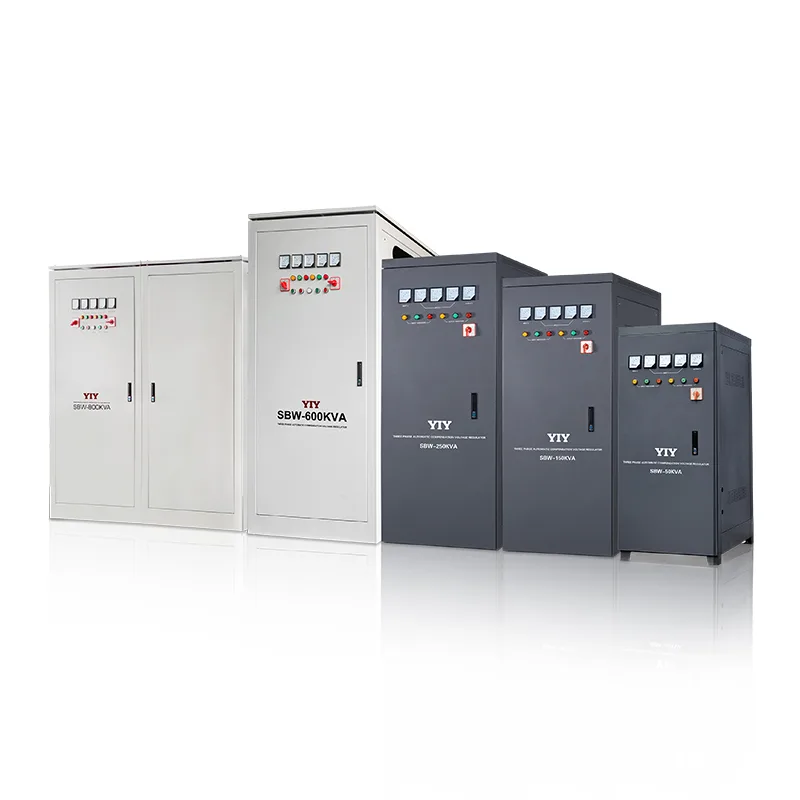
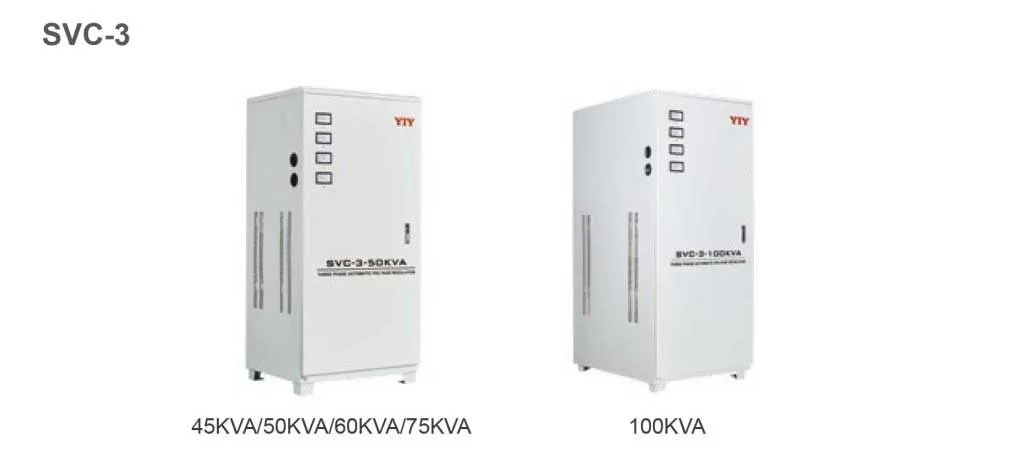
On 415 V: the SVC-3 catalogue lists 30 kVA with 380 V ±3% output “or customized”, and the three-phase voltage stabilizers page offers 415 V builds. Get the 415 V input window in writing. Still choosing a size? See choosing a 10 kVA to 30 kVA three-phase stabilizer.
Frequently Asked Questions
Does Power Factor Change the Current Figure?
No. kVA already includes it. SVC-3 lists the 30 kVA unit at 24,000 W, which assumes 0.8 power factor, so total your loads in kVA before you compare.
What Breaker Suits a 30 kVA Unit on a 415V Supply?
Under IEC 60364-4-43, design current ≤ breaker rating ≤ cable capacity. Against 62.3 A, the next preferred rating is 63 A, which leaves almost no margin once losses are added; plan on 80 A with cable rated above it.
Is Current Equal on All Three Phases?
Only with balanced loads. Clamp each phase under production load and size for the highest one.
Final Thoughts
Use 41.7 A for nominal 415 V; size protection for low-input current. See the 30 kVA voltage stabilizer range for models.