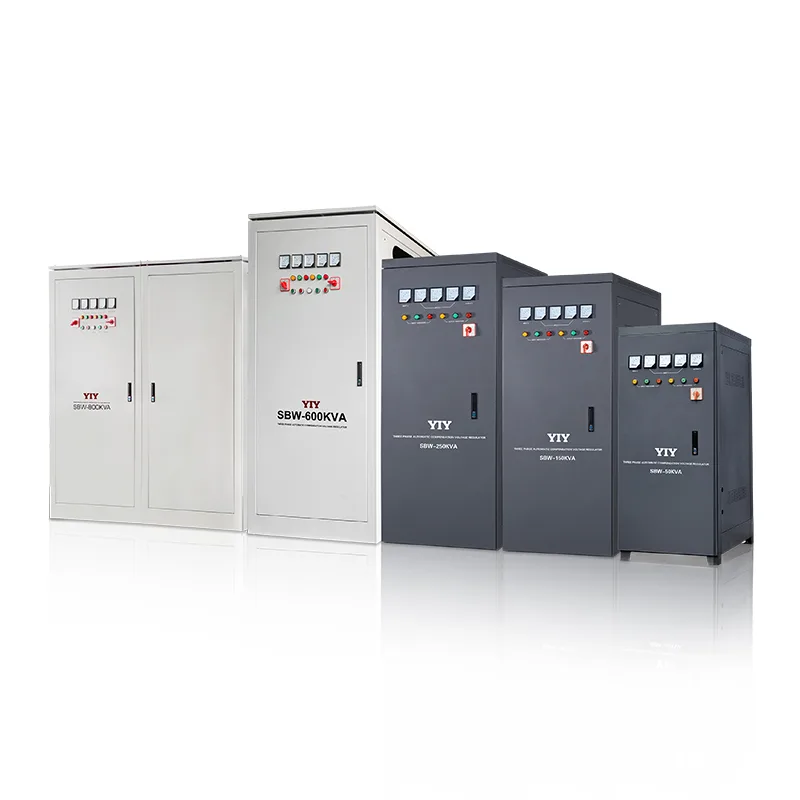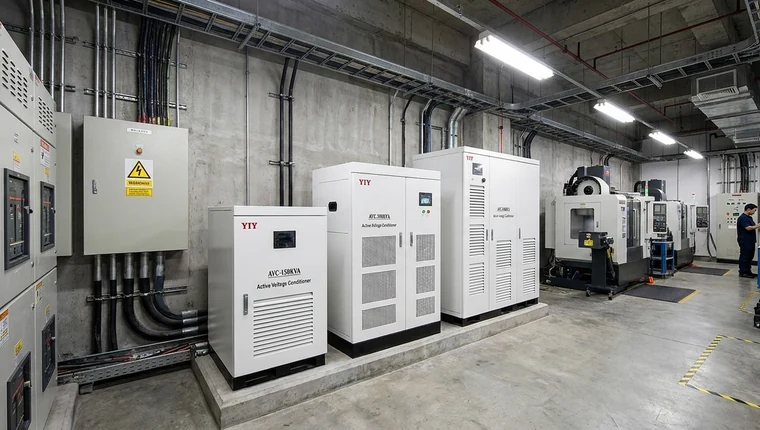
Before buying a 3 phase voltage stabilizer 30 kva, compare your load size, starting current, input-voltage window, phase balance, regulation accuracy, protection functions, installation environment, supplier capability, and lifecycle support. These factors decide whether the unit protects your equipment or becomes an underspecified bottleneck.
If your site sees unstable utility power, motor starts, CNC loads, pumps, compressors, or mixed three-phase distribution, the nameplate kVA is only the starting point. IEC 60038 standard voltages is the official reference for nominal AC system voltage planning, and many equipment specifications use tolerance planning around nominal voltage rather than assuming the grid is always stable. For you, that means the measured voltage range at your panel matters more than the brochure voltage alone.
Here’s what you need to know next: this guide will walk you through fit, sizing logic, servo/relay/IGBT technology choices, installation checks, RFQ details, and common procurement questions so you can shortlist the right three-phase AVR for this capacity tier.
When Is a 30 kVA Three-Phase Stabilizer the Right Fit for Your Load?
You should consider a 30 kVA three-phase stabilizer when your medium industrial three-phase load is vulnerable to voltage fluctuation, sags, brownouts, phase imbalance, or unstable utility supply.

For your site, this usually means CNC machines, compressors, pumps, HVAC panels, laboratory equipment, medical support systems, production lines, packaging machines, or small factory distribution panels. A voltage stabilizer maintains a steadier output despite input fluctuations, so your connected equipment sees less variation than the incoming grid provides.
Nominal kVA alone is not enough. A nameplate 30 kVA unit may still be wrong if your load has high motor starting current, poor power factor, uneven phase loading, frequent duty cycles, or a wider input-voltage swing than the stabilizer can correct. In practice, you compare the load profile and voltage behavior before treating “30 kVA” as a final specification.
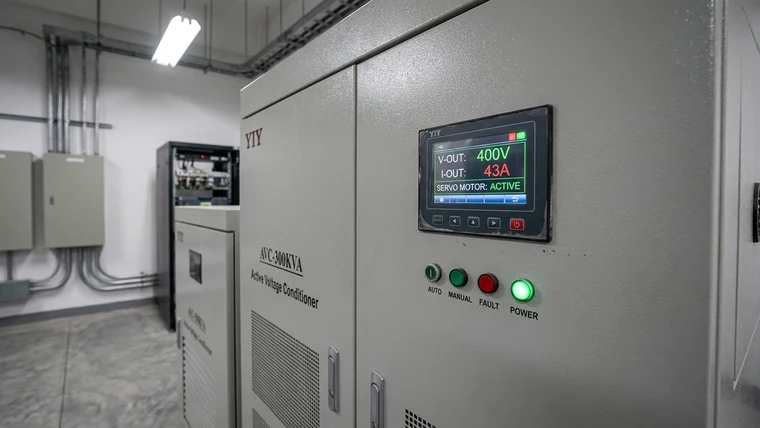
When you review three-phase stabilizers, also check whether the industrial 3 phase AVR 30 kVA option supports alarms, fault visibility, bypass, and maintenance-friendly monitoring. Those features help your maintenance workflow see voltage problems early instead of discovering them after production stops.
When Single-Phase Stabilization Is Not Sufficient
You should not use a single-phase stabilizer for true three-phase machinery, shared three-phase panels, or loads sensitive to line-to-line voltage behavior.
Single-phase stabilization also becomes risky when one phase drops more than the others. Phase imbalance can overheat motors even when average voltage looks acceptable, so your equipment may still trip or run hot if only one part of the supply is corrected.
| Site condition | Why it points to three-phase AVR protection |
|---|---|
| Three-phase motors or compressors | Voltage imbalance can increase heating and nuisance trips |
| Shared 3-phase distribution panel | One stabilizer can protect a group of balanced loads |
| CNC, lab, or medical support loads | Sensitive electronics may reject unstable supply |
| Brownouts or recurring sags | The automatic voltage regulator corrects low-voltage periods before they interrupt operation |
| Dust, heat, humidity, weak grid | You may need enclosure/IP planning, ventilation, filters, or custom protection |
Plainly: if your incoming supply regularly drifts outside what your machines tolerate, your stabilizer choice must be based on the measured input range, not brochure voltage. The cost of inaction is rarely just one failed component. Unstable voltage can cause nuisance trips, motor overheating, rejected batches, emergency service calls, and unplanned downtime.
How Do You Size This Capacity Tier Without Underspecifying the System?
You size this capacity tier from your real connected load, power factor, motor starting current, simultaneous startup pattern, duty cycle, future expansion margin, and measured input-voltage window.
Start with the load list, not the stabilizer brochure. For a three-phase load, apparent power is commonly estimated as:
kVA = √3 × line voltage × line current ÷ 1,000
Real power relates through:
kW = kVA × power factor
For you, this means a machine drawing high current at a low power factor may use more apparent power than its kW rating suggests. A “30 kVA” label can leave less usable headroom than you expect if you do not account for power factor and starting behavior.
Use measured current where possible, then separate continuous load from intermittent load. Motors, compressors, pumps, lifts, and HVAC equipment can draw several times running current during startup. Your calculation should identify whether one motor starts alone or multiple loads start together. Simultaneous startup can push a correctly sized running load into overload unless you allow enough engineering headroom.
| Check | Why it matters | If you skip it |
|---|---|---|
| Total kW/kVA | Confirms the true connected demand | The unit may run near 100% load continuously |
| Power factor | Converts kW into realistic kVA demand | Capacity appears larger than it is |
| Motor starting current | Captures inrush during startup | Nuisance trips or voltage dip during start |
| Load diversity | Shows what runs at the same time | Oversizing or undersizing becomes likely |
| Safety margin | Keeps operation away from the rated edge | Heat, stress, and downtime risk increase |
| Duty cycle | Distinguishes continuous from intermittent use | Cooling may be insufficient |
| Ambient temperature and ventilation | Affects transformer, servo, and cabinet heat | Derating may be needed in hot rooms |
A practical rule is to avoid running an industrial 3 phase AVR 30 kVA continuously at its rated ceiling. Leave headroom for future machines, weak-grid periods, and hot ambient conditions. For dusty, humid, or high-temperature rooms, specify filtration, enclosure/IP expectations, clearance, and forced ventilation where required.
If you want a deeper sizing workflow, use this 3 phase main line stabilizer sizing guide after you collect your load list, starting current, power factor, and measured input-voltage window. It will help you turn site data into a more RFQ-ready specification.
How Do Servo, Relay, and IGBT Regulation Principles Change Your Buying Decision?
You should choose the regulation technology based on your required accuracy, response behavior, maintenance tolerance, budget, and load sensitivity.
The wrong topology can turn voltage protection into another downtime risk. For your 30 kVA decision, compare the working principle before you compare price, because a low-cost unit with the wrong correction method may still allow trips, unstable operation, or excessive maintenance.
| Technology | How it regulates | Typical accuracy | Good fit | Watch-outs |
|---|---|---|---|---|
| Servo | MCU monitors voltage; a servo motor moves a carbon brush across a variac/autotransformer to adjust output | ±0.5–3%, response often ≤1–2 s | Industrial machinery, pumps, compressors, panels, and mixed loads needing stable correction but not instant compensation | Moving brush and motor require maintenance; slower than static designs |
| Relay | Electromagnetic relays switch transformer taps in steps | ±5–8% | Cost-sensitive, less sensitive loads where stepped correction is acceptable | Lower precision; relay wear; less suitable for CNC, lab, medical support, or sensitive production electronics |
| IGBT/static | DSP/PWM power electronics regulate output, often using a double-conversion AC-DC-AC concept | ±0.5% | Sensitive electronics, fast disturbance environments, automation controls, test equipment | Higher cost, more attention to heat management, ventilation, and service capability |
A three-phase servo stabilizer does not mean every internal motor is necessarily a three-phase motor. In this context, “3 phase” usually describes the stabilizer’s input/output power system. The servo motor’s job is mechanical: it drives the carbon brush across the variac so the automatic voltage regulator can raise or lower output voltage.
A relay voltage stabilizer can look attractive when budget is tight and the load is less sensitive. However, the wider ±5–8% regulation band means your equipment sees more voltage variation. If your production machine trips on tighter voltage limits, the purchase saving can be offset by nuisance stops, rejected work, or emergency troubleshooting.
IGBT/static regulation fits better when your incoming grid has rapid dips, switching noise, or frequent disturbances. IEC 61000-4-11 voltage dip and interruption immunity testing is one useful reference for thinking about how equipment behaves during voltage dips and short interruptions. For you, response behavior is not just a brochure number; it affects whether connected controls ride through disturbance events or shut down.
Also match the topology to the room. Servo designs need clean airflow and brush-access planning in dusty sites. IGBT cabinets need heat dissipation, ventilation clearance, alarm visibility, and preferably event logging for maintenance workflows.
What Site and Protection Details Should You Check Before Quotation or Installation?
You should collect site data, protection requirements, wiring configuration, environmental constraints, and maintenance expectations before model selection.
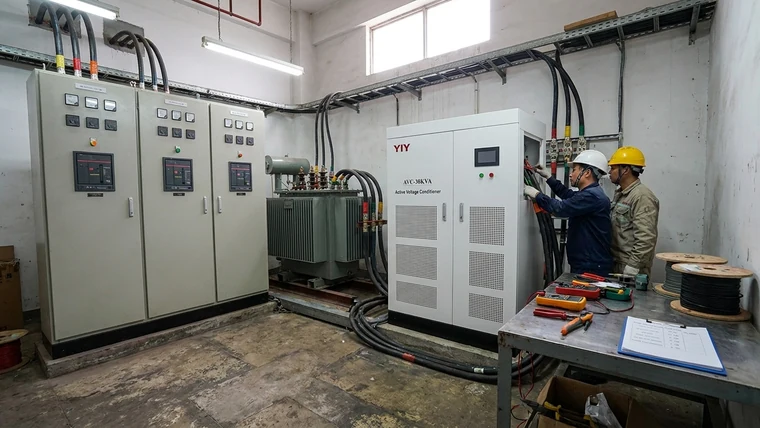
A correct quotation depends on how the stabilizer will be connected, protected, cooled, bypassed, and monitored in your real electrical room. For your 30 kVA three-phase AVR, the important items are not just “380 V” or “415 V.” You also need to confirm neutral availability, grounding quality, phase sequence, cable size, cabinet access, ventilation clearance, upstream breaker rating, and whether the unit needs manual or automatic bypass for service continuity.
| RFQ / installation check | What to confirm | Why it matters in practice |
|---|---|---|
| Input/output voltage and wiring | 3P3W or 3P4W, neutral, line voltage, phase sequence | Prevents wrong terminal design and phase-rotation faults |
| Protection coordination | Input/output MCB or MCCB, overload, short-circuit, over/under-voltage, surge protection | Helps faults trip in the right place instead of shutting down more equipment |
| Bypass and access | Maintenance bypass switch, front/rear access, cable entry direction | Lets your electrician service the stabilizer without unnecessary downtime |
| Grounding and cable size | Earthing resistance, conductor size, lug type, installation distance | Reduces shock risk, nuisance alarms, and overheating at terminals |
| Environment | Dust, humidity, heat, corrosive gas, poor ventilation, generator input, weak rural grid | Determines enclosure/IP needs, filters, derating, and cooling method |
| Monitoring | Meters, alarms, event logs, remote monitoring, PLC/BMS/SCADA signals | Gives your maintenance workflow visibility before small voltage events become stoppages |
Phase balance deserves a separate check. Measure current and voltage on L1, L2, and L3, redistribute single-phase loads where possible, and correct loose terminals or unequal feeders before blaming the stabilizer. A stabilizer can regulate voltage, but it should not be used to hide a badly distributed three-phase load.
For harsh rooms, specify adaptation early. Air-cooled cabinets need clean airflow and clearance, while oil-cooled designs may fit heavier-duty or hotter conditions where appropriate. If your site has generator input, high dust, humidity, high ambient temperature, or unstable rural supply, ask for custom protection, cabinet sealing, forced ventilation, surge suppression, and alarm thresholds before production.
For a broader procurement framework, this industrial voltage stabilizer selection guide can help you organize site data, protection requirements, wiring configuration, environmental constraints, and maintenance expectations before RFQ.
What Final Procurement Checks Should You Complete?
You should approve the purchase only after verifying the load list, nameplate current, phase balance, input-voltage log, protection scheme, supplier documents, and data plate.
You are not just buying capacity; you are reducing the risk of nuisance trips, overheated motors, rejected production, and avoidable downtime. Treat price as an output of specification, not the first specification. Cost drivers include kVA rating, input range, regulation technology, copper/aluminum choice, cooling method, cabinet protection, certifications, monitoring options, and customization.
| Check | Why it matters | If you skip it |
|---|---|---|
| Load list approved | Confirms what the stabilizer must actually supply | You may buy for the wrong connected load |
| Starting current reviewed | Prevents overload during motor startup | The unit may trip even if running load looks acceptable |
| Input-voltage log checked | Confirms the required correction range | The stabilizer may not correct your lowest or highest grid voltage |
| 3P3W / 3P4W confirmed | Matches wiring and neutral needs | Installation delays or wrong terminal design |
| Protection list matched | Confirms overload, short-circuit, over/under-voltage, surge, and bypass needs | Missing protection may appear only during a fault |
| Manual and data plate reviewed | Confirms the delivered unit matches the quotation | Your electrician may install against generic documents |
| Certificate scope verified | Confirms supplier claims match the product and factory scope | Compliance claims may not apply to your ordered configuration |
When comparing supplier capability, ask for a data sheet, wiring diagram, protection schedule, certificate scope, and major component list. If a supplier claims ISO quality management, verify ISO 9001:2015 quality management systems against the official ISO standard page and then check the supplier certificate scope.
YIY offers servo, relay, and IGBT stabilizer options, OEM/ODM support, a 500VA–3000KVA capacity range, and exports to 130+ countries; data as of 2026 Q2. For you, that breadth matters if your project may later expand from this capacity tier into larger three-phase systems, or if your procurement team wants one supplier path across multiple AVR technologies.
If your load calculation suggests this unit may be too close to the limit, it is worth reviewing how engineers compare before buying a voltage stabilizer in the next higher capacity tier. A higher rating may make sense when your load will expand, your starts are heavy, or your site conditions require more headroom.
How Do You Answer Common Technical Questions Before RFQ?
You should turn common questions into verification actions before you request a final quotation.
How Do You Stabilize Three-Phase Power in Practice?
Stabilize three-phase power by measuring the incoming voltage range, choosing a three-phase AVR with enough kVA headroom, and confirming correct 3P3W or 3P4W wiring. Before purchase, check your L1-L2-L3 voltage log, load list, phase sequence, neutral requirement, and upstream breaker rating. This prevents a correctly rated unit from being misapplied to the wrong feeder or voltage window.
How Does a Three-Phase Servo Stabilizer Regulate Voltage?
A servo stabilizer regulates voltage by using a control circuit to sense output deviation and drive a servo motor that moves a carbon brush on a variac or autotransformer. Typical servo accuracy is often around ±0.5–3%, meaning your machines see a narrower voltage band than the grid supplies. Verify the supplier’s data plate, response time, brush access, and maintenance instructions before approval.
How Do You Balance a Three-Phase System Before Installation?
Balance a three-phase system by measuring current and voltage on L1, L2, and L3, then redistributing single-phase loads so no phase carries a disproportionate share. Check terminals, cable sizing, grounding, and phase rotation before energizing the stabilizer. Your stabilizer can correct voltage, but it should not be used to hide poor load distribution.
Are All Servo Motors Used in Stabilizers Three-Phase?
No, not all servo motors inside stabilizers are three-phase. “Three-phase” usually describes the stabilizer’s input and output power system. The internal servo motor may be selected for the control mechanism, not the load supply type. Ask the supplier to confirm the motor/control configuration, wiring diagram, and spare-part availability so your maintenance workflow is not surprised later.
What Affects Three-Phase Servo Stabilizer Price?
Price is mainly affected by kVA rating, input-voltage range, copper or aluminum winding, regulation accuracy, cooling method, enclosure/IP protection, bypass, meters, alarms, event logging, and certification scope. Before comparing quotations, match each offer against the same load list, input-voltage log, protection requirements, and data plate specifications. A cheaper quote with missing protection or weak documentation can become the higher downtime risk.
Frequently Asked Questions
How Should You Compare Pricing for a Three Phase Servo Stabilizer?
You should compare pricing against the same electrical specification, not only the same kVA rating. Ask each supplier to quote against your load list, input-voltage range, output accuracy, cooling method, bypass requirement, enclosure/IP level, alarms, meters, and certification scope. Verify the data plate, wiring diagram, protection list, and warranty terms side by side before treating one quotation as cheaper.
How Does a 3 Phase Servo Motor Work in a Voltage Stabilizer?
Its controller watches the output, and when voltage drifts it turns a small motor that slides a brush along the transformer winding until the output is back on target. This mechanical adjustment raises or lowers output voltage until it returns to the set range. In many industrial servo stabilizers, typical regulation accuracy is around ±0.5–3% with response often within 1–2 seconds, depending on design.
What Affects Three Phase Servo Stabilizer Price the Most?
Capacity and the width of the input window move a three phase servo stabilizer price the most, followed by winding metal, accuracy, cooling and enclosure; extras such as bypass, metering, alarms, logging and certification files add to it. For procurement, request a bill of major components, data sheet, protection schedule, and certificate scope. This helps you separate a genuine specification difference from a quote that simply omits required features.
Are All Servo Motors in Stabilizers 3-Phase?
Not all servo motors used inside stabilizers are 3-phase motors. Here “three-phase” refers to the supply the unit corrects, not to the small servo motor inside it. Before approving spare parts or maintenance plans, ask the supplier to confirm the servo motor type, control board configuration, wiring diagram, brush assembly, and replacement-part availability.
Which Documents Should Confirm the 30 kVA Stabilizer Configuration?
The quotation, data sheet, wiring diagram, manual, nameplate, and certificate scope should all confirm the same model, rated kVA, input/output voltage, 3P3W or 3P4W wiring, protection functions, bypass operation, ventilation clearance, alarm meanings, and maintenance schedule. Cross-check those documents before installation so your electrician does not rely on generic documentation.
Final Thoughts: What Should Your Next Step Be?
You should move from a price inquiry to a first-pass sizing review before you lock the final RFQ.
The right 30 kVA three-phase AVR is selected by matching load behavior, voltage window, regulation technology, protection design, installation environment, and supplier support—not by kVA rating alone. For your procurement decision, keep the logic simple: confirm the real load and starting current, check the measured input-voltage range, choose servo, relay, or IGBT regulation based on accuracy and response needs, then verify protection, bypass, cooling, enclosure, documentation, and service support.
A low-friction next step is to ask YIY for a quick sizing review. Share your basic load list, starting-current estimate, input-voltage window, and installation conditions. YIY can help you compare servo, relay, and IGBT options, including OEM/ODM requirements, before you prepare a detailed RFQ.
About YIY
Zhejiang Yiyen Holding Group Co., Ltd. (YIY) is a professional voltage stabilizer manufacturer with 16+ years of experience. With a 30,000sqm modern facility and an annual production capacity of 1,000,000+ units, our products are exported to 130+ countries. We provide OEM/ODM customization services and are ISO 9001:2015 certified, committed to delivering stable and reliable voltage protection solutions to global customers.
Contact Us
Email: yiyen@yiyen.com
Phone/WhatsApp: +86 13587452904
Website: https://www.yiyavr.com/