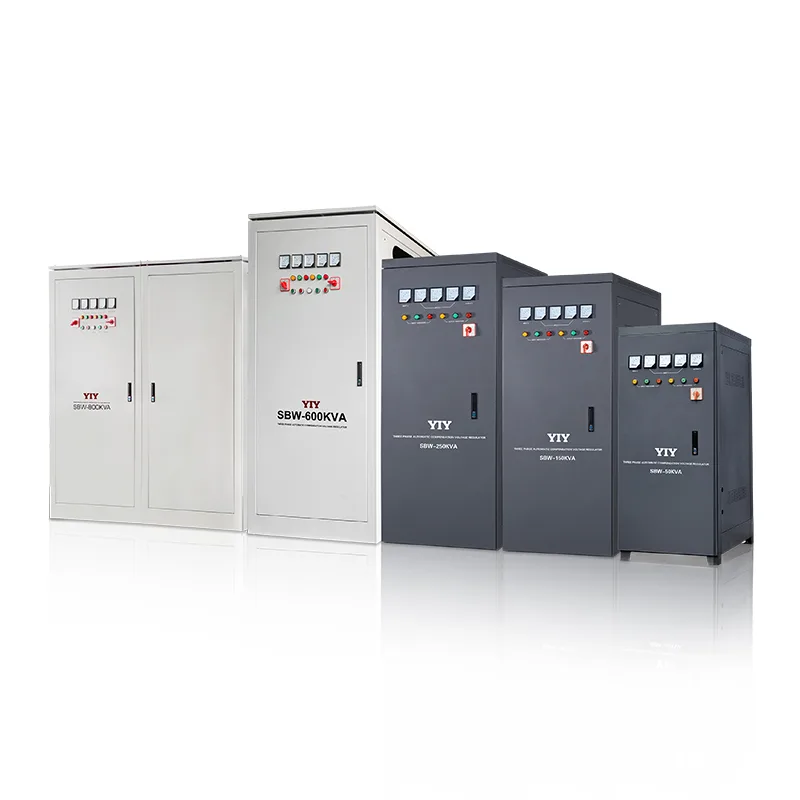
The voltage stabilizer kVA type that fits best is the one sized to your real load kW, power factor, starting current, input-voltage window, phase balance, and site derating, not the nearest catalog rating or a simple watts-to-kVA conversion. YIY’s documented stabilizer range spans 0.5 kVA to 3000 kVA, while IEC 60038 gives you the nominal-voltage reference point for checking site compatibility.
If your load list includes motors, HVAC, CNC, UPS, medical equipment, or mixed three-phase panels, the wrong capacity can lead to nuisance trips, overheated windings, unstable output, or overspending. This guide will help you decide how to compare load demand, phase configuration, voltage range, compliance proof, supplier capability, and the practical tradeoff between servo, relay, and digital/IGBT stabilizer designs.
Who needs to size voltage stabilizer kVA carefully?
You need this guide if you are converting real load data into a stabilizer shortlist, especially as a plant engineer, panel builder, EPC contractor, facility manager, technical buyer, or procurement stakeholder responsible for choosing the right kVA class, phase configuration, and regulation technology.
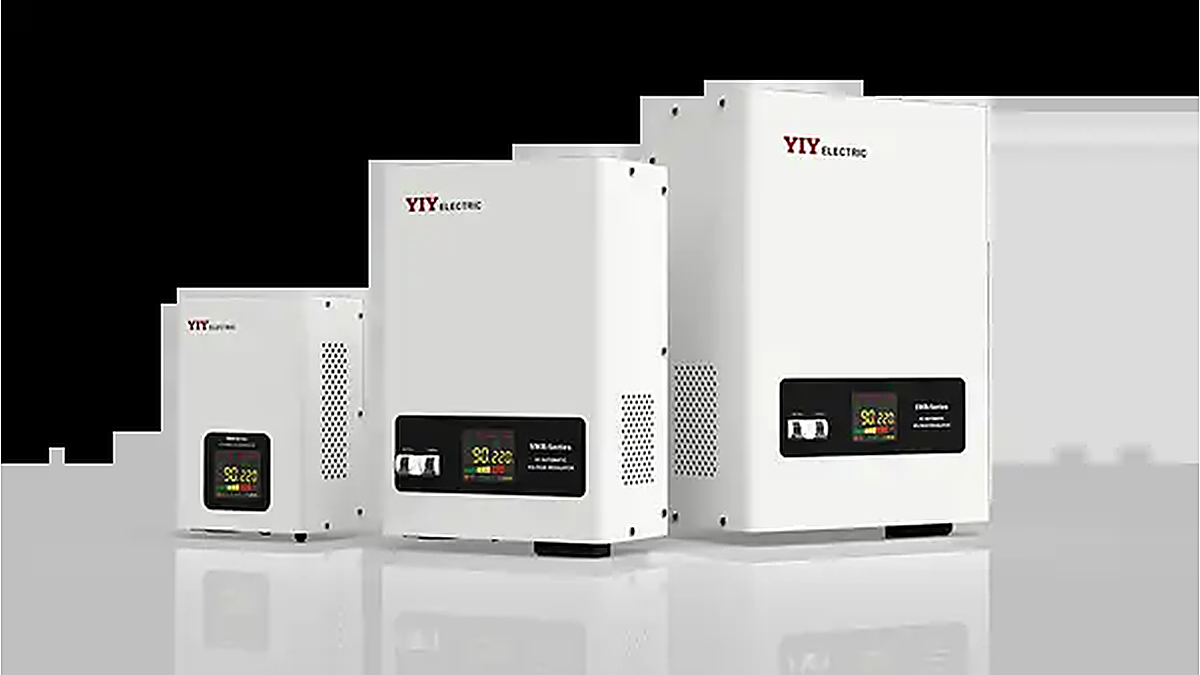
Your practical decision is not “which catalog model looks close.” It is whether your load needs a servo voltage stabilizer, automatic voltage regulator, digital/IGBT stabilizer, isolation-transformer option, or a customized OEM/ODM configuration that matches site voltage behavior and business risk.
| Your role | Main decision | Risk if skipped |
|---|---|---|
| Engineer / panel builder | Load kW, power factor, starting current, phase balance | Undersizing, overheating, nuisance trips |
| Facility / maintenance manager | Input-voltage range, dust, humidity, heat, ventilation | Repeat faults and poor equipment uptime |
| Procurement / EPC stakeholder | Supplier scope, documentation, customization, serviceability | Lowest-price selection with higher lifecycle cost |
For voltage references, check your local nominal supply against IEC 60038 standard voltages before finalizing input/output specifications. In practical terms, this means you should confirm whether your site is built around 230/400 V, 240/415 V, or another grid convention before approving a stabilizer nameplate.
This guide also helps you compare supplier capability, not only electrical ratings. YIY’s advantage is broader technology coverage across servo, relay, and digital/IGBT voltage-stabilization platforms, plus OEM/ODM support for export buyers who need private-label, project-specific, or panel-integrated designs.
Competitor positioning matters because some vendors emphasize narrower stories. For example, a supplier focused mainly on one regional market may show strength in government projects, railway projects, or isolation transformers, while your project may also need global export support, a visible IGBT/digital platform, OEM/ODM services, and larger manufacturing scale.
The cost of inaction is simple: a poorly matched stabilizer can protect the purchase budget while exposing your production line, HVAC, CNC, UPS, or medical load to avoidable downtime. Your goal is a specification that protects both equipment and operating continuity.
How do you calculate the right kVA from real load behavior?
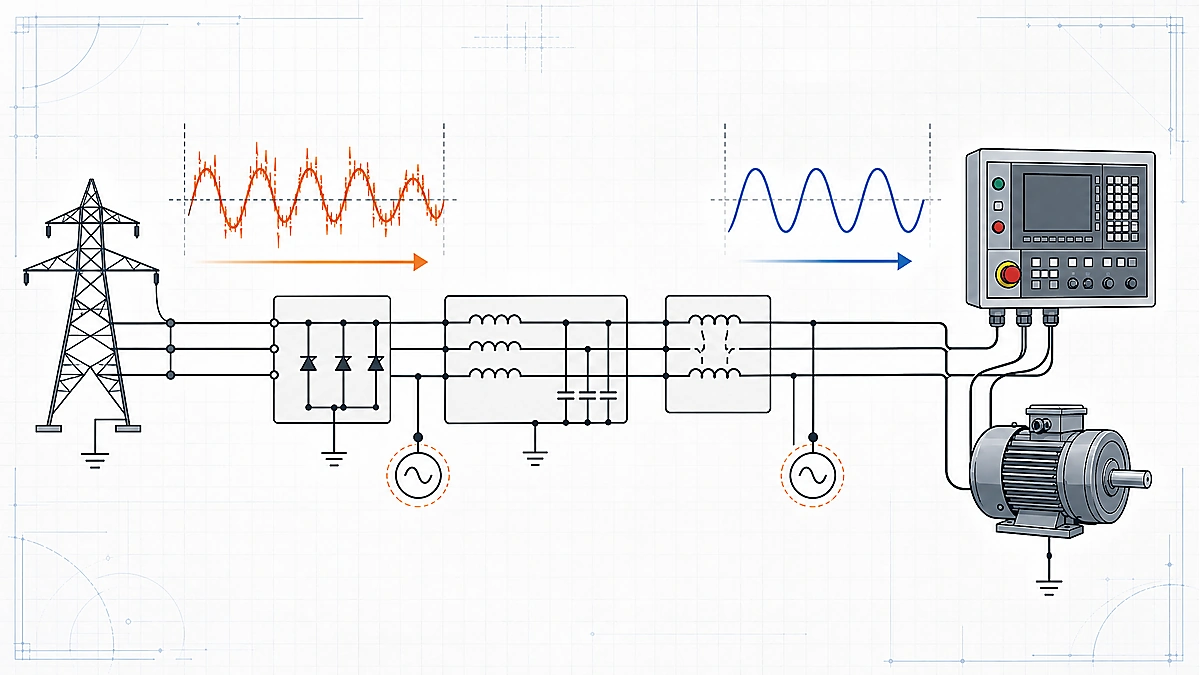
The right rating is the one that covers your real running load, starting surge, input-voltage variation, phase behavior, site environment, and application sensitivity with a practical safety margin. Start from measured load data, not only nameplate watts, because motors, compressors, UPS inputs, and CNC drives can draw very different current during startup or voltage dips.
Use kVA = kW ÷ power factor as the first screening calculation. For you, a 40 kW load at 0.8 PF needs at least 50 kVA before adding surge allowance, low-input derating, or future expansion.
For motor-heavy panels, check locked-rotor or starting current and decide whether the stabilizer must tolerate short peaks without output collapse. A practical engineering approach is to add a conservative margin for mixed industrial loads, then validate the final rating against the supplier’s overload curve.
| Check | Why it matters | If you skip it |
|---|---|---|
| Real kW and power factor | Converts demand into correct kVA | Undersized unit, heating, trips |
| Starting current | Motors and compressors surge at startup | Voltage sag during each start |
| Input-voltage window | Stabilizer capacity may derate at low input | Output may not hold under weak grids |
| Phase balance | Three-phase loads may not share current evenly | One phase overheats first |
| Load sensitivity | CNC, medical, UPS, and test equipment need tighter control | Process faults or nuisance alarms |
A 24 kW load at 0.8 PF is already 30 kVA before startup allowance, low-input derating, or expansion margin. If your calculation points toward this kind of mid-range panel class, the 20kva voltage stabilizer technical guide can help you compare how a nearby capacity tier fits real industrial loads.
Confirm nominal voltage against IEC 60038 before approving the input/output nameplate. Plainly, this prevents you from ordering a unit built for the wrong regional voltage convention, such as 230/400 V versus 240/415 V.
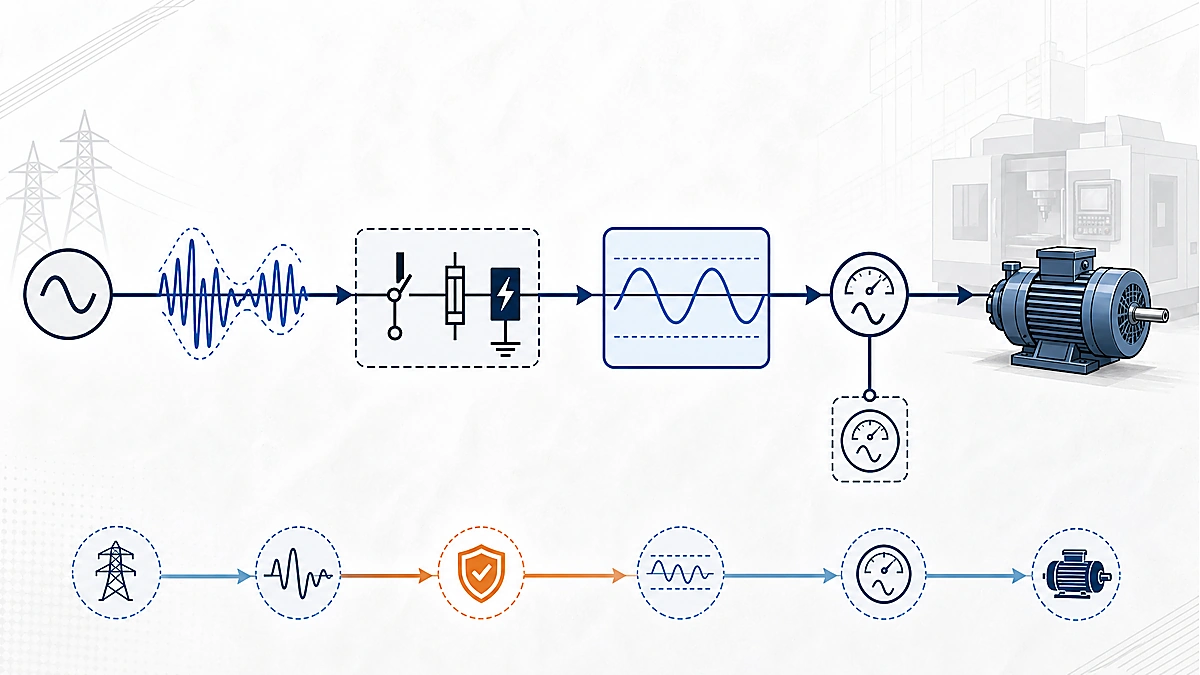
Site conditions also change your specification. For dust, humidity, heat, corrosive air, or unstable grids, ask for suitable enclosure protection, ventilation clearance, anti-condensation treatment, surge protection, and input-range customization.
Modern industrial units should also support visible alarms, event logging, and optional integration with maintenance or plant-control workflows. A cheaper underspecified stabilizer can protect purchase price while exposing your line to repeated stoppages, rejected batches, or emergency service costs.
Which standards and proof points should you request?
You should treat standards and documented test evidence as the filter that separates a safe shortlist from a risky catalog match. Verify mandatory electrical compatibility first, then use quality-system records, environmental adaptations, and monitoring features as best-practice evidence for long-term reliability.
IEC 60038 standard voltages defines internationally recognized nominal AC voltage references used when checking supply and equipment voltage compatibility. For you, this helps confirm whether the stabilizer should be built around 230/400 V, 240/415 V, or another regional convention before the purchase order is released.
| Evidence type | Verified requirement or best practice? | What you should ask for |
|---|---|---|
| Nominal voltage alignment | Requirement | Input/output voltage, phase, frequency, wiring system |
| Capacity and overload data | Requirement | kVA rating, load PF assumptions, overload curve |
| Protection functions | Requirement | Over/under-voltage, overload, short-circuit, phase failure |
| EMC or disturbance testing | Project-dependent requirement | Reference to IEC 61000-4-11 voltage dip and interruption testing where applicable |
| Quality management | Best-practice proof | Valid ISO 9001 quality management certification or equivalent audit evidence |
| Monitoring and logs | Best-practice proof | Alarm display, event records, communication options |
IEC 61000-4-11 addresses voltage dips, short interruptions, and voltage variation immunity testing for electrical and electronic equipment. This matters when your load includes PLCs, UPS inputs, CNC controls, medical devices, or test equipment that may fault during unstable grid events.
For outdoor panels, dusty workshops, coastal humidity, or high-temperature rooms, ask for enclosure/IP rating, ventilation clearance, anti-condensation treatment, surge protection, and derating assumptions. A lower-cost unit without these adaptations may save on procurement, but the value can disappear quickly through repeat trips, emergency maintenance, or production stoppage.
ISO 9001 is not a stabilizer performance standard, but it is useful proof that manufacturing, inspection, and corrective-action processes are controlled. For your evaluation file, request test reports, final inspection records, nameplate photos, wiring diagrams, and warranty terms before approving the supplier.
What does kVA mean for your stabilizer choice?
Voltage stabilizer kVA means the apparent-power capacity your stabilizer can carry while regulating unstable input voltage for your connected load. For you, it matters when voltage fluctuation, motor starting current, low power factor, or uneven three-phase loading can push the unit beyond its real operating capacity.
A voltage stabilizer, also called an automatic voltage regulator or AVR, keeps output voltage within a controlled range when the incoming supply rises or falls. The kVA rating is not the same as usable kW; you must interpret it with power factor, surge behavior, and site derating in mind.
Check this capacity question especially when your load includes:
- Motors, pumps, compressors, HVAC: starting current may exceed running current.
- CNC, UPS, medical, testing equipment: voltage instability can trigger faults.
- Three-phase panels: phase imbalance can overload one winding first.
- Weak grids or generator supply: low input voltage may reduce effective capacity.
- Dusty, humid, hot, or outdoor sites: enclosure, ventilation, IP rating, and anti-condensation protection affect reliability.
For deeper sizing logic, compare your load list with an industrial voltage stabilizer selection framework before finalizing the model. The practical goal is simple: choose a capacity class that protects uptime, not just a nameplate that looks close on paper.
How should you screen implementation risk before buying?
You should screen implementation risk by checking the load, the grid, the installation site, and the supplier evidence before you approve the model. This is where a technically correct calculation becomes a field-ready stabilizer specification.
| Check | Why it matters | If you skip it |
|---|---|---|
| Measured input voltage range | Confirms whether the unit can regulate during weak-grid periods | Output may drift or the unit may derate unexpectedly |
| Load current per phase | Shows whether a three-phase unit will be evenly loaded | One phase may overheat before the total kVA limit is reached |
| Starting current and inrush | Protects motor, compressor, HVAC, and UPS startup behavior | Startup sag, trips, or output instability |
| Ambient temperature and ventilation | Heat directly affects component life and overload tolerance | Shorter service life and more maintenance calls |
| Dust, humidity, or corrosive air | Determines enclosure and anti-condensation needs | Contamination, tracking, corrosion, or insulation faults |
| Documentation package | Supports installation, commissioning, and maintenance | Delays, wiring errors, and weak warranty evidence |
If your project involves a whole incoming panel or a balanced three-phase main line, compare your data against the 3 phase main line stabilizer sizing guide before locking the rating. That execution step helps you translate kW, PF, input range, and phase behavior into a more practical three-phase specification.
Before implementation, share your load list, starting current, input-voltage window, temperature, dust, humidity, ventilation space, and enclosure/IP expectations. Those details let the supplier check whether your chosen capacity tier can work under real conditions rather than only under nominal ones.
Where does YIY fit in your shortlist?
YIY fits when you need a stabilizer shortlist backed by documented range coverage, multiple regulation technologies, OEM/ODM flexibility, and implementation checks for real site conditions. For your planning, this means the same supplier can support small single-phase loads, panel-level industrial projects, and high-capacity three-phase installations without forcing every application into one technology story.
YIY’s documented stabilizer scope spans 0.5 kVA to 3000 kVA, with servo, relay, and digital/IGBT platforms referenced in internal technical materials. In practical terms, that range lets you evaluate light loads, 20 kVA to 50 kVA panel projects, and high-capacity installations without changing supplier category too early.
| Your application | Better-fit YIY direction | Implementation check |
|---|---|---|
| General industrial panels | Servo AVR / servo stabilizer | Confirm kW, PF, surge, and input range |
| Cost-sensitive light loads | Relay stabilizer | Check acceptable regulation accuracy and switching behavior |
| CNC, UPS, test, medical loads | Digital/IGBT stabilizer | Ask for alarm visibility, event records, and integration options |
| Export/OEM projects | Customized OEM/ODM configuration | Verify branding, wiring, enclosure, documentation, and test records |
YIY is also differentiated by manufacturing and export readiness: 16+ years in voltage stabilization, 30,000 square meters of factory scale, 1,000,000+ units annual capacity, exports to 130+ countries, and 120+ long-term partners are documented brand proof points. For you, those figures matter less as slogans and more as supply-risk indicators when repeat orders, private-label consistency, or project delivery schedules affect your sourcing decision.
When you evaluate industrial voltage stabilizer manufacturers, ask for certification evidence, factory capability, model range, customization support, warranty terms, wiring diagrams, and final test records. For procurement comparison, you can also use this guide to compare before buying a voltage stabilizer when your shortlist includes larger three-phase units.
What should you prepare before asking for a recommendation?
Your next step is to turn the shortlist into a verified specification by checking the remaining evidence gaps: real load demand, starting current, input-voltage range, phase balance, and installation environment. The more precise your first-pass data is, the faster you can separate an acceptable model from a risky one.
Before you ask for a quote, prepare the data that changes stabilizer selection in practice:
- Load list: kW, kVA, power factor, and critical equipment type.
- Starting behavior: motors, compressors, HVAC, pumps, UPS inrush.
- Site voltage: lowest and highest measured input voltage, not only nominal voltage.
- Phase system: single-phase, three-phase, neutral requirement, and phase imbalance.
- Environment: dust, humidity, heat, ventilation space, enclosure/IP expectations.
- Controls: alarm display, event logging, remote monitoring, or plant maintenance integration.
For nominal voltage alignment, compare your site convention with IEC 60038. Plainly, this helps you avoid ordering a unit built for 230/400 V when your project requires 240/415 V or another regional configuration.
If your calculation lands between two ratings, treat downtime risk as part of the buying decision. A cheaper undersized AVR, servo stabilizer, or digital stabilizer may cost less upfront, but repeated trips, overheated windings, and process interruptions can erase that saving quickly.
To get a YIY recommendation, start with a quick review of your load list, starting current, input-voltage window, installation conditions, enclosure needs, and monitoring expectations. YIY can then suggest the suitable capacity tier and model direction based on engineering fit rather than guesswork.
Frequently Asked Questions
How much power can a 5 kVA stabilizer handle?
A 5 kVA stabilizer can handle up to 5,000 VA of apparent power before derating or surge allowance. At 0.8 power factor, that equals about 4 kW of running load. For you, that means a 5 kVA unit may be too small for motor-heavy or low-PF loads even when the nameplate watts look close. Verify the load nameplate kW, measured current, power factor, motor starting current, and lowest site input voltage before selecting it.
How long does a 5 kVA stabilizer last?
A 5 kVA stabilizer can last several years when it is correctly sized, ventilated, protected from dust and humidity, and not overloaded. Lifespan depends more on your operating conditions than capacity alone. Check temperature rise, fan condition, terminal tightness, event history, and carbon brush wear on servo models during maintenance.
Which company is best for servo stabilizers?
The best servo stabilizer company is the one that can prove fit for your load, voltage range, documentation needs, and after-sales requirements. For B2B procurement, verify factory capability, model range, customization support, warranty terms, test reports, wiring diagrams, and quality-system evidence such as ISO 9001 certification. Ask the supplier to review your load list and confirm the sizing assumptions before quoting.
What are the common problems with stabilizers?
Common stabilizer problems include overload trips, output fluctuation, overheating, relay or servo motor wear, loose terminals, phase imbalance, and failure to regulate at low input voltage. Most issues trace back to undersizing, poor ventilation, harsh environments, or incorrect input range. Check measured input voltage, load current per phase, enclosure temperature, alarm records, and installation clearance before replacing the unit.
What is the lifespan of a servo stabilizer in industrial use?
A servo stabilizer’s lifespan in industrial use depends on load percentage, voltage fluctuation frequency, dust, heat, humidity, and maintenance quality. Servo units have moving parts, so carbon brush, motor, and variac condition matter. Build a maintenance routine that records output stability, brush wear, abnormal noise, temperature, and overload events. If your site is dusty or hot, specify stronger enclosure and cooling arrangements.
Final thoughts
Your best voltage stabilizer kVA choice is the one matched to measured load demand, power factor, starting current, input-voltage range, phase behavior, and site conditions. Start with the operating reality of the load, then move to the suitable technology: servo AVR for many industrial panels, relay units for lighter cost-sensitive applications, or digital/IGBT stabilizers for sensitive equipment that needs tighter control and better monitoring.
For procurement, this matters because a low-price but undersized unit can create repeat trips, overheating, production interruptions, and higher service costs. Treat capacity selection as an uptime decision, not only a catalog comparison.
Start with a quick-fit checklist to screen your load type, kVA range, voltage window, and installation environment before requesting a detailed engineering review from YIY.
About YIY
Zhejiang Yiyen Holding Group Co., Ltd. (YIY) is a professional voltage stabilizer manufacturer with 16+ years of experience. With a 30,000 square meter modern facility and an annual production capacity of 1,000,000+ units, YIY products are exported to 130+ countries. YIY provides OEM/ODM customization services and ISO 9001:2015 quality-management support for stable voltage protection solutions.
Contact Us
Email: yiyen at yiyen.com
Phone/WhatsApp: +86 13587452904
Website: https://www.yiyavr.com/