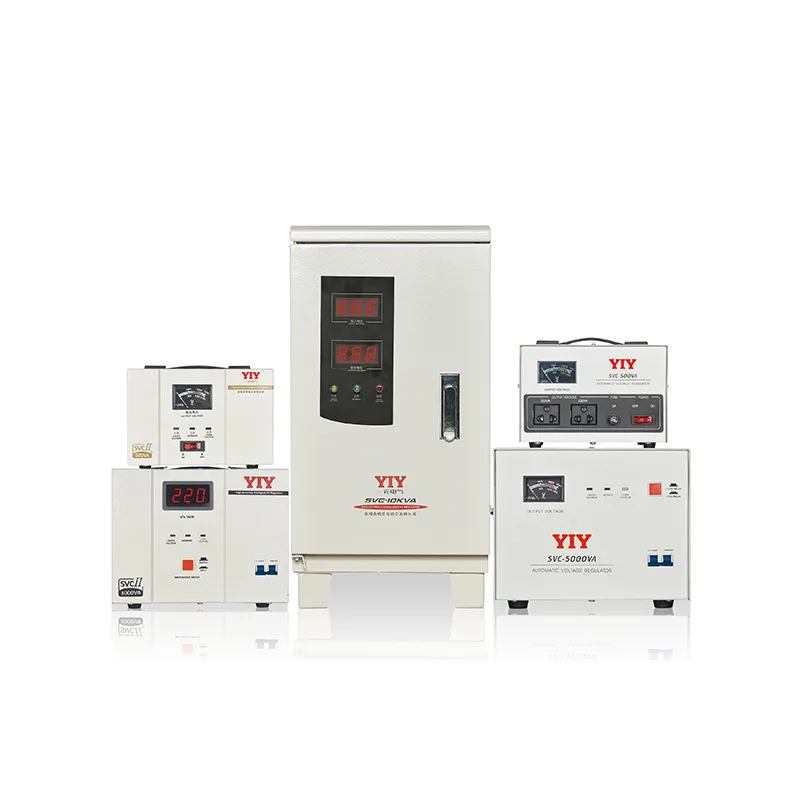
A servo stabilizer 5kva is a good fit when your connected load needs smoother voltage correction than a relay AVR can provide, but does not require the ultra-fast response or higher cost of a static/IGBT regulator.
In practical terms, this capacity tier suits sensitive single-phase equipment, small machinery, lab instruments, telecom loads, commercial electronics, and control cabinets where stable output voltage matters more than millisecond-level correction.
This guide helps you decide whether this three-phase or single-phase servo setup is the right choice by walking through the load problem, servo-versus-relay comparison, working principle, sizing checks, procurement criteria, maintenance expectations, and final quotation review.
If your site sees recurring undervoltage, overvoltage, or unstable mains, the decision is not only “5 kVA or not.” You also need to decide whether a servo voltage stabilizer, relay AVR, static AVR, or higher-capacity stabilizer matches your actual load behavior, tolerance, and maintenance context.
What Problem Does a 5 kVA Servo Stabilizer Solve for Your Load?
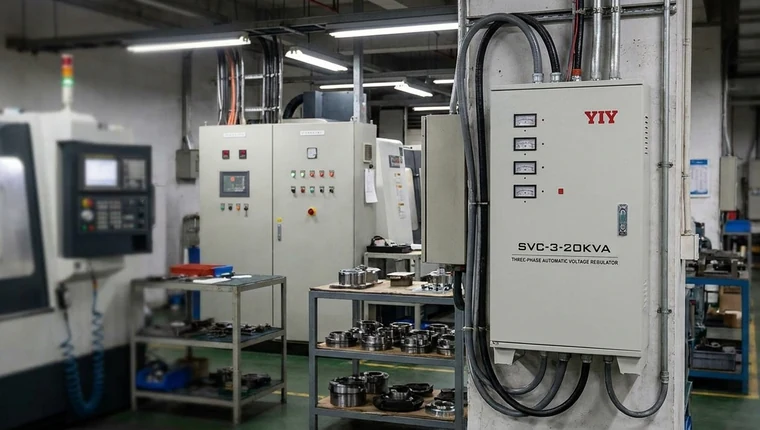
You use a 5 kVA servo stabilizer when your equipment is affected by sustained voltage drift, not just one-off surge events. This power class is usually evaluated before larger panel-level systems when you want to protect a defined load such as a lab bench, telecom rack, small CNC control cabinet, medical support device, office electronics cluster, or light-duty single-phase machine.
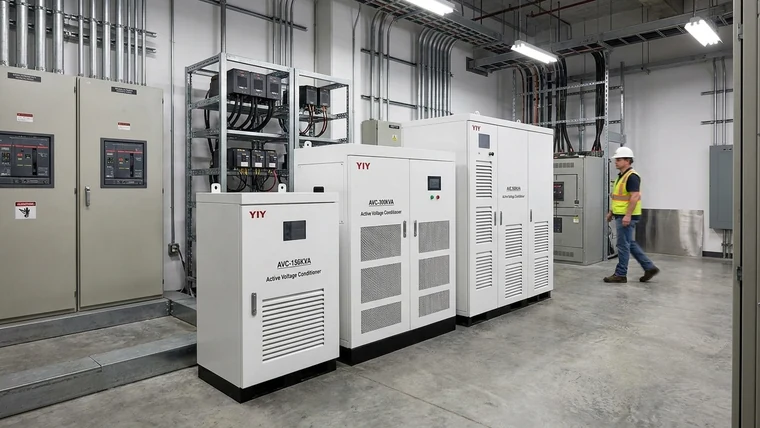
A 5 kVA rating means the stabilizer can support up to 5 kilovolt-amperes of apparent power under the right conditions. For you, that is not the same as saying it can support any 5 kW load. Power factor, startup current, duty cycle, ambient heat, and safety margin all change the real capacity you can use.
Common symptoms that justify evaluation include:
- Frequent voltage sag during peak grid demand or generator changeover
- Equipment resets on controllers, lab devices, POS systems, telecom gear, or small servers
- Unstable motor behavior such as humming, speed variation, or failed starts
- Transformer heating or abnormal temperature rise under normal operation
- Measured site voltage that falls outside the equipment nameplate tolerance
International nominal voltage expectations are often referenced through IEC 60038 standard voltages, which defines standard supply voltage values used in many markets. For you in practice, this does not mean every site remains inside a perfect band; it means your selection should compare measured input voltage against both the equipment requirement and the stabilizer’s correction range.
This capacity tier is less suitable for large three-phase machines, lifts, compressors, high-inrush motors, or full distribution panels. If your connected equipment is expanding beyond a defined single-phase load, you may need a larger servo stabilizer, a three-phase model, or a panel-level review.
When Is Servo Correction Better Than Relay or Static AVR?
You should choose servo correction when you need tighter and smoother output regulation than relay tap switching, but your load does not justify the fastest electronic correction of static or IGBT systems. For many 5 kVA-class applications, that means servo sits between basic low-cost AVR protection and premium high-speed regulation.
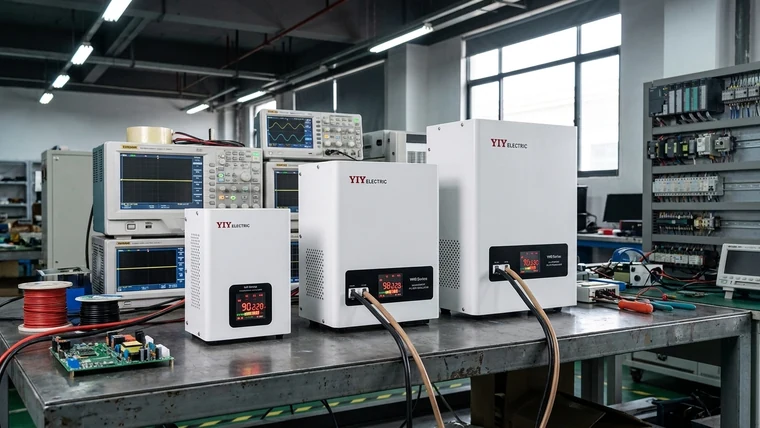
A relay unit switches between fixed transformer taps. That can be effective for basic home, office, or non-critical loads, but output correction happens in steps. A servo stabilizer uses motor-driven regulation, so the output adjustment is smoother and typically more precise.
| Technology | Typical strength | Tradeoff | Best fit for you |
|---|---|---|---|
| Relay AVR | Low cost, simple tap switching, easy replacement | Step-based correction and wider output variation | Basic home, small office, non-critical equipment |
| Servo stabilizer | Smooth correction, commonly around +/-0.5% to +/-3% output accuracy, maintainable design | Mechanical parts need periodic inspection; not ultra-fast | Commercial electronics, lab loads, telecom, control cabinets, light machinery |
| Static/IGBT AVR | Very fast electronic correction for sharp disturbances | Higher cost and more electronic complexity | Mission-critical automation, precision instruments, fast-fluctuation environments |
The +/-0.5% to +/-3% accuracy range means the output voltage stays closer to the set value than broad-tolerance alternatives. For your equipment, tighter output can reduce nuisance resets, overheating stress, unstable control behavior, and inconsistent operation.
A relay voltage stabilizer still makes sense when your load is simple, the budget is tight, and the equipment can tolerate stepped correction. Servo becomes more attractive when your device is sensitive enough that frequent relay switching or wider output variation becomes a concern.
Static or IGBT regulation is stronger when milliseconds matter. If your process stops when a short voltage dip occurs, or if the load includes highly sensitive automation or medical-adjacent electronics, you should compare the cost of a faster topology against the cost of downtime. IEC 61000-4-11 voltage dip testing defines immunity test methods for voltage dips and interruptions; for you, the practical point is that disturbance duration matters as much as voltage level.
How Does a Digital Servo Stabilizer Regulate Voltage?
You get smoother correction because a digital servo stabilizer senses voltage continuously and uses a servo motor to adjust an autotransformer until output returns to the target range. In daily use, it works as an automatic voltage regulator that corrects sustained voltage drift more gradually than a relay AVR.
A typical closed-loop correction sequence works like this:
- Voltage sensing: the sensing circuit samples input and output voltage continuously.
- Reference comparison: the controller compares measured output with the target, such as 220 V, 230 V, 380 V, 400 V, or 415 V depending on your system.
- Error calculation: the control board determines whether voltage must be raised or lowered.
- Motor actuation: the servo motor moves the carbon brush, contact arm, or variac mechanism.
- Autotransformer adjustment: the contact position changes the effective turns ratio.
- Stabilized output: the unit stops correction when output returns within the configured tolerance band.
Those nominal voltages matter because your stabilizer must match the actual site supply and the equipment nameplate. A 220/230 V single-phase system and a 380/400/415 V three-phase system require different architecture, protection design, and installation planning.
Response time also matters. Servo correction is commonly suited to slow or moderate fluctuation, often discussed in the 1-2 second correction class, but it is not intended to solve lightning impulses, sub-cycle transients, or very fast dips. If your problem is a sharp transient, you may need coordinated surge protection, UPS support, static regulation, or a different protection architecture.
Site conditions influence reliability as much as the control principle. In dusty, humid, hot, or weak-grid rooms, confirm ventilation, enclosure protection, ambient temperature allowance, bypass function, alarms, and inspection access before you approve the model.
How Should You Size This Capacity Tier Before Quotation?
You should size this capacity tier from measured load behavior, not from the 5 kVA label alone. Your goal is to confirm connected kVA, power factor, startup current, phase type, input voltage range, and service margin before you treat any quotation as comparable.
A simple sizing formula is:
Required kVA = connected kW / power factor
If your equipment consumes 3.5 kW at 0.8 power factor, the apparent load is 4.375 kVA before startup current and safety margin. For you, that means a nominal 5 kVA stabilizer may look sufficient on paper but still be tight if the load starts hard, runs continuously, or operates in a hot environment.
| Check | Why it matters | If you skip it |
|---|---|---|
| Connected load in kW/kVA | Your sizing starts from actual operating demand, not device count | The unit may run overloaded or oversized |
| Power factor | Low PF increases apparent power demand | A 5 kVA unit may not support the real load |
| Startup or inrush current | Motors, compressors, pumps, and transformers draw higher current at start | You may see trips, voltage dip, or failed startup |
| Safety margin | Headroom covers heat, aging, and future load growth | You may replace the unit sooner than planned |
| Phase type | Single-phase and three-phase designs are not interchangeable | Installation may be blocked or unsafe |
| Input voltage range | The stabilizer must correct your worst measured mains condition | Output may remain unstable under real grid conditions |
| Output accuracy | Sensitive loads may need tighter voltage tolerance | Your equipment may still reset, heat, or behave inconsistently |
| Bypass and service access | Maintenance needs safe isolation and visibility | Downtime becomes harder to diagnose |
Single-phase servo models can cover 0.5KVA-50KVA, while three-phase servo configurations can cover 3KVA-100KVA+ where supported by product specifications. For you, this means a 5 kVA single-phase unit may fit a defined rack, bench, or small machine, but planned expansion into motors, production equipment, or larger distribution may justify a three-phase sizing review.
For a broader engineering workflow, use YIY’s industrial voltage stabilizer selection guide to check load kVA, phase type, voltage range, power factor, and site conditions before you finalize the specification.
If your load includes high-inrush motors, lifts, compressors, or larger three-phase machines, review 3 phase main line stabilizer sizing instead of forcing the application into a small single-phase category.
What Specifications Should You Confirm on the Datasheet?
You should confirm the electrical, mechanical, protection, and maintenance details before comparing price. A lower quotation is not necessarily cheaper if it omits bypass, metering, alarms, protection functions, enclosure upgrades, or certification scope.
Key datasheet points include:
- Input voltage range and whether it matches your measured minimum and maximum
- Output voltage setting and accuracy tolerance
- Phase type, frequency, wiring method, and neutral requirements
- Overload capacity and cutoff behavior
- Over/under-voltage protection and recovery mode
- Manual or automatic bypass
- Metering, alarms, indicators, and event visibility
- Cooling method, ventilation clearance, and ambient temperature rating
- Enclosure/IP suitability for dust, humidity, and installation location
- Maintenance access for brush/contact inspection
- Warranty terms, test report scope, and certification documentation
Output accuracy around +/-0.5% to +/-3% is useful only when the rest of the design fits your site. If your measured input voltage falls outside the stabilizer’s range, the unit cannot correct it reliably. If your room is hot or dusty and the enclosure is not suitable, precision on the datasheet will not prevent maintenance issues.
For 5kva servo stabilizer price evaluation, expect cost to vary with copper content, input range, output precision, enclosure, metering, bypass, protection package, customization, certification scope, order quantity, warranty terms, and service support. Last verified: 2026-04-28. For you, the practical rule is simple: compare quotations only after the specification lines match.
What Should Your Procurement Review Include?
You should complete a structured procurement review before approving this power class. The right unit is the one that fits your measured voltage, load behavior, installation constraints, maintenance workflow, and commercial requirements.
| Check | Why it matters | If you skip it |
|---|---|---|
| Verify site voltage logs | Confirms the real input range and fluctuation pattern | You may buy a unit that cannot correct your worst condition |
| Match load kVA and startup behavior | Confirms the stabilizer can support running and starting demand | You may experience nuisance trips or failed starts |
| Compare topology fit | Confirms whether servo, relay, or static is appropriate | You may overpay or under-protect the load |
| Align quotation scope | Ensures phase, range, accuracy, enclosure, bypass, metering, and alarms match | Low price may hide missing features |
| Check certification and test documents | Confirms stated quality and compliance claims | You may approve unsupported specifications |
| Review maintenance access | Confirms your technicians can inspect and service the unit safely | Downtime may increase during routine service |
| Confirm warranty and service path | Defines responsibility after installation | Support disputes become more likely |
Before you compare suppliers, ask each one for the same baseline: phase type, rated kVA, input voltage range, output accuracy, protection list, bypass type, enclosure rating, metering, alarms, cooling method, certification scope, test report, warranty terms, and customization notes.
If you are evaluating multiple quotations, it can help to compare before buying a voltage stabilizer using the same structure even when the reference article covers a larger kVA class. The procurement logic is similar: align the electrical and service requirements first, then compare price.
How Does YIY Support This Application Decision?
You can use YIY’s technical review when you are unsure whether servo, relay, or IGBT is the best match for your application. The useful first step is not a large data request; it is a quick-fit review of your voltage range, load type, phase, kVA, startup behavior, and maintenance context.
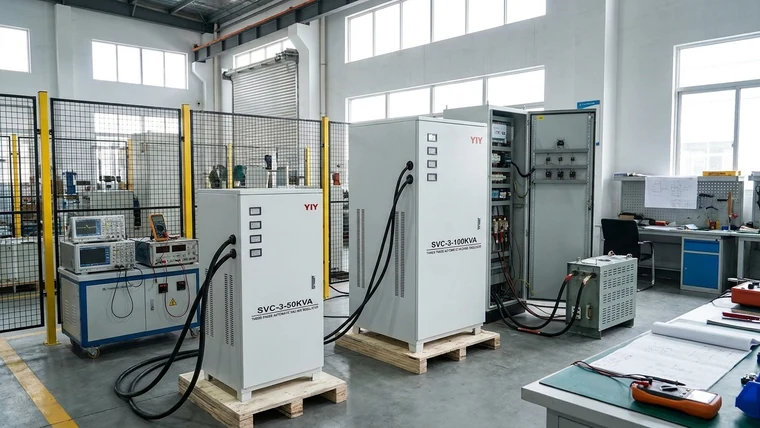
YIY covers Servo, Relay, and IGBT voltage stabilization technologies, which helps when your application does not fit neatly into one product category. A 5 kVA load may look simple, but your real decision may depend on whether the site has slow voltage drift, sharp dips, high inrush, generator fluctuation, dusty conditions, or limited service access.
YIY’s product range covers small residential and commercial stabilizers through high-capacity industrial systems, with structured series such as SVC, PRO, and PWR for different precision and load requirements. That means your selection can be based on application behavior rather than a single headline kVA value.
For trust verification, ask for documentation that matches your procurement requirements. YIY references ISO 9001:2015 quality management, ISO 14001 environmental management, CE compliance where applicable, and documented testing procedures. For you, the concrete verification action is to request the certificate copy, confirm the issuing body, check the certificate validity date, and match the product scope to the stabilizer you are buying.
Frequently Asked Questions
How Should You Compare Pricing for Servo Stabilizer 5kva?
Compare pricing only after the technical scope is aligned. Ask each supplier to itemize phase type, input voltage range, output accuracy, copper content, enclosure rating, bypass, metering, alarms, certifications, warranty terms, and service scope. Then verify those items against the datasheet and your equipment nameplate before treating one offer as cheaper.
Can a 5 kVA Servo AVR Run Motor Loads with Startup Current?
A 5 kVA servo AVR can run some motor loads only if the starting current stays within the stabilizer’s overload capacity. Before ordering, verify running current, locked-rotor or startup current, power factor, duty cycle, and start frequency. If the motor, pump, compressor, or transformer has high inrush, your application may need a larger kVA rating or a different topology.
How Often Should a Servo-Based Voltage Stabilizer Be Maintained?
A servo-based stabilizer should be inspected periodically because it uses motor-driven and contact-based regulation. Your interval depends on dust, humidity, heat, load level, operating hours, and manufacturer guidance. Check brush/contact wear, ventilation, terminal tightness, abnormal noise, output accuracy, alarms, and bypass function. For harsh sites, record inspection dates and compare voltage logs before and after maintenance.
What Affects the Quotation for This Power Class?
Most of the spread comes from what is inside the quote: how wide the input window is, how tight the output is, the winding metal, the enclosure and which protections, meters and bypass are included. Order size, warranty and service terms matter too. If two offers differ sharply, request a line-by-line exclusion list before assuming the lower price is better.
What Compliance Checks Should You Complete Before Procurement?
Ask for the datasheet, test report, certificate copies, warranty statement, and wiring diagram. Then verify certificate names, validity dates, issuing bodies, rated voltage, rated capacity, and product scope. This gives you a practical audit trail instead of relying only on a supplier’s general compliance statement.
Final Thoughts
A 5 kVA servo stabilizer is the right choice when your measured voltage instability, sensitive connected load, and moderate correction-speed requirement point to smooth servo regulation rather than basic relay switching or faster static control. Your decision should start with evidence: input voltage range, connected kVA, power factor, startup current, phase type, operating environment, and maintenance access.
Start with a quick-fit checklist or first-pass application review before preparing detailed logs. If your load still fits this capacity tier, ask YIY for a technical review to confirm whether servo, relay, or IGBT is the best match for your application and maintenance context.
About YIY
Zhejiang Yiyen Holding Group Co., Ltd. (YIY) is a professional voltage stabilizer manufacturer with 16+ years of experience. With a 30,000sqm modern facility and an annual production capacity of 1,000,000+ units, YIY products are exported to 130+ countries. The company provides OEM/ODM customization services and voltage protection solutions across residential, commercial, and industrial applications.
Contact Us
Email: yiyen@yiyen.com
Phone/WhatsApp: +86 13587452904
Website: https://www.yiyavr.com/