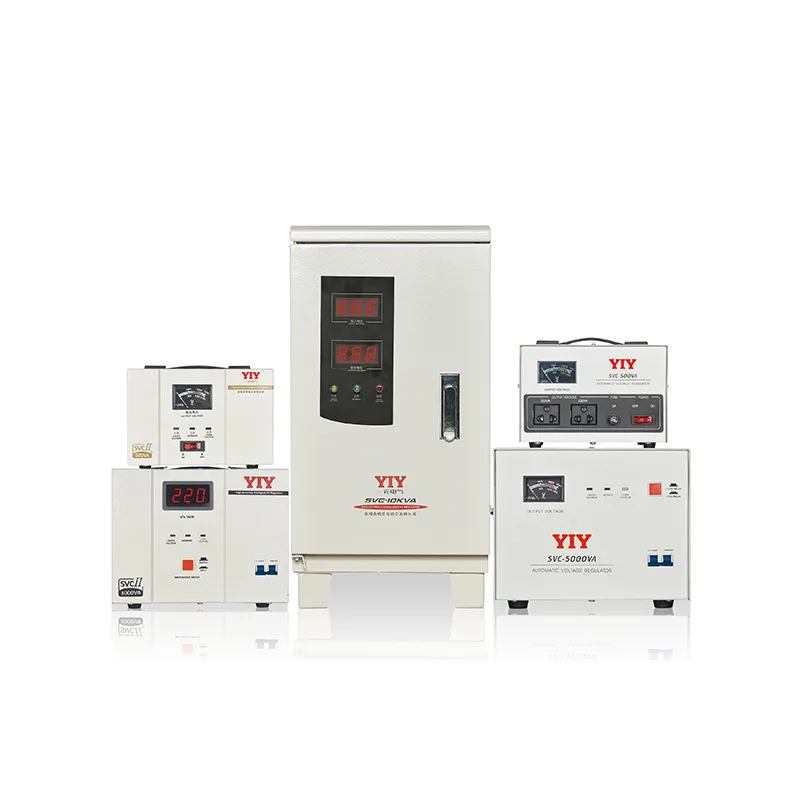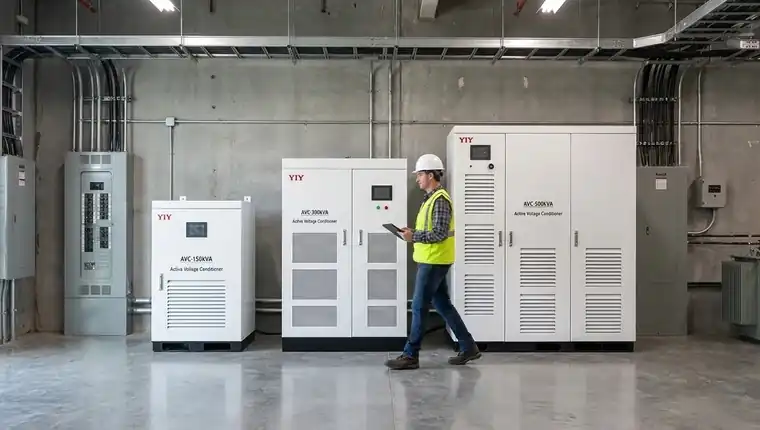
Servo stabilizer 5kva price varies because a 5kVA label does not tell you the input voltage range, phase configuration, correction accuracy, overload margin, protection package, enclosure design, or supplier support behind the quote.
If your 5kVA servo AVR will protect motors, CNC controls, UPS inputs, medical devices, lab equipment, or mixed commercial loads, the lowest offer can hide missing margin or weak serviceability. This guide will help you decide which cost drivers matter, when servo technology fits better than relay or static designs, how to size the unit, and what to verify before you approve a supplier quote.
What Pricing Problem Are You Really Trying to Solve?
You are trying to find the lowest safe cost for your actual voltage condition and load behavior, not simply the cheapest 5kVA stabilizer on a price list.
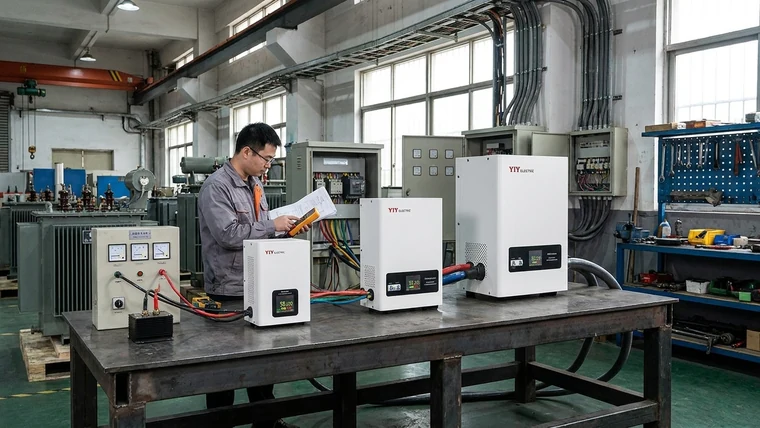
A 5kVA quote becomes meaningful only when you normalize the technical baseline. Your supplier may quote a narrow input range, a wide input range, single-phase wiring, three-phase wiring, loose correction accuracy, tighter output regulation, copper or aluminum winding options, basic protection, or a more complete bypass and alarm package. Each version can be called “5kVA,” but each version carries a different risk profile.
For nominal voltage language, IEC 60038 standard voltages provides internationally recognized voltage references. For you, that means your RFQ should not say only “normal voltage” or “standard input.” It should state the nominal system voltage and the measured voltage fluctuation range at your site.
If your application may later move from a small single-phase 5kVA unit into a plant-wide or machine-line setup, review YIY’s three-phase stabilizers early. That helps you avoid comparing a compact single-phase servo AVR with an industrial three-phase stabilizer as if they share the same cost structure.
| Quote driver | Why it changes cost | What it means for you |
|---|---|---|
| Input voltage range | Wider correction range needs different transformer design and protection settings | A cheaper unit may not correct your real low-voltage or high-voltage condition |
| Phase configuration | Single-phase and three-phase units use different wiring, controls, and enclosure layouts | Confirm phase before comparing suppliers, especially for expansion plans |
| Output accuracy | Tighter regulation usually requires better control and correction components | Sensitive electronics may justify the added cost; simple loads may not |
| Load behavior | Motors, compressors, UPS inputs, and mixed loads create different surge demands | The same 5kVA rating may be safe for one load and undersized for another |
| Protection package | Cutoff, delay, overload, bypass, surge protection, and alarms add hardware | Missing protection can turn a low quote into a maintenance problem |
| Enclosure and environment | Dust, humidity, heat, ventilation, and IP needs affect casing and cooling | Your installation site can make a catalog unit unsuitable |
| Documentation and support | Test reports, wiring diagrams, warranty, spare parts, and after-sales access cost money | Stronger supplier support reduces commissioning and service risk |
The practical takeaway is simple: if two suppliers quote different prices, first check whether they are quoting the same product. Your comparison should start with measured site voltage, phase, load current, power factor, startup current, duty cycle, installation environment, protection requirements, and support terms.
When Does Servo Technology Justify the Extra Cost?
You should choose servo when your load benefits from smoother continuous voltage correction and your site has sustained voltage fluctuation that a basic relay stabilizer may not handle gracefully.
A servo stabilizer uses a motor-driven correction mechanism rather than simple tap switching. The control board senses voltage deviation, the servo motor moves the carbon brush along the variac or autotransformer, and the output returns toward the target voltage. This gives your load smoother regulation than relay switching, while usually costing less than high-speed static or IGBT regulation.
Relay technology can still be the right choice when your load is simple, voltage fluctuation is occasional, and budget is the main constraint. If you are protecting small appliances, basic commercial loads, or non-critical equipment, a relay voltage stabilizer may meet your needs without the mechanical complexity of servo correction.
| Technology | Correction behavior | Typical price position | Maintenance profile | Best fit for your decision |
|---|---|---|---|---|
| Relay stabilizer | Step-based switching between taps | Lowest | Low mechanical service burden | Budget-first, less sensitive, simple loads |
| Servo stabilizer | Motor-driven continuous correction | Mid-range | Brush, servo, ventilation, and contact inspection | Motors, CNC auxiliaries, lab equipment, commercial loads needing steadier voltage |
| Static stabilizer | Electronic correction, no variac movement | Higher | Less mechanical wear, more electronic diagnostics | Sites needing faster correction and lower mechanical maintenance |
| IGBT stabilizer | High-speed electronic regulation | Highest | Requires stronger electronic service capability | Precision production, medical/lab loads, demanding automation |
Standards such as IEC 61000-4-11 voltage dip testing are useful because they frame voltage dips and interruptions as testable disturbances, not vague “bad power” complaints. In practical terms, you should match the stabilizer topology to the type of voltage problem you actually see: sustained low voltage, frequent dips, step changes, overload trips, or sensitive electronic resets.
A servo unit can be a strong fit when your voltage tends to stay outside the desired range for longer periods. It may not be the best fit when your problem is extremely fast transient disturbance, severe harmonic distortion, or a process that cannot tolerate even short correction delays. In those cases, you may need a static or IGBT design, surge protection, UPS support, isolation, or a broader power-quality review.
How Does the Servo Correction Mechanism Affect Reliability?
You get smoother regulation from a servo stabilizer, but you also take responsibility for a motor, brush, variac or autotransformer assembly, sensing circuit, and protection system that must be specified and maintained correctly.
The basic correction sequence is straightforward:
- The control board reads input and output voltage.
- The MCU or control circuit compares the measured output with the set value.
- The servo motor rotates in the required direction.
- The carbon brush moves along the variac or autotransformer contact surface.
- The turns ratio changes until output voltage returns toward the target.
- Overvoltage, undervoltage, overload, or abnormal conditions trigger alarm or cutoff when those protections are included.
That mechanism affects price because better brush material, more robust control boards, stronger transformer design, cleaner assembly, and clearer protection logic all add cost. A low-cost unit may still carry a 5kVA label, but your maintenance team may later discover limited spare parts, poor contact quality, weak fault indication, or no bypass.
Reliability depends on how the unit is built and how you maintain it. Brush wear is normal in servo designs, so your RFQ should ask for inspection intervals, spare brush availability, replacement procedure, ventilation requirements, and whether bypass is manual or automatic. If your protected load cannot stop during service, bypass design can matter more than a small upfront price difference.
Your environment also matters. Dust can affect moving contacts and cooling, humidity can accelerate corrosion, heat can reduce component life, and poor ventilation can push the stabilizer toward thermal stress. If your installation area has any of these conditions, specify enclosure protection, ventilation clearance, operating temperature, cable entry direction, and service access before you compare price.
Which Specifications Should You Confirm Before Asking for a Quote?
Before you ask for a 5kVA quote, confirm measured input voltage, phase, load current, power factor, startup behavior, correction accuracy, protection requirements, enclosure, bypass, documentation, warranty, and support location.
The common sizing formula for single-phase load is:
kVA = voltage x current / 1000
For you, this means a 230V load drawing 18A is about 4.14kVA before margin. If that load has motor startup current, poor power factor, future expansion, or long daily operation, a 5kVA stabilizer may be too close to its limit. You should not size from watts alone unless power factor and surge behavior are understood.
For three-phase systems, your sizing logic changes, and wiring assumptions can change the quote basis. If you are unsure whether your project is single-phase, three-phase, main-line, or machine-level protection, use an industrial voltage stabilizer selection framework before final RFQ wording. For larger three-phase assumptions, this 3 phase main line stabilizer sizing guide can help you separate line-level protection from individual equipment protection.
| Check | Why it matters | If you skip it |
|---|---|---|
| Measured input voltage range | Determines correction range, transformer ratio, and cutoff settings | You may buy a unit that cannot correct your real grid condition |
| Single-phase or three-phase supply | Changes wiring, protection design, enclosure, and cost | Quotes may look comparable but describe different products |
| Running current and power factor | kVA is not the same as usable kW when power factor is low | The stabilizer may run hot or overload during normal operation |
| Startup current | Motors and compressors can draw high inrush current | The AVR may trip or fail early even if running load seems safe |
| Load sensitivity | CNC controls, lab devices, UPS inputs, and medical equipment have different tolerance | You may overpay for a simple load or underprotect a sensitive one |
| Output accuracy requirement | Tighter regulation adds cost but may protect sensitive electronics better | You may accept regulation that does not match your process need |
| Bypass arrangement | Keeps your load serviceable during stabilizer maintenance or fault | A small stabilizer issue can stop the protected equipment |
| Protection functions | Overload, delay, over/under-voltage cutoff, surge protection, alarms, and indicators reduce risk | You may lose fault visibility or damage equipment during abnormal events |
| Enclosure and installation site | Heat, dust, humidity, and access affect service life | The unit may age quickly or become difficult to maintain |
| Documents and testing | Datasheet, wiring diagram, test report, warranty, and packing terms prove what was quoted | Procurement may approve a low price without evidence |
After you collect these details, request a quote that states the same assumptions in every supplier response. Ask for the input range, output voltage, accuracy, capacity, winding material, overload capacity, protection list, enclosure type, bypass, cooling method, dimensions, weight, warranty, lead time, packing, freight terms, and price validity date.
How Should You Compare 5kVA, 10kVA, 15kVA, and 20kVA Quote Logic?
You should compare capacity tiers by load margin and specification scope, not by multiplying a 5kVA price into a 10kVA, 15kVA, or 20kVA expectation.
A 10kVA unit may require a larger transformer, stronger protection, larger enclosure, heavier packing, and different installation work. A 15 kva servo voltage stabilizer price can change further if the supplier quotes three-phase, oil-cooled, wide-range input, custom enclosure, or industrial bypass. A servo voltage stabilizer 20kva price may also include more demanding freight, site commissioning, and service expectations.
| Capacity tier | Common comparison mistake | Better way to evaluate |
|---|---|---|
| 5kVA | Comparing only price and brand name | Confirm phase, input range, load current, surge, and protection |
| 10kVA | Assuming it costs exactly double a 5kVA unit | Check transformer design, wiring, enclosure, and overload margin |
| 15kVA | Treating single-phase and three-phase quotes as interchangeable | Normalize phase, cooling, winding, bypass, and site conditions |
| 20kVA | Ignoring installation, freight, and service requirements | Include access, cable sizing, commissioning, and after-sales support |
This is especially important in India-focused sourcing, where searches such as “10 kva servo stabilizer price in india” or “servo stabilizer 10kva price single phase” may return products with very different voltage ranges, winding materials, protection levels, and service commitments. For your purchase, a supplier’s local price list is useful only after the technical baseline is identical.
If you are comparing across higher-capacity projects, use the same discipline you would use to compare before buying a voltage stabilizer: normalize the technical assumptions first, then compare commercial terms. That habit prevents a low quote from winning simply because it excludes the protections or support your site actually needs.
What Supplier Proof Should You Require Before Approval?
You should require proof that the supplier can deliver the exact specification you priced, support it after installation, and document quality clearly enough for procurement and maintenance teams.
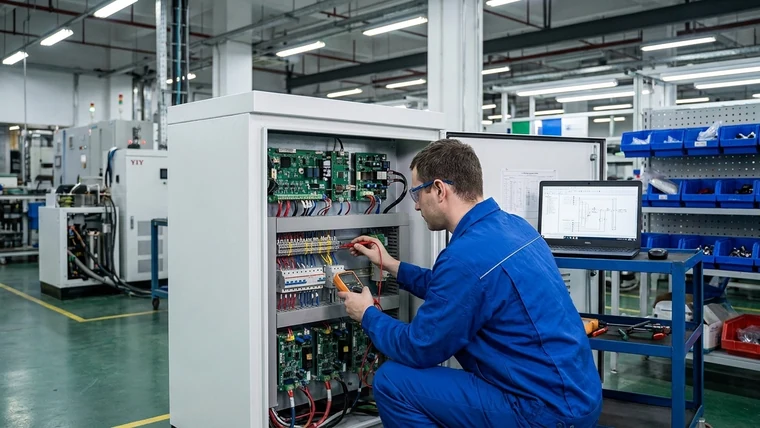
A credible quote should include a datasheet, model number, wiring diagram, protection list, input and output voltage range, accuracy, capacity, dimensions, weight, enclosure details, warranty terms, packing method, lead time, and test or inspection process. If your quote includes compliance or quality-system claims, ask for current documents rather than accepting logo claims in a brochure.
YIY reports a 30,000 square meter factory area, 1,000,000+ units annual capacity, exports to 130+ countries, 120+ long-term partners, and a 99.5%+ factory pass rate; last verified in the supplied editorial research on 2026-05-19. YIY also states ISO 9001:2015 certification; for context, the official ISO 9001 quality management page explains the quality management standard behind that certification.
For you, the important action is to request the supplier’s current certificate and confirm that the company name, scope, and validity match the quote.
| Supplier proof | What you should request | Why it protects you |
|---|---|---|
| Technical datasheet | Rated kVA, phase, input range, output accuracy, protection list | Confirms the quoted product is not just a generic capacity label |
| Wiring diagram | Input/output terminals, bypass, earthing, phase details | Reduces installation mistakes and commissioning delays |
| Test evidence | Factory test report or inspection record | Gives you a baseline before shipment or installation |
| Serviceability proof | Spare brush availability, PCB support, bypass design, service guidance | Keeps maintenance practical after purchase |
| Quality documents | ISO certificate, product certificates where applicable, supplier registration details | Helps procurement verify claims before approval |
| Commercial terms | Warranty, lead time, packing, freight terms, price validity | Prevents hidden cost changes after technical approval |
For procurement, the verification action is concrete: send the same RFQ sheet to every shortlisted supplier and reject any quote that does not state the technical baseline. If a supplier cannot confirm input range, phase, correction accuracy, protection functions, bypass, and warranty in writing, the price is not ready for approval.
Frequently Asked Questions
How Should You Compare Pricing for a 5kVA Servo Stabilizer?
You should compare a 5kVA servo stabilizer quote by specification, not by capacity label alone. Normalize input voltage range, phase type, output accuracy, overload margin, protection functions, enclosure, bypass, warranty, freight terms, datasheet, wiring diagram, test report, and price validity date.
A practical verification step is to create one RFQ table and ask every supplier to complete the same fields. If one supplier leaves protection, winding material, bypass, or voltage range blank, do not treat that offer as equal to a complete quote.
Can a 5kVA Servo AVR Support Motor or Compressor Loads?
A 5kVA servo AVR can support motor or compressor loads only when starting current and running current remain within the stabilizer’s safe margin. Check the motor nameplate, locked-rotor or startup current, power factor, and duty cycle before ordering.
For your verification, record the highest starting load separately from the steady running load. If the compressor starts frequently or the motor has high inrush current, ask the supplier whether oversizing, delay protection, or a different topology is safer.
How Should a 5kVA Servo Voltage Stabilizer Be Sized for Mixed Loads?
You should size a 5kVA servo voltage stabilizer from real connected load current, not equipment wattage alone. List each load, confirm voltage and current, convert to kVA, then add margin for startup, future expansion, and low power factor.
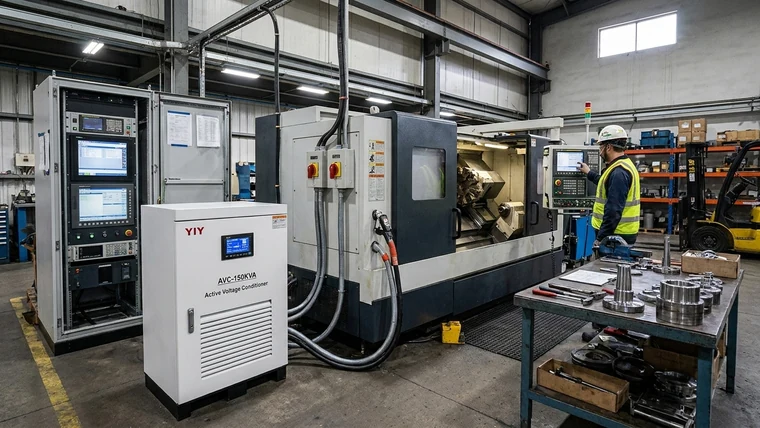
For mixed electronics and motors, verify the largest starting event because one surge can define the practical stabilizer size. If your total calculated load is already close to 5kVA before margin, treat this capacity tier as a warning sign rather than a final answer.
What Should You Know About Sourcing a Servo Stabilizer in India?
You should expect wide price variation in India-focused servo stabilizer sourcing because suppliers may quote different voltage ranges, winding materials, protections, documentation, and service terms. The phrase “5kVA servo stabilizer price” may refer to very different products across listings and local suppliers.
Before you approve the purchase, verify GST invoice details where relevant, compliance documents, factory test results, warranty coverage, after-sales location, packing, lead time, spare brushes, and export documentation if you are importing or reselling.
What Is the Safest Next Step Before You Buy?
You should start with a quick technical fit review before you request a final price, because a short review can prevent the most common quote mismatches.
Prepare only the essentials first: your nominal voltage, measured input voltage range, phase, load list, running current, startup behavior, installation environment, and whether bypass or alarms are required. With those details, YIY can help you check whether servo, relay, static, or IGBT regulation fits your application and maintenance context.
The best price is not the smallest number on a 5kVA line item. It is the quote that matches your voltage range, load behavior, protection needs, service access, documentation requirements, and future expansion plan without unnecessary overbuild.