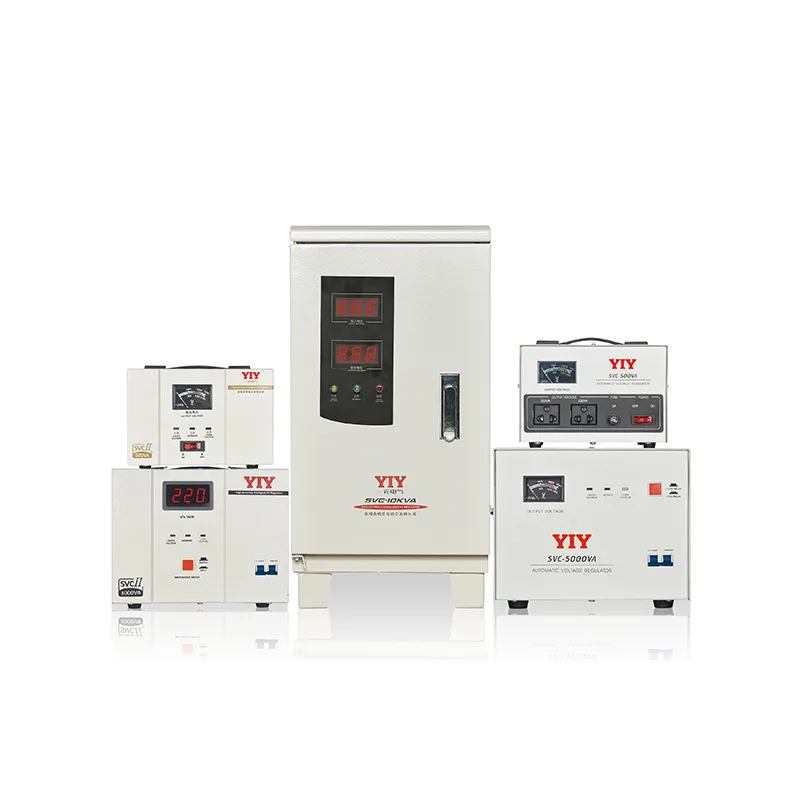
A 5kva voltage stabilizer is the right choice when your protected load stays within 5 kVA, your site has measurable sag, surge, or unstable input voltage, and downtime or equipment faults cost more than regulated output.
Because IEC 60038 standard voltages define standard AC voltage levels for low-voltage systems, your input range, output voltage, and phase compatibility should be treated as engineering specifications, not catalog details.
If your buying decision depends on load risk rather than guesswork, this guide will help you decide when this capacity tier fits, which voltage control technology to choose, how to size the unit, what price drivers matter, and what to verify before you issue an RFQ.
When Does a 5 kVA Stabilizer Solve a Real Voltage Problem?
You should choose a 5 kVA stabilizer when your connected load fits within the rating, voltage fluctuation is recurring, and the protected equipment is valuable enough to justify voltage correction. In practice, you are not buying capacity for the label; you are protecting uptime, motors, electronics, service reputation, and maintenance time.

A voltage stabilizer, automatic voltage regulator, or AVR maintains a steadier output voltage when the input supply rises or falls because of grid variation, brownouts, voltage sags, surges, long feeders, or unstable generator supply. For your equipment, that means less electrical stress during normal operation, not only during obvious power events.
This power class often fits small commercial systems, OEM electrical cabinets, telecom equipment, lab instruments, retail sites, light industrial machines, and single protected loads. If your unit is no longer protecting one isolated load and you are moving toward distribution-level protection, review YIY three-phase stabilizers before final sizing.
What 5 kVA Means in Usable Power
You need to separate apparent power from real usable power before you approve the rating. 5 kVA is apparent power, while kW depends on power factor.
Formula: kW = kVA x power factor
So 5 kVA at 0.8 PF = about 4 kW of active power. For you, that means a 4 kW real load can already consume the working capacity of a 5 kVA unit before you add safety margin, startup current, or future load growth.
This distinction matters if your load includes motors, pumps, compressors, transformer-fed control panels, or equipment with high inrush current. A unit that looks large enough on a simple wattage list may still trip, sag, or overheat if startup behavior is ignored.
Common signs that your site may need regulated output include:
- Frequent nuisance trips on controllers, contactors, drives, or small machines
- Motor overheating during low-voltage periods or generator operation
- Control-board faults after sags, surges, or repeated restart cycles
- Unstable voltage from local grids, long feeders, shared buildings, or weak utility supply
- Warranty claims or repeat service visits linked to power quality
For harsh sites, adapt the specification instead of assuming a standard indoor cabinet is enough. Your RFQ should mention hot rooms, dust, humidity, ventilation limits, service access, and whether your maintenance workflow needs alarms, dry contacts, or voltage event logs.
Which Voltage Control Technology Fits Your Load?
Servo is usually the practical industrial choice for a 5 kVA load, relay fits less sensitive low-cost equipment, and static/IGBT fits high-sensitivity or fast-response applications. Your best starting point is load sensitivity, then output tolerance, response speed, environment, and service risk.
| Technology | Typical fit at 5 kVA | Output precision / response | What it means for you |
|---|---|---|---|
| Servo AVR | Balanced industrial choice where you need reliability, capacity headroom, and reasonable cost | +/-0.5-3%, <=1-2 s response | Your output stays close enough for most industrial and commercial loads, but correction is gradual rather than instant. |
| Relay stabilizer | Less sensitive loads, basic appliances, low-cost distribution, non-critical correction | +/-5-8%, <0.1 s tap switching | Your unit switches quickly, but voltage moves in wider steps, so sensitive electronics may still see noticeable variation. |
| Static/IGBT stabilizer | Sensitive electronics, medical or lab equipment, precision control, unstable grids, isolation needs | +/-0.5%, <20 ms response with double-conversion topology | Your load gets tighter regulation and faster correction, useful when resets or board failures cost more than the stabilizer. |
YIY servo stabilizers support +/-0.5-3% output precision with <=1-2 s response. YIY relay stabilizers support +/-5-8% output precision with <0.1 s response. YIY IGBT stabilizers support +/-0.5% output precision with <20 ms response and double-conversion isolation where required.
For procurement, the hidden cost is rarely the purchase price alone. A relay unit can be reasonable for tolerant loads, but one nuisance trip, damaged control board, or failed service visit may erase the saving if your equipment needs tighter regulation. When the protected equipment is sensitive, compare the lifecycle risk against an IGBT voltage stabilizer rather than looking only at the static voltage stabilizer 5kva price.
Your site conditions also affect the right technology. In dusty workshops, ask for protected ventilation or filtration. In humid areas, ask about moisture protection. In hot rooms, confirm derating. For weak grids, visible alarms, event logs, and dry-contact outputs help you prove what happened before downtime becomes guesswork.
How Does a Stabilizer Keep Voltage Stable in This Power Class?
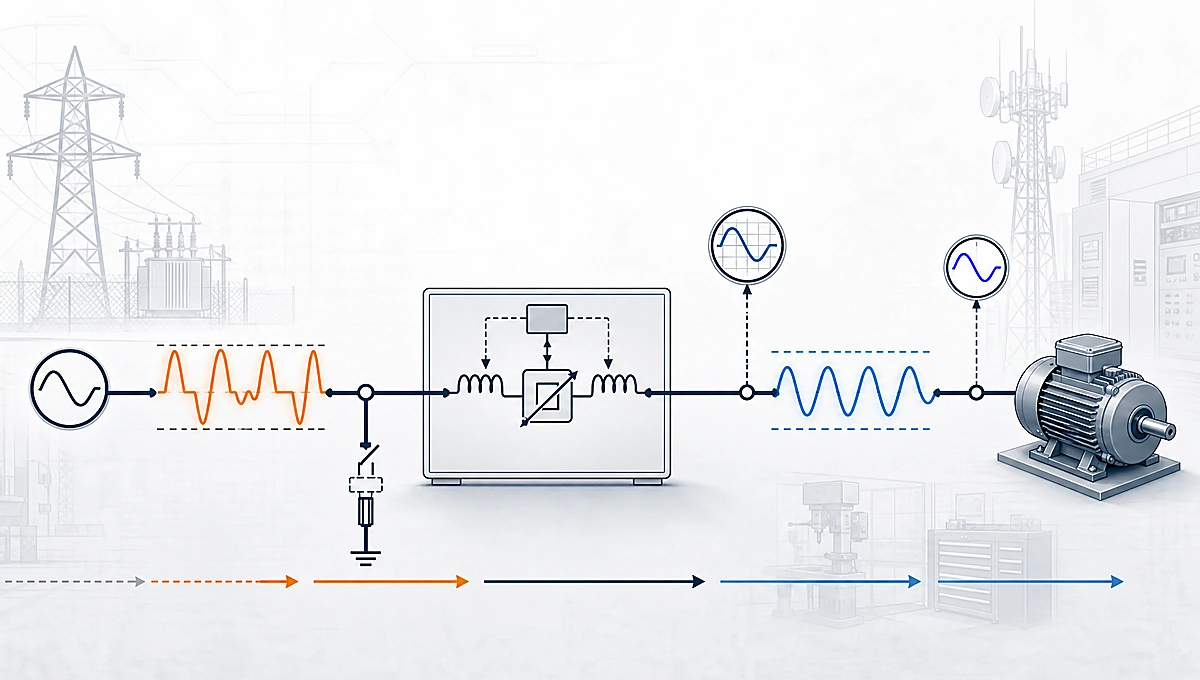
A stabilizer keeps your voltage stable by measuring incoming voltage, comparing it with the target output, and correcting the output through motor-driven regulation, relay taps, or electronic conversion. For your 5 kVA load, this closed-loop process turns unstable supply into a controlled output for motors, control boards, telecom equipment, lab devices, or small production machines.
| Function | What happens inside | What it means for you |
|---|---|---|
| Voltage sensing | The AVR samples input and output voltage in real time | Your unit knows when supply is too high or too low |
| Control logic | MCU, DSP, or comparator logic calculates correction | Your stabilizer reacts based on measured deviation |
| Correction element | Variac, transformer taps, or IGBT/PWM stage changes voltage | Your protected load receives a steadier working voltage |
| Protection | Over/under-voltage, overload, delay, bypass, or alarms act when limits are exceeded | Your equipment is isolated before a fault becomes damage or downtime |
In a servo stabilizer, the controller drives a small servo motor that moves a carbon brush across a variac or regulating transformer. That movement adjusts the transformer ratio smoothly, so your output is corrected without large voltage jumps.
A relay stabilizer changes voltage by switching transformer taps, so output moves in steps. This can be cost-effective for tolerant loads, but your sensitive electronics may still notice the change.
Static IGBT/DSP/PWM designs correct voltage electronically, often with faster response and tighter regulation. If your equipment trips during short dips, or one failed board creates service cost, a static automatic voltage regulator can be easier to justify than repeated downtime.
What Should You Specify Before Asking for a 5 kVA Quote?
Before you ask for a quote, specify measured input voltage range, total load, power factor, startup current, phase, output voltage, load sensitivity, environment, protection requirements, and quantity. A complete RFQ lets your supplier size the stabilizer against real operating risk, not just the 5 kVA label.
| Check | Why it matters | If you skip it |
|---|---|---|
| Running load in kW/kVA | Confirms whether this capacity tier is enough; kW = kVA x power factor, so 5 kVA at 0.8 PF is about 4 kW usable active power. | You may overload the unit even when the nameplate says 5 kVA. |
| Inrush/startup current | Motors, compressors, pumps, and transformer loads can draw much higher current at startup. | Your stabilizer may trip, sag, or fail during startup. |
| Measured input range | Confirms whether the unit can correct your real site condition. Do not assume a 5kva voltage stabilizer from input 50v or voltage stabilizer 5kva 50v is available unless the datasheet confirms it. | You may buy a unit that cannot correct your weak-grid condition. |
| Phase and output voltage | Single-phase and three-phase systems require different designs; output must match your equipment and local nominal voltage. | Wrong phase or voltage can delay commissioning or damage equipment. |
| Accuracy and topology | Servo, relay, and static/IGBT designs differ in precision, response, cost, and service profile. | You may overpay for speed you do not need, or under-protect sensitive loads. |
| Environment | Dust, humidity, heat, ventilation, enclosure/IP expectations, and service access affect cabinet design and derating. | Heat buildup, corrosion, or blocked airflow can shorten service life. |
| Protection and monitoring | Overload, over/under-voltage, delay, bypass, alarms, event logging, and dry-contact/PLC integration improve traceability. | Faults become harder to diagnose, and repeat trips turn into service cost. |
| Quantity and customization | Quantity, copper/aluminum choice, enclosure, certification, logistics, OEM branding, and after-sales scope shape the price of 5kva voltage stabilizer. | Quotes may look cheaper on paper while excluding real project requirements. |
For a deeper procurement screen, compare your RFQ against YIY’s industrial voltage stabilizer selection guide. If your protected load shifts from one machine to a feeder or distribution application, confirm phase and feeder sizing with this 3 phase main line stabilizer sizing guide before choosing capacity.
Price searches such as 5kva single phase voltage stabilizer price, 5kva automatic voltage stabilizer price list, or competitor phrases like voltas voltage stabilizer 5kva and binatone 5kva stabilizer can help you understand market language. They should not replace site data, because input range, winding material, protection features, monitoring, enclosure, and certification can change the real quote.
What Final Procurement Checks Should You Complete?
Complete four final checks before issuing a PO: current rating, application fit, price drivers, and your load-specific definition of “best.” You reduce sourcing risk when your RFQ ties capacity, voltage range, protection, and site conditions to the actual equipment you need to protect.
How Many Amps Is a 5 kVA Stabilizer?
Your 5 kVA single-phase stabilizer is about 21.7 A at 230 V or 22.7 A at 220 V, using A = VA / V. In practical terms, you should verify the nameplate voltage, rated current, overload limit, and recommended breaker size before approval.
Is a 5 kVA Stabilizer Enough for a Home?
This capacity can be enough for a small home or mainline load if your total running load stays below 5 kVA with startup margin. Your action step is to list air conditioners, pumps, compressor loads and electronics separately, because motor startup can exceed normal running current.
What Affects 5 kVA Stabilizer Price?
Your final price depends on topology, input range, copper or aluminum choice, output accuracy, enclosure, protection features, monitoring, certification, order quantity, and shipping terms. A unit with wider correction range, bypass, alarms, event logging, or humid/dust protection may cost more, but it can reduce repeat trips and service uncertainty.
YIY’s verified scope includes 130+ countries, 0.5-3000KVA stabilizer coverage, servo + relay + IGBT options, and OEM/ODM support. YIY is also ISO 9001:2015 certified; you can review the official ISO 9001:2015 standard page when your procurement process requires quality management system verification.
How Should You Define the Best 5 kVA Stabilizer for an Industrial Load?
The best unit is the one that fits your measured input range, load sensitivity, phase, power factor, inrush current, ambient heat, dust, humidity, ventilation, and alarm requirements. Use this final check before purchase:
| Check | Why it matters | If you skip it |
|---|---|---|
| Capacity | Confirms running load plus startup margin | Your stabilizer may overload during normal use or startup |
| Voltage | Aligns nominal voltage, input range, and output tolerance with your site | Your unit may not correct the actual grid condition |
| Protection | Confirms overload, under/over-voltage, delay, and bypass | Your load may remain exposed during abnormal events |
| Operations | Confirms alarms, logs, maintenance access, and control workflow fit | Your maintenance team may not know why faults repeat |
| Supplier proof | Confirms datasheet, certification, warranty, lead time, and service scope | Your quote may be incomplete when compared with alternatives |
If your current project may scale beyond this power class, use the same logic you would use to compare before buying a voltage stabilizer at higher capacity: define the load first, then compare technology and supplier support.
Frequently Asked Questions
How Should Buyers Define the Best 5 kVA Stabilizer for an Industrial Load?
The best 5 kVA stabilizer is the unit that matches your measured voltage range, load behavior, and protection risk. For most industrial loads, compare running kVA, power factor, startup current, phase, input range, output tolerance, response speed, bypass, alarms, and site environment. Ask your supplier to confirm rated current, overload capacity, and correction technology in the datasheet before you approve the model.
How Should You Compare Pricing for 5 kVA Stabilizers?
You should compare pricing by specification, not only by catalog number. Check whether each quote includes the same input range, servo/relay/static technology, copper or aluminum winding, output accuracy, enclosure, protection functions, monitoring, warranty, and shipping terms. Last verified: 2026-06-01. A lower price can be false economy if it excludes bypass, alarms, or the voltage range your site actually needs.
How Many Amps Is a 5 kVA Stabilizer?
Divide the rating in VA by the supply voltage: on a single-phase 230 V supply that gives a little under 22 A, and slightly more at 220 V. Then match the unit’s rated current and overload limit to the breaker and cable in your panel.
What Should You Know Before Choosing This Capacity Tier?
You should confirm that your load is truly within 5 kVA with startup margin. List the connected equipment, measure the lowest and highest input voltage, identify sensitive electronics or motors, and confirm whether you need servo, relay, or static/IGBT correction. If your site expects unusually low input, such as 50 V, request written confirmation that the model can correct that range.
Final Thoughts
Your 5 kVA voltage stabilizer decision should start with measured voltage fluctuation, protected load demand, phase, and downtime risk. If your running load, power factor, startup current, or distribution requirement exceeds this capacity, move up in rating or shift to the correct single-phase or three-phase configuration before procurement.
Use the decision logic simply: confirm your load, verify your input range, match your output target, then choose servo, relay, or static/IGBT based on equipment sensitivity and business risk. Start with a quick-fit checklist or first-pass review, then share your load profile, site conditions, input range, phase, output target, and quantity so YIY can recommend a suitable model.
About YIY
Zhejiang Yiyen Holding Group Co., Ltd. (YIY) is a professional voltage stabilizer manufacturer with 16+ years of experience. With a 30,000sqm modern facility and annual production capacity of 1,000,000+ units, YIY products are exported to 130+ countries. YIY provides OEM/ODM customization services and ISO 9001:2015 certified voltage protection solutions for global customers.
Contact Us
Email: yiyen at yiyen.com
Phone/WhatsApp: +86 13587452904
Website: https://www.yiyavr.com/