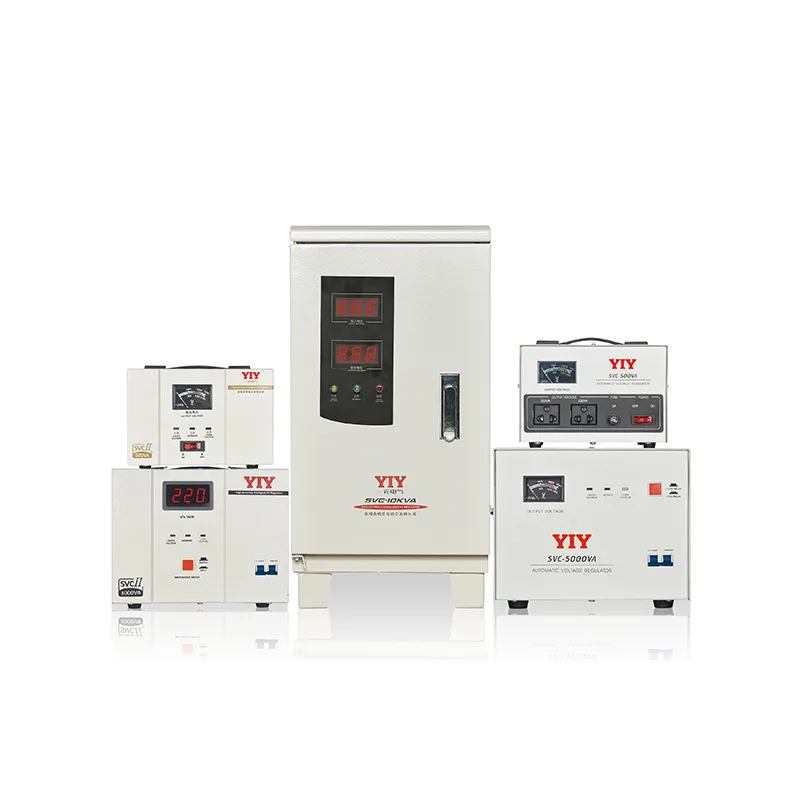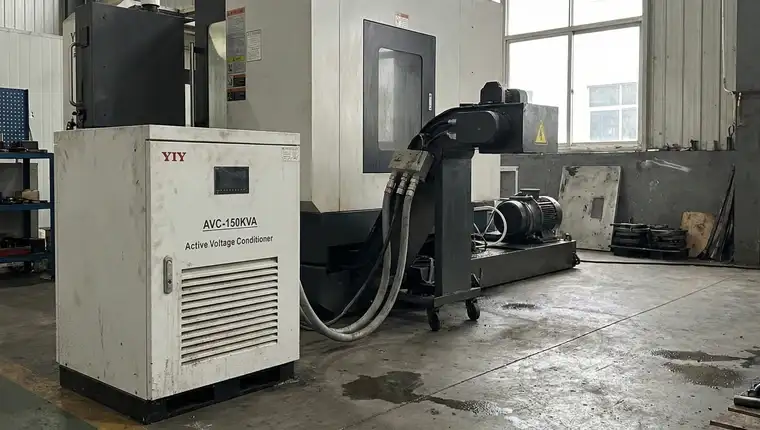
If your equipment is sensitive to brownouts, overvoltage, and unstable feeder conditions, a voltage regulator 5kva is often the smallest capacity band where selection mistakes start to become expensive. It sits in the range where buyers are no longer protecting a single household appliance, but may be stabilizing multiple critical single-phase loads, a control cabinet, laboratory equipment, telecom devices, or a compact industrial workstation. This guide explains what a 5kva voltage regulator actually covers, how to size it conservatively, and how engineers and procurement teams should compare relay, servo, and IGBT solutions before asking for a final quotation.
A practical rule is to treat a 5kva automatic voltage regulator as a protection device, not a simple accessory. It must match the real load profile, startup current, voltage window, and site environment. When those inputs are correct, the stabilizer becomes a low-cost insurance layer. When they are guessed, the result is nuisance tripping, poor regulation, or premature equipment wear.
What Voltage Regulator 5kva Means and When It Matters
A voltage regulator 5kva is an automatic voltage regulation device rated to handle up to 5 kilovolt-amperes of apparent power while maintaining a stable output when the incoming utility supply rises or falls. In plain terms, it helps keep downstream equipment operating inside a safer voltage band even when the grid is unstable.
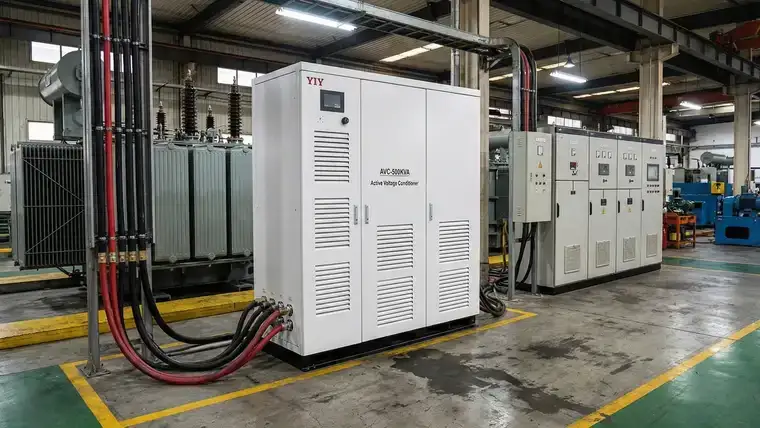
That rating matters because KVA is not the same as KW. KVA reflects apparent power, while KW reflects real power consumed by the load. If your power factor is 0.8, a 5 KVA stabilizer typically supports about 4 KW of real load. If the power factor is lower, or the load includes motors, compressors, transformers, or other inductive equipment, the usable capacity is lower. Buyers who ignore that distinction usually under-size the unit.
This capacity range becomes relevant when:
- A small industrial or commercial load already exceeds the comfort zone of low-cost plug-in protectors.
- The site sees repeated sags, surges, flicker, or long periods of undervoltage.
- Equipment downtime is more expensive than the stabilizer itself.
- The application requires a decision between low-cost relay correction and tighter servo or IGBT regulation.
For B2B users, the key question is not “Can I find any 5kva voltage regulator?” It is “Which 5kva automatic voltage regulator can protect this specific load under this specific site condition without overpaying for the wrong technology?”
Who Needs This and What They Need to Decide
Who needs this and what they need to decide depends on role, not just load size. A plant engineer, a facility manager, and a procurement lead can all be evaluating the same automatic voltage regulator 5kva, but they are solving different problems.
| Stakeholder | Main concern | Typical decision criteria |
|---|---|---|
| Industrial engineer | Output stability and equipment protection | Precision band, response behavior, overload tolerance, integration fit |
| Facility manager | Site reliability and maintenance burden | Input range, service life, spare parts, operating environment |
| Procurement team | Commercial risk and supplier quality | Certifications, delivery, warranty, documentation, engineering support |
For these buyers, the decision usually turns on five issues:
1. Actual load profile: What is the continuous load, what is the starting current, and what is the power factor?
2. Measured input-voltage range: What voltage does the site really see during peak and off-peak hours?
3. Required output accuracy: Is ±5% acceptable, or does the application need ±1% or better?
4. Application environment: Is the unit installed indoors, in dust, in heat, near telecom racks, or in a light industrial workshop?
5. Supplier fit: Can the manufacturer recommend the right technology family instead of pushing a single product type?
This is also where SERP competitors split into two visible groups. Some suppliers focus on simple home or single-phase retail products. Others, such as TSI Power, emphasize outdoor or extreme-environment positioning for industrial and telecom use. YIY’s practical advantage is broader technology coverage across relay, servo, and IGBT categories, plus the ability to bridge from compact single-phase needs to larger industrial multi-phase projects if the site later expands.
Selection Criteria and Sizing Logic for a 5kva Voltage Regulator
Step 1: Convert load data into required KVA
The working formula is:
Required stabilizer KVA = Total load in KW ÷ Power factor × safety margin
Example:
- Continuous load: 3.2 KW
- Power factor: 0.8
- Safety margin: 1.25
Calculation:
3.2 ÷ 0.8 × 1.25 = 5 KVA
That means a 5 KVA unit is the minimum acceptable rating in this example, not the oversized option. If the load contains motor starts, compressor starts, or strong transient peaks, you may need to step up to a 20kva voltage regulator or another higher-capacity model rather than forcing the installation into an undersized 5 KVA window.
Step 2: Match the input range to real site conditions
Nominal voltage is not enough. A unit specified for 160-250V input is not suitable for a site that regularly drops to 145V. Measure the actual voltage at the installation point over at least 24 to 48 hours and record the worst dips and highest peaks. This is more important than a brochure claim.
IEC 60038 is a useful reference point for standard system voltage tolerances, but local site conditions still decide the right input window. In unstable emerging-market grids or long feeder installations, the actual operating range can be much wider than nominal values suggest.
Step 3: Check the application, not just the headline capacity
Ask what the stabilizer is protecting:
- Control electronics and CNC panels need tighter regulation and cleaner transitions.
- Lighting, resistive loads, and general office equipment may tolerate wider regulation bands.
- Telecom or laboratory environments often justify higher precision and cleaner power conversion.
If the same site may later protect multiple cabinets or move toward a three-phase topology, comparing with a 3 phase voltage stabilizer 10kva early avoids a dead-end purchase.
Step 4: Review environmental derating
Capacity and reliability are affected by:
- Ambient temperature
- Altitude
- Dust and humidity
- Ventilation
- Indoor vs outdoor placement
Do not specify a 5kva voltage regulator as if it will operate in a clean, air-conditioned room if it is actually going into a hot electrical room or semi-open industrial area. That mismatch shortens life and creates the false impression that the product itself is weak.
Relay vs Servo vs IGBT for a 5kva Automatic Voltage Regulator
The most useful comparison for buyers is not brand vs brand. It is technology vs application.
| Parameter | Relay type | Servo type | IGBT type |
|---|---|---|---|
| Typical output precision | ±5% to ±8% | around ±1% to ±3% | up to ±0.5% |
| Response behavior | Fast tap switching | Mechanical correction, smoother regulation | Electronic conversion, highest precision |
| Relative cost | Lowest | Mid-range | Highest |
| Best-fit applications | General loads, budget-driven projects | Industrial equipment, mixed critical loads | Precision electronics, critical-process environments |
| Main tradeoff | Lower precision | Mechanical wear components | Higher cost and more advanced electronics |
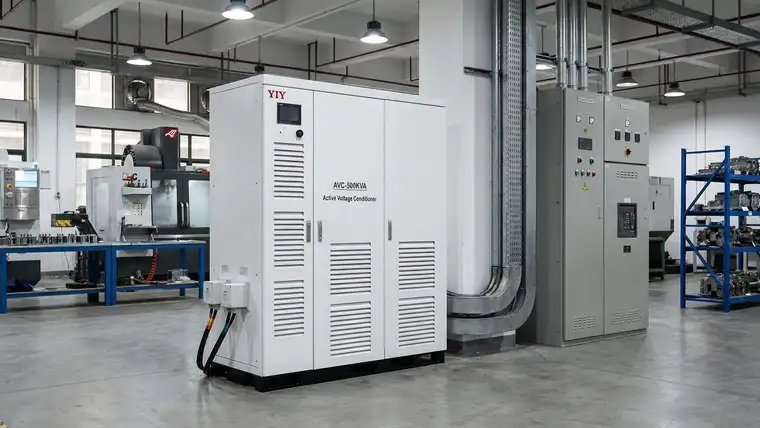
For many industrial buyers, servo technology remains the best balance at this size. It offers better regulation than relay designs without the premium attached to IGBT systems. Relay units remain viable where the load is tolerant and budget is tight. IGBT designs are justified when voltage precision and power quality matter more than initial cost.
This comparison also answers a common market misconception: the “best” voltage regulator 5kva is not a universal answer. It depends on the load sensitivity, the measured grid condition, and the buyer’s tolerance for maintenance, capex, and risk.
For deeper background on technology tradeoffs, a broader voltage stabilizer selection guide and a focused review of servo stabilizer for CNC machines are both useful companion resources when the protected load includes manufacturing controls.
Standards, Compliance, and Supplier Proof Points
Engineering buyers should not stop at capacity and price. A technical guide is only useful if it identifies what proof a supplier should provide.
The baseline checklist should include:
- Product-family documentation that clearly explains the correction method and intended applications
- Relevant quality and manufacturing controls such as ISO 9001:2015
- Clear explanation of input range, output accuracy, and overload behavior
- Installation guidance and maintenance expectations
- Engineering support for sizing and application review
For globally deployed projects, certification language also matters. YIY’s public materials emphasize ISO 9001:2015, ISO 14001, and CE coverage at the company and product-family level. That is valuable for supplier confidence, but buyers should still confirm the exact model-family documentation they need before PO release.
One point should be stated conservatively: YIY’s public knowledge base clearly explains the relay, servo, and IGBT technology families, but it does not publicly expose every exact 5 KVA SKU detail in one place. For that reason, a serious B2B buying process should verify the exact phase configuration, enclosure, input window, and output precision with the engineering team rather than assuming every family behaves identically.
Procurement teams that are also comparing vendor depth may want to review industrial voltage stabilizer manufacturers as part of the sourcing process, especially when the supplier will be supporting long-term factory, telecom, or panel-builder programs.
YIY Fit for Industrial and Commercial Buyers
For YIY, the strongest story in this segment is not “one miracle 5 KVA model.” It is the ability to match technology to application and support projects that may scale beyond 5 KVA later.
That matters in three ways:
1. Technology breadth: YIY covers relay, servo, and IGBT stabilizer architectures, so the recommendation can start from application fit.
2. B2B manufacturing capability: The company positions around export scale, certifications, and engineering-backed product families rather than a retail-only catalog.
3. Scalability: If today’s requirement is a compact single-phase stabilizer but tomorrow’s requirement is a plant-wide or three-phase system, the supplier relationship does not need to reset.
This is also the right place to separate industrial reality from home-search noise in the SERP. Many search results for voltage regulator 5kva are effectively residential or small-shop offers. Those products may be fine for light domestic use, but they are not always the right benchmark for industrial reliability, documentation quality, or future expansion support.
If your requirement is closer to light residential protection, a voltage stabilizer 3 kva or another household-oriented option may be a more economical fit. If the site includes higher startup current, capacity growth, or multi-load operation, 5 KVA is often the more realistic floor rather than the premium option.
Frequently Asked Questions About a Voltage Regulator 5kva
What is a 5 kVA stabilizer used for?
A 5 kVA stabilizer is used to maintain a more stable output voltage for loads that are too sensitive for raw utility power and too valuable to leave unprotected. Typical examples include control cabinets, telecom devices, office equipment clusters, light industrial machines, precision testing equipment, and mixed commercial loads in areas with unstable supply.
How much power can a 5 kVA stabilizer handle?
In many practical cases, a 5 KVA stabilizer handles around 4 KW of real load when the power factor is 0.8. The exact usable load depends on power factor, startup current, and the stabilizer design itself. That is why a nameplate KVA value should always be checked against the real application profile.
What is the difference between 5kVA and 10kVA stabilizer?
The difference is not only capacity. A 10 KVA stabilizer gives more headroom for startup current, future expansion, and multi-load operation. Buyers choosing between 5 KVA and 10 KVA should compare total connected load, inrush behavior, and whether the installation may grow. If the site already sits near the top end of 5 KVA, moving up early is usually safer than running with no margin.
Is a 5kVA stabilizer enough for a home?
Sometimes yes, sometimes no. A 5 KVA unit may be enough for a home with selected circuits or a limited appliance mix, but not for a whole-house installation with multiple air conditioners, pumps, or electric heating loads. Residential buyers often overestimate or underestimate the real requirement because they do not separate continuous load from startup current.
How long does a 5 kVA stabilizer last?
Service life depends on technology, duty cycle, environment, and maintenance discipline. In a clean, correctly sized installation, a properly selected stabilizer can provide many years of service. Relay units, servo units, and IGBT units age differently, so buyers should ask not only about warranty length but also about wear parts, inspection intervals, and after-sales support.
Next Steps for Specification and RFQ
Before you request pricing, prepare the data that actually determines whether the recommendation is valid:
1. Load list: rated KW or VA for each device, plus any motor or transformer startup current
2. Measured voltage window: minimum and maximum site voltage over at least 24 to 48 hours
3. Application notes: indoor or outdoor use, dust, humidity, temperature, altitude, and mounting constraints
4. Output expectation: acceptable regulation band, response priority, and whether the load is tolerant or precision-sensitive
With that information, the selection process becomes objective. Without it, even an experienced supplier is forced to guess.
If you are evaluating a voltage regulator 5kva for a real project, invite the reader to share load profile, site conditions, and target output requirements so YIY can recommend the right model. In practical terms, that means you should send the load list, input-voltage range, phase requirement, and installation environment so the engineering team can confirm whether relay, servo, or IGBT is the correct path.
Request a quote only after the technical fit is clear. That is the fastest way to avoid rework, overbuying, or a weak draft specification that later fails in the field.
—
About YIY
Zhejiang Yiyen Holding Group Co., Ltd. (YIY) is a professional voltage stabilizer manufacturer with 16+ years of experience. With a 30,000 m2 modern facility and an annual production capacity of 1,000,000+ units, our products are exported to 130+ countries. We provide OEM/ODM customization services and are ISO 9001:2015 certified, committed to delivering stable and reliable voltage protection solutions to global customers.
Contact Us
Email: yiyen@yiyen.com
Phone/WhatsApp: +86 13587452904
Website: https://www.yiyavr.com/
If you are planning a new project, talk to the engineering team or contact us for a tailored recommendation.
Voltage regulator, relay, and AVR comparison guides
Continue with these regulator and automatic voltage regulator references when comparing relay topology, kVA range, HS codes, and control methods.