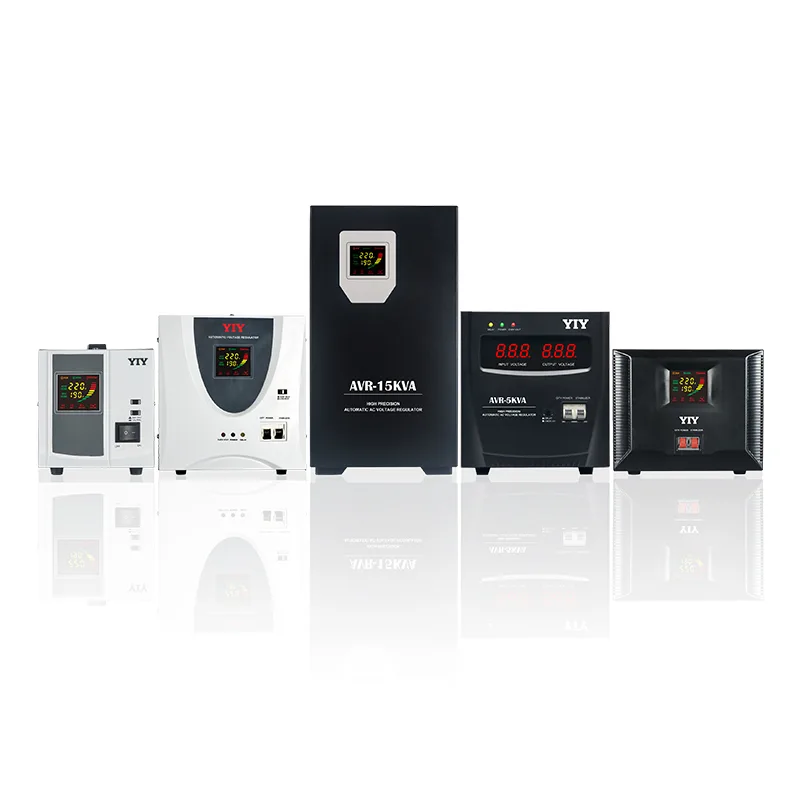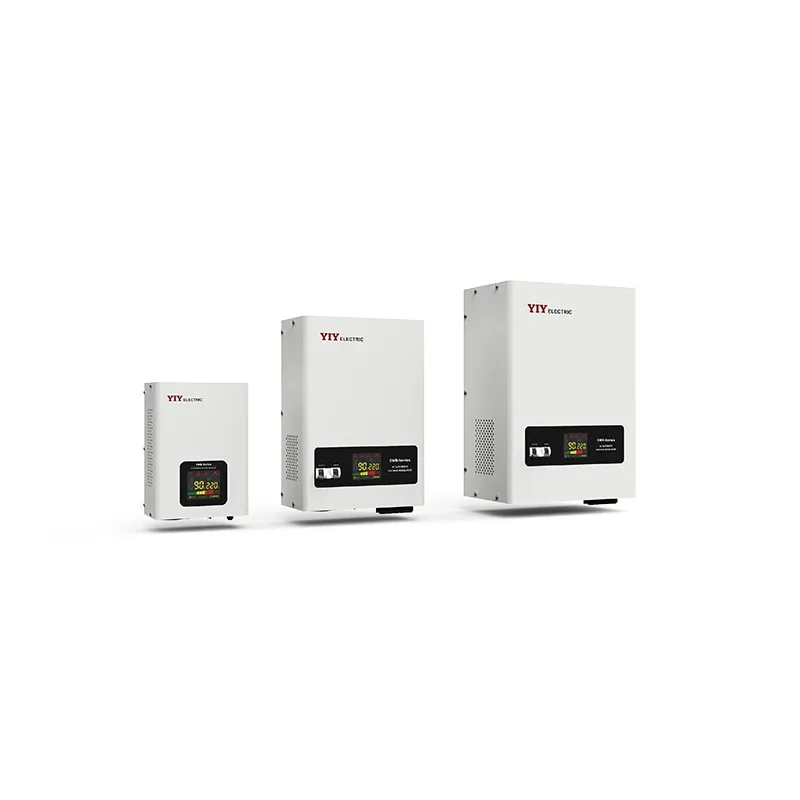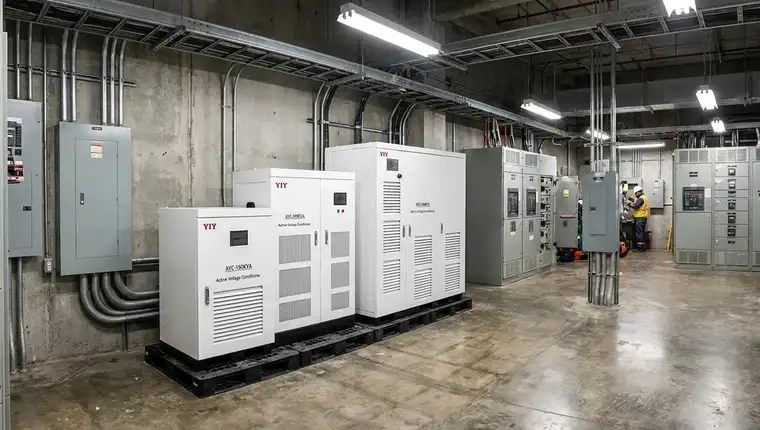
Relay is usually the right voltage regulator relay choice for HVAC, lighting, packaging, and other loads that can tolerate stepped correction, while servo and IGBT become necessary when resets, waveform sensitivity, or tighter control windows make stepped regulation too risky. The right choice depends on fault tolerance, correction style, maintenance expectations, and whether the site is dealing with one narrow feeder problem or a broader plant-wide stability issue.
This article answers four practical questions in sequence: what happens when voltage fluctuation moves outside the protection circuit’s usable range, when relay topology is the better fit than servo or IGBT designs, how electromagnetic tap-switching actually works in practice, and which sizing and environmental checks matter before you place an order. If you need the broader product context first, review the three-phase stabilizers guide and then return to this relay-specific comparison.
What happens when grid voltage fluctuations exceed your protection circuit’s tolerance?
If the supply repeatedly moves beyond the range your protection circuit can manage, the first consequences are usually line resets, unstable control logic, and faster contact wear rather than one dramatic hardware failure. The IEC 60038 Standard Voltages keep nominal low-voltage systems anchored to familiar tolerance expectations, so a 10% drop on a nominal 400V line pushes the feeder toward 360V and leaves very little margin for sensitive controls. In practical industrial settings, the damage accumulates through repeated brownout recovery, overheating of small control components, and fault investigation time that keeps returning because the feeder instability itself never gets addressed.
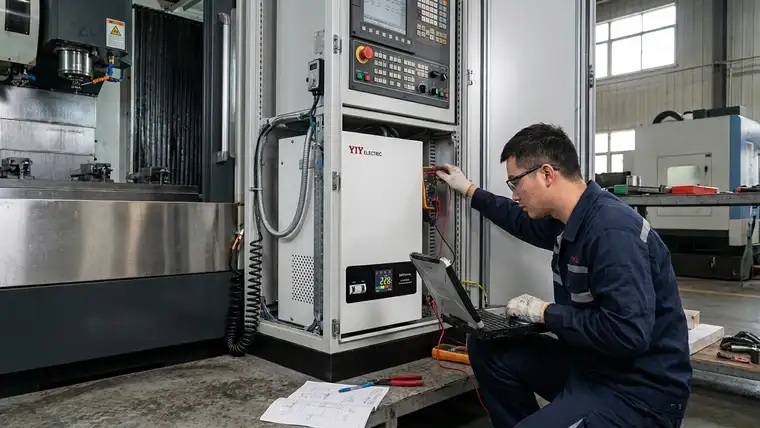
For operations teams, the most useful way to recognize this condition is to look for a cluster of symptoms instead of one headline event:
- repeated PLC or controller resets after short supply dips
- unexpected line restarts that clear after reboot but reappear under unstable utility conditions
- contactor chatter, heat, or abnormal maintenance findings in the relay path
- sensitive control circuits failing before the upstream protection strategy appears to have failed at all
Which stabilization topology delivers reliable voltage correction without overspecifying?
Relay-based correction is usually the best fit for light-commercial, residential, and general industrial loads that can tolerate stepped regulation. Servo and IGBT belong on more sensitive equipment where resets, waveform disturbance, or tighter control windows carry a higher operating cost.
Architecture Best fit Strength Main tradeoff Relay General HVAC, lighting, packaging, and other loads that tolerate stepped correction Lower capital cost and fast practical response Less smooth correction for highly sensitive electronics Servo More sensitive motors, automation panels, and mixed industrial loads Better output stability and smoother correction path More mechanical parts to inspect and maintain IGBT High-sensitivity electronics, instrumentation, and tighter control environments Faster correction and tighter tolerance Higher complexity and cost
For many commercial and residential applications, a relay voltage stabilizer remains the right answer because the load needs dependable correction, not maximum theoretical precision. Procurement teams should only move up the stack when the downstream electronics or process cost clearly justify that jump.
When should you upgrade to servo or IGBT instead?
Move up from relay when the protected equipment reacts badly to stepped regulation, uses tighter control electronics, or loses too much value every time the line resets. That is where the industrial voltage stabilizer selection guide becomes more useful than a simple price comparison because it keeps the shortlist tied to the real operating risk.How do electromagnetic tap-switching mechanisms stabilize output at practical speeds?
In field terms, electromagnetic tap switching is a four-step control chain: read the line, compare it to the allowed band, switch the tap, and log the event. That is the practical reason relay designs stay understandable to operators and maintainers even when the feeder itself is unstable.
Manufacturers and application notes typically describe relay stabilizers in that sequence, although actual response time still depends on tap spacing, controller logic, and load conditions. The mechanism is best understood as practical threshold correction, not as continuous smoothing.
A practical review of the mechanism should look at four steps:
1. Voltage sampling: The control circuit reads the incoming condition continuously enough to identify meaningful deviation rather than harmless micro-noise. 2. Threshold decision: The controller maps the voltage reading against configured operating bands so it knows when correction is justified. 3. Tap change execution: The relay engages the appropriate transformer tap to move output back into range. 4. Post-event logging: The system records or reports the event so maintenance teams can distinguish recurring feeder problems from one-off incidents.
That sequence is why a relay-type design can still be the right fit for many practical loads. It does not provide the same continuous regulation feel as a servo design, but it can restore acceptable operating voltage quickly enough for panels, HVAC circuits, and many general-purpose applications that do not need ultra-tight output smoothing.
What sizing and environmental parameters should you prioritize before ordering?
Before ordering, verify startup demand, feeder fluctuation range, enclosure conditions, and maintenance visibility together. Relay units are often chosen for practical cost reasons, but they still need to be sized against real operating stress rather than only against nameplate kVA.
Use this procurement checklist before approving the model:
Check Why it matters If you skip it Peak startup demand Confirms the relay and transformer path can ride through normal inrush without nuisance operation The unit may appear adequate in steady state but fail during starts Input fluctuation range Matches the selected operating window to actual site behavior The protection may spend too much time at the edge of its correction range Ambient heat and enclosure fit Verifies whether dust, humidity, and room temperature will shorten service life A technically correct design can still degrade early in the wrong enclosure environment Logging and maintenance visibility Helps the team spot repeated switching stress before it becomes failure Contact wear and unstable feeder behavior stay hidden until the next outage
This is also where the shortlist should branch into the next commercial step. If vendors are already being compared, move from product fit into a comparison-based consultation instead of a generic quote request. The most useful next step is a structured shortlist review, then a short engineering discussion focused on tradeoffs, proof points, and shortlist criteria.
Frequently Asked Questions
When is a relay-based stabilizer the right choice?
A relay-based stabilizer is the right choice when the protected load can tolerate stepped correction and the project needs a practical balance of response speed, cost, and service simplicity. It is often the right fit for HVAC, lighting, and general commercial power-protection circuits.When should you move from relay to servo or IGBT?
Move from relay when the downstream electronics react badly to stepped correction, when resets are too expensive to tolerate, or when the process needs tighter and smoother voltage control. That decision should be based on load sensitivity and operating cost, not on marketing language alone.What should procurement verify before shortlisting vendors?
Procurement should verify the actual operating window, startup demand assumptions, enclosure rating, and how the vendor supports maintenance visibility after installation. Before approving a shortlist, compare those items across suppliers rather than relying on one headline response-time claim.Final Thoughts
A relay-based voltage regulator is the right fit when the load needs dependable correction without the cost and maintenance profile of smoother high-end architectures. For the final decision, the real question is not whether relay is modern enough; it is whether relay matches the tolerance of the equipment and the financial impact of instability at the site.
For the next step, use the compare before buying a voltage stabilizer workflow to structure the shortlist, then contact our engineering team at yiyen@yiyen.com for a comparison-based consultation focused on tradeoffs, proof points, and shortlist criteria. That path gives procurement and engineering a cleaner basis for the final decision than a generic quote request.