The right automatic voltage regulating relay depends on whether you need transformer tap-changer control, general load voltage stabilization, or higher-precision regulation for sensitive equipment. Emco’s EE-301E, for example, is specified for on-load tap changer transformer control with a 10-120s time delay.
If your shortlist includes an Emco EE-301E-style transformer AVR relay, a load-side relay stabilizer, a servo stabilizer, or a static/IGBT voltage control unit, the buying risk is choosing the right technology for the wrong problem. This guide will help you compare the voltage problem, application fit, working principle, sizing checks, compliance proof points, and practical RFQ decisions before you commit.
What Problem Does an Automatic Voltage Regulating Relay Actually Solve?
You use an automatic voltage regulating relay when unstable voltage needs controlled correction instead of guesswork. In transformer applications, the relay monitors secondary voltage and commands raise/lower action through an on-load tap changer; in load-side stabilizer discussions, similar relay-based regulation may refer to a standalone stabilizer that switches transformer taps to protect equipment.

For electrical engineers and maintenance technicians, the value is technical stability: fewer voltage-related alarms, less stress on motors and controls, and clearer tap-changing logic. For your procurement file, the value is avoiding a wrong shortlist, because a transformer AVR relay, a general relay voltage stabilizer, a servo stabilizer, and a static/IGBT stabilizer solve different problems.
| If your problem is… | You are probably evaluating… | Practical meaning for you |
|---|---|---|
| Transformer secondary voltage drift | Transformer AVR relay | The relay commands an on-load tap changer, not a standalone stabilizer output stage. |
| General mains fluctuation for loads | Relay voltage stabilizer | You get stepped correction, typically suited to cost-sensitive general loads. |
| Tighter output accuracy for industrial loads | Servo stabilizer | You trade speed and simplicity for smoother voltage correction. |
| Fast, high-precision electronic correction | Static or IGBT voltage stabilizer | You prioritize response and control performance for sensitive equipment. |
Emco’s EE-301E is a niche example: it is specified as a solid-state voltage regulating relay for regulating the secondary voltage of a power transformer with an on-load tap changer.
That means you should not treat it as a broad replacement for every voltage stabilizer. It belongs where your transformer, PT signal, tap changer, and protection logic match the relay’s operating purpose.
The EE-301E manual-style data lists 110/230V AC +/-15% auxiliary supply, 110V AC PT supply, 95-125V lower setting, 90-120V raise setting, 10-120s time delay, and 80V undervoltage blocking.
For you, those settings help prevent unnecessary tap movement, avoid control action during severe undervoltage, and coordinate regulation with real grid behavior rather than momentary noise.
Cost of inaction is rarely just a relay price. If unstable voltage causes downtime, contactor chatter, motor stress, failed electronics, or repeat service visits, your real loss is production interruption plus the engineering time spent diagnosing a preventable power-quality issue.
When Does a Relay Stabilizer Fit Better Than a Tap-Changer AVR Relay?
You should choose a transformer AVR relay for OLTC control, but choose a relay voltage stabilizer when your job is protecting general single-phase or three-phase loads across a defined kVA range. That distinction keeps you from buying a control relay when you actually need a standalone automatic voltage regulator, line stabilizer, or relay-type voltage conditioner.
Emco EE-301E-style relay control fits transformer regulation: adjustable lower and raise settings, time delay, PT display, single-pulse relay operation, and undervoltage blocking are useful when the device commands an on-load tap changer. In practical terms, the relay is making tap-change decisions for the transformer; it is not supplying corrected output voltage to your equipment by itself.
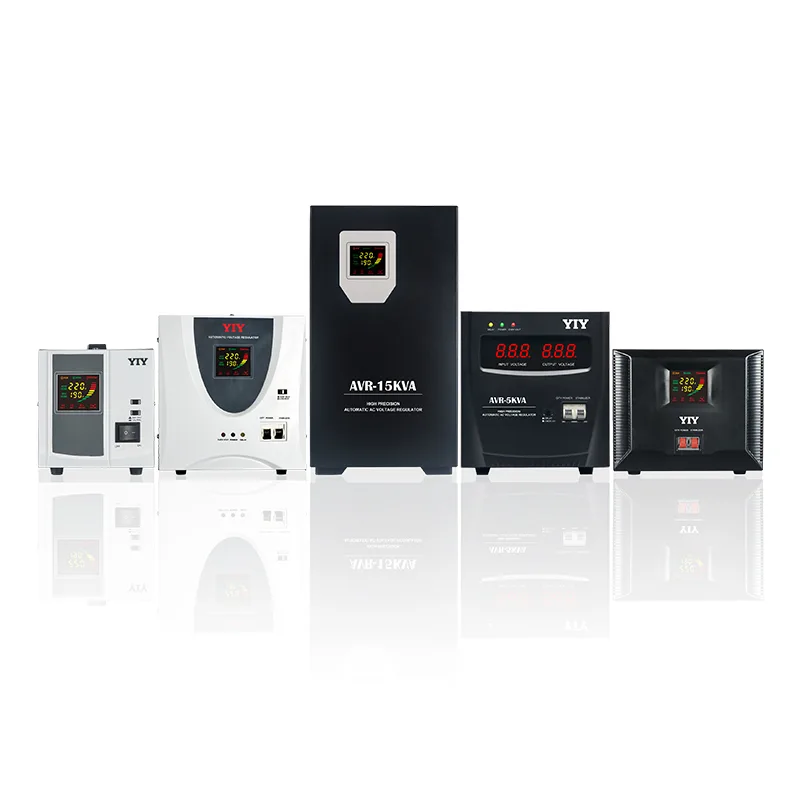
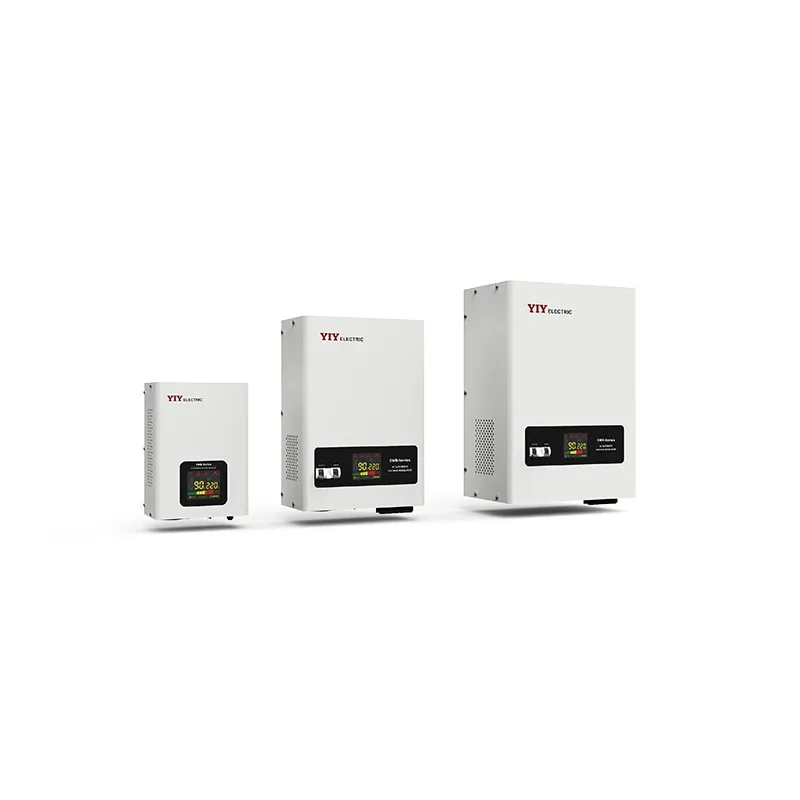
YIY AVR-series relay stabilizers cover 0.5KVA-60KVA for home, office, commercial, and industrial load protection, while TRS/SWR wall-mount options cover 0.5-20KVA.
For your shortlist, that means selection starts with load kVA, phase, input-voltage range, output tolerance, enclosure, and installation style, not only the relay logic.
| Option | Best fit | Strength | Watch point | Buyer action |
|---|---|---|---|---|
| Emco EE-301E-style AVR relay | Transformer secondary-voltage regulation with OLTC | Adjustable lower/raise settings, 10-120s delay, PT display, undervoltage blocking | Requires compatible transformer, PT signal, tap changer, and protection scheme | Confirm wiring diagram, PT voltage, tap-change logic, relay output rating, and manual availability |
| YIY relay stabilizers | General single-phase or three-phase load protection from 0.5KVA-60KVA | Broad capacity range, stepped relay correction, practical fit for mixed commercial and industrial loads | Relay correction is discrete, so ultra-sensitive loads may need servo or static regulation | Specify load list, surge margin, input range, phase, enclosure, and alarm needs |
| Outdoor/industrial alternatives | Harsh-site or industrial power conditioning projects | Often positioned around rugged outdoor or industrial deployment | Compare exact IP rating, thermal design, service access, and monitoring features model by model | Request environmental specs, installation drawings, and maintenance requirements |
For voltage selection, align nominal supply with IEC 60038 standard voltages where your market or project specification requires it.
Practically, this helps you avoid a mismatch between the equipment label, local grid, transformer secondary, and customer acceptance test.
Your operating environment should shape the final model. For dust, humidity, heat, unstable grids, or outdoor cabinets, ask for enclosure protection, ventilation clearance, derating at high ambient temperature, surge protection, bypass arrangement, alarms, event logging, and integration points for plant maintenance workflows.
How Does Relay-Type Voltage Regulation Work in Practice?
Relay-type voltage regulation works by sampling voltage, comparing it with your target output band, then switching transformer taps or sending a tap-changer command to bring the output back within range. For you, the key point is simple: the relay is not creating perfect voltage; it is making controlled raise/lower decisions based on measured deviation, timing, and protection limits.
| Step | What happens | Practical meaning for your site |
|---|---|---|
| Detection | The relay samples input or output voltage against a target range. | You need the sensing point, PT ratio, and nominal voltage to match the actual installation. |
| Decision | Raise/lower logic checks deviation, delay setting, hysteresis, and undervoltage blocking. | The delay avoids reacting to short dips, while hysteresis prevents relay chatter near the threshold. |
| Action | The unit switches an electromagnetic relay tap or sends a pulse to an OLTC control circuit. | Your load sees stepped correction, not infinitely smooth correction. |
| Hold | The controller waits until voltage leaves the acceptable band again. | Fewer unnecessary operations usually means less wear and easier maintenance. |
In a standalone relay stabilizer, electromagnetic relays physically select transformer taps. This approach is usually fast and cost-effective, but its output precision is commonly +/-5-8%, which is acceptable for many general loads and less suitable for high-precision process equipment, CNC controls, medical systems, or sensitive test benches.
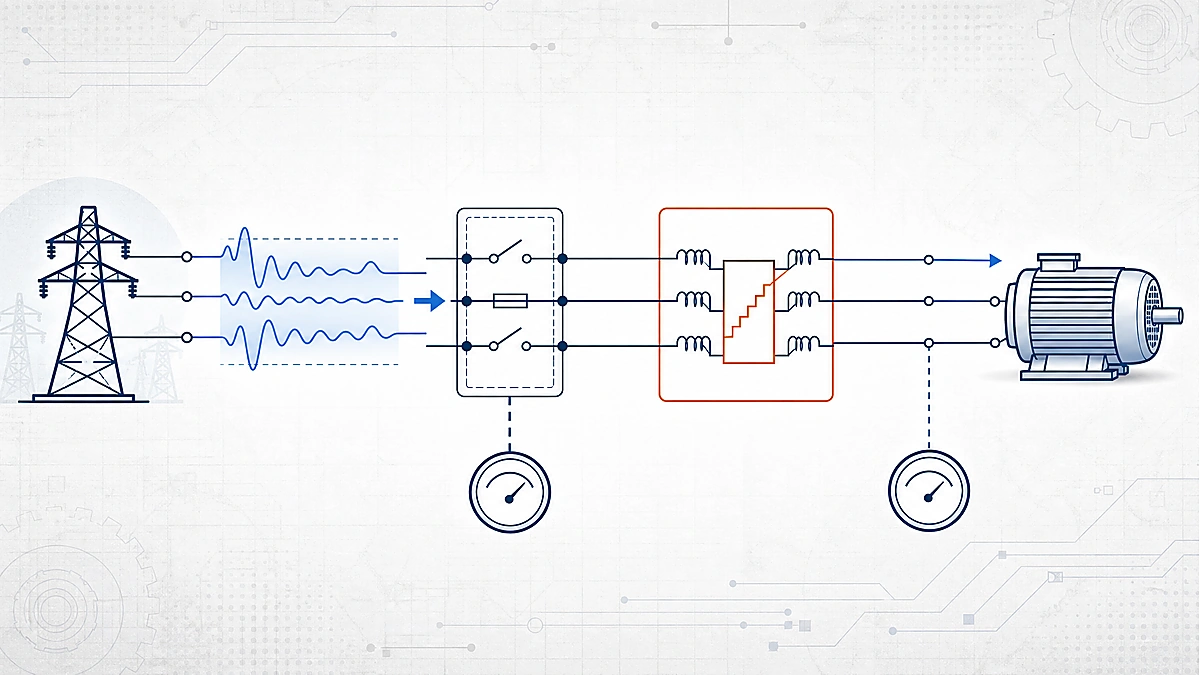
A transformer automatic voltage regulating relay works differently when paired with an on-load tap changer. In that setup, the relay is often a solid-state control device: it measures the PT voltage, decides whether voltage is too high or too low, then issues a raise or lower command pulse to the OLTC rather than switching load taps directly.
Use standards as context, not as a substitute for site engineering. The IEC 61000 electromagnetic compatibility series is relevant when you discuss voltage disturbances, immunity, and EMC behavior around industrial equipment. For you, that means EMC language in a specification should lead to test reports, installation practices, and disturbance tolerance checks, not just a logo on a brochure.
For dusty, humid, hot, or unstable-grid sites, specify enclosure protection, ventilation clearance, surge protection, alarm contacts, and event visibility. If downtime is expensive, also ask whether the controller supports alarm logging or integration with SCADA, PLC, or maintenance workflows, because invisible voltage events are harder to diagnose than logged ones.
Which Specifications Should You Compare Before Shortlisting a Model?
You should shortlist by application first, then compare input voltage range, output precision, kVA capacity, phase, delay behavior, environment, certificates, serviceability, and total sourcing risk. A transformer OLTC relay and a load-side relay stabilizer may both sit under the AVR conversation, but they solve different jobs.
| Check | Why it matters | If you skip it |
|---|---|---|
| Application type | Emco EE-301E-style relays control transformer tap changers; stabilizers protect downstream loads. | You may buy a control relay when your load needs corrected output voltage. |
| Supply and sensing | Confirm auxiliary supply, PT supply, nominal voltage, and wiring diagram. | Wrong voltage inputs can cause failed commissioning or unsafe control logic. |
| Setting bands | Compare lower/raise bands such as 95-125V LS and 90-120V RS where EE-301E data applies. | Tap changes may occur too late, too often, or outside your protection scheme. |
| Delay behavior | EE-301E snippets list 10-120s delay and about 2s single-pulse operation. | Short dips can trigger nuisance tap movement, service calls, or contact wear. |
| Phase and kVA | For load-side units, match single/three-phase supply, kVA, overload tolerance, and output accuracy. | Undersizing raises heat, failure risk, and wrong-stock inventory. |
| Environment | Check dust, humidity, heat, ventilation, enclosure/IP level, and installation location. | A technically correct unit can still fail early in a cabinet, outdoor kiosk, or hot workshop. |
| Proof and support | Ask for certification records, manuals, spare parts, lead time, warranty handling, OEM support, and after-sales response. | Downtime cost can exceed the price difference between two models. |
When your search includes automatic voltage regulating relay EE-301E, automatic voltage regulating relay EE 301 E, automatic voltage regulating relay EE 301-E, or EE301E, treat those as model-identification variants, not proof of interchangeability. Detailed EE-301E relay ratings, relay-contact limits, and full manual data should be confirmed with the original manufacturer or supplier before procurement approval.
For load-side units, move from nameplate guessing to structured sizing. If your application is three-phase main incoming protection, use 3 phase main line stabilizer sizing to check phase, kVA, voltage range, overload tolerance, and installation assumptions before you release the RFQ.
Modern industrial shortlists should also include alarm visibility, event logging, bypass status, and integration with plant control or maintenance workflows. If you need a broader framework, industrial voltage stabilizer selection can help you organize application, load, environment, and proof-point requirements before supplier comparison.
For supplier proof, ISO 9001:2015 is a quality management standard, not a product performance guarantee. In practical terms, you should still request the exact certificate scope, model test report, inspection record, warranty terms, and after-sales process that apply to your order.
Should You Choose Emco EE-301E, YIY Relay AVR, Servo, or Static Regulation?
You should choose Emco EE-301E-type AVR relays for transformer tap-changer control, YIY relay AVR units for cost-sensitive general load stabilization, servo regulation for smoother and tighter correction, and static/IGBT regulation where fast electronic precision is required. Your safest shortlist starts with the job: transformer control, general protection, precision industrial supply, or critical power quality.
| Option | Choose it when… | Practical tradeoff |
|---|---|---|
| Emco EE-301E-type AVR relay | Your transformer has an on-load tap changer and needs secondary-voltage control. | It commands tap changes; it is not a standalone load-side stabilizer. |
| YIY relay AVR | Your loads need fast, economical voltage protection. | Relay correction is discrete, commonly around +/-5-8%, so it suits general loads better than ultra-sensitive equipment. |
| Servo stabilizer | Your process needs smoother correction and tighter output control. | Better precision usually comes with more mechanical complexity and response-time considerations. |
| Static/IGBT regulator | Your application needs high-speed electronic regulation. | Higher performance is justified when downtime, rejected output, or sensitive electronics create real financial risk. |
Do not present a YIY relay AVR as a direct one-for-one replacement for Emco EE-301E unless your requirement is confirmed as a load-side voltage stabilizer requirement, not a transformer OLTC relay requirement. If your specification mentions PT input, raise/lower commands, tap-change delay, or undervoltage blocking, verify the transformer control scheme before substituting anything.
For high-speed electronic correction, compare static and IGBT options against your real risk level: rejected production, medical or laboratory sensitivity, control-system resets, or unacceptable downtime. An IGBT voltage stabilizer may be worth evaluating when your load cannot tolerate stepped correction or slower mechanical regulation.
Environment should narrow the final choice. For dust, humidity, heat, outdoor cabinets, or unstable grids, check enclosure/IP level, ventilation clearance, surge protection, bypass design, alarm contacts, monitoring, event logs, and SCADA or maintenance integration.
For a comparison-based consultation, share your load list, site voltage data, phase, kVA, ambient conditions, enclosure needs, and target output tolerance. YIY can then compare tradeoffs, proof points, and shortlist criteria without forcing the wrong technology into the wrong application.
What Final Checks Should You Complete Before You Decide?
You should confirm the application type, verified specifications, RFQ inputs, and site conditions before choosing an automatic voltage regulating relay or a load-side AVR unit. The practical risk is simple: a transformer tap-changer relay, a relay voltage stabilizer, a servo regulator, and a static voltage conditioner are not interchangeable.
| Final check | Why it matters | If you skip it |
|---|---|---|
| Application fit | Confirms whether you need OLTC transformer control or downstream load stabilization. | You may approve a device that cannot solve the real voltage problem. |
| Voltage standard | Aligns nominal ratings with IEC 60038 where your project requires it. | Grid, transformer, stabilizer, and acceptance-test expectations may conflict. |
| Environment | Checks dust, heat, humidity, ventilation, surge exposure, and enclosure/IP needs. | Early field failures can appear even when the electrical selection was correct. |
| Operations | Confirms alarm visibility, bypass status, event logging, and maintenance integration. | Your team may lose the evidence needed to diagnose repeat voltage events. |
| Documentation | Verifies manuals, drawings, wiring diagrams, test records, and certificate scope. | Procurement may approve a unit that cannot be commissioned or supported cleanly. |
For price comparison, do not compare a used or replacement Emco automatic voltage regulator relay against a new load-side stabilizer by unit price alone. Compare warranty, manual availability, test status, return terms, shipping, commissioning support, and whether the supplier confirms the application fit in writing.
If your next step is a procurement shortlist, it helps to compare before buying a voltage stabilizer using the same inputs across each supplier: load list, kVA, single/three-phase supply, nominal voltage, measured voltage range, ambient conditions, enclosure needs, target output tolerance, and required alarms.
Downtime usually costs more than a small price difference between models. Before you decide, compare the approval drawing, test report, protection logic, service access, spare-parts path, and warranty handling against your actual operating conditions.
Frequently Asked Questions
What Should You Know About the Automatic Voltage Regulating Relay EE-301E?
The EE-301E is a transformer AVR relay for secondary-voltage regulation through an on-load tap changer. It is not a general load-side stabilizer by itself. Before you shortlist it, verify the transformer PT voltage, auxiliary supply, raise/lower command logic, time-delay range, undervoltage blocking, and relay-output compatibility against your existing control circuit.
How Should You Compare Pricing for Emco AVR EE 301 E?
You should compare Emco AVR EE 301 E pricing against the full procurement package, not only the unit price. Ask each seller for model condition, warranty, manual availability, test status, lead time, shipping terms, and return policy. For a fair quote comparison, request the same voltage rating, supply configuration, documentation, and commissioning support from every supplier.
Where Should You Verify the Official Manual for an Emco Automatic Voltage Regulator Relay?
You should verify the official manual through Emco, an authorized distributor, or a supplier that can provide traceable documentation. Check the model name, EE-301E marking, wiring diagram, terminal layout, PT input, auxiliary supply, setting ranges, and relay contact ratings. Keep the manual revision or document date in your procurement file before approval.
How Should You Compare Pricing for an Emco AVR Relay Against a Load-Side Stabilizer?
You should compare an Emco AVR relay price only after confirming whether your requirement is transformer OLTC control or downstream load voltage stabilization. If you need load protection, compare relay, servo, and static stabilizers by kVA, phase, input range, output tolerance, enclosure, alarms, and service access. Ask suppliers to confirm the application fit in writing before purchase.
Final Thoughts
Your right choice is determined by the regulation job: transformer tap-changer control, general voltage stabilization, and high-precision electronic regulation require different sourcing paths. If you select by product name alone, you risk buying a relay that fits the label but misses the operating requirement.
Use the decision logic simply: choose an EE-301E-style relay only when your transformer, PT signal, OLTC logic, delay settings, and protection scheme match. Choose a relay stabilizer for economical load-side correction, servo regulation for smoother accuracy, and static/IGBT regulation when response speed and precision protect real production value.
Start with a quick-fit YIY comparison review. You can share your load list, site voltage range, phase/kVA, target tolerance, installation environment, and any existing Emco EE-301E documentation after the first fit conversation confirms which technology path makes sense.
About YIY
Zhejiang Yiyen Holding Group Co., Ltd. (YIY) is a professional voltage stabilizer manufacturer with 16+ years of experience. With a 30,000sqm modern facility and an annual production capacity of 1,000,000+ units, YIY products are exported to 130+ countries. YIY provides OEM/ODM customization services and is ISO 9001:2015 certified, with voltage protection solutions for global customers.
Contact Us
Email: yiyen at yiyen.com
Phone/WhatsApp: +86 13587452904
Website: https://www.yiyavr.com/