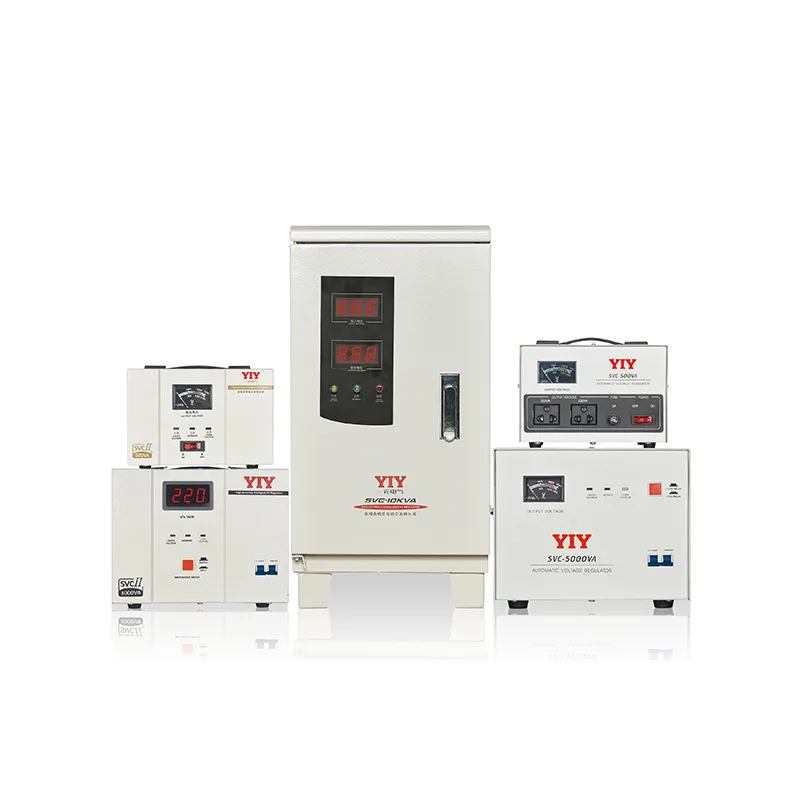

The 5 KVA voltage stabilizer price you see in a quote is rarely a single fixed number — it shifts based on technology type, how accurately your load has been sized, the input voltage range your site demands, and the certifications required for your market or application. Two buyers requesting the same 5 KVA unit can receive quotes that differ by 40% or more, simply because their specs diverge on these four variables.
This guide is written for plant engineers, panel builders, and procurement teams who need to move from a price inquiry to a spec-ready purchase order. It walks through each cost driver in sequence, so you can identify where your requirements sit and what that means for the number on your quote.
Who Is Buying a 5 KVA Stabilizer and What Decision Are They Making
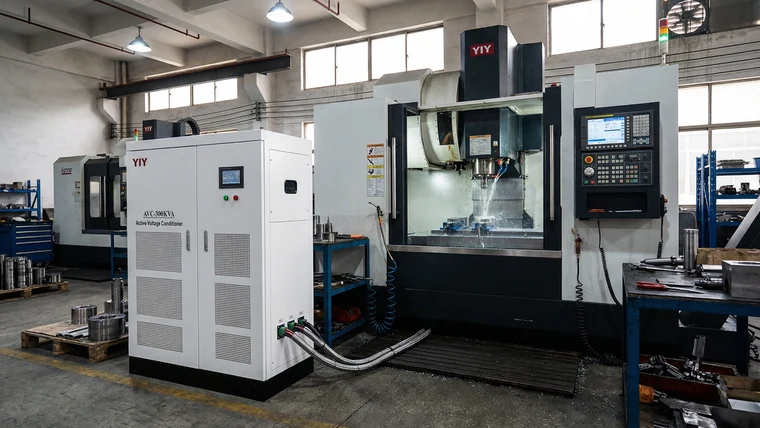
Most buyers searching for a voltage stabilizer 5 KVA price are not browsing — they are mid-specification. The typical profile is a plant engineer sizing protection for a CNC machine, a panel builder assembling a control cabinet, or an EPC procurement team locking down equipment specs before a purchase order. The load is usually defined; the question is whether 5 KVA is the right capacity and which technology type fits the application.
The Core Decision: Capacity First, Then Technology
Before comparing prices, the capacity question has to be settled. The standard sizing rule is total connected load × 1.2–1.3 to account for starting current and safety margin. A CNC spindle drawing 3.5 kW with auxiliary loads at 0.5 kW lands at roughly 4 kW — which puts a 5 KVA unit at the edge of the margin, not comfortably inside it. Getting this wrong means either an undersized unit that trips under inrush or an oversized quote that inflates cost unnecessarily.
Once capacity is confirmed, the technology choice drives the price range more than any other variable:
- Servo (motor-driven carbon brush): ±1–3% output precision, 1–2s response, best cost-to-performance ratio for most industrial loads
- Relay: step-switching, lower cost, suited to residential or non-sensitive commercial loads
- IGBT: ±0.5% or better, near-instantaneous response, required for precision instruments or semiconductor equipment — and priced accordingly
What a Structured Specification Process Looks Like
Product listings rarely answer the questions that decide a 5 KVA purchase. Before you commit to a unit, confirm load compatibility, the measured input voltage window at your site, the installation environment, and the certifications your destination market requires.
Your supplier should run that review with you: collect the load list, confirm whether servo, relay or IGBT technology fits it, and state which documents ship with the unit. The difference between suppliers is rarely the product range alone. It is whether a structured specification process exists before the quotation is issued.
How to Size Your Load Before Comparing Prices
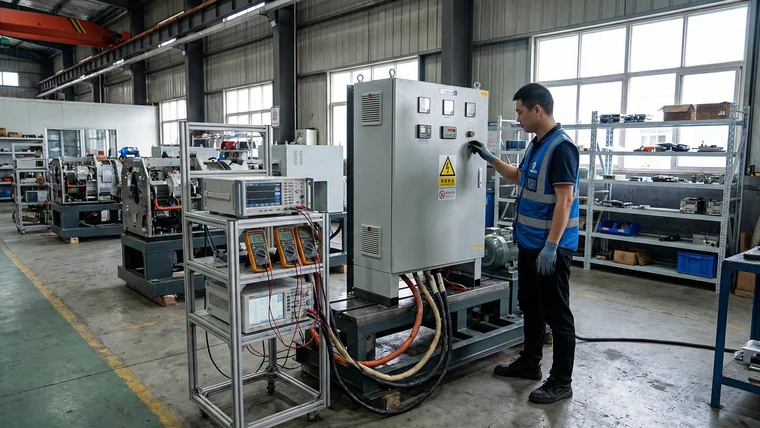
Getting the capacity right before requesting a quote saves time on both sides. A unit that’s undersized trips under inrush; one that’s oversized inflates cost without adding protection. The sizing process takes less than ten minutes if you have your load list ready.
The Sizing Formula
The standard rule: total connected wattage × 1.2–1.3 safety margin = minimum KVA required.
The multiplier accounts for motor starting current and simultaneous load peaks. A practical example: a CNC machine drawing 3.5 kW plus 0.5 kW in auxiliary loads gives you 4 kW total. Applying a 1.25× margin puts the minimum at 5 KVA — which means a 5 KVA unit is at the edge of its envelope, not comfortably inside it. If that same machine has a high-inrush spindle motor, stepping to a voltage stabilizer 3 kva or 6 KVA unit is the safer call.
Single-Phase vs. Three-Phase
Phase configuration affects both price and spec selection. Single-phase 5 KVA units are common for office equipment, small CNC machines, and light commercial loads. Three-phase configurations are required for most industrial motors and balanced distribution panels — and they carry a higher base price due to the additional winding and control complexity. Confirm your supply phase before requesting a quote; a single-phase price on a three-phase application is not a valid comparison.
Input Voltage Window
Industrial sites with wide grid fluctuation — typically −25%/+15% from nominal — need a stabilizer explicitly rated for that input range. Not all 5 KVA units are. Sensitive equipment such as medical instruments or precision test gear may also require selectable output voltage (e.g., 110 V or 127 V), which is a separate spec from input tolerance and adds cost.
When 5 KVA Is the Right Fit — and When It Isn’t
5 KVA covers most single-machine protection scenarios: a small CNC, a laser cutter, a server rack under 4 kW. It stops being the right answer when total connected load exceeds 4 kW with margin, when you’re protecting a production line with multiple motors, or when the site has severe voltage sag that demands a wider input window than a standard 5 KVA unit supports. In those cases, a voltage stabilizer 20kva price or a 25 KVA servo voltage stabilizer becomes the relevant comparison — and the quote will reflect that difference in transformer size, cooling method, and control complexity.

Choosing Between 5, 6, 8 and 10 KVA
When your calculated requirement falls between standard sizes, choose the next standard rating up. A load that works out at 5.5 kVA should not sit on a 5 kVA unit; the extra margin keeps startup transients from tripping the stabilizer.
Step up again when a 5 kVA unit would run above about 80% of its rating in daily use, or when motor loads need three-phase distribution. Around 10 kVA, selection usually moves to three-phase industrial models, where input voltage range, correction speed and protection functions matter as much as capacity. The YIY small voltage stabilizer range lists single-phase and compact three-phase models up to 10 kVA with their published input ranges.
Technology Type Is the Biggest Price Driver
When two buyers request a 5 KVA stabilizer quote and receive numbers that differ by 40%, technology type is almost always the reason. Relay, servo, and IGBT units occupy distinct price tiers — and each tier exists because the underlying correction mechanism is fundamentally different.
| Technology | Output Precision | Response Time | Relative Cost | Best Application |
|---|---|---|---|---|
| Relay | ±5–8% | 0.5–1s (stepped) | Lowest | Residential, light commercial, non-sensitive loads |
| Servo | ±1–3% | 1–2s (continuous) | Mid-range | Industrial CNC, packaging, control panels |
| IGBT | ±0.5% or better | <20ms (solid-state) | Highest (2–4× servo) | Semiconductor fab, medical imaging, precision instruments |
Relay Type: Lowest Entry Cost
Relay-based stabilizers use step-switching to correct voltage in discrete increments. The correction is not continuous — the output moves in steps, which means output precision is limited (typically ±5–8%). For residential loads, small office equipment, or light commercial applications where sensitive electronics are not involved, this is acceptable. The lower component cost translates directly into the lowest purchase price in the 5 KVA range.
The tradeoff is precision. Step-based correction introduces brief voltage transitions at each switching event. For CNC machines, medical instruments, or any load sensitive to transient fluctuations, relay type is the wrong choice regardless of price.
Servo Type: The Industrial Default
Servo stabilizers use a motor-driven carbon brush to adjust a variac continuously, delivering ±0.5–3% output precision with a response time of 1–2 seconds. This combination of continuous correction, reliable precision, and moderate cost makes servo the right default for most 5 KVA industrial applications — CNC machines, laser cutters, packaging equipment, and control panels.
The price premium over relay type is real but justified. For a plant engineer protecting a CNC spindle or a panel builder specifying a control cabinet, servo delivers the performance-to-cost ratio that relay cannot match and IGBT does not require. For most 5 KVA industrial applications, servo is the correct default — see our guide on when to choose a servo voltage stabilizer 5 KVA for application-specific criteria.
IGBT Type: Mission-Critical Premium
IGBT-based stabilizers use solid-state switching to achieve near-instantaneous response (milliseconds) and output precision of ±0.5% or better. The cost is significantly higher — often 2–4× a comparable servo unit — because the power electronics, control circuitry, and thermal management are substantially more complex.
IGBT is the right answer for semiconductor fabrication equipment, medical imaging systems, precision test instruments, and any application where a 1–2 second correction window causes process failure or equipment damage. For standard industrial loads, the premium is not justified.
Matching Technology to the Load Profile
CNC machines usually need servo or IGBT correction, because a voltage sag during a cut can scrap the workpiece or stress the spindle drive. Commercial lighting often runs reliably on a relay stabilizer, unless the circuit includes sensitive LED drivers or dimming controls. HVAC controls, small pumps and office loads sit between these two cases.
The deciding question is what a voltage event would cost on your site: a damaged motor controller, a corrupted machining cycle or lost production time. Base the technology choice on the load’s real voltage tolerance, not only on its rated capacity.
Certifications and Compliance That Affect What You Can Buy
Certifications are not just paperwork — they determine which markets a unit can legally enter and which suppliers are worth taking seriously. For global procurement, getting this wrong means customs holds, failed inspections, or equipment that can’t be commissioned on site.
The Standards That Define the Baseline
IEC 60038 sets the international standard for nominal voltages and defines the ±10% input tolerance that most industrial stabilizers are designed around. If a unit’s input range doesn’t cover your grid’s actual fluctuation window, IEC 60038 compliance alone doesn’t guarantee it will perform at your site.
IEC 61000 covers electromagnetic compatibility (EMC) — the requirement that a stabilizer neither generates disruptive interference nor fails under it. For facilities running sensitive instrumentation or operating near other electronic equipment, IEC 61000 compliance is a functional requirement, not a formality.
When you review a quotation, ask which parts of the IEC 61000 series the supplier has tested against, for example IEC 61000-3-2 for harmonic current emissions and IEC 61000-3-3 for voltage fluctuation and flicker, rather than accepting a general “IEC compliant” statement. For quality management, confirm that the ISO 9001:2015 certificate is current and that its scope covers stabilizer design and manufacturing.
CE, ISO 9001, and ISO 14001: What They Signal
CE marking is a legal requirement for equipment deployed in EU member states. A unit without CE cannot be sold or installed in the EU — full stop. Buyers sourcing for European projects should treat CE as a minimum filter, not a differentiator.
ISO 9001:2015 signals that the manufacturer’s design and production processes meet an audited quality management standard. It doesn’t guarantee a specific product outcome, but it does mean the factory has documented processes, traceability, and corrective action systems in place. ISO 14001 adds environmental management — relevant for procurement teams with sustainability reporting requirements or facility compliance obligations.
YIY’s Certification Position
YIY holds ISO 9001:2015, ISO 14001, and CE — all verified and current. This means YIY units are eligible for EU deployment and meet the quality management baseline that most industrial procurement policies require. For buyers sourcing into 130+ countries, these certifications reduce the compliance verification burden at the destination end.
The Sourcing Rule That Gets Overlooked
Certifications must match the destination market, not the origin country. A unit manufactured in China with CE marking is EU-eligible. A unit without CE is not — regardless of where it was made or what the supplier claims. Buyers comparing industrial voltage stabilizer manufacturers should verify certification scope and validity date before committing to a purchase order.
What Else Moves the Price: Copper Winding, Single-Phase vs Three-Phase, and Custom Specs
Once technology type is settled, three secondary variables consistently shift quotes in ways buyers don’t always anticipate: winding material, phase configuration, and customization scope. These aren’t edge cases — they show up in nearly every serious procurement comparison.
Copper vs Aluminum Winding
The transformer winding material is one of the most searched secondary specs, and for good reason. Copper-wound units carry a higher upfront cost — typically 15–25% more than aluminum equivalents at the same KVA rating — but deliver better conductivity, lower resistive losses, and longer service life under continuous load. For industrial applications where the stabilizer runs 16–24 hours a day, the total cost of ownership often favors copper despite the higher purchase price.
Buyers searching “Stabilizer 5KVA Copper price” are usually comparing against aluminum-wound alternatives. The honest answer: if the load is continuous and the installation environment is warm, copper winding is the right call. If the load is intermittent and budget is the primary constraint, aluminum is acceptable.
Single-Phase vs Three-Phase Configuration
Phase configuration affects transformer cost more than most buyers expect. A single-phase 5 KVA unit is the standard choice for office equipment, small CNC machines, and light commercial loads on a single-phase supply. A three-phase equivalent — protecting a balanced distribution panel or industrial motor — requires three separate winding sets and more complex control circuitry, which pushes the base price significantly higher.
The comparison is not apples-to-apples. A single-phase 5 KVA price and a 3 phase voltage stabilizer 10kva price reflect fundamentally different transformer architectures. Confirm your supply phase before requesting a quote — mismatched specs waste time on both sides.
OEM/ODM Customization
Standard catalog units cover most applications. But site conditions sometimes require deviations: wider input range (e.g., −30%/+20% instead of the standard −25%/+15%), higher IP-rated enclosures for dusty or wet environments, or selectable output voltage for equipment running on 110 V or 127 V. Each of these adds cost — engineering time, non-standard components, and extended lead time.
The Supplier Scope Gap
This is where Purevolt and Vener7 fall short in practice. Their listings show basic servo specifications, but neither offers a structured engineering consultation process. There’s no mechanism to confirm input range compatibility, verify enclosure requirements, or validate certification scope before committing to a purchase order. For buyers sourcing into regulated markets or non-standard site conditions, that gap is a real procurement risk — not just a service inconvenience.
How YIY Approaches 5 KVA Stabilizer Specifications and Quotes
Most suppliers will send you a price when you ask for one. YIY sends you a sizing review first.
The difference matters. A quote without a load review is just a number — it doesn’t tell you whether the unit will hold under inrush, whether the input range covers your grid’s actual fluctuation window, or whether the enclosure rating fits your installation environment. Getting those wrong means a unit that trips, fails early, or can’t be commissioned on site.
What the Engineering Review Covers
Before YIY quotes a 5 KVA unit, the engineering team reviews four inputs:
- Load list — total connected wattage and equipment types
- Starting current — motor inrush multipliers that determine whether 5 KVA is genuinely sufficient or undersized
- Input voltage window — actual grid fluctuation at the site, not just nominal
- Installation conditions — ambient temperature, enclosure requirements, phase configuration
This process catches the edge cases that generic listings miss: a CNC spindle with high inrush that pushes a 5 KVA unit past its envelope, or a site with −30% voltage sag that exceeds a standard input range spec.
Product Range and Manufacturing Credentials
YIY manufactures servo, relay, and IGBT stabilizers from 0.5 KVA to 3000 KVA, exported to 130+ countries. Annual production capacity exceeds 1,000,000 units across a 30,000㎡ facility, with 16+ years of manufacturing experience. ISO 9001:2015 certification covers the full design and production process — not just the finished product.
That range matters for procurement teams sourcing across multiple projects. A supplier who can cover 5 KVA today and voltage stabilizer 20kva price requirements on the next project reduces vendor complexity without sacrificing spec depth.
The Right Next Step
If you have a load list and site conditions ready, submit them for a sizing review — not a generic price request. The review confirms whether 5 KVA is the right capacity, which technology type fits the application, and what input range the unit needs to be rated for. That’s the information that turns a quote into a purchase order you can stand behind.
Frequently Asked Questions
What should buyers evaluate before requesting a 5 KVA voltage stabilizer price?
Before requesting a quote, confirm four inputs: your total connected load (in watts), the starting current multiplier for any motors in the system, your site’s actual input voltage range (not just nominal), and your installation environment — phase configuration, ambient temperature, and enclosure requirements. A quote without these details is just a number. It won’t tell you whether the unit will hold under inrush, whether the input range covers your grid’s real fluctuation window, or whether the enclosure rating fits your site. Getting those wrong means a unit that trips, fails early, or can’t be commissioned. Resolve the spec before comparing prices.
When does a 5 KVA stabilizer make sense versus stepping up to a larger capacity?
5 KVA covers most single-machine protection scenarios: a small CNC, a laser cutter, a server rack under 4 kW. Apply the standard sizing rule — total connected wattage × 1.25 safety margin — and if the result lands at or below 4 kW, a 5 KVA unit fits. If your load exceeds that threshold, has high-inrush motors, or your site experiences severe voltage sag beyond −25%, stepping up is the right call. Forcing a 5 KVA unit past its envelope doesn’t save money — it creates downtime.
How is a 5 KVA voltage stabilizer correctly sized for industrial use?
Start with your load list. Add up total connected wattage across all equipment, then multiply by 1.2–1.3 to account for motor starting current and simultaneous load peaks. Confirm your supply phase — single-phase for most small machines, three-phase for industrial motors and distribution panels. Then verify the input voltage window your site actually requires. Standard units cover −25%/+15%; sites with wider grid fluctuation need a unit explicitly rated for that range. Match all three before requesting a quote.
Final Thoughts
The 5 KVA voltage stabilizer price you receive is a direct output of four decisions: technology type (relay, servo, or IGBT), whether your load has been correctly sized with the 1.2–1.3 safety margin applied, the certifications your destination market requires, and the winding material and phase configuration your application demands. Get any one of these wrong and the quote either doesn’t fit your application or doesn’t reflect what you actually need to buy.
The right starting point is not a price request — it’s a load review. Submit your load list, starting current data, input voltage window, and installation conditions to YIY’s engineering team for a sizing review before committing to a specification.
About YIY
Zhejiang Yiyen Holding Group Co., Ltd. (YIY) is a professional voltage stabilizer manufacturer with 16+ years of experience. With a 30,000sqm modern facility and an annual production capacity of 1,000,000+ units, our products are exported to 130+ countries. We provide OEM/ODM customization services and are ISO 9001:2015 certified, committed to delivering stable and reliable voltage protection solutions to global customers.
Contact Us
Email: yiyen at yiyen.com
Phone/WhatsApp: +86 13587452904
Website: https://www.yiyavr.com/
If you found this article helpful, contact us for a sizing review or customized solution.