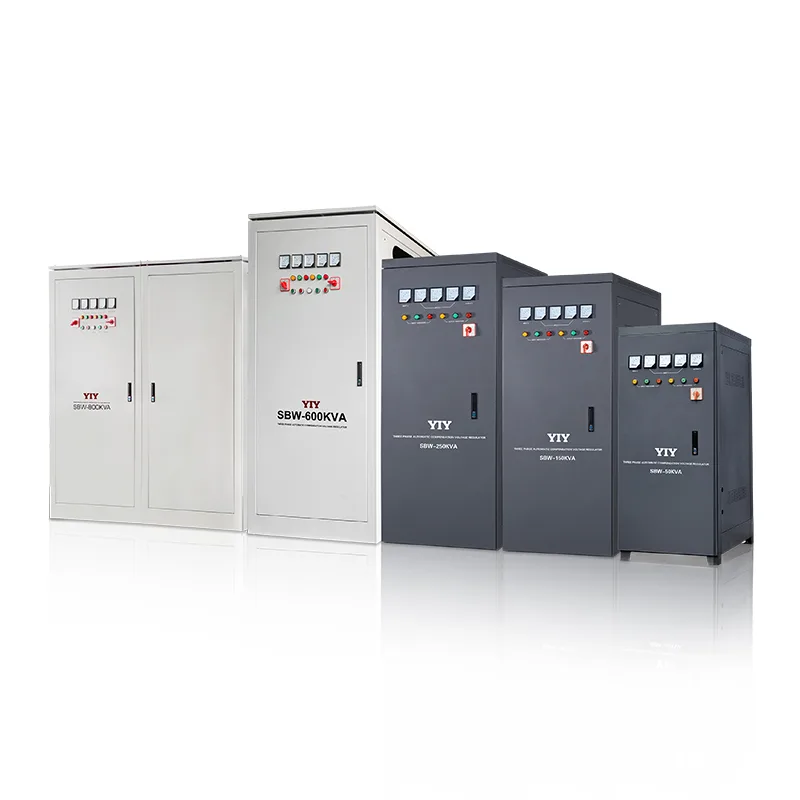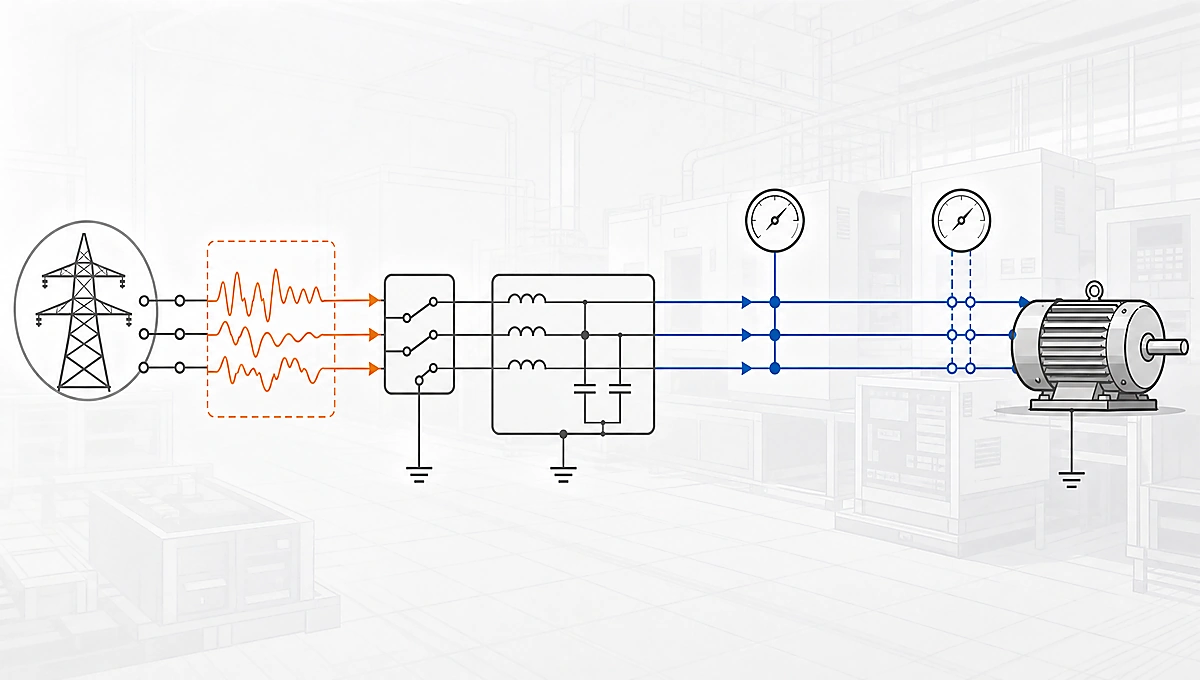
Choose a constant voltage source is active approach when unstable utility input, sensitive industrial loads, or fast correction needs make passive protection insufficient for your uptime, equipment life, and output quality. In industrial voltage protection, “active” means the system senses input deviation and corrects output voltage instead of only disconnecting, filtering, or absorbing a fault.
If your plant sees voltage sags, swells, generator fluctuation, phase unbalance, or nuisance trips, this guide will help you decide when active correction fits, how it compares with servo and IGBT stabilizers, what standards and sizing checks matter, and what proof to request before RFQ.
If you need the broader industrial path behind this topic, start with three-phase stabilizers.
When does unstable voltage become a real sourcing risk?
You face sourcing risk when voltage instability affects uptime, warranty exposure, equipment life, or product quality rather than appearing as a rare utility event. At that point, your decision is not simply whether to add protection; it is whether an active voltage conditioner, servo AVR, static IGBT stabilizer, or automatic voltage regulation system is the right fit for the load.
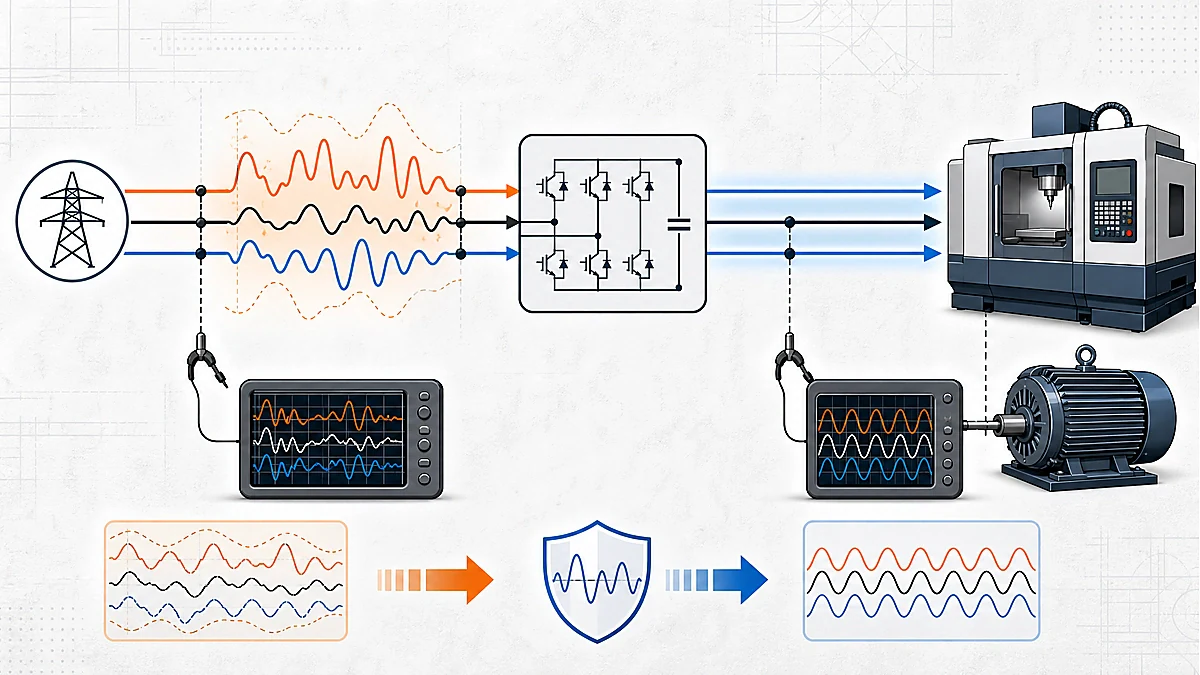
For three-phase industrial loads, start your shortlist with measured voltage range, load kVA, inrush current, phase unbalance, and fault history, then compare available three-phase stabilizers against those real conditions. A nominal “400 V” or “380 V” site description is not enough because your equipment fails during actual dips, swells, starts, and transitions.
Active regulation is worth evaluating when you see repeated nuisance trips on PLCs, VFDs, CNC systems, compressors, medical equipment, test benches, packaging lines, or control cabinets. It also belongs on your shortlist when low-voltage periods cause motor heating, abnormal current, process resets, product scrap, or service calls that keep recurring without a clear equipment defect.
The cost-of-inaction case is often stronger than the device-price argument. Uptime Institute’s 2024 outage analysis reported that 54% of significant outages cost more than $100,000 and 16% exceeded $1 million; even if your site is smaller, one stopped line can quickly outweigh the price gap between passive protection and active correction. Last verified: 2026-06-03. Uptime Institute Annual Outage Analysis 2024
Your environment also changes the procurement risk. In dusty, humid, hot, outdoor, generator-fed, or weak-grid locations, check enclosure/IP rating, ventilation clearance, thermal derating, surge protection, bypass design, and custom alarms before you approve a model. Those details decide whether the selected unit works in your site, not only in a catalog.
Before you finalize sizing or implementation details, review three phase stabilizer selection guide.
What does an active constant-voltage system actually do?
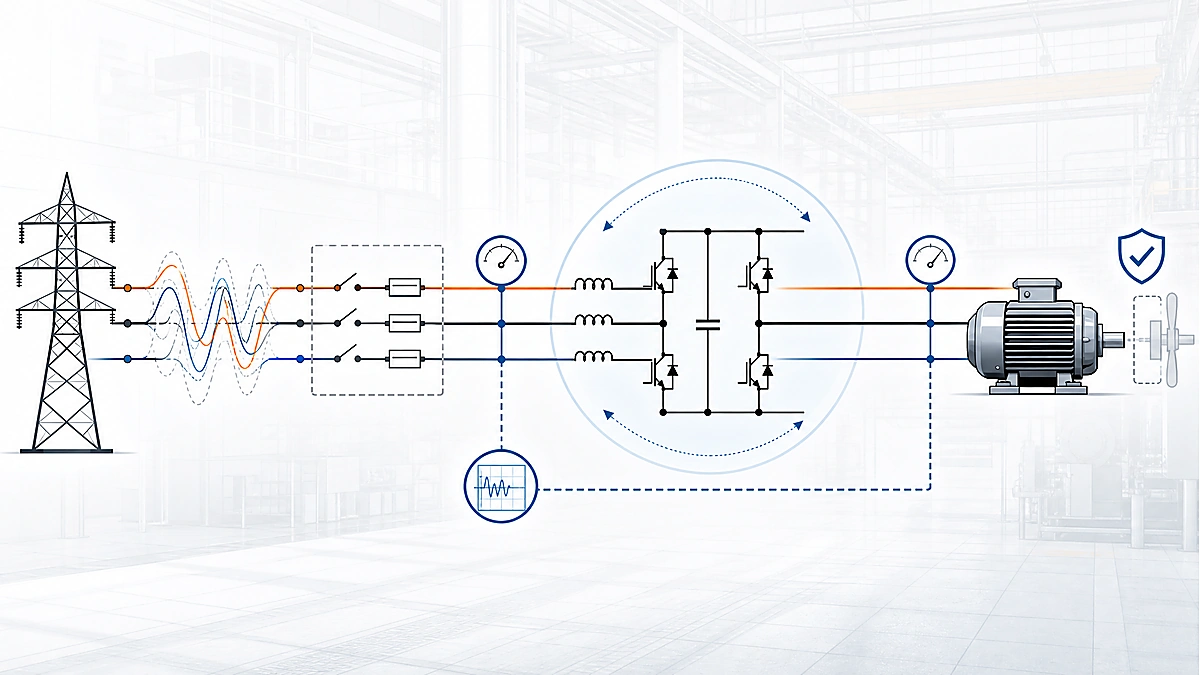
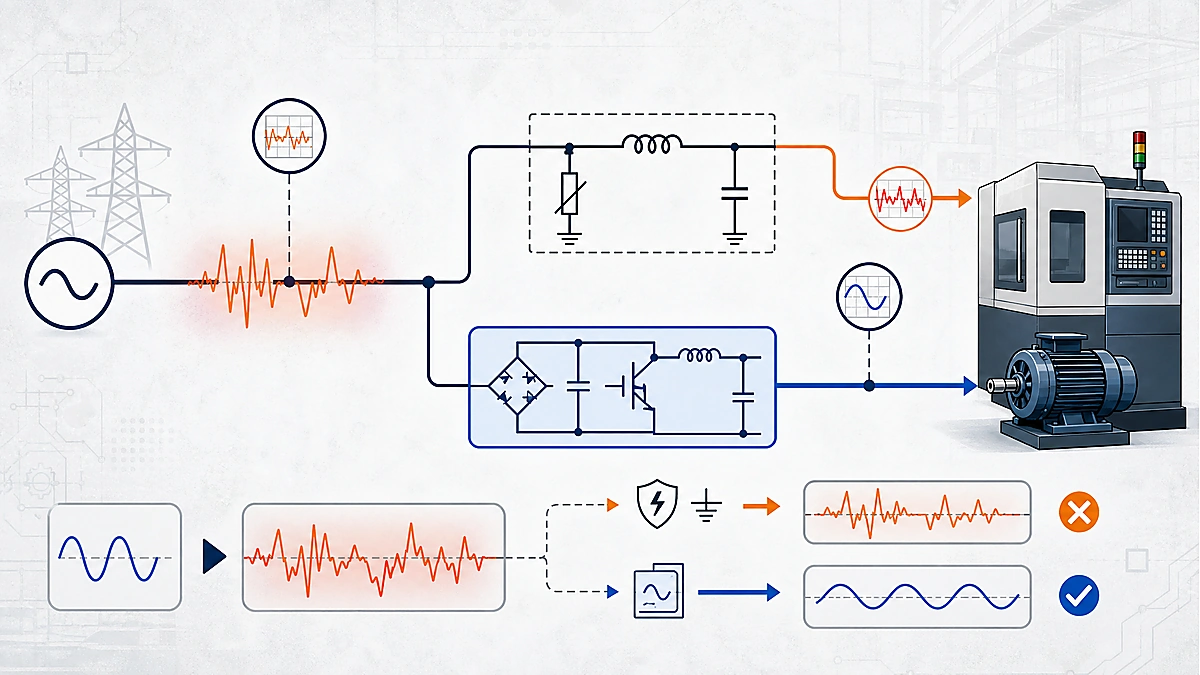
An active constant-voltage system senses input voltage, compares it with your target output, and applies correction before the connected load sees a damaging or disruptive deviation. In circuit theory, a voltage source is an active element because it can supply energy to a circuit; in industrial sourcing, active correction means the equipment closes a control loop around your real supply conditions.
A basic control sequence looks like this:
- Detect voltage, current, phase, frequency, and waveform condition.
- Decide whether the measured input is outside the target output and protection limits.
- Correct by moving a servo transformer, switching taps, or using IGBT/PWM compensation.
- Verify output condition and trigger alarm, bypass, shutdown, or logging if the fault continues.
Your target voltage should be specified from the actual electrical system, not a generic global claim. Nominal system voltages such as 230 V and 400 V should be aligned with IEC 60038 standard voltages, which gives your project a clearer reference point for utility supply, equipment nameplates, and acceptance discussion.
A voltage source PWM controlled active rectifier becomes relevant when you need fast electronic correction instead of slower mechanical movement. In practical terms, PWM and IGBT control let a static stabilizer shape compensation energy quickly and precisely, which helps sensitive controls ride through short sags and swells that might otherwise trip a PLC, CNC controller, imaging device, server rack, or test bench.
When you compare technical specs, translate each number into operating meaning:
| Spec | What it tells you | What it means for your load |
|---|---|---|
| Regulation accuracy | Output tolerance, usually stated as a percentage | Tighter output helps sensitive controls avoid resets or process drift |
| Response time | How quickly the unit reacts after input deviation | Faster correction helps loads that trip during short dips or swells |
| Input range | Lowest and highest supply the unit can correct | Wider range helps weak grids, long feeders, and generator-fed sites |
| Overload capacity | Short-term current handling above rated load | Motor starts and compressor inrush need margin, not only nameplate kVA |
| Bypass mode | Manual or automatic transfer path | A good bypass lets you service the unit without unnecessary downtime |
| Protection functions | Over/under-voltage, short-circuit, overtemperature, phase loss | These functions stop a voltage event from becoming equipment damage |
For voltage dip and interruption behavior, compare sensitive-load tolerance with IEC 61000-4-11 voltage dip testing. This does not mean every industrial stabilizer is certified to that exact test; it means you have a recognized way to discuss dip depth, duration, interruption behavior, and whether your regulator must correct the event before the machine trips.
If you want to expand this evaluation into a nearby technical path, continue with industrial voltage stabilizer selection guide.
For a concrete product reference while you compare options, review IGBT voltage stabilizer.
Which technology fits your precision, speed, and budget requirements?
Your best-fit technology depends on the disturbance pattern, load sensitivity, correction speed, site environment, and lifetime service expectation. A constant voltage source selection for industrial loads should compare topology before brand, because each active or semi-active design solves a different version of the same voltage problem.
| Option | Typical fit | Main advantage | Watch-out |
|---|---|---|---|
| Servo voltage stabilizer | Industrial motors, CNC, compressors, mixed three-phase loads | Strong balance of capacity, precision, and cost | Mechanical correction is not ideal for very fast sags |
| Relay stabilizer | Small general loads and less critical equipment | Low cost and simple structure | Step correction may be too coarse for sensitive electronics |
| Static IGBT AVR | PLCs, medical loads, data equipment, precision production | Fast electronic correction and high control accuracy | Higher purchase cost and thermal design requirements |
| Active voltage conditioner | Sag/swell-prone industrial and commercial loads | Rapid regulation and disturbance ride-through | Correction range, bypass, and overload behavior must be verified |
| CVCF-style voltage/frequency stabilizer | Generator, weak-grid, or frequency-unstable supply | Stabilizes both voltage and frequency | More complex sizing and higher system cost |
If your main problem is slow long-duration fluctuation, a servo stabilizer may be the most economical industrial answer. If your process trips on short disturbances, a static design or active voltage conditioner may justify the extra cost. When you need fast electronic regulation in this power class, review an IGBT voltage stabilizer alongside servo options rather than assuming one topology is always superior.
For a broader selection framework, use an industrial voltage stabilizer selection guide to structure your comparison around load behavior, correction range, environment, compliance, documentation, and supplier support. That keeps your shortlist tied to engineering fit instead of only unit price or brand familiarity.
External market options such as PCS100 AV-type active voltage conditioners and Schneider-style active voltage solutions are usually positioned for fast sag and swell correction on sensitive industrial or commercial loads. Your practical task is to compare them with servo AVR and IGBT stabilizer options using identical site data: kVA, inrush current, input range, correction speed, bypass mode, overload rating, protection list, and service access.
What sizing checks should you complete before RFQ?
You should size the unit from measured site voltage, real load behavior, correction speed, environmental conditions, compliance references, and supplier proof, not nominal kVA alone. Your RFQ should prove that the active voltage regulator, servo AVR, static stabilizer, or active voltage conditioner can hold output under the faults your load actually sees.
| Check | Why it matters | If you skip it |
|---|---|---|
| Load profile | Record kVA/kW, power factor, starting current, nonlinear loads, phase balance, harmonics, duty cycle, and 10-25% expansion margin where future load growth is likely. This tells you whether the unit can handle real current demand, not just nameplate capacity. | You may undersize the system and cause overload trips, heat stress, nuisance bypass, or poor correction during motor starts. |
| Site voltage profile | Measure nominal voltage, lowest/highest input voltage, sag/swell history, frequency, generator/grid supply, grounding, cable distance, and phase unbalance. These values translate your site into correction range and protection requirements. | A unit that works in a catalog may fail on a weak grid, long feeder, or unstable generator supply. |
| Technology fit | Match servo, relay, static IGBT, active voltage conditioner, or CVCF-style regulation to the disturbance pattern and load tolerance. Faster response matters when equipment trips before operators can react. | You may overpay for speed you do not need, or under-spec a slow topology for sensitive loads. |
| Environment | Confirm ambient temperature, dust, humidity, ventilation, cabinet location, enclosure/IP rating, corrosion risk, and service clearance. These details affect cooling and long-term reliability. | Heat, dust, or poor airflow can shorten component life and cause nuisance faults. |
| Compliance and acceptance proof | Align nominal voltage with IEC 60038 and discuss dip behavior with IEC 61000-4-11 where relevant. Ask for factory test reports and protection settings. | Acceptance tests, warranty claims, and contractor handover can become subjective. |
| Sourcing readiness | Request wiring diagrams, spare parts list, customization options, batch consistency controls, lead time, warranty terms, and after-sales support. | One missing spare, unclear diagram, or weak batch can cost more than the purchase-price saving. |
| Monitoring and operations | Specify alarms, event logs, remote monitoring, and PLC/BMS/SCADA or maintenance integration where your workflow needs them. | Your maintenance staff may not be able to connect voltage events with production faults. |
For three-phase industrial applications, the three phase stabilizer selection guide is a useful execution reference when you are preparing load data, input range, phase balance, site constraints, and RFQ details. The goal is simple: make every supplier quote against the same operating reality.
The 10-25% spare capacity guideline is not a license to guess high. It gives your application room for motor starting, future equipment additions, and normal load variation, but you still need power factor, inrush current, harmonic content, and ambient temperature to size responsibly. A heavily nonlinear or motor-heavy load may need more engineering review than a stable resistive load at the same kVA.
How should you verify standards, certifications, and supplier proof?
You should verify standards and certifications by requesting the exact document, test report, certificate scope, and applicable product model instead of accepting general claims. Standards language helps your project, but only when it is tied to your voltage system, disturbance pattern, and acceptance criteria.
If a supplier mentions IEC 60038, check that your quotation states the intended nominal voltage and output tolerance clearly. For you, that means fewer disputes about whether the selected model was designed for the local supply system or merely adapted after the fact.
If your sensitive equipment has known dip or interruption tolerance, use IEC 61000-4-11 as a discussion reference for voltage dip depth, duration, and interruption behavior. For procurement, the practical verification action is to ask the supplier: “At our measured lowest input and specified load current, what output voltage and response time can you prove?”
For quality-system claims, ask whether the manufacturer’s certificate covers the actual production organization and product process. YIY states ISO 9001:2015 quality management certification; you can compare the certificate scope with the official ISO 9001 quality management standard page to understand what the certification is intended to cover.
Also check factory test reports, wiring diagrams, protection settings, bypass design, overload rating, enclosure details, spare part availability, and service response. Your acceptance review should leave a clear paper trail showing why the selected unit fits your measured site conditions.
What final decision checks should you complete?
You should approve an active voltage solution only after confirming measured voltage behavior, load capacity, correction speed, protection design, site environment, monitoring needs, and supplier proof. Your final decision should be based on operating risk and verification evidence, not only catalog kVA.
Before you issue a purchase order, complete these checks:
- Confirm nominal voltage, lowest/highest measured input, phase count, frequency, grounding, harmonics, and cable distance.
- Confirm load kVA/kW, power factor, starting current, nonlinear loads, phase balance, duty cycle, and future expansion margin.
- Confirm response time, input correction range, output tolerance, overload capacity, and bypass behavior.
- Confirm over/under-voltage, short-circuit, overtemperature, phase loss, surge, and alarm functions.
- Confirm enclosure/IP rating, cooling clearance, dust/humidity protection, and derating at high ambient temperature.
- Confirm event logs, remote monitoring, and PLC/BMS/SCADA or maintenance integration where your operations need visibility.
- Confirm documentation, warranty terms, spare parts, lead time, factory tests, and after-sales support.
If your shortlist includes active voltage conditioners, PCS100 AV-type options, Schneider-style alternatives, servo AVR, and IGBT static stabilizers, ask every supplier for the same proof set. That one step makes quotations technically comparable and reduces the risk of buying a unit that only fits on paper.
Frequently Asked Questions
What should you know before evaluating an active voltage conditioner from Schneider-style suppliers?
You should evaluate correction range, response time, bypass design, load compatibility, service documentation, wiring diagrams, protection lists, and factory test reports. Then compare those documents against your measured sag, swell, phase unbalance, ambient temperature, dust/humidity level, ventilation limits, and enclosure requirements before you approve the quotation.
How do PCS100 AV-type active voltage conditioners compare with industrial voltage stabilizers?
PCS100 AV-type active voltage conditioners are usually positioned for fast sag and swell correction on sensitive industrial or commercial loads. Compare them with servo AVR and IGBT stabilizer options using the same kVA, inrush current, input range, correction speed, bypass mode, overload rating, and site conditions. The best fit depends on whether your main issue is fast ride-through, long-duration fluctuation, or mixed load protection.
Are the best active voltage conditioners always the right choice for a factory load?
No. The best active voltage conditioner is the one that matches your disturbance pattern and load tolerance, not automatically the most expensive or fastest option. Start with one week of voltage logs, equipment trip records, and a list of sensitive loads such as PLCs, CNC systems, VFDs, compressors, or medical devices. If the data shows recurring fast dips or swells, active correction may be justified; if not, a servo or static AVR may be more economical.
Should buyers compare active voltage solutions with IGBT or servo stabilizers before RFQ?
Yes. You should compare active voltage conditioners, IGBT static stabilizers, and servo stabilizers before RFQ when downtime risk, repeat sourcing, or batch consistency matters. Send each supplier the same measured input range, load kVA/kW, power factor, inrush current, phase balance, site temperature, dust/humidity level, and target output tolerance. This verification action makes the offers comparable.
When is active voltage correction necessary?
Active voltage correction is necessary when your load cannot tolerate the depth, duration, or recurrence of input fluctuation. Verify whether failures happen during short dips, phase unbalance, brownouts, generator transitions, or swells. Then ask whether the proposed regulator corrects the event before your machine trips.
Final Thoughts
Choose active voltage correction when your measured voltage problem creates more operating risk than the cost of selecting the right protection. Your best path is to measure the disturbance, match the correction technology to your load sensitivity, verify standards and supplier proof, then confirm the model against real site conditions before purchase.
For more technical background while you compare options, YIY’s voltage stabilizer technical articles can help you review sizing, sourcing, and troubleshooting topics before RFQ. For a low-friction next step, start with a quick-fit checklist or first-pass application review, then share your load profile, site conditions, and target output requirements so YIY can recommend a suitable model conservatively.
About YIY
Zhejiang Yiyen Holding Group Co., Ltd. (YIY) is a professional voltage stabilizer manufacturer with 16+ years of experience. With a 30,000sqm modern facility and an annual production capacity of 1,000,000+ units, YIY products are exported to 130+ countries. YIY provides OEM/ODM customization services and ISO 9001:2015 certified production support for stable, reliable voltage protection solutions.
Contact Us
Email: yiyen at yiyen.com
Phone/WhatsApp: +86 13587452904
Website: https://www.yiyavr.com/