Beite陛下,以下是文章引言:
—
Automatic voltage regulator repair is the right call when failure symptoms are isolated to a specific component and the cost of replacement outweighs the cost of targeted service. An AVR that delivers unstable output, trips under load, or shows localized relay or capacitor failure is often a repair candidate — not a write-off.
The decision isn’t always obvious. This article walks through the evaluation framework: how to read failure patterns, when repair economics make sense, what compliance factors constrain your options, and how maintenance practices affect how often you face this choice.
What Automatic Voltage Regulator Repair Actually Means
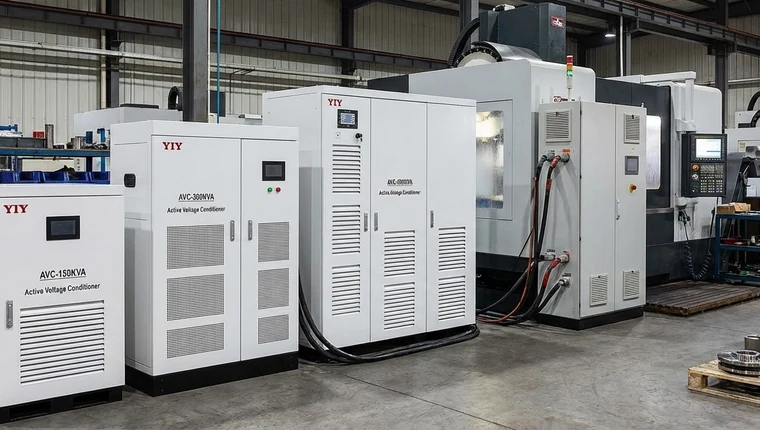
An automatic voltage regulator (AVR) does one job: it monitors incoming grid voltage and continuously adjusts output to hold a stable level — typically ±1–5% of the rated value — regardless of what the supply is doing. Sags, surges, brownouts, and momentary spikes are absorbed before they reach connected equipment. For CNC machines, lighting systems, and sensitive industrial loads, that constant output is what prevents premature failure and unplanned downtime.
How an AVR Maintains Output Stability
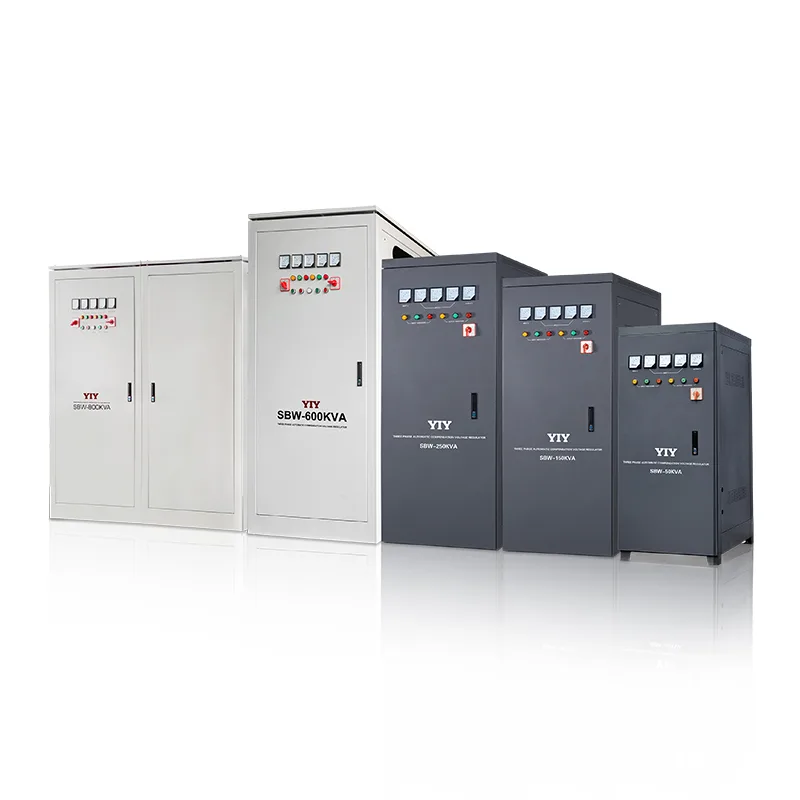
The core mechanism varies by technology. Relay-type AVRs use electromagnetic tap switching to step voltage up or down in discrete increments, delivering ±5–8% output precision with fast response. IGBT-based units like the CVCF series use solid-state switching for continuous correction, achieving ±0.5% accuracy with response times under 10ms. Servo stabilizers sit between the two — motorized autotransformer adjustment gives the best balance of precision and load tolerance for most industrial applications.
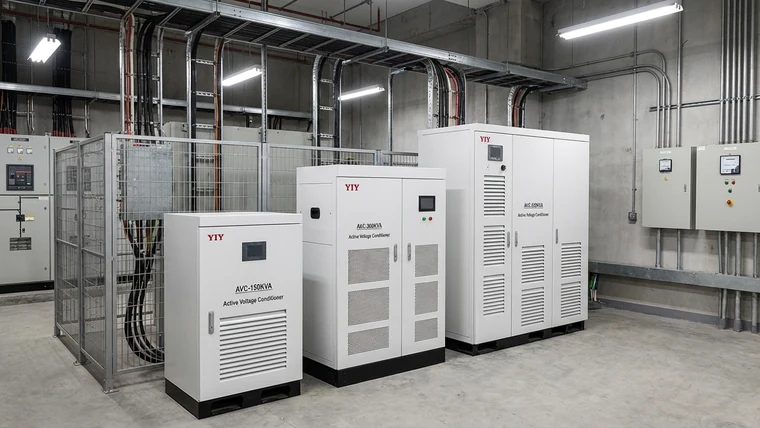
All three types share the same functional goal: isolate downstream equipment from grid instability.
Common Failure Modes That Trigger a Repair Decision
Three component categories account for most AVR failures in the field:
- Relay wear — mechanical contacts degrade after repeated switching cycles, causing output instability or audible chattering under load
- Capacitor degradation — electrolytic capacitors in the control board lose capacitance over time, leading to regulation drift or startup failures
- Control board faults — damaged sensing circuits, blown protection components, or firmware-related faults that affect regulation logic
These failures are localized. They don’t necessarily compromise the transformer core, housing, or wiring harness — which is exactly what makes repair viable.
Repair vs. Replacement: The Core Distinction
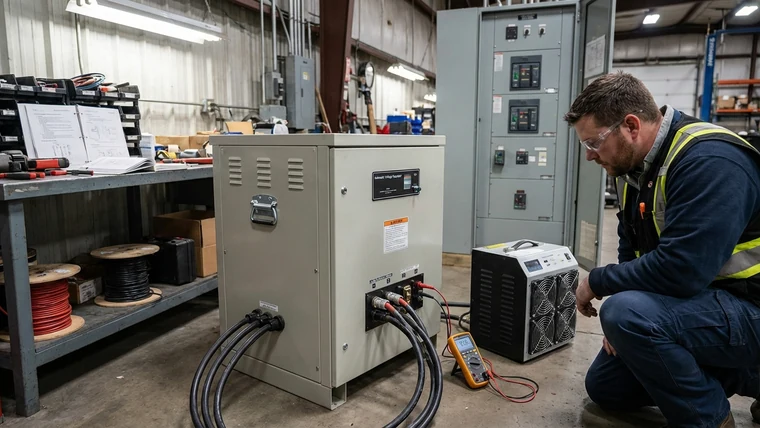
Repair means a component-level intervention: replacing a failed relay bank, recapping a control board, or swapping a damaged sensing module. The unit’s structural and electrical integrity remains intact.
Replacement means a full unit swap — new transformer, new control electronics, new enclosure. It’s the right call when failure is distributed across multiple subsystems, when the unit is out of compliance with current standards, or when repair cost approaches 60–70% of replacement cost.
The repair decision starts with isolating the failure. If it’s confined to one replaceable subsystem, repair is almost always the faster and more cost-effective path.
Who Faces This Decision and What’s at Stake
The repair-or-replace question lands on three types of people, and each one has different exposure to getting it wrong.
Industrial Engineers
Plant engineers and electrical maintenance teams are usually first on the scene when an AVR fails. They’re reading output waveforms, checking relay chatter, and deciding whether a fault is localized or systemic. For them, the wrong call means either unnecessary downtime waiting for a replacement unit, or a patched repair that fails again under load — both outcomes that reflect directly on their maintenance record.
Facility Managers
Facility managers sit one level up from the fault itself. They’re managing uptime commitments, maintenance budgets, and vendor relationships simultaneously. A CNC machine offline for 48 hours while a replacement AVR ships internationally isn’t just a technical problem — it’s a production schedule problem. Repair, when viable, compresses that window significantly.
Procurement Teams
Procurement teams face this decision at scale. When a facility runs 20 or 40 stabilizer units, the repair-vs-replace calculus becomes a policy question, not a one-off judgment. They need a defensible framework: when does repair make economic sense, and when does it expose the operation to recurring failure risk?
The Core Tradeoff
Unplanned downtime in industrial environments typically costs far more than the repair itself. A single CNC machine stoppage can run $500–$2,000 per hour depending on the production context. An AVR repair — relay replacement, control board recap — often costs 10–20% of unit replacement value and can be completed in hours rather than days.
The risk of getting this wrong cuts both ways: repair a unit with distributed failure and you’re back in the same position within months; replace a unit with an isolated fault and you’ve spent 5–10x more than necessary.
Where Competitor Positioning Creates a Gap
TSI Power and similar vendors concentrate their AVR lineup on outdoor and extreme-environment applications — ruggedized enclosures, wide temperature ranges, generator-side deployment. That’s a legitimate niche, but it leaves a gap for the majority of industrial buyers whose equipment sits indoors: factory floors, server rooms, lighting control panels, CNC bays.
YIY’s indoor/outdoor industrial range — covering 0.5KVA to 3000KVA with IEC 60038 compliance — is built for exactly this environment. The decision framework here applies directly to that installed base.
Repair vs. Replace: The Evaluation Framework
Four variables determine whether repair is the right call: AVR technology type, fault severity, load criticality, and unit age. Work through them in order.
Variable 1: Technology Type
The AVR’s internal architecture directly affects repair complexity and cost.
Relay-type units are the most repair-friendly. Tap-switching contacts are discrete, replaceable components. A worn relay bank or failed capacitor is a straightforward swap — parts are inexpensive and the repair window is typically hours, not days. Output precision is ±5–8%, which is acceptable for general industrial loads.
Servo stabilizers introduce mechanical wear points: the motorized autotransformer brush and drive motor. These are repairable, but require a technician familiar with the mechanical assembly. Carbon brush replacement is routine maintenance; motor or gearbox failure is a more involved repair that still typically costs less than replacement.
IGBT-based units (like the CVCF series, ±0.5% accuracy, 10ms correction) are the most precision-sensitive. Repair is board-level — failed IGBTs, gate drivers, or sensing circuits require component-level diagnosis. This is viable when the fault is isolated to one board, but becomes uneconomical if multiple subsystems are affected.
Variable 2: Fault Severity
Minor faults — relay contact wear, capacitor degradation, blown protection fuses — are repair candidates in all three technology types. These are localized, replaceable, and rarely indicate systemic failure.
Major faults — transformer winding damage, control board failure across multiple circuits, or housing damage from surge events — shift the calculus toward replacement. The threshold: if repair cost exceeds 60% of replacement value, replace.
Variable 3: Load Criticality
Mission-critical loads (medical equipment, precision CNC, server infrastructure) require ±0.5% output tolerance. If the unit protecting them is IGBT-based and the fault is board-level, repair is still viable — but only if the repaired unit can be re-verified to spec. General industrial loads tolerating ±5–8% have more flexibility; a relay-type repair that restores basic regulation is sufficient.
Variable 4: Unit Age and Lifespan
Well-maintained relay and servo stabilizers typically operate 10–15 years before cumulative wear justifies replacement. IGBT units, with no mechanical wear, can exceed 15 years if thermal management is maintained. The decision point: if a unit is within the first 60% of its expected lifespan and the fault is isolated, repair almost always wins on economics. Beyond 80% of expected lifespan, a major fault is a replacement trigger — you’re repairing into the depreciation curve.
Standards and Compliance Factors That Affect the Decision
Repair decisions aren’t purely economic. A repaired AVR that no longer meets its original specification creates liability — and in regulated markets, a compliance gap that can block equipment from returning to service.
IEC 60038: The Input Tolerance Baseline
IEC 60038 sets the foundational requirement: AVRs must handle ±10% input voltage variation and trigger alarms when supply falls outside that window. A unit that’s been repaired must still meet this threshold — not just regulate output, but activate the correct alarm response at the right deviation point. If a control board repair affects the sensing circuit calibration, the alarm threshold shifts. That’s a compliance failure, not just a performance issue.
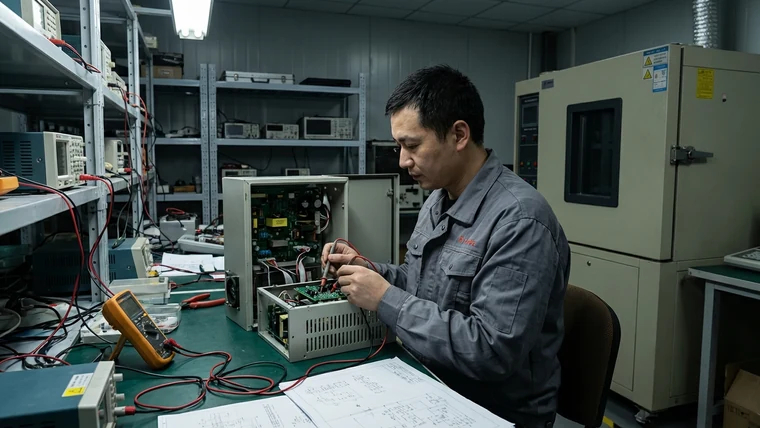
Before returning a repaired unit to service, verify alarm trigger points against the original spec sheet. This is a five-minute bench test that most teams skip — and the one most likely to surface a miscalibration introduced during repair.
CE Certification After Repair
For equipment sold into or operating within EU markets, CE marking carries post-repair implications. CE certification covers the unit as originally manufactured and tested. A repair that replaces a control board or modifies protection circuitry may technically void the original declaration of conformity — particularly if the replacement component wasn’t sourced from the original manufacturer or an approved equivalent.
Procurement teams sourcing for EU-market facilities should confirm with their repair provider whether the repaired unit retains its CE declaration, or whether a new conformity assessment is required. This isn’t bureaucratic caution — it’s a real exposure point during equipment audits.
ISO 9001:2015 and What Certified Manufacturers Document
ISO 9001:2015-certified manufacturers maintain documented procedures for repair and service — including component traceability, test records, and re-verification protocols. When you send a unit to a certified service provider, you should receive a service record that documents what was replaced, what was tested, and what the post-repair output readings were.
If your repair provider can’t produce this documentation, that’s a signal about their quality system — not just their paperwork habits.
Practical Compliance Verification Before Return to Service
Three checks before a repaired AVR goes back online:
- Output accuracy test: Measure regulated output at 80%, 100%, and 120% of rated load. Compare against nameplate spec.
- Alarm threshold test: Simulate input deviation beyond ±10% and confirm alarm activation at the correct setpoint.
- Protection response test: Verify overvoltage and undervoltage cutoff triggers within spec.
These tests take under 30 minutes with basic bench equipment. They’re the difference between a repaired unit and a verified repaired unit.
Maintenance Practices That Reduce Repair Frequency
The best way to reduce automatic voltage regulator repair costs is to avoid the conditions that cause failure in the first place. A structured maintenance cycle — not reactive troubleshooting — is what extends automatic voltage regulator lifespan and keeps units out of the service queue.
Routine Maintenance Checklist
Four tasks form the core of any AVR maintenance program:
- Visual inspection — Check for physical damage, loose terminal connections, signs of overheating (discoloration, burnt smell), and relay contact wear. On servo stabilizers, inspect the carbon brush for wear depth.
- Cleaning — Remove dust and debris from ventilation slots, cooling fins, and internal components. Dust accumulation is the leading cause of thermal failure in relay and servo units.
- Voltage output testing — Measure regulated output at 80%, 100%, and 120% of rated load. Compare against nameplate spec. Drift beyond ±1% of rated tolerance is an early warning sign.
- Calibration — Verify that the sensing circuit is triggering correction at the correct input deviation threshold. Miscalibrated units regulate late, exposing connected equipment to transient voltage events.
Maintenance Intervals by Environment
Environment determines how often each task runs:
| Environment | Visual + Cleaning | Voltage Testing | Calibration |
|---|---|---|---|
| Clean indoor (office, server room) | Every 6 months | Annually | Annually |
| Industrial floor (moderate dust) | Every 3 months | Every 6 months | Annually |
| Dusty / humid / outdoor-adjacent | Monthly | Every 3 months | Every 6 months |
High-humidity environments accelerate capacitor degradation and PCB corrosion — increase inspection frequency accordingly.
How Proper Automatic Voltage Regulator Operation Prevents Premature Failure
Most field failures trace back to operating conditions, not component defects. Two factors matter most:
Load sizing — Running a unit at sustained loads above 80% of rated capacity accelerates relay contact wear and thermal stress on capacitors. The automatic voltage regulator manual for most industrial units specifies a 70–80% continuous load ceiling for this reason. Oversizing by 20–25% is standard practice for loads with high inrush current.
Input range compliance — Operating outside the unit’s rated input range (typically ±15–20% of nominal) forces continuous correction cycles that wear mechanical components faster. If your grid regularly exceeds this range, that’s a site condition problem — not a repair problem.
When to Consult the Manual vs. Escalate
The automatic voltage regulator manual covers calibration procedures, alarm threshold settings, and component replacement specs for standard maintenance tasks. Use it for anything within the routine checklist above.
Escalate to manufacturer support when: output drift persists after calibration, protection circuits are triggering without clear input cause, or the unit has sustained a surge event. These symptoms suggest control board or transformer-level issues that require factory-level diagnosis.
How YIY Supports Repair, Replacement, and Long-Term Operation
The decision framework in this article applies directly to YIY’s installed base. Whether you’re evaluating a relay unit that’s been running for eight years or sizing a replacement for a failed servo stabilizer, YIY’s engineering team can map your specific load profile and site conditions to the right model — or confirm that repair is the better path.
Product Range: 0.5KVA to 3000KVA
YIY covers the full industrial spectrum across three core technologies:
- Relay-type stabilizers — cost-effective, fast response, ±5–8% output precision; best fit for general industrial loads where repair economics favor component-level service
- Servo stabilizers — motorized autotransformer design, best balance of precision and load tolerance; the standard choice for CNC machines, lighting systems, and mixed industrial loads
- IGBT-based units (CVCF series) — ±0.5% accuracy, 10ms correction, THD <3%; for mission-critical loads where precision is non-negotiable
This range spans single-phase and three-phase configurations, indoor and outdoor enclosures, and both standard and custom voltage specifications. It’s not a narrow outdoor/extreme-environment lineup — it’s built for the factory floor, server room, and production bay where most industrial AVR decisions actually happen.
Manufacturing Credentials
Zhejiang Yiyen Holding Group (YIY) has 16+ years of manufacturing experience in voltage stabilization, with products exported to 130+ countries across six continents. The facility operates under ISO 9001:2015 certification, with documented quality procedures covering design, production, and service. Annual production capacity exceeds 1,000,000 units from a 30,000㎡ facility.
That scale matters for repair and replacement decisions: parts availability, service documentation, and engineering support are consistent across the product range — not dependent on a single distributor or regional stock.
Where YIY Differs from Narrow-Focus Competitors
TSI Power and similar vendors concentrate on outdoor and generator-side deployments. That’s a legitimate niche. But the majority of industrial voltage stabilizer applications sit indoors — factory floors, CNC bays, lighting control panels — where the relevant variables are load profile, input range, and output tolerance, not ruggedized enclosures.
YIY’s IEC 60038-compliant range addresses both environments without forcing buyers into a product line designed for edge cases.
Getting a Model Recommendation
Share your load profile (KVA rating, load type, inrush characteristics), site conditions (input voltage range, environment, single/three-phase), and target output requirements. YIY’s engineering team will identify whether repair is viable for your current unit or recommend the right replacement model from the What Should You Compare Before Choosing Types Of Automatic Voltage Regulatortypes of automatic voltage regulator range that fits your application.
Frequently Asked Questions
When is automatic voltage regulator repair necessary?
Repair is the right call when failure is isolated to a single replaceable component — a worn relay bank, degraded capacitors on the control board, or a blown protection fuse. These faults don’t compromise the transformer core or wiring harness, which means the unit’s structural integrity is intact. The practical threshold: if repair cost stays below 60% of replacement value and the unit is within the first 60–70% of its expected lifespan, repair almost always wins on economics. A relay-type unit with contact wear or an IGBT board with a failed gate driver are both repair candidates — not write-offs.
What should buyers evaluate before choosing automatic voltage regulator repair?
Four variables determine whether repair makes sense: AVR technology type, fault severity, load criticality, and unit age. Relay-type units are the most repair-friendly — discrete contacts, inexpensive parts, fast turnaround. Servo stabilizers introduce mechanical wear points that are repairable but require a technician familiar with the assembly. IGBT-based units (like the CVCF series, ±0.5% accuracy) are viable at the board level when the fault is isolated. If multiple subsystems are affected, or the unit is past 80% of its expected lifespan, replacement is the cleaner path.
How should automatic voltage regulator repair be sized or specified after service?
A repaired unit must be re-verified to its original nameplate spec before returning to service. Test regulated output at 80%, 100%, and 120% of rated load. Confirm alarm thresholds trigger at the correct IEC 60038 deviation points (±10% input). For EU-market equipment, verify whether the repair affects the unit’s CE declaration of conformity — control board replacements can technically require a new conformity assessment. ISO 9001:2015-certified service providers will supply documented test records; if your repair provider can’t, that’s a quality system gap worth flagging.
Final Thoughts
The repair-vs-replace decision comes down to four variables working together: AVR technology type, fault severity, load criticality, and unit age. Cost matters, but it’s not the only input. A relay unit with worn contacts is a repair candidate. An IGBT board with a failed gate driver is a repair candidate. A unit past 80% of its expected lifespan with distributed failure across multiple subsystems is a replacement trigger — regardless of what the repair quote says.
Compliance adds a layer that pure economics misses. A repaired unit that no longer meets IEC 60038 alarm thresholds or has a voided CE declaration isn’t just underperforming — it’s a liability.
Share your load profile, site conditions, and current fault symptoms with YIY’s engineering team. We’ll tell you whether repair makes sense or recommend the right model from our 0.5KVA–3000KVA range for your application.
—
About YIY
Zhejiang Yiyen Holding Group Co., Ltd. (YIY) is a professional voltage stabilizer manufacturer with 16+ years of experience. With a 30,000sqm modern facility and an annual production capacity of 1,000,000+ units, our products are exported to 130+ countries. We provide OEM/ODM customization services and are ISO 9001:2015 certified, committed to delivering stable and reliable voltage protection solutions to global customers.
Contact Us
Email: yiyen at yiyen.com
Phone/WhatsApp: +86 13587452904
Website: https://www.yiyavr.com/
If you found this article helpful, contact us for a sizing review or customized solution.
Related reading: How Voltage Stabilizer Works: Relay, Servo & IGBT Guide.