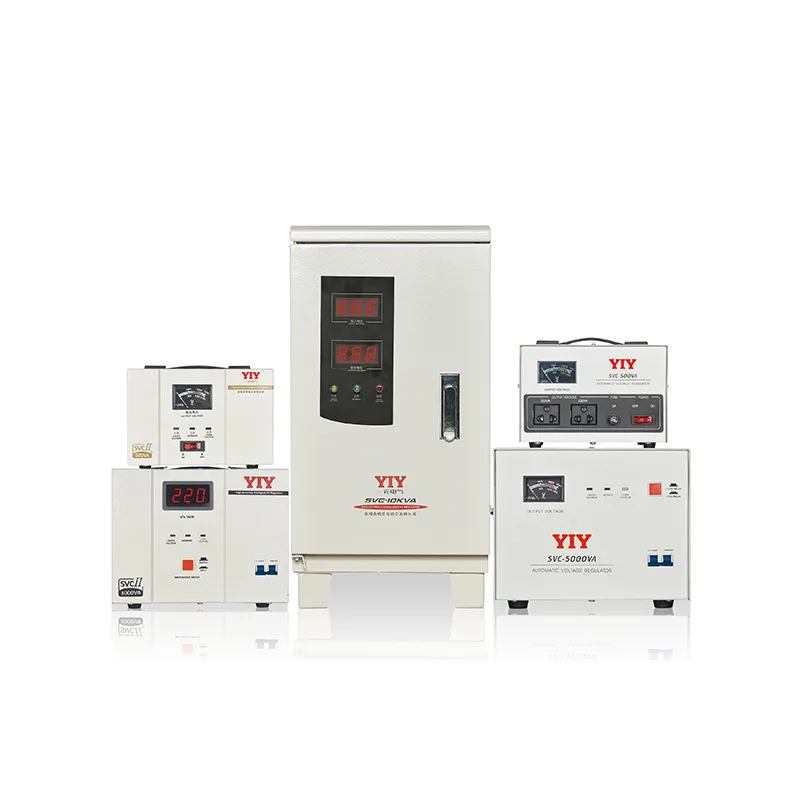
Choose a servo stabilizer 5kVA when your small industrial or commercial load needs smooth voltage correction, verified sizing, and serviceable protection without moving immediately to a higher-cost static or IGBT regulator.
Your best use case is a defined load such as a control panel, small machine, lab device, packaging unit, pump control circuit, or sensitive commercial system that shows recurring voltage drift, nuisance trips, overheating, resets, or inconsistent output.
This guide will help you decide whether this capacity tier fits your load, how servo compares with relay and static correction, what specifications to verify before purchase, and how to review pricing without choosing the wrong unit.
A 5kVA rating is not a guarantee that the stabilizer will protect every “5kVA-looking” load. You still have to check phase type, power factor, running current, motor inrush, voltage range, installation environment, bypass needs, and maintenance access. For nominal voltage references, IEC 60038 standard voltages provide the standards context, but your practical selection should start with measured voltage at your load terminals, not only the catalog voltage printed on a datasheet.
What Does Servo Stabilizer 5kVA Mean for Your Load?
You should treat a servo stabilizer 5kVA as a small-load voltage correction device, not as a whole-building cure for poor supply quality. It is usually intended to protect a specific machine, control panel, appliance group, small commercial circuit, or compact industrial load that falls within the stabilizer’s usable current and voltage correction range.
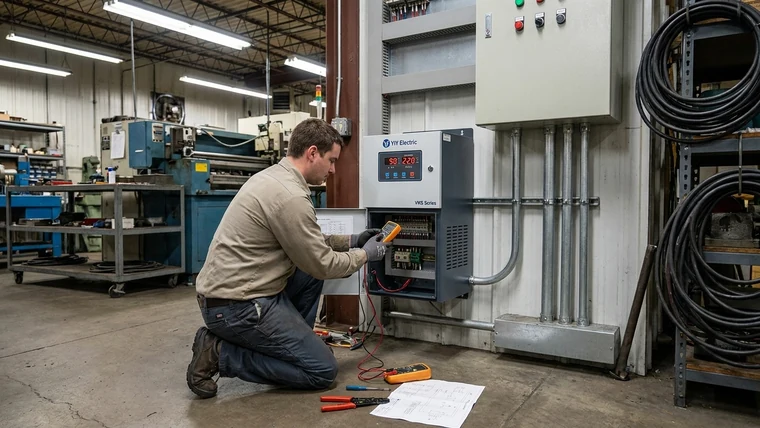
In practical terms, 5kVA means 5 kilovolt-amperes of apparent power. If your load power factor is 0.8, the real power is roughly:
5kVA x 0.8 PF = 4kW
That calculation matters because your equipment does not consume “kVA” in a simple one-to-one way. Motors, compressors, transformers, and inductive loads can draw higher current than their real kW rating suggests. If your motor starts under load, starts frequently, or runs during low-voltage periods, you may need more headroom than a steady-state nameplate suggests.
For orientation, a servo voltage stabilizer uses motor-driven continuous correction to regulate AC output. That makes it different from a relay unit that switches between fixed taps, and it is why servo designs are often considered for small industrial loads where smooth correction and field serviceability both matter.
When This Capacity Tier Usually Fits
Your application is a good candidate when the protected load is defined, measured, and not close to the stabilizer’s limit. Common examples include:
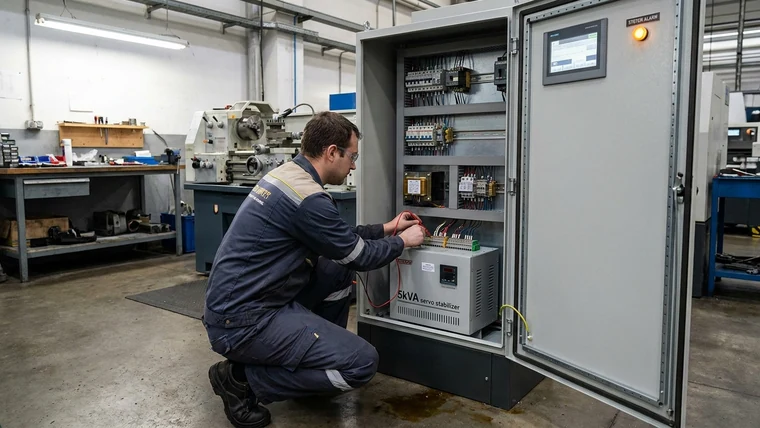
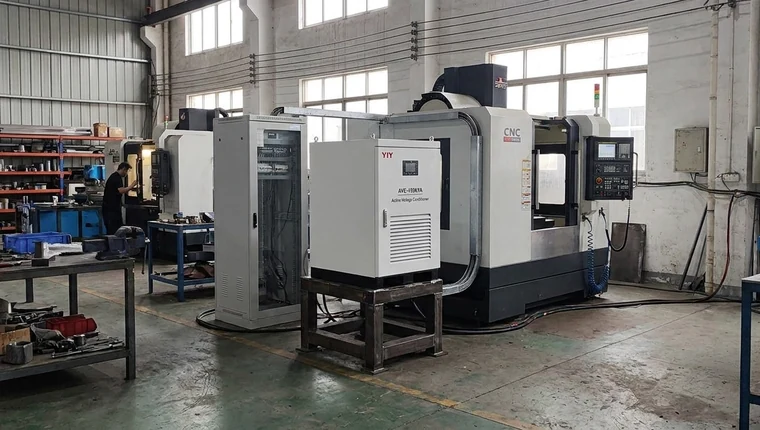
- Small machine tools, auxiliary CNC equipment, and packaging controls
- Lab instruments, test benches, and small medical support equipment
- PLC, HMI, contactor, and control transformer panels
- Small pumps, fans, and motor control circuits with verified starting current
- Sensitive commercial loads affected by low or high utility voltage
- Generator-fed equipment where voltage drift follows load changes
If your goal is to protect an entire workshop, multiple production lines, or a three-phase distribution board, this power class may be too small. At that point, you should step back and size the main supply, not just the individual machine.
When It Is Probably the Wrong Size
This capacity is risky when your load is unknown, motor inrush is high, power factor is poor, or the stabilizer would run near full load for long periods. It is also not the right shortcut if your site has severe dips beyond the correction range, frequent short interruptions, harmonics, surge problems, or grounding issues that require a broader power-quality solution.
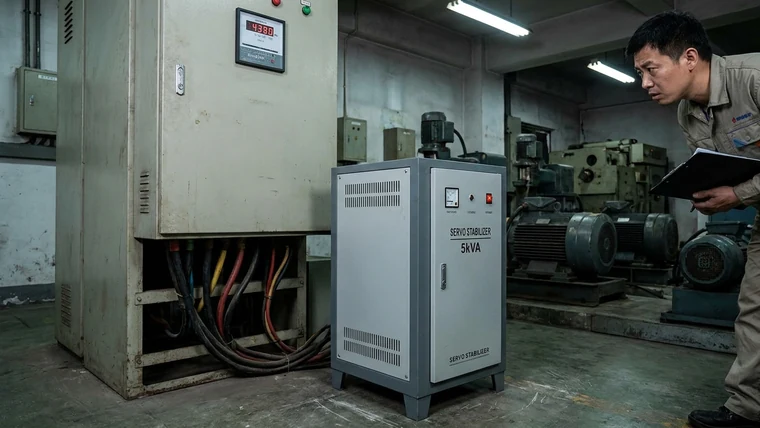
For you, the key rule is simple: if the load cannot be measured, the 5kVA label cannot be trusted as a selection answer.
When Does a 5kVA Load Actually Need Voltage Stabilization?
You need voltage stabilization when measured supply variation is affecting equipment performance, not simply because the load nameplate looks important. The best trigger is a repeated pattern: resets, overheating, nuisance trips, contactor chatter, process variation, or premature component failure that appears during low-voltage, high-voltage, peak-demand, or generator operation.
Voltage stabilization becomes practical when you can connect the symptoms to voltage behavior at the protected load. For example, your control panel may reset when the utility drops during peak production. A motor may run hotter when voltage is low. A contactor may chatter when coil voltage falls below its holding range. A lab instrument may produce inconsistent results when supply voltage drifts outside its acceptable input window.
Site Symptoms Worth Logging
Before you buy, log voltage and current across real operating conditions:
| Symptom you see | What it may indicate | What you should verify |
|---|---|---|
| PLC, HMI, or controller resets | Control supply instability or voltage dips | Minimum voltage at the control panel during operation |
| Motor overheating | Low voltage, overload, or poor power factor | Running current, starting current, and duty cycle |
| Contactor chatter | Coil voltage falling below holding level | Voltage at coil terminals during peak load |
| Inconsistent machine output | Supply variation affecting drives, heaters, or controls | Voltage trend during production shifts |
| Trips during generator use | Generator voltage sag or unstable regulation | Voltage and frequency under load changes |
| Repeated power supply failure | Overvoltage, undervoltage, heat, or surge exposure | High-voltage periods, ventilation, and protection design |
These checks turn your purchase from a guess into an engineering decision. A stabilizer can only correct within its designed input range; it cannot fix an undersized cable, poor grounding, severe harmonics, short interruption, or overloaded generator by itself.
Why Measured Data Beats Assumptions
Your minimum and maximum input voltage define whether a model can regulate output properly. If the catalog input range is too narrow, the stabilizer may spend its worst operating moments outside correction capability. If the output accuracy is looser than your equipment needs, the stabilizer may be technically operating while your load still sees unacceptable variation.
A short measurement record is often enough for first-pass selection. Capture voltage at idle, startup, peak load, shift change, and generator operation if applicable. If your equipment fails at a predictable time of day, measure during that window rather than only during a convenient maintenance visit.
How Does an Industrial Servo Voltage Stabilizer Work?
You get smooth correction because a servo stabilizer senses voltage, compares it with a target output, and drives a servo motor to adjust a variac or autotransformer contact continuously. Instead of jumping between relay taps, the mechanism trims the transformer ratio so the output returns closer to the desired voltage.
A typical servo AVR includes a sensing circuit or MCU, servo motor, variac or autotransformer, carbon brush, buck-boost transformer, control PCB, protection circuit, meters, bypass, and enclosure. A servo stabilizer technical guide describes this motor-based regulation principle as a way to maintain stable AC output when input supply voltage changes.
The practical control loop is:
- Monitor voltage: the sensing circuit reads incoming supply and actual output.
- Compare with the setpoint: the controller checks output against the desired nominal voltage.
- Drive the servo motor: the motor rotates in the direction needed for boost or buck correction.
- Move the carbon brush: the brush travels across the variac or autotransformer contact path.
- Adjust transformer output: the buck-boost stage raises or lowers output voltage.
- Supervise protection: protection circuits monitor overload, high or low voltage, short circuit, delay, and bypass functions where included.
For your equipment, this means the correction is gradual and continuous. That can be helpful for contactors, control power supplies, lab instruments, and small machines that do not respond well to repeated step changes.
The tradeoff is also clear. Servo correction is serviceable and cost-effective, but it has moving parts. Your maintenance plan should include carbon brush inspection, terminal tightening, fan and filter checks, calibration review, alarm testing, and visual inspection for dust, heat, or vibration damage.
Which Technology Fits Your Precision, Budget, and Maintenance Requirements?
Choose servo when you need smoother correction than relay switching and better cost balance than static or IGBT regulation. Relay units fit basic price-sensitive loads, while static or IGBT designs fit highly sensitive loads that justify faster electronic correction and a higher budget.
| Technology | Correction style | Strength for your load | Limitation to consider | Best-fit use case |
|---|---|---|---|---|
| Servo AVR | Continuous motor-driven variac/autotransformer correction | Smooth output correction, practical serviceability, good industrial cost balance | Moving parts need inspection; response is not semiconductor-fast | Small industrial machines, control panels, lab devices, packaging equipment, generator-fed loads |
| Relay stabilizer | Step correction by switching transformer taps | Lower cost, simple design, fast switching between taps | Output changes in steps; accuracy is usually lower | Basic residential, light commercial, and non-critical loads |
| Static / IGBT AVR | Electronic correction without mechanical brush movement | Very fast correction and high precision | Higher cost and more electronics-dependent service model | Sensitive electronics, medical/lab loads, telecom-grade equipment, precision processes |
If your load is a simple appliance group or low-risk circuit, a relay voltage stabilizer may be enough. You would choose it when cost matters more than smooth output and the protected equipment can tolerate stepped correction.
Servo becomes more attractive when your equipment is sensitive enough to dislike frequent under-voltage or over-voltage, but not so sensitive that it requires premium electronic correction. For many small industrial and commercial loads, this is the practical middle ground.
Static or IGBT correction belongs in the comparison when your process has low tolerance for voltage deviation, your correction speed requirement is high, or downtime is expensive enough to justify a premium regulator. If a brief voltage event can stop a test sequence, corrupt a process, or shut down a critical system, you should compare servo against faster electronic options instead of choosing on purchase price alone.
What Should You Check Before Specifying This Capacity Tier?
You should approve this capacity only after you verify load current, inrush, phase type, input range, protection functions, environment, and service access. A 5kVA servo AVR can be the right fit for a small defined load, but it is not a substitute for measured selection.
| Check | Why it matters | If you skip it |
|---|---|---|
| Running current and power factor | kVA is apparent power; at 0.8 PF, 5kVA is about 4kW of real power. This helps you avoid confusing kW and kVA. | The stabilizer may overload even when the load appears to be “under 5kW.” |
| Starting current and duty cycle | Motors, compressors, and pumps may draw several times running current during startup. Your headroom must cover real start behavior. | The unit may trip, heat, or suffer shortened component life. |
| Sizing margin | A practical margin, often around 20-30% depending on load type, gives your stabilizer room for heat, inrush, and future load variation. | A small later load change can push the unit beyond safe operation. |
| Single-phase or three-phase supply | Phase type affects wiring, neutral handling, phase balance, cabinet design, and protection. | You may buy a unit that cannot be installed safely or cannot regulate all phases properly. |
| Input voltage window | The stabilizer must cover your measured minimum and maximum voltage, not just nominal voltage. | Output regulation may fail during the exact conditions you bought it to solve. |
| Output accuracy | Sensitive controls, instruments, and machines may require tighter output than basic loads. | Your equipment may still reset, drift, or trip even after installation. |
| Protection and bypass | Overload, short-circuit, high/low voltage cutoff, delay, surge protection, and bypass affect uptime and service safety. | A minor electrical issue can become avoidable downtime. |
| Environment | Heat, dust, humidity, ventilation, vibration, and cabinet protection affect brush wear and insulation reliability. | Maintenance problems may appear earlier than expected. |
| Observability | Meters, alarms, and event visibility help you prove whether voltage was the cause of a fault. | Fault history remains unclear, and troubleshooting becomes repetitive. |
If your load expands beyond this rating, use a broader method such as 3 phase main line stabilizer sizing before moving into 25 kVA, 40kVA, or higher-capacity designs. The practical meaning is simple: once you protect a distribution line instead of one defined load, your sizing logic changes from “equipment protection” to “system protection.”
For a more complete procurement screen, combine your site measurements with an industrial voltage stabilizer selection process. That helps you review voltage range, load behavior, protection, installation conditions, maintenance access, and supplier support as one decision instead of separate checklist items.
How Should You Evaluate 5kVA Servo Stabilizer Price?
You should compare 5kVA servo stabilizer price only after every quote is normalized to the same technical scope. A cheaper unit is not truly cheaper if it excludes the correction range, protection, bypass, enclosure, testing, or service support your load requires.
Price is usually affected by:
- Phase type and rated current
- Input correction range and output accuracy
- Transformer and variac build quality
- Carbon brush, servo motor, and control PCB design
- Overload, short-circuit, high/low voltage, delay, and surge protection
- Manual or automatic bypass design
- Metering, alarms, event indication, and communication options
- Enclosure quality, ventilation, IP protection, and ambient rating
- Factory testing, documentation, warranty, and after-sales support
For you, the safest comparison is not “which quote is lowest?” It is “which quote protects this measured load with the fewest hidden exclusions?”
Ask each supplier for the datasheet, wiring diagram, protection list, rated input range, output accuracy, overload capacity, bypass description, enclosure details, test report, warranty terms, and service procedure. If the application may grow from a small defined load to a larger mainline stabilizer, use a structured process to compare before buying a voltage stabilizer so quotation details stay comparable across capacity classes.
What Should Your Procurement Acceptance Review Include?
You should accept the stabilizer only when the technical file proves the unit matches your site, load, and maintenance context. A procurement review should be practical enough for engineering, purchasing, and maintenance to use together.
| Check | Why it matters | If you skip it |
|---|---|---|
| Measured voltage record attached | Confirms the correction range is based on site reality | You may approve a unit that cannot regulate worst-case supply |
| Load list and current data attached | Confirms running current, startup current, and future spare margin | The stabilizer may be undersized from day one |
| Phase and wiring confirmed | Prevents mismatch between single-phase and three-phase designs | Installation may be delayed or unsafe |
| Protection functions listed | Shows exactly what faults the unit can isolate or alarm | Missing protection may only be discovered after a fault |
| Bypass method documented | Allows service or fault isolation without unnecessary downtime | Maintenance may have to stop the load completely |
| Installation environment reviewed | Confirms heat, dust, humidity, and ventilation are suitable | Premature wear and nuisance faults become more likely |
| Maintenance access confirmed | Ensures brush, fan, terminals, and meters can be serviced | Routine inspection becomes difficult or ignored |
| Supplier test report checked | Verifies the delivered unit matches the quoted specification | You may receive a different configuration than expected |
Keep this review concrete. Before approval, ask the supplier to mark the exact model, input range, output accuracy, rated current, protection options, bypass type, and enclosure on the quotation. Then compare those details against your measurement record and installation photos.
Frequently Asked Questions
How Should You Compare Pricing for Servo Stabilizer 5kVA?
Compare pricing by matching input voltage range, output accuracy, phase type, protection package, bypass design, enclosure, warranty, and service support. Your concrete verification action is to request the datasheet, wiring diagram, test report, protection list, and overload rating from each supplier, then check whether all quotes cover the same measured voltage window. A lower quote is not comparable if it excludes bypass, cabinet ventilation, surge protection, or local service access.
Can a 5kVA Servo Stabilizer Run a Motor Load?
A 5kVA servo stabilizer can run a motor load only if running current, power factor, and starting current remain within the stabilizer’s usable capacity. Check the motor nameplate, measure startup current where possible, and allow headroom for inrush. If your pump, fan, or compressor starts frequently or starts under load, you may need a larger AVR than the steady-state kW suggests.
Is a Servo AVR Better Than a Relay Stabilizer for Sensitive Equipment?
A servo AVR is usually better when your sensitive equipment needs smoother continuous voltage correction instead of stepped tap switching. It suits control panels, lab equipment, small machines, and commercial loads affected by recurring voltage drift. Relay units can still fit basic, low-risk loads where cost matters more than output precision. For highly sensitive electronics, compare servo against static or IGBT regulation before you approve the purchase.
What Affects 5kVA Servo Stabilizer Price?
Price is affected by phase type, correction range, output accuracy, transformer build, protection functions, enclosure quality, bypass design, alarms, certification, and after-sales support. To verify a quote, ask the supplier to identify which protections are included as standard and which are optional. Also confirm whether the quoted unit includes factory testing, documentation, warranty, and service support for your region.
Should You Choose a Mainline Servo Stabilizer Instead of a Dedicated 5kVA Unit?
Choose a mainline stabilizer only when you want to protect a defined distribution line or multiple loads, not just one small machine. Your verification step is to list every downstream load, measure total running current, identify simultaneous starting loads, and confirm whether single-phase or three-phase regulation is required. If the downstream load mix changes often, a dedicated unit for the sensitive equipment may be easier to size and maintain.
How Can YIY Help You Confirm the Right Fit?
You can start with a quick first-pass review instead of preparing a full engineering package upfront. Share your load type, rated voltage, phase type, approximate current, symptoms, and installation environment, and YIY can help you decide whether servo, relay, or IGBT regulation deserves the next level of review.
For a more accurate recommendation, prepare:
- Minimum and maximum measured input voltage
- Load list with running current and power factor if available
- Motor starting behavior or inrush notes
- Single-phase or three-phase supply details
- Photos of the installation location and panel
- Required protection, bypass, alarm, and enclosure preferences
- Maintenance expectations and service access constraints
YIY supports voltage stabilizer selection across servo, relay, and IGBT options, so your decision can be based on application fit instead of only catalog kVA. Zhejiang Yiyen Holding Group Co., Ltd. operates as a voltage stabilizer manufacturer with global export experience, OEM/ODM support, and quality management aligned with the ISO 9001:2015 quality management standard.