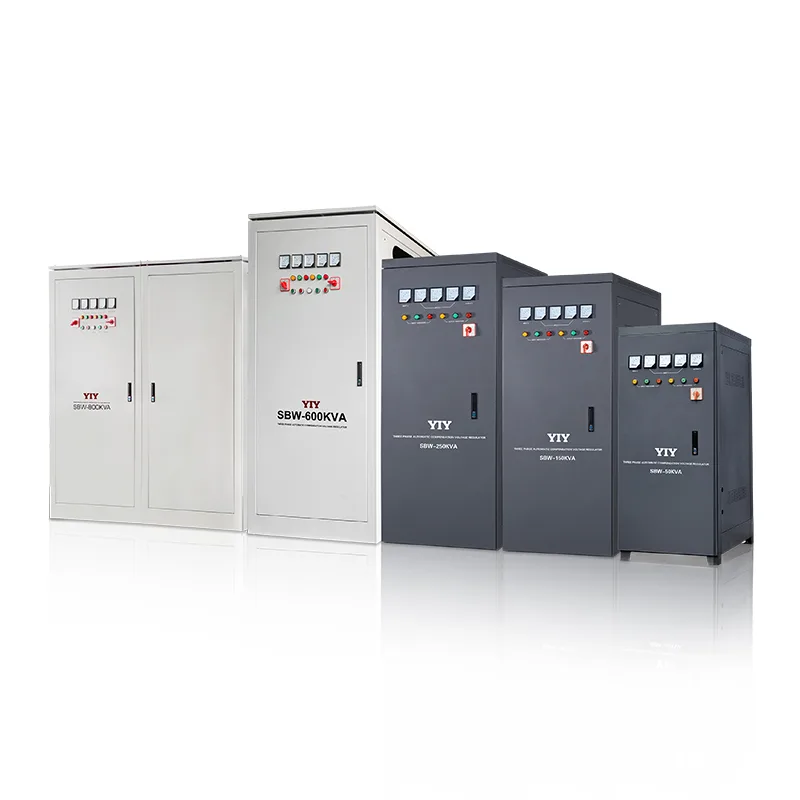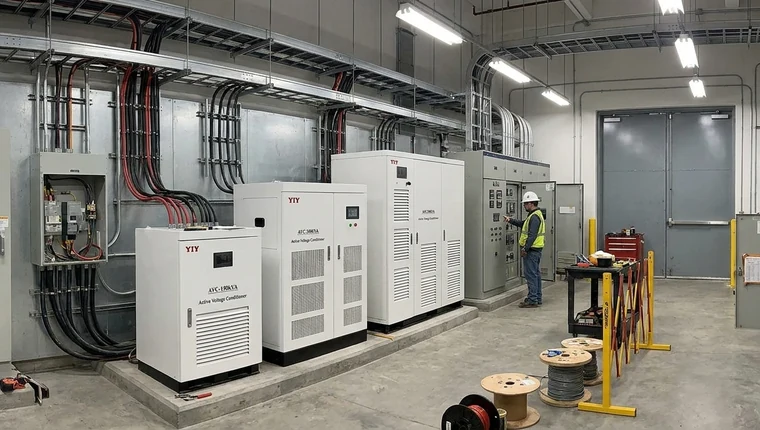
Choose a servo stabilizer when your industrial or precision load needs smooth voltage correction, tighter accuracy than relay tap switching, and practical service access without moving into a higher-complexity static or IGBT system.
In many industrial applications, this means a servo voltage stabilizer with output accuracy around ±0.5% to ±3% and response in the ≤1-2 second class is a strong fit for CNC machines, pumps, compressors, medical devices, telecom rooms, and production lines exposed to recurring voltage drift.
This guide will help you decide how servo correction works, when it fits better than relay or IGBT regulation, what sizing and maintenance checks matter, and which documents you should verify before procurement approval.
What Does a Servo Stabilizer Do for Your Load?
You use a servo stabilizer to keep your equipment supply closer to its required voltage when the grid repeatedly drifts high or low. A servo voltage stabilizer is an electromechanical automatic voltage regulator that senses voltage, compares it with the target output, and drives a servo motor to adjust an autotransformer or variac.
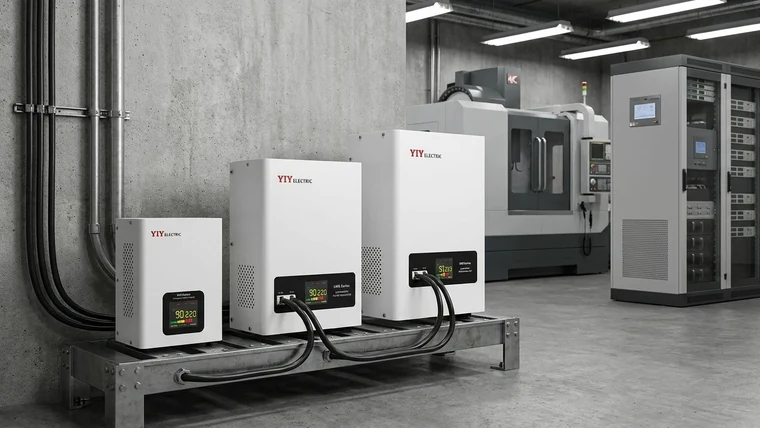
For you, the practical value is not just a nicer voltage number on a display. Stable voltage can reduce nuisance trips, overheating, unstable machine behavior, and avoidable maintenance calls when your site is exposed to weak-grid conditions, peak-demand dips, generator variation, or heavy motor starts.
A typical servo controlled voltage stabilizer follows this correction loop:
- The control circuit monitors input and output voltage.
- The controller compares actual output with your set target, such as 220V, 230V, 380V, or 400V.
- If the voltage is too high or too low, the controller commands the servo motor.
- The motor moves a carbon brush across the autotransformer winding.
- The effective turns ratio changes, raising or lowering the output voltage.
- The loop keeps tracking voltage as your grid supply drifts.
Those nominal voltage references matter because equipment is designed around expected supply conditions. IEC 60038 standard voltages defines standard voltage references used in power-system planning and equipment compatibility discussions; in practical terms, your stabilizer is helping your equipment operate closer to the voltage range it was built to receive.
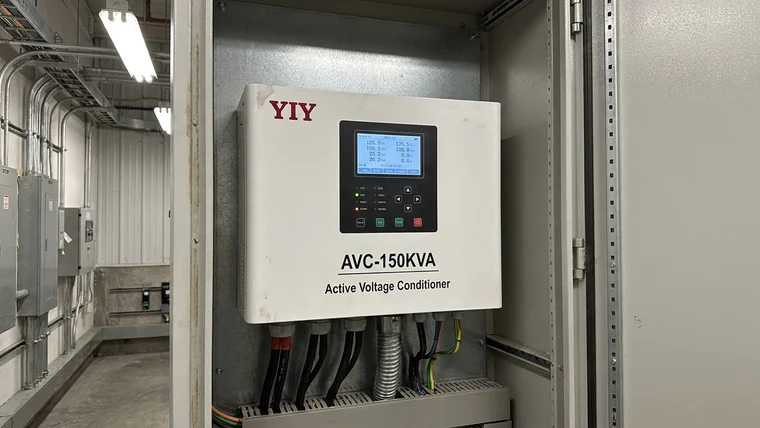
When Should You Choose Servo Instead of Relay or IGBT?
Choose servo when your load needs continuous correction and industrial-grade accuracy, but does not require the fastest electronic correction available. This capacity and technology tier usually fits recurring voltage fluctuation better than simple relay switching, while remaining more serviceable and cost-balanced than many static or double-conversion designs.
The decision is really a topology decision. Relay designs switch between fixed taps, so they are simple and economical but less smooth. Servo designs mechanically sweep across the transformer winding, so correction is continuous. IGBT or static systems use faster electronic correction and may be better for ultra-sensitive loads.
| Stabilizer type | Correction method | Typical accuracy class | Response behavior | Best fit for you | Main caution |
|---|---|---|---|---|---|
| Relay AVR | Fixed tap switching | ±5% to ±8% | Fast but stepped | Basic appliances, non-critical loads, cost-sensitive sites | Output changes in steps, which may not suit precision equipment |
| Servo AVR | Servo motor + variac/autotransformer | ±0.5% to ±3% | Smooth correction, often ≤1-2 seconds | Industrial equipment, CNC machines, compressors, pumps, medical devices, mixed production loads | Carbon brush and moving parts need planned inspection |
| Static / IGBT | Electronic switching or conversion | Often tighter than servo | Very fast electronic correction | Labs, imaging systems, semiconductor tools, ultra-sensitive electronics | Higher complexity and typically higher specification cost |
For your industrial load, servo is often the middle path: smoother than relay, easier to justify than IGBT when millisecond-level correction is not required, and available across a wide power range. Servo voltage stabilizers can cover applications from smaller instruments to heavy industrial systems, with product families commonly spanning from VA-level units to high-kVA industrial equipment.
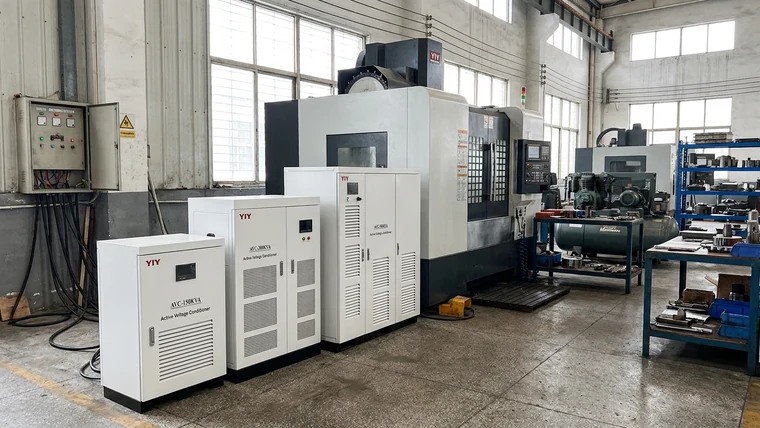
If your process cannot tolerate the mechanical correction delay of a servo design, compare an IGBT voltage stabilizer before approving the order. That is especially important for semiconductor tools, laboratory systems, medical imaging, or other critical electronic loads where disturbance tolerance is narrow.
Which Site Symptoms Point Toward Servo Correction?
You should evaluate servo correction when recurring voltage drift is already affecting equipment behavior, process stability, or maintenance patterns. The clearest signal is not a single voltage event; it is repeated operating evidence that your load is being stressed by an unstable supply.
Common symptoms include:
- CNC machines showing alarms, resets, or inconsistent machining results during grid fluctuation.
- Pumps, compressors, or motors drawing higher current during low-voltage periods.
- PLCs, contactors, drives, or power supplies failing without a clear mechanical cause.
- Medical, telecom, or testing equipment showing unstable operation during peak demand.
- Production lines restarting after voltage dips, generator transitions, or heavy motor starts.
- Maintenance staff repeatedly replacing electrical parts without resolving the root condition.
For you, these symptoms turn voltage regulation into a continuity decision. A basic stabilizer may look cheaper at purchase, but if the wrong topology causes repeated trips or unstable output, your real cost shifts into downtime, scrap, emergency service, and procurement rework.
Servo is not automatically the answer for every symptom. If your load is simple and tolerant, relay may be enough. If your process is highly sensitive to brief disturbances, static or IGBT regulation may be safer. The point is to match your load sensitivity to the voltage correction behavior instead of buying by kVA alone.
What Sizing Checks Matter Before You Request a Quotation?
You should size the stabilizer from measured site voltage, real load behavior, starting current, phase configuration, and service conditions rather than nameplate kVA alone. This is where many wrong purchases happen: the quoted unit may match the steady load, but fail during motor starts, high ambient temperature, or deep voltage dips.
Use this procurement screen before you send your RFQ:
| Check | Why it matters | If you skip it |
|---|---|---|
| Measured input voltage range | Your AVR must cover the real low and high voltage seen at site | The unit may trip, bypass, or fail to correct deep dips |
| Output voltage target | Your equipment may require 220V, 230V, 380V, 400V, or another project-specific target | You may stabilize the supply at the wrong voltage |
| kVA, kW, and power factor | Motors, heaters, UPS inputs, drives, and rectifiers stress the stabilizer differently | A nameplate-only quote may be undersized |
| Starting current | Motors and compressors can draw several times running current at startup | The unit may overload even when steady load looks acceptable |
| Single-phase or three-phase supply | Phase type changes wiring, protection, neutral handling, and transformer design | You risk wrong configuration or installation rework |
| Neutral and phase imbalance | Three-phase systems may need phase-loss, phase-sequence, and unbalance protection | Sensitive controls may see unsafe reference voltage |
| Bypass and protection | Manual/automatic bypass, overload, short-circuit, surge, and delay restart protect continuity | One stabilizer issue can stop the whole line |
| Maintenance access | Carbon brush inspection, ventilation, and spare parts affect serviceability | Your unit may be difficult to maintain after installation |
After the numbers are collected, translate them into practical margin. Your unit should not run at its limit during normal production. Allow room for starting current, heat, duty cycle, simultaneous operation, and reasonable future expansion.
For three-phase main-line systems, your review should also include neutral condition, phase imbalance, cable size, earthing, bypass location, and upstream/downstream protection. If your project is at main distribution level, use a dedicated 3 phase main line stabilizer sizing review so the stabilizer is matched to the whole electrical context, not just one machine.
For a broader specification workflow, the industrial voltage stabilizer selection guide can help you move from topology choice into capacity, protection, and installation checks.
What Maintenance and Environment Factors Should You Check?
You should choose a servo unit only after confirming that your site can support its cooling, inspection, bypass, and service requirements. Servo technology is robust for many industrial environments, but it is still an electromechanical design with a motor, brush movement, transformer assembly, and ventilation needs.
Dust, humidity, heat, weak-grid conditions, and cabinet placement all change real performance. In a clean electrical room, a servo type voltage stabilizer may be straightforward to maintain. In a hot workshop or dusty production area, your specification should address enclosure protection, filtered ventilation, cooling clearance, anti-condensation needs, surge protection, and safe access for inspection.
Ask these questions before purchase:
- Can your maintenance staff inspect or replace carbon brushes without dismantling the installation?
- Is there enough cabinet clearance for ventilation and service access?
- Does the unit include manual or automatic bypass for continuity during service?
- Are alarms visible enough for operators and maintenance staff?
- Can event logs or communication outputs connect to PLC, BMS, SCADA, or maintenance workflows?
- Are spare brushes, control boards, meters, fuses, and service parts available for your region?
For you, maintenance visibility is a risk-control feature. A front-panel display is helpful, but event history, alarm clarity, and accessible service points make the difference between planned inspection and unexpected downtime.
What Documents Should Procurement Verify?
You should collect technical, quality, and compliance documents before order release, not after the stabilizer arrives. A complete file helps you confirm that the quoted product, wiring design, protection functions, and supplier quality claims match your application.
Use this acceptance review:
| Check | Why it matters | If you skip it |
|---|---|---|
| Datasheet and model code | Confirms capacity, voltage range, accuracy, response class, phase type, and cooling method | You may receive a unit that differs from the quoted requirement |
| Wiring diagram and one-line integration | Confirms input/output terminals, bypass, neutral, earthing, and protection coordination | Installation may require rework |
| Protection list | Confirms overload, short-circuit, surge, high/low voltage cut-off, delay restart, phase loss, or phase sequence protection | Your load may remain exposed to preventable faults |
| Factory test report | Confirms the unit has been tested against agreed parameters | You rely only on catalog claims |
| Spare-parts list | Confirms availability of brushes, meters, control boards, fuses, and service parts | Downtime may be extended during maintenance |
| Warranty and service terms | Clarifies coverage, exclusions, response process, and support scope | Disputes may occur after installation |
| Quality and compliance certificates | Supports supplier qualification and market requirements | Procurement may approve an incomplete supplier file |
If ISO 9001:2015 evidence is part of your supplier qualification, verify the certificate scope against the supplier name, factory address, and product category. The official ISO 9001 quality management systems page helps procurement understand what the quality framework covers; for you, the practical point is to verify process control rather than relying only on a logo in a brochure.
If your project involves EU market requirements, check the applicable CE marking requirements and request the relevant declaration and test documentation from the supplier. In practical terms, you want the documentation to match the actual model, rated voltage, protection design, and shipment scope.
How Can YIY Help You Confirm the Right Topology?
You can use YIY for a first-pass fit review before you commit to servo, relay, or IGBT. The goal is to match your correction speed, voltage accuracy, capacity margin, site environment, and maintenance expectations to the real behavior of your equipment.
For a useful review, prepare:
- Your load list, including motors, CNC machines, compressors, UPS inputs, rectifiers, heaters, medical devices, or mixed loads.
- Measured voltage records showing lowest voltage, highest voltage, event frequency, and whether dips happen during startup.
- Phase type, neutral condition, earthing arrangement, and target output voltage.
- Starting method, duty cycle, simultaneous operation, and future expansion allowance.
- Installation environment, including dust, humidity, ambient temperature, ventilation, generator input, and cabinet space.
- Protection and monitoring needs, including bypass, alarms, logs, communication, and maintenance access.
YIY supplies servo, relay, and IGBT regulation options, so your recommendation can stay application-led instead of product-led. Relay may fit basic and cost-sensitive loads. Servo often fits industrial equipment that needs smooth correction and practical serviceability. IGBT may fit critical electronics where faster correction is worth the added complexity.
YIY also supports OEM/ODM projects and application-specific engineering for industrial, telecom, and medical sectors. That matters when your buying decision includes more than kVA: cabinet design, monitoring, certification package, local service expectations, and procurement documentation can be just as important as the stabilizer topology.
If you are already comparing capacity, protection, and procurement documents, the article on how to compare before buying a voltage stabilizer can help you organize the final RFQ review.
Frequently Asked Questions
Is a Servo Stabilizer Better Than a Relay Stabilizer for Industrial Equipment?
A servo stabilizer is usually better when your industrial equipment needs smooth, continuous voltage correction. Relay stabilizers switch between fixed taps, while servo designs adjust more continuously through a motor-driven transformer mechanism. For a concrete verification step, ask the supplier to compare relay and servo output accuracy, correction behavior, and load suitability against your actual equipment list before approval.
How Much Capacity Margin Should You Consider When Sizing a Servo Controlled Voltage Stabilizer?
Rate the unit above the steady running load, leaving room for motor starts, high ambient temperature, heavy duty cycles, machines running together and growth. Motor-heavy loads need more than a nameplate total. Verify this by sending the supplier your load schedule, power factor, starting method, measured current, and one-line diagram, then ask for the sizing basis in writing.
When Should You Choose an IGBT or Static Stabilizer Instead of Servo?
Choose IGBT or static regulation when your load cannot tolerate servo’s mechanical correction delay. This is more likely for semiconductor tools, laboratories, imaging systems, and ultra-sensitive electronics. Check the equipment manual for input-voltage tolerance, disturbance ride-through, and response requirements, then compare those limits with the proposed stabilizer datasheet.
What Documents Should Procurement Request Before Approving a Servo Voltage Stabilizer Order?
Procurement should request the datasheet, wiring diagram, protection list, factory test report, warranty terms, spare-parts list, and applicable quality or compliance documents. As a verification action, cross-check the model number, rated voltage, kVA, phase type, input range, and protection functions across the quotation, datasheet, approval drawing, and nameplate draft.
Can One AVR Unit Protect a Whole Production Line?
One correctly sized unit can protect a production line or main feeder if the total load, starting sequence, phase balance, voltage range, and bypass arrangement are engineered properly. Do not assume that the sum of machine nameplates is enough. Verify simultaneous starts, largest motor start, future load additions, cable routing, and upstream/downstream protection before choosing this architecture.
Final Thoughts
A servo stabilizer is often the practical choice when your site needs continuous voltage correction, industrial accuracy, wide capacity coverage, and maintenance that your staff can realistically manage. The right decision is not based on the word “servo” alone; it comes from matching voltage behavior, load sensitivity, starting current, site environment, downtime risk, and service access.
If your equipment faces recurring voltage drift but does not require ultra-fast electronic correction, this three-phase or single-phase servo setup may be the right middle path. If your loads are basic, relay may be enough. If they are highly sensitive, IGBT may be safer.
Start with a quick YIY technical review or short fit checklist to confirm whether servo, relay, or IGBT best matches your application and maintenance context before you move into a detailed quotation.