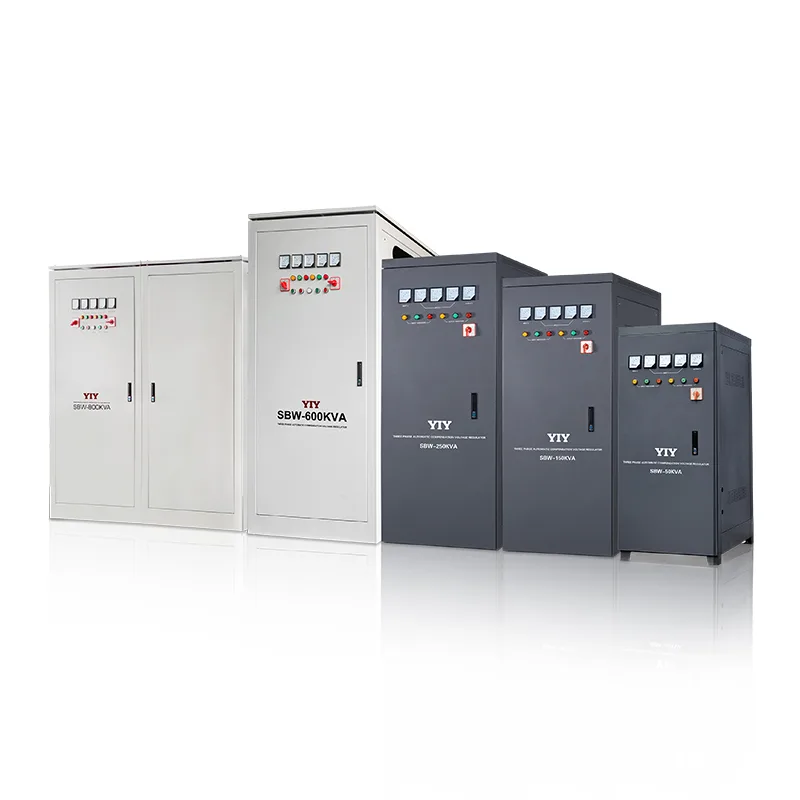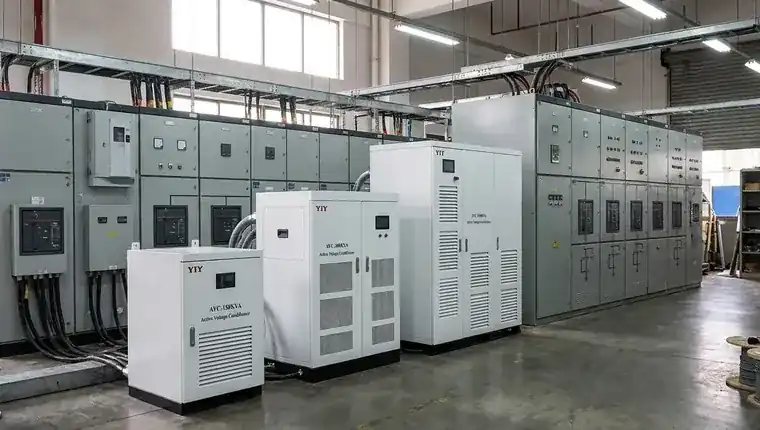
Choose a servo stabilizer when your industrial load needs continuous voltage correction, stable output accuracy, and a maintainable cost profile, but does not require ultra-fast fully electronic correction.
In practical terms, this technology fits recurring undervoltage, overvoltage, generator drift, weak-grid fluctuation, and precision equipment that needs smoother voltage than relay switching can usually provide.
This guide will help you decide when servo control is the right choice, how it compares with relay, static, and IGBT designs, what specifications affect sizing, and what you should verify before procurement approval.
What Problem Are You Trying to Solve?
You should start with the voltage behavior at your site, not with the stabilizer catalog. A servo stabilizer only makes sense when your equipment is exposed to voltage movement that affects operation, accuracy, heat, trips, or service life.
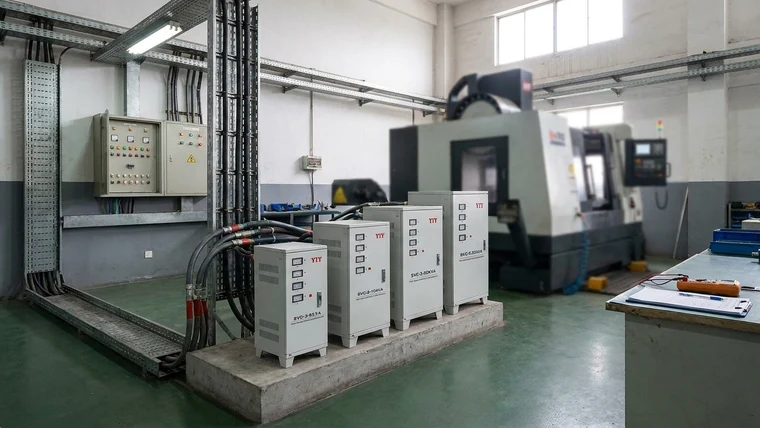
Voltage fluctuation becomes a production risk when your CNC machines, motors, compressors, elevators, medical equipment, telecom systems, packaging lines, or test equipment start reacting to the supply instead of the process. You may see nuisance trips, unstable torque, overheating, PLC resets, inconsistent product quality, or different behavior on generator power versus grid power.
The reference voltage also matters. IEC 60038 standard voltages define standard voltage levels used for supply planning and equipment alignment. For you, that means the stabilizer should be selected around the actual nominal voltage and tolerance expected at your site, not around a generic “220V” or “380V” label.
A voltage protector can disconnect abnormal power. A surge protector can help with short transient events. A servo voltage stabilizer is different because it continuously corrects voltage while your load keeps running. That distinction matters when your main problem is ongoing line drift rather than one isolated spike.
Common signs that your site may need continuous regulation include:
- Drives, PLCs, medical devices, or elevators reset without a clear equipment fault.
- Motors or compressors run hotter during low-voltage periods.
- CNC tolerance, packaging seal quality, or test readings change with line voltage.
- Generator operation causes wider voltage swings than grid operation.
- Three-phase loads show imbalance, noise, or repeated protection alarms.
- Production issues disappear after voltage returns to a normal range.
How Does a Servo Voltage Stabilizer Work?
A servo voltage stabilizer corrects voltage by sensing input and output voltage, then using a servo motor to adjust an autotransformer until the output returns to the target range. For your load, the practical result is smoother correction of gradual or recurring voltage changes instead of step-based relay switching.
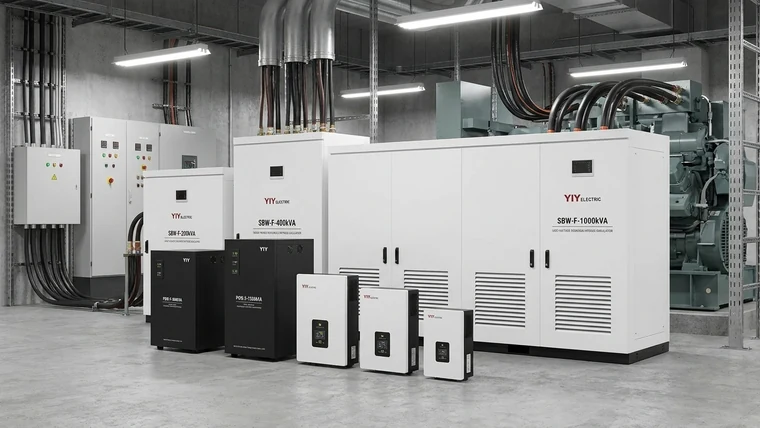
Inside a servo controlled voltage stabilizer, the control board monitors voltage in real time. When output voltage moves above or below the set reference, the controller commands a servo motor. That motor moves a carbon brush across the autotransformer winding, changing the effective turns ratio and raising or lowering the output voltage.
The correction loop is straightforward:
- Sensors read input and output voltage.
- The controller compares output voltage with the setpoint.
- The servo motor receives a correction command.
- The carbon brush moves along the autotransformer surface.
- The turns ratio changes to boost or reduce voltage.
- Your equipment receives corrected output within the designed tolerance band.
Typical servo units are often specified around ±0.5% to ±3% output precision with response time up to about 1-2 seconds, depending on model, load condition, and fluctuation severity. For you, those numbers mean servo technology is well suited to moderate grid fluctuation, long low-voltage periods, and generator drift; it is not the same as instantaneous electronic correction for very fast voltage dips.
The moving brush mechanism is also the maintenance tradeoff. Your service plan should include brush wear, contact cleanliness, dust accumulation, ventilation, abnormal noise, and cabinet temperature. In dusty, humid, or hot electrical rooms, ask about enclosure protection, filtered airflow, anti-condensation measures, and service access before you approve the model.
When Should You Choose Servo Instead of Relay, Static, or IGBT?
You should choose servo when you need better accuracy and smoother correction than relay designs, but your application does not justify the cost or speed requirements of static or IGBT correction. This is why servo technology is often used for general industrial loads, workshops, production lines, medical equipment, and precision machinery with recurring voltage drift.
| Technology | Best fit for your application | Main advantage | Tradeoff you should check |
|---|---|---|---|
| Relay AVR | Lower-cost loads with wider voltage tolerance | Simple and economical | Step correction, lower precision, possible output fluctuation |
| Servo AVR | Industrial loads needing continuous correction and practical accuracy | Balanced cost, capacity, and stability | Mechanical brush movement and maintenance |
| Static stabilizer | Sensitive loads needing faster correction | Faster response than servo | Higher cost and more electronic complexity |
| IGBT stabilizer | Critical loads needing fully electronic correction | High-speed semiconductor correction | Cost must be justified by risk and load criticality |
A servo type voltage stabilizer is usually the practical middle ground when your equipment needs stable voltage but not semiconductor-level speed. If your line voltage slowly drifts low during peak production, rises at night, or fluctuates under generator load, servo correction can be a strong fit.
For very fast voltage dips, static or IGBT designs may be more appropriate. The official IEC 61000-4-11 voltage dip testing page covers immunity testing for voltage dips, short interruptions, and variations. For you, this distinction helps separate normal voltage regulation from dip-ride-through requirements.
If your load is mission-critical, highly sensitive, or affected by rapid sag events, compare servo with an IGBT voltage stabilizer before you finalize the topology. Servo can be excellent for continuous correction, but IGBT or static correction may fit better when your application needs fully electronic response.
Competitor comparison should stay practical, not brand-led. Some suppliers may focus strongly on a domestic market or a narrower product range. Your advantage comes from comparing topology coverage, documentation depth, service support, compliance evidence, and whether the supplier can help you match the stabilizer to your measured site conditions.
What Specifications Should You Verify Before Sizing?
You should specify your servo stabilizer from measured site voltage, real load demand, starting current, phase configuration, environment, bypass design, and maintenance access. A kVA number alone is not enough to protect your equipment.
| Check | Why it matters | If you skip it |
|---|---|---|
| Input voltage range | Your stabilizer must cover the lowest and highest voltage your site actually sees, including generator operation. | The unit may reach its correction limit and pass unstable voltage to your load. |
| Output tolerance | Servo designs are commonly specified around ±0.5% to ±3%, depending on model. For your equipment, tighter tolerance means less drift reaches controls, drives, or measurement circuits. | You may still see nuisance trips, overheating, or process errors. |
| Running load in kVA/kW | Your real load demand determines the baseline capacity. | A unit may be oversized on paper or undersized in operation. |
| Starting current | Motors, compressors, lifts, pumps, and transformers may draw several times running current at startup. | The stabilizer can overload or sag during the exact moment your load starts. |
| Single-phase or three-phase supply | Phase configuration must match your distribution and load balance. | Motors may run hot, and three-phase loads may see imbalance. |
| Generator and nonlinear loads | Drives, rectifiers, UPS systems, and generators can introduce harmonics or unstable voltage behavior. | The stabilizer may hunt, alarm, or interact poorly with the upstream supply. |
| Bypass and protection | Manual or automatic bypass, overload protection, over/under-voltage protection, alarms, and meters support service continuity. | A fault can become avoidable downtime. |
| Cooling and enclosure | Heat, dust, humidity, and airflow affect brush life, insulation stress, and derating. | Maintenance cost can rise after installation. |
For three-phase distribution, your phase balance and load sequence matter as much as total capacity. If your stabilizer supports motors, compressors, lifts, or mixed production loads, use a dedicated 3 phase main line stabilizer sizing review to confirm whether your capacity, phase arrangement, and protection design match the real installation.
YIY product documentation describes servo stabilizer capacity coverage from 500VA to 3000KVA. For you, that range means the same technology class can be applied from smaller equipment protection to large industrial power systems, but the final model still depends on voltage range, load current, inrush behavior, cooling, and cabinet design.
How Should You Turn Site Data into a Selection Decision?
You should turn site data into a selection decision by matching the electrical problem, load behavior, and maintenance context to the stabilizer topology. This prevents you from buying a unit that looks acceptable in a quotation but fails during startup, peak load, or poor-grid periods.
Start with your measured voltage. Record minimum voltage, maximum voltage, typical operating voltage, generator voltage, and voltage during machine startup. If you only check voltage during normal office hours, you may miss the weak-grid condition that actually causes your trips.
Next, calculate load demand correctly. For a three-phase load, kVA is commonly calculated from voltage, current, and power factor. In practical terms, your supplier should not size only from motor nameplate kW. Your review should include running current, starting current, simultaneous starts, duty cycle, and whether several loads can start together.
Your sizing workflow should include:
- Confirm nominal voltage and phase configuration.
- Measure the worst low-voltage and high-voltage conditions.
- List each major load with kW, kVA, current, power factor, and starting behavior.
- Identify sensitive loads such as CNC controls, medical systems, PLCs, drives, and test equipment.
- Separate gradual voltage drift from fast voltage dips.
- Define required output tolerance, bypass, alarms, and communication needs.
- Confirm cooling, cabinet location, service clearance, and maintenance responsibility.
For a broader selection process, use an industrial voltage stabilizer selection approach that compares topology, capacity, voltage range, protection, and site conditions together. For you, that keeps the decision connected to operational risk rather than only the lowest purchase price.
What Should Your Procurement Review Include?
You should approve a servo AVR quotation only after you verify the datasheet, wiring design, factory test evidence, compliance files, warranty terms, and maintenance instructions. This gives your procurement decision enough technical proof to support installation and service later.
| Procurement check | Why it matters | If you skip it |
|---|---|---|
| Datasheet | Confirms rated kVA, input range, output accuracy, response time, overload capacity, and phase configuration. | You may approve a model that does not match your site requirement. |
| Wiring diagram | Shows bypass, earthing, protection, and connection logic. | Installation errors become more likely. |
| Factory test report | Confirms the actual model or unit has been tested. | You rely only on catalog claims. |
| Compliance certificates | Supports project, import, or customer requirements. | Documentation gaps can delay approval or handover. |
| Maintenance guide | Defines brush inspection, ventilation clearance, spare parts, and service intervals. | Your service team may not know what to inspect or when. |
| Warranty and parts policy | Clarifies after-sales support and replacement availability. | Downtime can extend while you wait for parts or approval. |
If a supplier references ISO certification, verify the exact standard rather than accepting a logo alone. The official page for ISO 9001:2015 quality management certification explains the quality management system standard. For you, the practical action is to request the supplier’s current certificate, check the scope, confirm the issuing body, and match the company name to the quotation.
Documentation quality is especially important when you compare multiple offers. Before you approve a purchase order, it is worth using a structured buyer screen such as compare before buying a voltage stabilizer so you compare wiring, protection, test reports, service terms, and maintenance support instead of only price.
Where Does YIY Fit in Your Selection Process?
You should use YIY as a technical review partner when you need to confirm whether servo, relay, static, or IGBT regulation best fits your load and maintenance context. The easiest first step is a quick application review, not a long data request.
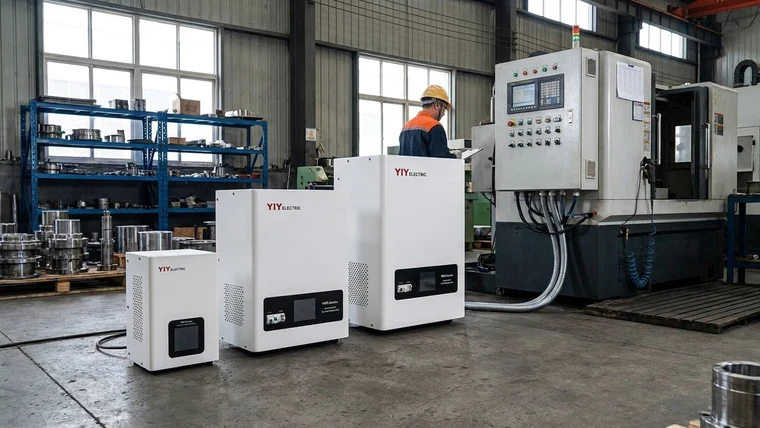
YIY’s servo stabilizer range is positioned for industrial, commercial, medical, and precision equipment applications where continuous correction and maintainable accuracy are required. The broader portfolio also helps when your site review shows that relay is enough for one load, servo is appropriate for another, and IGBT or static correction may be better for a critical system.
For your first-pass review, prepare only the essential information:
- Your nominal voltage and phase configuration.
- The lowest and highest voltage you have measured.
- Main load types, rated power, and starting behavior.
- Whether power comes from grid, generator, or both.
- Required output tolerance and sensitivity of the connected equipment.
- Site environment, ventilation, dust, humidity, and cabinet location.
- Any required bypass, alarm, meter, or communication function.
That short checklist is usually enough to determine whether this capacity tier and topology are worth quoting. More detailed logs can come later if your application is complex, critical, or affected by fast dips.
Frequently Asked Questions
Is a Servo Stabilizer Necessary for CNC Machines or Precision Equipment?
A servo stabilizer is necessary when your CNC machines or precision equipment face recurring undervoltage, overvoltage, or line drift outside their accepted input range. To verify this, compare the machine manual’s voltage tolerance with the stabilizer output accuracy, then review site voltage logs during production, startup, and generator operation.
Should You Choose Servo, Static, or IGBT for Fast Voltage Dips?
Static or IGBT stabilizers are usually better for fast voltage dips, while servo designs are better suited to gradual or moderate voltage fluctuation. Check the dip duration, equipment immunity requirement, and whether your load needs electronic correction or separate ride-through planning before you specify the topology.
What Documents Should You Request Before Approving a Servo AVR Quotation?
Request the datasheet, wiring diagram, factory test report, compliance certificates, warranty terms, and maintenance guide. As a concrete verification step, match the quoted model code and rated kVA against the factory test report, then confirm input range, output tolerance, bypass design, earthing, and phase configuration against your site data.
How Should You Size a Servo Voltage Stabilizer for Motors or Compressors?
Size by real running load plus starting current, not by nameplate kW alone. Ask your supplier to calculate kVA using voltage, current, power factor, phase count, motor inrush, and load sequence; if several motors can start together, include that worst-case condition in the review.
When Is Relay Regulation Enough Instead of Servo?
Relay regulation may be enough when your load is less sensitive, your voltage fluctuation is limited, and step correction will not affect operation. If your equipment trips, overheats, or produces unstable output under voltage drift, servo regulation is usually a stronger candidate because it provides smoother continuous correction.
Final Thoughts
A servo stabilizer fits your industrial load when you need continuous voltage correction, practical output accuracy, broad capacity coverage, and maintainable cost. It is usually stronger than relay regulation for sensitive or production-critical loads, but it should still be compared with static or IGBT technology when your problem is fast voltage dips or mission-critical interruption risk.
Your best next step is a quick fit review: confirm your measured voltage range, load profile, phase configuration, starting current, and site environment. With that information, YIY can help you decide whether servo, relay, or IGBT is the right match before you spend time on a detailed quotation package.
About YIY
Zhejiang Yiyen Holding Group Co., Ltd. (YIY) is a professional voltage stabilizer manufacturer with 16+ years of experience. With a 30,000sqm modern facility and an annual production capacity of 1,000,000+ units, YIY exports products to 130+ countries and provides OEM/ODM customization services for global voltage protection projects.
Contact Us
Email: yiyen@yiyen.com
Phone/WhatsApp: +86 13587452904
Website: https://www.yiyavr.com/