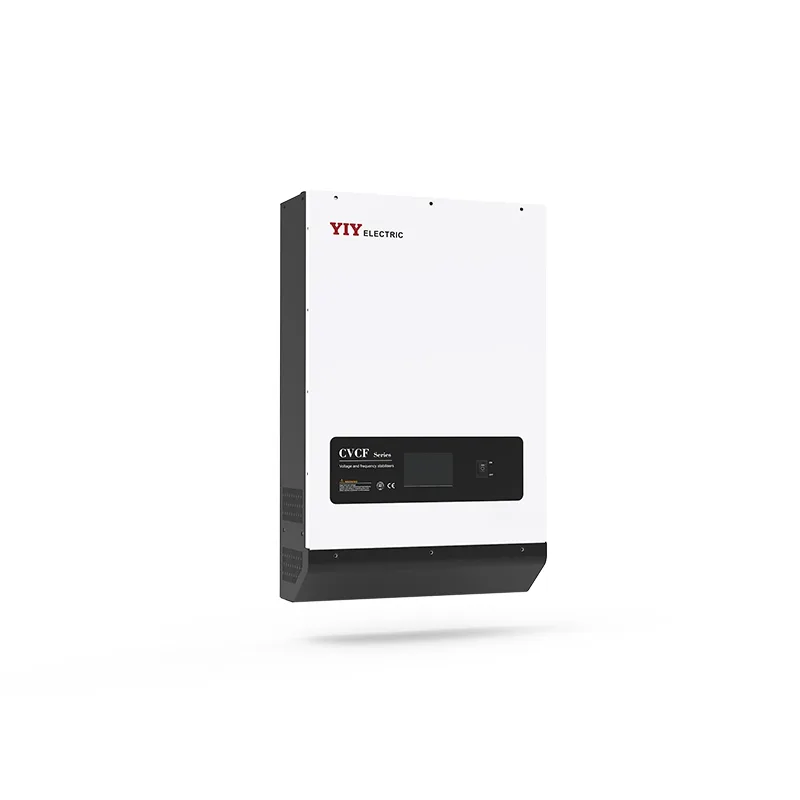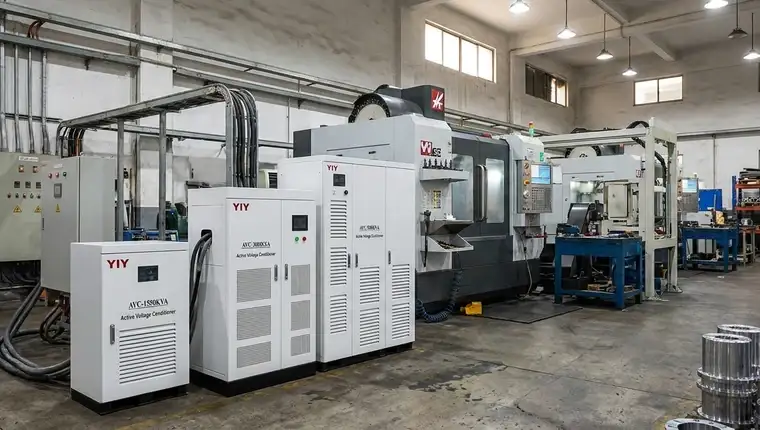
Choose a static automatic voltage regulator when voltage dips, surges, weak-grid behavior, or generator fluctuation threaten sensitive equipment, process uptime, or compliance expectations.
If your load is tolerant and low-risk, a simpler relay or servo stabilizer may be enough; if your load includes CNC controls, medical support equipment, precision production lines, or critical three-phase machinery, faster electronic correction becomes easier to justify.
This guide will help you decide when static regulation fits, how it compares with relay and servo designs, which specifications you should verify, how to size and commission the unit, and what procurement checks reduce risk before you buy.
What Does a Static Automatic Voltage Regulator Do for You?
You use a static automatic voltage regulator to keep output voltage stable when incoming supply voltage rises or falls. In practical terms, it sits between your power source and your protected load, monitors voltage behavior, and corrects abnormal input conditions so your equipment receives a more consistent supply.
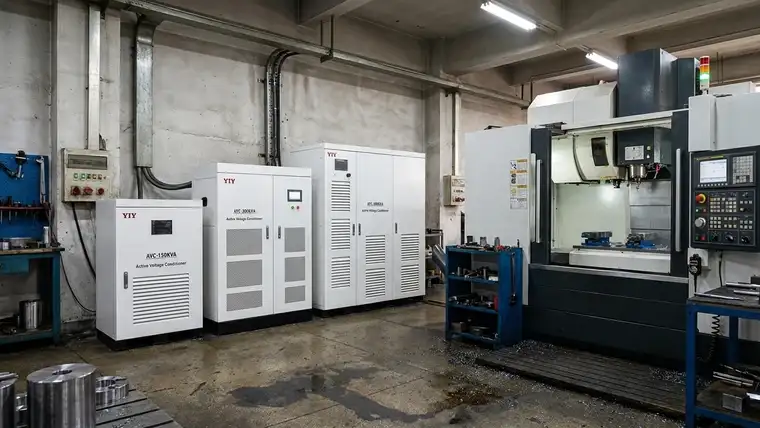
For terminology, many buyers use “AVR,” “voltage stabilizer,” and “voltage regulator” interchangeably, but the technical meaning can vary by supplier and application. If you are still clarifying whether you need a voltage stabilizer, static voltage regulator, or line conditioner, define the problem first: repeated low voltage, overvoltage, short dips, phase imbalance, generator instability, or sensitive electronic loads.
IEC 60038 provides a recognized reference for nominal system voltages, so it helps you compare your measured site voltage against standard voltage expectations rather than against vague “normal power” language. You can review the official IEC 60038 standard voltages publication page when your project documents cite that standard.
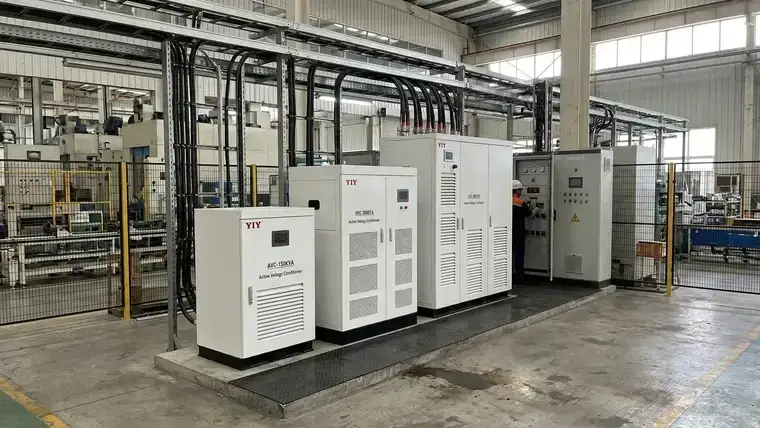
For three-phase industrial sites, your decision also depends on phase configuration, neutral arrangement, grounding, load balance, and bypass strategy. If your protected loads are distributed across a plant or production line, start with the main voltage architecture and compare suitable three-phase stabilizers before choosing a cabinet style or technology.
When Should You Choose Static Regulation Instead of a Simpler Stabilizer?
You should choose static regulation when your voltage disturbance is fast, frequent, or costly enough that slower or stepped correction may not protect the load reliably. The key question is not whether your site has voltage fluctuation; it is whether that fluctuation creates equipment trips, process instability, overheating, product defects, or avoidable maintenance work.
Static regulation is usually a stronger fit when you protect:
- CNC machines, servo drives, PLC cabinets, and precision control systems
- Medical, laboratory, or test equipment with narrow voltage tolerance
- Production lighting, inspection systems, and process auxiliaries
- Generator-fed loads where voltage varies during load steps
- Industrial machines in weak-grid, rural, coastal, or export-market installations
A simpler stabilizer may still fit your secondary loads. General lighting, basic workshop sockets, non-critical pumps, and loads that tolerate wider voltage movement may not need the same correction speed or output precision. That is why your selection should follow operational risk, not only rated kVA.
You can use a practical test: if a voltage event stops production, damages material, creates unsafe restarts, or triggers repeat service calls, treat that load as a candidate for stronger regulation. If the load continues operating safely through moderate voltage movement, a lower-cost design may be more reasonable.
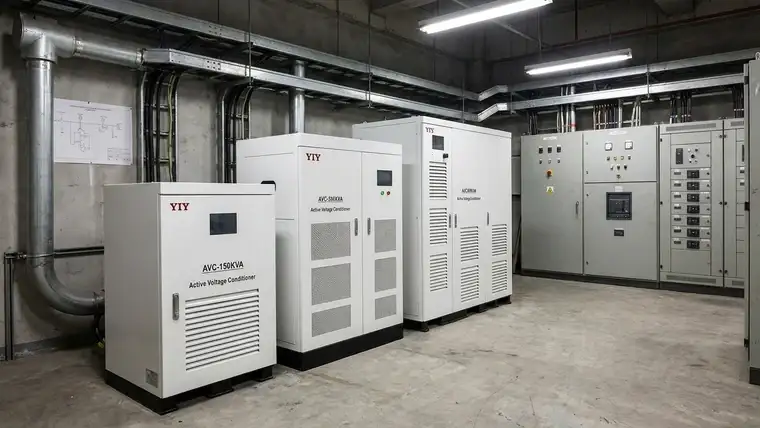
If you want to expand this evaluation into a nearby technical path, continue with igbt voltage stabilizer.
How Do Relay, Servo, and Static IGBT Designs Compare?
Relay, servo, and IGBT/static designs solve the same broad problem, but they correct voltage in different ways and suit different risk levels. Your best choice depends on load sensitivity, correction speed, output accuracy, maintenance expectations, and budget.
Relay designs switch transformer taps, so correction is stepped. Servo designs use a motor-driven variac, so correction is smoother and often suitable for many industrial loads. Static IGBT or PWM designs use electronic correction, which makes them a better candidate when fast response and reduced mechanical wear matter.
| Selection factor | Relay stabilizer | Servo stabilizer | Static / IGBT stabilizer | What it means for you |
|---|---|---|---|---|
| Correction method | Electromagnetic tap switching | Motor-driven variac adjustment | DSP/PWM electronic correction | Match the method to how fast your voltage changes |
| Output behavior | Stepped correction | Smooth mechanical correction | Fast electronic correction | Sensitive controls usually benefit from tighter, faster correction |
| Typical accuracy context | Basic regulation | Often specified around +/-0.5% to +/-3% depending on model | Often positioned for high-precision output | Accuracy affects nuisance trips, heating, and process consistency |
| Moving parts | Relay contacts | Motor and variac assembly | Fewer mechanical correction parts | Maintenance planning differs by technology |
| Best-fit loads | Basic appliances, simple loads, low-risk branches | Many industrial machines and main-line applications | CNC, medical, electronics, fast dips, weak grids | Use higher-performance designs where downtime risk is higher |
| Cost profile | Lower upfront cost | Balanced industrial option | Higher-performance option | Buy based on failure cost, not only purchase price |
| Monitoring and protection | Basic protection | Stronger options available | Advanced alarms and event visibility often available | Better visibility helps you trace voltage events |
If you want a deeper engineering comparison before narrowing the model list, review the relay-versus-servo-versus-IGBT tradeoffs and the technical discussion of servo and IGBT regulator technologies. Those comparisons help you separate correction principle from marketing names.
The practical takeaway is simple: relay can be enough for tolerant loads, servo is often a strong industrial middle ground, and static electronic regulation deserves attention when your load is sensitive or your voltage events happen too quickly for slower correction to be comfortable.
Which Specifications Should You Confirm Before Purchase?
You should confirm input range, output voltage, phase, kVA rating, load type, accuracy, protection, and site environment before you approve any unit. A regulator that looks correct on a catalog page can still fail your application if it cannot cover your real voltage swing, starting current, heat conditions, or phase arrangement.
| Specification | What you verify | Why it matters | Practical impact for your site |
|---|---|---|---|
| Input voltage range | Minimum and maximum measured voltage under real load | Confirms the unit can correct actual grid behavior | Prevents bypass, alarms, or unstable output during dips |
| Output voltage | Target output such as 220 V, 380 V, 400 V, or 415 V | Matches machine nameplates and regional requirements | Reduces motor heating, controller faults, and warranty disputes |
| Phase configuration | Single-phase or three-phase, neutral, grounding, phase balance | Determines topology and wiring design | Avoids wrong-model selection and phase-related trips |
| kVA rating | Running load, starting current, power factor, and expansion margin | Prevents undersizing under dynamic load | Reduces overload trips and premature component stress |
| Load behavior | Motors, CNC, compressors, medical, lighting, generator-fed loads | Different loads tolerate voltage movement differently | Prevents overbuying for tolerant loads or underprotecting critical loads |
| Accuracy and response | Output tolerance, correction speed, and technology type | Links performance to load sensitivity | Helps you justify static regulation where fast dips cause faults |
| Protection functions | Over/under-voltage, overload, short circuit, surge, bypass, alarms | Keeps faults visible and controlled | Reduces troubleshooting time and hidden failure risk |
| Environment | Dust, humidity, heat, airflow, enclosure/IP requirement | Electronics depend on cooling and contamination control | Prevents thermal derating, corrosion, and avoidable failures |
After voltage and kVA numbers, translate the values into site risk. For example, a 400 V target output matters because your motors, drives, and control transformers are designed around a voltage window; persistent deviation can become heat, trips, unstable operation, or shortened service life. A kVA rating matters because motor starts and compressor starts can demand more than the steady running load shown in a spreadsheet.
For a full sizing workflow, compare your site data with a broader voltage stabilizer selection process. At minimum, list every connected load, separate critical from non-critical equipment, confirm starting current, verify power factor, and leave a realistic expansion margin.
Do not rely on search terms such as “static voltage regulator circuit,” “static voltage regulator PDF,” or “static voltage and phase angle regulator PDF” as proof that one generic design will fit your project. Treat those terms as research clues, then request the actual datasheet, wiring diagram, correction range, alarm logic, test conditions, and commissioning requirements for your selected model.
What Should You Check for Standards, Compliance, and Supplier Proof?
You should verify standards references, certification files, test documents, and quality-system evidence before treating a quotation as technically complete. Standards do not replace site engineering, but they give your procurement and engineering reviewers a common reference point.
The IEC 61000 series is commonly used for electromagnetic compatibility context, including disturbance and immunity considerations. If your project documents cite EMC performance, use the official IEC 61000 electromagnetic compatibility series page as your starting reference and ask the supplier which specific parts, tests, or design assumptions apply to your equipment.
For supplier quality claims, ISO 9001 should be tied to an actual certificate scope, not just a logo on a brochure. The official ISO 9001 quality management page explains the standard, but your verification action is more concrete: request the certificate, confirm the issuing body, check the scope covers relevant design or manufacturing activity, and make sure the certificate is current.
| Check | Why it matters | If you skip it |
|---|---|---|
| Confirm nominal voltage references | Keeps design expectations aligned across buyer, installer, and supplier | You may compare offers using different voltage assumptions |
| Request model-specific datasheet | Shows correction range, accuracy, overload, and protection details | You may buy a unit that fits the keyword but not the load |
| Verify ISO 9001 certificate scope | Confirms the quality system applies to relevant operations | You may accept a certificate that does not cover the product process |
| Ask for wiring and bypass diagrams | Helps your installer plan safe integration and maintenance access | You may discover installation conflicts late |
| Review alarm and monitoring options | Helps your maintenance team see voltage events | You may lose the evidence needed to troubleshoot repeat faults |
| Confirm local code responsibility | Keeps installation aligned with site electrical regulations | You may create safety, inspection, or insurance issues |
For your purchasing file, keep the quotation, datasheet, wiring diagram, nameplate draft, certification files, protection settings, bypass description, and acceptance checklist together. This reduces disagreement later if your site expands, changes loads, or investigates a voltage-related incident.
How Should You Install and Commission This Type of Regulator?
You should install and commission a static voltage regulator only after site voltage logging, load review, cable checks, grounding checks, ventilation planning, bypass verification, and test records are complete. The installation should be performed by a qualified electrician or electrical contractor under local code requirements; your role is to make sure the engineering assumptions are verified before the unit carries critical load.
| Step | What you verify | Why it matters |
|---|---|---|
| 1. Site survey | Room access, dust, humidity, corrosive air, vibration, heat sources | Confirms the cabinet can survive the real environment |
| 2. Incoming voltage logging | Minimum voltage, maximum voltage, sag frequency, phase imbalance | Confirms correction range against measured supply |
| 3. Load audit | kVA, starting current, power factor, critical-load priority | Prevents undersizing and nuisance shutdowns |
| 4. Cabinet placement | Clearance, airflow, ambient temperature, enclosure/IP needs | Protects electronics from heat and contamination |
| 5. Wiring and grounding | Cable size, terminal torque, phase sequence, protective earth | Reduces heating, shock risk, and unstable operation |
| 6. Bypass verification | Manual or automatic bypass, interlocks, transfer procedure | Keeps service possible without unnecessary downtime |
| 7. Test run | Input/output voltage, alarms, overload behavior, temperature rise | Confirms the unit works under your actual site load |
| 8. Alarm and log review | Event records, display visibility, remote status options | Helps maintenance trace future voltage events |
| 9. Handover file | Nameplate, wiring diagram, settings, measurements, checklist | Gives you evidence for service, warranty, and audits |
Your environment can change the final specification. In dusty workshops, ask about filtration and cleaning access. In humid or corrosive sites, discuss coating, anti-condensation heating, and enclosure/IP requirements. In hot electrical rooms, leave more conservative clearance around the cabinet and avoid blocking ventilation.
Generator-fed systems deserve an extra review. Confirm generator frequency stability, voltage swing during load steps, phase balance, neutral arrangement, grounding, and measured minimum/maximum voltage under real load. If the generator hunts sharply during motor starts, the regulator may chase instability rather than protect your equipment.
Commissioning should end with evidence, not only a powered-on cabinet. Keep input/output measurements, alarm screenshots, bypass test results, protection settings, and signed acceptance records in one file so your maintenance team can compare future events against the original baseline.
What Final Procurement Screen Should You Use Before Approval?
You should approve the order only when the model, site data, protection plan, documents, and acceptance criteria all match your application. This final screen helps you avoid buying a regulator that satisfies a keyword search but misses your real operating risk.
| Check | Why it matters | If you skip it |
|---|---|---|
| Site voltage log is available | Shows the real correction range required | The unit may not cover your worst dips or surges |
| Load list includes starting current | Captures dynamic demand from motors and compressors | The regulator may overload during startup |
| Phase and neutral arrangement are confirmed | Prevents topology and wiring mismatch | Installation may be delayed or unsafe |
| Output voltage target is written | Aligns supplier, installer, and equipment nameplates | You may receive the wrong output configuration |
| Protection settings are specified | Controls over/under-voltage, overload, surge, and bypass behavior | Faults may be hidden or poorly coordinated |
| Environment is documented | Connects enclosure, cooling, and filtration to real conditions | Heat, dust, or humidity may shorten service life |
| Datasheet and wiring diagram are approved | Gives engineering and installation teams a shared reference | Site work may rely on assumptions |
| Certification and test files are requested | Supports procurement, audit, and compliance review | You may accept unsupported supplier claims |
| Acceptance test is defined | Makes handover measurable | You may not know whether the unit performs as promised |
If you are comparing several suppliers, give each one the same load profile and ask for the same response: recommended kVA, input range, output target, accuracy, overload capacity, bypass plan, protection logic, cabinet requirements, and document package. That makes your comparison technical rather than purely price-led.
Frequently Asked Questions
What Is a Static Voltage Regulator?
A static voltage regulator is an electronic device that stabilizes output voltage when input voltage rises or falls. For your site, that means it can help protect sensitive loads such as CNC controls, medical equipment, production lighting, and process auxiliaries from dips, surges, and weak-grid behavior. The same device is often sold as a static voltage stabilizer: the name signals electronic correction instead of a motor-driven brush.
What Is the Difference Between Static Voltage Stabilizer and Servo Stabilizer?
A static voltage stabilizer corrects voltage electronically, while a servo stabilizer adjusts voltage through a motor-driven variac. For your decision, compare correction speed, output accuracy, maintenance parts, bypass design, and supplier test data; servo can be cost-effective for many industrial loads, while static regulation is stronger for fast dips and sensitive electronics.
Which Is Better, Servo or Static Stabilizer?
Neither is universally better. You should choose servo when your load needs smooth, cost-effective industrial regulation and the voltage disturbance is not extremely fast; choose static regulation when sensitive electronics, frequent dips, or high downtime risk make faster electronic correction more important.
Can a Static Voltage Regulator Be Used with a Generator?
Yes. Generator output drifts in both voltage and frequency when big loads start, so check the set before you connect a regulator. Record its output while your largest motor starts and compare the lowest and highest readings with the regulator’s input window and overload rating. Also confirm the neutral and earthing arrangement with the installer.
What Documents Should You Request Before Approving an Order?
Request the datasheet, wiring diagram, bypass scheme, nameplate draft, installation clearance requirements, certification files, protection settings, and acceptance test procedure. For compliance review, also ask which IEC voltage or EMC references are used and verify any ISO 9001 certificate scope rather than accepting a logo alone.
Final Decision: When Is This Capacity and Technology Class Worth It?
You should choose static regulation when unstable voltage creates measurable risk for your equipment, production uptime, product consistency, or compliance review. Start with your load profile and site voltage behavior, then decide whether relay, servo, or static electronic correction gives the right balance of protection, speed, maintainability, and cost.
For less sensitive loads, relay or servo options may still be commercially sensible. For CNC machines, medical support loads, generator-fed controls, and critical three-phase processes, the stronger case for electronic regulation comes from avoided trips, clearer fault visibility, and better alignment between your supply conditions and your equipment requirements.
For a low-friction next step, prepare a short checklist with load type, phase, kVA, measured voltage range, generator use, and site conditions. Share that first-pass information with YIY, and your application can be reviewed for the most suitable regulator technology and model direction before you commit to a detailed specification package.
Which Is Better: Static Voltage Stabilizer or Servo?
Static stabilizers (thyristor/IGBT-based) correct electronically and have no moving parts, which suits CNC machines, medical imaging, data centers and precision drives where correction speed and low maintenance matter. Servo stabilizers use a motor-driven variac; they correct more slowly but usually accept a wider input range at a lower cost per kVA, which suits motors, HVAC compressors, pumps and general industrial loads.
Choose static for fast-switching critical loads; choose servo for bulk industrial loads where cost per kVA drives the specification.