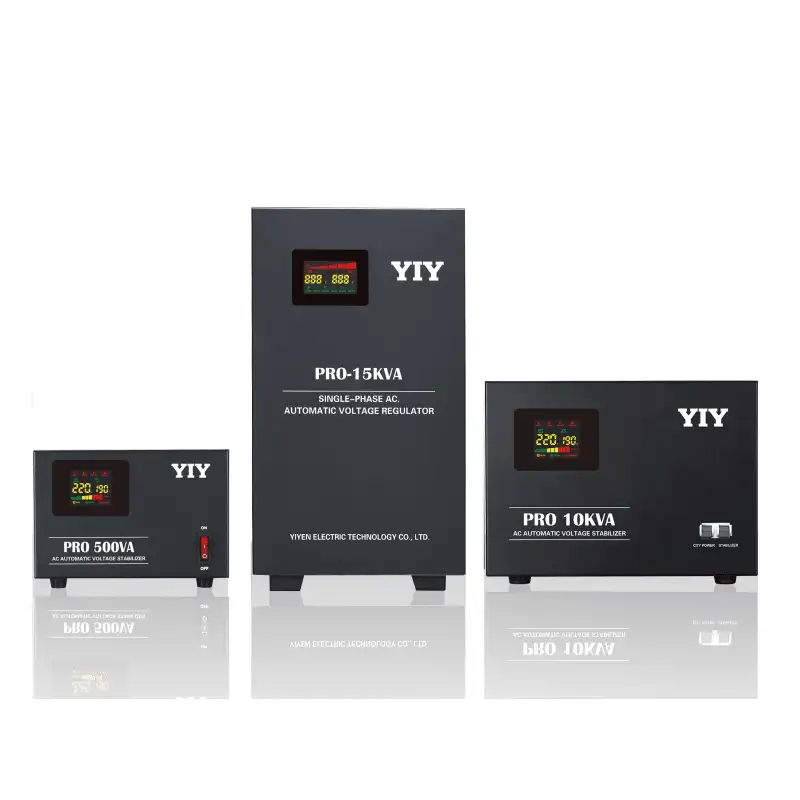
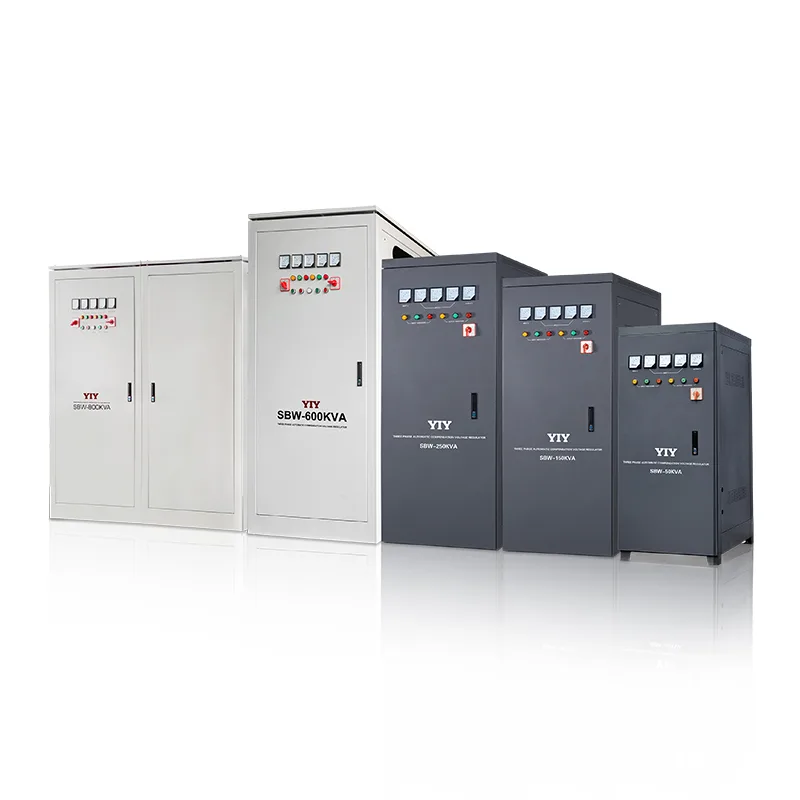
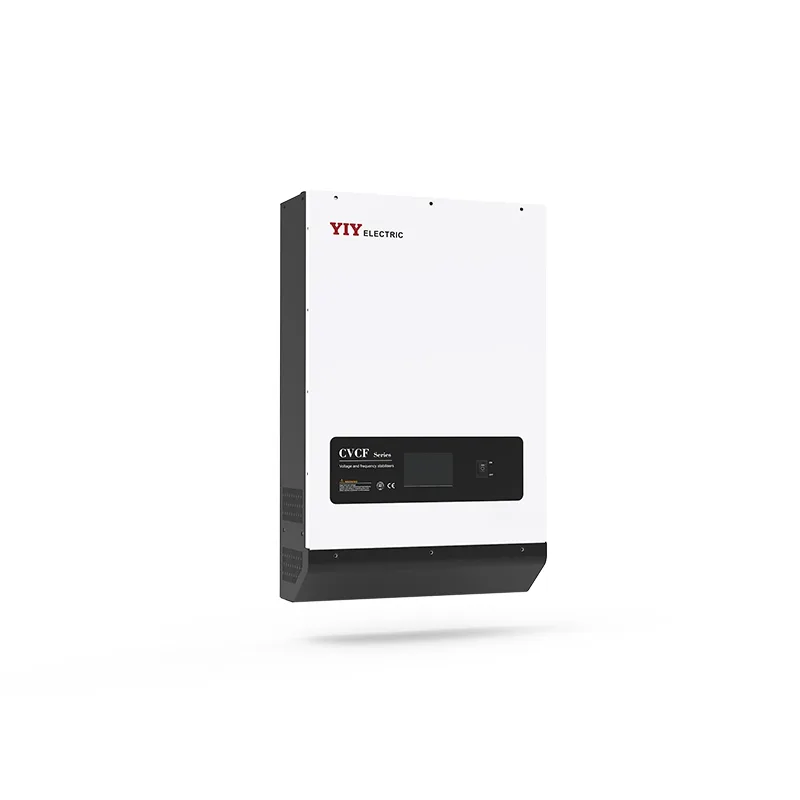
Once the reader understands the servo-versus-IGBT trade-off, use this voltage stabilizer selection guide to extend the decision into phase, capacity, and site conditions.

Why This Decision Matters
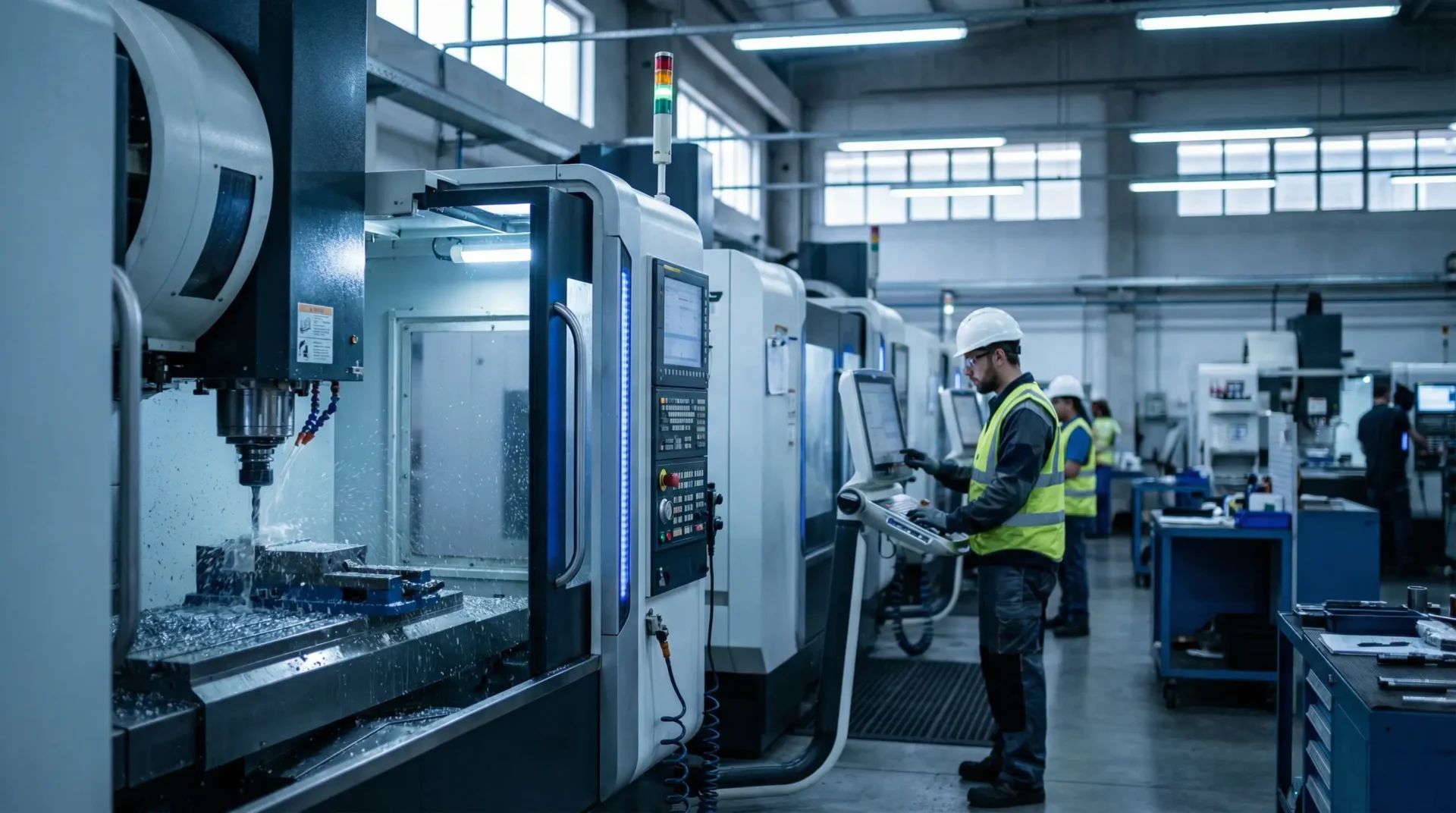
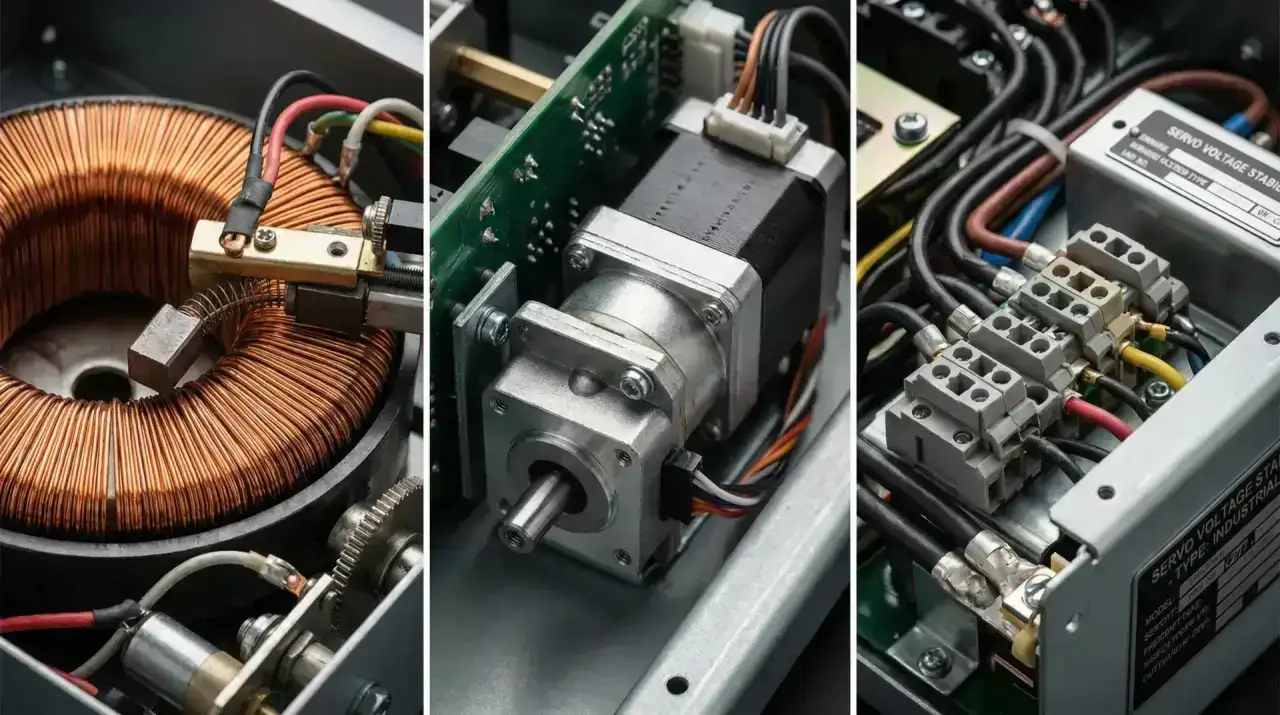
How Servo Stabilizers Work
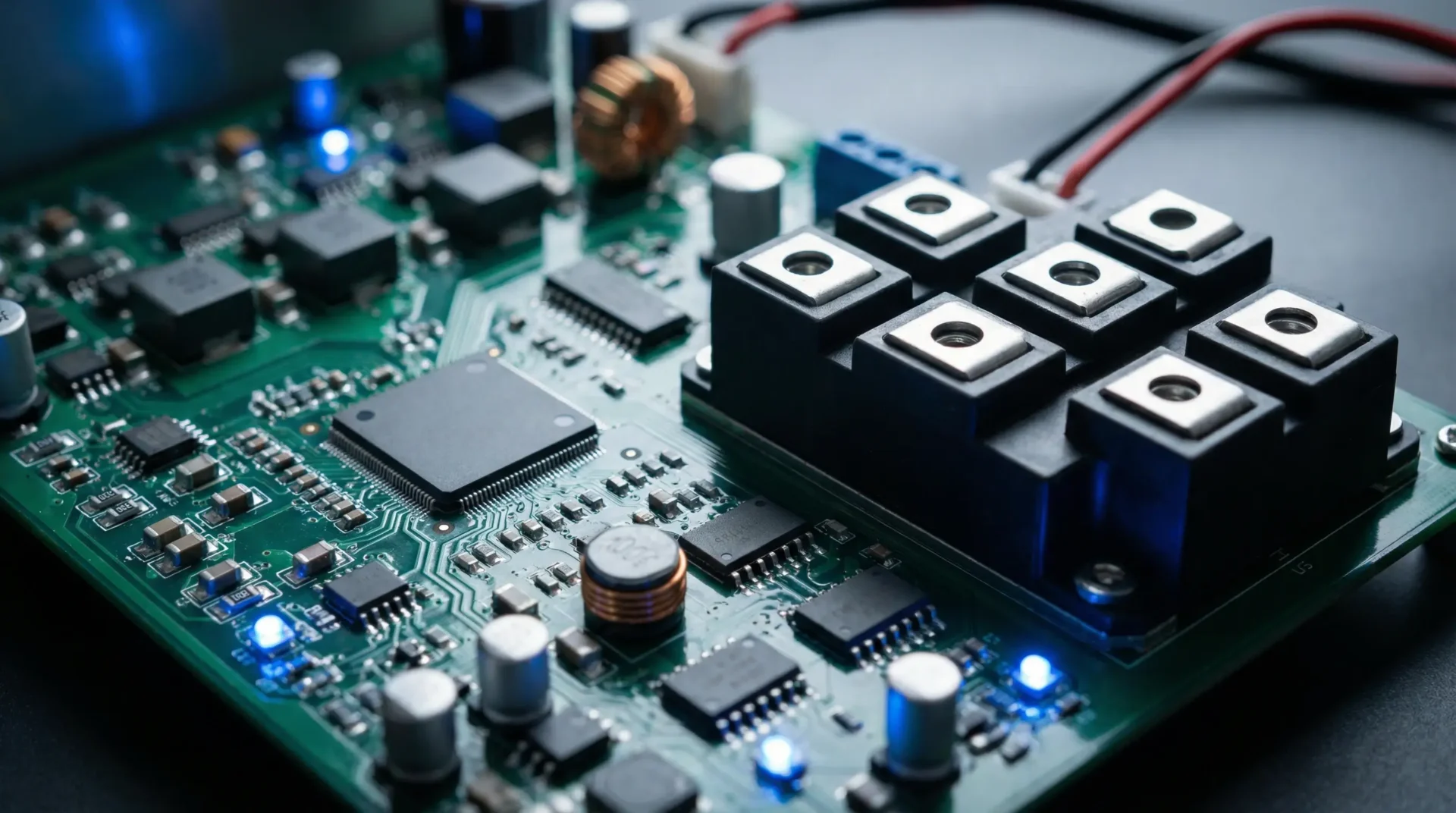
How IGBT Stabilizers Work
Performance Comparison: The Numbers That Matter
|
Specification
|
Servo Stabilizer
|
IGBT Stabilizer
|
|---|---|---|
|
Response Time
|
50ms – 5 seconds
|
< 20 milliseconds
|
|
Regulation Speed
|
~100V/s
|
Up to 1000V/s
|
|
Output Accuracy
|
±1%
|
±1%
|
|
Efficiency
|
98%+
|
Higher (IGBT low losses)
|
|
Moving Parts
|
Yes (motor + brush)
|
No (solid-state)
|
|
Maintenance
|
Brush replacement required
|
Maintenance-free
|
The 5-Year Total Cost Reality Check
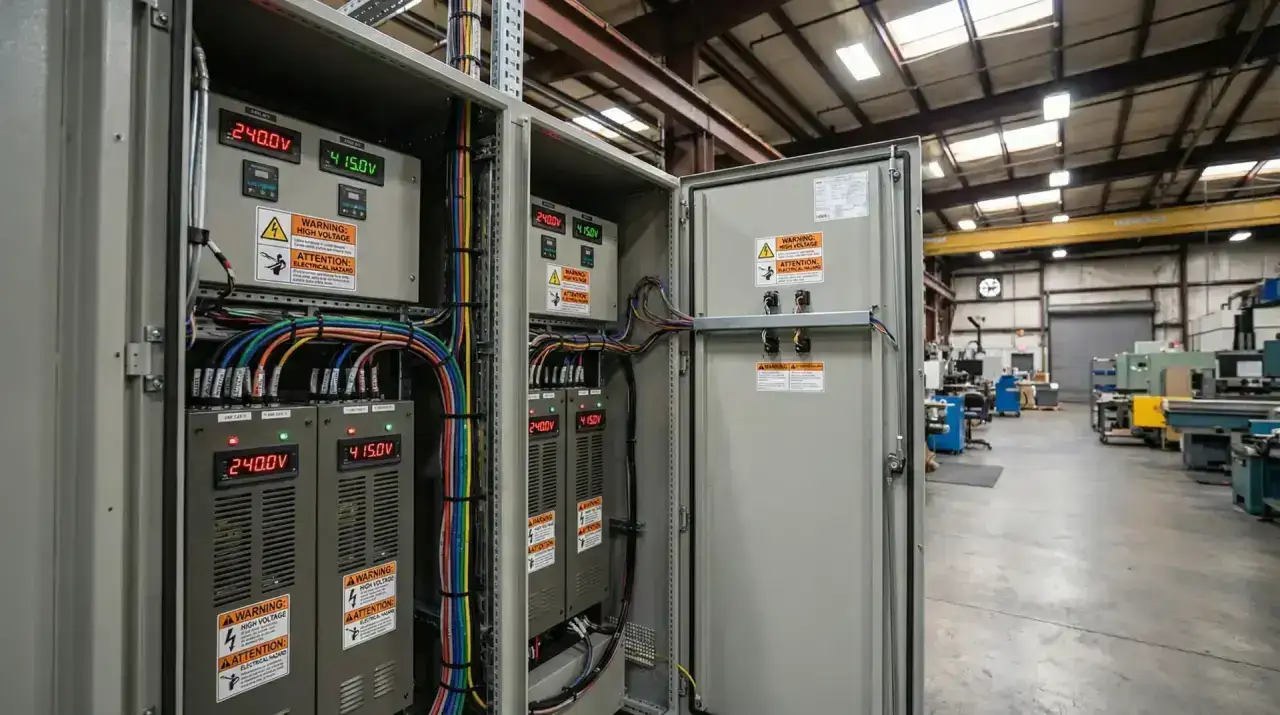
Application Scenarios: Where Each Technology Shines

The Hidden Cost: Maintenance Requirements
Making the Right Choice
The Antifragility Choice: Beyond Protection
The Technology Trend
Final Thoughts
Ready to specify? See the three-phase guide (10–25 KVA) or industrial guide (200–500 KVA) for sizing and pricing.
Engineer Decision Notes: When Servo Wins and When IGBT Is Worth the Premium
Most factory buyers do not need a philosophical servo-versus-IGBT debate; they need a rule for where to spend precision budget. Servo remains the better default for mixed industrial lines because it absorbs weak-grid variation at lower total cost and scales economically from workshop loads to feeder-class projects. IGBT is justified when the cost of one voltage event outweighs the price premium — high-speed test benches, medical electronics, precision measurement, or electronics-heavy lines with tight tolerance windows.
If servo is the right default for your line, the servo voltage stabilizer category summarises published input range and ±2–3% output accuracy for each YIY series.
- Choose servo first: CNC workshops, packaging lines, pumps, HVAC, and mixed motor loads where +/-2% to +/-3% regulation is operationally enough.
- Choose IGBT first: control-heavy cells, metrology, semiconductor support equipment, and electronics-dense systems where switching speed and tighter precision directly protect yield.
- Choose a hybrid architecture: servo on the line feeder, IGBT on the most sensitive branch loads — often the most economical answer for plants with mixed risk profiles.
- Specification trap to avoid: buyers often compare only accuracy. The real decision also depends on maintenance access, harmonic environment, bypass strategy, and whether the site needs low-input tolerance more than sub-cycle correction.
For machine-cell applications, continue to the CNC stabilizer guide. For electronics-grade correction, compare against the AVC active voltage conditioner. For plant-wide sizing, use the 200-500 KVA industrial guide.
Frequently Asked Questions
What is the main difference between servo and IGBT voltage stabilizers?
Servo stabilizers use a motor-driven autotransformer (mechanical) for ±3% accuracy with 3-5 second response time. IGBT stabilizers use solid-state switching (electronic) for ±1% accuracy with 20ms response time. Servo is more cost-effective; IGBT is faster and maintenance-free.
When should I choose IGBT over servo technology?
Choose IGBT when your load requires sub-second voltage correction (CNC machines, medical imaging, data centers), when noise must be minimal, or when zero-maintenance operation is critical. The higher purchase price is offset by lower lifetime maintenance costs.
What is the cost difference between servo and IGBT stabilizers?
Servo stabilizers typically cost 40-60% less than equivalent IGBT units at the same capacity. However, IGBT units have near-zero maintenance costs, while servo units require carbon brush replacement every 2-3 years and periodic motor servicing.
Can servo and IGBT stabilizers be used in the same facility?
Yes. Many factories use IGBT stabilizers for sensitive production lines (CNC, testing equipment) and servo stabilizers for general lighting, HVAC, and non-critical loads. This hybrid approach optimizes cost while protecting critical equipment.