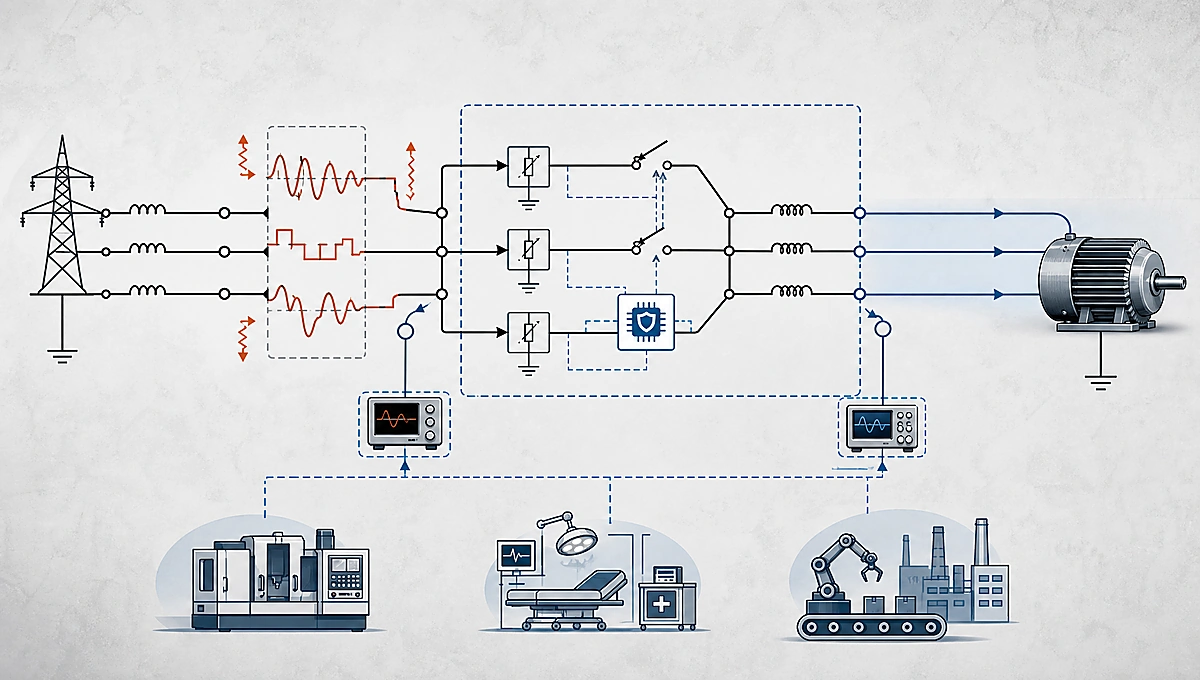
Are voltage gated channels active or passive? They are passive ion channels: voltage opens the gate, but ions move down an electrochemical gradient rather than being pumped by ATP-driven active transport. For your industrial voltage-protection decision, the useful distinction is different but related: passive protection can clamp, isolate, or disconnect, while active voltage correction continuously senses and regulates unstable supply.
If your search is also trying to answer a buying question, this guide will help you separate biology terminology from power-equipment selection, compare passive protection with active correction, and decide what evidence belongs in your RFQ.
If you need the broader industrial path behind this topic, start with three-phase stabilizers.
Are Voltage Gated Channels Active or Passive in Practical Terms?
You can treat voltage-gated channels as passive because the channel controls access, not energy-driven movement. When the gate opens, ions follow the gradient that already exists; the channel does not force ions uphill the way active transport does.
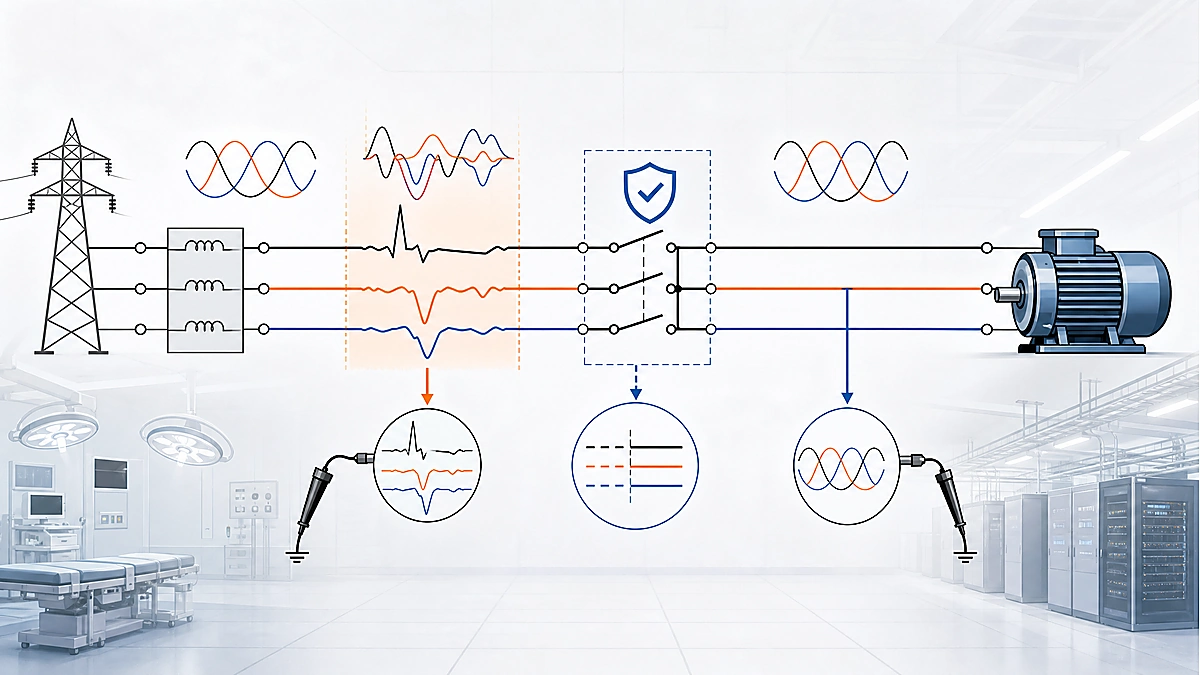
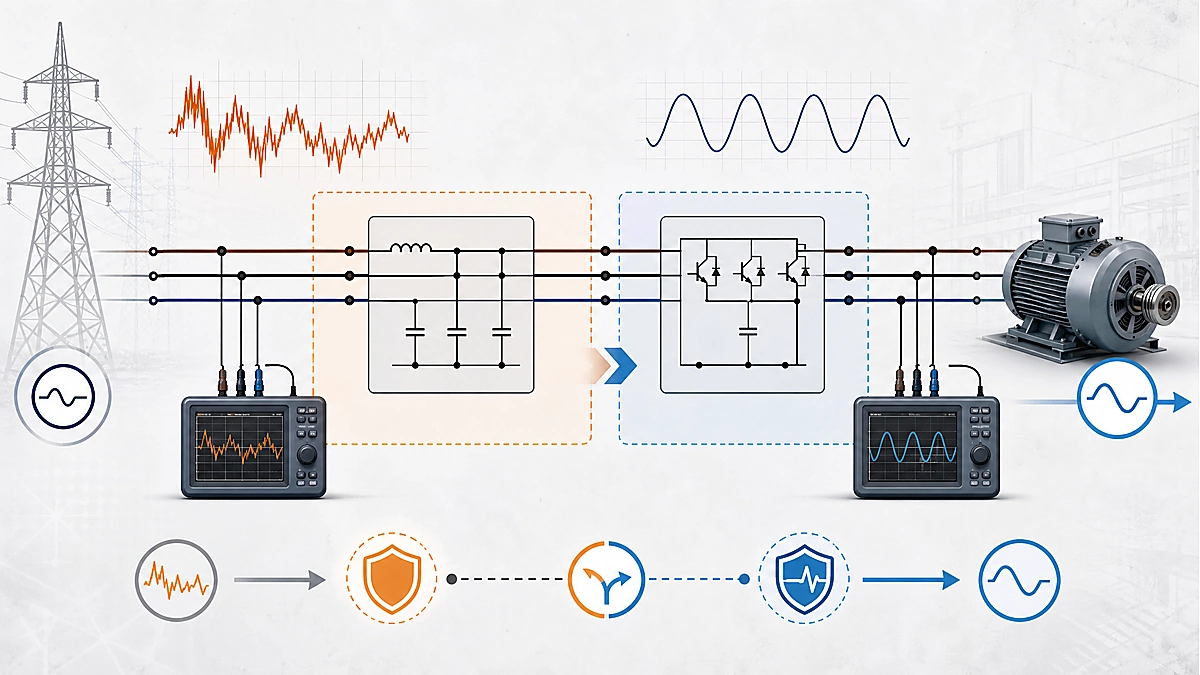
That answer matters because the word “active” can mislead you when you move from biology into electrical equipment. In power-quality language, an active voltage conditioner, AVR, servo stabilizer, or IGBT regulator does use sensing and control circuitry to correct the delivered output. A passive device usually protects, filters, clamps, isolates, or disconnects rather than continuously correcting voltage.
| Concept | What it means | What it means for your decision |
|---|---|---|
| Voltage-gated channel | Passive ion channel opened by voltage | It is not active transport, even though it responds to voltage |
| Passive voltage protection | Surge protection, cutoff relay, fuse, limiter, isolation, or filtering | It may reduce damage, but it may not keep your load running through sags or swells |
| Active voltage correction | AVR, servo stabilizer, static regulator, or active conditioner | It regulates output when your incoming voltage fluctuates within the unit’s correction range |
| Measured site data | Voltage logs, sag depth, swell level, inrush, phase balance, and load current | It tells you whether protection alone is enough or regulation is required |
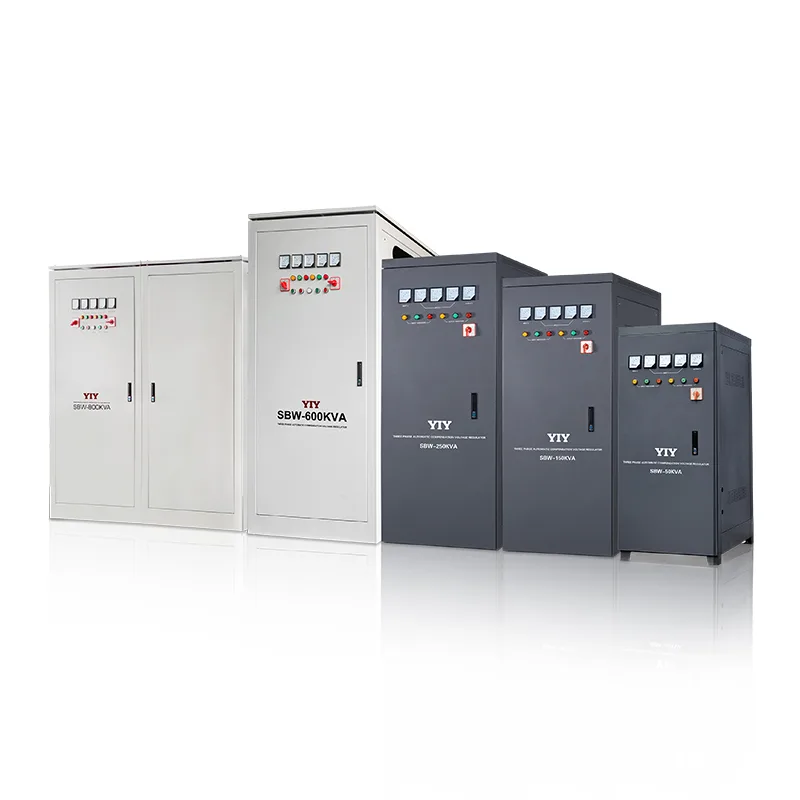
For larger industrial three-phase loads, your first practical reference point is configured three-phase stabilizers because they let you compare correction range, overload margin, bypass design, alarms, event logging, and installation fit in the same selection path.
A useful standards reference is IEC 61000-4-11 voltage dip and interruption immunity testing, which addresses immunity testing for voltage dips, short interruptions, and voltage variations.
In practical terms, this means your equipment choice should reflect the actual disturbances your load experiences, not only the nominal voltage on a nameplate.
Before you finalize sizing or implementation details, review Three Phase Stabilizer Selection Guide for Industrial Loads.
When Is Passive Protection Enough, and When Do You Need Active Correction?
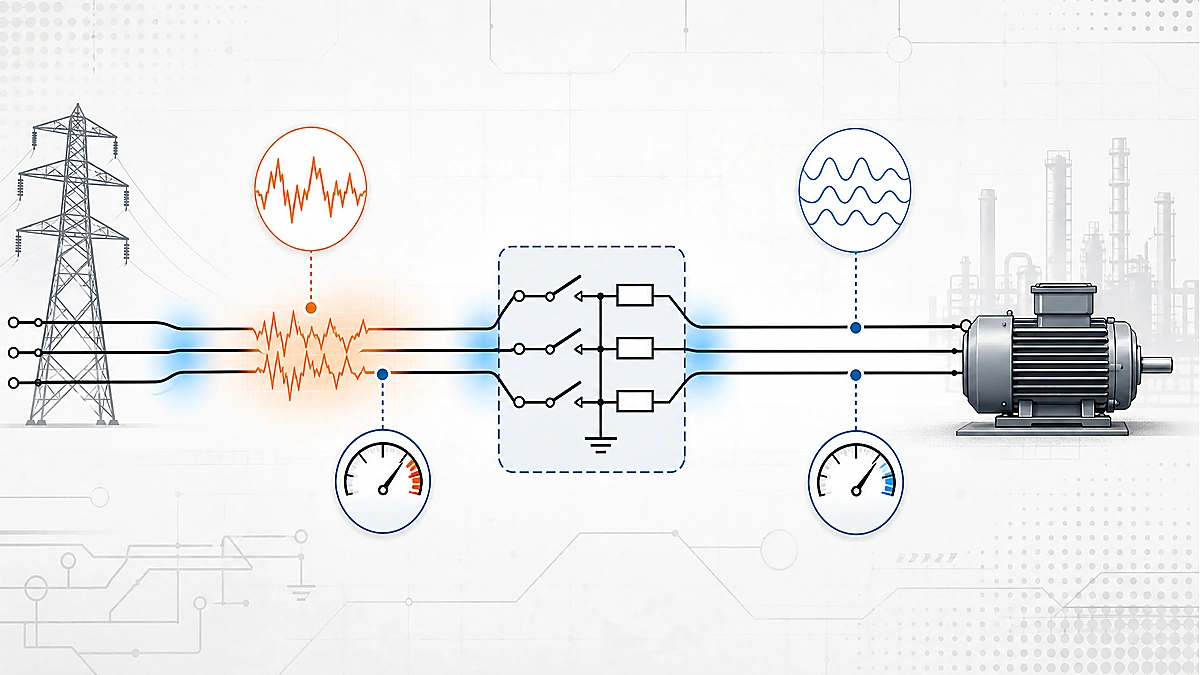
You should use passive protection when your main risk is damage limitation, and you should move to active voltage correction when your load needs stable output during repeated voltage fluctuation. If your process trips, faults, restarts, or produces scrap during sags and swells, protection alone is usually not enough.
Passive devices still belong in many systems. Surge protective devices, fuses, cutoff relays, isolation devices, and limiters can reduce exposure during severe or abnormal events. They are often part of a complete protection design, especially where overvoltage, short circuits, lightning events, or unsafe supply conditions must be interrupted.
Active correction is different. It is chosen when you need voltage continuity within a target tolerance. That may apply to CNC machines, compressors, elevators, medical equipment, automated production lines, HVAC systems, data centers, industrial controls, and mixed three-phase panels. For your load, the key question is not whether the supply can occasionally be disconnected; it is whether the output must remain usable while the grid moves.
A practical selection ladder looks like this:
| Option | Best fit | Main limitation |
|---|---|---|
| Passive protection | Damage limitation, isolation, cutoff, surge exposure | Does not continuously regulate output |
| Relay regulation | Less sensitive loads and basic correction needs | Step changes may be too coarse for sensitive equipment |
| Servo AVR | Many industrial loads needing smoother voltage regulation | Mechanical correction is not the fastest option |
| Static IGBT stabilizer | Sensitive automation, medical, IT, and high-continuity loads | Higher specification and cost than basic correction |
| Active voltage conditioner | Rapid correction of sags and swells for critical loads | Must be matched carefully to disturbance profile and load behavior |
ABB positions the PCS100 AVC-40 for sensitive industrial and commercial loads affected by voltage instability, while other active conditioner suppliers describe continuous correction for sags and swells. You should treat those examples as market context, then verify the exact model against your measured voltage logs, load kVA, bypass requirements, and project acceptance criteria.
If you want to expand this evaluation into a nearby technical path, continue with Voltage Stabilizer Selection: A Complete Guide for Industrial Applications.
For a concrete product reference while you compare options, review IGBT voltage stabilizer.
How Should You Translate Active Versus Passive Into a Specification?
You should specify the unit around your real supply behavior, real load behavior, and required output tolerance. A voltage-protection decision becomes much clearer when you stop comparing product labels and start comparing measurable conditions.
Start with nominal voltage. If your destination market uses 220V, 230V, 380V, 400V, or 415V systems, nominal-voltage alignment affects transformer design, calibration, documentation, and installation checks. The official IEC 60038 standard voltages reference defines standard voltage families used across regions.
For you, this means your RFQ should state destination country, phase system, frequency, nominal voltage, and allowable input swing before anyone recommends a model.
Next, define the correction job. If your supply only has occasional extreme events, passive cutoff plus surge protection may be acceptable. If your load sees repeated undervoltage, overvoltage, phase imbalance, or production faults, compare active correction technologies. Use Voltage Stabilizer Selection: A Complete Guide for Industrial Applications to deepen the specification logic before you lock the final topology.
| Specification item | What to request | What it means for you |
|---|---|---|
| Input voltage range | Minimum and maximum operating voltage, not only nominal voltage | Confirms whether the unit can regulate during your worst normal swings |
| Output accuracy | Target tolerance such as +/-1% to +/-3% where applicable | Tighter tolerance helps sensitive electronics, CNC, IT, and medical loads |
| Response behavior | Correction time under sag and swell conditions | Faster response reduces the chance of faults during brief disturbances |
| Rated kVA/kW | Continuous capacity, power factor assumptions, and overload margin | Prevents undersizing when real current is higher than nameplate assumptions |
| Inrush handling | Motor starting current, compressor start, drive behavior, overload curve | Reduces nuisance trips during startup or temporary overload |
| Phase condition | Single-phase, three-phase, imbalance, phase loss protection | Keeps the chosen design aligned with your actual distribution system |
| Bypass and protection | Manual/automatic bypass, overcurrent, overheat, phase loss, abnormal voltage | Helps maintenance keep the load protected and serviceable |
| Monitoring | Meters, alarms, event logs, dry contacts, or communication options | Gives you evidence when voltage events become recurring problems |
The numbers in this table are not decoration. A +/-3% output tolerance, for example, means the unit is allowed to vary within that band during regulation; a sensitive load may need a tighter band, while a rugged motor load may not. An input range tells you whether the stabilizer will keep correcting during your site’s low-voltage periods or simply fall outside its design window.
Which RFQ Checks Help You Choose Relay, Servo, IGBT, or Active Conditioner Options?
Your RFQ should be based on voltage logs, load current, starting demand, phase behavior, environment, and target output accuracy before you shortlist technologies. Without those details, even a high-quality product can be the wrong fit for your load.
Ask your engineering contact or site owner for rated kVA/kW, power factor, measured current, motor starting current, operating hours, phase count, voltage range, frequency, ambient temperature, enclosure needs, and required output accuracy. For execution-level three-phase checks, use the Three Phase Stabilizer Selection Guide for Industrial Loads to validate phase balance, load type, and installation conditions.
| Check | Why it matters | If you skip it |
|---|---|---|
| Load profile and rated kVA/kW | Confirms continuous demand and capacity tier | The stabilizer may run hot, trip, or fail early |
| Power factor and measured current | Converts nameplate data into real electrical loading | A unit that looks large enough may still be overloaded |
| Motor starting current | Inrush can exceed running current | Compressors, pumps, and motors may trigger nuisance trips |
| Phase count and phase balance | Determines single-phase, three-phase, and unbalance requirements | One phase may be poorly protected or unstable |
| Voltage range and frequency | Defines the real correction window | The unit may regulate during normal periods but fail during deep sags |
| Target output accuracy | Matches tolerance to load sensitivity | Sensitive equipment may still fault or drift |
| Environment and enclosure | Dust, humidity, heat, altitude, airflow, and IP rating affect reliability | Heat buildup, corrosion, blocked airflow, or service delays may appear |
| Bypass and monitoring | Supports maintenance access and fault visibility | Repeated voltage events may stay hidden until downtime occurs |
A small 3kVA-style stabilizer may fit instruments, office electronics, compact medical devices, or a single sensitive load. Larger motors, production lines, elevators, HVAC systems, CNC machines, or mixed industrial panels usually justify a higher-capacity three-phase servo or static configuration. If your site needs faster electronic correction, compare an IGBT voltage stabilizer against the same load data rather than treating it as a generic upgrade.
What Proof Should You Ask a Supplier to Provide?
You should ask for documents that prove the proposed model matches your load, standards context, and installation conditions. A clean quotation is useful, but your acceptance decision should rest on verifiable evidence.
Request a datasheet, wiring diagram, single-line diagram, factory test report, overload curve, protection list, bypass schematic, certification documents, enclosure details, and any project references that resemble your application. If your procurement process requires a compliance matrix, ask the supplier to map each line of your specification to a datasheet value or test document.
YIY’s internal technical documentation emphasizes selection from measured site conditions and real load behavior rather than nominal voltage alone. YIY also reports a 30,000 m2 factory, 1,000,000+ units/year production capacity, and export experience across 130+ countries. Those scale signals matter when you need repeatable documentation, consistent configuration, and project support across multiple sites.
When quality-system evidence is part of your vendor review, verify the certificate scope and issuing body rather than accepting a logo at face value. YIY states that it is ISO 9001:2015 certified, and the official ISO page explains the quality management standard behind that certification reference.
Frequently Asked Questions
Are voltage gated channels active transport?
No. Voltage-gated channels are not active transport because ions move down an electrochemical gradient after the channel opens. To verify the concept in your own notes, check whether energy is used to move ions against a gradient; if not, you are dealing with passive transport.
Is voltage gated active transport in the same way an AVR is active correction?
No. The biology term and the power-equipment term use “active” differently. In biology, active transport means energy-driven movement against a gradient; in industrial voltage protection, active correction means the equipment senses input voltage and regulates output through a control mechanism.
What should you know about Schneider active voltage conditioner options?
You should verify the exact Schneider product family, voltage class, correction range, response time, bypass design, certifications, and wiring diagram before procurement. As a concrete check, compare the datasheet line by line against your measured sag/swell records and destination-market nominal voltage.
What should buyers check when comparing PCS100 AV active voltage conditioners?
You should compare correction range, load kVA, response behavior, overload handling, bypass logic, project references, factory test reports, and single-line diagrams. Before approval, ask the supplier to show how the proposed unit handles your worst recorded sag and your highest expected inrush condition.
How do you choose the right active voltage conditioner instead of just the best-rated one?
You choose the unit that matches your voltage logs, load criticality, kVA/kW demand, power factor, inrush current, phase imbalance, ambient conditions, enclosure needs, and required output tolerance. A “best-rated” model can still be wrong if it does not match your site disturbance profile.
Final Thoughts
You now have the core answer: voltage-gated channels are passive in biology, while industrial voltage systems need active correction when your load requires continuous regulated output. Passive protection can clamp, isolate, or disconnect, but AVR, servo, static IGBT, and active conditioner systems are selected when unstable supply must be corrected before it becomes faults, scrap, service calls, or downtime.
Your next step should be low-friction: start with a quick fit review of your load profile, site conditions, and target output requirements. If you are still mapping adjacent sizing and sourcing questions, the YIY voltage stabilizer blog can help you continue the evaluation path before you request a full quotation.
About YIY
Zhejiang Yiyen Holding Group Co., Ltd. (YIY) is a professional voltage stabilizer manufacturer with 16+ years of experience. With a 30,000 m2 modern facility and annual production capacity of 1,000,000+ units, YIY provides OEM/ODM customization services and voltage protection solutions for global customers.
Contact Us
Email: yiyen at yiyen.com
Phone/WhatsApp: +86 13587452904
Website: https://www.yiyavr.com/