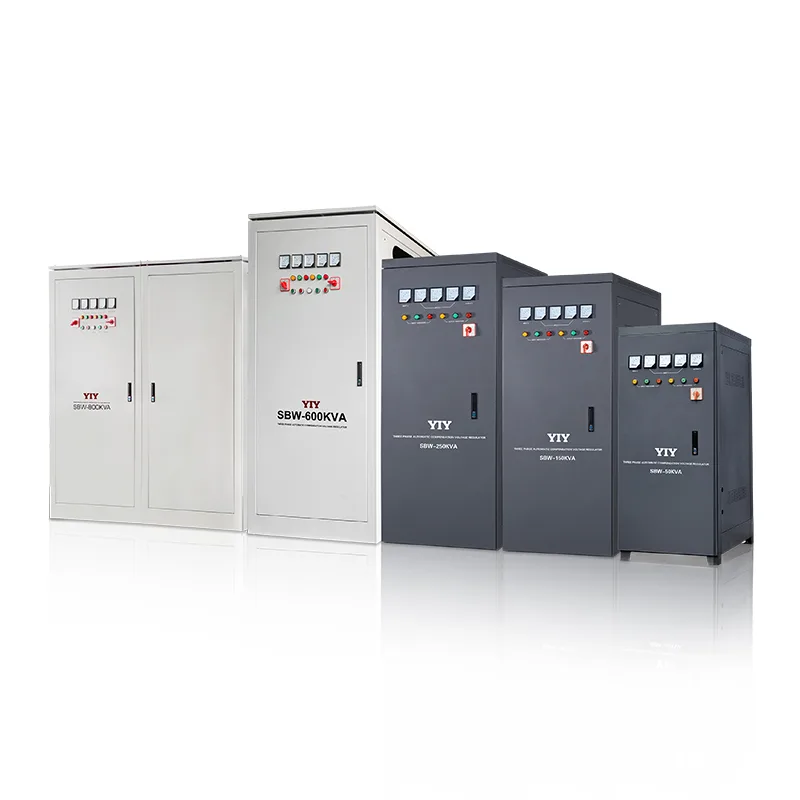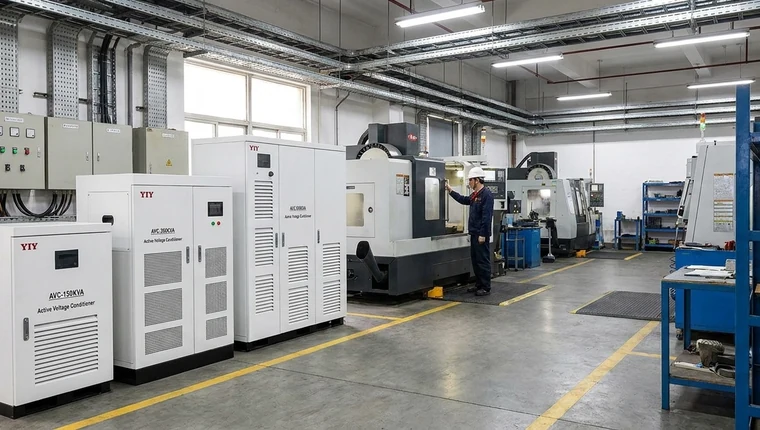
20 kva 3 phase stabilizer price is mainly shaped by regulator technology, input-voltage range, output accuracy, load behavior, protection package, enclosure, cooling method, compliance evidence, and delivery scope.
If your quoted price looks surprisingly low or high, the difference is usually hidden in the specification, not in the 20 kVA nameplate alone.
This guide will help you answer the practical buying questions: what a quote includes, which technology fits your load, how site conditions affect cost, what you should ask suppliers to verify, and when a listed price is ready for procurement.
What Does 20 kva 3 Phase Stabilizer Price Really Include?
You should treat a 20 kVA three-phase stabilizer quote as complete only when it defines the electrical design, protection package, enclosure, documentation, and service scope. A bare price without those details is only a budget signal.
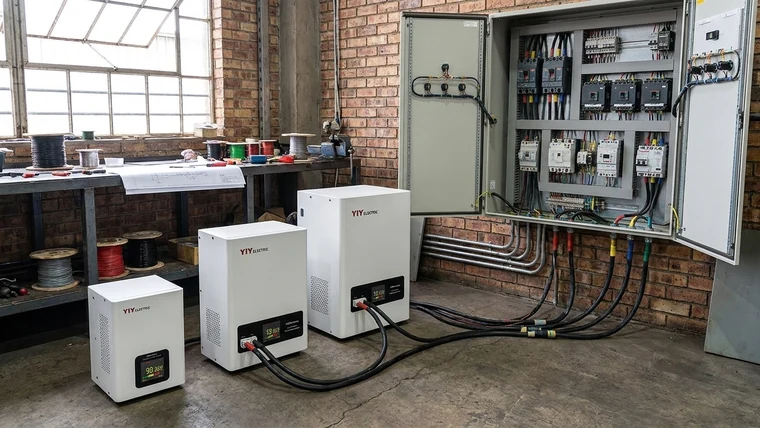
A 20 kVA three-phase stabilizer is an industrial AVR, voltage regulator, or line conditioner used to maintain stable output voltage for three-phase loads during sags, surges, and phase imbalance. For your plant, workshop, panel, or process line, the real question is not “What is the cheapest 20 kVA unit?” It is “Will this unit hold voltage safely under my load and site conditions?”
Public market listings can help you build a budget range, but they are not equivalent to a finished engineering quotation. Data verified for this pricing context in 2026 Q2 includes published examples around ₹23,000 for a Vertex 20 KVA three-phase stabilizer listing, around Rs. 46,200 for a Micron 20 KVA air-cooled servo voltage stabilizer listing, and around US$180-$350 for a China-listed 20 kVA three-phase AVR reference.
Those examples can help you spot outliers, but they do not prove that two suppliers are quoting the same input range, protection level, enclosure, warranty, or test documentation.
For orientation, compare YIY three-phase stabilizers by application and specification rather than price alone. Your buying decision should start with the load and electrical environment, then move to the quote.
Quote item What you should verify Why it changes the final cost Regulator technology Servo, relay, or IGBT/static Determines accuracy, correction speed, components, and service model Rated capacity Continuous 20 kVA rating, not only peak or model naming Prevents undersizing when your load runs near the limit Input-voltage range Standard, wide, or custom correction window Wider ranges need more transformer and control margin Output accuracy Example: relay tolerance, servo precision, or static AVR precision Sensitive equipment needs tighter voltage control Protection package Overload, short circuit, phase loss, phase sequence, surge, bypass More protection reduces fault escalation and downtime risk Cooling and enclosure Air/oil cooling, cabinet design, IP level, ventilation clearance Heat, dust, humidity, and access affect reliability Documentation Test report, wiring diagram, user manual, warranty terms Helps your commissioning and maintenance teams avoid delays
The practical meaning is simple: if one supplier quotes only the stabilizer cabinet and another includes wider voltage correction, MCCB, bypass, alarm, test report, packing, and support, the higher price may actually be the more complete offer.
Supplier process control also matters. ISO 9001:2015 quality management systems relate to documented processes, traceability, and quality management; they do not automatically guarantee voltage performance, but they give you a basis to ask for QC records, test reports, and consistent documentation.
How Do Servo, Relay, and IGBT Technologies Change Your Cost?
Technology choice changes the price because each design gives you a different balance of accuracy, speed, maintainability, and component cost. For a general 20 kVA industrial load, servo is often the balanced middle path, while relay is more budget-oriented and IGBT/static regulation is usually chosen for faster correction or tighter control.
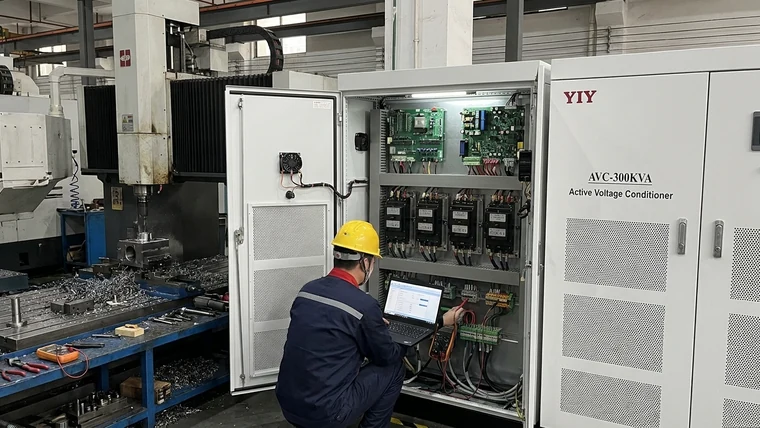
Technology Typical cost position Where it fits your load What you should check Relay stabilizer Often lower upfront cost Tolerant loads where wider output variation is acceptable Step correction, output tolerance, relay life, and nuisance switching Servo AVR / servo voltage stabilizer Usually mid-range Many industrial panels, pumps, compressors, and general machinery Servo motor, carbon brush access, bypass, dust protection, and ventilation IGBT/static AVR Usually higher cost CNC, automation, medical, test, or sensitive electronic equipment Thermal design, surge protection, service capability, and control-board support
YIY technical evidence places servo output precision at about ±0.5% to ±3%, with response time commonly described as ≤1-2 seconds. For you, that means a servo AVR can hold voltage more tightly than basic relay switching, but correction is still electromechanical rather than instant electronic switching.
Relay models are usually priced lower because the switching architecture is simpler. If your load can tolerate a broader voltage band, this may be acceptable. If your equipment is sensitive to voltage steps, frequent grid fluctuation, or phase imbalance, the lower price can create a higher operating risk.
IGBT/static regulation generally costs more because it uses faster power electronics, control boards, and stronger heat management. If your process stops are expensive, your grid changes sharply, or your equipment has tight voltage tolerance, the extra cost may be easier to justify.
When suppliers discuss voltage dips, interruptions, or sag behavior, ask how the unit was evaluated. IEC 61000-4-11 voltage dip testing is useful context for voltage dips, short interruptions, and voltage variation immunity. In practical procurement terms, this helps you ask better questions about ride-through behavior, alarms, and fault response instead of comparing only cabinet weight and kVA.
Which Load and Site Factors Push the Quote up or Down?
Your final quote changes when your real load, starting current, phase balance, and installation environment create more electrical or thermal stress. The same “20 kVA” label can represent very different hardware once your supplier sees the operating conditions.
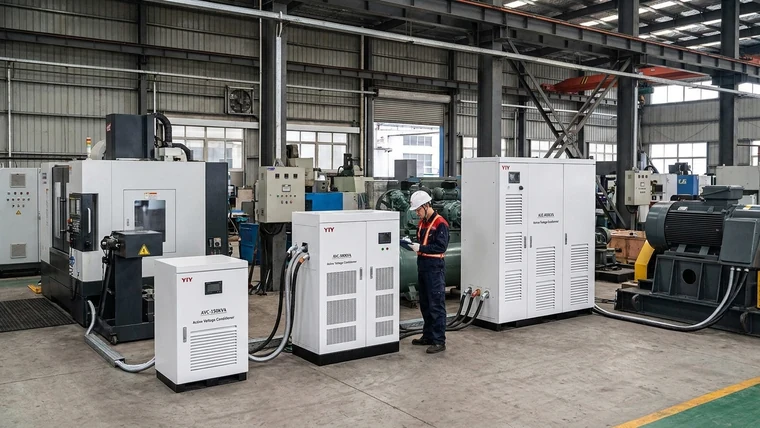
If your connected load is stable and well below 20 kVA, the specification may stay straightforward. If your load includes motors, compressors, pumps, welders, CNC machines, variable-frequency drives, or poor power factor, your stabilizer may need extra margin, heavier components, or stronger protection.
Factor Why it affects price What it means for you Running kVA Sets normal thermal stress You avoid paying for unnecessary capacity or undersizing the unit Power factor Apparent power rises when PF is low A 16 kW load at 0.8 PF already equals 20 kVA Starting current Motors can draw several times running current Extra margin helps prevent startup sag or trips Phase imbalance Uneven phase loading stresses regulation You may need better phase-wise protection and monitoring Input-voltage instability Wider correction requires more design margin A weak grid often costs more to stabilize safely Ambient temperature Heat reduces component life Cooling design and derating become important Dust and humidity Contamination and corrosion increase failure risk Enclosure, ventilation, and maintenance access matter
The formula kVA = kW / power factor is especially important. If your equipment is rated in kW, do not assume the same number in kVA. For example, 16 kW at 0.8 PF requires 20 kVA before any safety margin. In practical terms, a stabilizer sized exactly to the calculated number may have no room for starting current, future expansion, or temporary overload.
For deeper capacity-specific selection, use the 20kva voltage stabilizer guide when you move from price comparison into load matching. It helps you focus on whether this capacity tier is actually right for your application.
How Much Does Input-Voltage Range Affect the Stabilizer Quote?
A wider input-voltage range usually increases the quote because the stabilizer needs more correction capability, transformer margin, control range, and thermal headroom. If your supplier quotes without your measured voltage range, your price comparison is incomplete.
A stabilizer designed around a relatively stable grid is not the same as one built for frequent low-voltage or high-voltage operation. Public examples often list ranges such as 280-430 V or 295-465 V. Those numbers matter because a wider range generally means the unit must correct more aggressively and handle higher internal stress.
Reference standards help you check assumptions. IEC 60038 standard voltages provides standard voltage references, which is useful when you verify whether a stabilizer is designed around the correct grid expectation. For you, that means the ordered unit should match the actual supply system at your site, not only a catalog’s default voltage.
Before you accept a quote, collect at least a simple input-voltage log. If possible, capture normal production hours, motor starting periods, generator operation, and low-demand periods. A supplier can quote more accurately when you provide the low, high, average, and worst-case voltage readings instead of saying only “voltage fluctuates.”
What Should You Normalize Before Comparing Suppliers?
You should compare suppliers only after every quote is built around the same load data, input range, protection package, enclosure, documentation, warranty, and delivery scope. Otherwise, a cheaper offer may simply be missing the items your site requires.
Check Why it matters If you skip it Load list Confirms motors, CNC loads, pumps, compressors, panels, and expansion You may compare a real 20 kVA solution against an undersized cabinet kW, kVA, and power factor Converts actual demand into apparent power Your stabilizer may overload even when the kW number looks safe Starting current Shows startup stress The unit may trip or sag when motors start Input-voltage log Confirms whether you need standard, wide, or custom range You may overpay for unused range or miss a severe grid issue Output accuracy Matches topology to equipment tolerance Sensitive equipment may still see unstable voltage Correction speed Separates relay, servo, and static behavior Fast dips may remain a problem if speed is not suitable Protection functions Covers overload, short circuit, surge, phase loss, phase sequence, bypass, and alarms A manageable fault may become downtime Cooling and enclosure Matches dust, heat, humidity, and ventilation A low-cost unit may overheat or corrode early Manual and drawings Confirms terminals, earthing, settings, and maintenance Your commissioning team may lose time resolving mismatches Warranty and service Defines response, spare parts, and claim conditions Your operating risk remains unclear after purchase
A proper 20 kva stabilizer 3 phase manual should match your ordered configuration. Before acceptance, cross-check the terminal diagram, earthing requirement, input/output range, phase sequence, bypass operation, ventilation clearance, overload setting, maintenance interval, and protection thresholds.
For execution-level sizing, use 3 phase main line stabilizer sizing when you prepare the load list, starting-current notes, phase-balance checks, and safety margin. This helps you send suppliers the same technical basis instead of collecting inconsistent quotations.
How Should You Build an RFQ That Avoids Hidden Cost Gaps?
Your RFQ should make every supplier quote the same technical scope, so the final comparison is about value and fit rather than missing details. A short but complete RFQ can prevent most pricing confusion.
RFQ input What you should include Why it helps the supplier quote correctly Load data Connected load list, running kW/kVA, power factor, starting current Confirms whether 20 kVA is enough Grid data Measured input-voltage window, phase type, frequency, generator use Defines voltage correction range Application Motors, CNC, compressor, pump, medical, automation, or panel load Helps select relay, servo, or IGBT/static topology Site conditions Ambient temperature, dust, humidity, ventilation, indoor/outdoor location Determines enclosure and cooling needs Protection needs Overload, short circuit, phase loss, phase sequence, surge, bypass, alarms Prevents missing safety and downtime controls Documentation Test report, wiring diagram, manual language, certificate requirements Supports commissioning and procurement approval Commercial scope Packing, freight, taxes, warranty, spare parts, delivery time Makes landed-cost comparison fair
If you are comparing 20 kva 3 phase servo stabilizer price in India with China or global supplier references, normalize freight, taxes, after-sales support, customization, and documentation before you judge the number. A local listed price may exclude options, while an export quotation may include packing or customization. The opposite can also be true, so your RFQ must remove ambiguity.
For broader procurement structure, align your worksheet with industrial voltage stabilizer selection. That keeps your RFQ focused on application risk, voltage behavior, sizing margin, and long-term service instead of a single price line.
When Is a Servo 20 kVA Three-Phase Stabilizer the Better Fit?
A servo unit is often the better fit when your load needs better accuracy than relay regulation but does not require the fastest static correction. For many industrial users, this is why servo remains a practical middle option.
Choose servo when your application includes general machinery, production panels, pumps, compressors, and equipment that benefits from stable voltage but does not require millisecond-level correction. You should still verify input range, output tolerance, correction speed, bypass, brush access, servo motor serviceability, and enclosure protection.
Choose relay only when your load can tolerate broader voltage steps and your budget is the controlling factor. This may work for less sensitive equipment, but you should confirm that voltage variation will not cause overheating, process quality issues, nuisance trips, or premature component wear.
Choose IGBT/static regulation when your equipment is sensitive, your voltage dips are rapid, or downtime is expensive enough to justify a higher-cost design. This may be relevant for CNC systems, medical equipment, automation lines, testing equipment, or facilities with repeated fast fluctuations.
YIY’s capability evidence covers servo, relay, and IGBT options across a broad capacity range, with OEM/ODM support and global deployment experience. For your project, that matters because the right answer may not be the same topology for every site. The supplier should help you choose the regulator design around your voltage behavior and load tolerance.
What Acceptance Checks Should You Complete Before Purchase?
Your acceptance review should confirm that the quoted unit matches your actual load, voltage range, site conditions, protection expectations, and documentation requirements. This is where you prevent a low quote from becoming a commissioning problem.
Check Why it matters If you skip it Data plate review Confirms capacity, phase, voltage, frequency, and model You may receive a unit that does not match the RFQ Wiring diagram Confirms input/output terminals, neutral, earth, and bypass Installation errors become more likely Protection test notes Confirms overload, short circuit, phase loss, and alarms Fault behavior may be unclear Output accuracy statement Confirms expected regulation band Sensitive loads may remain exposed Cooling clearance Confirms installation space and airflow The cabinet may overheat in service Manual match Confirms the manual belongs to your configuration Maintenance and operation instructions may be wrong Warranty scope Confirms claim terms, spares, and service response Support expectations may be disputed later
If you are evaluating multiple capacity bands or want to understand how quote logic changes at higher ratings, use compare before buying a voltage stabilizer as a procurement comparison reference near your final shortlist stage. The same discipline applies: compare specification scope before comparing the headline number.
Frequently Asked Questions
How Should You Compare Pricing for 20 kva Stabilizer 3 Phase?
Compare pricing by normalizing the regulator type, continuous kVA rating, input-voltage window, output accuracy, correction speed, protection package, enclosure, cooling method, bypass, warranty, freight, taxes, and documentation. Your concrete verification action is to send every supplier the same RFQ table and ask them to mark included, optional, or excluded items line by line.
Is a Listed 20 kVA Stabilizer 3 Phase Price Enough to Compare Suppliers?
No. A listed price is only a budget reference. You should verify the data plate, wiring mode, input/output range, protection list, cooling design, quotation sheet, test report, manual, warranty terms, packing, freight, and tax scope. Ask for a configuration-specific manual or wiring diagram before you treat the price as procurement-ready.
Is a Servo AVR Always the Right Option for a 20 kVA Three-Phase Load?
No. Servo is often practical for general 20 kVA industrial loads because it balances accuracy, cost, and serviceability, but relay units may suit tolerant budget loads and IGBT/static AVRs may fit sensitive equipment needing faster correction. Verify your load tolerance, voltage fluctuation pattern, starting current, and downtime risk before choosing the topology.
What Information Should You Send to Get an Accurate Quote for This Capacity Tier?
Send your connected load list, running kW or kVA, power factor, starting current, phase type, frequency, measured input-voltage range, generator use, ambient temperature, dust and humidity conditions, enclosure needs, alarm or monitoring needs, and required certificates or manual language. If you have voltage logs or panel photos, add them after the first-pass fit check.
Final Thoughts
You should view a 20 kVA three-phase stabilizer quote as an engineering fit decision, not a simple product-price lookup. The final number depends on technology, input range, load behavior, starting current, phase balance, enclosure, protection, compliance evidence, documentation, and after-sales scope.
Your lowest-friction next step is to request a first-pass sizing review with YIY using only four basics: load list, starting current, input-voltage window, and installation conditions. If the fit looks close, you can then share voltage logs, panel details, and documentation requirements for a final quotation.
About YIY
Zhejiang Yiyen Holding Group Co., Ltd. (YIY) is a professional voltage stabilizer manufacturer with 16+ years of experience. With a 30,000sqm modern facility and an annual production capacity of 1,000,000+ units, YIY products are exported to 130+ countries. YIY provides OEM/ODM customization services and supports voltage protection projects across servo, relay, and IGBT stabilizer technologies.
Contact Us
Email: yiyen@yiyen.com Phone/WhatsApp: +86 13587452904 Website: https://www.yiyavr.com/