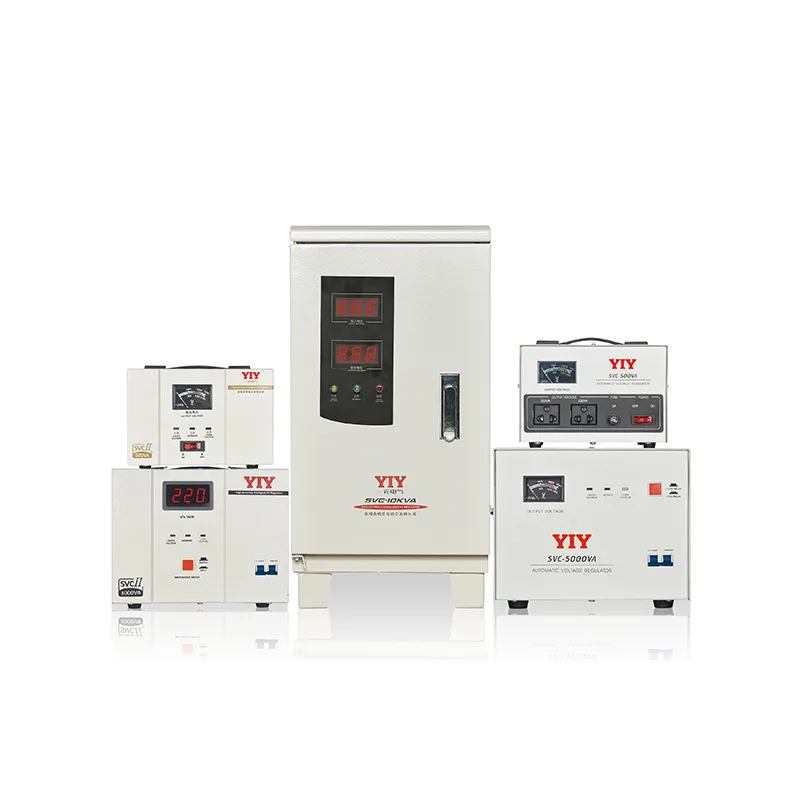
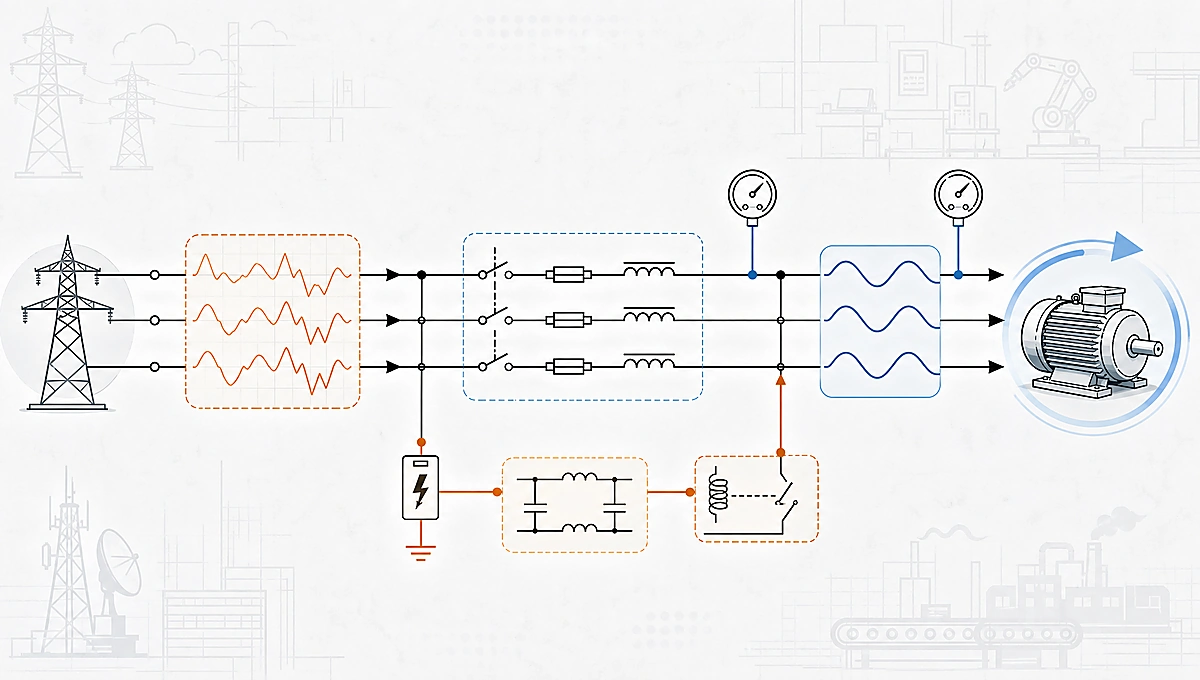
An automatic voltage stabilizer 5 kva is the right shortlist only when its 5,000 VA rating, input-voltage range, phase configuration, correction technology, protection functions, and supplier proof match your real load.
It is not automatically a 5,000 W stabilizer; your usable wattage depends on power factor, starting current, and how much safety margin your site needs.
This guide walks you through the key decisions: when this capacity tier fits, how to size it from site data, how relay, servo, and static AVR designs compare, what evidence to request from suppliers, and which final checks to complete before RFQ approval.
When Does an Automatic Voltage Stabilizer 5 kva Actually Fit?
You should consider this capacity tier when your connected load is small enough for 5,000 VA but sensitive enough that low voltage, high voltage, dips, or generator fluctuation can cause resets, overheating, nuisance trips, or service complaints.
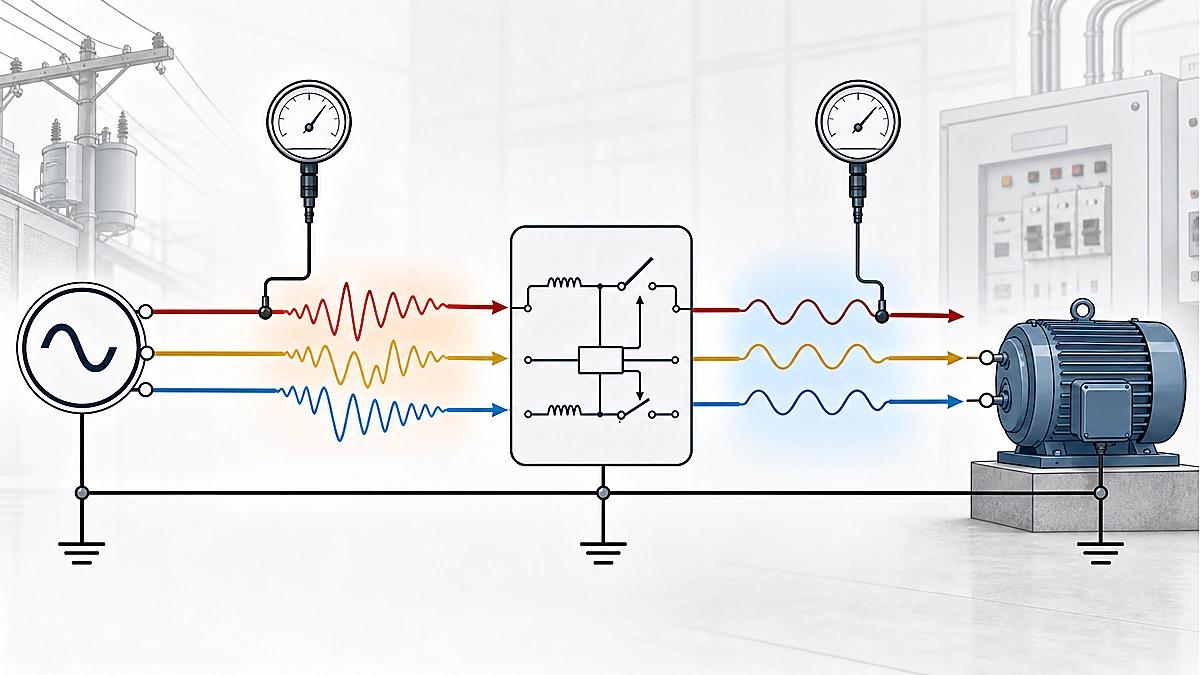
An automatic voltage stabilizer, automatic voltage regulator, AVR, and AC voltage stabilizer are closely related terms for equipment that senses input-voltage variation and corrects the output toward a usable range. For you, the practical value is not the name; it is whether your equipment receives steadier voltage during the worst supply conditions.
IEC 60038 defines nominal system voltage references through IEC 60038 standard voltages.
That matters because your stabilizer selection should start from measured voltage behavior, not only from a nominal 220 V, 230 V, or 240 V label.
A 5 kVA automatic stabilizer is usually worth evaluating when you see:
- Low voltage during peak demand
- High voltage during light-load periods
- Generator overshoot or unstable generator output
- Voltage dips that reset controls, POS systems, PLCs, routers, or small UPS units
- Starting-current sag from pumps, compressors, motors, fans, or refrigeration loads
- Repeat complaints from small workshops, retail sites, OEM panels, or light industrial equipment
The key formula is simple: watts = VA x power factor. A 5 kVA stabilizer provides 5,000 VA; at 0.8 power factor, that is about 4,000 W before additional margin. In practical terms, your load can exceed the safe operating zone even when the catalog rating looks large enough.
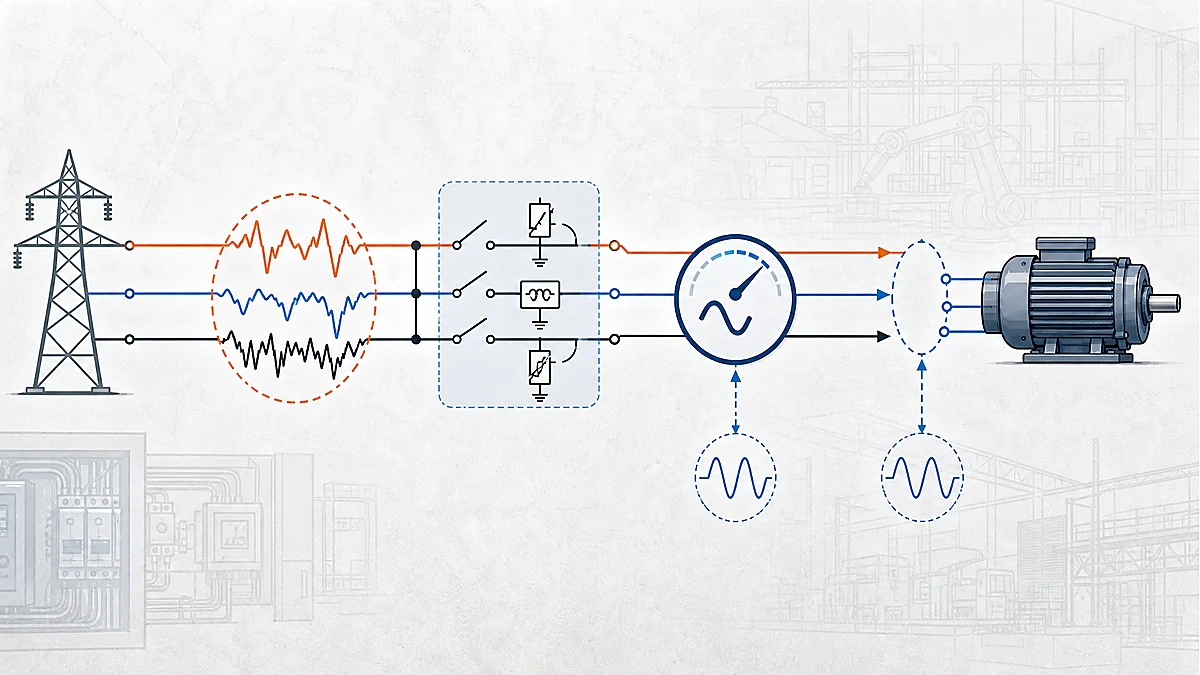
How Should You Size a 5 kVA Stabilizer from Your Site Data?
You should size the stabilizer from your load list, starting current, measured input-voltage window, phase configuration, protection needs, and installation environment. That keeps your RFQ grounded in real operating conditions instead of a generic capacity label.
Start with the connected equipment. Resistive loads, electronics, compressors, motors, transformer-fed panels, HVAC equipment, and mixed commercial loads behave differently. A resistive load may be predictable, while a motor or compressor can draw several times its running current during startup. For you, that means the running wattage is only one part of the sizing decision.
| Sizing Check | What You Verify | What It Means for You |
|---|---|---|
| Connected load list | Device nameplates, rated current, wattage, VA, and duty cycle | You avoid buying a unit that fits one device but not the whole panel |
| Power factor | Whether the load is near 1.0 PF, 0.8 PF, or lower | You convert 5,000 VA into realistic usable watts |
| Starting current | Motor, compressor, pump, HVAC, and transformer inrush | You reduce startup trips, sag, relay chatter, and overload events |
| Input-voltage window | Real minimum and maximum voltage at the site | You confirm the AVR can correct the actual grid problem |
| Output target | Required output voltage and accuracy | You protect sensitive electronics from remaining instability |
| Phase configuration | Single-phase or three-phase distribution | You avoid protecting only part of the installation or choosing the wrong architecture |
| Environment | Heat, dust, humidity, ventilation, enclosure, and IP needs | You reduce overheating, contamination, and service-life risk |
If your site is single-phase and the running load is modest, a 5 kVA single-phase AVR may be enough. If your load is distributed across three phases, includes unbalanced motors, or is part of a main-line panel, your next step should include 3 phase main line stabilizer sizing so you do not force a single-phase solution into a three-phase problem.
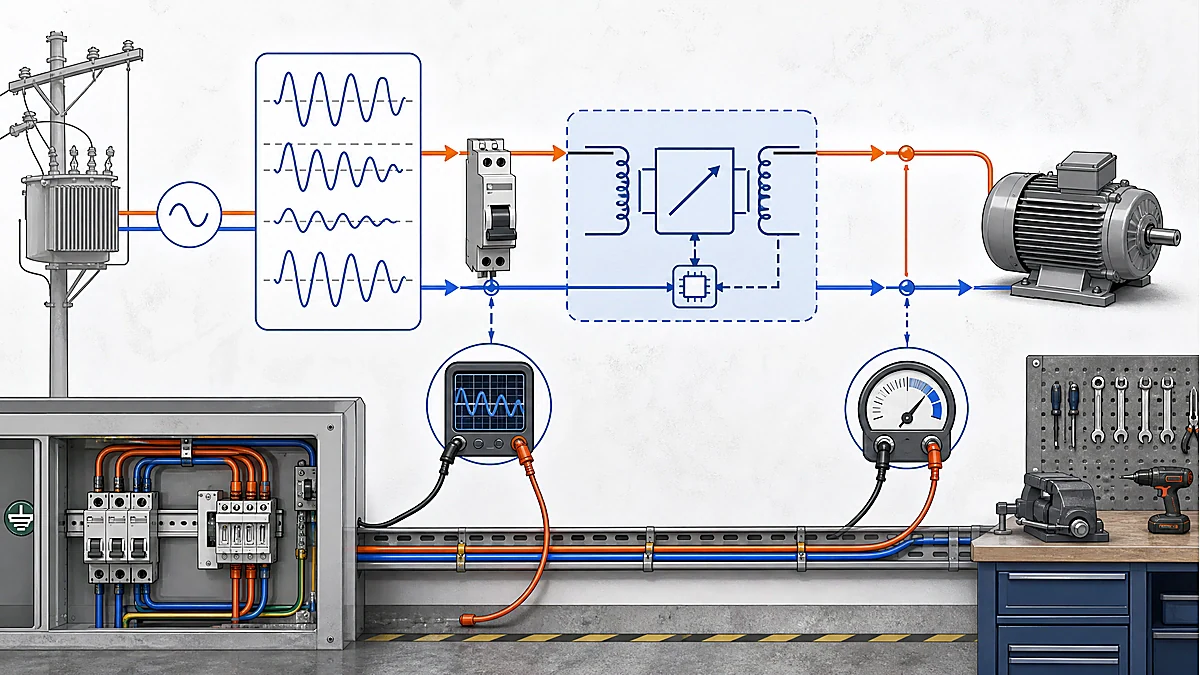
For broader industrial projects, use a structured industrial voltage stabilizer selection process and share your load list, starting current, voltage records, installation temperature, enclosure constraints, and service expectations. That gives your supplier enough information to recommend a 5 kVA unit, a larger single-phase model, or a three-phase stabilizer with fewer assumptions.
Which Technology Fits Your Precision, Budget, and Maintenance Requirements?
You should compare relay, servo, and static AVR designs by correction method, response behavior, output accuracy, service profile, and total sourcing risk. The right answer is not always the most expensive technology; it is the design that matches how sensitive your load is and how unstable your supply becomes.
| AVR Design | How It Corrects Voltage | Typical Fit | Main Advantage | Main Caution |
|---|---|---|---|---|
| Relay stabilizer | Switches transformer taps through relays | Basic appliances, lighting, less sensitive loads | Lower initial cost | Step changes, relay wear, and wider regulation tolerance |
| Servo voltage stabilizer 5 kva | Uses motor-driven correction with a buck-boost transformer or variac arrangement | Small workshops, POS systems, pumps, mixed commercial panels, light industrial loads | Balanced cost, smoother correction, and field serviceability | Moving parts, brush or motor maintenance, slower than static correction |
| Static / IGBT stabilizer | Uses power electronics for fast correction | CNC controls, testing equipment, precision electronics, unstable grids | Fast response and tighter control | Higher cost, heat management, and electronic repair capability |
A relay stabilizer can work when your load tolerates stepped correction and moderate output variation. If your equipment includes simple resistive loads or less sensitive devices, this may be enough. If your load includes control boards, electronics, communication equipment, or frequent dips, relay-only correction may leave too much risk.
A servo design often sits in the practical middle for this capacity tier. You get smoother regulation than relay switching, wider usefulness across mixed loads, and a service model that many technicians understand. For you, a servo unit can make sense when you want a balance of price, correction quality, and maintainability rather than the lowest possible purchase cost.
Static or IGBT designs are better when response speed and tighter output control matter more than upfront budget. If your site has unstable utility power, generator fluctuation, or equipment that trips during short dips, the faster correction may justify the additional cost.
If a 5 kVA unit becomes too tight after you add future loads, do not stretch the rating. Compare the sizing logic against a larger tier such as a 20kva voltage stabilizer so your next project does not inherit the same capacity problem.
What Protection Functions Should Your RFQ Require?
You should require protection functions that match your fault conditions: high-low voltage cut-off, overload protection, delay restart, manual or automatic bypass, thermal protection, alarms, display visibility, and surge protection where the site needs it.
Protection is where a low-price quote can become expensive later. A stabilizer that corrects voltage under normal conditions may still fail your application if it does not respond properly to overload, severe undervoltage, repeated dips, heat, or humidity. Your specification should make these requirements visible before the quote is approved.
| Function | Why It Matters | If You Skip It |
|---|---|---|
| High-low voltage cut-off | Disconnects output during unsafe voltage conditions | Your equipment may still see damaging voltage outside the correction range |
| Delay restart | Protects compressors, refrigeration, and motor loads after interruptions | Restart stress and nuisance trips become more likely |
| Overload protection | Prevents sustained operation beyond rated capacity | Transformer heating and premature failure risk increase |
| Bypass | Allows maintenance or emergency continuity depending on design | Service work may require longer shutdowns |
| Display and alarms | Shows voltage, load, fault, or status conditions | Your maintenance staff may not know what happened during a trip |
| Surge protection | Helps limit transient events when specified correctly | Boards and electronics remain exposed to damaging spikes |
| Thermal protection and ventilation guidance | Keeps internal temperature within design limits | Heat can shorten service life even when electrical sizing is correct |
IEC 61000-4-11 covers IEC 61000-4-11 voltage dip and interruption immunity testing.
For your buying decision, this does not mean every stabilizer is certified to that standard; it means dips and short interruptions are real test conditions, so you should ask how the supplier’s product behaves during similar site events.
What Supplier Proof Should You Request Before Purchase?
You should request datasheets, wiring diagrams, factory test evidence, quality-system documentation, warranty terms, spare-parts policy, and application support before comparing the 5 kva voltage stabilizer price. A low quote is only useful when the unit can be built, tested, shipped, installed, and supported consistently.
Ask for traceable quality evidence. ISO 9001:2015 defines requirements for ISO 9001:2015 quality management systems, so it helps you evaluate whether a supplier has repeatable process controls rather than relying on one good sample.
For B2B sourcing, your supplier screen should include:
| Check | Why It Matters | If You Skip It |
|---|---|---|
| Full datasheet | Confirms capacity, input range, output accuracy, frequency, phase, response, cooling, and duty cycle | You may approve a quote that hides important limits |
| Wiring diagram | Helps panel builders and installers verify connection requirements | Installation errors and commissioning delays become more likely |
| Factory test process | Shows how voltage range, load, protection, and output are checked | You rely on catalog claims without inspection evidence |
| Quality-system proof | Supports repeatability across batches | Your second or third order may not match the sample |
| Customization ability | Covers regional voltage, branding, enclosure, alarm, plug, or OEM/ODM needs | You may need field modifications after delivery |
| Warranty and spare parts | Defines support after installation | Downtime risk increases when parts or service routes are unclear |
| Export and packaging experience | Reduces shipping, documentation, and compliance friction | Damage, delays, and incomplete paperwork can affect rollout |
YIY brand materials state 30,000 square meters of facility space, 1,000,000+ units of annual capacity, exports to 130+ countries, 120+ long-term partners, ISO 9001:2015, and a 99.5%+ factory pass rate. Last verified: 2026-05-29.
When you compare suppliers, use evidence instead of brand visibility alone. A useful starting point is YIY’s guide to evaluating industrial voltage stabilizer manufacturers, especially if your order may later expand into OEM, ODM, regional voltage customization, or repeat procurement.
How Should You Compare Price Without Choosing the Wrong Unit?
You should compare voltage stabilizer 5 kva price only after the electrical scope, protection package, environment, and supplier evidence are aligned. Otherwise, you may be comparing different products under the same capacity label.
A cheaper relay model, a servo stabilizer, and a static AVR may all appear under the same 5 kVA search result, but they do not carry the same correction behavior, component cost, service profile, or application fit. For you, the fairest comparison is an RFQ sheet where every supplier answers the same technical questions.
Use this order:
- Confirm your load list and power factor.
- Add starting-current and future-load margin.
- Verify measured input-voltage minimum and maximum.
- Confirm single-phase or three-phase requirements.
- Choose relay, servo, or static topology.
- Specify protection functions and bypass needs.
- Add environment requirements such as heat, dust, humidity, ventilation, and enclosure.
- Compare warranty, spare parts, lead time, and test evidence.
- Review freight, packaging, regional voltage customization, and documentation.
- Only then compare price.
This order protects your budget because it prevents a low voltage stabilizer 5 kva price from hiding missing protection, weak correction range, undersized components, or poor after-sales support.
What Final Decision Checklist Should You Use Before Approval?
You should approve the stabilizer only after every critical sizing, protection, and supplier-evidence check has a clear answer. This is the point where your procurement file should turn from “best price” into “best fit for this load.”
| Check | Why It Matters | If You Skip It |
|---|---|---|
| 5,000 VA capacity confirmed against real load | Prevents overload from power factor or hidden connected loads | The AVR may overheat or trip under normal operation |
| Starting current reviewed | Motors and compressors can exceed running current during startup | The stabilizer may sag, chatter, or trip at startup |
| Input range matches measured site voltage | Correction must cover the actual low and high voltage window | The unit may stop regulating when you need it most |
| Phase type confirmed | Single-phase and three-phase applications require different design logic | You may protect the wrong circuit or under-size the system |
| Topology selected by load sensitivity | Relay, servo, and static designs suit different fault conditions | You may overpay or under-protect the application |
| Protection functions listed in RFQ | Cut-off, delay, bypass, overload, alarms, and surge options reduce field risk | Important features may be missing from the final quote |
| Supplier proof collected | Datasheets, tests, warranty, spare parts, and QA evidence support repeat buying | You may struggle with service, replacements, or batch consistency |
| Installation environment reviewed | Heat, dust, humidity, and ventilation affect service life | A correctly sized unit may still fail early |
| Future expansion checked | Extra loads may push the system beyond 5 kVA | You may need a replacement sooner than expected |
If you are comparing larger industrial RFQs later, YIY’s guide to compare before buying a voltage stabilizer gives you a useful higher-capacity decision structure. The same logic applies here: your best quote is the one that proves fit, not merely the one with the lowest line item.
Frequently Asked Questions
How Much Power Can a 5 kVA Stabilizer Handle?
A 5 kVA stabilizer handles 5,000 VA, not automatically 5,000 W. Use watts = VA x power factor; at 0.8 PF, usable real power is about 4,000 W before margin. Verify each equipment nameplate, add motor or compressor starting current, and keep spare capacity so your stabilizer is not running at its limit.
How Long Does a 5 kVA Stabilizer Last?
A 5 kVA stabilizer can last several years when it is correctly sized, ventilated, and maintained. Service life depends on load percentage, ambient heat, dust, humidity, fluctuation severity, topology, and maintenance quality. Before you buy, verify the operating temperature range, duty cycle, cooling method, warranty term, spare-parts availability, and brush or relay maintenance interval where applicable.
Which Company Is Best for Servo Stabilizers?
The best servo stabilizer company is the one that proves application fit, quality control, and after-sales support for your market. Ask for a datasheet, wiring diagram, factory test process, ISO 9001 evidence, warranty terms, spare-parts policy, and proof of similar load or voltage-range experience. Your verification action is simple: send the same RFQ sheet to each supplier and compare their evidence side by side.
What Are the Common Problems with Stabilizers?
Common stabilizer problems include undersizing, overheating, relay chatter, slow correction, loose terminals, worn carbon brushes, unstable output, nuisance trips, and board damage from surge, dust, or humidity. Before approval, ask the supplier to verify overload cut-off, high-low voltage protection, surge protection, ventilation clearance, alarm display, and maintenance instructions in writing.
Is a Servo Voltage Stabilizer 5 kva Better Than a Relay Model?
A servo model is usually better when your load needs smoother correction, tighter output control, and better suitability for mixed commercial or light industrial use. A relay model can still fit basic loads where step regulation is acceptable. Your decision should be based on load sensitivity, voltage fluctuation severity, maintenance expectations, and budget.
Final Thoughts
You get the best result when you treat a 5 kVA stabilizer as an engineered fit, not a catalog shortcut. The right unit must match your VA demand, usable wattage, starting current, voltage range, phase setup, correction technology, protection functions, environment, and supplier support.
Before you request a detailed quotation, start with a quick fit review: load list, starting current, measured input-voltage window, phase configuration, installation conditions, and required protection functions. YIY can review those basics first and help you decide whether this capacity tier, a larger single-phase AVR, or a three-phase stabilizer is the more reliable path.