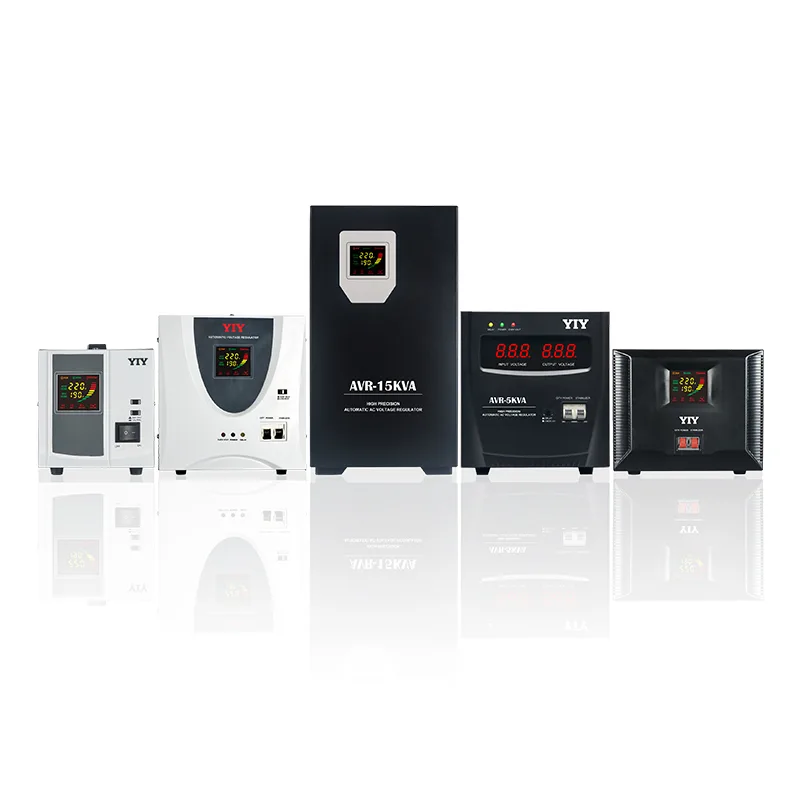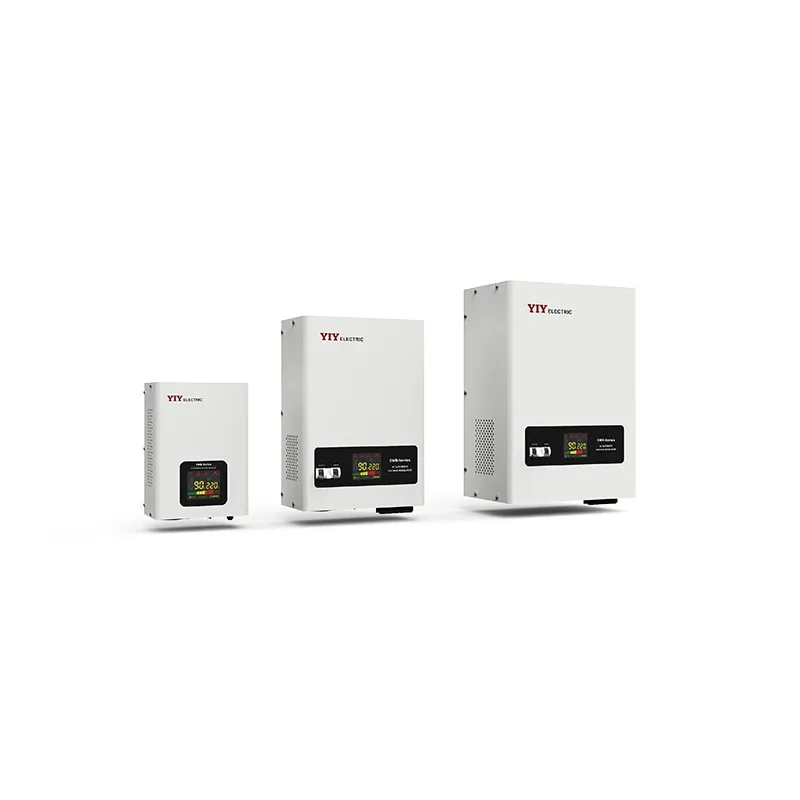
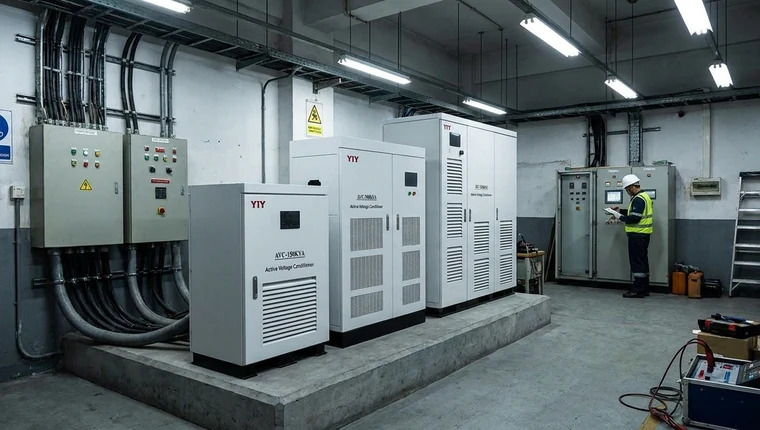
For most unstable-grid homes, offices, shops, hotels, and display rooms, the best stabilizer for 65 inch LED TV use is usually a servo unit. Relay units fit moderate fluctuation; IGBT/static AVR units fit premium or business-critical displays.
Check three things: how unstable your input voltage is, how much your TV and accessories draw, and whether you also need backup power during outages.
When Does Your 65-Inch LED TV Actually Need a Stabilizer?
You need a stabilizer when your incoming voltage is frequently low, high, unstable, generator-backed, or shared with heavy loads that cause visible dips and trips. If your wall voltage stays inside the TV’s rated input range and your local supply is stable, your modern LED or smart TV may not need an external stabilizer at all.
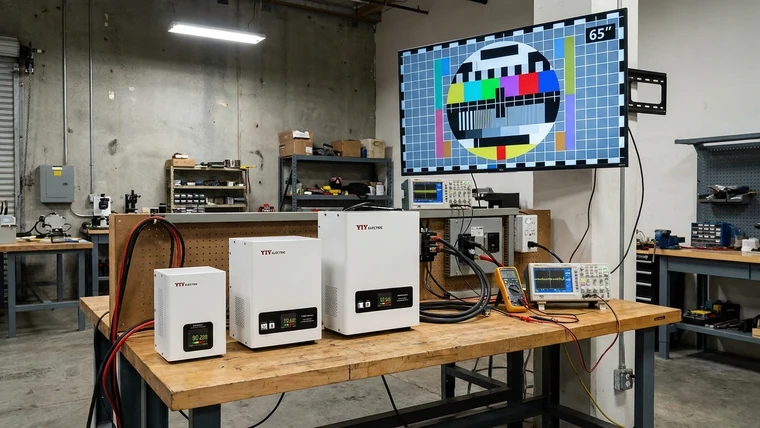
A stabilizer for 65 inch LED TV use is not a power booster. It is an automatic voltage regulation device installed before your TV and connected electronics, such as a set-top box, soundbar, media player, router, or signage controller. Its job is to keep the output voltage closer to a safe operating band before the power reaches your display electronics.
Your decision should be based on measured site conditions, not just screen size. A 65-inch LED, 4K, or OLED TV may have built-in protection, but that protection is not the same as site-level voltage control. If you see repeated brownouts, overvoltage, generator changeover events, or nuisance shutdowns during peak evening load, an external AVR or stabilizer becomes much more relevant.
Nominal supply references are commonly framed around IEC 60038 standard voltages, which defines standard voltage values for public low-voltage supply systems. In practical terms, this means you should compare your measured wall voltage against your local nominal supply and the TV’s rated input range; if your supply often falls far outside that range, built-in TV protection should not be your only defense.
Which Is the Best Stabilizer for 65 Inch LED TV: Relay, Servo, IGBT/Static AVR, or UPS?
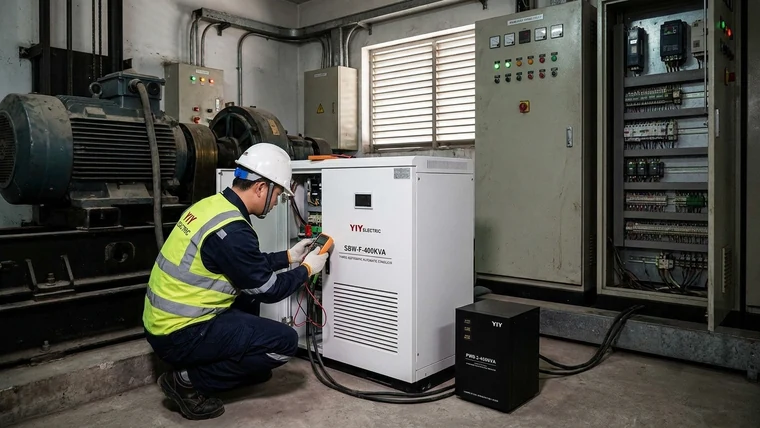
For most 65-inch LED TV installations, choose a servo voltage stabilizer; choose relay only for basic budget protection, and choose IGBT/static AVR when the display is premium, generator-backed, or business-critical. A UPS is a separate decision because it provides backup time, not just voltage regulation.
| Option | Typical regulation / response profile | Best fit for you | Main limitation | What to verify before buying |
|---|---|---|---|---|
| Relay stabilizer | Often around ±5–8% output accuracy; tap switching can be fast | Basic TV protection where voltage swings are moderate | Stepped correction, less precise output | High/low cut-off, delay timer, surge protection, rated input range |
| Servo voltage stabilizer | Often around ±0.5–3% output accuracy; correction commonly around ≤1–2 s | Premium LED/4K TV, home theater, shops, offices, hotels | Slower than static AVR for very fast disturbances | Load rating, input range, bypass, overload protection, service access |
| IGBT/static AVR | Can reach about ±0.5% output accuracy with response often <20 ms in suitable designs | OLED wall, digital signage, control room, generator-backed display | Higher cost and more detailed specification work | Waveform quality, bypass, alarms, event logging, thermal design |
| UPS with AVR | Depends heavily on model; backup time depends on battery | Short outages, safe shutdown, router/streaming continuity | Not every UPS regulates tightly or outputs ideal waveform | Sine-wave output, transfer behavior, AVR range, battery runtime |
These figures mean something practical for you. A relay unit may be enough if your voltage only moves moderately and you want affordable protection. A servo stabilizer gives smoother, tighter correction for a valuable TV and connected electronics. An IGBT/static AVR reacts faster and regulates more tightly, which matters when disturbances happen in milliseconds or the display cannot go offline.
A UPS vs stabilizer for LED TV comparison should start with the problem you are solving. If your issue is voltage fluctuation while power is still available, your primary device is a stabilizer or AVR. If your issue is power outage and you want your TV, router, or media system to stay on briefly, you need a UPS.
Some UPS models include AVR, but you should still verify output voltage range, waveform quality, transfer time, and battery runtime instead of buying by brand name alone.
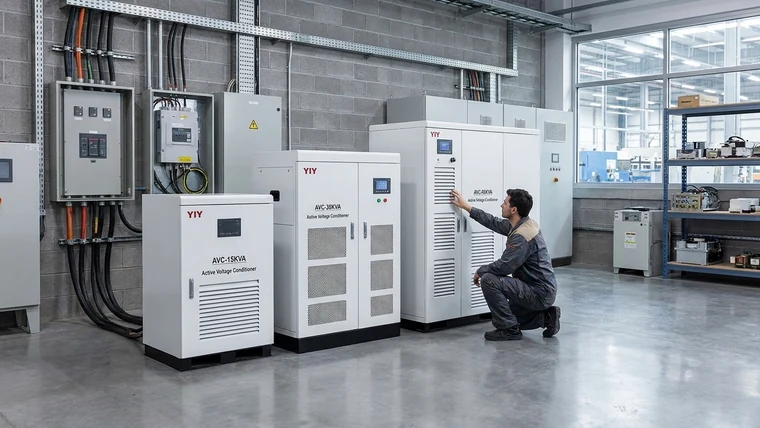
For higher-capacity applications, the same selection logic scales into larger systems. If your project expands from one TV outlet into many screens, office AV racks, or commercial display circuits, a 20kva voltage stabilizer guide can help you understand how capacity, input range, protection design, and application sensitivity change as loads grow.
How Do Response Time, Output Accuracy, and Input Range Protect Your TV?
Your stabilizer protects your TV by regulating output voltage, disconnecting during unsafe conditions, and reducing repeated stress on the TV power board and accessories. The practical question for you is not simply whether the TV turns on; it is whether the unit can handle the voltage behavior your site actually produces.
| Spec to check | What it means technically | What it means for you |
|---|---|---|
| Input voltage range | The low and high voltage the stabilizer can accept before cut-off | A wider range helps if your feeder, generator, or local grid sags heavily |
| Output accuracy | How close the output stays to the target voltage | Tighter accuracy keeps your TV and accessories closer to their intended supply |
| Response time | How quickly the unit corrects a voltage change | Faster response helps when dips or spikes occur suddenly |
| High/low cut-off | Disconnection when input voltage becomes unsafe | Your TV is not exposed when correction is no longer safe |
| Delay timer | Wait time before reconnecting after an outage | Your TV avoids rapid on/off cycling during unstable restoration |
| Overload protection | Protection when connected load exceeds rating | Your stabilizer is less likely to overheat or trip unexpectedly |
Voltage disturbances such as dips, short interruptions, and variations are commonly evaluated in equipment immunity contexts under IEC 61000-4-11 voltage dip and interruption immunity testing. For you as a buyer, the takeaway is simple: a stabilizer should behave predictably not only when power is normal, but also when your incoming supply becomes unstable.
Output accuracy matters because your TV, soundbar, router, and media devices use electronic power supplies. A broad stepped correction may still keep the TV working, but tighter regulation reduces unnecessary electrical stress. If you own a premium 4K or OLED display, or if the screen is used for signage or business operations, the value of tighter regulation increases.
Response time matters most when your voltage changes suddenly. Air conditioners, pumps, elevators, generators, and weak shared feeders can create rapid voltage events. Relay stabilizers can switch quickly but in steps. Servo units correct smoothly but may take longer. IGBT/static designs are often selected when you want faster electronic correction.
Input range is just as important as accuracy. A stabilizer with good output accuracy but a narrow input range may cut off too often in a weak-grid area. For your site, record low and high wall voltage during peak hours, generator transfer, and heavy-load startup; then compare those numbers with the stabilizer data sheet.
How Much Voltage Stabilizer Is Required for an LED TV?
You should size the stabilizer from the TV nameplate wattage plus all connected accessories, then add a safety margin instead of choosing only by “65-inch” or “55-inch.” Many small TV setups are below 1 kVA, but bundled electronics, commercial screens, or multi-display installations may need more headroom.
Start with the load list:
- 65-inch LED or 4K TV
- Set-top box or satellite receiver
- Soundbar or AV receiver
- Wi-Fi router or streaming device
- Media player, signage controller, or mini PC
- Any shared accessories connected to the same protected outlet
The basic sizing logic is:
Total watts ÷ power factor = approximate VA
Then choose a stabilizer rating above that calculated VA so the unit is not running continuously at its limit. In practical terms, this gives your stabilizer breathing room for accessory additions, heat, short load changes, and real-world operating conditions.
For example, if your TV and accessories draw 400 W and you assume a 0.8 power factor, the estimated apparent power is 500 VA. You would not want to buy a unit that runs at exactly 500 VA all day; you would select a rating with a practical margin based on the manufacturer’s data sheet and your environment.
For residential use, a compact relay or servo unit may be enough if your measured voltage range is moderate. For commercial display groups, hotels, classrooms, showrooms, or offices with multiple screens, your selection may move from a single outlet stabilizer toward a main-line or distribution-level solution. If your installation involves several rooms or a three-phase supply, use a 3 phase main line stabilizer sizing approach so your load calculation, phase arrangement, and protection strategy match the real installation.
The same method used in voltage stabilizer selection applies here. The safest purchase is not the largest unit you can afford; it is the unit sized for your measured load and voltage range.
What Should You Check Before Choosing a TV Stabilizer Supplier?
You should shortlist a supplier only after you verify load sizing, input range, protection features, certification evidence, serviceability, and application fit. Price matters, but your bigger risk is buying a unit that looks acceptable online and then fails to match your voltage behavior on site.
| Check | Why it matters | If you skip it |
|---|---|---|
| TV and accessory wattage | Your stabilizer must cover the TV, soundbar, set-top box, router, and media devices | You may undersize the unit and trigger overload trips |
| Measured input voltage | Your actual low/high voltage determines the required input range | The stabilizer may cut off too often or fail to protect during extremes |
| Output accuracy | Premium displays benefit from tighter voltage control | You may buy basic stepped correction when smoother regulation is needed |
| Response time | Fast dips and spikes require faster correction | Your TV may still experience stressful voltage events |
| Protection stack | High/low cut-off, delay, overload, surge protection, bypass, and alarms reduce risk | A single event may become a service call |
| Environment fit | Heat, dust, humidity, wall cabinets, and coastal air affect service life | Poor ventilation or corrosion may shorten stabilizer life |
| Certification and quality proof | Test reports, warranty terms, and ISO 9001 quality management systems evidence help you verify manufacturing control | You compare brochures instead of documented quality practices |
| Service and spare parts | Your project may need maintenance support after installation | A low-cost purchase can become expensive downtime |
A concrete verification action is useful here: ask the supplier for the exact model data sheet, rated input range, output accuracy, overload rating, protection functions, warranty terms, and any test report or quality-system certificate before purchase. If you are buying for a hotel, school, office, retail chain, or signage project, request a written match between your measured voltage range and the proposed model.
Supplier positioning can also help you filter options. Some brands focus on retail TV stabilizers, some on UPS-style backup with AVR features, and some on industrial or outdoor power conditioning. YIY is positioned more toward precision voltage stabilizer ranges, servo and IGBT/static options, OEM/ODM capability, and export-oriented application support.
If supplier capability is part of your decision, compare documentation and manufacturing proof instead of relying only on brand familiarity. A guide to evaluating industrial voltage stabilizer manufacturers can help you structure supplier questions around production control, customization, certification, testing, service, and export experience.
Which Option Should You Choose for Your Use Case?
You should choose the least complex stabilizer that reliably handles your actual voltage risk, display value, and uptime requirement. In other words, do not overbuy an IGBT/static AVR for a stable-grid living room, but do not underbuy a basic relay unit for a premium display wall on a generator-backed supply.
| Your situation | Better fit | Why it fits |
|---|---|---|
| Stable urban supply, occasional minor fluctuation | Relay or compact servo | Basic protection may be enough if measured voltage is not severe |
| Premium 65-inch LED or 4K TV in an unstable area | Servo stabilizer | Better balance of output accuracy, cost, and reliability |
| OLED TV, high-end home theater, or business-critical display | Servo or IGBT/static AVR | Tighter regulation and stronger protection features become more valuable |
| Retail signage, hotel lobby, control room, or AV room | Servo or IGBT/static AVR with alarms | Downtime affects operations, not just entertainment |
| Frequent short outages | UPS with AVR, possibly plus stabilizer | Backup time becomes necessary in addition to regulation |
| Multi-room or multi-screen installation | Main-line stabilizer or distribution-level design | Centralized protection may be more practical than many small units |
For a single TV in a home, a compact stabilizer may be enough if the voltage range is moderate. For a business display, your decision should include downtime cost, service access, monitoring, and whether someone can see alarms quickly. For a generator-backed site, pay closer attention to input range, waveform behavior, bypass, and fast protection.
The best stabilizer for LED TV use is therefore not a universal model. It is the model whose rated range and protection design match your wall voltage, accessory load, and uptime expectations.
What Final Procurement Checks Should You Complete Before Buying?
You should complete a short acceptance review before approving any stabilizer order. This helps you move from “it should work” to “we verified that it fits our load and voltage risk.”
| Check | Why it matters | If you skip it |
|---|---|---|
| Confirm TV input rating | Your TV label or adapter shows the allowed voltage range | You may buy protection you do not need, or miss a real risk |
| Log wall voltage | Peak-hour and generator-transfer readings reveal real conditions | You may choose the wrong input range |
| Add all connected loads | Accessories can materially change the total load | You may undersize the AVR |
| Compare VA/kVA rating | The unit must carry the load with margin | Running near limit increases heat and nuisance trips |
| Verify protection functions | Cut-off, delay, overload, surge protection, bypass, and alarms reduce damage risk | One abnormal event may pass downstream |
| Review supplier proof | Data sheets, test reports, warranty, and quality evidence support the claim | You may rely on marketing copy only |
| Check service path | Spare parts, response time, and technical support matter after installation | Small failures may create long downtime |
For larger commercial procurement, do not treat a TV stabilizer as an isolated accessory. Compare the total application risk, specification evidence, and support model. Before issuing a purchase order, it is worth using a structured framework to compare before buying a voltage stabilizer, especially when several suppliers quote different technologies, tolerances, and protection packages.
Which Protection and Installation Checks Matter for a TV Stabilizer?
Check protection logic before brand. Regulation corrects moderate fluctuation; cutoff disconnects the TV when input leaves the safe window; restart delay stops repeated power cycling after load shedding or a generator transfer. A surge strip only clamps short spikes and does not correct sustained low or high voltage.
| Supply risk | Effect on the TV setup | Feature to verify |
|---|---|---|
| Undervoltage / brownout | Flicker, resets, unclean start | Wide input range, low-voltage cutoff |
| Overvoltage | Stress on the power board and capacitors | High-voltage cutoff, surge suppression |
| Short interruption or generator changeover | Repeated off/on cycling | Restart delay, abnormal input detection |
| Overload | Stabilizer overheats or trips | Overload and thermal protection |
Before first use, match the TV and stabilizer voltage, add up the connected accessory load, confirm grounding, leave airflow clearance in AV cabinets, and test how the unit restarts after an outage. The same checks apply to branded sets such as Samsung, LG, or Sony: compare the maker’s rated input range with your measured socket voltage.
For a portable relay unit sized for a TV and its accessories, see the YIY PR portable single-phase relay voltage stabilizer; confirm the capacity on that product page against your measured load.
Frequently Asked Questions
Do You Really Need a Stabilizer for TV?
You need a stabilizer only when your incoming voltage is unstable or outside the TV’s rated input range. Check your TV rear label or adapter input range, then measure wall voltage during peak evening load, generator changeover, or heavy appliance startup. If voltage stays stable inside the allowed range, built-in protection may be enough.
What Is the Purpose of a Stabilizer on a TV?
A TV stabilizer regulates abnormal input voltage before it reaches the TV power board and connected accessories. For your purchase check, look for high/low cut-off, time delay, overload protection, surge protection, rated input range, and output accuracy on the data sheet.
Does a 55-Inch TV Need a Stabilizer?
A 55-inch TV does not need a stabilizer based on size alone. You should check the TV wattage, adapter input range, local voltage stability, and connected accessories such as a soundbar, set-top box, router, or media player. The same selection logic used for a 65-inch TV applies to 50-inch and 55-inch TVs.
Does a 4K TV Need a Stabilizer?
A 4K TV does not need a stabilizer simply because it is 4K. It needs protection when your supply is unstable, the display is expensive, or downtime matters in a shop, hotel, office, classroom, or signage setup. For premium 4K or OLED displays, compare relay, servo, and IGBT/static AVR options by input range, output accuracy, response time, and protection features.
How Much Voltage Stabilizer Is Required for an LED TV?
Size an LED TV stabilizer from the TV wattage plus connected accessories, then add a practical margin. Bundled audio, media controllers, or several screens raise the total, so check the sum against the rated output on the data sheet.
Final Recommendation
For your 65-inch LED TV, choose relay if you only need affordable basic protection under moderate fluctuation. Choose servo if you want the best general-purpose balance for unstable-grid homes, offices, hotels, and shops. Choose IGBT/static AVR if your display is premium, generator-backed, or business-critical and you need faster, tighter voltage regulation.
Your next step: list the TV and accessory watts, record your low/high wall voltage, and compare them with the stabilizer data sheet. Dealers and wholesale buyers can send model and quantity needs through the YIY contact page.