Grid instability and transient voltage spikes silently degrade enterprise workstations, shortening hardware lifecycles and inflating IT maintenance budgets. When procurement teams shortlist a pc voltage stabilizer for distributed fleets or engineering labs, the specification decision directly dictates long-term asset reliability and total cost of ownership. Selecting an undersized or mismatched unit guarantees premature board failure, while overengineering traps capital in idle capacity.
This guide translates vendor marketing claims into a structured commercial evaluation process. We will expose the hidden operational costs of unmanaged power events, contrast the technical tradeoffs across relay, servo, and IGBT circuit architectures, and map out exact load calculations, input tolerances, and compliance standards needed to confidently approve a purchase order. By focusing on verified engineering metrics rather than generic promotional datasheets, technical buyers can secure optimal asset protection without overspending on redundant infrastructure.
The Real Cost of Unstable Grid Power on IT Infrastructure
If your IT team is still treating voltage drift as an occasional nuisance, you are already undercounting its cost. Unstable grid power turns routine workstation refreshes into unpredictable capital drains, raises failure rates, and bloats maintenance budgets. Start your shortlist by quantifying how unmanaged power quality affects the hardware, data integrity, and uptime your procurement decision is supposed to protect.
Chronic Micro-Sags, Swells, and Component Stress
Transient surges and persistent micro-sags do not wait for catastrophic hardware failure to inflict damage. Repeated voltage deviations place excessive thermal and electromagnetic stress on switched-mode power supplies, high-performance GPUs, and NVMe storage controllers. This cumulative degradation aggressively bypasses standard diagnostic scans, making root-cause analysis frustratingly difficult for site engineers. Because these compounding electrical defects violate standard operational limits, manufacturers frequently classify them as environmental abuse, effectively voiding warranties and shifting replacement costs directly to internal IT budgets.
Intermittent Spikes vs. Continuous Commercial Variance
Many procurement teams only react to visible outages or lightning-induced transients, completely ignoring chronic baseline grid instability. In commercial engineering labs and manufacturing facilities, continuous voltage variance operates silently, consistently pushing workstations outside their optimal power delivery window. While isolated spikes trigger immediate protection circuits or abrupt crashes, continuous drift quietly corrodes conversion efficiency and permanently shortens silicon service life.
Weighing Stabilization Investment Against Reactive Replacement Cycles
Procurement leaders often face a false economy when trading upfront voltage regulation costs for aggressive, reactive hardware replacement schedules. Accelerated component failure inevitably drives unplanned downtime, disrupts critical rendering workflows, and triggers emergency procurement premiums that instantly destroy department margins. When comprehensive total cost of ownership models account for lost productivity, technical buyers must treat proactive grid stabilization as foundational infrastructure to secure predictable asset depreciation and long-term operational continuity across distributed PC fleets.
When Do You Actually Need a Voltage Stabilizer for PC Deployments?
If you are protecting office workstations, engineering benches, or mixed home-lab environments, you need more than a surge strip. An automatic voltage stabilizer for pc setup works best when it is treated like an automatic voltage stabilizer for home use decision: correct the baseline voltage window before daily drift reaches your power supplies. That is the more relevant starting point when your PCs sit on circuits that experience repeated sags, swells, or generator transitions.
High-Value Workload Alignment
Performance-critical environments require external regulation that internal filtering simply cannot deliver. CAD workstations executing complex render pipelines suffer immediate data loss during microsecond voltage dips, while managed gaming PC fleets trigger GPU instability when supply rails collapse. Retail digital signage and compact server racks deployed in unconditioned spaces depend on continuous baseline correction to prevent silent OS corruption and data packet loss.
When Stabilization Becomes Mandatory
Modern workstation PSUs feature Active PFC topologies that internally tolerate minor variance, typically between 100V and 130V. But when facility measurements consistently breach ±10% nominal thresholds, internal PFC circuits endure constant high-frequency switching. Evaluating local grid telemetry against PSU specifications reveals whether baseline stabilization or heavy-duty battery backup represents the optimal capital allocation strategy. For facilities experiencing frequent fluctuations exceeding IEEE 519 harmonic distortion guidelines, deploying external voltage regulation is not optional; it is a compliance necessity to prevent grid telemetry corruption and ensure electromagnetic compatibility with adjacent network infrastructure.
How to Choose the Best Voltage Stabilizer for PC: Topology Breakdown
If you are comparing relay, servo, and IGBT options for a PC fleet, topology choice sets your maintenance burden, precision ceiling, and response profile. Use this section to decide whether your environment needs low-cost relay correction, smoother servo regulation, or faster solid-state control before you commit budget. Understanding how each architecture handles inrush currents and steady-state loads is what turns a generic shortlist into a reliable engineering decision.
Relay-Type Architecture
These units rely on electromagnetic tap switching across autotransformer windings to correct baseline deviations. When the control board detects variance, specific relays engage instantly, delivering rapid correction speeds ideal for transient grid drops. The primary advantage lies in cost efficiency and mechanical simplicity, making relay models highly suitable for light commercial environments where budget constraints outweigh strict precision demands. However, the audible clicking and step-wise voltage transitions can occasionally stress highly sensitive analog components.
Servo-Type Architecture
Servo stabilizers replace discrete switching with a motor-driven carbon brush that continuously traverses an autotransformer winding. This analog regulation guarantees ±1% output accuracy, effectively isolating sensitive workstations from chronic voltage drift. Because brush movement is proportional rather than abrupt, servo units excel at managing continuous heavy loads without inducing the acoustic noise or transient microspikes associated with relay systems. They remain the industry standard for mid-range commercial IT deployments.
IGBT and Digital PWM Architecture
Modern digital PWM stabilizers eliminate moving components entirely through high-frequency solid-state switching. By modulating duty cycles via Insulated Gate Bipolar Transistors, these architectures deliver the highest output precision while generating zero mechanical wear. Integrated digital monitoring capabilities provide real-time telemetry, allowing facility managers to track load profiles and baseline drift proactively before equipment degradation occurs.
Topology Comparison Matrix
| Feature | Relay-Type | Servo Motor-Type | IGBT / Digital PWM |
|---|---|---|---|
| Correction Speed | <20ms (Rapid) | ~0.5s (Moderate) | <1ms (Instant) |
| Output Accuracy | ±5% to ±10% | ±1% | ±0.5% to ±1% |
| Maintenance | Low (Relay wear over time) | Medium (Brush inspection) | Virtually Zero |
| Acoustic Profile | Audible clicking | Quiet hum | Silent |
| Best Use Case | Budget fleets, non-critical workstations | CAD labs, continuous 24/7 loads | Precision servers, medical/diagnostic IT |
| Lifespan | 5–8 years | 10–15 years | 12–20 years |
Procurement teams must balance correction speed against voltage accuracy and long-term maintenance liabilities. While relay systems win on immediate response time, they sacrifice fine-tuned accuracy. Servo models offer superior stability under sustained stress. For deeper technical insights into switching mechanisms and lifecycle management, reviewing comprehensive data on relay vs servo vs IGBT topologies clarifies which architecture aligns with your specific operational tolerances.
Procurement Checklist: Automatic Voltage Stabilizer for PC Sizing & Compliance
If you are about to issue an RFQ, use this checklist to separate actual engineering requirements from polished vendor claims. You need to confirm load size, input range, compliance proof, and service terms before a workstation-protection project can be approved without hidden lifecycle risk.
- Confirm your measured lowest and highest input-voltage window before you compare correction ranges.
- Confirm your true continuous VA load and startup margin before you sign off on capacity.
- Confirm your required uptime target, maintenance tolerance, and warranty expectation before you compare quotes.
Load Sizing & Capacity Planning
Accurate capacity mapping begins by systematically summing the continuous wattage and VA ratings of every connected workstation and peripheral. Engineering teams must then apply a non-negotiable 20–30% safety margin to safely accommodate cold-start inrush currents from modern switched-mode power supplies. Undersizing the unit forces constant transformer saturation and premature thermal failure, while excessive oversizing permanently traps capital in idle conversion capacity. For multi-rack deployments or lab clusters, utilizing proven 20kva voltage stabilizer capacity mapping methodologies ensures your baseline calculations account for phase balancing and future expansion headroom.
Input Window & Grid Alignment
Procurement specialists must cross-reference the stabilizer’s documented buck/boost operating range against historical local grid telemetry and utility fault records. Verify that the minimum input threshold sits safely below your facility’s lowest recorded voltage sag, and confirm the maximum ceiling withstands sudden generator swells without triggering protective shutdowns. Demand strict output accuracy tolerances, ideally ±1% to ±3%, to guarantee stable DC conversion across shifting enterprise load profiles. A common mistake is purchasing units rated for 180V–240V in regions where sags frequently dip to 150V, which instantly voids coverage and risks hardware damage.
Regulatory & Quality Verification
Compliance documentation serves as your primary procurement risk mitigation layer. Validate every shortlisted unit against IEC 60038 nominal voltage classifications and demand certified IEC 61000 EMC compatibility reports to prevent harmonic distortion from corrupting adjacent network switches and sensitive medical or diagnostic peripherals. Require verifiable ISO 9001 factory audit trails alongside independent third-party type test certificates, strictly bypassing vendors that only supply internal manufacturing declarations. For facilities integrating stabilization into larger facility management networks, aligning with established commercial deployment specifications guarantees seamless integration with existing BMS and SNMP monitoring ecosystems.
Manufacturer Warranty & After-Sales Terms
Warranty clauses are frequently overlooked during the shortlisting phase but directly impact long-term OPEX. Confirm in writing how long the warranty covers core transformers and control boards. Verify whether coverage includes on-site technical dispatch, advanced replacement protocols, or restricted RMA shipping. Clarify exclusions related to lightning strikes, user-installation errors, or unauthorized firmware modifications. A transparent warranty structure signals manufacturing confidence and reduces post-installation liability exposure for IT asset managers.
Site-Specific Deployment Factors
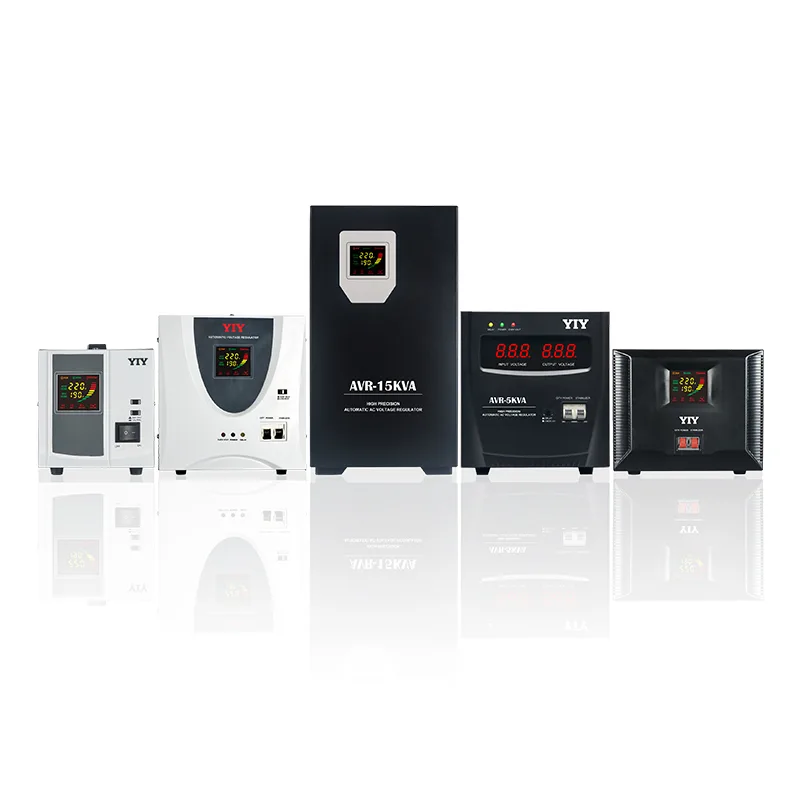
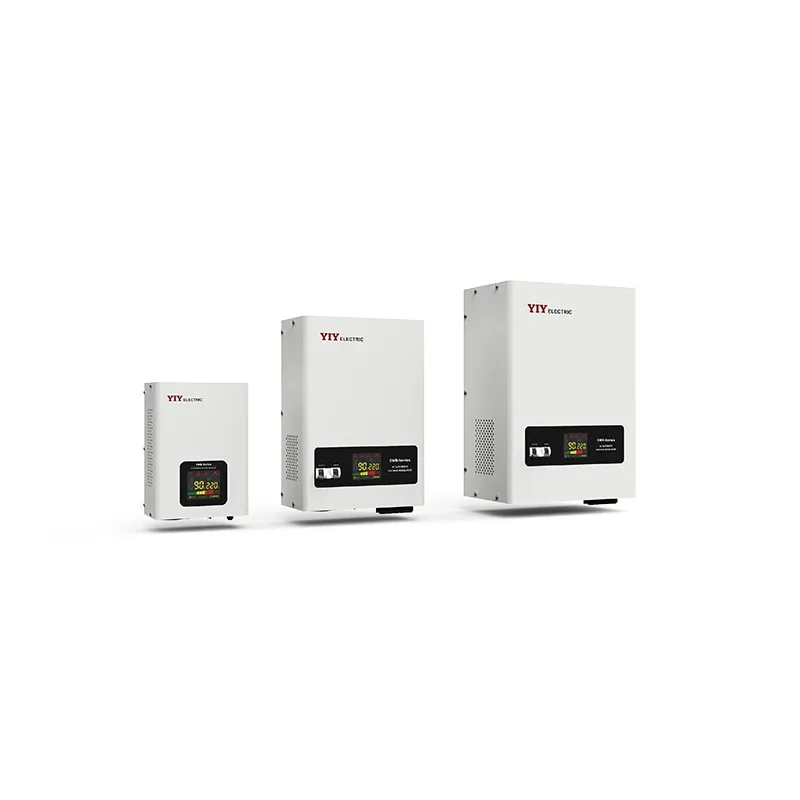
Physical integration parameters dictate long-term operational viability within constrained server rooms, engineering labs, or open office floors. Evaluate chassis form factors and active cooling requirements to guarantee adequate ventilation clearances without triggering localized thermal hotspots. For workstation clusters, home labs, or compact office circuits, compare the physical range and protection logic against YIY’s small capacity voltage stabilizers before you request a custom desktop or lab configuration. Enforce strict audible noise thresholds below 45 dB to maintain acoustic compliance in shared workspaces. For specialized enterprise deployments, engage YIY OEM/ODM engineering support early to pre-configure custom terminal blocks, SNMP monitoring interfaces, and regional firmware parameters before mass rollout, accelerating site commissioning.
Frequently Asked Questions
How do I accurately calculate the kVA rating needed before purchasing a PC voltage stabilizer?
Start by summing the continuous VA ratings of all connected workstations, monitors, and peripherals. Apply a mandatory 20–30% safety margin to safely absorb cold-start inrush currents from modern switched-mode power supplies. Undersizing forces constant transformer saturation and thermal failure, while excessive oversizing traps capital in idle conversion capacity. Always benchmark continuous output ratings against your peak concurrent load, ensuring reliable uptime across distributed workstation clusters.
Do I need a voltage stabilizer for PC setups that already have a UPS?
Not necessarily, but they serve different functions. A UPS provides short-term battery backup during outages and often includes basic AVR, but its internal correction circuitry may not handle chronic, wide-range grid fluctuations efficiently. If your facility experiences persistent sags or swells outside standard ±5% tolerances, pairing an external pc voltage stabilizer upstream of your UPS ensures the battery bank only deploys during actual blackouts, significantly extending battery lifespan and reducing total cost of ownership.
Which stabilization topology offers the best balance of precision and lifecycle cost for commercial deployments?
Servo-driven architectures typically deliver the optimal trade-off, maintaining ±1% output accuracy through continuous carbon-brush regulation. They outperform relay designs under sustained loads while eliminating disruptive acoustic clicking and transient spikes. For noise-sensitive labs requiring zero maintenance, IGBT/PWM solid-state units provide uncompromised precision and silent operation, albeit at a higher initial capital expenditure that pays off through reduced maintenance overhead and longer component lifespan.
What compliance certifications and testing documentation should a supplier provide during RFQ evaluation?
Demand verified IEC nominal voltage classifications and certified IEC 61000 EMC compatibility reports to prevent harmonic distortion from disrupting adjacent network infrastructure. Require a verifiable ISO 9001 factory audit trail alongside independent third-party type test certificates. Reject vendors offering only internal manufacturing declarations, as unverified documentation introduces severe compliance and operational risks during enterprise fleet rollouts. Proper documentation streamlines procurement approvals and safeguards long-term asset depreciation.
Final Thoughts
Procuring a pc voltage stabilizer is not about selecting the highest capacity or the cheapest relay unit. It is a calculated alignment of three variables: accurate load forecasting with inrush margins, documented input variance against local grid telemetry, and topology selection matched to your precision thresholds. Bypassing proper sizing or ignoring IEC compliance guarantees premature thermal degradation or stranded capital. Procurement leaders must prioritize verified capacity headroom, topology durability, and electromagnetic compatibility over upfront price differentials. The optimal unit emerges only when technical specifications are cross-referenced against actual deployment constraints rather than generic marketing datasheets.
Standardizing your shortlist around verified operating ranges and certified manufacturing tolerances converts voltage regulation from a reactive cost center into a predictable infrastructure asset.
To accelerate your evaluation, compile your exact peak VA requirement, historical grid voltage extremes, and site-specific environmental constraints. Submit these parameters directly to YIY engineering. We will immediately filter compatible architectures, verify type-test documentation, and deliver a precise quotation, ensuring your procurement timeline stays on track and your workstations receive calibrated protection from day one.
About YIY
Zhejiang Yiyen Holding Group Co., Ltd. (YIY) is a professional voltage stabilizer manufacturer with 16+ years of experience. With a 30,000sqm modern facility and an annual production capacity of 1,000,000+ units, our products are exported to 130+ countries. We provide OEM/ODM customization services and are ISO 9001:2015 certified, committed to delivering stable and reliable voltage protection solutions to global customers.
Contact Us
Email: yiyen@yiyen.com
Phone/WhatsApp: +86 13587452904
Website: https://www.yiyavr.com/
If you found this article helpful, contact us for a sizing review or customized solution.