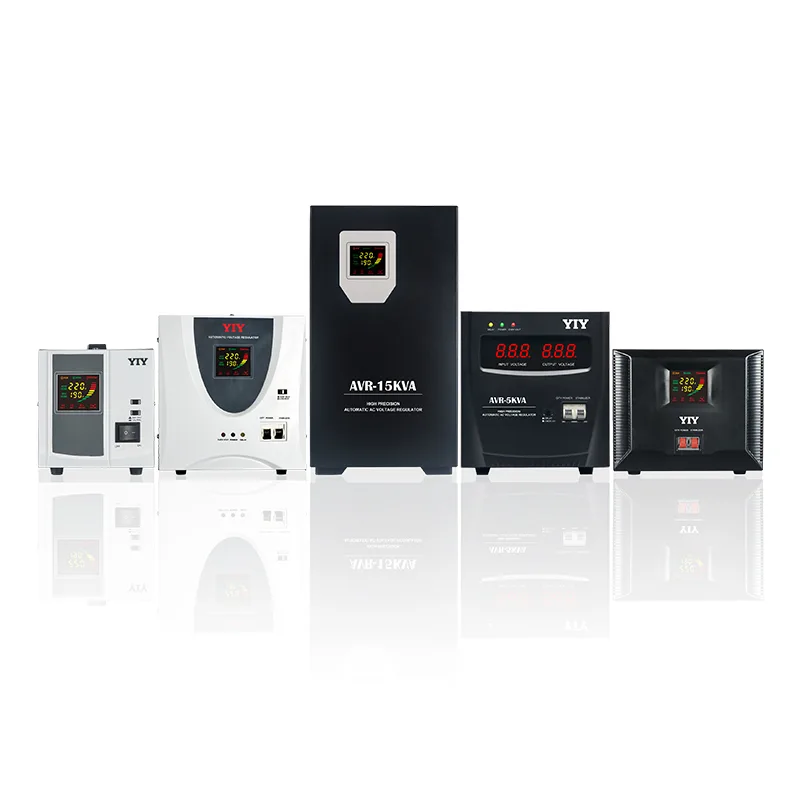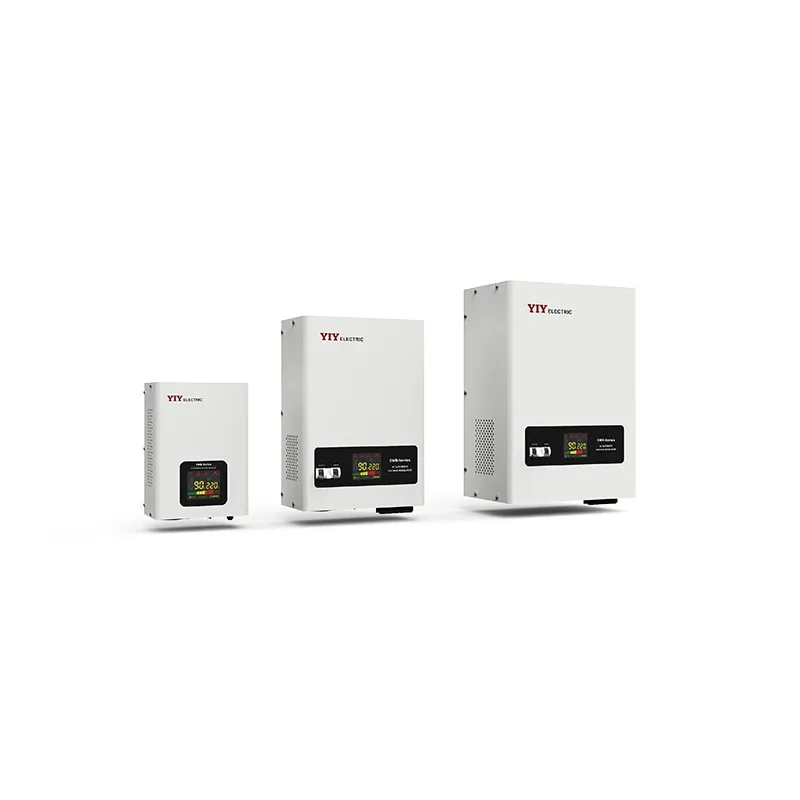
Unstable grid voltage is a real operating problem for homes in many regions — brownouts drop supply below safe thresholds, surges spike past rated limits, and the result is flickering lights, shortened appliance lifespans, and failed electronics. An automatic voltage stabilizer for home use addresses this directly by continuously monitoring incoming utility voltage and correcting it to a stable output before it reaches your refrigerator, air conditioner, or sensitive devices. Learn more about How Voltage Stabilizer Workshow voltage stabilizer works in our technical guide.
This article covers when a residential stabilizer is the right call, why relay-type units are the practical fit for most home loads, how to size one correctly, and what to look for when evaluating options — including where certified engineering support matters more than the lowest import price.
What Automatic Voltage Stabilizer for Home Use Means and When It Matters
An automatic voltage stabilizer for home use is a device that continuously monitors incoming utility voltage and corrects it to a stable output level before it reaches your appliances. When grid voltage drops below or spikes above safe thresholds, the stabilizer adjusts in real time to maintain constant output — typically within ±5% to ±8% of the rated voltage. This automatic correction happens without user intervention, which is why it’s called “automatic.”
The Voltage Problems It Solves
Residential utility grids commonly experience three types of voltage disturbances: sags (voltage drops below nominal), surges (voltage spikes above nominal), and brownouts (sustained low voltage). According to the U.S. Department of Energy, voltage sags and brownouts can cause lights to dim and motors to stall. Surges can damage sensitive electronics. Brownouts force appliances to draw more current to maintain power, which accelerates wear and can trigger thermal shutdowns. A voltage stabilizer intercepts these fluctuations at the service entry point and delivers clean, stable power to downstream loads.
Why Relay-Type Stabilizers Fit Residential Use
For home applications, relay-type stabilizers are the recommended technology. They use electromagnetic relays to switch transformer taps, delivering discrete voltage steps with response times under 20 milliseconds. See our full Stabilizer Voltage Regulator Comparisonrelay vs servo vs IGBT comparison for a detailed breakdown. Compared to servo stabilizers (which use motor-driven variable transformers) and IGBT stabilizers (which use solid-state switching), relay units offer the fastest response at the lowest cost. Servo stabilizers are better suited for industrial loads requiring continuous adjustment, and IGBT units are reserved for mission-critical applications where cost is secondary to precision. For general residential protection, relay technology hits the right balance of speed, reliability, and affordability.
| Technology Type | Response Time | Output Precision | Best Use Case | Relative Cost |
|---|---|---|---|---|
| Relay | <20ms | ±5-8% | Residential/General | Lowest |
| Servo | 50-100ms | ±1-3% | Industrial/Continuous | Medium |
| IGBT | <10ms | ±1% | Mission-Critical | Highest |
What It Protects
Automatic voltage stabilizers safeguard the full range of household equipment: refrigerators and air conditioners (which are vulnerable to compressor damage from voltage sags), LED and CFL lighting (which can flicker or fail under unstable voltage), televisions and home theater systems — see our dedicated guide on Voltage Stabilizer For Television Buyer Guidevoltage stabilizer for television for appliance-specific sizing — computers and networking equipment, and kitchen appliances like microwaves and washing machines. By stabilizing voltage before it reaches these loads, the stabilizer extends appliance lifespan and prevents nuisance trips or failures.
Who Needs This and What They Need to Decide
Homeowners experiencing frequent brownouts, flickering lights, or premature appliance failures are the primary audience for residential voltage stabilizers. If your refrigerator compressor cycles erratically, your LED bulbs dim during peak hours, or your air conditioner trips unexpectedly, unstable grid voltage is likely the root cause. These symptoms indicate that incoming utility power is dropping below or spiking above safe operating thresholds, forcing appliances to work harder and fail sooner.
The Buying Decision
The core decision is sizing: calculating total home load and adding a safety margin. List every appliance’s rated wattage or VA — refrigerator, air conditioner, washing machine, microwave, lighting circuits, and any other connected equipment. Sum the total, then multiply by 1.2 to 1.3 to account for startup surges and future expansion. For a broader Voltage Stabilizer Selectionvoltage stabilizer selection guide covering industrial and commercial scenarios, see our complete reference.
Home Load Calculation Example
| Appliance | Rated Wattage | Quantity | Total Wattage |
|---|---|---|---|
| Refrigerator | 800W | 1 | 800W |
| Air Conditioner | 2000W | 2 | 4000W |
| Washing Machine | 1200W | 1 | 1200W |
| Microwave | 1000W | 1 | 1000W |
| Lighting Circuits | 1000W | 1 | 1000W |
| Base Load Total | 8000W | ||
| Safety Margin (25%) | +2000W | ||
| Required Capacity | 10,000VA (10kVA) |
Most typical homes with standard appliances fall into the 5kVA to 15kVA range. If your load calculation points to a 10 Kva Automatic Stabilizer Comparison Guide10 KVA automatic stabilizer, see our dedicated comparison guide before specifying.
What Differentiates YIY
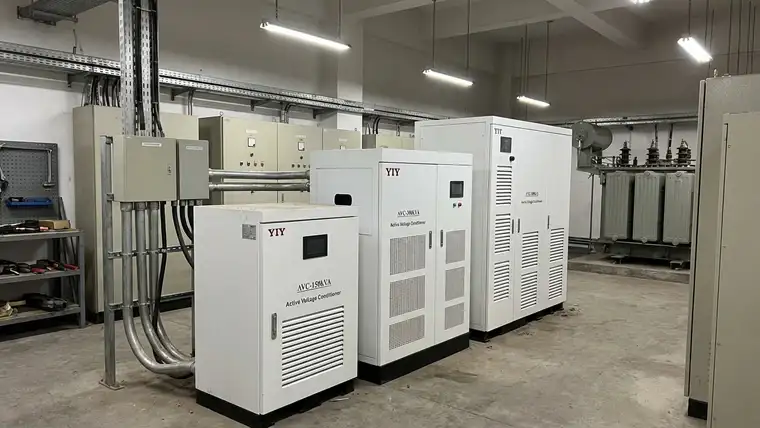
Most suppliers target industrial or import markets, leaving residential buyers with incomplete guidance. TSI Power focuses on telecom and outdoor industrial installations, not home load profiles. Alibaba and eBay list cheap imports with minimal documentation and no engineering support. ATO offers 1 kVA entry units but limited capacity range for larger homes. YIY provides relay-type stabilizers specifically matched to residential single-phase 220V systems, complete load calculation guides, Iso 9001 Quality Management.htmlISO 9001:2015 and CE certifications, and direct engineering team access to verify sizing before purchase. This combination of residential product focus, documented quality standards, and application support closes the gap between generic industrial offerings and actual home protection needs.
Standards, Compliance, and Sizing Fundamentals
Residential voltage stabilizers must comply with HomepageIEC 60038, the global standard that defines nominal voltage ranges from 100V to 1000V and permits input tolerance up to ±10%. This standard ensures that a stabilizer rated for 220V single-phase can accept input from 198V to 242V and still deliver stable output. YIY relay stabilizers are designed to meet IEC 60038 requirements, with automatic alarm triggers when input voltage exceeds the acceptable range.
Load Calculation Methodology
Sizing a home stabilizer correctly requires listing every connected appliance’s rated wattage or VA, then adding a 20-30% safety margin. For example, if your refrigerator draws 800W, air conditioner 2000W, washing machine 1200W, microwave 1000W, and lighting circuits total 1000W, your base load is 6000W. Multiply by 1.25 to account for startup surges and future expansion: 6000W × 1.25 = 7500VA, so you would select a 10kVA stabilizer to ensure adequate headroom. This margin prevents overload during simultaneous appliance startup and accommodates additional devices without requiring a new unit.
Market Capacity Range
Single-phase 220V stabilizers for residential use are available from 1kVA entry units up to 60kW for large homes with heavy loads. Most typical homes with standard appliances fall into the 5kVA to 15kVA range. Smaller units (1-3kVA) suit apartments or single-room protection, while larger capacities (20kVA+) are specified for homes with multiple air conditioners, electric water heaters, or workshop equipment.
Quality Certifications
YIY stabilizers carry ISO 9001:2015 certification for quality management systems, ISO 14001 for environmental management, and CE marking for European Union compliance. These certifications verify that manufacturing processes, component sourcing, and final testing meet documented international standards. ISO 9001:2015 specifically ensures traceability from raw materials through final inspection, while CE compliance confirms electromagnetic compatibility and low-voltage directive adherence for safe residential installation.
YIY Relay Stabilizers for Residential Protection
YIY relay-type voltage stabilizers are engineered specifically for residential single-phase 220V systems, delivering output precision of ±5% to ±8% through electromagnetic relay switching. Unlike servo stabilizers that use motor-driven variable transformers, relay units switch between discrete transformer taps in under 20 milliseconds, making them ideal for protecting home appliances that require fast correction during voltage sags or surges. This discrete-step approach provides the response speed residential loads need without the mechanical complexity or higher cost of continuous-adjustment technologies.
Manufacturing Scale and Quality Certification
YIY operates a 30,000㎡ manufacturing facility with an annual production capacity exceeding 1,000,000 units, serving customers across 130+ countries over 16+ years of voltage stabilization experience. The facility holds ISO 9001:2015 certification for quality management systems, ISO 14001 for environmental management, and CE marking for European Union compliance. These certifications verify that component sourcing, assembly processes, and final testing meet documented international standards, with full traceability from raw materials through final inspection. This manufacturing scale and quality infrastructure support both standard residential models and custom OEM/ODM configurations for specific regional voltage requirements.
Residential Implementation Guidance
For typical home applications, YIY relay stabilizers accept single-phase 220V input with tolerance for grid fluctuations from 150V to 250V, automatically correcting to stable 220V ±5% output. Capacity range spans 1kVA entry units for apartment protection up to 10kVA models for larger homes with multiple air conditioners, refrigerators, and heavy appliances. Installation requires only service-entry mounting and load connection—no complex programming or calibration. The relay switching mechanism operates silently during normal correction cycles, with audible alarm triggers only when input voltage exceeds the acceptable ±10% range defined by IEC 60038. This combination of fast response, proven manufacturing capability, and straightforward residential deployment makes YIY relay stabilizers a practical fit for homeowners seeking documented protection without industrial-grade complexity or cost.
Selection Criteria: Load, Voltage Range, and Application Fit
Load Evaluation and Capacity Sizing
The first step in selecting a voltage stabilizer for home use is calculating total connected load. List every appliance’s rated wattage: refrigerator (typically 800-1200W), air conditioner (1500-3000W per unit), washing machine (1000-1500W), microwave (800-1200W), television (100-300W), computer equipment (200-500W), and lighting circuits (500-1000W total). Sum these values, then multiply by 1.25 to 1.3 to add the required 20-30% safety margin that accounts for motor startup surges and future appliance additions.
For example, a home with 8000W total connected load requires 8000W × 1.25 = 10,000VA capacity, so you would specify a 10kVA home voltage regulator. This margin prevents overload during simultaneous appliance startup—when multiple motors energize at once, instantaneous draw can spike 150-200% above rated power. Undersizing forces the stabilizer into overload protection mode, defeating the purpose of continuous voltage correction.
Voltage Range Requirements
Residential AVR units must accept the full range of grid voltage fluctuations your location experiences. Standard single-phase 220V stabilizers typically handle input from 150V to 250V, delivering stable 220V ±5% output across that entire range. This ±10% input tolerance aligns with IEC 60038 requirements and covers the brownout conditions (voltage sags below 200V) and surge events (spikes above 240V) common in residential utility grids.
If your area experiences voltage drops below 150V or surges above 250V, specify a wider input range or add upstream surge protection. The stabilizer’s automatic alarm will trigger when input exceeds its rated tolerance, signaling that grid conditions have moved outside the correction window.
Technology Selection for Home Applications
For residential protection, relay-type stabilizers deliver the optimal balance of response speed, cost, and reliability. Relay units switch transformer taps in under 20 milliseconds using electromagnetic relays, fast enough to protect sensitive electronics from voltage sags without the mechanical complexity of servo stabilizers or the premium cost of IGBT units. Servo stabilizers use motor-driven variable transformers suited for industrial loads requiring continuous fine adjustment, while IGBT stabilizers employ solid-state switching reserved for mission-critical applications where cost is secondary to precision. For general home use protecting refrigerators, air conditioners, computers, and lighting, relay technology provides adequate correction speed at the lowest total cost of ownership.
Common Questions and Next Steps
Do Home Voltage Stabilizers Really Work?
Yes. Automatic voltage stabilizers actively monitor incoming voltage and correct it in real time through transformer tap switching. When grid voltage drops to 180V or spikes to 250V, a relay stabilizer switches to the appropriate tap within 20 milliseconds to maintain 220V ±5% output. This continuous correction prevents the voltage sags that cause compressor stalls, the surges that damage electronics, and the brownouts that force appliances to draw excess current. The protection is measurable: stabilized voltage extends appliance lifespan and eliminates nuisance trips caused by voltage instability.
Which Stabilizer Is Best for Home Use?
Relay-type stabilizers are the recommended technology for residential applications. They deliver the fastest response time (under 20 milliseconds) at the lowest cost, making them ideal for protecting home appliances from voltage fluctuations. Servo stabilizers use motor-driven variable transformers suited for industrial loads requiring continuous fine adjustment, while IGBT stabilizers employ solid-state switching reserved for mission-critical applications where cost is secondary. For general home protection of refrigerators, air conditioners, computers, and lighting, relay technology provides adequate correction speed without industrial-grade complexity or premium pricing.
How to Stabilize Electricity at Home
Calculate total connected load by listing every appliance’s rated wattage, then multiply by 1.25 to add the required safety margin. Install the stabilizer at the service entry point before the main distribution panel so all downstream circuits receive corrected voltage. Verify that the unit’s input range (typically 150V-250V for residential models) covers the voltage fluctuations your location experiences. Professional installation ensures proper grounding and load connection.
If you’re experiencing voltage instability, share your operating environment, protected loads, and observed voltage behavior with YIY’s engineering team. We’ll recommend the right relay stabilizer capacity and configuration for your specific home protection needs.
Frequently Asked Questions
Do home voltage stabilizers really work?
Yes. Automatic voltage stabilizers actively monitor incoming voltage and correct it in real time through transformer tap switching. When grid voltage drops to 180V or spikes to 250V, a relay stabilizer switches to the appropriate tap within 20 milliseconds to maintain 220V ±5% output. This continuous correction prevents the voltage sags that cause compressor stalls, the surges that damage electronics, and the brownouts that force appliances to draw excess current. The protection is measurable: stabilized voltage extends appliance lifespan and eliminates nuisance trips caused by voltage instability.
Which stabilizer is best for home use?
Relay-type stabilizers are the recommended technology for residential applications. They deliver the fastest response time (under 20 milliseconds) at the lowest cost, making them ideal for protecting home appliances from voltage fluctuations. Servo stabilizers use motor-driven variable transformers suited for industrial loads requiring continuous fine adjustment, while IGBT stabilizers employ solid-state switching reserved for mission-critical applications where cost is secondary. For general home protection of refrigerators, air conditioners, computers, and lighting, relay technology provides adequate correction speed without industrial-grade complexity or premium pricing.
How should I size an automatic voltage stabilizer for my home?
Calculate total connected load by listing every appliance’s rated wattage, then multiply by 1.25 to add the required safety margin. For example, if your refrigerator draws 800W, air conditioner 2000W, washing machine 1200W, and lighting 1000W, your base load is 5000W. Multiply by 1.25: 5000W × 1.25 = 6250VA, so select a 10kVA stabilizer. This margin prevents overload during simultaneous appliance startup and accommodates future additions without requiring a new unit.
Final Thoughts
Selecting the right automatic voltage stabilizer for home use comes down to three core factors: technology fit, accurate sizing, and verified manufacturing capability. Relay-type stabilizers deliver the response speed residential loads require at the lowest total cost. Proper capacity calculation—listing every appliance’s rated wattage and multiplying by 1.25 to 1.3—prevents overload during simultaneous startup and accommodates future expansion. YIY’s residential relay stabilizers combine this technical fit with ISO 9001:2015 and CE certifications, plus direct engineering team access to verify sizing before purchase.
If you’re experiencing voltage instability, share your operating environment, protected loads, and observed voltage behavior with YIY’s engineering team. We’ll recommend the right relay stabilizer capacity and configuration for your specific home protection needs.
—
About YIY
Zhejiang Yiyen Holding Group Co., Ltd. (YIY) is a professional voltage stabilizer manufacturer with 16+ years of experience. With a 30,000sqm modern facility and an annual production capacity of 1,000,000+ units, our products are exported to 130+ countries. We provide OEM/ODM customization services and are ISO 9001:2015 certified, committed to delivering stable and reliable voltage protection solutions to global customers.
Contact Us
Email: yiyen@yiyen.com
Phone/WhatsApp: +86 13587452904
Website: https://www.yiyavr.com/
If you found this article helpful, contact us for a sizing review or customized solution.