Unpredictable grid conditions don’t just trip breakers; they silently degrade compressor windings, fry control PCBs, and trigger costly HVAC downtime. Relying on built-in tolerances is a gamble, making a precise approach to ac stabilizer voltage fluctuation a critical capital decision for facility managers and engineering teams. Selecting the wrong correction architecture means either overspending on unnecessary precision or risking chronic equipment failures during deep brownouts.
This guide maps your load profile, starting currents, and site input window directly to the optimal stabilization technology. We evaluate response times and compliance trade-offs across servo, relay, and IGBT units, then verify capacity margins against environmental constraints. For commercial ventilation systems operating under frequent grid stress, deploying a reliable Relay Voltage Stabilizersrelay voltage stabilizer provides a fast-response, cost-effective baseline for neutralizing acute sags before they cascade into expensive downtime. Engineering and procurement teams can use this framework to convert raw site data into a reliable specification without overengineering or undersizing.
What ac stabilizer voltage fluctuation means and when it matters
AC stabilizer voltage fluctuation management refers to deploying automatic voltage regulators (AVRs) that actively neutralize incoming grid instabilities before they reach critical HVAC infrastructure. Unlike built-in unit protections that merely tolerate brief deviations, external stabilizers continuously correct severe sags and surges to maintain strict output tolerances. This active regulation prevents cumulative compressor winding breakdown and shields sensitive control PCBs from thermal stress.
Operational decision context
The procurement mandate to implement external conditioning hinges entirely on measured site variability and documented equipment sensitivity thresholds. Utilities with aging distribution networks routinely expose connected terminals to unpredictable amplitude shifts that invalidate standard manufacturer warranties. Engineering teams must prioritize proactive voltage correction over passive tolerance to guarantee continuous cooling capacity and extend asset lifecycles.
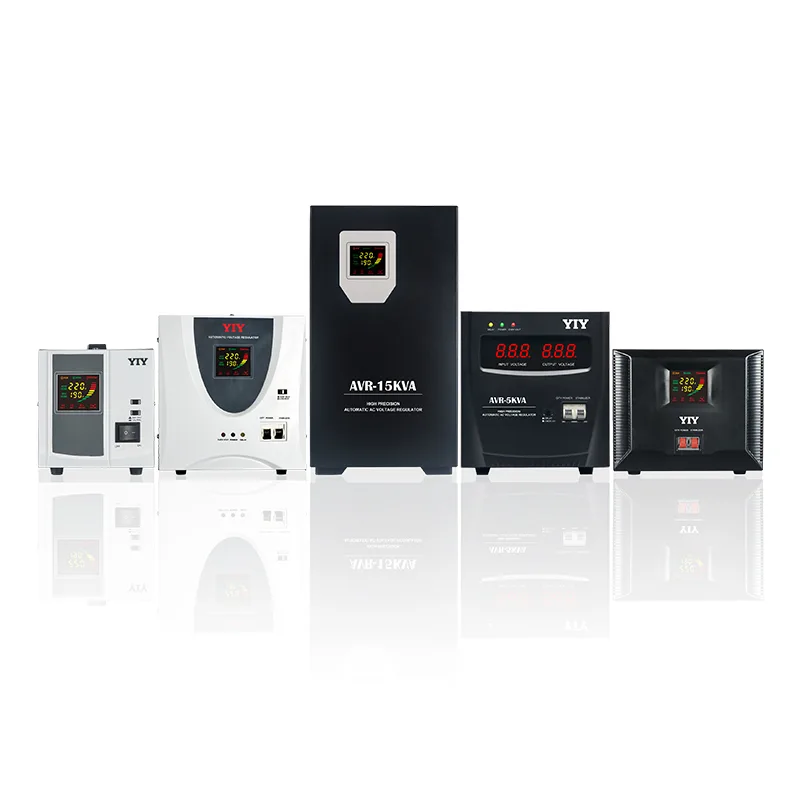
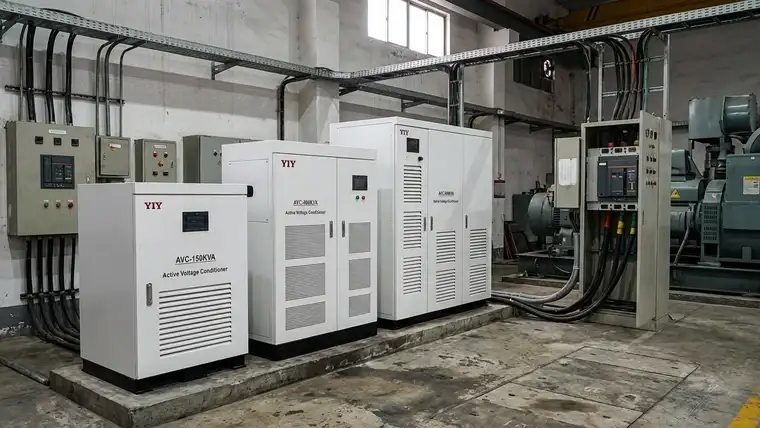
Matching correction topology to actual load behavior eliminates mechanical bottlenecks while preventing capital overallocation. YIY addresses core industrial and commercial AC protection requirements with a unified matrix spanning 500VA to 3000KVA, integrating Servo, Relay, and IGBT architectures alongside turnkey OEM/ODM capabilities. This verified technical breadth, supported by validated deployments across 130+ countries, enables specification teams to convert raw grid telemetry into precise equipment shortlists and fast-track custom solution quoting.
Standards, compliance, and proof points
Grid compliance frameworks dictate acceptable input windows before protective isolation becomes mandatory. The 1032IEC 60038 voltage standards establish standard voltage ratings and strictly enforce a ±10% input tolerance threshold for industrial equipment survival. Simultaneously, power quality mandates like the 519 2022.htmlIEEE 519 harmonic control guidelines restrict rapid voltage flicker and waveform distortion in public networks, forcing engineering teams to validate external regulator compliance before energizing expensive HVAC infrastructure. For precise compressor and PCB tolerance thresholds, consulting AHRI equipment performance standards is essential to ensure your stabilization strategy aligns with OEM warranty requirements.
Factory-side quality management transforms theoretical specifications into verifiable reliability baselines. ISO 9001:2015 and active CE certifications confirm rigorous manufacturing protocols, ensuring electrical components withstand continuous thermal stress without mechanical degradation. These internationally recognized audits eliminate generic performance claims, guaranteeing your automatic voltage regulator delivers consistent phase balancing across unpredictable grid environments.
Verified Requirements vs. Operational Best Practices
Verified regulatory requirements directly bind hardware output precision to documented equipment damage thresholds. Mission-critical digital control PCBs strictly demand ±0.5% regulation achievable only through advanced IGBT architectures, whereas heavy-duty compressors safely operate within broader ±3% margins using standard electro-mechanical servos. Procurement decisions must align topology with the strictest component limit to maintain valid manufacturer warranties.
Operational best practices introduce flexible engineering buffers that extend asset lifecycle without violating compliance mandates. Applying a calculated 1.2-1.3x capacity multiplier safely neutralizes dangerous motor inrush currents, representing a proven optimization strategy rather than a rigid statutory obligation. Implementing supplementary harmonic filtration remains entirely optional, becoming necessary only when continuous on-site telemetry confirms waveform distortion exceeds standard utility parameters.
Technology selection framework: Servo vs. Relay vs. IGBT
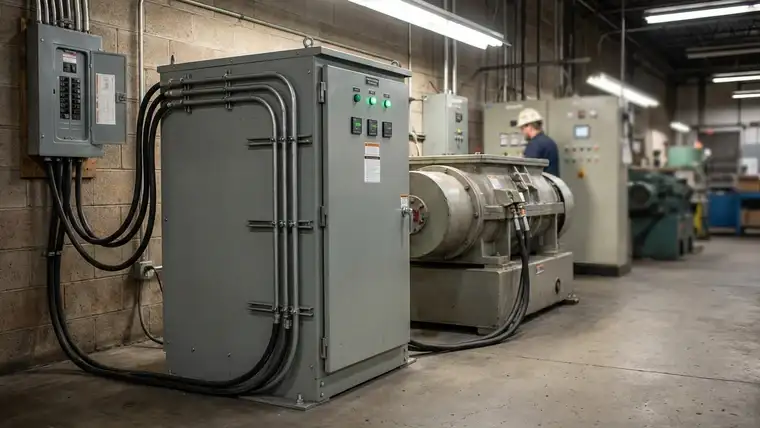
Matching correction topology to actual load behavior eliminates mechanical bottlenecks while preventing capital overallocation. Reviewing a comprehensive Stabilizer Voltage Regulator Comparisontechnology comparison guide helps engineering teams align hardware response curves with specific application demands. Below is a breakdown of the three core architectures used in modern HVAC voltage protection.
| Architecture | Output Precision | Response Time | Ideal Application | Key Advantage |
|---|---|---|---|---|
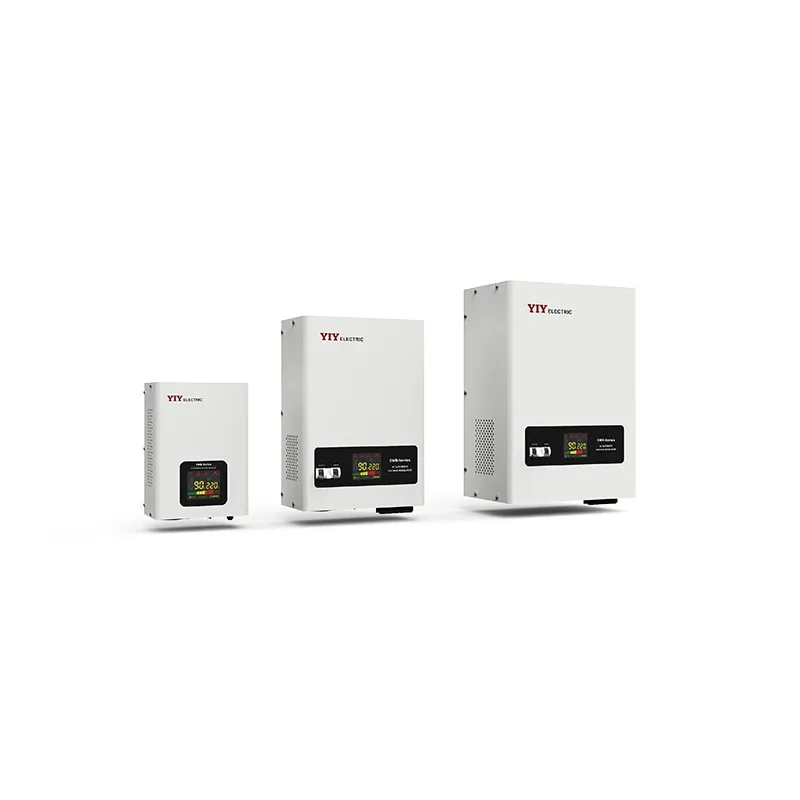
| Relay | ±5% to ±8% | <0.5s | Commercial ventilation, light industrial HVAC | Fast, cost-effective tap-switching for moderate grid swings |
| Servo | ±0.5% to ±3% | 1-2s | Multi-compressor plants, continuous heavy loads | Balanced precision, high fault tolerance, robust durability |
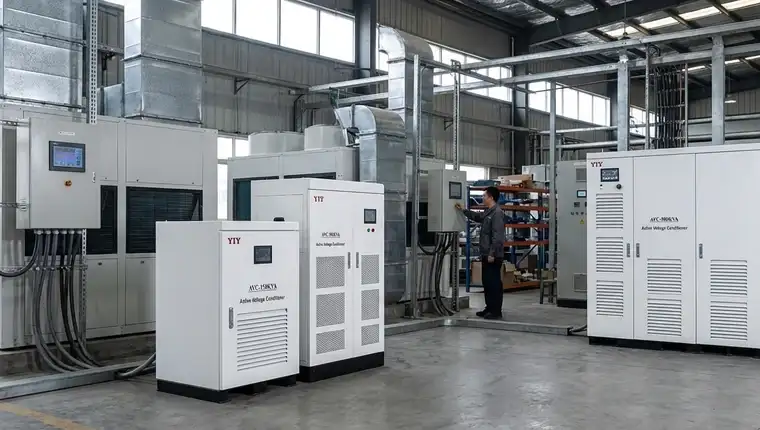
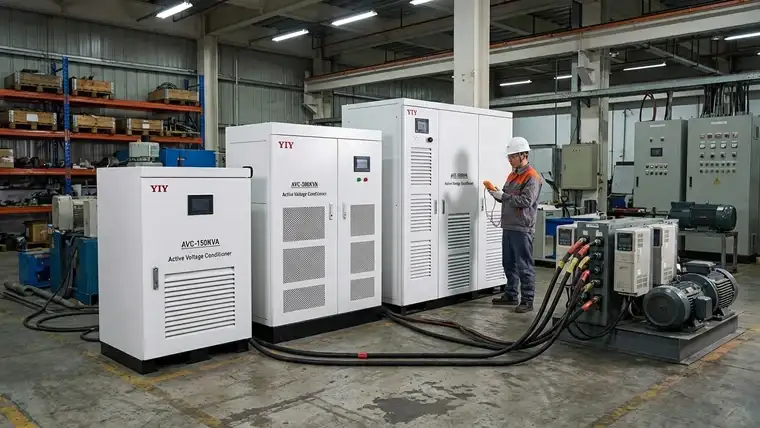
| IGBT | ±0.5% | <20ms | Mission-critical data center cooling, surgical HVAC | Sub-millisecond PWM correction, complete double-conversion isolation |
While relay systems excel at rapid, economical correction for standard commercial sites, facilities running sensitive variable refrigerant flow (VRF) systems often require the smoother stepping profile of a Servo Voltage Stabilizersservo voltage stabilizer. Mission-critical environments experiencing micro-sags or severe harmonic distortion should default to solid-state IGBT architectures to guarantee zero-break transfer and pristine sinusoidal output.
YIY capabilities, product fit, and implementation guidance
YIY anchors its industrial and commercial AC protection strategy on a unified hardware matrix spanning 500VA to 3000KVA. By integrating electro-mechanical Servo, fast-switching Relay, and high-precision IGBT architectures into a single manufacturing pipeline, procurement teams bypass the architectural limitations typical of regional vendors. This comprehensive product portfolio ensures that every utility environment matches a validated correction topology without forcing costly overengineering or risking chronic equipment failures.
Documented Manufacturing and Technological Differentiation
Unlike competitors who rely exclusively on legacy servo-mechanical designs, YIY maintains verified ISO 9001:2015 production lines capable of advanced DSP-controlled regulation. This technological breadth means engineering departments can safely specify double-conversion isolation for mission-critical HVAC assets, knowing the factory already validates sub-20ms response protocols under full thermal stress. Such vertical manufacturing capacity effectively eliminates the supply chain bottlenecks that consistently plague suppliers focused solely on narrow domestic distribution networks.
Global Deployment and Custom Solution Framework
Validated project deployments across 130+ countries prove that our heavy-duty cabinet assemblies consistently survive extreme ambient temperatures and chronic grid harmonics. Our dedicated OEM/ODM engineering channels easily accommodate custom input voltage windows, specialized phase balancing, and strict enclosure IP ratings tailored directly to your facility blueprints.
Site Integration and Lead Qualification
Proper topology selection requires mapping actual site telemetry against documented compressor tolerance thresholds before finalizing any purchase order. Our engineering specialists cross-reference your input window variations with strict IEC compliance mandates to recommend the optimal Servo, Relay, or IGBT configuration. Request a customized hardware specification by forwarding your exact load schedules and grid instability logs to our technical sales desk.
Selection criteria and sizing considerations
Translating raw grid telemetry into a reliable procurement specification requires a structured evaluation framework. Engineering teams must quantify ac stabilizer voltage fluctuation against actual motor inertia before locking in correction topography or nominal capacity. This systematic approach eliminates guesswork and aligns capital expenditure directly with verified operational risks.
Load Profile and Capacity Multipliers
Calculate true continuous and peak demand for all connected cooling infrastructure rather than trusting generic nameplate ratings. Compressor starting currents routinely exceed running loads by five to eight times, meaning baseline calculations must absorb massive transient inrush spikes. Applying the established 20kva Voltage Stabilizer Technical Guidecapacity sizing framework to total connected wattage guarantees the selected unit survives repeated thermal cycling without premature derating. Always size for the worst-case simultaneous startup scenario, not just steady-state cooling.
Input Voltage Window and Phase Architecture
Map recorded utility extremes directly to hardware response curves to eliminate chronic nuisance tripping during deep brownouts. A precision automatic voltage regulator AVR must continuously neutralize rapid sag events while preserving strict operational compliance thresholds. For multi-unit commercial plants, deploying a synchronized three phase voltage stabilizer maintains equal impedance distribution and completely prevents destructive neutral shifts across parallel condensing banks. Verify input range compatibility against historical outage logs to prevent cascade failures during seasonal peak demand.
Environmental Stress and Application Alignment
Ambient site conditions dictate enclosure protection levels and thermal dissipation pathways just as aggressively as electrical loads dictate transformer ratings. Extreme humidity and chronic dust exposure rapidly degrade internal varnish insulation, forcing procurement to specify IP54 cabinets or sealed forced-air cooling modules. Choose the correct voltage stabilizer for AC by evaluating harmonic filtration needs only when telemetry confirms distortion exceeds standard limits. Cross-referencing documented telemetry against OEM warranty clauses secures long-term asset performance.
Common questions, next steps, and CTA
Procurement teams frequently navigate open technical questions before finalizing capital expenditures for industrial voltage protection infrastructure.
Addressing Evidence and Specification Gaps
Engineering stakeholders often ask why specific AC-focused case studies or exact deployment metrics are not widely published. While YIY’s systems operate globally across 130+ countries, HVAC and heavy cooling projects involve highly sensitive telemetry and proprietary client data. We resolve this by sharing verified compliance reports and factory-validated stress logs rather than generalizing complex project architectures.
Readers also note that exact input voltage ranges for YIY AC stabilizers remain absent from standard literature. This occurs deliberately because grid architectures dictate strict regional variability. Our hardware supports customized wide-range configurations spanning ±15% to over ±50%, engineered directly to match your local IEC 60038 baselines and historical brownout severity.
Additionally, public market volume and CPC data for this technical niche often appear minimal or unclear. This reflects the specialized nature of B2B infrastructure procurement. Reliable voltage regulation decisions rely entirely on documented asset risk profiles and uptime SLAs, never on aggregate consumer search trends or generic keyword volume.
Actionable Next Steps
Translating theoretical sizing guidelines into a hardened procurement specification requires direct technical validation. Do not rely on generic capacity tables when motor inrush curves, phase imbalance patterns, and harmonic distortion levels dictate your true hardware thresholds. Engineering teams must quantify ac stabilizer voltage fluctuation against actual operational parameters using a verified What Should You Compare Before Choosing Types Of Automatic Voltage RegulatorAVR procurement checklist to avoid costly misallocations.
Request a quote or talk to the engineering team to initiate a targeted sizing review. Submit your complete load schedule, recorded starting currents, exact input-voltage window limits, and ambient installation conditions. Our specialists will cross-reference this telemetry against strict compliance thresholds to deliver an optimized, deployment-ready hardware configuration.
Frequently Asked Questions
What should buyers evaluate before choosing ac stabilizer voltage fluctuation protection?
Technical teams must document actual site telemetry rather than relying on generic nameplate ratings. Focus heavily on the recorded input voltage window, peak compressor inrush currents, and localized ambient thermal stress. Mapping these exact variables ensures you select the optimal correction topology—whether Servo, Relay, or IGBT—while preserving factory OEM warranties and avoiding costly capital overengineering.
When is ac stabilizer voltage fluctuation conditioning strictly necessary?
External conditioning becomes mandatory when long-term utility telemetry shows consistent deviations beyond ±10% of the rated voltage. Standard HVAC units merely tolerate brief sags, leaving sensitive compressor windings and digital control PCBs vulnerable to accelerated thermal degradation. A dedicated automatic voltage regulator completely isolates these assets to maintain continuous cooling capacity during chronic grid instability.
How should ac stabilizer voltage fluctuation solutions be sized or specified?
Calculate the true continuous kilowattage across all connected cooling infrastructure first, then systematically apply a 1.2 to 1.3 safety multiplier. This engineered buffer safely absorbs massive transient inrush spikes without triggering premature thermal derating. For multi-unit commercial facilities, always specify a synchronized three-phase configuration to prevent destructive neutral shifts, while strictly matching output precision to your most fragile control boards.
Final Thoughts
Selecting the correct topology for your ac stabilizer voltage fluctuation management boils down to matching exact load profiles, real-time input telemetry, and strict uptime SLAs. Heavy-duty compressors typically thrive on servo-driven reliability, standard commercial ventilation runs efficiently on fast-acting relays, and mission-critical digital HVAC assets demand sub-20ms IGBT regulation. Never size by generic nameplate ratings alone; always apply a calculated 1.2 to 1.3 safety multiplier to safely absorb transient inrush currents while maintaining IEC compliance thresholds.
To eliminate capital overallocation and prevent chronic thermal degradation, forward your complete equipment load schedules, peak starting currents, and documented input-voltage window logs to our engineering team. Our specialists will cross-reference your site data against factory validation protocols and deliver an optimized, warranty-compliant specification package ready for immediate procurement.
About YIY
Zhejiang Yiyen Holding Group Co., Ltd. (YIY) is a professional voltage stabilizer manufacturer with 16+ years of experience. With a 30,000sqm modern facility and an annual production capacity of 1,000,000+ units, our products are exported to 130+ countries. We provide OEM/ODM customization services and are ISO 9001:2015 certified, committed to delivering stable and reliable voltage protection solutions to global customers.
Contact Us
Email: yiyen@yiyen.com
Phone/WhatsApp: +86 13587452904
Website: https://www.yiyavr.com/
If you found this article helpful, contact us for a sizing review or customized solution.