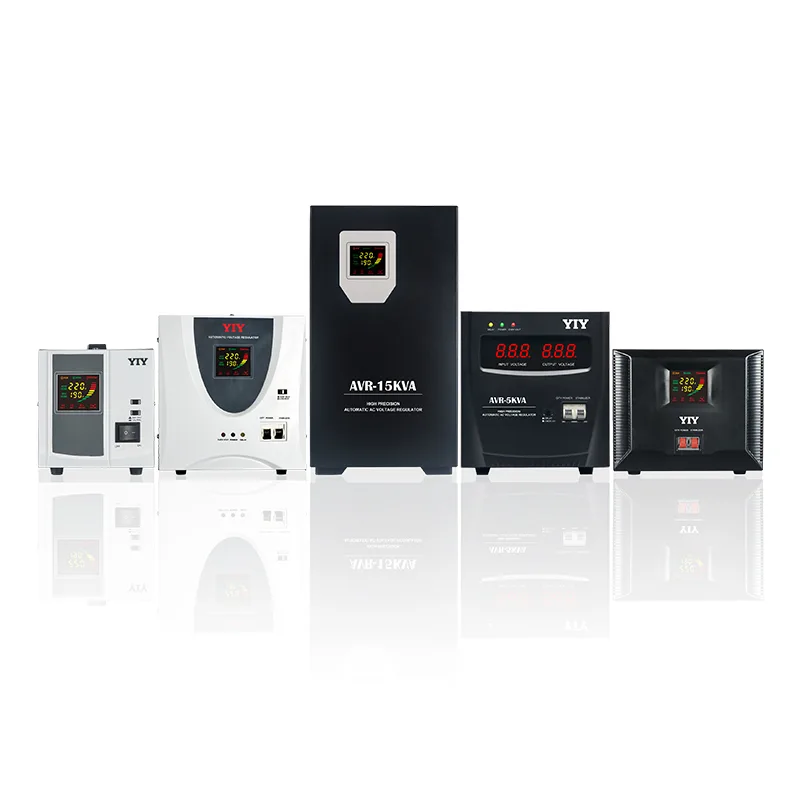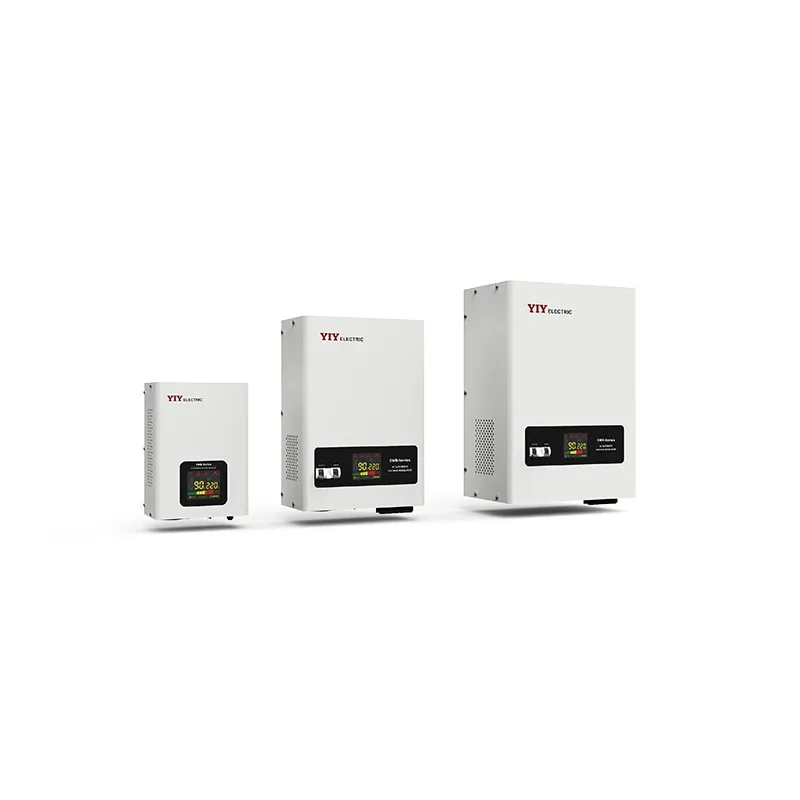
Picking the wrong voltage stabilizer for television is a procurement mistake that cuts both ways: over-spec an industrial-grade unit and you’ve wasted budget on capacity your LED or LCD TV will never use; under-spec a cheap import and you’ve left sensitive display electronics exposed to the brownouts and surges that actually damage them. In grid-unstable regions — across South Asia, Africa, and parts of Latin America — this is not a theoretical risk. It’s the reason electronics retailers and procurement teams end up replacing panels instead of protecting them.
This guide is built for buyers who are past the awareness stage. It covers the technology choices that actually split shortlists (relay vs. servo vs. IGBT), how to size capacity correctly against a real TV load, what certifications separate a documented unit from an unverified import, and where a manufacturer like YIY fits into that decision.
Who Actually Needs a Voltage Stabilizer for Television — and Why It Still Matters
The honest answer is: not everyone. But in the regions where it matters, it matters a lot.
The Real Buyer Profile
The primary use case is residential or small-retail in grid-unstable markets — South Asia, Sub-Saharan Africa, parts of Latin America and Southeast Asia, where utility voltage can swing 20–40V above or below nominal without warning. The buyer is typically a homeowner protecting a mid-to-high-value LED or LCD TV, or an electronics retailer bundling stabilizers with TV sales as a value-add and liability hedge.
This is a single-appliance, low-load deployment. It has nothing in common with industrial multi-load installations requiring three-phase servo or IGBT units rated at 10KVA and above. The specs that matter here — capacity, response time, output precision — are calibrated for a 100–300W single-phase load, not a production line.
Where Built-In Protection Falls Short
Modern TVs ship with Switched-Mode Power Supplies that tolerate a reasonable input range — typically ±10% of nominal voltage. Under stable grid conditions with occasional minor fluctuations, that built-in tolerance is sufficient. No external stabilizer needed.
The problem is severity and frequency. In regions with chronic brownouts, repeated voltage sags below 180V, or sharp surge events from grid switching, the SMPS operates continuously at the edge of its tolerance window. That sustained stress degrades components over time and shortens panel life even without a single catastrophic failure. An external stabilizer adds a buffer layer that absorbs the worst fluctuations before they reach the TV’s internal circuitry — it’s not redundant protection, it’s a different tier of protection for a different threat level.
For buyers uncertain whether they need a stabilizer or a surge protector, the distinction matters: see our guide on voltage stabilizer vs voltage protector for a direct comparison of what each device actually does.
Single-Appliance vs. Multi-Load: Different Specs Apply
A voltage stabilizer for television is sized for one load. Capacity calculation is straightforward: TV rated wattage multiplied by 1.2–1.3 to build in a safety margin. A 150W TV needs a 180–200VA unit, not a 1KVA industrial relay bank. Oversizing wastes money; undersizing causes the stabilizer to run hot and fail early.
Industrial deployments protecting multiple loads — HVAC, CNC, server racks — require three-phase units, higher KVA ratings, and tighter output precision. That’s a different product category entirely.
Relay vs. Servo vs. IGBT: Which Technology Fits a TV Load?
Three stabilizer technologies dominate the market. For a residential TV load, the choice is straightforward — but understanding how voltage stabilizer works across all three types helps you avoid paying for precision you don’t need, or buying cheap hardware that delivers neither.
| Technology | Output Precision | Response Time | Cost Tier | TV Suitability |
|---|---|---|---|---|
| Relay | ±5%–±8% | 20–40 ms | Low | Excellent — right fit for most TV loads |
| Servo | ±0.5%–±3% | ≤1–2 seconds | Medium–High | Overkill for standard TVs; suited to high-end AV |
| IGBT | <±1% | Near-instantaneous | High | Not cost-effective at 100–300W TV load sizes |
Relay: The Right Call for Most TV Applications
Relay stabilizers use electromagnetic relays to switch between transformer taps, correcting output voltage in discrete steps. Response time is fast — typically under 20–40ms — and output precision lands at ±5%–±8%. For a standard LED or LCD TV drawing 80–300W, that precision window is more than adequate. The TV’s internal SMPS handles the remaining micro-fluctuations without issue.
Cost is the other advantage. Relay units are the most affordable technology in this category, which is why they dominate residential TV protection globally. For single-appliance residential use, relay is the default recommendation.
Servo: Justified Only for High-Sensitivity AV Equipment
Servo stabilizers use a motorized variac to deliver continuous, stepless voltage correction. Output precision reaches ±0.5%–±3%, with response time of ≤1–2 seconds. That precision matters for high-end AV equipment — professional audio amplifiers, broadcast monitors, or reference-grade home theater systems where even minor voltage variation affects signal quality.
For a standard television, servo precision is overkill. The slower response time (relative to relay) and significantly higher unit cost don’t translate into better TV protection. If your load is a consumer LED TV, you’re paying for engineering your application doesn’t require.
IGBT: Not Cost-Effective at This Load Size
IGBT-based stabilizers offer the highest precision and fastest electronic switching, with near-instantaneous correction and output stability tighter than ±1%. They’re designed for sensitive industrial loads, medical equipment, and high-value production environments where voltage deviation causes measurable process or quality impact.
At a 100–300W single-TV load, IGBT technology is economically indefensible. The cost premium is calibrated for multi-load industrial deployments, not a living room setup. For a deeper technical comparison of the two premium technologies, see servo vs IGBT technology in modern stabilizers.
A Note on Unverified Imports
The AliExpress/Alibaba market for TV stabilizers runs from $2.40 to $150. Many of these units carry no documented output precision specs, no IEC 60038 compliance, and no third-party certification. A unit without a verified spec sheet cannot be evaluated against the criteria above — you’re buying a label, not a performance guarantee.
Sizing the Right Capacity for a Voltage Stabilizer for Television
Getting capacity wrong is the most common procurement mistake in this category. Undersize the unit and you’ve created a failure point, not a protection layer.
The Sizing Formula
The rule is straightforward: Required capacity (VA) = Total TV load (watts) × 1.2 to 1.3
That 20–30% safety margin isn’t padding — it accounts for startup inrush current, ambient temperature derating, and the stabilizer’s own internal losses. A unit running at 100% of rated capacity runs hot, triggers thermal protection, and fails early. For a broader treatment of voltage stabilizer selection methodology across load types, the complete industrial guide covers the same sizing logic at larger scales.
TV Wattage to Stabilizer Size: Quick Reference
| Screen Size | Typical Draw | Minimum VA (×1.3) | Recommended Unit Size |
|---|---|---|---|
| 32–43 inch | 40–80W | 52–104VA | 150VA |
| 50–55 inch | 80–150W | 104–195VA | 200VA |
| 65 inch | 120–200W | 156–260VA | 300VA |
| 75 inch | 180–300W | 234–390VA | 500VA |
| 85 inch+ | 250–400W | 325–520VA | 500–750VA |
Don’t size to the TV’s rated maximum wattage alone. Check the actual measured draw under normal viewing conditions if possible — rated wattage is often a ceiling, not an average. But if you only have the nameplate figure, use it as your baseline and apply the full 1.3 multiplier.
Input Voltage Range and IEC 60038 Compatibility
Capacity is only half the equation. The stabilizer must also handle your local grid’s nominal voltage. IEC 60038 defines standard voltages globally — 220V/50Hz across most of Asia, Africa, and Europe; 120V/60Hz in North America; 230V/50Hz in much of the Middle East and parts of Latin America.
Confirm the unit’s rated input voltage range matches your grid’s nominal. A unit spec’d for 220V nominal with ±15% tolerance handles 187V–253V — adequate for most unstable grids. A unit that only tolerates ±10% on a 220V grid cuts out below 198V, which is exactly the brownout range you’re trying to protect against.
What Undersizing Actually Does
A stabilizer running beyond its rated capacity doesn’t just perform poorly — it degrades in specific, predictable ways:
- Thermal stress: Continuous overload raises internal temperatures, accelerating insulation breakdown and relay contact wear
- Relay chatter: Relays switching at the edge of their rated current produce audible noise and accelerate contact erosion
- Premature failure: Mean time between failures drops sharply when a unit operates above 85–90% of rated capacity consistently
The cost difference between a correctly sized 300VA unit and an undersized 150VA unit is marginal. The cost of replacing a failed stabilizer — or worse, a damaged TV panel — is not.
Standards and Certifications That Separate Reliable Units from Risky Imports
Certifications aren’t marketing checkboxes — they’re the minimum evidence that a unit was designed and tested against documented requirements. For B2B procurement, the difference between a certified unit and an unverified import is the difference between a traceable quality record and a label printed on a box.
IEC 60038: The Baseline Voltage Requirement
IEC 60038 defines standard nominal voltages globally — 220V/230V/50Hz across most of Asia, Africa, and Europe; 120V/60Hz in North America. Any compliant stabilizer must support input tolerance of ±10% around the nominal voltage. On a 220V grid, that means the unit must handle 198V–242V without dropping output quality.
This isn’t a premium feature. It’s the floor. A unit that can’t maintain stable output across the full ±10% input range isn’t compliant with the standard — it’s just a box with a voltage label. Confirm IEC 60038 compliance explicitly before shortlisting any supplier.
ISO 9001:2015 and CE: Quality System Signals for B2B Buyers
ISO 9001:2015 certifies that a manufacturer operates a documented quality management system — covering design, production, testing, and service. For B2B procurement, it means there’s an auditable process behind every unit, not just a production line. CE marking indicates conformity with EU safety and electromagnetic compatibility directives, and is a practical baseline for export-market units regardless of destination.
Neither certification guarantees product performance on its own, but both signal that a supplier can be held accountable to documented standards. They’re the minimum bar for any serious procurement shortlist.
Automatic Cutoff: A Required Safety Feature, Not an Upgrade
Per IEC standards, any compliant stabilizer must include automatic alarm and cutoff when input voltage exceeds ±10% of nominal. If the grid drops below 198V or spikes above 242V (on a 220V system), the unit should disconnect the load — not attempt to regulate beyond its design range. This protects the TV from exactly the severe events the stabilizer can’t correct.
Units that advertise “wide input range” without specifying the cutoff threshold are a red flag. The cutoff behavior should be documented in the spec sheet, not implied.
The Import Risk: Unverified Certifications on Marketplace Units
AliExpress and Alibaba list TV stabilizers from $2.40 to $150. Many carry CE or ISO logos with no traceable certification body, no test reports, and no documented compliance path. A logo printed on a product page is not a certification — it’s a design element.
For retailers and installers, this creates direct liability exposure. If an uncertified unit fails and damages a customer’s TV, there’s no documented quality record to fall back on. Understanding how to evaluate industrial voltage stabilizer manufacturers applies the same supplier accountability framework to residential procurement decisions.
The shortlist filter is straightforward: request the ISO 9001:2015 certificate number, the CE declaration of conformity, and the IEC 60038 compliance documentation. If a supplier can’t produce all three, remove them from consideration.
What YIY Offers for TV Stabilizer Applications — and How to Shortlist Faster
Most suppliers in this category fall into one of two traps: they’re either industrial-focused manufacturers whose smallest unit is a 10KVA three-phase rack, or they’re anonymous importers with no traceable quality record. Neither fits a residential TV deployment. YIY sits in a different position.
Relay Line: Built for Residential Single-Phase Loads
YIY’s relay stabilizer series is IEC 60038 compliant, rated for single-phase residential loads, and supports input tolerance of ±10% — meaning it handles 198V–242V on a 220V grid without dropping output quality. For a 100–300W TV load, that’s the spec window that matters. Output precision lands at ±5%–±8%, which is more than adequate for any LED or LCD TV’s internal SMPS to handle the remainder.
This is not an industrial product adapted for residential use. It’s the right product category for the right load size.
Traceable Quality vs. Anonymous Imports
The difference between a YIY unit and a $12 marketplace import isn’t just price — it’s accountability. YIY carries ISO 9001:2015 certification, 16+ years of manufacturing experience, and exports to 130+ countries. That means there’s an auditable quality management system behind every unit, not just a label. When a retailer or installer needs to document their supply chain or respond to a warranty claim, that paper trail exists.
Anonymous imports don’t offer that. A CE logo on a product listing is not a certification — it’s a design element.
Full Technology Range: Scale Without Switching Suppliers
YIY covers relay, servo, and IGBT stabilizer types across a 0.5KVA–3000KVA range. For a buyer protecting a single residential TV today, the relay line is the right entry point. For the same buyer who later needs to protect a commercial AV installation, a server room, or a production line, the product range scales without requiring a supplier change. That continuity matters for procurement teams managing multiple site types.
TSI Power, by contrast, is oriented toward industrial and telecom infrastructure — a different application profile entirely. For residential TV protection, that focus is a mismatch.
Get a Faster Quote: Submit Three Numbers
The fastest path to a shortlisted model is a three-input consultation: your TV’s rated wattage, your local grid’s nominal voltage, and your typical input fluctuation range (e.g., drops to 185V, spikes to 250V). With those three data points, YIY’s engineering team can eliminate the wrong models immediately and quote the right unit — rather than sending a catalog and waiting for follow-up questions.
FAQ: Common Questions Before Sending a Voltage Stabilizer RFQ
Does my modern Samsung or LG TV really need an external stabilizer?
It depends on your grid, not your TV brand. Modern Samsung and LG sets ship with SMPS that tolerate roughly ±10% of nominal voltage — adequate for stable grids with occasional minor dips. The problem is chronic instability: repeated brownouts below 180V, frequent surge events from grid switching, or sustained voltage sags that keep the SMPS operating at the edge of its tolerance window. In South Asia, Sub-Saharan Africa, and parts of Latin America where this is the norm, an external stabilizer isn’t redundant — it’s a different tier of protection for a different threat level.
What capacity stabilizer do I need for a 75-inch TV?
Apply the formula: Required VA = TV wattage × 1.3. A 75-inch LED TV typically draws 180–300W under normal viewing conditions. Using 220W as a mid-range example: 220W × 1.3 = 286VA minimum — a 300VA unit is the practical choice. The 30% margin covers startup inrush current, ambient temperature derating, and the stabilizer’s own internal losses. Running a unit at 100% rated capacity accelerates relay wear and thermal degradation; the margin keeps it in the safe operating zone.
What is the difference between relay and servo stabilizers for TV use?
Relay stabilizers switch between transformer taps in discrete steps, delivering ±5%–±8% output precision with response times under 20–40ms — more than adequate for any LED or LCD TV’s internal SMPS. Servo stabilizers use a motorized variac for continuous, stepless correction at ±0.5%–±3% precision, but respond in ≤1–2 seconds and cost significantly more. For a standard consumer television, relay is the right call. Servo precision is overkill unless you’re protecting high-end AV or broadcast equipment where even minor voltage variation affects signal quality.
How do I verify a stabilizer meets IEC 60038 before buying?
Request three documents from any supplier before shortlisting:
- ISO 9001:2015 certificate — with issuing body name and certificate number (verifiable)
- CE Declaration of Conformity — not a logo on a product page, an actual signed document
- IEC 60038 compliance statement — confirming ±10% input tolerance on your grid’s nominal voltage (220V, 230V, or 120V)
If a supplier can’t produce all three on request, remove them from consideration.
Final Thoughts
Three variables determine whether a voltage stabilizer for television is the right buy — and which unit to order. Technology type: relay handles the 100–300W single-phase TV load at the right cost and response speed; servo and IGBT add precision your TV’s SMPS doesn’t need. Capacity: multiply your TV’s rated wattage by 1.3 and round up to the next standard unit size. Certification: IEC 60038 compliance plus ISO 9001:2015 and CE documentation are the minimum bar — not optional extras.
Everything else on a spec sheet is secondary to getting these three right.
To get a model recommendation without the back-and-forth: share your TV’s rated wattage, your grid’s nominal voltage, and the typical fluctuation range you see (lowest dip, highest spike). YIY’s team can eliminate the wrong options immediately and quote the right unit faster.
About YIY
Zhejiang Yiyen Holding Group Co., Ltd. (YIY) is a professional voltage stabilizer manufacturer with 16+ years of experience. With a 30,000sqm modern facility and an annual production capacity of 1,000,000+ units, our products are exported to 130+ countries. We provide OEM/ODM customization services and are ISO 9001:2015 certified, committed to delivering stable and reliable voltage protection solutions to global customers.
Contact Us
Email: yiyen@yiyen.com
Phone/WhatsApp: +86 13587452904
Website: https://www.yiyavr.com/
Related TV and appliance protection guide
Review this companion article when deciding whether a dedicated LED TV voltage stabilizer is needed for a home or small commercial installation.