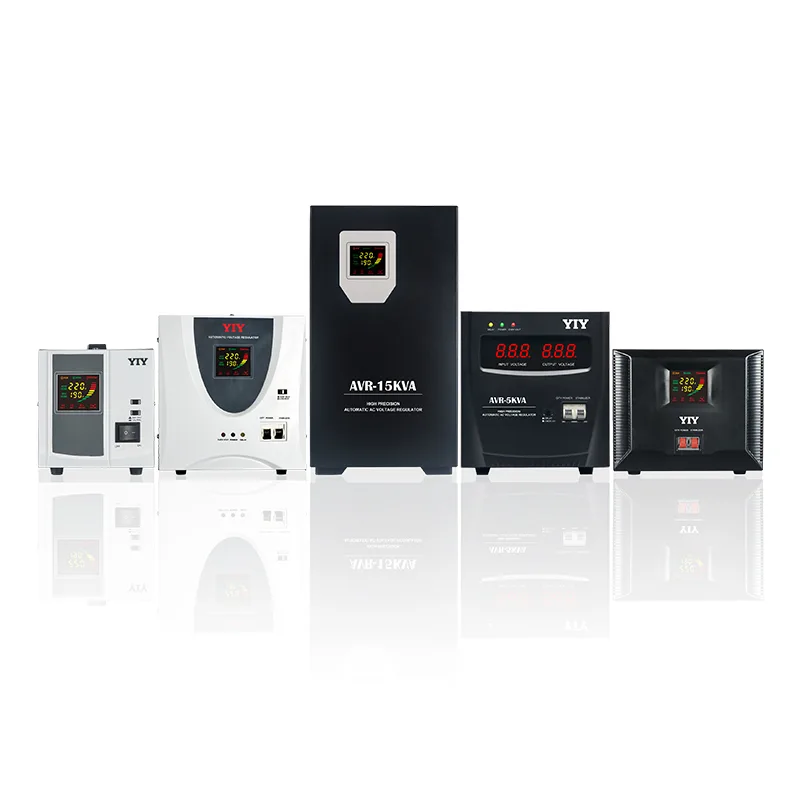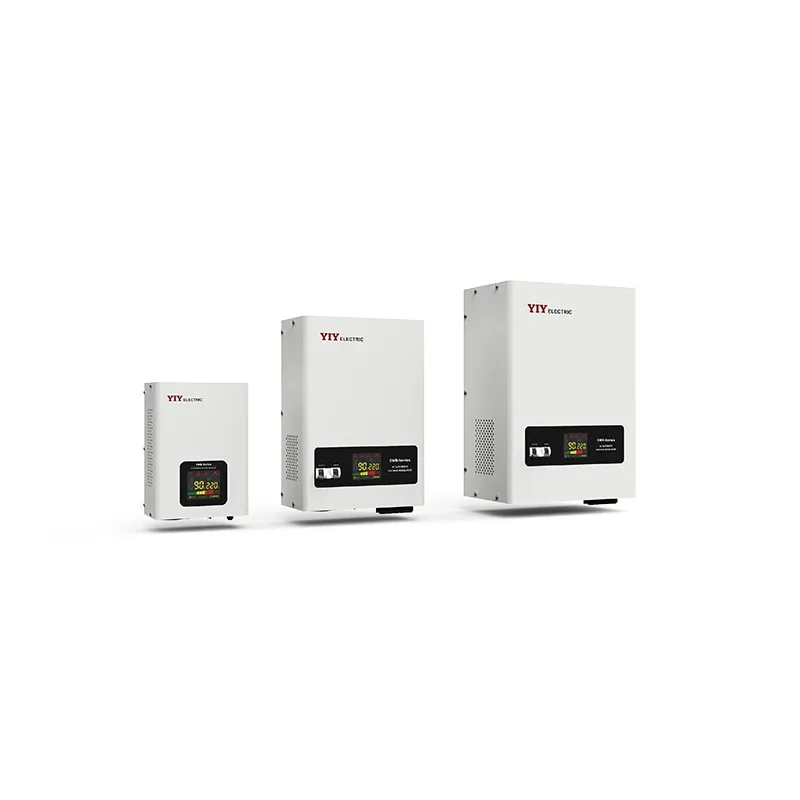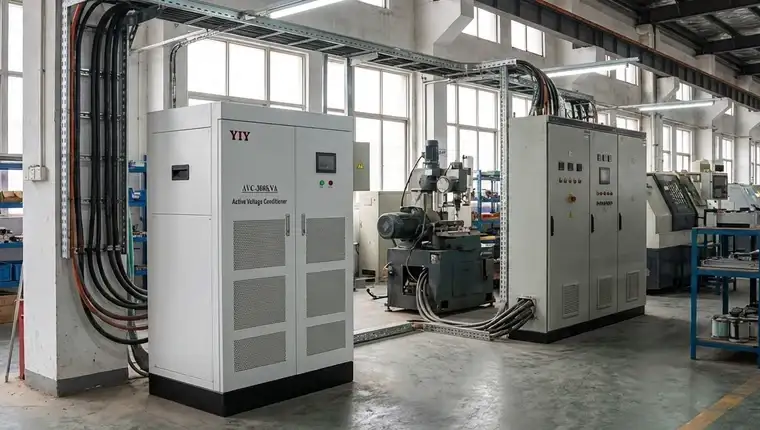
Unpredictable grid fluctuations threaten modern smart TV architectures, where sensitive microprocessors and power boards can suffer irreversible damage from sudden sags or surges. Selecting the right led tv voltage stabilizer has shifted from an optional accessory to a critical procurement decision that dictates asset longevity, warranty validity, and total cost of ownership.
To navigate this evaluation efficiently, this guide breaks down how to map local voltage tolerances against total system loads, compare response architectures, and verify compliance benchmarks. Following this structured specification path ensures procurement teams deploy engineered protection that matches actual grid volatility, eliminating costly retrofit cycles and generic consumer-grade replacements.
Defining the Role of a Voltage Stabilizer for LED TVs
At its core, a voltage stabilizer functions as an active regulation barrier between the utility grid and sensitive display electronics. Instead of passively transmitting incoming power, it continuously samples supply lines and automatically corrects output voltage to a strict reference standard. This dynamic compensation process prevents sudden drops from disrupting smart-TV connectivity, ensuring downstream equipment receives stable energy regardless of upstream grid severity.

For facility managers and residential buyers evaluating fast-response relay architectures against microprocessor tolerance standards, understanding how a relay voltage stabilizer operates provides the baseline for reliable entertainment setups. These engineered units utilize rapid tap-switching networks to deliver millisecond correction cycles at minimal upfront cost, making them highly practical for standard indoor environments where space and acoustic profiles matter.
Modern Display Vulnerability to Grid Stress
Contemporary LED and smart TV architectures pack high-density microprocessors into increasingly thin chassis, leaving minimal electrical headroom for raw power variance. When the grid experiences prolonged brownouts or sudden voltage sags, internal switching power supplies struggle to maintain operational thresholds, triggering chronic thermal stress across main PCB layers. Conversely, sharp transient surges instantly bypass primary filtering stages, delivering lethal current spikes that permanently degrade LED driver ICs and backlight arrays.
Response Architectures & Technology Profiles
To understand how voltage stabilizer works across different topologies requires balancing correction latency against strict precision tolerances. Electromechanical relays utilize rapid tap-switching to deliver fast response cycles, making them ideal for general residential use. Servo-controlled units track fluctuations through continuous motorized feedback at ±0.5% output accuracy, while IGBT solid-state regulators provide seamless, zero-step waveform adjustment for mission-critical commercial displays.
Baseline Market Context & Expectations
Entry-level consumer models generally operate within a rigid 90V to 290V input window, optimized for localized grids with predictable daily variance. While adequate for single-room home entertainment, these compact designs frequently compromise on sustained overload capacity and thermal dissipation. Industrial-grade alternatives expand the operational envelope significantly, integrating hardened protection circuitry, wider capacity scaling, and strict IEC compliance to withstand demanding facility deployments.
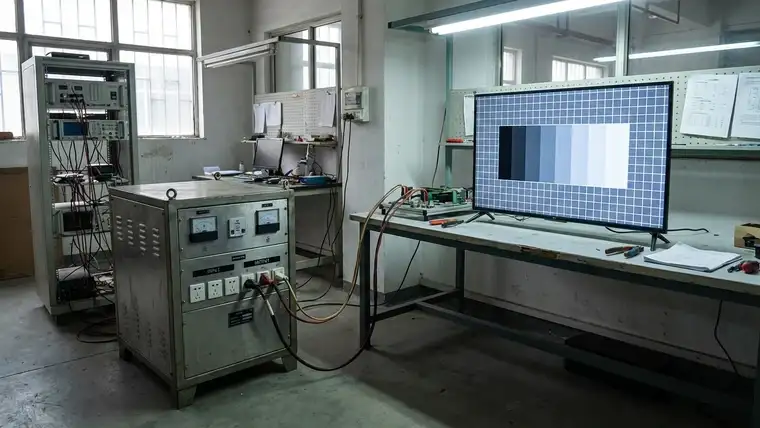
Who Needs Protection and the Core Buying Trade-offs
Securing reliable power for LED displays spans three distinct buyer profiles: individual homeowners managing volatile grids, institutional procurement teams standardizing digital assets, and facility managers overseeing high-density hospitality or residential blocks. Grid instability forces rapid evaluation of power conditioning hardware before bulk procurement cycles begin.
If you’re navigating the voltage stabilizer for television buying guide landscape, you’ll quickly notice that modern smart TV architectures leave zero electrical headroom for raw power variance, making proactive protection non-negotiable for long-term deployment.
Consumer-Grade Limits vs. Engineered Reliability
Compact retail stabilizers typically promise wide 90V to 290V input windows in aggressive, space-saving enclosures. These units frequently compromise on sustained overload capacity and thermal dissipation, leading to shorter duty cycles and premature relay contact degradation. Engineered indoor-rated alternatives eliminate these failure modes by integrating industrial-grade relay architectures with hardened protection circuitry designed for continuous operation.
Why Relay Topologies Optimize Entertainment Setups
Fast-response relay networks consistently outperform motorized alternatives for residential entertainment and hospitality displays. Electromechanical tap-switching executes voltage correction within milliseconds, instantly neutralizing transient sags that would otherwise crash smart-TV operating systems. Servo mechanisms deliver tighter precision but introduce mechanical latency and audible operational hum, making relay topologies the optimal, cost-efficient choice for standard 40-inch to 80-inch setups.
Aligning Procurement with Indoor Specifications
The vendor selection process heavily depends on application context rather than raw wattage ratings alone. While competitors dominate ruggedized outdoor deployments, their heavy enclosures ignore the spatial and acoustic constraints of interior hospitality environments. YIY bridges this gap with dedicated indoor TV protection modules engineered for silent operation, compact wall-mounting, and strict IEC compliance across multi-room residential networks.
Technical Sizing and Selection Criteria for TV Loads
Selecting a voltage stabilizer for led tv requires matching exact capacity, input windows, and response times to your local grid profile. The table below outlines the core technical differentiators you should verify before procurement:
| Specification Parameter | Relay Topology | Servo Topology | IGBT Solid-State Topology |
|---|---|---|---|
| Response Time | 10–50 ms | ≤1.0–2.0 s | <1 ms (seamless) |
| Output Accuracy | ±5% to ±8% | ±0.5% to ±3% | ±0.5% |
| Correction Method | Step-wise tap switching | Continuous motorized brush contact | Zero-step high-frequency switching |
| Maintenance Needs | Low (periodic contact inspection) | Moderate (brush/bearing wear over time) | Minimal (solid-state components) |
| Acoustic Profile | Audible click during correction | Continuous low hum during operation | Completely silent |
| Best Application | Residential, hospitality, standard smart TV setups | High-precision commercial displays, broadcast studios | Mission-critical medical, lab, or server-grade displays |
Load Calculation Methodology
Accurate capacity sizing requires a strict audit of every active component within the modern entertainment ecosystem. Facility managers should standardize this evaluation by summing the rated wattage of the primary display panel, dedicated set-top box, and acoustic soundbar, then applying a mandatory 1.2 to 1.3 safety multiplier to establish the final VA requirement. When evaluating a 5kVA servo stabilizer selection, remember that accurate capacity sizing requires strict audit of every active component to prevent chronic undervoltage lockouts while guaranteeing hardware operates safely below continuous thermal saturation limits.
Input Voltage Range Mapping
Aligning the correction window with regional grid baselines eliminates unnecessary capital expenditure and prevents premature protection trips during heavy seasonal demand. Engineering teams must log nominal utility ratings alongside historical fluctuation ceilings, cross-referencing local distribution telemetry with manufacturer tolerance charts to accurately map expected supply volatility. When specifying a voltage stabilizer for smart tv installations, always verify that the internal regulation architecture sustains strict output stability even when upstream distribution consistently plunges into critical brownout territory.
Response Time Thresholds & Panel Longevity
Correction latency directly dictates the operational lifespan of integrated power supply modules. Deploying a capri voltage stabilizer for led tv or equivalent engineered unit guarantees these temporal parameters align with strict microprocessor tolerance standards, effectively preventing cumulative dielectric breakdown across critical motherboard trace layers. Servo-controlled topologies deliver continuous waveform adjustment within ≤1–2 seconds, whereas electromechanical relays bypass motorized delays entirely by executing instantaneous tap-switching networks that intercept hazardous transient spikes.
Compliance Standards, Testing, and Quality Benchmarks
Procurement decisions should prioritize verifiable engineering over promotional claims, as true voltage protection relies on strict adherence to global electrical standards and documented manufacturing protocols. Grounding your selection framework in certified protocols ensures long-term grid compatibility while eliminating premature hardware failures driven by untested tolerance thresholds.
Navigating IEC Framework for Grid Compatibility
The IEC 60038 voltage standards establishes nominal voltage ratings for public supply networks, ensuring stabilizers align with regional baselines without triggering false protection trips during normal fluctuations. Simultaneously, the IEC 61000 series enforces strict electromagnetic compatibility (EMC) requirements, shielding sensitive TV microprocessors from harmonic distortion and upstream grid interference. Units lacking documented IEC validation risk injecting electrical noise into local circuits, permanently degrading both LED panel longevity and peripheral connectivity.
Quality Management & Component Integrity
Manufacturing consistency directly dictates output precision and operational lifespan, making ISO 9001:2015 certification a mandatory screening filter for serious procurement. Verified quality management systems enforce rigorous auditing across transformer winding tolerances, raw component sourcing, and automated output calibration. This systematic oversight guarantees every unit delivers consistent ±0.5% output accuracy across high-volume production batches. Without these structural controls, random contact degradation and premature coil fractures become statistically inevitable within eighteen months of standard deployment.
Mandatory Safety Features vs. Marketing Specifications
Engineering-grade protection requires three non-negotiable cut-off mechanisms: over-voltage, under-voltage lockout, and thermal safety switches. Over-voltage circuits instantly disconnect power when input spikes exceed maximum thresholds. Under-voltage mechanisms safely isolate displays during prolonged brownouts, avoiding chronic electrical strain. Thermal cut-offs provide critical redundancy, automatically neutralizing operations before core components reach dangerous heat saturation levels.
When implementing a servo voltage stabilizer in premium lounge or broadcast environments, always request independent thermal imaging logs and third-party compliance certificates to confirm genuine reliability before scaling inventory orders. Clear boundaries separate certified compliance requirements from marketing-driven specifications like aesthetic digital displays or exaggerated 90V–290V claims.
Implementing YIY’s Precision Solutions in Real Environments
Translating theoretical load calculations into operational hardware requires matching YIY’s scalable 0.5–3000KVA manufacturing range to your exact display architecture. For standard 32-inch to 65-inch entertainment clusters, fast-response relay topologies deliver millisecond tap-switching to instantly neutralize transient sags. When facility operators demand tighter waveform consistency across high-density hospitality suites, servo-controlled architectures provide continuous motorized feedback at ±0.5% output precision without introducing disruptive operational noise.
Global Deployment Validation
This engineered precision translates directly to field durability, reinforced by an annual production capacity exceeding 1,000,000 units across ISO 9001:2015 audited manufacturing lines. YIY stabilizers currently maintain active protection networks across 130+ countries, effectively validating indoor reliability claims under highly divergent utility grid conditions. These verified commercial deployments prove consistent thermal management and silent operation, ensuring strict IEC compliance even in premium lounge environments.
OEM/ODM Procurement Flexibility
Distributors and enterprise procurement teams require strictly engineered protection modules rather than generic retail hardware. YIY supports extensive OEM/ODM customization, allowing bulk buyers to configure internal transformer windings, expand input voltage windows, and integrate industrial communication protocols that match regional distribution baselines. This factory-direct adaptability eliminates costly post-installation retrofitting while guaranteeing seamless electrical integration.
Transition to Engineering Consultation
Selecting the optimal power architecture ultimately depends on granular site telemetry rather than generic panel wattage ratings. To guarantee uncompromised power conditioning across your distributed network, procurement managers should submit detailed aggregate load profiles, historical grid fluctuation logs, and specific ambient thermal constraints. Providing these operational parameters allows YIY engineers to bypass theoretical estimation models, run detailed compatibility simulations, and deliver precisely matched stabilization recommendations.
Frequently Asked Questions
Do we actually need a dedicated LED TV voltage stabilizer?
Modern smart TVs pack dense microprocessors into thin chassis, leaving zero electrical headroom for raw grid variance. Voltage sags and transient surges easily bypass basic surge protectors, permanently degrading internal power boards and LED drivers. A dedicated stabilizer continuously samples supply lines and enforces strict output stability, extending hardware lifespan and preserving manufacturer warranties across commercial deployments.
How should capacity be sized for a TV setup with peripherals?
Never size based on the display panel alone. Sum the rated wattage of the television, external decoder, and acoustic peripherals, then multiply by 1.2 to 1.3 for a mandatory engineering safety margin. For a standard 55-inch entertainment cluster, this usually translates to a verified 1.0–1.5 kVA unit, preventing thermal saturation during peak operational hours.
What is the practical difference between relay and servo architectures?
Relay units use rapid tap-switching networks for millisecond correction, making them highly practical for cost-efficient residential and hospitality environments. Servo models track grid fluctuations via motorized feedback loops to deliver tighter ±0.5% precision, but introduce slight response latency and audible operational hum. Procurement teams typically standardize on relay topologies for silent, reliable spike interception.
Final Thoughts
Selecting an led tv voltage stabilizer depends on precise load mapping, topology alignment, and verified compliance. Begin by calculating the aggregate wattage of displays and peripherals, then apply a 20–30% safety margin to prevent thermal saturation. Cross-reference that capacity against local grid baselines, opting for fast-response relay networks in standard setups or servo-controlled units when ±0.5% precision is mandatory. Always verify IEC 60038 compliance and ISO 9001:2015 manufacturing controls to filter consumer-grade models that compromise internal winding quality. Proper sizing transforms unpredictable grid stress into managed operational overhead.
To move from specification to deployment, share your exact load breakdowns, historical fluctuation data, and installation constraints. YIY will run compatibility simulations and deliver a customized, IEC-aligned recommendation matched to your facility’s unique electrical footprint.
Related reading: Relay Voltage Stabilizer — Overview.
Buying Notes: TV Protection Is a Consumer Decision, Not an Industrial RFQ
LED TV stabilizer pages often drift into industrial language that does not help a home buyer decide. The real decision here is simple: whether the local grid is unstable enough to justify a dedicated relay-based protection layer for consumer electronics, and whether the buyer is protecting only a TV or a broader home entertainment branch.
- Use this page for: households, showrooms, hospitality rooms, and light residential environments where the TV is the most sensitive visible device on the branch.
- Stay with relay logic: when the load is entertainment electronics and the goal is cost-effective protection against household sags and surges.
- Escalate upward: if the branch also carries AC compressors, larger appliances, or mixed home-office equipment. In that case the small-capacity sizing guide is more appropriate than a TV-only article.
- Commercial checkpoint: the buyer should define whether the stabilizer protects a single TV, a media wall, or a mixed appliance branch. Those are three different purchase decisions.
This page should stay anchored in consumer-grade protection logic; once the load expands into broader appliance protection, move to the TV solution page and the small-capacity guide.