Indian homes routinely see supply voltage swing anywhere from 150V to 250V — a range wide enough to shorten appliance life, trip sensitive electronics, and leave refrigerators and ACs running on degraded power for hours at a time. A power stabilizer for home in India solves this by continuously correcting input voltage to a stable output, typically 220V ±3%, regardless of what the grid delivers.
This article is deployment guidance, not a general overview. It covers which stabilizer type fits residential loads (relay technology is the residential default for most households), how to size the unit against your actual load, and what to check before you buy — so you can make a confident decision rather than guess at specs.
What a Home Power Stabilizer Does and When Indian Homes Need One
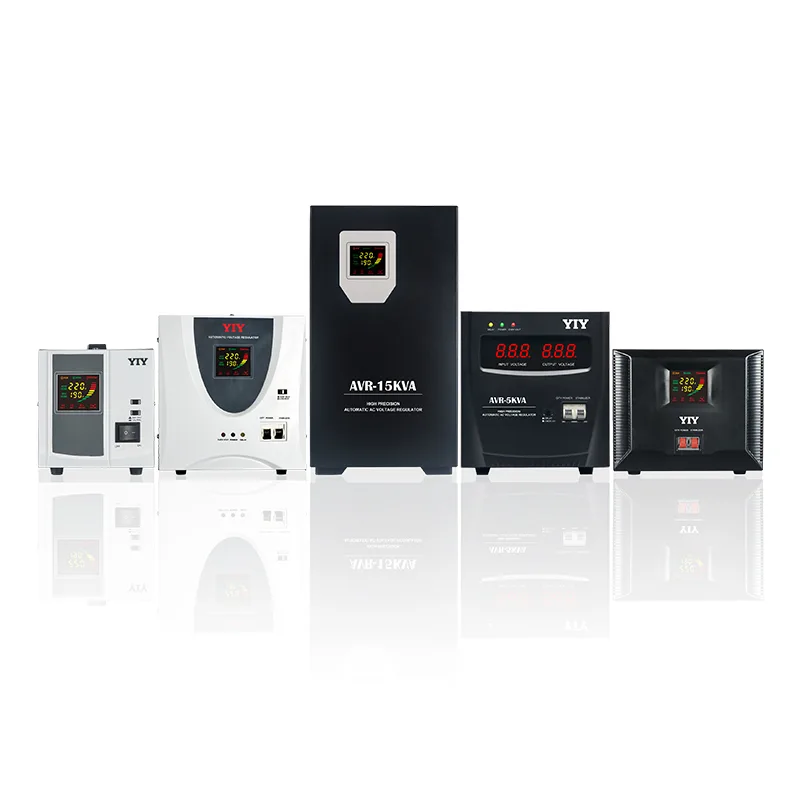
A power stabilizer for home in India — technically called a voltage stabilizer or automatic voltage regulator (AVR) — is an electromagnetic device that accepts unstable grid input and delivers constant output voltage to connected appliances. Based on established engineering methods for How Voltage Stabilizer Workshow voltage stabilizers operate, most residential units automatically monitor input levels and switch transformer taps to correct the supply to a steady 220V ±3% output. The correction happens continuously, with no user intervention required.
Why Indian Grid Conditions Demand One
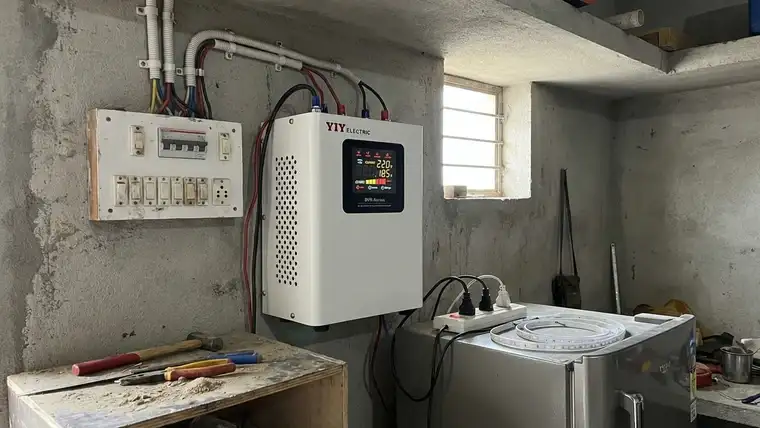
Indian utility grids rarely deliver stable voltage. Three problems dominate residential supply, making a voltage stabilizer for home use critical for appliance longevity:
- Voltage sag (brownout): Supply drops below 200V during peak demand hours. Refrigerator compressors overheat, AC units lose cooling efficiency, and motors draw excess current trying to compensate.
- Overvoltage: Supply spikes above 240V during off-peak periods or when nearby industrial loads disconnect suddenly. This burns out LED drivers, TV power boards, and washing machine control circuits.
- Sustained fluctuation: Voltage swings between sag and surge multiple times per hour in areas with weak distribution infrastructure. Repeated cycling causes cumulative thermal stress on appliance components.
According to operational data published by the Report IndexCentral Electricity Authority of India, voltage deviations in many residential distribution networks routinely exceed the nominal 230V standard for extended periods, directly correlating with increased rates of residential appliance failure.
Do home voltage stabilizers really work? Yes — a properly sized unit continuously monitors input voltage and switches transformer taps to maintain output within ±5-8% of the nominal 220V target. The appliance sees stable power regardless of what the grid delivers.
Stabilizer vs Surge Protector — Different Jobs
This distinction matters because the two devices solve different problems. A surge protector clamps brief transient spikes (lightning strikes, switching surges) lasting microseconds to milliseconds. It does not correct sustained undervoltage or overvoltage. A voltage stabilizer continuously regulates the supply level — it handles the slow, persistent voltage deviations that characterize Indian residential grids.
A surge protector alone will not help when voltage sags to 170V for three hours every evening. A stabilizer will. Many relay-type stabilizers also include built-in overvoltage cutoff and short-circuit protection, which partially overlaps with surge protector functionality — but the core job is voltage regulation, not transient suppression.
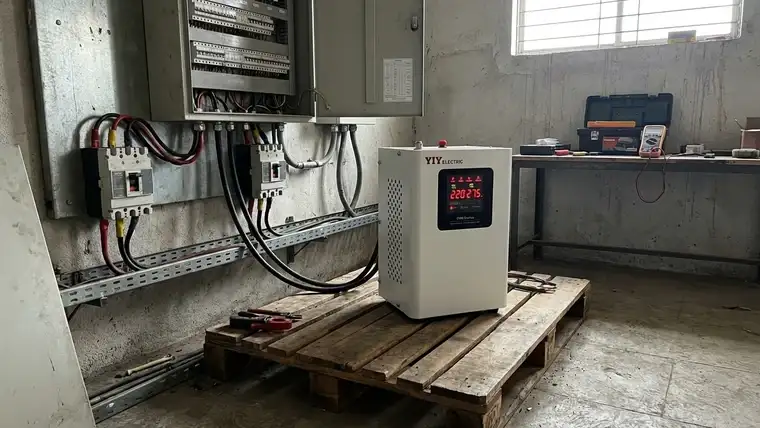
If your area experiences frequent brownouts, sustained low voltage below 190V, or regular overvoltage events above 240V, a home voltage stabilizer india is not optional — it is the minimum protection layer between the grid and your appliances.
Which Stabilizer Type Fits Residential Loads Best
Three technologies dominate the stabilizer market — relay, servo, and IGBT — and they are not interchangeable for home use. Each makes a different tradeoff between cost, precision, and response speed.
The Three-Way Tradeoff
To understand the engineering behind these devices, it helps to review the foundational Voltage Regulatorautomatic voltage regulation principles. In typical residential designs, the correction mechanism is chosen based on load tolerance:
| Stabilizer Type | Output Precision | Response Time | Best Fit Use Case |
|---|---|---|---|
| Relay | ±5% – 8% | < 20ms (Fastest) | General residential use: refrigerators, ACs, TVs. Lowest cost, highly reliable. |
| Servo | ±1% – 3% | Slow (Motorized) | Precision industrial loads, sensitive lab equipment, continuous heavy machinery. |
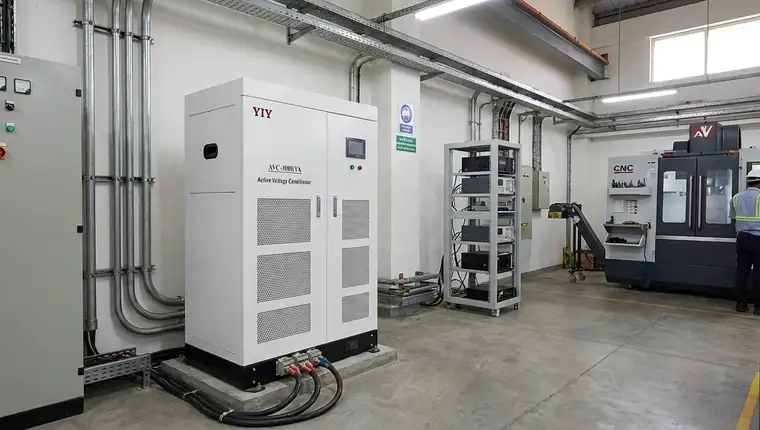
| IGBT | ±0.5% | Instant (Electronic) | Medical equipment, CNC machines, high-end audio. Overkill for typical home appliances. |
Relay stabilizers use electromagnetic relays to switch between transformer taps. The stepped correction is coarse but more than adequate for household appliances, delivering the fastest response at the lowest unit cost among the three types.
Servo stabilizers use a motorized variac to deliver continuous, stepless correction at ±1–3% precision. The detailed Stabilizer Voltage Regulator Comparisonrelay vs servo vs IGBT comparison outlines how this motor mechanism is inherently slower to respond and adds mechanical complexity — meaning higher cost and more maintenance points. Servo shines in precision-sensitive industrial loads, not in a living room.
IGBT-based stabilizers achieve ±0.5% output precision with near-instantaneous electronic switching. For a home refrigerator or TV, that precision level is overkill — and the price premium is hard to justify.
Why Relay Wins for General Residential Use
Which stabilizer is best for home use? For the vast majority of Indian households, relay technology is the correct answer. The load profile — refrigerators, ACs, TVs, washing machines — tolerates ±5–8% output variation without issue. Relay units handle the wide Indian grid input range (150V–250V) and correct to a stable 220V output at the lowest cost per VA. Faster response than servo means the appliance sees corrected voltage before a compressor or motor has time to react to the sag.
Where Competitors Draw the Line
TSI Power positions itself around industrial, telecom, and outdoor deployments. Their product story is built for rack-mount and field infrastructure — not for a 2kVA home voltage stabilizer india installation. Residential relay and portable options are not their focus.
Servomax is India-domestic and servo-centric. They serve the local market well for servo applications, but their technology stack stops there. No relay portable line, no IGBT offering, and no OEM/ODM path for buyers who need customization.
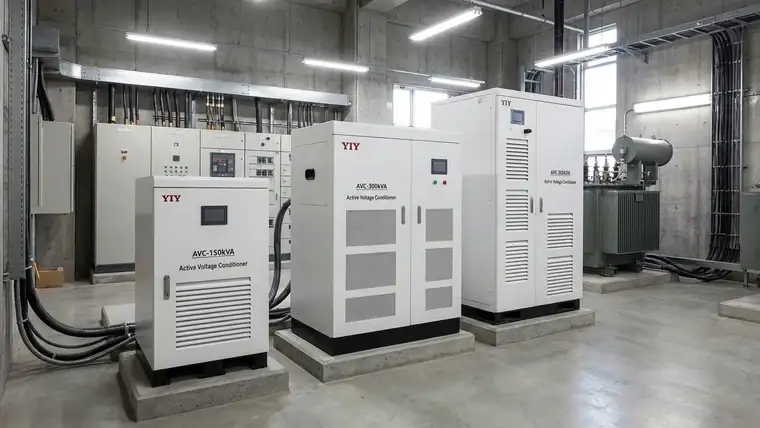
YIY covers relay, servo, and IGBT across a single product family, exported to 130+ countries. For residential buyers, that means the right technology at the right tier — without being pushed toward an industrial-grade solution that doesn’t fit the load or the budget.
How to Size a Power Stabilizer for Your Indian Home
Sizing a voltage stabilizer for home is a four-step process. Get it wrong and you either overload the unit or pay for capacity you never use.
Step 1: List Every Protected Appliance
Start with the appliances you want to protect and note the wattage or VA rating from the nameplate or manual. Common Indian home loads vary widely:
| Appliance Category | Typical Load (Starting/Peak) |
|---|---|
| 1-Ton Split AC | 1,000–1,200W |
| 1.5-Ton Inverter AC | 1,500–2,000W |
| Double Door Refrigerator | 250–350W (Surge to 1000W) |
| Front Load Washing Machine | 500–800W (Heater cycle: up to 2000W) |
| 40–55″ LED/LCD TV | 80–150W |
| Ceiling Fans (×4) | 200–300W |
Step 2: Sum the Total Load
Add up all wattage values for the appliances you plan to protect. If your nameplate shows VA instead of watts, use VA directly — they’re close enough for sizing purposes at residential power factors.
Example: Refrigerator (250W) + AC (1,800W) + washing machine (600W) + TV (100W) = 2,750W total.
Step 3: Apply the 20–30% Safety Margin
This is the rule most buyers skip — and the one that causes premature failures. Multiply your total load by 1.2 to 1.3:
2,750W × 1.3 = 3,575VA → round up to a 4kVA unit
The margin accounts for motor startup surges (compressors draw 3–5× running current at startup), aging derating, and any appliances you add later.
Step 4: Single-Phase vs. Whole-House Protection
Most Indian homes run on single-phase 230V supply. A single-phase home voltage stabilizer covering 2–5kVA handles the typical bedroom or living room load cluster.
If you want whole-house protection covering all circuits including the main distribution board, you need a mainline stabilizer sized to your sanctioned load. You can reference a practical Voltage Regulator 5kva Technical Guide5kVA technical sizing guide to understand how to map panel loads to output capacity for larger 2-3 BHK flats.
For AC-only protection, a dedicated 2kVA unit is the standard fit. A dedicated Voltage Stabilizer 3 Kva Sizing Guide3 kVA stabilizer sizing guide provides the exact breakdown of running currents versus startup surges for split and window units.
Key rule: Never size a stabilizer at exactly your calculated load. The 20–30% buffer is not optional — it’s the difference between a unit that lasts a decade and one that trips or burns out within two years.
YIY PR Series: Built for Indian Home Deployment
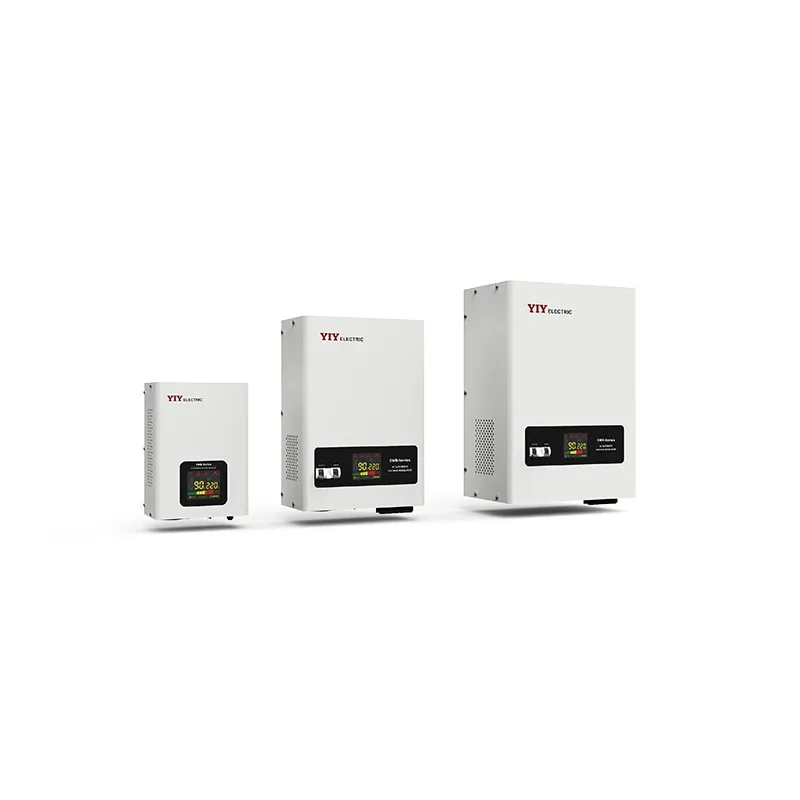
Most residential stabilizers on the market are either undersized for real Indian grid conditions or overengineered for industrial loads. The YIY PR Series sits in the gap: a portable relay stabilizer purpose-built for home deployment, covering 500VA to 2,000VA — the range that fits single-appliance and room-level protection in Indian households.
What the PR Series Delivers
The PR Series runs on CPU-controlled automatic voltage regulation, which means correction decisions are made electronically rather than through mechanical timers or manual switching. Front-panel digital meters give you live input and output voltage readings — useful in areas where grid voltage swings unpredictably throughout the day.
The built-in extension socket is a practical detail that matters in Indian homes: you plug the stabilizer into the wall, then plug your appliance directly into the unit. No additional wiring, no electrician required for basic single-appliance setups.
Protection Stack
The PR Series includes four hardware protections that address the specific failure modes common in Indian residential supply:
- Brownout protection — cuts output when input drops below the safe operating threshold, preventing compressor and motor damage during sustained low-voltage periods.
- Overvoltage cutoff — disconnects load when input exceeds the upper limit, protecting LED drivers and control boards from voltage spikes.
- Short-circuit protection — isolates the unit on downstream fault detection.
- Selectable time delay — configurable reconnection delay after a protection event (usually 3-6 minutes), which prevents compressor damage from rapid cycling on refrigerators and ACs.
Compliance and Manufacturing Credentials
The PR Series is manufactured under ISO 9001:2015 quality management, CE marked, and compliant with the Iec 60038 Standards Iec VoltagesIEC 60038 standard voltages, which define nominal voltage levels including India’s 230V residential system. These aren’t marketing claims; they’re the baseline for export to 130+ countries across regulated markets.
YIY’s manufacturing facility runs 30,000 m² of production floor with annual output exceeding 1,000,000 units. OEM and ODM customization is available for distributors and project buyers who need branded units or modified specs for specific deployment contexts.
Where Competitors Stop Short (Revisited)
While global competitors like TSI Power focus entirely on industrial, telecom, and outdoor infrastructure, they lack a residential offering entirely. Servomax serves the Indian domestic market with servo technology, which is excellent for precision-sensitive industrial loads but inefficient for a home refrigerator or TV. Their stack stops at servo; they lack a relay portable line, a cost-effective IGBT option, and an OEM path.
YIY covers relay, servo, and IGBT across a single product family. For Indian home buyers, that means the right technology tier — relay — without being pushed toward an industrial-grade solution that doesn’t fit the load or the budget.
Power Stabilizer Selection Checklist
Use this checklist to match stabilizer specs against your actual home environment before committing to a unit.
1. Input Voltage Range vs. Your Local Grid
Check your grid’s actual voltage behavior — not the nominal rating. If your area regularly drops below 190V or spikes above 240V, confirm the stabilizer’s rated input range covers that full swing. Most residential relay units handle 150V–250V input; units with a narrower window will cut out during deep brownouts rather than correct them.
2. Output Precision: Sensitive vs. Standard Loads
Standard home loads — refrigerators, ACs, washing machines, fans — tolerate ±5–8% output variation without issue. Relay stabilizers deliver exactly that, at the lowest cost. If you’re protecting medical equipment, a home server, or high-end audio gear that requires tighter regulation, step up to servo (±1–3%) or IGBT (±0.5%). Don’t pay for precision your load doesn’t need.
3. Response Time vs. Load Type
Motor loads (compressors, pumps) are sensitive to the delay between a voltage event and correction. Relay stabilizers respond in under 20ms — fast enough that the compressor doesn’t react to the sag. Servo motors are slower by design. If you’re protecting an AC or refrigerator, relay response time is sufficient. For loads where even a brief uncorrected dip causes failure, verify the stated response time against the load’s tolerance spec.
4. Form Factor: Portable vs. Wall-Mount
Portable units (500VA–2kVA) plug directly into the wall and accept one appliance at a time — no installation required. Wall-mount mainline units protect the full distribution board but require a licensed electrician for installation and are sized to your sanctioned load (typically 5–10kVA for a 2–3BHK flat). Match form factor to scope of protection, not personal preference.
5. Budget Alignment
Relay technology is the cost-effective default for residential protection. Servo and IGBT carry a significant price premium justified only by precision requirements that residential loads don’t have. Size the unit at 1.2–1.3× your calculated load — the safety margin is not optional — then select the lowest technology tier that meets your output precision and response time requirements.
Frequently Asked Questions About the Power Stabilizer for Home in India
Do home voltage stabilizers really work?
Yes. A properly sized voltage stabilizer continuously monitors incoming supply and switches transformer taps to maintain output within ±5–8% of the nominal 220V target. The correction happens automatically in under 20ms — fast enough that your refrigerator compressor or AC unit never reacts to the voltage dip. The appliance sees stable power regardless of whether the grid is delivering 170V or 245V. The key requirement is correct sizing: the unit must be rated at 1.2–1.3× your total connected load to handle motor startup surges and long-term derating.
Which stabilizer is best for home use?
For the vast majority of Indian households, a relay-type voltage stabilizer is the correct choice. Relay units deliver ±5–8% output precision — more than sufficient for refrigerators, ACs, TVs, and washing machines. They respond faster than servo stabilizers, cost significantly less than IGBT units, and handle the wide Indian grid input range (150V–250V) without issue. Servo and IGBT technology only justify their price premium for precision-sensitive industrial or medical loads that residential homes simply do not have.
What is the difference between a power surge protector and a stabilizer?
A surge protector clamps brief transient voltage spikes — lightning strikes or switching surges lasting microseconds. It does nothing about sustained undervoltage or overvoltage. A voltage stabilizer for home continuously regulates the supply level, correcting the slow, persistent voltage deviations that define Indian residential grids. When your evening voltage sags to 170V for three hours, a surge protector is useless — only a stabilizer will keep your appliances running safely.
How to size voltage stabilizer for home correctly?
Sizing is strictly mathematical. First, sum the wattage of all appliances you intend to protect. Second, add a 20% to 30% safety margin to account for startup surges. Third, convert watts to kilovolt-amperes (kVA) assuming a standard 0.8 power factor. Finally, round up to the nearest commercial rating (e.g., if your calculated load with margin is 2.8kVA, buy a 3kVA or 4kVA unit, not a 3kVA unit operating at max capacity).
Final Thoughts
A power stabilizer for home in India fits when your grid delivers sustained voltage outside the 190V–240V band, your protected loads include compressors or motors, and you need automatic correction without manual intervention. Relay technology covers that scenario at the lowest cost and fastest response — it is the residential default for a reason.
The sizing rule does not change: calculate your total connected load, apply a 1.2–1.3× margin, then select the unit. Skip the margin and you are sizing for ideal conditions, not Indian grid reality.
To get a specific deployment recommendation, share your operating environment, the loads you want to protect, and how your voltage behaves across the day. YIY will map that to the right unit and capacity.
About YIY
Zhejiang Yiyen Holding Group Co., Ltd. (YIY) is a professional voltage stabilizer manufacturer with 16+ years of experience. With a 30,000sqm modern facility and an annual production capacity of 1,000,000+ units, our products are exported to 130+ countries. We provide OEM/ODM customization services and are ISO 9001:2015 certified, committed to delivering stable and reliable voltage protection solutions to global customers.
Contact Us
Email: yiyen@yiyen.com
Phone/WhatsApp: +86 13587452904
Website: https://www.yiyavr.com/
Looking for a general guide to small voltage stabilizers? See the Complete Guide to Small Voltage Stabilizers (1–5 KVA) for technology comparison and sizing formulas that apply globally.