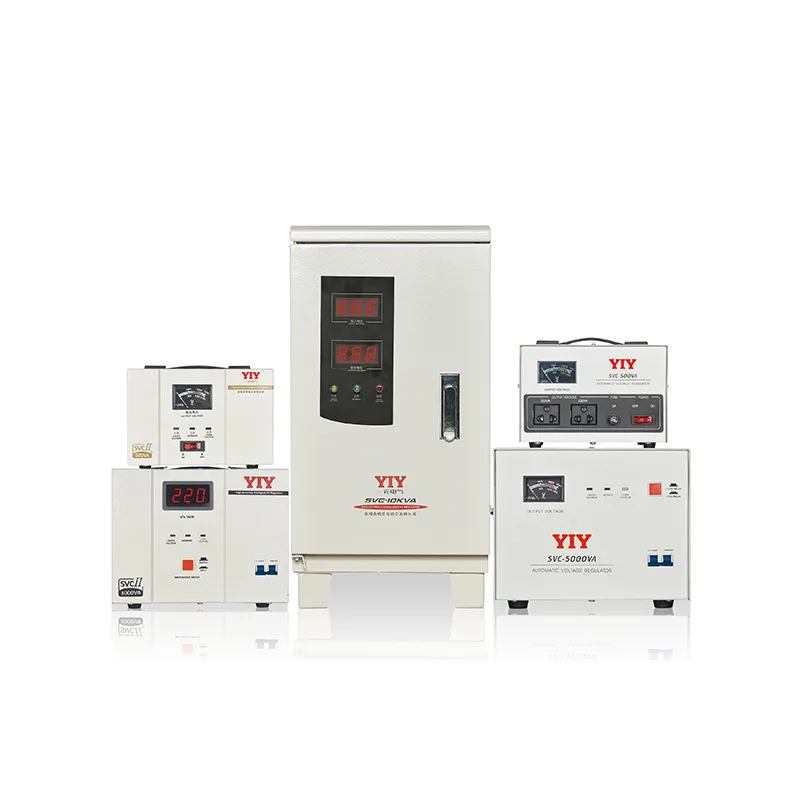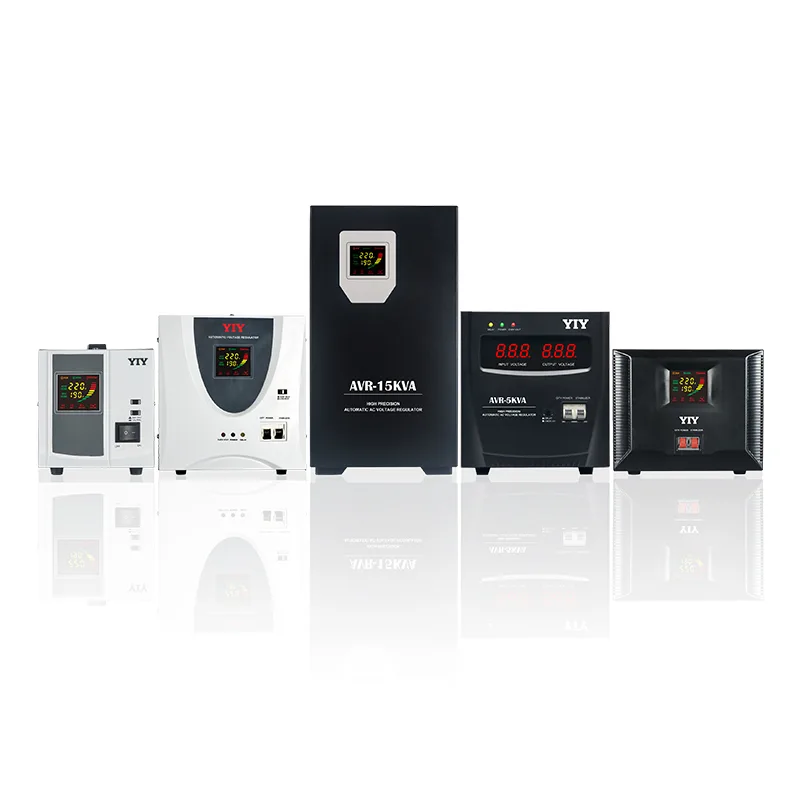
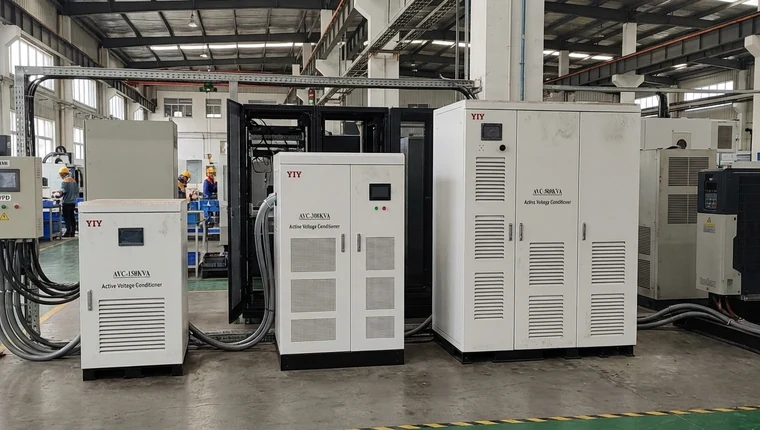
A voltage stabilizer — also called an automatic voltage regulator (AVR) — is the device that holds output voltage constant when the grid fluctuates. Knowing what is voltage stabilizer and which type fits a given application is a purchasing decision with direct consequences: grid instability is common across industrial and commercial sites, equipment damage from voltage sags or surges is expensive, and the wrong choice leaves protection gaps under real load conditions.
The practical selection criteria come down to three mechanism types — Relay, Servo, and IGBT — each calibrated for different precision requirements and load profiles. The sections below cover how each works, which compliance standards apply to cross-border procurement, how to calculate the right capacity for your site, and what distinguishes a manufacturer with global deployment capability from a regional-only option.
What a Voltage Stabilizer Does — and When Your Site Actually Needs One
A voltage stabilizer — or automatic voltage regulator (AVR) — continuously monitors incoming supply voltage and corrects it to a preset output level. When input drops, the unit boosts; when input rises, it bucks. This buck/boost operation runs in real time through sensing and correction cycles, keeping output within a defined tolerance band regardless of what the grid delivers.
The Problem It Solves
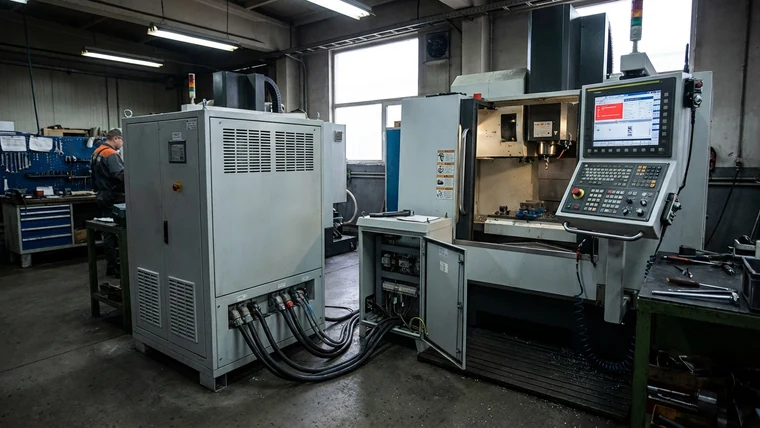
Utility grids in industrial zones, developing markets, and high-load sites regularly produce voltage sags (sustained low voltage), brownouts (extended sags below 85% nominal), and transient surges. None of these are catastrophic in a single event — but they accumulate. CNC machines experience servo drive faults and spindle positioning errors. Lighting systems cycle prematurely and degrade ballasts. Sensitive auxiliaries — PLCs, HMI panels, variable-frequency drives — misread sensor signals or enter fault states. The damage is rarely dramatic; it shows up as shortened component life, unplanned downtime, and warranty voids from out-of-spec operating conditions.
Do Voltage Stabilizers Really Work?
Yes — and the mechanism is straightforward. The stabilizer samples output voltage multiple times per second. If deviation exceeds the correction threshold, the control circuit adjusts the autotransformer tap position (Relay, Servo) or fires IGBT switching sequences (IGBT type) to bring voltage back into range. The correction loop is continuous, not reactive after damage has occurred. Third-party validation from electrical engineering sources confirms this: a properly specified stabilizer delivers constant voltage to the load regardless of input changes, provided input stays within the unit’s rated input window (typically ±10% per IEC 60038).
When You Need One — and When You Don’t
Need one: Your site voltage fluctuates beyond ±5% of nominal, or your equipment carries a rated operating voltage tolerance tighter than grid variance. CNC machining centers, medical imaging equipment, and precision lighting rigs all qualify.
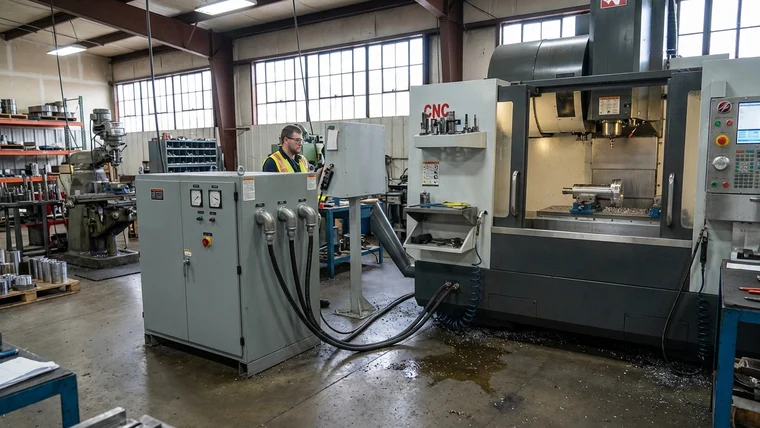
Skip it: Grid quality is stable (±2–3%), load is purely resistive (heating elements, basic motors with no electronics), and equipment tolerances are wide. Installing a stabilizer on an already-stable feed adds cost with no protection benefit.
The decision starts with a grid quality assessment — voltage logging over 24–72 hours against your equipment’s rated tolerance window.
How Voltage Stabilizers Work: Relay, Servo, and IGBT Mechanisms Compared
All three types share the same fundamental loop: sense output voltage, detect deviation, correct in real time via buck or boost. How each type executes that correction determines its precision, speed, and cost profile.
Relay Type
Electromagnetic relays switch between fixed transformer tap positions to step output voltage up or down. Correction happens in discrete increments — there is no continuous adjustment, only a jump from one tap to the next. Output precision lands at ±5–8%, which is acceptable for residential loads, general commercial equipment, and motor circuits that tolerate moderate variance. Response is fast — relay switching is near-instantaneous — and the low component count keeps unit costs down.
Servo Type
A servo motor physically repositions a carbon brush along an autotransformer winding. An MCU samples output voltage continuously and drives the motor to hold the setpoint. Because the adjustment is analog and stepless, output precision reaches ±0.5–3% — a meaningful improvement over relay switching. Response time is ≤1–2 seconds under most load conditions, which covers the majority of industrial correction requirements. This is the standard choice for CNC machines, compressors, and process equipment: better precision than relay, at a fraction of IGBT cost.
IGBT Type
IGBT units use DSP-controlled PWM switching in a double-conversion AC-DC-AC topology. Input AC is rectified to DC, then inverted back to a clean AC output — fully isolated from grid disturbances. Output precision is ±0.5%, with near-zero harmonic distortion and complete decoupling from input transients. This architecture suits medical imaging equipment, semiconductor fabrication lines, precision test benches, and any load where grid isolation is a hard requirement. Cost and complexity are significantly higher than servo.
Quick Comparison
| Type | Precision | Response | Best For |
|---|---|---|---|
| Relay | ±5–8% | Fast | Residential, general-purpose |
| Servo | ±0.5–3% | ≤1–2 sec | Industrial balance of cost and accuracy |
| IGBT | ±0.5% | Near-instant | Mission-critical, high-precision loads |
The right mechanism is determined by your load’s tolerance band, not by default preference. Tighter tolerance requirements move you up the ladder; budget and application simplicity move you down.
Compliance and Standards Every Procurement Team Should Verify
Certifications are not marketing — they define what a stabilizer must do under real operating conditions. For cross-border procurement, knowing which standards are mandatory versus optional determines whether a unit clears customs and performs legally once installed.
IEC 60038: The Baseline Voltage Standard
IEC 60038 defines the nominal voltages recognized globally — 230V single-phase, 400V three-phase — and sets the operational tolerance window at ±10% of nominal. A compliant stabilizer must hold output within specification across that full input range without degradation. If a unit trips, clips output, or reduces accuracy at the ±10% boundary, it is not conforming to the standard regardless of what the datasheet claims. Ask suppliers for test reports showing output stability at both tolerance limits, not just nominal input.
IEC 61000: EMC Requirements for Industrial Sites
IEC 61000 covers electromagnetic compatibility — the stabilizer must neither generate disruptive emissions nor fail under the interference levels typical of industrial environments. This matters for CNC lines, VFD-heavy motor circuits, and any facility where switching loads generate harmonic distortion. A unit without documented IEC 61000 compliance can introduce interference that degrades the very equipment it is meant to protect.
ISO 9001:2015 and CE Certification
ISO 9001:2015 applies to the manufacturer’s design, production, and service processes — it tells you the quality system is audited, not just the product. CE marking is a legal requirement for any stabilizer entering the European market; without it, the equipment cannot be legally sold or installed in EU member states. When evaluating suppliers, request the ISO 9001 certificate with current validity dates and the CE Declaration of Conformity specific to the stabilizer model.
Auto-Alarm and Protection Features
Compliant units must include auto-alarm circuits that trigger when input voltage exceeds the rated ±10% tolerance window. This is a functional compliance requirement, not a premium feature — it ensures the unit disconnects or alerts before operating outside its certified range, protecting both connected equipment and the warranty.
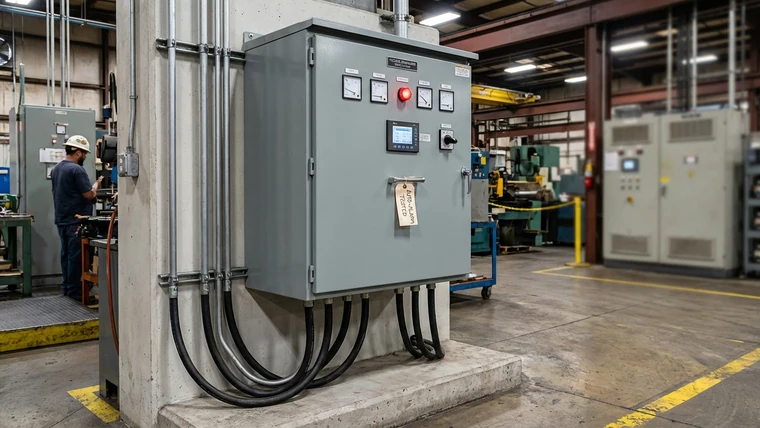
Mandatory vs. optional: EU market entry requires CE marking under the Low Voltage Directive (2014/35/EU) and EMC Directive (2014/30/EU), usually shown with harmonised EN standards (EN 61000 series for EMC). IEC 60038 lists standard voltages; it is a design reference, not an import requirement. ISO 9001:2015 is a strong supplier qualification signal but is not a legal import requirement outside specific regulated sectors.
How to Size and Specify the Right Voltage Stabilizer
Sizing errors are the leading cause of field failures. An undersized unit runs at thermal limits continuously; an over-specified unit wastes capital. The framework below gives procurement engineers a concrete path from site survey to final specification.
Step 1: Calculate Required Capacity
Add up the nameplate kVA (or kW ÷ power factor) of all connected loads. Apply a 1.2–1.3 safety factor to that total — this accounts for startup inrush, load growth, and derating at elevated temperatures. A 40 kVA aggregate load requires a 48–52 kVA rated unit minimum. Undersizing based on average load, not peak, is a common and costly mistake.
Step 2: Confirm Phase Configuration
Single-phase units serve lighting panels, office equipment, and residential circuits. CNC machining centers, industrial motors, and compressors almost always require three-phase units — running them on single-phase creates phase imbalance that degrades both the stabilizer and the connected equipment. Verify motor nameplates before specifying.
Step 3: Match Precision Tier to Equipment Tolerance
| Load Type | Required Output Precision |
|---|---|
| Lighting, HVAC, general motors | ±5–8% (Relay type sufficient) |
| CNC machines, production equipment | ±1–3% (Servo type required) |
| Lab instruments, data centers, medical imaging | ±0.5% (IGBT type required) |
Don’t over-specify — a ±0.5% IGBT unit protecting a lighting circuit adds cost with no operational benefit. Don’t under-specify — a Relay unit on a CNC spindle drive will allow enough residual variance to cause positioning faults.
Step 4: Assess the Actual Input Voltage Range
Log your site voltage over at least 24 hours before writing a spec. Single-point measurements miss morning load peaks, evening brownouts, and generator switchover transients. The stabilizer’s rated input window must fully contain the observed range — typically ±10% per IEC 60038, but industrial zones in developing markets can swing further.
Step 5: Factor in Environmental Derating
Ambient temperature above 40°C, altitude above 1,000 m, and humidity above 85% RH all require capacity derating — typically 5–10% per relevant factor. Outdoor or harsh-environment installations require an appropriate IP enclosure rating (IP54 minimum for most industrial sites; IP65 for washdown or outdoor exposure). Confirm the manufacturer’s derating curves, not just the nameplate rating.
Why Global Buyers Choose YIY Over Regional-Only Suppliers
When procurement teams evaluate voltage stabilizer suppliers across borders, the shortlist narrows fast. Most regional manufacturers — including well-known India-focused brands like Servomax — operate within a single domestic market and offer only part of the technology spectrum. That gap matters when your project spans multiple countries, requires IGBT-grade precision, or needs OEM-customized specs.
Technology Coverage: Full Lineup vs. Partial
Servomax and similar India-centric suppliers concentrate on Relay and Servo types for the local market. IGBT-based stabilizers — the double-conversion AC-DC-AC architecture required for semiconductor fabs, medical imaging, and mission-critical loads — are absent from their export catalogs. YIY manufactures and exports all three types: Relay, Servo, and IGBT. A procurement team specifying mixed-technology protection across a multi-site facility can source the complete range from one manufacturer, one quality system, and one contract.
Export Reach and Compliance
YIY ships to 130+ countries; products carry CE marking for the EU, and the factory is certified to ISO 9001:2015 and ISO 14001. Regional-only suppliers typically cannot provide the Declaration of Conformity or test reports required for European or North American market entry. For global buyers, that documentation gap is not a paperwork inconvenience — it is a legal barrier that eliminates suppliers from consideration before pricing is even discussed.
OEM/ODM Scale
The 30,000㎡ facility and 1,000,000+ unit annual production capacity support custom specifications that smaller regional manufacturers cannot absorb: non-standard input ranges, enclosure ratings, voltage setpoints, and branded configurations. Multi-site industrial buyers regularly leverage this for standardized equipment across facilities in different grid environments.
Range and Experience
The product range runs from 0.5KVA to 3000KVA — a span that covers everything from a single HVAC unit to a utility-scale substation installation — without switching manufacturers mid-project. Behind that range is 16+ years of verified deployment across industrial, commercial, and utility applications globally. ISO 9001:2015 certification applies to design, manufacturing, and service, providing an audited quality management system that many regional suppliers simply cannot document.
Frequently Asked Questions
Do voltage stabilizers really work?
Yes. The correction loop runs continuously — the unit samples output voltage multiple times per second and adjusts the autotransformer tap position (Relay/Servo) or fires IGBT switching sequences to bring output back into range before damage accumulates. Third-party electrical engineering sources confirm the same mechanism: constant output is delivered regardless of input changes, provided input stays within the unit’s rated window (typically ±10% per IEC 60038). The protection is preventive, not reactive after damage has occurred.
When is a voltage stabilizer actually necessary?
Install one when site voltage fluctuates beyond ±5% of nominal, or when equipment tolerances are tighter than grid variance. CNC machining centers, medical imaging equipment, and motor circuits with variable-frequency drives all qualify. Skip it when grid quality is stable (±2–3%) and loads are purely resistive — a stabilizer on an already-stable feed adds capital cost with no protection benefit. The decision starts with 24–72 hours of voltage logging, not assumptions about grid quality.
How should a voltage stabilizer be sized or specified for industrial use?
Sum the nameplate kVA of all connected loads, then apply a 1.2–1.3 safety factor to cover startup inrush and load growth. Confirm phase configuration — CNC machines and industrial motors almost always require three-phase units. Match precision tier to load tolerance: Relay (±5–8%) for general circuits, Servo (±1–3%) for production equipment, IGBT (±0.5%) for mission-critical systems. Log actual site voltage for at least 24 hours before finalizing the spec — single-point measurements miss brownout cycles.
Final Thoughts
Choosing the right voltage stabilizer comes down to three steps: confirm the problem exists by logging site voltage against your equipment’s rated tolerance, match the mechanism type to your precision and load requirements — Relay for general circuits, Servo for industrial balance, IGBT for mission-critical isolation — and verify that the unit you specify carries the compliance documentation your target market requires. Skipping any of these steps is where most sizing errors and protection gaps originate.
If you’re ready to move from evaluation to specification, share your load profile, site conditions, and target output requirements with the YIY engineering team. We’ll recommend the right model, type, and capacity for your application.
About YIY
Zhejiang Yiyen Holding Group Co., Ltd. (YIY) is a professional voltage stabilizer manufacturer with 16+ years of experience. With a 30,000sqm modern facility and an annual production capacity of 1,000,000+ units, our products are exported to 130+ countries. We provide OEM/ODM customization services and are ISO 9001:2015 certified, committed to delivering stable and reliable voltage protection solutions to global customers.
Contact Us
Email: yiyen at yiyen.com
Phone/WhatsApp: +86 13587452904
Website: https://www.yiyavr.com/
If you found this article helpful, contact us for a sizing review or customized solution.
Related reading: How Voltage Stabilizer Works: Relay, Servo & IGBT Guide.