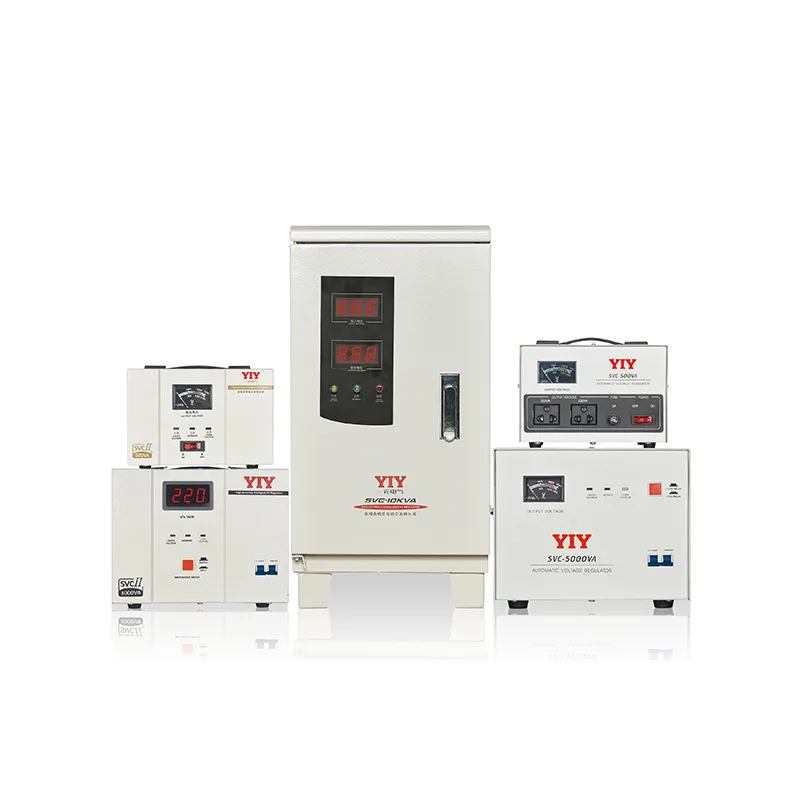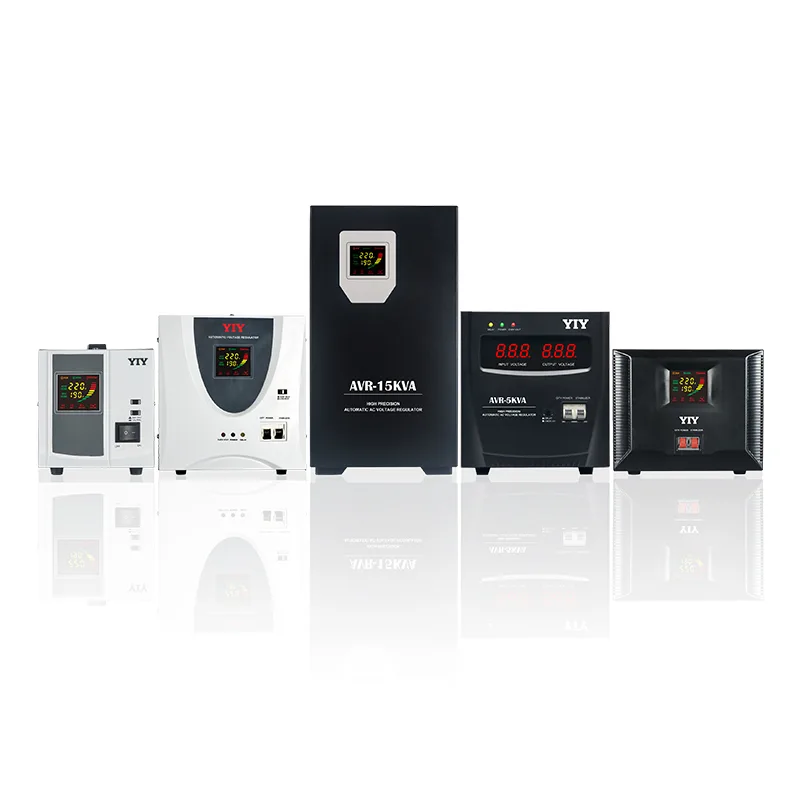
Unstable grid voltage is not a minor inconvenience — for CNC machines, medical equipment, or industrial production lines, a single voltage sag or surge can mean scrapped output, damaged hardware, or unplanned downtime. When procurement teams and facility managers start asking how does an AC voltage stabilizer work, they are usually past the awareness stage and already facing a real sourcing decision: relay, servo, or IGBT — and which topology actually fits their load, environment, and tolerance for error.
This guide cuts straight to that decision. It covers the core operating principles behind each stabilizer type, the variables that determine correct sizing and fit, the compliance standards that affect global deployment, and where each technology makes or breaks the case for selection. If you are comparing options or preparing a specification, this is the decision structure you need.
Who Needs This and What They Need to Decide
Three buyer types drive most stabilizer inquiries: electrical engineers specifying protection for production equipment, facility managers accountable for uptime in plants running CNC machines, injection molders, or precision test rigs, and procurement teams translating those requirements into sourcing decisions. All three are past the awareness stage — they already know voltage instability is the problem. What they need is a structured way to evaluate relay, servo, and IGBT topologies against their specific load, environment, and tolerance for error.
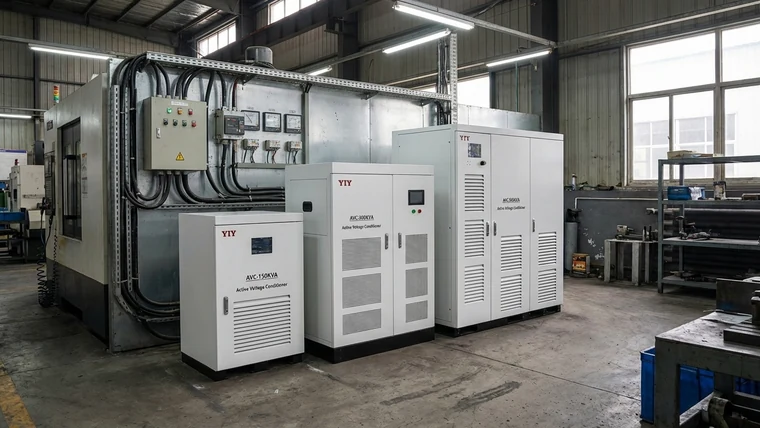
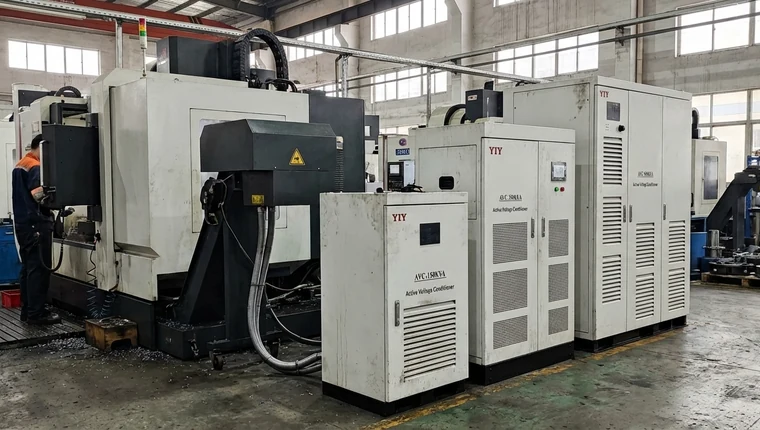
The automatic voltage regulator category — often used interchangeably with “voltage stabilizer” — covers a broad range of topologies. Understanding the distinctions between What Should You Compare Before Choosing Types Of Automatic Voltage Regulatortypes of automatic voltage regulator before specifying is the difference between a good procurement decision and an expensive one.
The Core Decision
The practical question is not whether to use a stabilizer — it’s which type fits the application. A relay-based unit is fast and low-cost, but its step-correction delivers ±5–8% precision that won’t satisfy tight-tolerance loads. A servo unit uses a continuously adjusting autotransformer to hit ±0.5–3%, making it the default choice for most industrial settings. An IGBT unit goes further with double-conversion AC-DC-AC topology and ±0.5% output, suited for mission-critical loads that cannot tolerate any waveform deviation.
Why Source Coverage Matters
Most stabilizer manufacturers specialize in one or two topologies. TSI Power, for example, focuses on AVR; Servomax covers servo and transformers. That narrower focus limits your options when application requirements cross technology boundaries — especially in multi-line facilities where different machines may call for different protection strategies. YIY covers all three types — relay, servo, and IGBT — from 0.5 KVA to 3000 KVA, with OEM/ODM support across 130+ countries. For procurement teams sourcing across global sites, that breadth reduces vendor fragmentation and simplifies compliance documentation.
The rest of this guide walks through the selection logic, sizing variables, and standards that determine which topology actually fits your load.
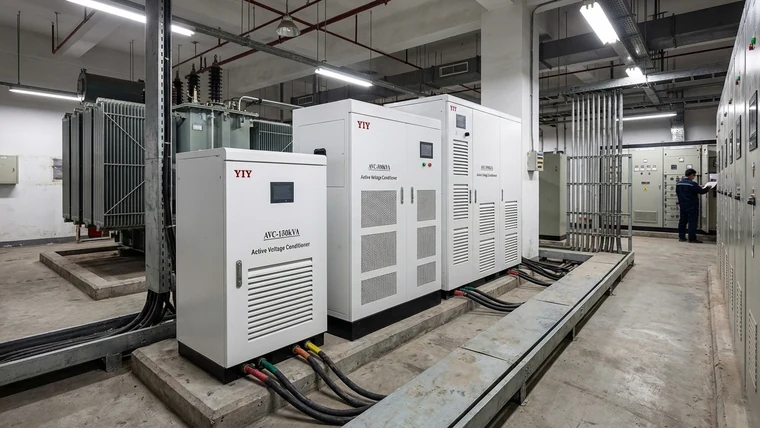
Selection Criteria and Sizing Considerations
Understanding how an AC voltage stabilizer works is only half the job. The other half is matching the voltage stabilizer working principle to your actual load profile, site conditions, and tolerance for output deviation. For a detailed side-by-side evaluation of each topology’s tradeoffs, the Stabilizer Voltage Regulator Comparisonstabilizer voltage regulator comparison covers relay, servo, and IGBT in depth.
Load Type and Power Factor
Start with the load. Resistive loads — heaters, lighting — are forgiving; relay-based stabilizers handle them fine. Motor-driven or inductive loads (compressors, CNC spindles, injection molders) generate reactive current and demand tighter regulation, which pushes the specification toward servo or IGBT. If your load includes sensitive electronics or precision instrumentation, ±1% output variance is the practical ceiling — servo or IGBT only.
Input Voltage Range and Grid Instability
Check your site’s actual input range before sizing. A location where input swings between 160V and 260V on a 220V nominal grid requires a stabilizer rated for that full range. Relay units correct in discrete steps; servo units adjust continuously via autotransformer, which handles wide and frequent fluctuations better. IGBT units with double-conversion AC-DC-AC topology provide complete grid isolation — input instability simply doesn’t reach the output.
Topology Comparison: Relay vs Servo vs IGBT
| Criterion | Relay | Servo | IGBT |
|---|---|---|---|
| Output Precision | ±5–8% | ±0.5–3% | ±0.5% |
| Response Time | <20 ms | 0.5–1.5 s | <20 ms |
| Correction Method | Step switching (transformer taps) | Continuous (carbon brush / autotransformer) | Double-conversion AC→DC→AC |
| Grid Isolation | No | No | Full |
| Waveform Purity | Good | Good | Excellent |
| Typical Capacity Range | 0.5–100 KVA | 1–3000 KVA | 1–3000 KVA |
| Ideal Application | General-purpose, residential, light commercial | Industrial machinery, CNC, compressors | Medical, precision instrumentation, mission-critical |
| Relative Cost | Low | Medium | High |
Capacity Sizing
The standard rule: total connected load (kVA) × 1.25 safety factor. For motor-heavy loads, apply an additional 1.5–2× multiplier for inrush current. Undersizing here is the most common procurement error — a stabilizer running at 95% capacity degrades faster and trips under surge conditions.
Environment and Installation
Ambient temperature, humidity, altitude, and enclosure type all affect derating. An automatic voltage regulator rated for 40°C may need to be upsized by 15–20% in a 50°C plant environment. IP rating matters too — open-frame units are not appropriate for dusty or high-moisture sites.
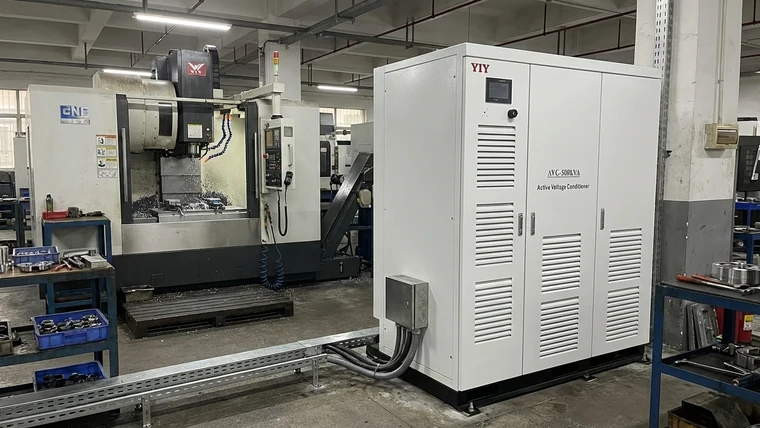
Match these four variables — load type, input range, capacity, and environment — and the right topology becomes obvious. Procurement teams building a full specification framework will find a broader treatment of application criteria in the Voltage Stabilizer Selectionvoltage stabilizer selection for industrial applications guide.
Standards, Compliance, and Proof Points
Stabilizer selection doesn’t happen in a regulatory vacuum. The standards that govern voltage equipment affect which topologies are acceptable in specific markets, how units must be tested before deployment, and what documentation procurement teams need to clear import and installation approval.
Mandatory Requirements
IEC 60038IEC 60038 defines the nominal voltage levels for global AC power systems — 230V/50Hz for most of Europe, Asia, and Africa; 120V/60Hz for North America. Any stabilizer deployed across multiple regions must be rated and tested against these reference voltages, not just the domestic grid it was built for.
IEC 61000 governs electromagnetic compatibility (EMC). Stabilizers — particularly IGBT units operating PWM switching at high frequency — must meet conducted and radiated emission limits under IEC 61000-3-2 and IEC 61000-4 immunity standards. A unit that passes IEC 61000 testing won’t introduce noise that disrupts the sensitive equipment it’s supposed to protect.
CE marking is a legal requirement for any stabilizer sold into the European Economic Area. It confirms the unit has been assessed against the Low Voltage Directive (LVD) and the EMC Directive — not just self-declared.
Verified Quality Evidence
ISO 9001:2015 certification applies to the design and manufacturing process, not just the finished product. It’s the difference between a supplier claiming consistent output precision and one whose process controls are independently audited. For procurement teams evaluating long-term sourcing reliability, ISO 9001 is a baseline, not a differentiator.
ISO 14001 (environmental management) matters for buyers whose facilities operate under corporate sustainability requirements or government environmental mandates — increasingly common in EU and East Asian markets.
Optional but worth requesting: factory acceptance test (FAT) reports, third-party calibration records for output accuracy, and burn-in test documentation. These aren’t mandatory, but they separate manufacturers with genuine process discipline from those who only meet the minimum bar.
How an AC Voltage Stabilizer Works — and When It Matters
An AC voltage stabilizer is an electrical device that automatically maintains constant output voltage regardless of what the incoming grid supply does. When input voltage fluctuates — whether from utility-side instability, load switching on shared circuits, or infrastructure limitations — the stabilizer detects the deviation and corrects it before it reaches connected equipment. The output stays within a defined tolerance band. The load never sees the grid’s instability.
The Core Operating Mechanism
The correction process works through one of three topologies — for a deeper breakdown of each mechanism, see How Voltage Stabilizer Workshow voltage stabilizer works.
Relay-based units use electromagnetic relays to switch between transformer taps in discrete steps — fast and cost-effective, but limited to ±5–8% output precision. The control circuit monitors input voltage continuously; when deviation exceeds the threshold, the appropriate relay fires and connects a different tap, either boosting or bucking the output. The correction is nearly instantaneous (<20 ms) but moves in fixed increments, which means output precision is bounded by how many taps the transformer has.
Servo units drive a carbon brush along an autotransformer (variac) via a servo motor under MCU control. Unlike relay switching, this is a continuous mechanical adjustment — the brush moves to precisely the winding position that delivers the target output voltage. The MCU samples input and output voltage, calculates the required turns ratio, and commands the servo motor accordingly. This gives ±0.5–3% precision and handles wide, frequent input swings without the output stepping that relay switching produces. The tradeoff is response time: mechanical adjustment takes 0.5–1.5 seconds, which is too slow for loads sensitive to transients.
IGBT units use Insulated Gate Bipolar TransistorIGBT switching technology in a double-conversion AC→DC→AC topology with PWM switching and DSP control. The input AC is rectified to DC, then synthesized back to clean AC at the target voltage and frequency. Because the output is regenerated rather than tapped or adjusted, the load is fully isolated from the grid — input instability, harmonics, and transients cannot pass through. Output precision reaches ±0.5%, and response is as fast as relay-based units (<20 ms) with none of the step-correction artifacts.
When This Topic Becomes a Sourcing Decision
Understanding how does ac voltage stabilizer work stops being academic the moment grid instability affects production. A CNC machine losing calibration, an injection molder tripping mid-cycle, or a test rig delivering inconsistent results — these are the failure modes that push engineers into specification mode. The question shifts from “does a stabilizer help?” to “which topology is right for this load and this site?”
That’s also where supplier coverage matters. YIY manufactures all three types — relay, servo, and IGBT — from 0.5KVA to 3000KVA, with OEM/ODM support across 130+ countries. A single source across all topologies simplifies specification, procurement, and compliance documentation across multi-site deployments.
YIY Capabilities, Product Fit, and Implementation Guidance
Most stabilizer manufacturers are built around a single topology. TSI Power focuses on AVR; Servomax concentrates on servo and transformer-based units. That narrowed scope works until a project requires protection across different load types or sites — at which point vendor fragmentation becomes a real procurement problem. YIY manufactures all three types: relay, servo, and IGBT, from 0.5 KVA to 3000 KVA, within a single ISO 9001:2015-certified production system.
What Each Type Covers
Relay stabilizers handle general-purpose and cost-sensitive applications — residential equipment, light commercial loads, situations where ±5–8% output precision is sufficient and fast response (typically <20 ms) is the priority.
Servo stabilizers are the default choice for most industrial deployments: continuous autotransformer adjustment under MCU control delivers ±0.5–3% output precision, which covers CNC machines, injection molders, and compressor-driven production lines.
IGBT stabilizers apply where the load cannot tolerate any waveform deviation — precision instrumentation, medical equipment, test rigs — using double-conversion AC→DC→AC topology and DSP-controlled PWM to achieve ±0.5% output with full grid isolation. For mission-critical loads where the choice between servo and IGBT hinges on waveform purity and grid isolation requirements, Stabilizer Voltage Regulator Comparisonservo vs IGBT technology goes deeper on both.
Manufacturing Capability and OEM/ODM Scope
YIY operates a 30,000㎡ facility with annual production capacity exceeding 1,000,000 units. Products are exported to 130+ countries, with CE marking and ISO 14001 documentation available to support import and installation approval across major markets. OEM/ODM customization — enclosure type, input range, communication interface, voltage rating — is supported across all three product families, which matters for procurement teams sourcing against site-specific specifications rather than off-the-shelf configurations.
Application Fit in Practice
For multi-line facilities running different machine types, the ability to source relay, servo, and IGBT units from one supplier under one quality system simplifies specification, reduces vendor management overhead, and makes compliance documentation consistent across sites. That’s the practical case for full-topology coverage — and it’s where narrower competitors structurally cannot follow.
Common Questions, Next Steps, and CTA
Specs This Article Couldn’t Fully Cover
A few technical details fall outside what a selection guide can pin down without knowing your specific application. Exact response times vary by unit size and configuration — relay units typically correct within <20 ms, servo units within 0.5–1.5 seconds depending on motor torque and input swing range. Input voltage acceptance ranges also differ by model: YIY’s relay line commonly handles 140V–260V (single-phase, 220V nominal), while servo units can be configured for wider swings, and IGBT units are rated to tolerances specified at order. These parameters need to be confirmed against your site’s actual grid data before finalizing a specification.
Single-Phase vs. Three-Phase: Not a Minor Footnote
Single-phase and three-phase stabilizers operate on the same correction principles, but the topology and balancing requirements differ significantly. Three-phase servo units must maintain balance across all three legs — unbalanced loads or phase-to-phase voltage asymmetry can affect output precision. If your facility runs three-phase machinery (CNC lines, injection molding banks, compressor arrays), this is a specification variable that needs to be addressed explicitly, not assumed.
Do Voltage Stabilizers Really Work?
Yes — but only when properly matched to the load. An undersized or wrong-topology unit will still allow voltage deviation to reach equipment. The correction mechanism is sound; the failure mode is almost always specification error, not technology failure.
Next Step: Get a Model Recommendation
The selection logic in this guide points to the right topology. Translating that into a specific model, input range, and capacity requires knowing your load profile, site conditions, and target output tolerance. Share those details with YIY’s engineering team — they’ll recommend the right unit across relay, servo, or IGBT, from 0.5KVA to 3000KVA, and can support OEM/ODM configuration if your application calls for it.
Frequently Asked Questions
What should buyers evaluate before choosing an AC voltage stabilizer?
Four variables determine the right topology: load type, input voltage range, required output precision, and installation environment. Resistive loads tolerate relay-based units with ±5–8% output precision. Inductive or motor-driven loads — CNC spindles, injection molders, compressors — need tighter regulation, which pushes the specification toward servo (±0.5–3%) or IGBT (±0.5%). Input range matters too: if your site swings between 160V and 260V on a 220V nominal grid, the unit must be rated for that full span. Finally, ambient temperature and IP rating affect derating — a unit spec’d for 40°C may need to be upsized by 15–20% in a 50°C plant environment.
When is an AC voltage stabilizer necessary?
The moment grid instability starts affecting production output. A CNC machine losing calibration mid-run, an injection molder tripping under load, or a test rig delivering inconsistent results — these are the failure modes that make a stabilizer a production requirement, not an optional upgrade. If your facility runs sensitive electronics, precision instrumentation, or medical equipment, any waveform deviation reaching the load is unacceptable. That’s when IGBT double-conversion topology becomes the only defensible specification.
How should an AC voltage stabilizer be sized or specified?
Start with total connected load in kVA, then apply a 1.25 safety factor. For motor-heavy loads, add a further 1.5–2× multiplier to account for inrush current at startup. Undersizing is the most common procurement error — a stabilizer running near capacity degrades faster and trips under surge conditions. Confirm the input voltage acceptance range against your site’s actual grid data before finalizing any specification.
Final Thoughts
The decision comes down to four variables: load type, input range, output precision requirement, and installation environment. Get those right and the topology — relay, servo, or IGBT — follows logically. Most industrial applications land on servo. Loads that can’t tolerate any waveform deviation require IGBT. Cost-sensitive or general-purpose applications are where relay makes sense.
Where many procurement teams hit friction is sourcing: most manufacturers cover one or two topologies, which forces vendor fragmentation as application requirements diversify. A single supplier across all three simplifies specification and compliance across sites.
If you’re ready to move from selection logic to a specific model, share your load profile, site conditions, and target output tolerance with YIY’s engineering team — they’ll identify the right fit.
About YIY
Zhejiang Yiyen Holding Group Co., Ltd. (YIY) is a professional voltage stabilizer manufacturer with 16+ years of experience. With a 30,000㎡ modern facility and an annual production capacity of 1,000,000+ units, our products are exported to 130+ countries. We provide OEM/ODM customization services and are ISO 9001:2015 certified, committed to delivering stable and reliable voltage protection solutions to global customers.
Contact Us
Email: yiyen at yiyen.com
Phone/WhatsApp: +86 13587452904
Website: https://www.yiyavr.com/