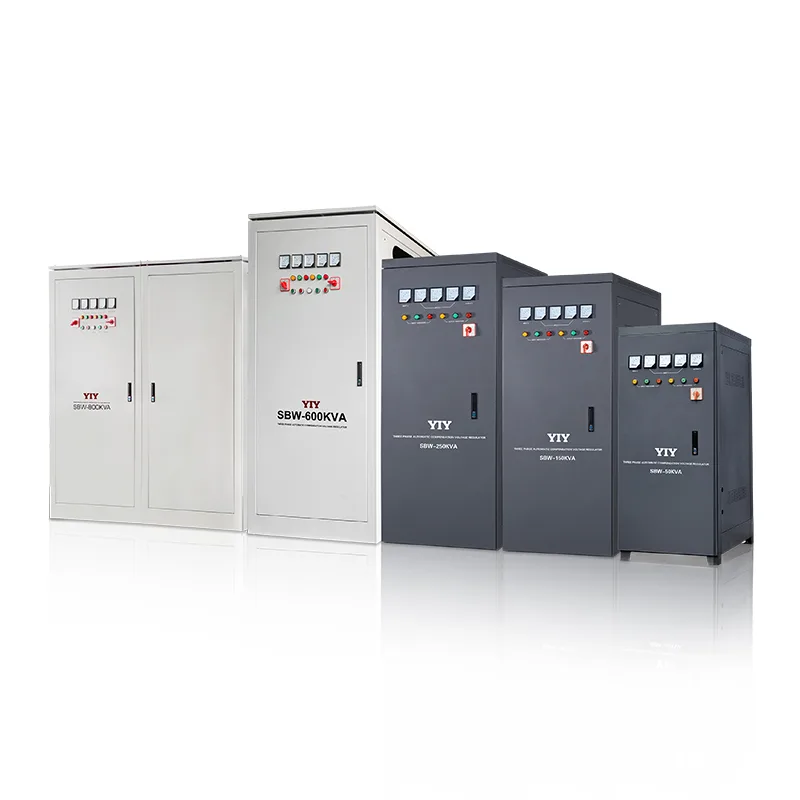
Evaluating a 7kv stabilizer starts with one question: does “7kV” mean a voltage class or a capacity shorthand? Settle that, then match load dynamics, environment, and maintenance to your site. This guide covers the terminology, use cases, sizing, topology, standards, and supplier checks.
For heavy cyclic industrial loads, a servo voltage stabilizer architecture is usually the first family to evaluate.
Does “7kV” Mean a Voltage Class or Capacity Shorthand?
Often it’s ambiguous. Some buyers mean a genuine high-voltage class; others use “7kV” loosely for a site-level stabilizer that is really sized in kVA. The quotation path depends on the answer.
- First checkpoint: confirm whether the request is about voltage class, insulation environment, or stabilizer capacity.
- If it’s really capacity: move to the 10–25 kVA three-phase guide or the 200–500 kVA guide, depending on project scale.
- Commercial checkpoint: don’t let mixed terminology reach the RFQ. Fix the electrical standard, load profile, and operating environment first.
Defining the 7kV Stabilizer and Its Role in Reliable Power
At its foundation, a 7kV stabilizer functions as a high-capacity automatic voltage regulator (AVR) designed to isolate critical infrastructure from erratic grid conditions. The unit continuously samples incoming line voltage, compares it against a fixed digital reference, and dynamically recalibrates the internal transformer ratio. This closed-loop feedback mechanism instantly neutralizes dangerous sags and transient surges before they reach downstream assets.
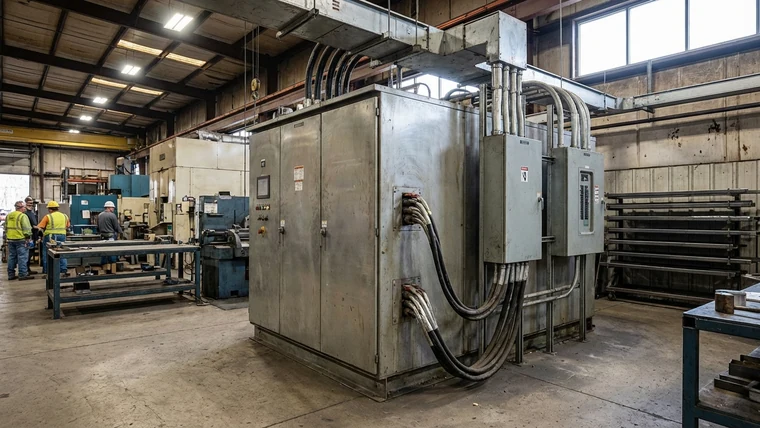
For industrial environments, this continuous correction directly dictates equipment longevity and process stability. Unregulated power delivery rapidly degrades heavy motor windings, corrupts programmable logic controllers, and accelerates electronic component fatigue. Maintaining a rigid output band ensures that automated production lines operate exactly at design voltage. This stable electrical baseline completely eliminates thermal stress, protects warranty terms, and preserves strict manufacturing tolerances.
When mapping power distribution across multiple bays or production zones, single-phase units rarely scale to meet aggregate demand. For detailed phase-specific load distribution strategies, refer to our three-phase capacity guide linked above to align multi-point protection with facility architecture.
Identifying Key Use Cases and Decision-Making Roles
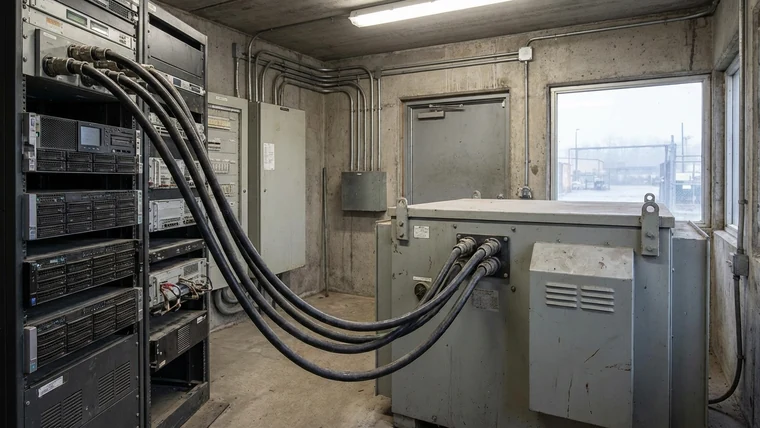
Selecting a reliable industrial voltage stabilizer demands moving past generic marketing claims and aligning precise voltage correction capabilities with your facility’s actual operating parameters. Different industrial environments impose radically different electrical stress profiles on power regulation equipment.
Mapping Critical Application Scenarios
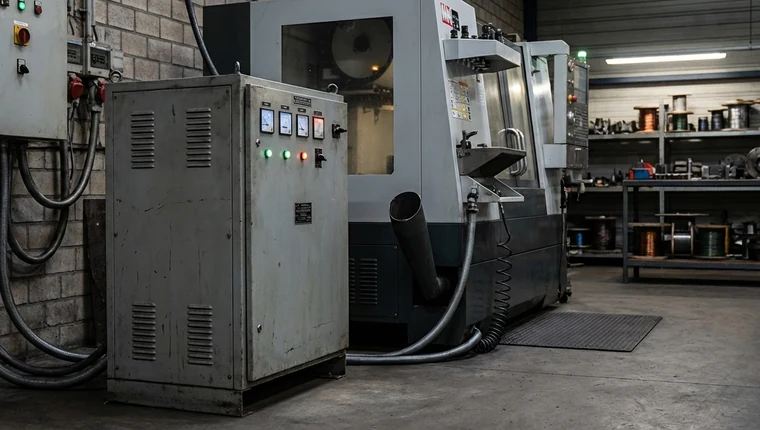
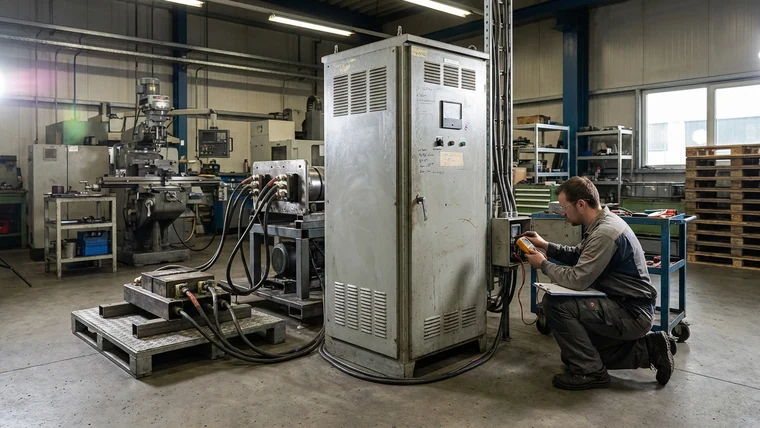
High-throughput manufacturing floors routinely expose stabilizers to aggressive motor inrush currents, requiring automated CNC lines and heavy hydraulic presses to maintain stepless micro-adjustments during sudden demand spikes. Outdoor utility cabinets and remote telecom base stations face an entirely different challenge, demanding IP-rated housings that preserve tight output bands despite severe ambient heat and persistent coastal humidity. Validating both electrical response speeds and environmental ingress ratings ensures uninterrupted site operations.
Aligning Divergent Stakeholder Priorities
Engineering departments and purchasing teams rarely evaluate voltage protection equipment using identical success metrics. Technical leads focus strictly on sub-cycle response times, harmonic filtering, and mean time between failures to safeguard automated asset lifecycles. Procurement stakeholders, by contrast, scrutinize total cost of ownership, standardized spare-part availability, and comprehensive multi-year warranty terms against strict capital limits. Bridging these divergent priorities early prevents costly project approval bottlenecks.
Differentiating Through Application-Specific Validation
Competitors frequently segment their industrial positioning, leaving buyers to piece together fragmented technical claims. YIY counters this by publishing centralized, application-specific architecture pages that directly cross-reference exact load profiles with verified correction mechanisms. This comprehensive product-range proof allows cross-functional committees to simultaneously validate engineering tolerances and procurement risk thresholds.
Core Selection Criteria: Load Profiling and Specification Logic
Calculating True Capacity Requirements
A 7kv automatic voltage regulator sizing exercise starts from measured baseline capacity. Add up the maximum continuous load of downstream motors and resistive loads, then correct the total for the actual operating power factor.
Motor starting kVA needs explicit treatment because inrush briefly exceeds running demand; the 20kVA stabilizer technical guide uses the same load-profiling method.
Agree an expansion margin with your supplier from measured peaks and planned load growth.
Topology Comparison Matrix
Choosing the correct internal regulation architecture dictates long-term field performance. The table below outlines how servo, IGBT, and relay topologies compare across critical industrial selection metrics:
| Selection Metric | Relay-Based Topology | Servo-Driven Architecture | IGBT Digital Stabilizer |
|---|---|---|---|
| Correction Method | Discrete winding taps | Motorized brush on autotransformer | PWM digital signal processing |
| Response Speed | Fast steps | Seconds, stepless | Sub-cycle |
| Voltage Accuracy | Widest tolerance | ±2–3% on YIY servo series (product pages) | Tightest tolerance |
| Maintenance | Low (No moving parts) | Medium (Brush/Carbon wear) | Very Low (Solid-state) |
| Ideal Application | Lighting, heaters, resistive loads | CNC, HVAC, packaging lines | Medical, precision labs, microelectronics |
A deep dive into control architectures is available in our comprehensive servo relay iGBT stabilizer comparison. While relay systems offer the lowest upfront cost, industrial facilities typically benefit from the seamless correction and durability of servo or IGBT platforms.
Mapping Voltage Fluctuation and Environmental Constraints
Hardware longevity depends entirely on verifying your incoming grid’s specific variance envelope. Facilities experiencing chronic brownouts require wider input acceptance windows to compensate for extreme sags without triggering constant mechanical oscillation. Simultaneously, unconditioned deployment sites mandate rigorous verification of ambient temperature limits, sustained humidity tolerance, and adequate physical clearance for forced-air heat dissipation. Ignoring spatial restrictions forces the unit into continuous thermal throttling and rapid insulation breakdown.
Standards, Compliance, and Third-Party Validation
Validating a 7kv stabilizer requires looking past glossy brochures to hard regulatory documentation. Industrial voltage regulation equipment must strictly adhere to established international benchmarks to ensure safe installation and uninterrupted operation.
Mandatory Regulatory Compliance Vs. Optional Features
Procurement teams should prioritize units that demonstrably align with IEC 60038:2009 standard voltage levels. Matching the nominal voltage means output settings don’t need changing on site.
Distinguishing between non-negotiable safety mandates and commercial value-adds prevents costly budget misallocation. Beyond baseline voltage matching, robust IEC 61000 electromagnetic compatibility immunity ensures sensitive downstream automation hardware remains shielded from electrical noise, surge propagation, and harmonic distortion. Features like advanced active harmonic filtering or remote cloud telemetry typically represent optional performance enhancements rather than baseline regulatory necessities.
Factory Testing and Load Endurance Protocols
Reliability shows up in transparent, repeatable factory acceptance tests. Vendor test reports should document output accuracy across the full input range, including sag and swell conditions, against the tolerance stated on the datasheet, plus a full-load endurance run.
Verifying Third-Party Validation
Independent certification remains the strongest objective indicator of long-term field performance. Engineering teams should formally request comprehensive compliance certificates covering dielectric strength, short-circuit endurance, and emission limits from internationally accredited laboratories. Cross-referencing these validated reports against your site’s specific environmental stress parameters eliminates deployment risk.
Aligning Manufacturer Capabilities with Site Requirements
Technical specifications and regulatory compliance checklists only define baseline electrical viability. True operational reliability depends entirely on verifying whether the supplier’s production ecosystem can actually deliver, scale, and adapt to your facility’s exact demands.
Manufacturing Scale and Engineering Flexibility
YIY runs a 30,000㎡ production facility under an ISO 9001:2015 quality management system, with annual capacity of 1,000,000+ units, which matters for multi-site rollouts where one supplier must deliver consistent batches.
OEM and ODM customization covers input range, enclosure, and protection options; ask for the change to be written into the datasheet you approve.
Transitioning from Evaluation to Specification
Once your technical committee finalizes the load matrix, site constraints, and preferred regulation topology, the validation process requires direct manufacturer consultation. Vetting suppliers requires specific checkpoints detailed in our guide on industrial voltage stabilizer manufacturers.
Send your three-phase configuration, continuous load, measured starting current, and ambient conditions for a sizing recommendation and an itemized quotation.
Frequently Asked Questions
What Should Buyers Evaluate Before Choosing a 7kv Stabilizer?
Focus on actual incoming grid fluctuations, downstream load profiles, and environmental constraints like ambient heat and ventilation clearance. Verify that the architecture aligns with IEC 60038 standards and holds independent certifications for electromagnetic compatibility before evaluating optional telemetry. Procurement teams should prioritize documented factory endurance curves over generic marketing claims. Matching correction tolerance to sensitive PLC requirements early in the process significantly reduces unexpected commissioning delays.
When Is a 7kv Stabilizer Necessary for Industrial Operations?
This capacity threshold becomes critical when automated CNC arrays, heavy hydraulic systems, or precision packaging lines operate on chronically unstable mains. If your facility voltage routinely drifts beyond strict equipment tolerances or faces aggressive motor startup surges, a high-capacity industrial voltage stabilizer immediately isolates downstream assets from dangerous thermal cycling and prevents costly production downtime.
How Should a 7kv Stabilizer Be Sized or Specified Accurately?
Start from measured running load corrected for power factor, then check motor starts against the unit’s short-term overload rating. Ask the supplier to show the margin they applied and the overload duration the quoted model tolerates.
Final Thoughts
Clarify what “7kV” means, size from measured load and starting current, then pick the topology. Compare YIY’s three-phase stabilizers once that frame is fixed.