
Relay vs IGBT (Static) Voltage Stabilizer: A Technical Comparison

Relay vs IGBT (Static) Voltage Stabilizer: Which Is Right for You?
A relay voltage stabilizer is an electromechanical AVR switching transformer taps in 20–40 ms at ±5–8% accuracy; an IGBT stabilizer is a solid-state AVR correcting voltage in under 10 ms at ±1% — this guide compares cost, speed, and application fit for industrial buyers.
If stepped relay correction matches the load sensitivity and budget, compare the YIY relay voltage stabilizer range by input window, capacity, switching tolerance, installation format, and protection functions.
How Do These Voltage Stabilizers Compare?
Voltage stabilizers are essential for protecting electrical equipment from fluctuations. Relay and IGBT (Static) technologies represent distinct approaches to voltage regulation, each with specific performance characteristics and application suitability. This analysis provides an objective overview to aid in selection.
| Criterion | Relay | IGBT (Static) | Winner |
|---|---|---|---|
| Regulation Principle |
Tap-Switching
Relay-type stabilizers use a series of relays to switch between different taps on an auto-transformer. When input voltage deviates, the control circuit selects the appropriate tap to bring the output voltage within the desired range.
|
PWM (Pulse Width Modulation)
IGBT (Insulated Gate Bipolar Transistor) based static stabilizers utilize power electronics, specifically IGBTs, to continuously adjust the output voltage through pulse width modulation (PWM) techniques. This allows for smooth, stepless voltage regulation.
|
B |
| Response Time |
Slow (20-100ms)
Due to the mechanical nature of relay switching, the response time is typically in the range of tens to hundreds of milliseconds, resulting in minor momentary voltage dips or surges during correction.
|
Fast (<5ms)
IGBT-based stabilizers offer extremely fast response times, often within a few milliseconds (half a cycle or less). This rapid correction minimizes voltage disturbances, making them suitable for highly sensitive equipment.
|
B |
| Voltage Regulation Accuracy |
Moderate (±5% to ±10%)
Accuracy is limited by the discrete steps of the transformer taps. The output voltage is corrected to the nearest tap, leading to a wider tolerance band around the nominal voltage.
|
High (±1% to ±2%)
The continuous regulation capability of IGBT technology allows for very precise output voltage control, maintaining the voltage within a tight tolerance, often ±1% to ±2% of the nominal value.
|
B |
| Waveform Distortion |
Minimal
Relay-type stabilizers generally introduce minimal waveform distortion as they primarily switch between different transformer taps without altering the fundamental waveform shape.
|
Minimal (with proper design)
While PWM can inherently introduce harmonics, well-designed IGBT static stabilizers incorporate filters to ensure the output waveform has minimal harmonic distortion, typically less than 3% THD.
|
Tie |
| Efficiency |
High (90-95%)
Relay stabilizers are generally efficient, especially when operating within their nominal voltage range, as power losses primarily occur in the transformer windings and during switching.
|
High (95-98%)
IGBT static stabilizers typically offer higher efficiency due to the advanced power electronics. Losses are mainly associated with switching and conduction in the IGBTs and associated components.
|
B |
| Maintenance |
Moderate
Relays are mechanical components subject to wear and tear over time, especially with frequent switching. They may require periodic inspection and replacement, contributing to maintenance needs.
|
Low
Being solid-state devices, IGBT static stabilizers have no moving parts, which translates to significantly lower maintenance requirements and a longer operational lifespan.
|
B |
| Noise Level |
Audible
The mechanical operation of relays produces an audible ‘click’ sound during voltage corrections, which can be noticeable in quiet environments.
|
Silent
As solid-state devices, IGBT static stabilizers operate silently, making them suitable for installations where acoustic noise is a concern.
|
B |
| Cost |
Lower
Relay-type stabilizers are generally more cost-effective in terms of initial purchase price, making them an economical choice for less demanding applications.
|
Higher
The advanced technology and components in IGBT static stabilizers result in a higher initial investment. However, this is often offset by superior performance and lower long-term maintenance.
|
A |
| Overload Capacity |
Good
Relay stabilizers typically handle temporary overloads reasonably well, limited by the transformer and relay current ratings.
|
Excellent
IGBT static stabilizers are often designed with robust overload protection and can handle significant momentary overloads due to the inherent switching capabilities of IGBTs.
|
B |
How Does the Product Lineup Compare Side-by-Side?
Relay Series
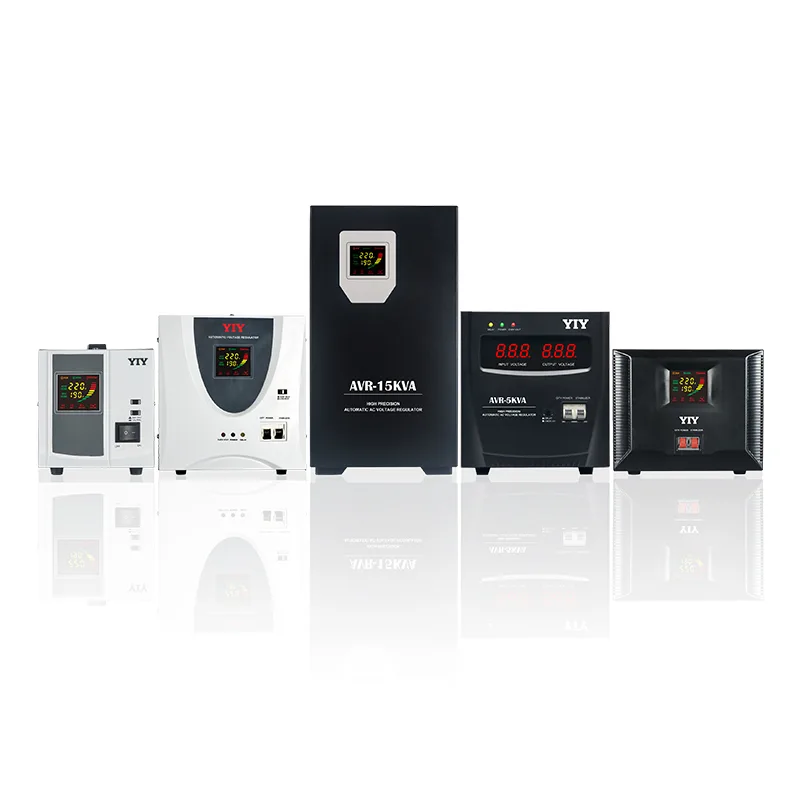
AVR Single-Phase Relay Voltage Stabilizer
Versatile freestanding relay stabilizer offering wide input range correction, suitable for retail shops, clinics, and small businesses.
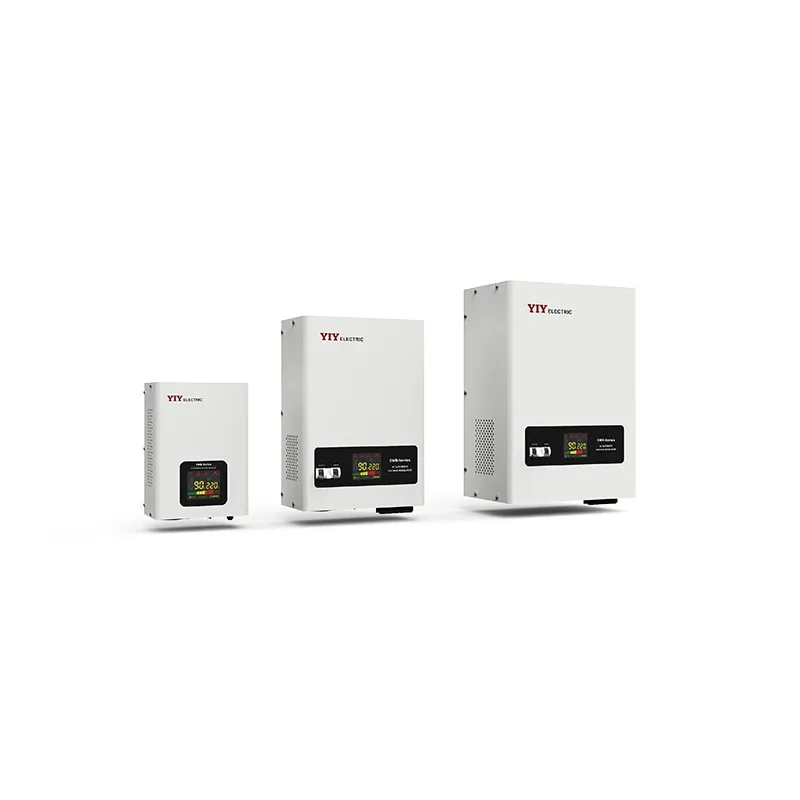
SWR Wall-Mounted Single Phase Relay Voltage Stabilizer
Budget-friendly wall-mounted relay stabilizer with fast 4ms switching, designed for household appliances like TVs, refrigerators, and ACs.

TRS Wall-Mounted Single-Phase Relay Voltage Stabilizer
Slim-profile wall-mounted relay stabilizer with digital display and auto-restart, perfect for apartments and small office installations.

PR Portable Single-Phase Relay Voltage Stabilizer
Lightweight portable stabilizer with plug-and-play convenience, designed for temporary setups, events, and mobile equipment protection.
IGBT (Static) Series

AVC Active Voltage Conditioner
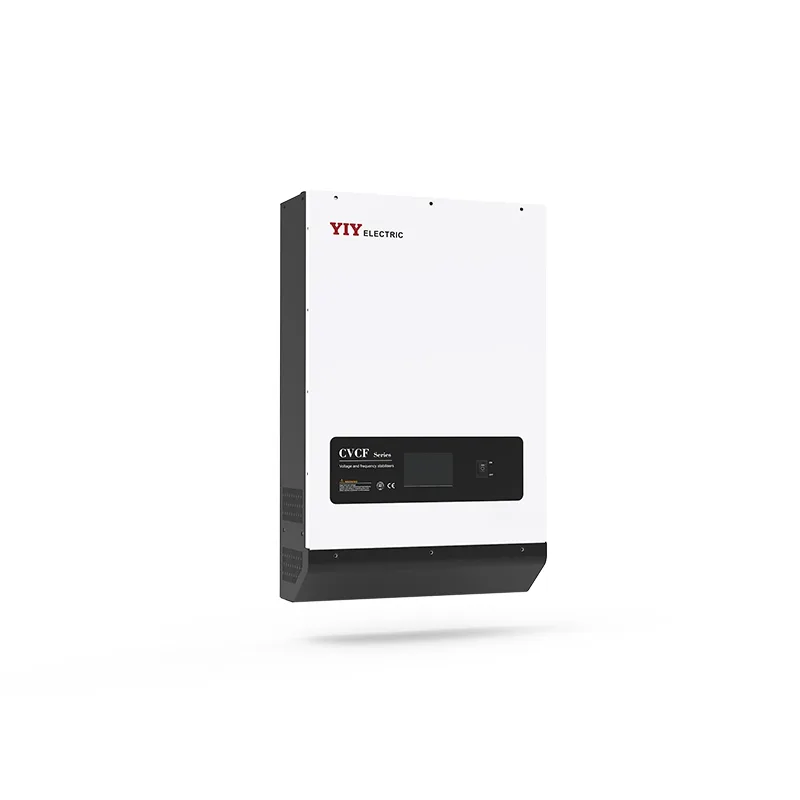
CVCF IGBT Voltage & Frequency Stabilizer
Advanced IGBT-based stabilizer delivering ±1% voltage and ±0.5% frequency accuracy, essential for data centers, telecom, and precision…

TSS Wall-Mounted Voltage Stabilizer
Which Should You Choose?
Choose Relay When…
- Budget constraints are a primary concern, and you need a cost-effective solution.
- Your equipment is not highly sensitive to minor voltage fluctuations or momentary dips.
- The application can tolerate audible switching noise.
- You require stabilization for general-purpose lighting, small machinery, or less critical loads.
- Input voltage fluctuations are infrequent and within a moderate range.
Choose IGBT (Static) When…
- Your equipment demands extremely fast response times and precise voltage regulation (e.g., medical devices, CNC machines, data centers).
- You need to protect highly sensitive and critical loads from even minor voltage disturbances.
- A silent operation is crucial for the installation environment.
- Long-term reliability and minimal maintenance are priorities.
- You are looking for higher efficiency and lower operational costs over the stabilizer’s lifespan.
- The application requires stable output under rapidly changing or wide input voltage fluctuations.
Expert Consultation for application-specific needs.
Need a Specific Voltage Stabilization Solution?
Our team can help you select the ideal stabilizer for your application.
Request QuoteStabilizer Technology Comparison: Servo vs Relay vs IGBT
| Technology | Output Accuracy | Response Time | Best Application |
|---|---|---|---|
| Servo (motorized) | ±0.5–3% | 3–5 seconds | Precision machinery, medical, laboratory |
| Relay (tap-switching) | ±5–8% | 20–40 ms/step | Offices, retail, general-purpose loads |
| IGBT (solid-state) | ±1% | <10 ms | Critical electronics, data centers, CNC |
Frequently Asked Questions
What is the primary difference in how Relay and IGBT stabilizers correct voltage?
Which type offers better voltage accuracy?
Is response time important for all applications?
Do IGBT stabilizers generate more heat?
What are the long-term maintenance considerations for each type?
Can I use a Relay stabilizer for a high-power industrial application?
Are YIY’s voltage stabilizers suitable for international markets?
Explore More Voltage Stabilizer Solutions
Browse other selection dimensions to find the right fit for your project.
By Industry
By Technology
By Country
Get Expert Recommendation
Tell us your application and load profile — our engineers will recommend the right technology for your project.
Error: Contact form not found.