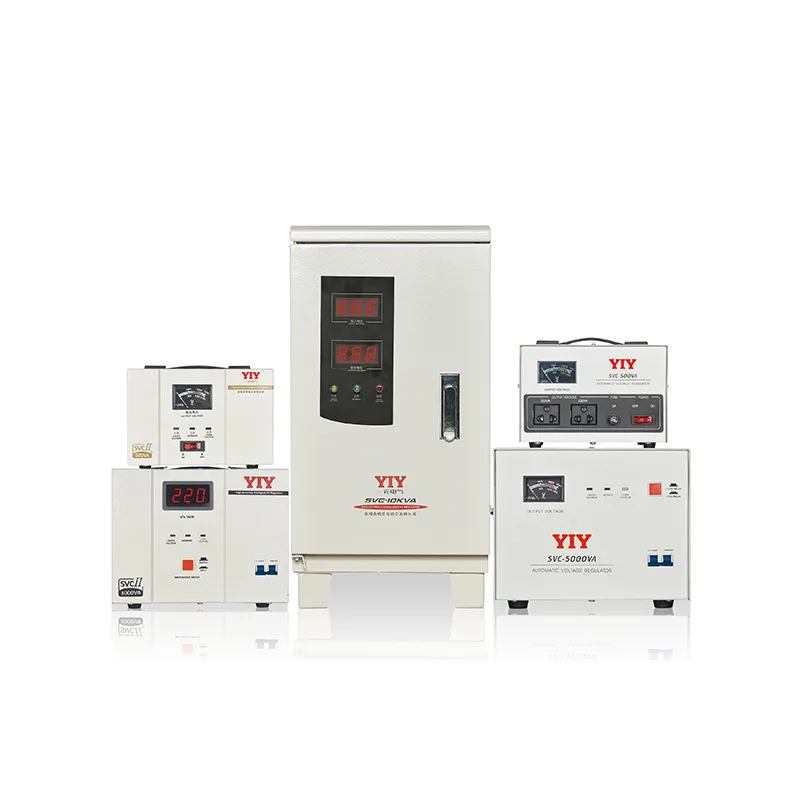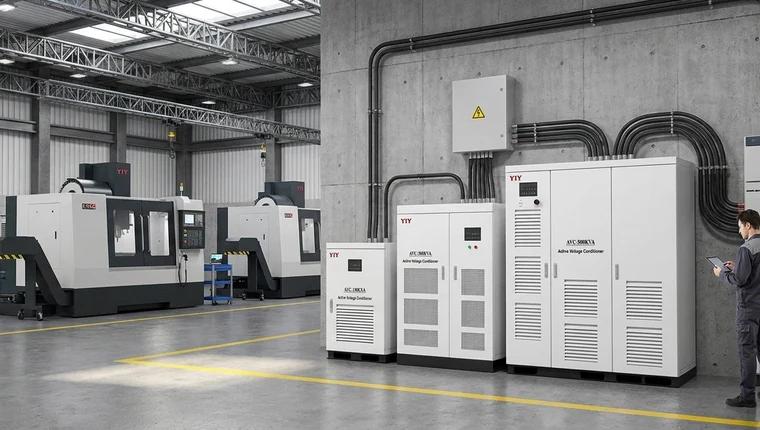
Servo stabilizer price is mainly affected by kVA capacity, phase configuration, input voltage range, output accuracy, topology, protection package, cabinet design, and service scope.
If you compare only a headline price, you may miss the technical details that decide whether the unit can handle your real voltage fluctuation, motor starting current, site temperature, and maintenance expectations.
This guide walks you through what a quote should include, how servo correction works, when servo is better than relay, static, or IGBT regulation, how to size the unit, and what to verify before you send an RFQ.
What Does a Servo Stabilizer Quote Actually Include?
Your quote should be treated as a technical configuration, not just a kVA price tag. The same 5kVA or 10kVA label can hide very different transformer design, copper content, correction range, protection logic, enclosure quality, test scope, and after-sales support.
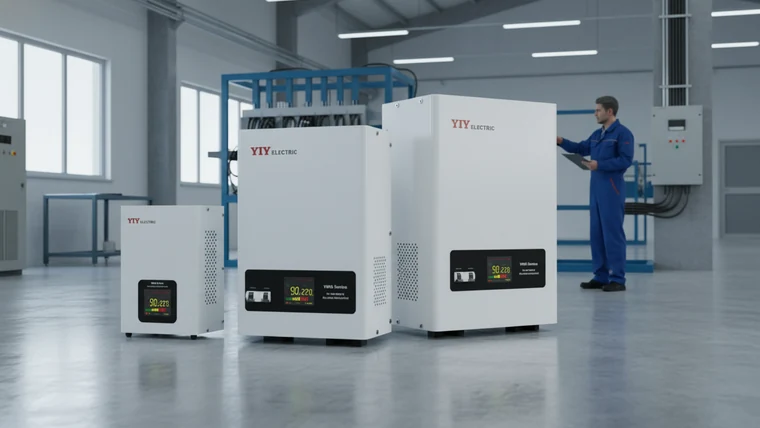
A typical quotation for a servo voltage stabilizer should make these items clear:
- Rated capacity in kVA
- Single-phase or three-phase configuration
- Nominal input and output voltage
- Input correction range
- Output voltage accuracy
- Overload capacity and trip behavior
- Over-voltage and under-voltage protection
- Short-circuit and overload protection
- Phase-loss, phase-sequence, or phase-unbalance protection for three-phase systems
- Manual or automatic bypass
- Surge protection, if required
- Isolation transformer, if required
- Cooling method and cabinet ventilation
- Enclosure type, IP rating, and installation clearance
- Test report, warranty, spare parts, and service support
- Freight, export documents, duties, and local installation scope
The product price is only the factory unit cost. Your landed cost includes freight, customs, insurance, documentation, and local handling. Your lifecycle cost includes downtime risk, maintenance access, spare parts availability, energy losses, and the cost of replacing an underspecified unit.
For you, this means a cheaper unit may not be the better buy if it excludes bypass, surge protection, suitable cooling, or a cabinet built for dust, humidity, heat, or poor ventilation. A higher quote may be reasonable when it includes a wider input range, stronger transformer design, better protection, or documented testing.
Nominal voltage context is often checked against IEC 60038 standard voltages, which provides standard system voltage references used in many electrical specifications. In practical terms, your stabilizer should be specified for the voltage your site actually experiences, not only the voltage printed on the utility label.
How Does a Servo Voltage Stabilizer Work?
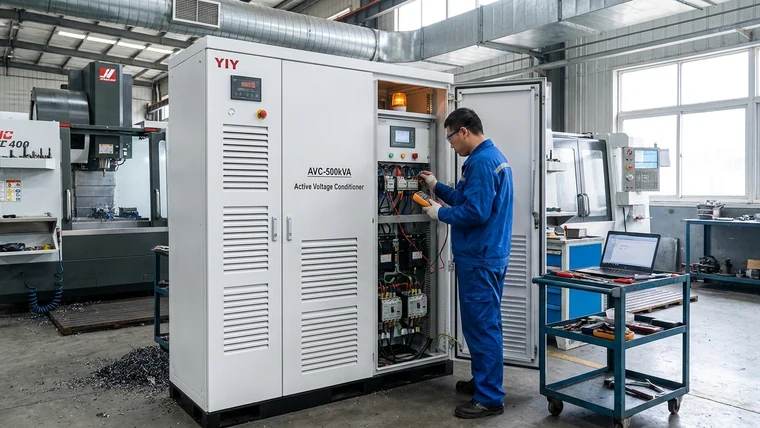
You get voltage correction through a controller, servo motor, carbon brush, and autotransformer working together. The controller senses voltage deviation, commands the servo motor, and adjusts the transformer ratio so your output voltage returns near the target level.
The working sequence is straightforward:
- Detection — the controller monitors input and output voltage.
- Motor movement — the servo motor rotates forward or reverse.
- Transformer adjustment — the carbon brush moves across the variac or autotransformer winding.
- Output correction — the transformer ratio changes to raise or lower the output.
- Protection or alarm — the stabilizer trips, delays, bypasses, or alarms if voltage remains unsafe.
This motor-driven correction is why servo AVR systems are widely used for industrial loads where you want smooth regulation and practical cost-performance. Common applications include production equipment, CNC support loads, motors, compressors, HVAC systems, laboratory equipment, UPS input support, and general plant power stabilization.
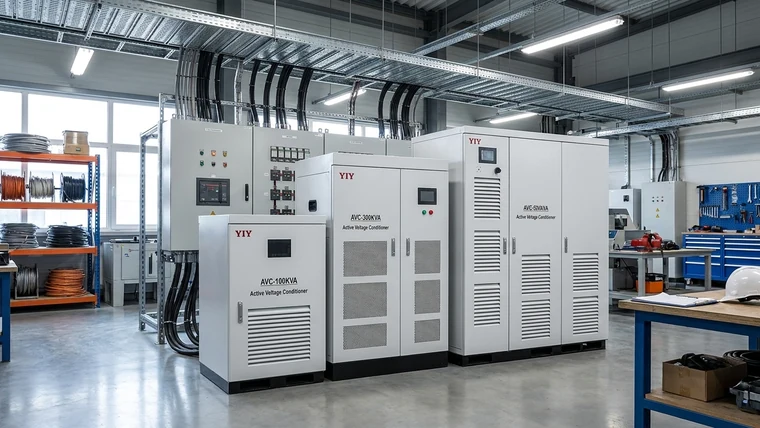
For your buying decision, the key point is that wider correction range and tighter output accuracy are not just settings on a brochure. They require suitable transformer design, motor control, winding quality, protection logic, and testing. If your site has weak grid supply, frequent dips, or high startup current, the unit may need a stronger design than a basic price list suggests.
Which 8 Factors Change the Price Most?
You should expect the quote to change when the electrical duty, protection level, or physical construction changes. The eight factors below usually explain why two suppliers quote different prices for what appears to be the same capacity tier.
| Cost factor | What changes in the design | What it means for you |
|---|---|---|
| 1. kVA rating | Larger transformer, more copper, larger cabinet, stronger cooling | Higher capacity costs more, but undersizing can cause overheating or nuisance trips |
| 2. Phase configuration | Single-phase and three-phase designs use different wiring, protection, and control logic | Three-phase loads require closer review of phase balance, phase loss, and load behavior |
| 3. Input voltage range | Wider correction range requires more transformer and control headroom | If your grid swings widely, a narrow-range model may fail to regulate when you need it most |
| 4. Output accuracy | Tighter tolerance requires better sensing, control, and calibration | Sensitive equipment may justify tighter accuracy; simple loads may not |
| 5. Topology choice | Relay, servo, static, and IGBT designs use different components | The right technology depends on your load risk, not only the lowest initial price |
| 6. Protection package | More protection adds breakers, sensors, relays, alarms, surge devices, or bypass circuits | Better protection can reduce fault damage and simplify maintenance response |
| 7. Cabinet and cooling | Larger enclosure, ventilation, fans, IP rating, or oil-cooled construction may be needed | Harsh sites need practical installation clearance and service access |
| 8. Service and documentation | Test reports, warranty, spares, OEM support, and export documents add scope | Strong documentation helps you compare offers and avoid procurement disputes |
These factors explain why a servo stabilizer 5kVA price or servo stabilizer 10kVA price can vary so much across suppliers. The label may be the same, but the electrical design and included scope may be very different.
Should You Choose Servo, Relay, Static, or IGBT Regulation?
Servo is usually the balanced choice when your industrial load needs better voltage regulation than relay switching but does not require the highest-cost electronic correction. Relay, static, and IGBT designs can still be the better fit when your load profile or risk level points in another direction.
| Regulation type | Best fit | Price position | Main watch-out |
|---|---|---|---|
| Relay stabilizer | Simple, low-risk loads where stepped correction is acceptable | Usually lower initial cost | Step changes may not suit sensitive industrial equipment |
| Servo stabilizer | Motors, compressors, CNC support loads, HVAC, production equipment, general industrial use | Mid-range cost-performance | Mechanical parts need inspection, especially in dust or heat |
| Static stabilizer | Loads needing faster electronic correction | Often higher than basic servo designs | Premium should be justified by load sensitivity |
| IGBT / digital stabilizer | Critical loads needing tight control, fast response, diagnostics, or monitoring | Higher specification and different cost structure | May be overbuilt for simple loads |
You should choose relay only when your equipment can tolerate stepped correction and wider variation. For sensitive equipment, the lower upfront cost can be offset by nuisance trips, process errors, or avoidable service calls.
Servo regulation fits many industrial sites because it offers a practical balance of capacity, accuracy, reliability, and budget. It is especially relevant when your voltage swings are meaningful but your application does not require the full feature set of a digital power-electronics platform.
Static and IGBT designs become more attractive when response speed, correction precision, diagnostics, or critical-load protection matter more than initial purchase cost. If you are considering a digital alternative, compare the servo configuration with an IGBT voltage stabilizer so your RFQ reflects the real load risk instead of a generic technology preference.
For EMC and electrical disturbance context, the IEC 61000 electromagnetic compatibility standards are often referenced when evaluating equipment behavior under disturbance conditions. For you, this means the stabilizer should be chosen for the actual electrical environment around your load, not only for nominal voltage.
How Should You Size the Unit Before Asking for Price?
You should size from measured voltage conditions, apparent power, load behavior, inrush current, phase system, and future expansion. If you send only “5kVA,” “10kVA,” or “three phase” to a supplier, you may receive a price quickly, but the quote may not protect your real equipment.
Start with this formula:
kVA = Voltage × Current ÷ 1000 for single-phase loads.
For three-phase loads, use:
kVA = √3 × Line Voltage × Line Current ÷ 1000
These formulas convert your electrical load into apparent power. In practical terms, kVA tells you how much total electrical capacity the stabilizer must carry, while watts alone may not show the effect of power factor, motors, compressors, or rectifier-based equipment.
If your load includes motors, compressors, pumps, elevators, HVAC, UPS systems, or production machinery, running current is not enough. Starting current can be much higher than normal operating current, and that startup behavior can decide whether your stabilizer trips, overheats, or causes voltage sag.
For three-phase installations, review phase balance and regulation type carefully. If your load is unbalanced, ask whether the stabilizer regulates each phase independently or as a combined three-phase system. For deeper execution-level guidance, use YIY’s 3 phase main line stabilizer sizing guide when your project involves plant-level distribution, mixed loads, or uneven phase loading.
A practical RFQ should include:
| Input to provide | Why it matters | Practical result for you |
|---|---|---|
| Measured minimum and maximum input voltage | Defines correction range | Prevents buying a unit that cannot regulate during worst-case grid swings |
| Load list with current and voltage | Establishes real kVA demand | Avoids undersizing from incomplete nameplate data |
| Power factor | Converts watts into apparent power | Helps you choose capacity correctly |
| Inrush or startup current | Shows startup stress | Reduces nuisance trips and startup sag |
| Single-phase or three-phase system | Determines topology and protection | Prevents wrong wiring and wrong regulation design |
| Duty cycle and ambient temperature | Affects thermal design | Helps avoid overheating in continuous operation |
| Future expansion allowance | Keeps capacity from becoming obsolete | Reduces the chance of replacing the unit too soon |
For broader model selection, the industrial voltage stabilizer selection guide can help you organize voltage data, kVA margin, load behavior, and RFQ inputs before you compare offers.
What Should You Check in a Servo Voltage Stabilizer Price List?
You should treat any servo voltage stabilizer price list as a starting point, not a final procurement answer. A list can help you compare capacity tiers, but it rarely captures site-specific voltage range, protection, cabinet design, duty cycle, documentation, or installation conditions.
Use this structure when you evaluate a price list or supplier quotation:
| Check | Why it matters | If you skip it |
|---|---|---|
| Input voltage range | Confirms whether the unit can correct your real grid condition | The stabilizer may fail during deep dips or high peaks |
| Output accuracy | Shows how tightly voltage is regulated | Sensitive equipment may still trip or behave unpredictably |
| Overload capacity | Determines short-term load handling | Motor starts may cause shutdowns |
| Bypass provision | Supports maintenance and service continuity | You may need to stop the load for simple service work |
| Surge protection | Helps protect against transient events | Drives, controllers, or electronics may remain exposed |
| Phase protection | Protects three-phase equipment | Phase loss or sequence issues can damage motors |
| Cooling and ventilation | Controls temperature rise | Heat can shorten service life |
| Enclosure/IP rating | Matches dust, humidity, and installation location | The cabinet may not survive the site environment |
| Test report and warranty | Verifies build and support scope | Procurement disputes become harder to resolve |
| Spare parts access | Reduces service delays | Downtime may last longer than expected |
For you, the most important procurement action is to ask every supplier to quote against the same checklist. That makes the price of servo stabilizer equipment comparable across capacity, protection, service scope, and installation conditions.
If you are comparing a 10kVA unit, do not rely only on a search for “10 kva servo stabilizer price in India” or similar regional price terms. Those results may help you understand the market, but your final specification should still be based on measured voltage, load behavior, protection requirements, and service expectations.
When Does a Higher Quote Make Sense?
You should accept a higher quote only when it is tied to a clear technical or service benefit. Paying more for a nameplate alone is not useful; paying more for the correct correction range, stronger protection, better thermal design, or reliable documentation may be justified.
A higher quote may make sense when your project needs:
- Wide input voltage correction for unstable grids
- Tighter output voltage accuracy for sensitive equipment
- Independent phase control for unbalanced three-phase loads
- Higher overload tolerance for motors or compressors
- Built-in bypass for maintenance continuity
- Surge protection for weak-grid or lightning-prone locations
- Isolation transformer for specific load or site requirements
- Oil-cooled or heavy-duty cooling design
- Higher enclosure protection for dust, humidity, or outdoor exposure
- Alarm output, event logging, or remote monitoring
- OEM/ODM customization, export documentation, or project-specific testing
On the other hand, a lower-cost configuration may be enough when your load is simple, your grid is stable, your environment is clean, and downtime risk is low. The best quote is the one that matches your electrical risk without overbuilding the system.
What Final Procurement Checks Should You Complete?
You should approve a servo stabilizer quote only after you verify the electrical data, load behavior, topology choice, protection scope, environment fit, and supplier support. This final review helps you avoid comparing one complete technical offer against another supplier’s basic unit price.
Before issuing a purchase order, confirm:
| Check | Why it matters | If you skip it |
|---|---|---|
| Measured voltage record included | Confirms the quote is based on real site conditions | Supplier may quote the wrong correction range |
| Capacity and margin documented | Shows the unit can handle load and expansion | The unit may run hot or trip |
| Inrush behavior reviewed | Protects motor and compressor startup | Startup failure or voltage sag may continue |
| Topology justified | Confirms servo, relay, static, or IGBT fit | You may overpay or underprotect the load |
| Protection list complete | Clarifies what is included | Hidden add-ons may appear later |
| Cabinet and cooling matched to site | Prevents environmental failure | Dust, heat, or humidity may shorten service life |
| Bypass and maintenance access confirmed | Supports service continuity | Maintenance may require load shutdown |
| Test and warranty terms reviewed | Reduces procurement risk | Quality and support expectations may be unclear |
If you are moving into larger-capacity evaluation, this is also the right time to compare before buying a voltage stabilizer so your procurement review covers specification scope, supplier differences, and acceptance criteria.
Frequently Asked Questions
Which Voltage Regulation Type Should I Choose for a Factory Load: Servo, Relay, Static, or IGBT?
You should choose servo when your factory load needs balanced cost, capacity, and voltage accuracy. Choose relay for simple low-risk equipment, static for faster electronic correction, and IGBT when critical loads need tighter control, diagnostics, or advanced monitoring.
A concrete verification step is to list your connected loads, log incoming voltage during normal and peak operation, and compare the downtime risk of each load against the cost of each topology.
Why Can 5kVA and 10kVA Servo AVR Quotes Be So Different?
Your 5kVA or 10kVA quotes can differ because the same kVA label may include different transformer design, copper content, input range, output accuracy, protection package, cooling, cabinet quality, accessories, testing, and warranty.
Before you accept the quote, request a datasheet, wiring diagram, protection list, input voltage range, output tolerance, overload rating, test report, and included accessories.
When Do Industrial Loads Actually Need a Servo Voltage Stabilizer?
You need a servo voltage stabilizer when voltage fluctuation can cause trips, overheating, process errors, poor equipment performance, or damage. Common triggers include unstable grids, motor startup sag, compressors, HVAC systems, CNC support loads, and sensitive production equipment.
Verify the need by logging voltage at the incoming supply and at the load during startup and peak operation. Then compare those readings with your equipment tolerance and the stabilizer correction range.
What Should I Check Before Accepting a Servo Stabilizer Quotation?
You should check measured voltage conditions, load behavior, kVA margin, phase system, protection needs, site environment, input range, output accuracy, overload capacity, bypass, surge protection, enclosure rating, cooling space, spare parts, test report, and warranty.
If any item is missing, ask for a revised technical offer before you issue the purchase order. A complete quotation should make the scope clear enough for your engineering, procurement, and maintenance stakeholders to review.
How Can YIY Help You Compare the Right Configuration?
You can start with a low-friction fit review before preparing a full engineering package. Share your voltage range, load type, capacity target, phase system, and application risk, and YIY can help you confirm whether servo, relay, static, or IGBT regulation is the better starting point.
YIY supports voltage stabilizer selection across servo and IGBT technologies, OEM/ODM customization, and industrial application review. Zhejiang Yiyen Holding Group Co., Ltd. is ISO 9001:2015 certified, and YIY provides voltage protection solutions for customers in global industrial markets.
If your first question is simply whether the quoted servo stabilizer price matches your application, ask YIY for a quick first-pass review. You can then decide whether detailed voltage logs, load lists, drawings, or final RFQ documents are needed.
Contact YIY
Email: yiyen at yiyen.com
Phone/WhatsApp: +86 13587452904
Website: https://www.yiyavr.com/