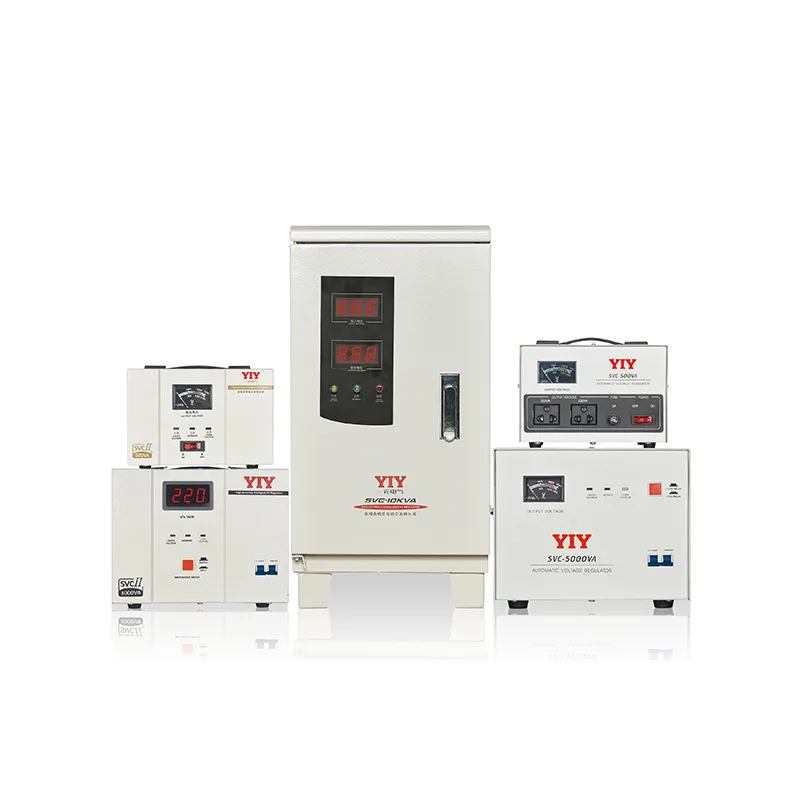
Servo stabilizer parts are worth choosing when your industrial load needs continuous voltage correction, serviceable assemblies, and a practical lifecycle-cost balance instead of the lowest upfront part price.
In this guide, you’ll decide when servo technology fits, how the core components work, how servo compares with relay/static/IGBT options, which specifications to verify, and what to check before approving a cabinet, kit, or complete stabilizer.
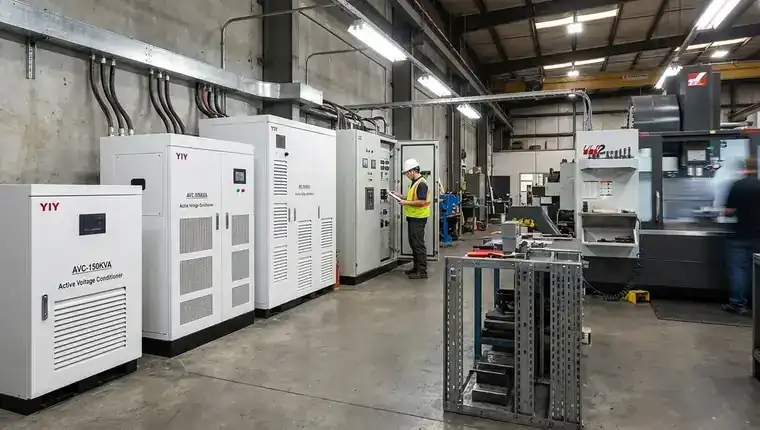
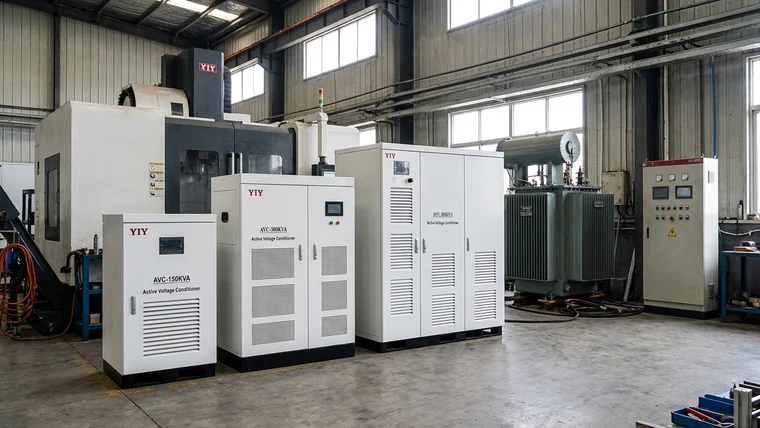
If your site faces drifting mains voltage, motor-driven equipment, CNC machines, pumps, compressors, or mixed three-phase loads, a servo voltage stabilizer can be a sensible middle path. The key is matching the topology to the real voltage problem, not simply replacing a failed carbon brush, dimmer, or cabinet assembly.
What Problem Do Servo Stabilizer Parts Solve for You?
You use servo assemblies when unstable input voltage threatens equipment reliability, process continuity, and maintenance predictability. They help an industrial AVR correct recurring low voltage, overvoltage, and gradual grid drift before those conditions become nuisance trips, overheating, control errors, or premature component wear.
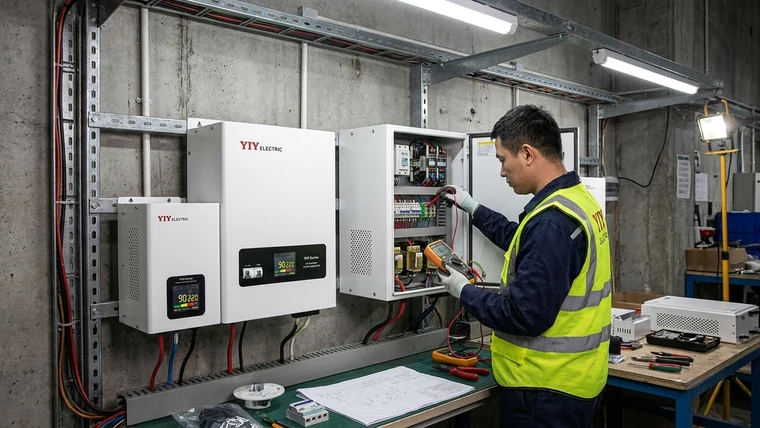
A servo stabilizer is not a single spare. It is the operating system around the servo motor, servo stabilizer carbon brush, variac or servo stabilizer dimmer, control board, transformer assembly, servo stabilizer cabinet, bypass path, protection devices, meters, terminals, cooling, and service access.
Your decision usually starts with one of these situations:
| Situation you see on site | Why servo components may help | What you should confirm |
|---|---|---|
| Voltage drifts for long periods | Continuous variac correction can keep output closer to target | Input range, output tolerance, correction speed |
| Motors or compressors trip during unstable supply | Industrial kVA capacity and overload margin matter | Starting current, phase imbalance, thermal margin |
| CNC or PLC equipment shows voltage-related errors | Smoother correction may reduce operating interruptions | Output tolerance, nonlinear load behavior, grounding |
| Existing stabilizer needs field repair | Serviceable parts may reduce replacement scope | Brush, variac surface, controller, insulation condition |
| Electrical room is dusty, hot, or humid | Cabinet design affects service life | Ventilation, filters, enclosure notes, anti-corrosion treatment |
For you, the buying question is not “Which part is cheapest?” The better question is: which servo assembly keeps your load inside a safe operating window with enough protection, visibility, and maintainability for your site conditions?
How Do Industrial Servo Voltage Stabilizers Work?
You get voltage correction from a servo stabilizer through an electromechanical control loop: the controller senses voltage deviation, drives a servo motor, moves the carbon brush across the variac, and adjusts the transformer ratio until output returns to the target band.
The operating sequence is straightforward:
- The control board samples input and output voltage.
- The controller compares measured output with the nominal target.
- The servo motor rotates in the required direction.
- The carbon brush moves along the variac winding contact surface.
- The effective turns ratio changes smoothly.
- Your load receives corrected output until the next deviation triggers the loop again.
In practical terms, the variac is the adjustable voltage element, the carbon brush is the moving contact, and the servo motor is the actuator. If the brush is worn, the dimmer surface is damaged, or the control board is unstable, your AVR may hunt, overshoot, heat up, or fail to regulate under load.
Named voltage references matter here. IEC 60038 standard voltages define standard voltage references used when checking nominal supply alignment; for you, that means the quoted input and output values should match your actual supply system and equipment nameplates, not just a catalog assumption.

A well-specified servo unit should also give you accessible brush assemblies, a reliable servo stabilizer dimmer, clear cabinet ventilation, a safe bypass path, and protection for overvoltage, undervoltage, overload, short circuit, and phase faults.
When Should You Choose Servo Instead of Relay, Static, or IGBT Designs?
You should choose servo when your load needs smoother correction and stronger industrial capacity fit than relay designs, but does not require the ultra-fast response or premium control profile of static or IGBT systems.
For your selection work, think of servo as the middle path between basic step correction and high-speed power-electronic regulation.
| Topology | Correction behavior | Best fit for you | Main tradeoff |
|---|---|---|---|
| Servo voltage stabilizer | Continuous motor-driven variac correction | Industrial loads with recurring voltage drift, motors, pumps, compressors, CNC, mixed three-phase loads | Requires brush, variac, motor, and cabinet maintenance |
| Relay stabilizer | Step-based tap switching | Simple, budget-led, non-critical loads | Less smooth correction and lower precision |
| Static AVR | Electronic correction without moving variac contact | Sensitive loads with faster voltage variation | Higher electronic-module dependency |
| IGBT voltage stabilizer | Digital power-electronic regulation | Critical processes, medical/lab equipment, high-end automation, fast disturbances | Higher specification and service complexity |
If your voltage problem is recurring drift, weak grid supply, or gradual variation under industrial load, servo is often a practical fit. If your issue is frequent fast dips, short interruptions, or critical-process precision, compare servo against an IGBT voltage stabilizer before you lock the topology.
IEC 61000-4-11 voltage dip and interruption immunity testing gives useful context for voltage dips, short interruptions, and voltage variation immunity. In practical terms, it helps you classify whether your site problem is normal fluctuation, a dip, or an interruption so you do not overspecify or underspecify the stabilizer.
The balanced view matters. Relay can be better when your load is simple and budget-led. Static can be better when changes are fast and frequent. IGBT can be better when response speed and precision are mission-critical. Servo fits best when you want continuous correction, industrial capacity, and maintainable mechanical assemblies.
Which Specifications Should You Verify Before Purchase?
You should select the unit by matching voltage range, kVA capacity, load behavior, phase configuration, site environment, protection design, and maintenance access, not by headline capacity alone.
Treat the datasheet as a risk-control document. It should prove that the stabilizer can regulate your real load under your real grid conditions.
| Check | Why it matters | If you skip it |
|---|---|---|
| Input voltage range | Confirms the unit can correct weak grids, generator supply, and recurring high/low voltage | The stabilizer may sit outside correction range during the disturbance you bought it for |
| Output tolerance | Shows how tightly voltage is held around nominal; many servo designs are specified around +/-1% to +/-3% depending on model | Sensitive CNC, PLC, pump, or compressor loads may still trip or overheat |
| kVA margin | Gives thermal headroom for continuous load, future expansion, and poor power factor | A low-cost model can become expensive through overload trips and shortened component life |
| Motor starting current | Motors can draw several times running current during startup | The unit may look correct on paper but fail during start events |
| Nonlinear loads | VFDs, rectifiers, UPS inputs, and CNC drives create harmonics and crest-factor stress | Heating, regulation, and protection behavior may differ from resistive-load testing |
| Three-phase imbalance | Phase-to-phase load differences affect correction behavior and neutral stress | One phase can drift while the cabinet meter still looks acceptable |
| Bypass requirement | Manual or automatic bypass supports service without full process shutdown | Brush or variac maintenance can force avoidable downtime |
| Alarm and logging needs | Meters, alarms, dry contacts, RS485, or BMS/SCADA links support fault tracing | Faults become anecdotal and root-cause review slows down |
| Cooling clearance | Airflow protects transformers, servo motors, brushes, and control boards | Heat buildup reduces reliability even when kVA sizing looks adequate |
For deeper sizing work, use an industrial voltage stabilizer selection checklist alongside the supplier datasheet. That helps you move from component choice into voltage range, kVA margin, bypass, and protection review.
If you are specifying a main-line three-phase installation, also verify phase imbalance, motor load grouping, cabinet placement, and service clearance. A dedicated 3 phase main line stabilizer sizing guide can help you translate those site details into a more realistic capacity and installation decision.
How Should You Evaluate Cabinet Design and Maintenance Access?
You should approve the cabinet only when it gives you safe access, adequate cooling, clear protection layout, and practical serviceability for the parts most likely to need inspection.
The servo stabilizer cabinet is not just an enclosure. It controls heat, dust exposure, wiring discipline, service access, operator safety, and the time your maintenance team spends diagnosing a fault.
| Check | Why it matters | If you skip it |
|---|---|---|
| Dimensional drawing | Confirms the unit fits your electrical room and clearance needs | Installation may block doors, vents, or service paths |
| Wiring diagram | Helps your electrician verify terminals, bypass, and load connection | Commissioning errors become more likely |
| Protection schematic | Shows overvoltage, undervoltage, overload, short-circuit, and phase protection | You may buy correction without adequate fault protection |
| Ventilation layout | Protects transformer, variac, brush, and controller temperature | Heat can shorten service life |
| Enclosure/IP notes | Matches dust, humidity, and workshop conditions | Contamination can damage contacts and electronics |
| Bypass arrangement | Allows service without unnecessary process shutdown | Small repairs can stop production |
| Factory test report | Confirms the supplied unit was tested against agreed parameters | Acceptance depends on trust instead of evidence |
Your maintenance plan should cover carbon brush inspection, variac surface condition, servo motor health, terminal tightening, cabinet cleaning, fan operation, and service documentation. In dusty sites, shorten inspection intervals and clean carbon dust before it becomes a tracking or overheating risk. In humid or corrosive sites, ask about anti-corrosion treatment, insulation protection, and sealing details.
A servo stabilizer kit can be useful when the main transformer, variac surface, cabinet, protection circuit, and wiring platform remain serviceable. Before approval, match kVA rating, phase configuration, input voltage range, mounting points, wiring diagram, and control board compatibility. If windings are overheated or insulation is damaged, replacing parts alone may extend downtime instead of reducing cost.
What Should Your Final Procurement Screen Include?
You should complete final procurement checks by confirming load fit, documentation, service parts, cabinet design, and supplier support before approving a servo AVR, complete stabilizer, or replacement kit.
Use a consistent acceptance screen so engineering, maintenance, and purchasing evaluate the same risks.
| Check | Why it matters | If you skip it |
|---|---|---|
| Load list and duty cycle | Confirms what the stabilizer actually serves | The quote may be based on incomplete or average load data |
| Nameplate voltage and frequency | Keeps the specification aligned with your electrical system | The unit may be correct for another supply standard |
| Starting current and overload margin | Protects motor-heavy applications | Startup events may cause trips or unstable output |
| Spare-part list | Reduces repair delay for brushes, control boards, motors, fuses, fans, meters, and contactors | A small failure can become a long outage |
| Maintenance interval guidance | Sets realistic service expectations | Brush and cabinet issues may be discovered only after symptoms appear |
| Acceptance test criteria | Defines what must be proven before handover | Disputes become harder to resolve after installation |
| Supplier topology review | Confirms whether servo, relay, static, or IGBT is the best fit | You may buy the wrong technology for the disturbance pattern |
If your project is moving from technical review to supplier comparison, use this stage to compare before buying a voltage stabilizer rather than evaluating price alone. The better procurement question is whether the quoted unit fits your load, grid behavior, cabinet environment, service model, and acceptance criteria.
For trust verification, request quality-system documentation where it matters to your procurement process. If a supplier cites certification, verify the scope and certificate details; ISO 9001 quality management is the official ISO page for the ISO 9001:2015 quality management standard, and you should still confirm that any claimed certificate applies to the relevant company and manufacturing scope.
Frequently Asked Questions
Can a Servo Stabilizer Kit Replace a Complete Voltage Stabilizer?
Only if the rest of the old unit is still sound. A kit swaps the moving and control parts; it relies on the existing transformer, winding track, enclosure and protection being in good order. Check that the kit matches the old nameplate rating, phase arrangement and fixing points before ordering. Signs of overheated windings, damaged insulation or a bent cabinet mean you should replace the whole stabilizer instead.
Is a Servo Stabilizer Suitable for CNC Machines, Motors, and Mixed Industrial Loads?
A servo stabilizer is often suitable for CNC machines, motors, pumps, compressors, and mixed industrial loads when the voltage problem is recurring drift rather than ultra-fast transient disturbance. You should verify motor starting current, nonlinear load content, phase imbalance, output tolerance, and overload margin before purchase. For sensitive drives or fast voltage events, compare servo with static or IGBT regulation instead of assuming one topology fits all.
How Often Should a Servo Stabilizer Carbon Brush Be Inspected?
A servo stabilizer carbon brush should be inspected during planned maintenance and more often in dusty, hot, high-load, or unstable-grid environments. Your concrete checks are brush length, spring pressure, contact condition, carbon dust buildup, and arcing marks on the dimmer or variac surface. If the output hunts, overheats, or becomes unstable under load, inspect the brush assembly before replacing larger components.
What Documents Should You Request Before Approving a Servo Stabilizer Cabinet Design?
You should request dimensional drawings, wiring diagrams, protection schematics, bills of materials, ventilation layouts, enclosure or IP notes, terminal plans, bypass arrangements, and factory test reports. As a verification action, cross-check the nominal input and output voltage values against your site supply and the relevant standard voltage reference before sign-off. This prevents a cabinet from being built around catalog assumptions instead of your actual electrical system.
What Spare Parts Should Your Maintenance Team Keep for a Servo AVR?
Your spare list should include the parts most likely to reduce repair time: carbon brushes, control board, servo motor, limit switches, meters, fuses, contactors, cooling fans, indicator lamps, and key terminals. Match every spare to the exact model, voltage class, and cabinet layout. For dusty or humid sites, add filters, sealing parts, and anti-corrosion consumables so environmental protection does not fail before the electrical components do.
Final Decision: When Does Servo Fit Best?
You should choose servo-based assemblies when your application needs continuous voltage correction, industrial capacity, and serviceable components, while still comparing relay, static, and IGBT options before final specification.
For your decision, keep the logic practical: choose servo when voltage drift is recurring, loads are industrial, and maintenance access matters; choose relay when the load is simple and budget-led; consider static or IGBT when correction speed, precision, or critical-process stability is the stronger requirement.
A low-friction next step is to request a quick-fit technical review with YIY to confirm whether servo, relay, or IGBT best matches your application and maintenance context. You can start with your load type, voltage range, phase configuration, and installation environment; detailed logs can come later if the first-pass review shows they are needed.
About YIY
Zhejiang Yiyen Holding Group Co., Ltd. (YIY) is a professional voltage stabilizer manufacturer with 16+ years of experience. With a 30,000 sqm modern facility and an annual production capacity of 1,000,000+ units, YIY products are exported to 130+ countries. YIY provides OEM/ODM customization services and supports industrial customers with voltage protection solutions for varied application and maintenance contexts.
Contact YIY
Email: yiyen@yiyen.com
Phone/WhatsApp: +86 13587452904
Website: https://www.yiyavr.com/