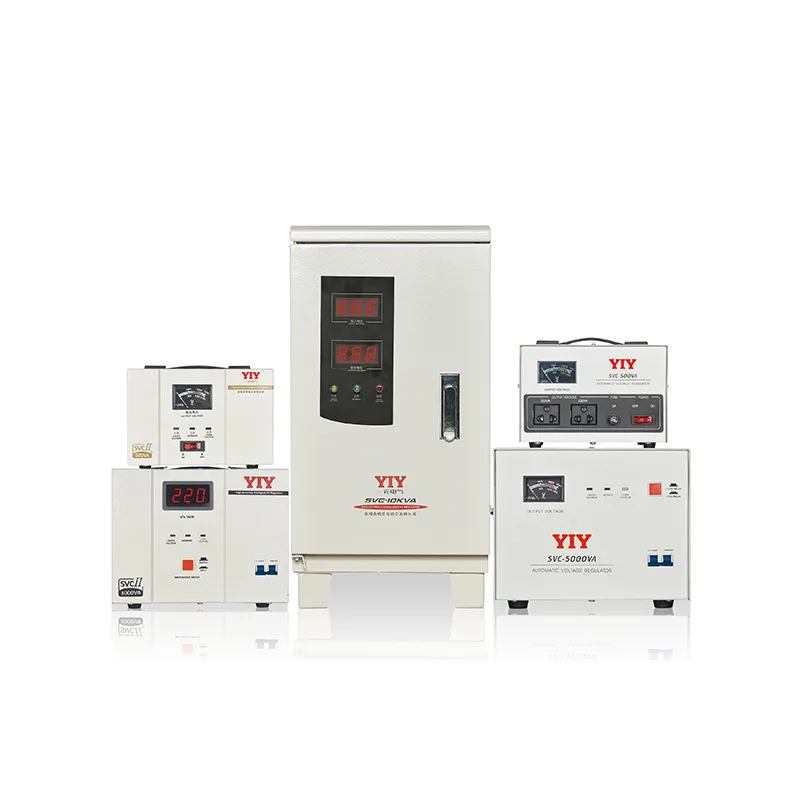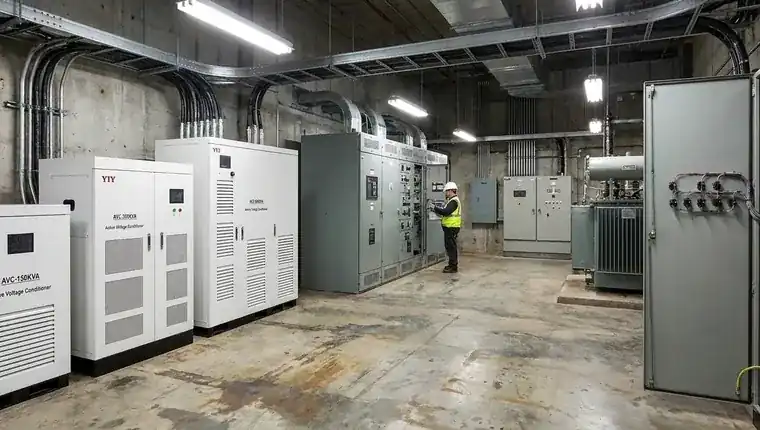
Servo stabilizer price is mainly shaped by kVA capacity, input voltage range, phase configuration, correction accuracy, transformer and variac build, protection options, enclosure type, installation conditions, monitoring, and service planning.
If your load is sensitive, the lowest quote may not be the lowest-risk option because an underspecified stabilizer can create trips, overheating, maintenance delays, or premature replacement.
In this guide, you will learn when servo technology makes sense, which specifications change the quote, how to compare servo against relay and IGBT options, what sizing inputs to prepare, and how to screen an RFQ before you approve a purchase.
What Does Servo Stabilizer Price Include?
You are not only paying for a kVA number; you are paying for a complete voltage-correction system matched to your grid, load, site, and maintenance plan.
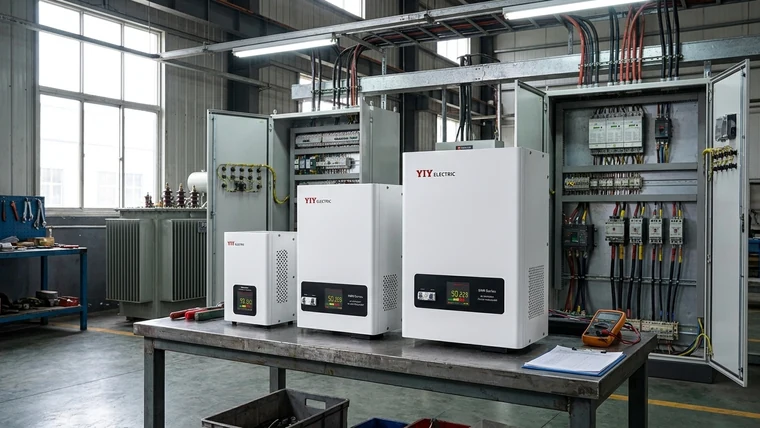
A servo design typically uses an MCU control loop, servo motor, carbon brush, variac/autotransformer, transformer assembly, protection circuit, metering, contactors, cooling, and enclosure. The servo voltage stabilizer category is often chosen when you need smoother voltage correction than a basic relay stabilizer, but you do not need the premium response profile of a static or IGBT-based system.
For your procurement comparison, the important point is simple: two units with the same kVA rating can have very different internal builds. A 50 kVA quote with a narrow input range, basic protection, and simple cabinet should not be compared as equal to a 50 kVA quote with wider correction range, bypass, phase protection, heavy-duty contactors, monitoring, and project documentation.
| Price factor | What changes inside the unit | What it means for you |
|---|---|---|
| kVA capacity | Transformer, variac, copper, cabinet size | Higher load current needs a larger and heavier build |
| Input voltage range | Variac range, winding design, thermal margin | Wider grid fluctuation usually costs more |
| Output accuracy | Control precision, calibration, feedback stability | Tighter tolerance protects sensitive loads better |
| Phase configuration | Single-phase or three-phase control and protection | Three-phase systems add complexity and cabinet size |
| Protection package | Relays, contactors, breakers, bypass, alarms | Better protection reduces operating risk |
| Enclosure and cooling | Cabinet, fans, filters, IP rating, ventilation | Harsh sites need stronger environmental design |
| Monitoring | Digital meters, event logs, RS485/Modbus | Your maintenance team can trace voltage events faster |
| Service access | Brush quality, spare parts, service clearance | Maintenance becomes easier and less disruptive |
If a supplier gives you only a servo voltage stabilizer price list without these specifications, you do not yet have a complete comparison.
When Does Servo Technology Make Commercial Sense for Your Load?
You should choose a servo stabilizer when your voltage fluctuation is frequent enough to threaten equipment stability, but your application does not require the fastest electronic correction available.
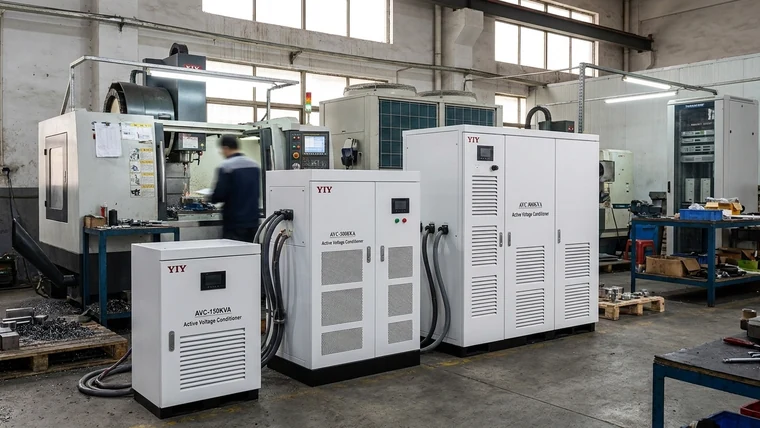
Servo technology is a practical middle ground for many industrial sites. It is commonly used for CNC machines, packaging lines, printing equipment, pumps, lifts, HVAC compressors, telecom rooms, workshops, and mixed-load panels where voltage fluctuation causes nuisance trips or equipment stress.
Your first decision is not the brand. It is the combination of voltage severity and load sensitivity. If your input supply regularly moves outside the safe operating range of drives, controllers, motors, or compressors, a correctly sized servo stabilizer can help keep output voltage more stable and reduce avoidable shutdowns.
Motor loads need special attention. A pump, compressor, or lift can draw several times its running current during start-up. If you size only by nameplate kW, your stabilizer may look affordable on paper but fail during real starts. In practical terms, you may need a higher capacity tier or stronger overload margin than the basic load list suggests.
CNC and continuous production lines change the buying logic. A cheaper unit can become expensive if voltage instability causes rejected parts, control-board failures, maintenance callouts, or stopped production. For you, the better question is not “Which quote is lowest?” but “Which specification reduces the failure modes that cost us the most?”
Nominal voltage references may also matter in project documentation. Where you need a standards-based voltage reference, IEC 60038 standard voltages can help you define the nominal system voltage clearly. In practice, this helps you avoid vague RFQs such as “380 V stabilizer” when your site, country, or tender requires a more specific voltage definition.
Which Technology Fits Your Precision and Budget Requirements?
You should compare servo, relay, and IGBT options by load sensitivity, correction behavior, maintenance expectations, and budget—not by headline price alone.
A relay stabilizer may suit basic, cost-driven loads with wider tolerance. A servo stabilizer usually fits industrial loads that need smoother correction and stronger capacity scaling. An IGBT voltage stabilizer or static AVR may fit critical loads that need very fast correction, tight dynamic response, or high-end electronic voltage control.
| Technology | Best fit | Tradeoff for your budget |
|---|---|---|
| Relay stabilizer | Basic appliances, simple low-cost loads, broad tolerance applications | Lower upfront cost, but stepped correction and limited industrial suitability |
| Servo stabilizer | Industrial machines, motors, CNC, packaging, pumps, lifts, mixed workshop loads | Balanced cost, smoother correction, mechanical wear points to maintain |
| IGBT/static stabilizer | Critical electronics, high-speed correction needs, medical or precision environments | Higher investment, stronger dynamic performance, more electronic complexity |
For your RFQ, servo is often the commercial sweet spot when you need industrial-duty voltage correction but do not want to overbuy a premium static design. However, you should not force servo into every project. If your process is extremely sensitive to fast dips, transients, or dynamic events, a higher-performance topology may be worth reviewing.
This technology decision also affects future maintenance. Servo units include mechanical wear components such as carbon brushes and variac contact surfaces. That does not make them unsuitable; it simply means your maintenance plan should include inspection intervals, spare parts availability, and access clearance.
How Should You Specify Capacity, Voltage Range, and Accuracy Before Requesting a Quote?
You should define load kVA/kW, measured current, phase type, input voltage range, output voltage, frequency, load profile, starting current, duty cycle, and site environment before asking for final pricing.
A vague RFQ creates misleading comparisons. One supplier may assume a 20% margin, another may allow for motor starting current, and another may quote a lighter build with fewer protections. The result is a price comparison that looks clean in a spreadsheet but is not technically equal.
Use measured current whenever possible. For three-phase loads, a common sizing check is:
kVA = 1.732 x voltage x current / 1000
For single-phase loads, use:
kVA = voltage x current / 1000
These formulas give you a starting point, not a final purchase decision. For your site, the practical meaning is that measured current, starting current, power factor, duty cycle, and future expansion can all push the required capacity above a simple nameplate estimate.
For three-phase applications, use a more detailed sizing workflow before you accept the final quote. This 3 phase main line stabilizer sizing guide is useful when your decision depends on measured current, phase configuration, start-up behavior, and expansion margin.
Your voltage range also changes the build. A unit designed for 340-460 V input is not the same as one designed for 300-480 V input. The wider correction window generally needs heavier copper, a larger variac range, and stronger thermal design. For you, that higher cost may be justified if your grid is unstable enough to push a narrow-range model into bypass, trip, or overload.
Accuracy matters, but only when your load needs it. A tolerance such as +/-1% can cost more than +/-3% because control precision, calibration, and component selection become stricter. If your machines are CNC, printing, testing, medical, or control-heavy, tighter regulation may be worthwhile. If your load is robust and less sensitive, paying for the tightest tolerance may not improve your real operating outcome.
For broader specification planning, use an industrial voltage stabilizer selection process before requesting a final quote. It helps you move from a rough equipment request to a technical specification that suppliers can quote consistently.
| RFQ check | Why it matters | If you skip it |
|---|---|---|
| Measured voltage range | Defines correction window and copper requirement | You may receive a quote that cannot handle your grid |
| Load kW/kVA/current | Sets transformer and variac capacity | The unit may overheat or trip under real load |
| Starting current | Motors and compressors surge at start-up | Your stabilizer may fail during start rather than run |
| Phase type | Changes control design and protection logic | You may miss phase loss or phase sequence protection |
| Output tolerance | Determines regulation precision | You may overspend or underprotect sensitive loads |
| Duty cycle | Impacts thermal design | Continuous loads may stress a light-duty unit |
| Expansion margin | Supports future equipment growth | You may need early replacement |
| Environment | Drives enclosure, cooling, and coating choices | Dust, heat, or humidity may shorten service life |
Which Product Features Raise the Quote Beyond Basic kVA?
You should expect the quote to rise when your stabilizer needs wider correction, tighter accuracy, stronger protection, bypass, monitoring, custom enclosure, cooling upgrades, or documentation.
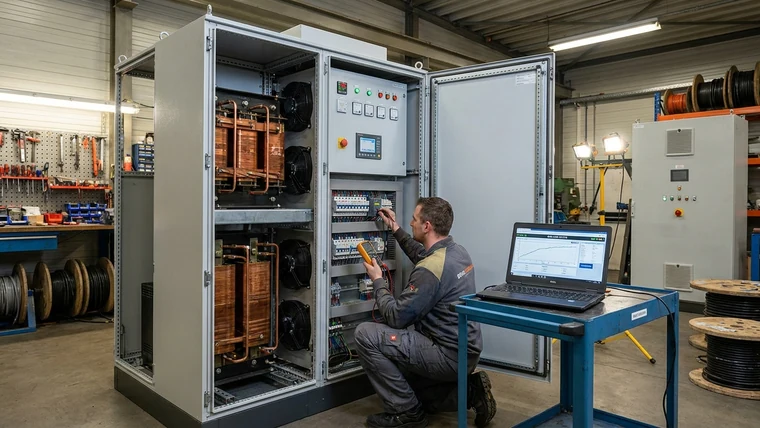
Protection options are often where “cheap” and “industrial” quotes separate. Over-voltage, under-voltage, overload, short-circuit, phase loss, phase sequence, surge protection, delay protection, and manual or automatic bypass add components and testing time. For you, these features can reduce nuisance shutdowns and make maintenance safer.
Bypass deserves special attention. A manual or automatic bypass can keep essential loads running while the stabilizer is inspected or serviced. If your production cannot tolerate a full shutdown, bypass is not a luxury item; it is part of your continuity plan.
Enclosure design also affects pricing. Dusty workshops, humid rooms, high ambient heat, corrosive environments, or semi-outdoor installations may require filters, coated boards, anti-condensation treatment, stronger ventilation, or IP-rated cabinets. The official IEC 60529 IP code protection levels define degrees of protection against solid objects and water ingress. In practical terms, an IP rating helps you specify whether the cabinet is suitable for your actual installation environment rather than just a clean indoor test room.
Monitoring can add cost but improve troubleshooting. Digital meters, alarm contacts, event logs, RS485, Modbus, PLC, BMS, or SCADA integration help you identify voltage events instead of treating every stoppage as an unknown machine fault. If your maintenance history includes repeated unexplained trips, monitoring may pay back through faster diagnosis rather than direct energy savings.
Harmonic-sensitive sites may also need clearer power-quality boundaries. Where harmonics are part of your site review, IEEE 519 harmonic control in electric power systems is a useful reference point. A servo stabilizer is not a harmonic filter by default, so you should confirm whether your problem is voltage fluctuation, harmonic distortion, power factor, or a mix of issues before assigning the stabilizer the wrong job.
How Do Installation and Service Conditions Change Your Total Landed Cost?
You should treat the equipment quote as only one part of the project cost because cabinet handling, cabling, protection coordination, ventilation, commissioning, and service access can all change the final landed cost.
A larger cabinet can increase freight volume, unloading requirements, and installation labor. If your electrical room has tight doorways, limited floor space, or difficult lifting access, confirm cabinet drawings, weight, cable entry, and service clearance before approval.
Cabling can also change the project cost. High-current stabilizers may require larger cables, bigger lugs, gland plates, cable trays, and longer installation time. If your stabilizer is far from the main distribution board or load panel, your cable cost may become a meaningful part of the total project budget.
Breaker coordination should not be guessed. MCCB or ACB ratings, bypass switch design, upstream and downstream protection, earthing, neutral arrangement, and bonding should be reviewed before installation. For you, this reduces the risk that a correctly built stabilizer still causes nuisance trips because the surrounding electrical system was not coordinated.
Service planning matters because servo units include mechanical wear points. Your maintenance plan should include carbon brush inspection, variac surface checks, terminal tightening, fan inspection, dust removal, alarm testing, and spare brush availability. If the cabinet is installed against a wall or boxed into a corner, every service visit becomes harder and more likely to be delayed.
| Site review item | Why it matters | If you skip it |
|---|---|---|
| Cabinet drawing and weight | Confirms access, lifting, and floor planning | Delivery or installation may be delayed |
| Cable route and distance | Affects copper, labor, and voltage drop | Your landed cost may exceed the base quote |
| Breaker and bypass design | Supports safe operation and maintenance | Trips or shutdowns may continue |
| Earthing and neutral arrangement | Protects people and control electronics | Faults may become harder to isolate |
| Ventilation clearance | Controls temperature under load | Heat can shorten component life |
| Service clearance | Allows brush and variac inspection | Maintenance may be skipped or rushed |
How Should You Compare Supplier Quotes Before Approval?
You should compare quotes only after each supplier confirms the same capacity basis, voltage range, accuracy, protection list, enclosure, cooling, bypass, monitoring, documentation, and service scope.
A low number can be useful if the specification is complete. It becomes risky when it hides missing protection, narrow correction range, light-duty components, unclear carbon brush quality, weak cooling, no bypass, or poor service access.
Ask each supplier for a technical datasheet, wiring diagram, protection list, cabinet drawing, test scope, warranty terms, spare parts list, and commissioning assumptions. If you are buying for a three-phase servo setup, also verify phase loss, phase sequence, unbalance handling, and load-start behavior.
| Check | Why it matters | If you skip it |
|---|---|---|
| Same input range | Keeps correction capability comparable | One quote may be cheaper because it covers less fluctuation |
| Same output tolerance | Aligns regulation accuracy | You may compare +/-1% against +/-3% unfairly |
| Same protection list | Shows real industrial readiness | Missing relays or bypass can appear as savings |
| Same enclosure rating | Matches your environment | Dust, heat, or moisture can damage the unit |
| Same monitoring scope | Affects fault visibility | Maintenance may lack event data |
| Same service support | Reduces downtime risk | Spare parts and troubleshooting may be slow |
If downtime matters, use a structured comparison rather than a single price column. This guide to compare before buying a voltage stabilizer can help you organize capacity, protection, and supplier checks before final approval.
Frequently Asked Questions
Can Installation Conditions Change the Final Cost of a Servo Stabilizer Project?
Yes. Your final project cost can change because of cabinet size, cable distance, breaker coordination, earthing, ventilation, lifting access, bypass panels, and commissioning time. Before approval, verify the cabinet drawing, cabinet weight, cable entry position, service clearance, ambient temperature, and site access route against your electrical room.
Why Do Two Servo Voltage Stabilizer Quotes with the Same kVA Rating Differ So Much?
Two quotes with the same kVA rating can differ because the internal specification is not the same. Input range, output accuracy, copper content, variac size, carbon brush quality, protection relays, bypass design, enclosure rating, cooling, and monitoring all affect cost. Ask each supplier to provide the same datasheet fields before you compare the price.
How Should a Servo Stabilizer Be Sized for Industrial Equipment?
Size it from measured load current, phase type, power factor, starting current, duty cycle, voltage range, and expansion margin. On three-phase supplies, run the kVA formula above as a first check, then confirm motor inrush, compressor starts, welding loads, or CNC sensitivity before final selection.
When Is Servo Better Than a Relay Stabilizer?
Servo is usually better when your load needs smoother correction, better output stability, and stronger industrial-duty performance than a relay design can provide. Choose servo for CNC machines, printing lines, packaging equipment, pumps, lifts, HVAC compressors, and mixed workshop loads with frequent fluctuation. If your load is basic and cost-driven, relay may be enough; if response speed is critical, review IGBT or static options.
What Verification Action Should You Take Before Accepting a Quote?
Ask for a signed technical datasheet and compare it against your RFQ line by line. Confirm kVA basis, input range, output tolerance, phase type, protection functions, bypass, enclosure, cooling method, cable entry, cabinet dimensions, warranty, spare parts, and commissioning scope before issuing a purchase order.
Final Thoughts
You get the most reliable servo stabilizer quote when you treat pricing as an engineering selection problem, not a kVA shopping exercise. Capacity matters, but your real cost drivers are voltage range, load behavior, accuracy, protection, enclosure, installation conditions, maintenance access, and supplier support.
Start with a quick first-pass fit review: share your load list, measured voltage range, phase type, operating hours, site environment, and required protection features. YIY can help you check whether servo, relay, or IGBT is the better fit before you move into a detailed final quotation.