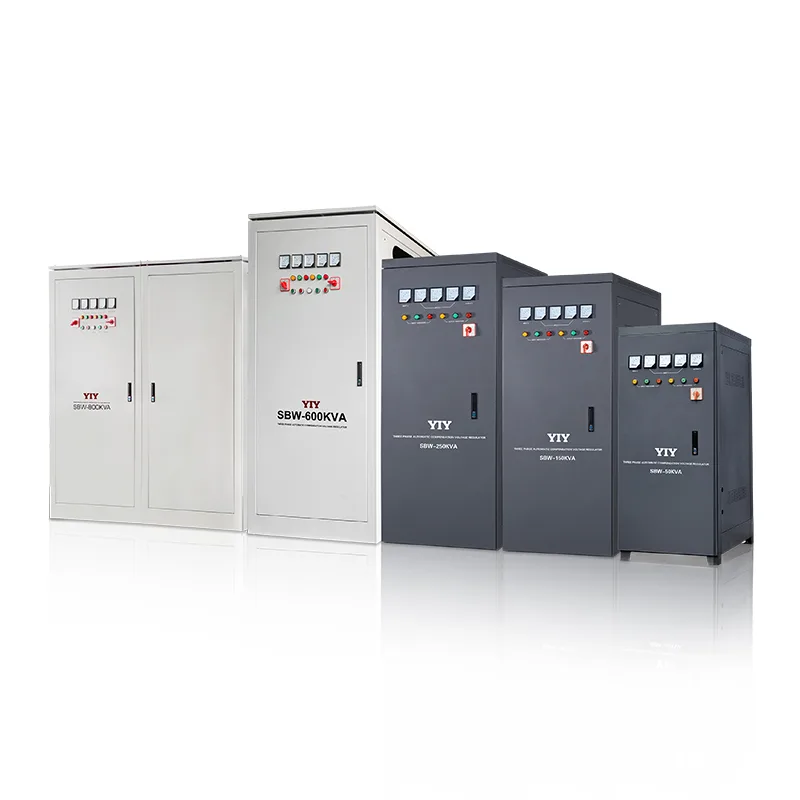
Choose an industrial servo stabilizer when your site has recurring voltage drift, sensitive industrial loads, and a maintenance team that needs serviceable precision rather than simple on/off protection.
Servo is usually the right fit when undervoltage, overvoltage, or phase imbalance is creating nuisance trips, hotter equipment, unstable UPS input, rejected output, or production stoppages.
This guide walks you through the key decisions: when servo beats relay or static designs, how to check your voltage and load data, what to confirm for three-phase installations, and which procurement checks help you avoid an underspecified unit.
When Should You Choose an Industrial Servo Stabilizer?
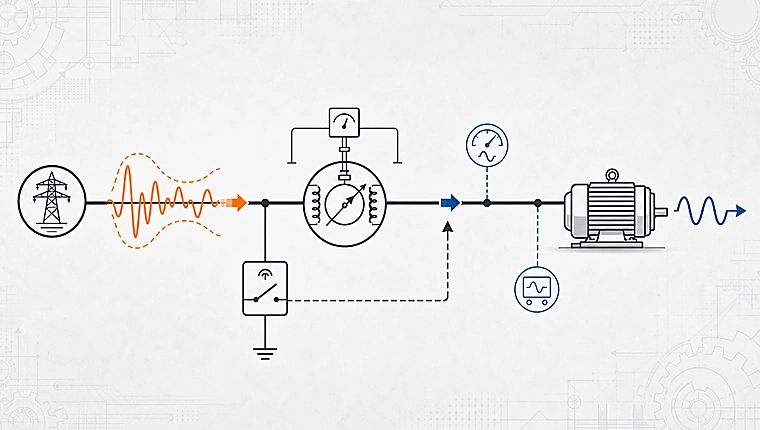
You should choose this capacity and technology class when your voltage problem is repeated drift, not just one rare event. A servo design continuously adjusts output voltage through a motor-driven autotransformer, so it is better suited to industrial loads that benefit from smooth correction and practical serviceability.
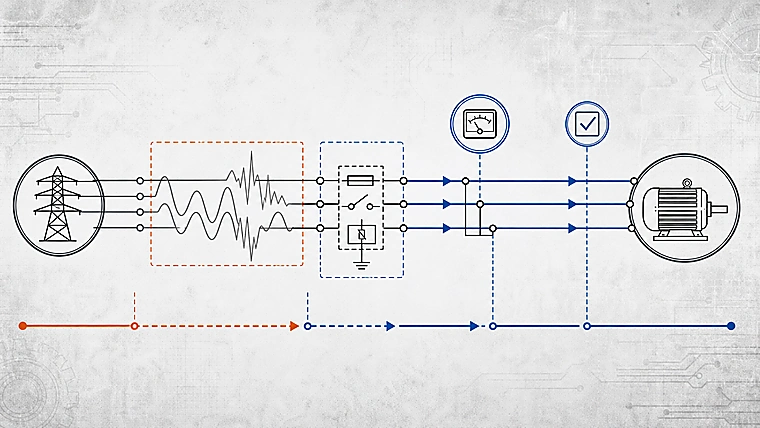
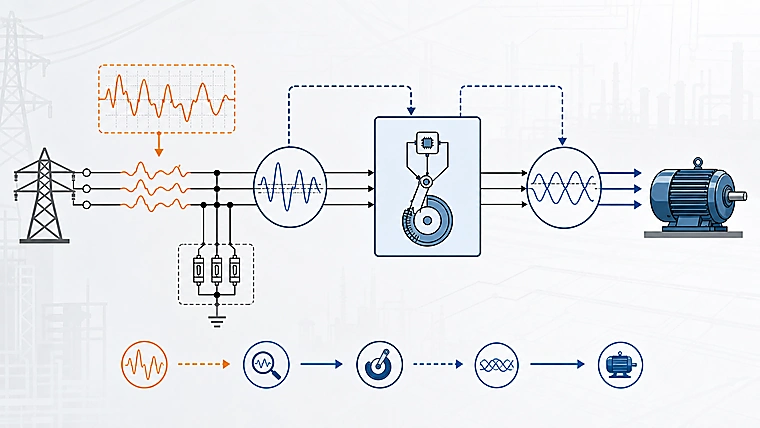
In a typical servo voltage stabilizer, the controller monitors voltage and commands a servo motor to move a carbon brush along an autotransformer. That movement changes the turns ratio and corrects output voltage more smoothly than relay step switching. For your plant, that means the stabilizer is not only disconnecting during trouble; it is actively correcting supply variation while your equipment runs.
Servo is especially relevant when your load includes CNC machines, compressors, pumps, elevators, HVAC systems, telecom equipment, lab equipment, production lines, or UPS-backed panels. If your operators see repeated trips during motor starts, unstable control voltage, or unexplained alarms during weak-grid periods, you have a practical reason to evaluate servo AVR rather than choosing only by catalog kVA.
Nominal voltage context also matters. IEC 60038 standard voltages provides recognized AC system voltage baselines; in practical terms, you can compare your measured site voltage against a standard reference before deciding how wide the stabilizer input range must be.
Which Technology Fits Your Precision and Budget Requirements?
You should compare servo, relay, and static/IGBT designs by correction behavior, load sensitivity, maintenance needs, and budget rather than by price alone. Each topology solves a different kind of voltage problem, and your best choice depends on how fast, precise, and serviceable the correction must be.
| AVR type | Correction behavior | Practical strength | Maintenance profile | Better fit for your application |
|---|---|---|---|---|
| Servo stabilizer | Continuous electromechanical correction | Good balance of precision, capacity, cost, and serviceability | Brush and variac inspection required | Factories, CNC, compressors, production lines, UPS input protection, mixed industrial loads |
| Relay stabilizer | Step-based switching | Lower cost and simple operation | Usually low maintenance | Basic or residential loads with wider voltage tolerance |
| Static/IGBT stabilizer | Fast electronic correction | Very high speed and precision | Less mechanical wear, higher electronic complexity | Ultra-sensitive loads, fast sag correction, strict process control |
| Bypass or protector only | No active voltage correction | Isolation or backup path | Low | Fault isolation, not voltage regulation |
If your application is residential or light-duty, the decision logic is different from industrial procurement. A guide such as automatic voltage stabilizer for home use is more relevant when your load is appliances, small electronics, or a household main line. For industrial equipment, you usually need stronger attention to starting current, phase balance, enclosure design, bypass, and service access.
Servo is not always the best answer. If your main issue is very fast voltage sag, severe waveform distortion, harmonics from heavy nonlinear loads, or process equipment that needs electronic correction in milliseconds, a static/IGBT stabilizer may be a stronger technical fit. If your voltage variation is mild and your loads tolerate steps, relay may be enough.
What 7 Checks Should You Complete Before Selecting a Model?
You should complete these checks before you compare final quotations, because a correct kVA rating can still fail if the input range, starting current, environment, or bypass design is wrong. Treat the checklist as a procurement screen, not a paperwork exercise.
| Check | Why it matters | If you skip it |
|---|---|---|
| Measured low and high voltage | Defines the correction range the stabilizer must handle | The unit may alarm, bypass, or under-correct during real dips |
| Load kVA, kW, and power factor | Shows apparent power, real power, and current stress | A model may look large enough but run hot or overload |
| Motor starting current | Compressors, pumps, lifts, and motors can draw several times running current at startup | Output voltage may sag during startup and still trip the load |
| Phase condition | Three-phase imbalance changes the correction method you need | One phase may remain risky even if average voltage looks acceptable |
| Load type | UPS, VFDs, welders, rectifiers, and CNC controls behave differently | Heating, noise, or nuisance protection trips may appear after commissioning |
| Site environment | Dust, humidity, heat, altitude, and outdoor exposure change cabinet design | Brushes, insulation, ventilation, or electronics may age faster |
| Bypass and service access | Production sites need maintenance without unnecessary shutdown | A small service issue can become full downtime |
For a broader execution framework, use industrial voltage stabilizer selection when you prepare your load list, voltage log, and site conditions. In practical terms, that gives your supplier enough data to size the stabilizer around real operating stress rather than a nameplate estimate.
Your RFQ should include nominal voltage, measured minimum and maximum voltage, frequency, phase type, total kVA, real kW, power factor, startup current, duty cycle, harmonic environment, neutral condition, installation photos, enclosure preference, and maintenance clearance. The more complete your inputs are, the less likely your quotation will hide assumptions.
How Should You Size a Three-Phase Servo Setup?
You should size a three-phase servo setup from measured load behavior, starting current, and phase condition, not from total kVA alone. A 100 kVA load on a stable feeder is not the same as a 100 kVA load with weak incoming voltage, compressor starts, low power factor, or phase imbalance.
For many industrial plants, the key question is whether you need independent phase correction or balanced three-phase correction. Independent correction can help when your phases drift differently. Balanced correction may fit when the supply is more stable and the load is relatively even. What this means for you is simple: phase measurements can change the actual stabilizer design, not just the wiring diagram.
If the stabilizer will protect a main incoming line, panel group, or broad plant section, review 3 phase main line stabilizer sizing before finalizing the cabinet. Main-line protection usually requires more attention to feeder condition, upstream breaker coordination, bypass, cable entry, ventilation, and maintenance clearance.
Your sizing margin should also reflect the load type. Motors, lifts, compressors, and pumps need startup allowance. UPS inputs and VFDs may introduce nonlinear current and harmonics. CNC and lab equipment may require tighter output stability. After each specification number, ask what it means operationally: Will the stabilizer correct your worst recorded dip? Will it tolerate startup? Can it run in your electrical room temperature? Can it be serviced without stopping critical output?
What Installation Details Change the Final Specification?
Your installation details can change the cabinet, cooling, bypass, protection, and maintenance plan even when the electrical rating is already correct. A well-sized servo AVR can still perform poorly if heat, dust, blocked airflow, poor earthing, or tight service access is ignored.
Follow this sequence before approval:
- Record indoor or outdoor location, dust, humidity, vibration, altitude, floor strength, cable route, and service clearance.
- Log voltage under real operation, including lowest voltage, highest voltage, and phase-to-phase variation.
- Separate motors, VFDs, UPS inputs, compressors, lab equipment, telecom loads, and control panels.
- Match kVA, input range, overload margin, phase configuration, and starting-current behavior.
- Select enclosure and cooling: filtered ventilation, forced air, oil cooling, outdoor cabinet, or higher IP protection where needed.
- Specify manual or automatic bypass if downtime windows are short.
- Verify earthing, breaker coordination, terminal torque, cable entry sealing, airflow, alarms, and output voltage during commissioning.
- Define brush inspection, dust cleaning, terminal tightening, alarm review, event-log review, and critical spares.
High heat and blocked airflow reduce practical service life. Dust can shorten maintenance intervals. Humidity may call for anti-condensation measures. Outdoor or harsh process areas may require higher cabinet protection, surge coordination, filtered ventilation, and clearer alarm outputs. For your maintenance workflow, visible meters, dry contacts, event logs, and PLC/BMS/SCADA communication options can help separate grid events from equipment faults.
Which Procurement and Compliance Checks Matter?
You should verify quality records, drawings, protection design, and maintenance support before you treat the quotation as comparable. Two stabilizers with the same kVA rating may differ significantly in transformer design, enclosure, bypass, protection components, serviceability, and documentation.
Ask for wiring drawings, product test records, protection list, bypass design, overload capacity, cooling method, enclosure rating, spare carbon brush availability, maintenance guidance, and warranty terms. If ISO certification is cited, verify the exact standard. The official ISO page for ISO 9001:2015 quality management systems explains the quality-management framework; for you, the practical value is procurement confidence in repeatable quotation, inspection, production, and corrective-action processes.
Before you approve the supplier, confirm these details in writing:
| Check | Why it matters | If you skip it |
|---|---|---|
| Test report or inspection record | Confirms the supplied unit was checked against agreed specs | You rely on catalog claims instead of unit-level evidence |
| Wiring and bypass drawing | Shows how the stabilizer fits your site | Installation changes may happen under time pressure |
| Protection list | Clarifies overload, short-circuit, delay, surge, and phase protection | Critical protection may be assumed but not supplied |
| Spare parts and brush guidance | Supports long-term serviceability | Maintenance delays can extend downtime |
| Cabinet and cooling confirmation | Matches real heat, dust, and airflow conditions | The stabilizer may age faster than expected |
| Communication and alarm options | Helps your maintenance team diagnose events | Fault isolation depends on manual observation |
For commercial review, you can also compare before buying a voltage stabilizer when your shortlist moves from technical screening to supplier evaluation. That step helps you compare what is actually included in the quotation, not only the headline capacity.
Frequently Asked Questions
How Should You Size This Power-Protection Setup for Your Actual Load Profile?
Size it from measured kVA, real kW, power factor, starting current, voltage range, duty cycle, and site conditions. Your concrete verification action is to share a 7-14 day voltage log, a load list, and the highest startup current with the supplier, then ask them to map those inputs to the proposed capacity, correction range, overload margin, and phase-correction method.
Which Compliance, Reliability, or Maintenance Checks Matter Before Procurement?
You should confirm standards context, factory quality records, protection design, and serviceability. Ask for ISO 9001 documentation where claimed, product test reports, wiring drawings, protection list, bypass design, spare brush availability, and maintenance interval guidance. Also verify that the proposed nominal voltage and correction range match your site measurements.
What Site Details Should You Confirm Before Ordering a Servo Voltage Regulator for Industrial Equipment?
Confirm indoor or outdoor location, ambient heat, dust, humidity, vibration, cable entry, floor space, airflow, earthing, and maintenance clearance. If your site is hot, dusty, humid, or outdoors, request the cabinet IP rating, ventilation method, filter access, anti-condensation measures, and bypass arrangement before signing the quotation.
Can You Run an AC or HVAC Load Without a Stabilizer?
You can run AC without a stabilizer if the supply stays inside the equipment’s allowed voltage range and nuisance trips are rare. For larger HVAC systems, compressors, weak feeders, or unstable industrial sites, record voltage for 7-14 days during normal operation and check whether compressor starts cause repeated dips, trips, or alarms.
Final Decision
An industrial servo stabilizer is the right choice when your voltage fluctuation is recurring, your protected load is valuable, and you need a practical balance of precision, capacity, maintainability, and cost. Your final decision should account for measured voltage behavior, load kVA and kW, starting current, phase condition, heat, dust, bypass needs, monitoring expectations, and service access.
Before you request a final quotation, start with a quick fit review: voltage log, load list, phase type, site photos, and any downtime limits. YIY can help you confirm whether servo, relay, or IGBT is the better fit for your application and maintenance context before you move into detailed model selection.