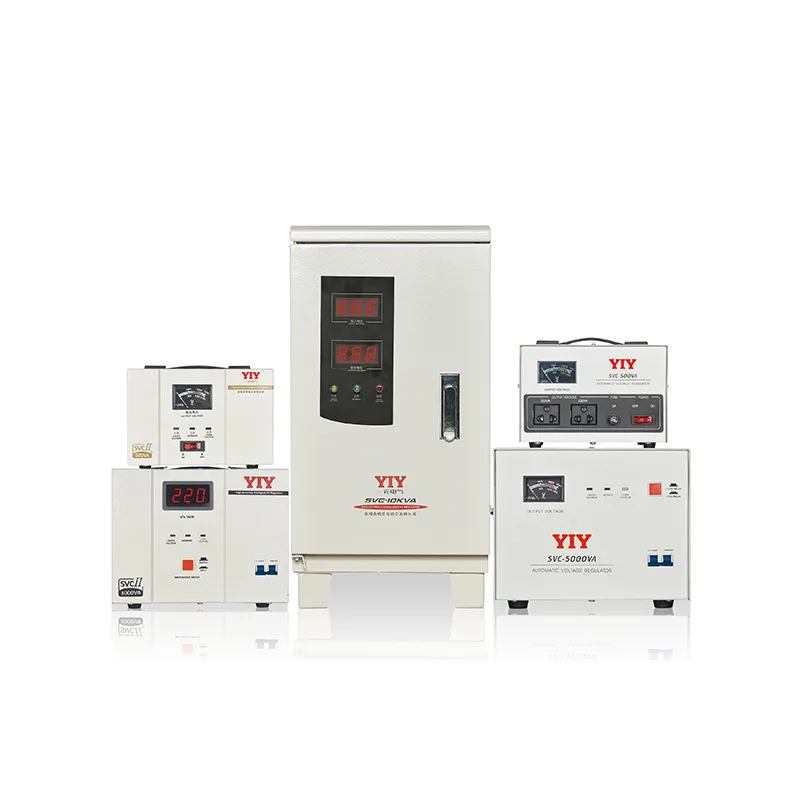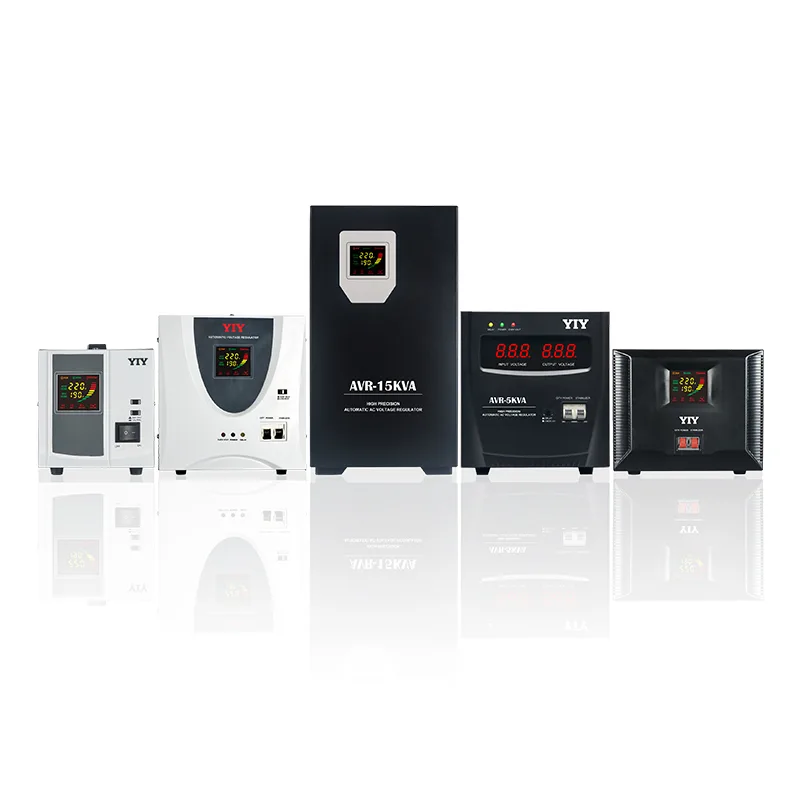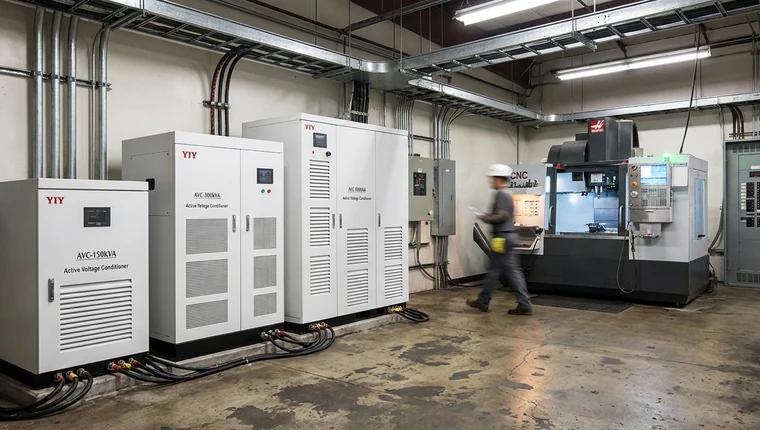
Choose a servo stabilizer for sensitive industrial loads that need smoother, continuous voltage correction; choose a relay stabilizer for simpler, lower-risk loads where stepped correction and wider output variation are acceptable.
The servo stabilizer vs relay stabilizer decision matters most when your site runs CNC machines, motors, production lines, telecom power systems, medical equipment, or mixed three-phase loads where poor voltage regulation can interrupt work or stress equipment.
This guide will help you compare how each topology works, when servo is worth the added complexity, when relay is enough, how CVT and static/IGBT alternatives fit, and what you should verify before approving an AVR quotation.
Why Does the Servo Stabilizer vs Relay Stabilizer Decision Matter?
You are not just choosing a box with a kVA rating; you are choosing how your load will experience voltage correction during real fluctuations. For industrial users, the safer choice depends on load sensitivity, fluctuation frequency, output accuracy, service access, and lifecycle risk.
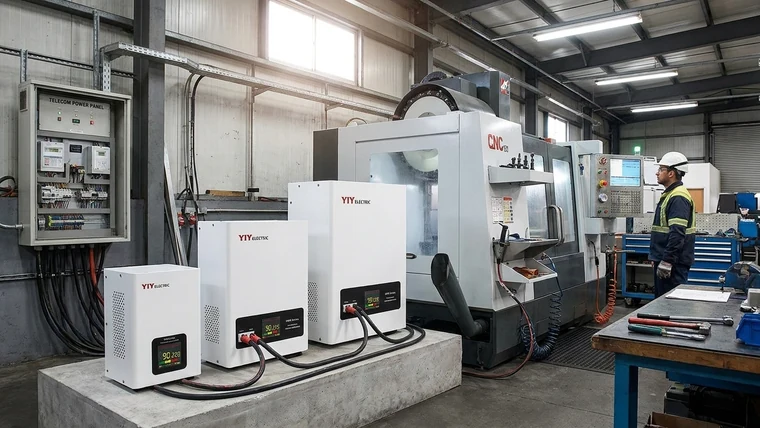
A relay stabilizer regulates voltage by switching transformer taps. That makes it simple and cost-effective, but correction happens in steps. If your load can tolerate those steps, relay may be enough.
A servo stabilizer uses a servo motor and autotransformer mechanism to adjust voltage more continuously. If your equipment is sensitive to voltage jumps, a servo voltage stabilizer is usually the more relevant starting point because it is designed around smoother correction for industrial and precision loads.
Standards language helps you keep the discussion grounded. IEC 60038 standard voltages defines standard voltage systems, including AC systems up to 1,000 V; in practical terms, you should compare your measured site voltage against the expected nominal supply class before selecting an input range. For disturbance and immunity context, the IEC 61000 EMC standards are also useful when you discuss how electrical equipment behaves in real power environments.
| Decision factor | Relay stabilizer | Servo stabilizer | What it means for you |
|---|---|---|---|
| Correction style | Step-by-step tap switching | Continuous servo-driven adjustment | Relay can create voltage steps; servo gives smoother output movement. |
| Typical fit | General loads, small appliances, lighting, basic office equipment | CNC, motors, production lines, telecom, medical, control panels | Your load sensitivity should decide the topology, not only budget. |
| Output behavior | Wider correction bands are common | Tighter regulation is usually possible | Sensitive equipment benefits from fewer abrupt voltage changes. |
| Maintenance concern | Relay contact wear under frequent switching | Brush, servo motor, ventilation, dust control | Your maintenance capability should be part of the buying decision. |
| Procurement risk | Underbuying for sensitive loads | Overspending for simple loads | You avoid both problems by matching topology to actual load risk. |
The practical warning signs are familiar: your CNC controller resets, drives trip, motors heat without obvious mechanical overload, relays click frequently, or production equipment behaves differently during peak utility demand or generator changeover. If these symptoms appear, you should not treat the stabilizer as a commodity accessory.
How Do Servo and Relay Stabilizers Work Differently?
You should choose based on correction behavior: servo correction is continuous, while relay correction is stepped. That difference is the core reason one topology fits sensitive industrial loads better and the other fits general-purpose applications better.
In a servo AVR, a control circuit monitors the incoming voltage, compares it with the target output, and commands a servo motor to move a carbon brush or contact along an autotransformer. This changes the turns ratio gradually and corrects output voltage smoothly. For your site, that usually means fewer abrupt changes at the equipment input.
In a relay AVR, a sensing circuit selects transformer taps through relays. When input voltage crosses a preset band, the relay changes tap position. This is fast and simple, but the output changes in steps. For lighting, basic appliances, and less sensitive single-phase loads, that may be acceptable. For PLCs, CNC controls, medical devices, laboratory equipment, telecom systems, or motor-driven production equipment, stepped correction can become a source of nuisance trips or process instability.
| Technical point | Servo correction | Relay correction |
|---|---|---|
| Control method | Servo motor moves contact along autotransformer | Relay switches between transformer taps |
| Output movement | Smooth and continuous | Discrete step changes |
| Typical sound/behavior | Motor movement during correction | Audible relay clicking |
| Strong fit | Sensitive industrial and precision loads | General and lower-criticality loads |
| Key service item | Brush, servo motor, mechanical path, cooling | Relay contacts and tap-switching circuit |
The basic stabilizer working sequence is similar in both designs:
- Detect incoming voltage.
- Compare voltage against the desired output setpoint.
- Correct the output through servo movement or relay tap switching.
- Protect, alarm, or disconnect if the voltage remains outside the safe operating range.
For you, the important point is not only how the stabilizer works internally. The important point is how your connected load sees the correction. If the load cannot tolerate voltage steps, relay speed alone does not solve the problem.
When Should You Choose Servo Instead of Relay?
You should choose servo when the load is valuable, sensitive, continuously operated, or expensive to restart after a voltage-related trip. Relay remains a sensible option when your load is simple, non-critical, and tolerant of stepped regulation.
| Your situation | Better fit | Why it fits | What you should verify |
|---|---|---|---|
| CNC machines, production equipment, PLC panels | Servo | Smoother correction helps reduce voltage-step stress | Machine input tolerance, output accuracy, phase balance |
| Motors, compressors, pumps, mixed industrial loads | Servo | Handles industrial correction needs better when sized properly | Starting current, power factor, duty cycle, kVA margin |
| Medical, telecom, laboratory, control loads | Servo or static/IGBT | Load sensitivity usually justifies tighter regulation | Required voltage tolerance and protection design |
| Lighting, appliances, simple office loads | Relay | Lower-cost stepped correction may be enough | Whether output variation is acceptable |
| Very fast electronic loads or high-precision test systems | Static/IGBT | Electronic correction may outperform mechanical systems | Cost, heat, environment, service capability |
| Budget-driven low-criticality sites | Relay | Simpler design and lower cost | Relay life under fluctuation frequency |
A relay voltage stabilizer can be a practical choice for general applications where cost and basic automatic voltage regulation are the main concerns. It is not automatically “bad”; it is simply less suitable when your process needs smoother correction or tighter voltage stability.
Servo is often the practical middle ground for industrial users. It generally offers a better balance of stability, capacity, serviceability, and cost than basic relay designs, while avoiding the higher cost and application specificity of some static or IGBT systems. If your load is a standard workshop, factory line, telecom cabinet, or motor-control system, this three-phase servo setup may be the right class to evaluate first.
You should also consider environment. Dust, humidity, high ambient temperature, outdoor installation, generator input, and weak-grid operation can change the right specification. A well-chosen topology can still fail early if the enclosure, cooling path, bypass, surge protection, and maintenance access are wrong.
Where Do CVT, Static, and IGBT Options Fit?
You should treat CVT, static, and IGBT stabilizers as alternatives for specific power-quality problems, not as universal replacements for servo or relay. The right choice depends on whether your priority is ride-through behavior, very fast correction, high precision, simplicity, or cost control.
A CVT, or constant voltage transformer, can provide voltage regulation and isolation characteristics for certain loads. In a CVT vs servo stabilizer comparison, CVT may appeal where isolation and simple magnetic regulation are useful, but it is not always the best fit for large, changing industrial loads or high-capacity three-phase systems. Servo designs are often more flexible for broader industrial kVA ranges and mixed load profiles.
Static and IGBT-based voltage stabilizers use electronic correction rather than mechanical servo movement. They can respond faster and may suit high-precision electronic loads, test equipment, or applications where fast correction is critical. The tradeoff is that they usually require closer application review, stronger thermal design, and a higher budget.
| Technology | Best-fit use case | Main advantage | Main caution |
|---|---|---|---|
| Relay AVR | General, low-criticality loads | Low cost and simple design | Stepped output correction |
| Servo AVR | Industrial and sensitive loads | Smooth correction and broad capacity fit | Requires mechanical maintenance |
| CVT | Select isolation/regulation use cases | Magnetic regulation and isolation behavior | Can be less flexible for changing industrial loads |
| Static/IGBT AVR | High-speed precision applications | Very fast electronic correction | Higher cost and application-specific review |
For your project, the question is not “Which technology is best?” The better question is: “Which correction behavior matches my load risk, voltage profile, environment, and maintenance capability?”
What Should You Check Before Specifying an Industrial AVR?
You should specify the AVR from measured voltage behavior, load characteristics, wiring system, environment, and service needs—not from kVA alone. A stabilizer that looks correctly rated on paper can still fail your application if it ignores starting current, voltage range, bypass, heat, dust, or phase imbalance.
Use this procurement screen before you approve a servo, relay, CVT, or static/IGBT quotation:
| Check | Why it matters | If you skip it |
|---|---|---|
| Measured input voltage range | Confirms whether the AVR can correct your real low and high voltage conditions | The unit may alarm, bypass, or fail to regulate during peak fluctuation |
| Required output accuracy | Sensitive equipment may need tighter voltage control than general loads | CNC, medical, telecom, or PLC loads may still trip |
| Load kVA and inrush current | Motors, compressors, transformers, and welders can draw high starting current | The stabilizer may overload during start-up |
| Load type | Resistive, inductive, capacitive, VFD, rectifier, and mixed loads stress AVRs differently | You may see heat, unstable output, or nuisance protection trips |
| Single-phase or three-phase wiring | Phase count, neutral, grounding, and imbalance affect selection | You may buy the wrong configuration or need unsafe field changes |
| Bypass requirement | Maintenance bypass can keep your process running during service | One stabilizer fault may stop the whole line |
| Enclosure and environment | Dust, humidity, heat, and outdoor exposure affect lifespan | Premature failure becomes more likely |
| Cooling and clearance | Transformers and servo mechanisms need airflow and access | Heat and difficult service raise lifecycle cost |
| Protection features | Over/under-voltage, overload, short-circuit, delay, and surge protection reduce risk | Your downstream equipment may remain exposed |
| Monitoring and alarms | Displays, event records, and remote alarms help you see voltage problems early | Voltage events stay invisible until equipment trips |
If you want a broader step-by-step selection workflow, use YIY’s industrial voltage stabilizer selection guide after you finish the topology comparison. It helps you translate site voltage, real load behavior, and installation conditions into a more complete AVR specification.
After every technical number, ask what it means operationally. If your site voltage drops below the AVR’s correction range, the unit may not restore output as expected. If your motor inrush exceeds the selected capacity, the stabilizer may trip during start-up even though running kVA appears acceptable. If your cabinet has poor ventilation, the equipment can overheat even when the electrical rating is correct.
How Should You Size and Approve a Three-Phase Servo Setup?
You should size a three-phase servo stabilizer from the real load list, worst-case input voltage, starting current, load imbalance, neutral requirement, and future expansion margin. The final rating should protect your process during real operating conditions, not only during steady-state running.
For three-phase systems, confirm:
- Line-to-line voltage and line-to-neutral voltage
- Whether your load requires neutral
- Phase imbalance under normal and peak operation
- Motor starting method, such as DOL, star-delta, soft starter, or VFD
- Running kW/kVA and power factor
- Starting current and duty cycle
- Required output accuracy
- Manual or automatic bypass preference
- Installation environment and cooling clearance
A common sizing mistake is to total running load only. Your motor, compressor, pump, transformer, or mixed production line may demand much higher current during starting or process peaks. That does not mean every project needs excessive oversizing, but it does mean you should verify starting behavior before approving the AVR rating.
For deeper three-phase checks, you can use YIY’s 3 phase main line stabilizer sizing guide to confirm line voltage, neutral, imbalance, and bypass mode before finalizing the configuration.
What Final Procurement Checks Should You Complete?
You should complete procurement only after the quotation proves fit against your site data, load list, environment, and service expectations. The final review should catch mismatches before the purchase order, not after installation.
Before you approve the supplier proposal, request and verify:
| Procurement item | What to verify | Why it matters to you |
|---|---|---|
| Technical datasheet | Input range, output accuracy, kVA, phase, protection list | Confirms the unit matches your electrical requirement |
| Wiring diagram | Incoming, outgoing, neutral, grounding, bypass | Prevents installation ambiguity |
| Load compatibility statement | Motor, CNC, telecom, medical, VFD, or mixed load suitability | Reduces risk of using the wrong topology |
| Bypass design | Manual bypass, automatic bypass, or no bypass | Determines whether maintenance stops your process |
| Enclosure details | IP rating, cabinet construction, cooling method | Protects against dust, heat, humidity, and site exposure |
| Alarm and monitoring options | Display, dry contacts, event records, remote communication | Helps your maintenance workflow detect voltage events |
| Maintenance schedule | Brush inspection, relay inspection, fan cleaning, service intervals | Prevents avoidable downtime |
| Quality and test documents | Factory inspection, test reports, certificates where applicable | Supports procurement and compliance review |
| Warranty and spare parts | Coverage, exclusions, lead time, local service plan | Reduces downtime after installation |
If your purchase is capacity-specific, you can also compare before buying a voltage stabilizer using a structured quotation review. Even when your final rating is not 50 kVA, the same procurement logic applies: measured voltage, connected load, bypass, protection, environment, and vendor documentation should all align.
Frequently Asked Questions
Can a Relay Stabilizer Protect Sensitive Industrial Equipment?
A relay stabilizer can protect some equipment, but it is usually not the safer choice for highly sensitive industrial loads. Relay AVRs correct voltage in steps, so the output can jump when taps switch.
Your concrete verification action is to check the equipment’s allowable input-voltage tolerance, then compare it with the relay stabilizer’s stated output accuracy and switching bands. For CNC controls, medical devices, telecom systems, PLC panels, and precision test equipment, this check often pushes the decision toward servo or static/IGBT regulation.
How Much kVA Margin Should You Allow When Sizing a Servo AVR?
You should allow margin for starting current, future load growth, low-voltage operation, and duty cycle, but the exact margin should come from your load data rather than a fixed rule. Motors, compressors, transformers, and mixed industrial loads can draw significantly more current during start-up than during normal running.
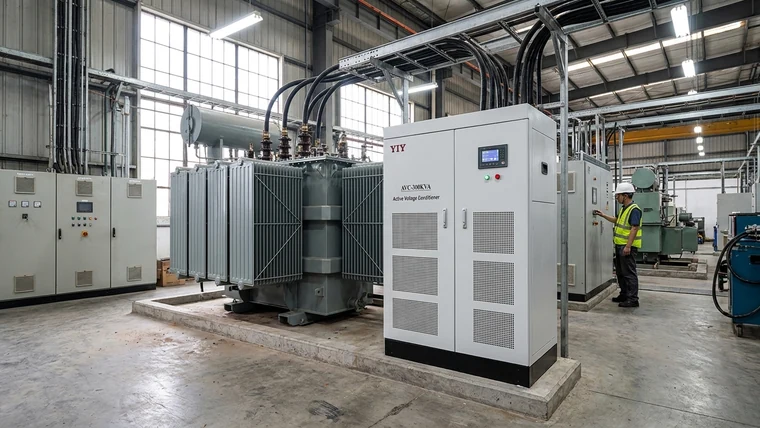
Verify the full load list, starting method, power factor, measured low-voltage condition, and expected expansion before selecting the final rating. If your process may expand soon, include that future load in the application review instead of treating it as a later upgrade.
Is a Servo Stabilizer Better Than a Relay Stabilizer for CNC Machines or Motor Loads?
A servo stabilizer is generally better for CNC machines and many motor loads because it provides smoother voltage correction than relay tap switching. CNC controllers, drives, and control boards can be sensitive to voltage steps, while motors can stress the AVR during start-up.
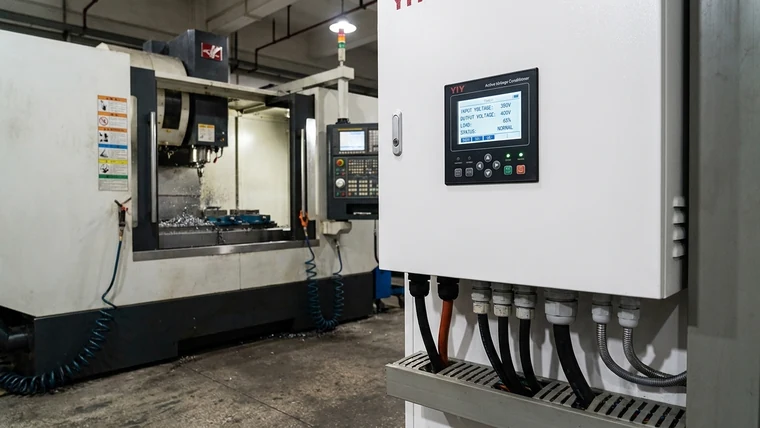
Before approval, check the CNC machine data plate, drive manual, site voltage log, output accuracy requirement, and phase balance. This gives you a technical basis for choosing this capacity tier instead of relying on a generic “industrial stabilizer” label.
When Is Relay Still the Better Choice?
Relay still wins for straightforward, low-risk loads on a tight budget that can live with stepped correction. Examples include basic lighting, some appliances, small office loads, and general single-phase applications where downtime risk is low.
Your verification action is simple: confirm that the connected equipment tolerates the relay unit’s output range and that frequent switching will not create operational complaints or premature relay wear.
What Documents Should You Request Before Approving a Voltage Stabilizer Quotation?
Request the technical datasheet, wiring diagram, protection list, bypass design, enclosure/IP details, warranty terms, maintenance schedule, and applicable test or inspection documents. For dusty, humid, hot, or outdoor locations, ask for cabinet construction details, cooling requirements, and environmental limits.
For compliance-driven procurement, request quality-system documentation and factory inspection records before issuing the purchase order.
Final Thoughts: How Should You Move Forward?
You should choose servo when voltage stability protects uptime, product quality, or sensitive equipment; choose relay when the load is lower-risk and basic stepped regulation is enough. If your site runs CNC machines, motors, telecom systems, medical equipment, or mixed three-phase production loads, the safer path is to evaluate the load and voltage profile before comparing price.
Start with a quick review rather than a heavy documentation request. YIY can help you run a first-pass fit check to confirm whether servo, relay, or IGBT is the best option for your application and maintenance context.
About YIY
Zhejiang Yiyen Holding Group Co., Ltd. (YIY) is a professional voltage stabilizer manufacturer with 16+ years of experience. With a 30,000 sqm modern facility and an annual production capacity of 1,000,000+ units, YIY products are exported to 130+ countries. YIY provides OEM/ODM customization services and is certified to the ISO 9001:2015 quality management standard.
Contact Us
Email: yiyen@yiyen.com
Phone/WhatsApp: +86 13587452904
Website: https://www.yiyavr.com/