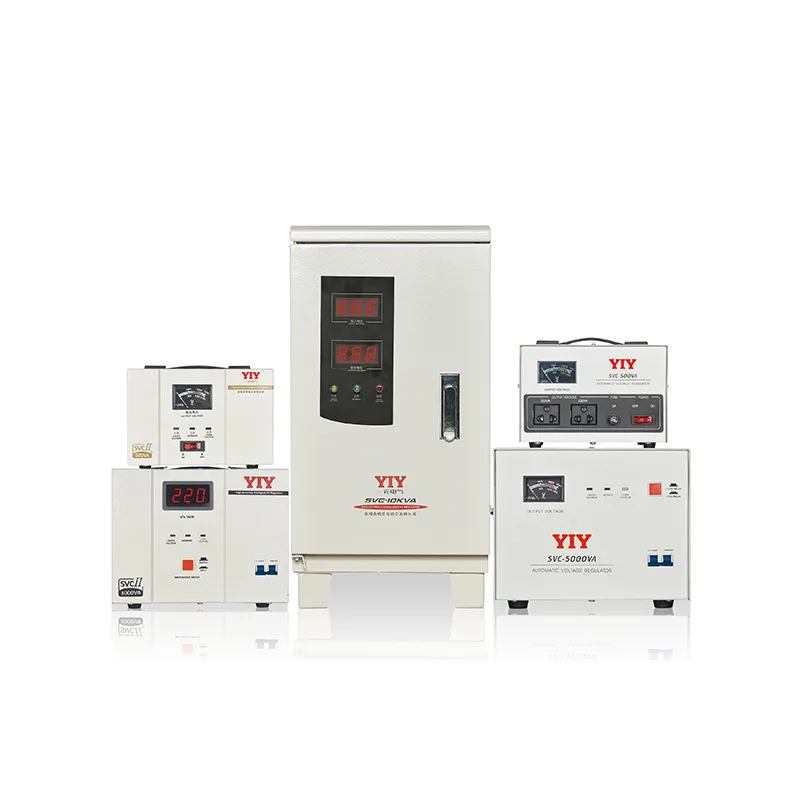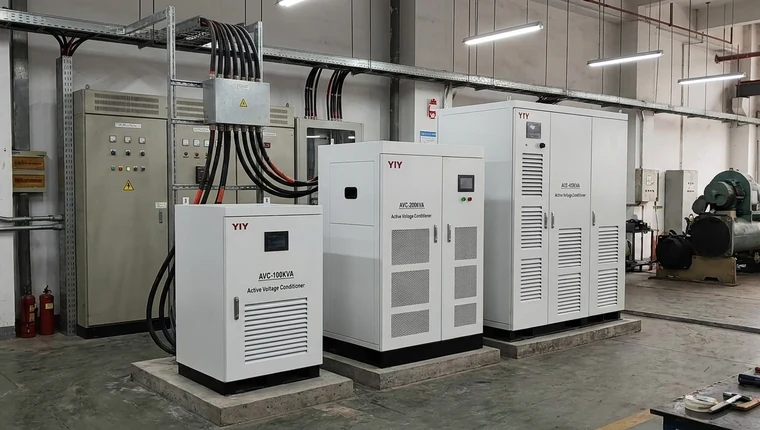
Servo stabilizer price is driven by engineering scope, not by kVA rating alone. Your quotation changes with capacity, input voltage range, phase configuration, correction accuracy, transformer design, protection functions, enclosure, cooling, monitoring, and service requirements.
If you compare only the nameplate rating—such as 5 kVA, 10 kVA, or 50 kVA—you may accidentally compare a basic AVR with an application-ready industrial stabilizer. This guide will help you decide why quotes differ, when servo is the right topology, which specifications affect cost, and what to verify before you send an RFQ or approve a purchase order.
Why Can the Same kVA Rating Produce Different Servo Stabilizer Prices?
You get different prices for the same kVA rating because kVA describes apparent capacity, while the real build cost depends on voltage behavior, load type, phase system, protection scope, cabinet design, and support requirements.
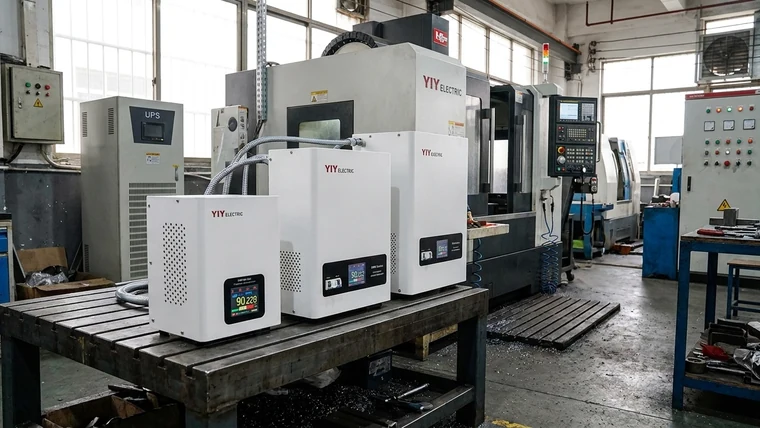
Your first filter should be whether the supplier is quoting the same engineering job. A 10 kVA unit for a clean indoor supply is not equivalent to a 10 kVA unit for weak-grid operation, high ambient temperature, dust, motor starts, and frequent voltage dips.
A servo voltage stabilizer uses a servo motor and variable transformer/autotransformer mechanism to correct voltage continuously. That continuous correction is valuable for many industrial loads, but the hardware, protection, and cabinet design still need to match your actual site conditions.
| Cost driver | Why it changes the quote | What it means for you |
|---|---|---|
| kVA/kW capacity | Larger transformer, variac, wiring, contactor, and cabinet sizes | You should confirm running load, startup load, and future expansion before comparing prices. |
| Input voltage range | Wider correction windows require heavier correction hardware | A unit for mild fluctuation will not cost the same as one built for severe grid swings. |
| Single-phase vs three-phase | Three-phase units add phase monitoring, balancing, and protection complexity | Your supply topology affects component count, control logic, and panel size. |
| Output accuracy | Tighter tolerance requires better sensing and finer control | Sensitive CNC, medical, lab, or automation loads may justify a higher specification. |
| Transformer design | Copper/aluminum choice, insulation, temperature rise, and duty cycle affect build cost | Your quote should state material and thermal assumptions, not just kVA. |
| Load profile | Motors, compressors, welders, VFDs, UPS inputs, and rectifiers stress equipment differently | You need margin for inrush, harmonics, and duty cycle where applicable. |
| Protection features | Bypass, surge protection, overload, phase loss, short-circuit, and alarms add modules | Lower upfront cost may mean weaker fault handling and slower maintenance. |
| Cooling method | Fan cooling, oil cooling, ventilation path, and derating affect reliability | Harsh sites need airflow and thermal design that match the environment. |
| Enclosure/IP rating | Dust, humidity, corrosion, cable entry, and access space affect cabinet construction | Indoor standard cabinets should not be assumed for workshops or outdoor-adjacent areas. |
| Service and documentation | Testing, commissioning, spare parts, warranty, OEM labeling, and reports add scope | You should compare what is included before choosing the lowest offer. |
Named voltage assumptions should also be clear in your RFQ. IEC 60038 standard voltages provides nominal-voltage context for AC and DC systems up to 1,000 V. In practical terms, your supplier should not guess whether your site is based on 220 V, 230 V, 380 V, 400 V, or another regional supply condition.
Which Technology Fits Your Precision and Budget Requirements?
Servo is usually the balanced choice when you want practical industrial accuracy, scalable kVA capacity, and maintainable equipment without paying for the fastest electronic correction available.
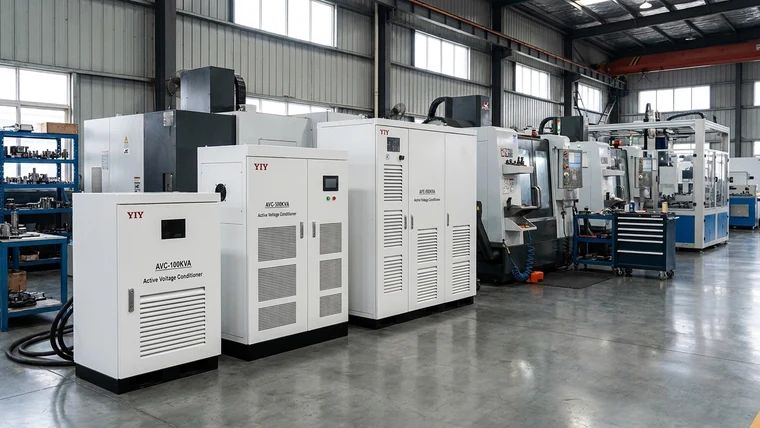
Your topology decision matters because the price of servo stabilizer equipment is only one part of the decision. Relay, servo, static, and IGBT designs solve different voltage problems. A lower-cost relay stabilizer may be enough for basic loads, while a static or IGBT design may be justified when your process cannot tolerate short dips, resets, or tighter voltage deviation.
| Technology | Response behavior | Precision level | Maintenance profile | Best-fit use case |
|---|---|---|---|---|
| Relay stabilizer | Step-based switching | Basic regulation | Simple, low-cost service | Homes, small commercial loads, non-critical equipment |
| Servo stabilizer | Motor-driven continuous correction | Strong practical accuracy for industrial use | Periodic brush, variac, and mechanical inspection | Motors, pumps, CNC auxiliaries, packaging lines, general industrial loads |
| Static stabilizer | Electronic correction | Higher precision potential | Electronics-focused service | Sensitive equipment needing faster correction |
| IGBT stabilizer | High-speed digital power control | High precision and controllability | Skilled electronic diagnostics | Medical, lab, automation, and critical disturbance-sensitive systems |
If your load is sensitive to very short disturbances, compare servo with an IGBT voltage stabilizer before you lock the specification. The higher upfront price of an IGBT or static design can make sense when one nuisance trip, rejected batch, or machine reset costs more than the equipment premium.
For most general industrial applications, servo remains attractive because it balances correction accuracy, capacity range, and serviceability. You should still confirm whether your maintenance team can inspect brushes, moving contacts, fans, terminals, and bypass arrangements on a regular schedule.
How Does a Servo Voltage Stabilizer Work?
You get continuous voltage correction from a servo stabilizer because the control system adjusts a variable transformer mechanism instead of switching fixed relay steps.
The stabilizer monitors input and output voltage in real time. When the output voltage deviates from the target band, the control board commands a servo motor to move the carbon brush or variac contact. That movement changes the effective turns ratio of the autotransformer, boosting or reducing voltage until the output returns closer to the set value.
A typical correction sequence works like this:
- Input and output sensing: voltage sensors read the supply and the stabilized output.
- Control decision: the controller compares measured output with the target value.
- Servo movement: the motor rotates the variac shaft or brush mechanism.
- Voltage adjustment: the autotransformer changes the effective voltage ratio.
- Stabilized output: your connected load receives voltage within the designed output band.
- Protection response: abnormal voltage, overload, phase loss, overtemperature, or surge conditions trigger alarms, trip functions, or bypass where specified.
Those technical details affect your quotation because the correction range, transformer size, sensing accuracy, motor assembly, brush quality, protection board, and enclosure all carry cost. For you, the practical takeaway is simple: a stable-looking price list cannot tell whether the unit is suitable for your site voltage, duty cycle, or service expectations.
Industrial disturbance expectations should also be realistic. The IEC 61000 EMC standards family is often used as a reference context when engineers discuss electromagnetic compatibility, dips, disturbances, and equipment immunity. For your purchase, this means you should describe the voltage events you actually see—slow fluctuation, repeated dips, generator variation, motor-start sag, or transient disturbance—before choosing a topology.
What Specifications Should You Verify Before Approving a Quote?
You should verify input range, output accuracy, phase system, load behavior, protection, bypass, enclosure, cooling, monitoring, and service scope before you approve the purchase order.
Your quote comparison should be specification-led. If two suppliers quote the same capacity but different input ranges, protection lists, cabinet ratings, or commissioning support, they are not quoting the same stabilizer. For a broader execution framework, use this industrial voltage stabilizer selection guide alongside your supplier datasheets.
| Check | Why it matters | If you skip it |
|---|---|---|
| Input voltage range | Determines how much correction hardware is required | The stabilizer may hit limits during low-grid, high-grid, or generator operation. |
| Output tolerance | Defines how tightly the unit controls voltage | Sensitive controls may still see unstable supply if the tolerance is too wide. |
| kVA sizing and margin | Accounts for load, power factor, inrush, and future expansion | You may get overload trips, overheating, or shortened service life. |
| Load type | Motors, VFDs, welders, compressors, UPS inputs, and rectifiers behave differently | Nameplate kVA may look sufficient while real operation stresses the unit. |
| Phase system | Single-phase and three-phase systems require different protection and wiring | You may buy the wrong configuration for your distribution panel. |
| Phase imbalance | Three-phase loads may have unequal current or voltage conditions | Motors and control equipment may remain exposed to imbalance risks. |
| Bypass arrangement | Allows maintenance or emergency operation | Your process may need full shutdown for simple service work. |
| Protection list | Over/under-voltage, overload, short-circuit, phase loss, surge, and thermal protection protect uptime | Fault isolation becomes slower and riskier. |
| Cooling method | Heat management affects component life | A cabinet that works in a clean room may fail early in a hot workshop. |
| Enclosure and IP rating | Dust, humidity, corrosion, and cable entry affect cabinet requirements | Environmental exposure may cause premature failure. |
| Monitoring and alarms | Meters, indicators, event logs, dry contacts, or communication ports support maintenance | Your team may lose evidence after voltage events. |
| Warranty and service | Defines support coverage, spare parts, and commissioning responsibility | A cheaper quote may cost more when troubleshooting starts. |
For three-phase main-line applications, your sizing check should include phase behavior, neutral conditions, downstream load diversity, and expansion margin. If this is your situation, review 3 phase main line stabilizer sizing before finalizing the capacity.
After technical specs, convert numbers into operating meaning. If a supplier quotes ±1% output accuracy, you are paying for tighter control than ±3%. If the quote supports a wider input range, you are paying for a unit that can keep regulating through deeper grid fluctuation. If the cabinet has a higher enclosure rating, you are paying for environmental resilience rather than only electrical capacity.
How Should You Compare a 5 kVA or 10 kVA Price List?
You can use 5 kVA or 10 kVA listed prices for rough budgeting, but you should not use them as final industrial procurement evidence.
Small-capacity search terms such as “servo stabilizer 5kVA price,” “5kVA servo stabilizer price,” “servo stabilizer 10kVA price,” or “10 kVA servo stabilizer price in India” are useful when you need a starting budget. They are less useful when your load includes motor starts, generator operation, unstable supply, dust, humidity, high ambient temperature, or custom monitoring.
A basic 5 kVA or 10 kVA list price often assumes:
- Standard input voltage range
- Standard indoor enclosure
- Basic protection
- Simple load profile
- Limited documentation
- No special commissioning requirements
- No OEM/ODM customization
- No harsh-environment upgrades
Your actual cost may change once you add bypass, surge protection, wider input range, tighter output accuracy, special cabinet dimensions, remote alarms, phase protection, or test documentation.
For example, a 10 kVA stabilizer feeding office equipment is a different requirement from a 10 kVA stabilizer feeding a small motor-driven production process. The nameplate rating may match, but the load behavior and protection expectations do not.
What Should Your RFQ Include?
Your RFQ should include enough electrical, environmental, and service information for suppliers to quote the same scope.
A complete RFQ pack helps you avoid vague pricing and reduces later change requests. If you only send “10 kVA servo stabilizer, 380 V,” the supplier may assume standard conditions that do not match your site.
Include these items:
-
Nominal voltage and actual voltage log
Send high/low readings, dip frequency, generator behavior, and any known voltage sag during motor starts. This tells the supplier whether you need a standard or wider input range. -
Load list and data plate photos
Provide equipment kW, kVA, current, power factor, startup behavior, duty cycle, and whether loads are motors, compressors, VFDs, welders, rectifiers, UPS systems, or control equipment. -
Phase and distribution details
State single-phase or three-phase, neutral availability, phase imbalance, grounding arrangement, and where the stabilizer will sit in the distribution path. -
Environmental conditions
Share ambient temperature, humidity, dust, ventilation, indoor/outdoor exposure, corrosion risk, and available installation space. -
Protection and bypass requirements
Confirm manual bypass, automatic bypass, overload, short-circuit, phase loss, surge protection, over/under-voltage, thermal protection, and alarm needs. -
Monitoring and integration expectations
Specify meters, indicators, event logging, dry contacts, RS485/Modbus, BMS, PLC, SCADA, or maintenance-system requirements if your workflow needs them. -
Certification, inspection, and documentation needs
Ask for datasheets, wiring diagrams, routine test reports, warranty terms, spare-parts availability, and commissioning instructions.
For procurement fairness, ask every supplier to fill the same technical table. That lets you compare the price of servo stabilizer equipment by equivalent scope, not by the lowest incomplete offer.
What Final Acceptance Checks Should You Complete?
You should complete an acceptance review that compares technical scope, supplier responsibility, and service risk before you issue the purchase order.
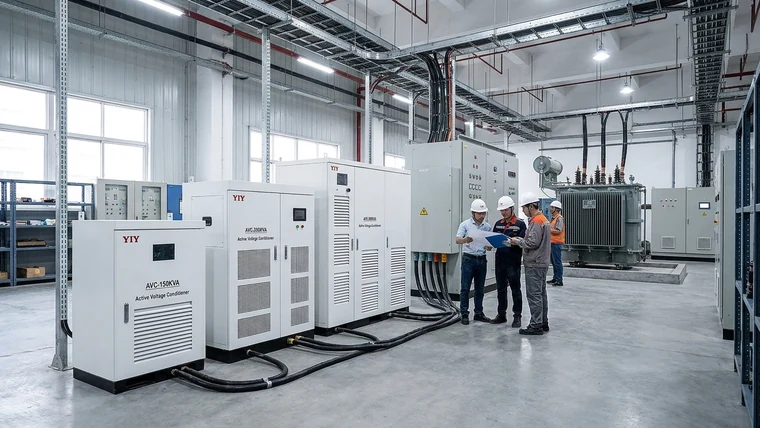
Your final review should prevent a common mistake: choosing the lowest price when the quote has a narrower input range, weaker protection, smaller cabinet, limited cooling, or unclear service support.
| Check | Why it matters | If you skip it |
|---|---|---|
| Match every quote to the same input range | Input range is one of the largest design differences | You may select a unit that cannot stabilize your actual grid. |
| Confirm output tolerance | Different tolerances protect different load sensitivities | Your sensitive equipment may still reset or alarm. |
| Compare transformer and conductor assumptions | Material, insulation, and thermal design affect durability | The lower quote may have less thermal margin. |
| Review bypass and protection line by line | Protection scope affects uptime and fault recovery | Maintenance may require shutdown or expose equipment to avoidable risk. |
| Check enclosure, cooling, and access | Site reliability depends on cabinet design | Dust, heat, or poor ventilation may shorten service life. |
| Request drawings and test documents | Documentation supports installation and acceptance | Your installation team may discover gaps too late. |
| Clarify warranty and spare parts | Support terms affect lifecycle cost | A low quote may become expensive during downtime. |
| Confirm commissioning scope | Startup settings and site checks reduce early failures | Incorrect installation may be blamed on the equipment or the site. |
If you are comparing larger project quotations, this guide to compare before buying a voltage stabilizer can help you structure supplier evaluation before the final commercial decision.
Frequently Asked Questions
Can I Use a 5 kVA or 10 kVA Servo Stabilizer Price List for Industrial Procurement?
A 5 kVA or 10 kVA listed price is only useful for rough budgeting. You should verify data plate values, actual running load, startup current, input voltage range, phase system, bypass, overload protection, enclosure rating, alarms, and commissioning support before procurement.
A concrete verification action is to send your load list and voltage log to the supplier and ask them to mark whether the listed model still applies without modification.
Is a Servo Stabilizer Usually Less Expensive Than a Static or IGBT Voltage Regulator?
A servo stabilizer is often cost-effective for general industrial voltage regulation, but static or IGBT designs may be justified when your process needs faster electronic correction, tighter control, fewer resets, or lower downtime risk.
Your best check is to compare the cost of one production stop or rejected batch against the price difference between topologies.
What Should I Send to Get an Accurate Servo Voltage Stabilizer Quotation?
Send load lists, data plate photos, voltage logs, single-line diagrams, phase and neutral details, ambient conditions, protection requirements, approval expectations, certification needs, and test-report requirements.
For better accuracy, include actual measured high/low voltage readings instead of only nominal voltage. Ask the supplier to confirm the selected input range and output tolerance in writing.
Why Can Two Suppliers Quote Different Prices for the Same kVA Rating?
Two suppliers can quote different prices for the same kVA because the engineering scope may differ in input range, output tolerance, transformer design, cooling method, enclosure rating, bypass, metering, surge protection, warranty, and service coverage.
Before approval, request both suppliers’ technical datasheets and mark every difference line by line against your RFQ.
Should ISO or Quality Certification Affect My Supplier Evaluation?
Yes, but certification should support—not replace—technical verification. ISO 9001:2015 quality management indicates a quality-management framework, but you should still review datasheets, test records, drawings, warranty terms, and application fit.
Your concrete action is to ask for the current certificate, check the certificate scope, and confirm whether the quoted product line is covered by the supplier’s quality system.
Final Thoughts
Your safest buying decision starts with a matched technical comparison, not a generic price list. Servo stabilizer price becomes meaningful only when every quote reflects the same voltage range, capacity margin, topology, protection, enclosure, cooling, monitoring, documentation, and service scope.
Use this simple sequence before you buy:
- Confirm the real voltage problem with logs or measured site data.
- Decide whether servo, relay, static, or IGBT fits your load sensitivity.
- Size the unit from running load, inrush behavior, phase system, and expansion margin.
- Verify protection, bypass, enclosure, cooling, alarms, and service access.
- Compare only equivalent quotation scopes.
YIY supports servo, relay, and IGBT voltage-stabilization options, OEM/ODM requirements, and industrial application review. As a low-friction next step, you can request a quick-fit technical review to confirm whether this capacity tier and topology match your application before you prepare a full internal data package.