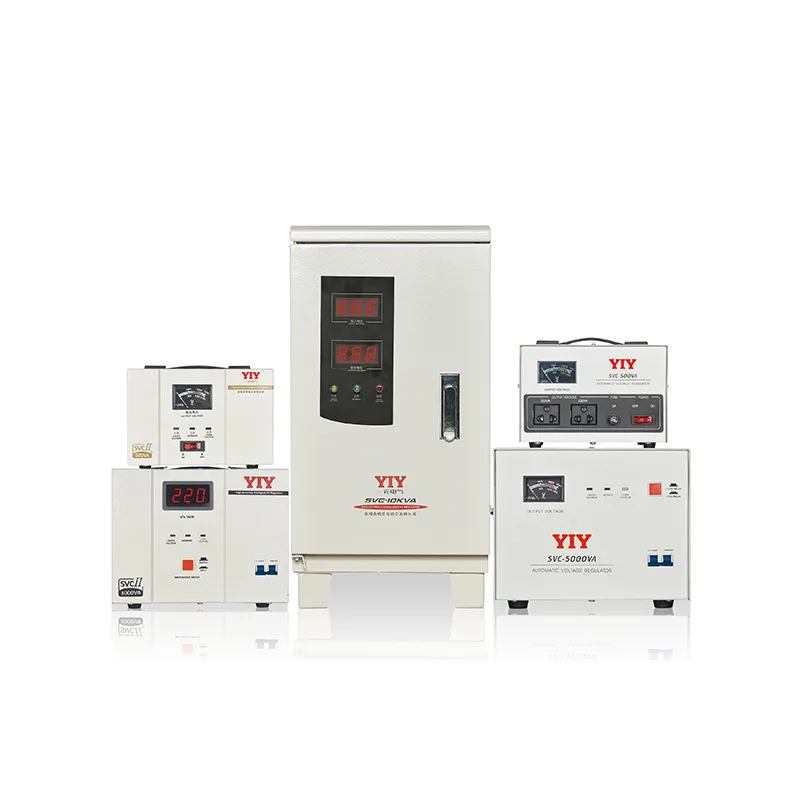
Servo stabilizer price is mainly affected by kVA rating, phase configuration, input voltage range, output accuracy, protection design, enclosure requirements, and your real load behavior—not by capacity alone.
Before you compare quotes, you need to know whether suppliers are pricing the same electrical requirement. This guide walks you through the cost drivers, topology choices, working principle, RFQ checklist, India-specific buying checks, and the practical next step for a YIY technical review.
What Are You Really Paying for When You Compare Quotes?
You are not only paying for a stabilizer cabinet; you are paying for corrected voltage under your site’s real operating conditions.

A basic price list may show a standard model by kVA rating, but your final quote changes when the supplier accounts for input voltage fluctuation, motor starting current, power factor, enclosure design, bypass needs, freight, warranty, and documentation. That is why the price of servo stabilizer units can vary even when two models both say “5 kVA,” “10 kVA,” or “15 kVA.”
A standard servo voltage stabilizer typically sits between relay and static/IGBT designs: it offers smoother correction and better industrial suitability than many relay units, while usually remaining more economical than high-speed electronic stabilizers for general industrial loads.
For your RFQ, separate these three numbers:
- Reference price list: a baseline number for a standard rating and standard voltage range.
- Quoted equipment price: the adjusted unit price after capacity, phase type, voltage range, accuracy, protection, display, and cabinet options are included.
- Landed project cost: the complete cost after packing, freight, duties, installation accessories, commissioning, warranty terms, spare parts, and local service expectations.
For nominal voltage definitions, align your RFQ language with IEC 60038 standard voltages. In practice, this helps you, your consultant, your installer, and your supplier use the same voltage assumptions instead of comparing quotes based on unclear “local voltage” wording.

Which Factors Change Servo Stabilizer Price the Most?
You should expect the quote to change most when kVA, phase type, voltage correction range, accuracy, protections, and site environment change.
The table below gives you a practical way to read a quote before you treat it as expensive or cheap.
| Cost driver | What changes in the product | What it means for you |
|---|---|---|
| kVA rating | Transformer core size, winding material, terminals, cabinet size, heat dissipation | Higher kVA generally costs more, but the increase is not always linear because mechanical and thermal design also change. |
| Single-phase vs three-phase | Wiring design, phase protection, control logic, cabinet layout | A three-phase unit is not just “three single-phase units”; you should compare it as a different equipment class. |
| Input voltage range | Transformer design margin, control range, thermal reserve | A wider range costs more but helps if your grid drops or rises beyond normal conditions. |
| Output accuracy | Sensing, control calibration, correction precision | Tighter accuracy such as ±0.5% to ±2% can protect sensitive loads better than a wider ±3% class. |
| Protection package | Over/under-voltage, overload, short circuit, phase loss, surge protection, bypass | A cheaper quote may exclude protections your load actually needs. |
| Enclosure and cooling | Cabinet material, ventilation, IP protection, oil-cooled or air-cooled design | Dust, humidity, heat, and poor ventilation can make a standard cabinet a poor choice. |
| Monitoring and alarms | Digital meter, fault records, dry contacts, remote alarm outputs | Better visibility can help you diagnose voltage events before they become downtime. |
| OEM/ODM requirements | Branding, terminals, manuals, packaging, certification support | Customization can raise unit cost, but it may reduce integration and resale friction. |
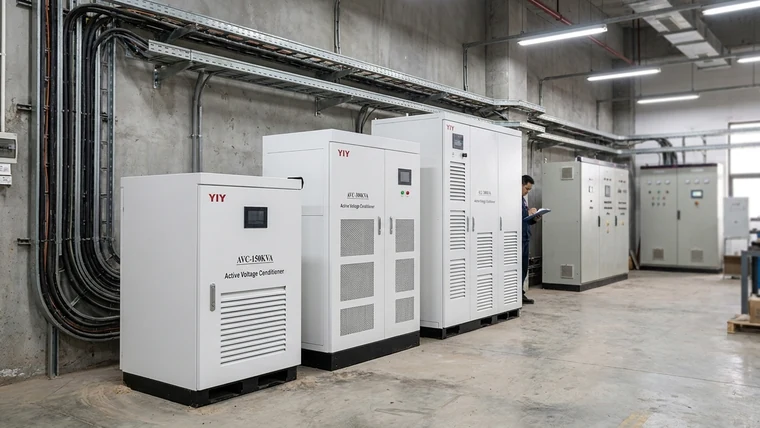
YIY’s servo portfolio covers a broad range from small single-phase models to large industrial configurations, with documented capability across 500VA to 3000KVA. For you, that means the same supplier can review small commercial loads, three-phase industrial loads, and custom OEM/ODM programs without forcing every project into one standard cabinet.
When Should You Choose Servo Instead of Relay or IGBT?
You should choose servo when your load needs smoother regulation and stronger industrial capacity than relay, but does not require the high-speed correction and higher cost profile of static/IGBT technology.
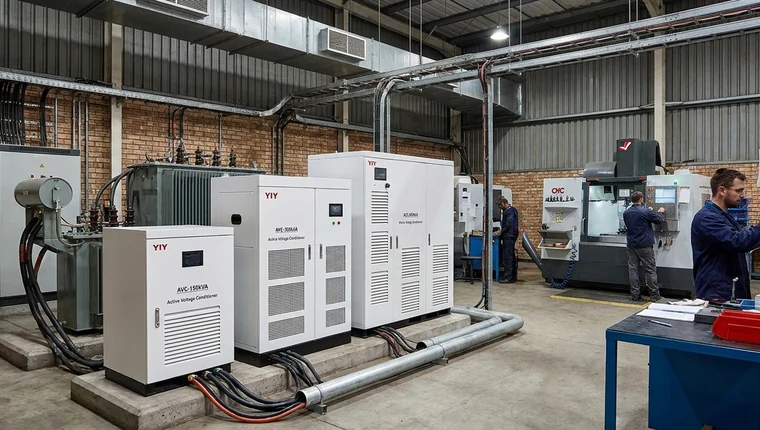
Servo designs are often a practical middle path for factories, workshops, pumps, HVAC systems, packaging lines, and CNC support circuits where voltage fluctuation is sustained rather than momentary. If your equipment is lightly loaded and downtime risk is low, a relay stabilizer may be enough. If your process is highly sensitive and fast correction is critical, an IGBT voltage stabilizer may deserve review.
| Technology | Typical price level | Correction style | Strength | Tradeoff | Best fit |
|---|---|---|---|---|---|
| Relay stabilizer | Low | Step-based switching | Budget-friendly for simple loads | Less smooth correction and lower precision | Small appliances, light commercial loads, non-critical use |
| Servo stabilizer | Medium | Motor-driven smooth correction | Good cost-to-performance balance for many industrial loads | Mechanical parts need inspection | Pumps, HVAC, workshops, production lines, general industrial distribution |
| Static / IGBT stabilizer | High | Electronic high-speed correction | Fast response and high precision | Higher initial cost and more electronic complexity | Medical, laboratory, precision automation, critical electronics |
For your buying decision, the practical point is simple: do not buy the lowest-price topology if it cannot tolerate your real load behavior. A cheaper relay unit can become costly if step changes cause nuisance trips, contactor chatter, or equipment instability. A premium IGBT unit can be justified when your process cannot tolerate slower correction, but it may be unnecessary for many general industrial loads.
For EMC and immunity expectations in sensitive installations, use the IEC 61000 electromagnetic compatibility series as the reference family. This does not automatically mean every project needs the most expensive stabilizer, but it gives you a standards-based way to discuss interference and immunity expectations with your supplier.
How Does a Servo Stabilizer Work, and Why Does That Affect Cost?
You are paying for a closed-loop electromechanical correction system that senses voltage, moves a servo mechanism, adjusts transformer contact, and verifies output stability.
A servo stabilizer is not a simple on/off switch. It uses a controller, servo motor, carbon brush mechanism, and autotransformer to raise or lower voltage smoothly. That design explains why servo units usually cost more than basic relay stabilizers and less than many high-speed static systems.
Step 1: Voltage Sensing
Your stabilizer samples incoming supply and output voltage. This tells the controller whether the output is below, above, or within the target band.
Step 2: Deviation Calculation
The controller compares actual output against the desired voltage. For you, this is where the accuracy class matters: a tighter target requires better control and calibration.
Step 3: Servo Movement
The servo motor rotates in the required correction direction. This mechanical movement is one reason maintenance access, brush condition, and duty cycle matter.
Step 4: Carbon Brush Adjustment
The carbon brush changes contact position on the autotransformer winding. In practical terms, this enables smooth voltage correction rather than abrupt relay steps.
Step 5: Voltage Correction
The autotransformer raises or lowers output voltage. Wider input swings require more design margin, which can raise your quote.
Step 6: Output Feedback
The controller checks the corrected output and stops movement when the voltage returns within tolerance. For your equipment, this helps maintain a more stable supply during sustained grid fluctuation.
Accuracy ranges such as ±0.5%, ±1%, ±2%, or ±3% are not just marketing numbers. A tighter band means your output stays closer to nominal voltage, which can matter for CNC control panels, instrumentation, medical-style loads, and sensitive electronics. For less sensitive motor loads, a wider accuracy band may be acceptable and more economical.
How Should You Size and Specify Your RFQ?
You should size your RFQ from measured voltage data and real load behavior, not from nameplate kW alone.
A useful starting formula is:
kVA = kW ÷ power factor
If your 8 kW load operates at 0.8 power factor, the apparent power is 10 kVA. For you, this means a unit that appears correct by watts alone may be undersized once power factor, motor starting current, future expansion, and duty cycle are included.
Use this procurement screen before you ask for a firm quote.
| Check | Why it matters | If you skip it |
|---|---|---|
| Connected load and running load | Shows both maximum exposure and normal demand | You may overpay for excess capacity or undersize the unit. |
| Power factor | Converts kW into actual kVA requirement | A watt-based match may still be too small. |
| Motor startup current | Motors, pumps, compressors, lifts, and HVAC can draw high inrush current | The stabilizer may trip or fail to prevent voltage sag. |
| Minimum and maximum input voltage | Determines required correction range | A standard unit may not handle your worst grid condition. |
| Single-phase or three-phase supply | Changes cabinet, terminals, protection, and control design | Quotes may compare different equipment classes. |
| Output accuracy target | Affects controller, calibration, and transformer design | Sensitive loads may remain unstable if tolerance is too wide. |
| Bypass requirement | Supports maintenance without full shutdown | Service may require longer downtime. |
| Ambient temperature and ventilation | Affects cooling and component life | The unit may run hot or derate in real use. |
| Dust, humidity, and cabinet location | Determines enclosure and protection needs | A standard indoor cabinet may fail early. |
| Alarms and monitoring | Helps maintenance staff identify voltage events | Troubleshooting becomes slower and less certain. |
| Warranty and service terms | Defines lifecycle support | A low initial quote may hide higher operating risk. |
For a deeper specification workflow, use YIY’s industrial voltage stabilizer selection guide when you are preparing measured input voltage, load profile, power factor, and safety margin details.
If your project is a three-phase main line installation, also review 3 phase main line stabilizer sizing before finalizing capacity. In practical terms, three-phase main line units involve phase protection, cabinet size, cooling, bypass, and load diversity questions that can materially affect your quote.
What Should You Check for India Pricing and Sourcing?
You should treat “servo voltage stabilizer price list” and India-market search results as starting points, not final procurement numbers.
Searches such as servo stabilizer 5kva price, 10 kva servo stabilizer price in india, and 15 kva servo stabilizer price in india often mix different assumptions: single-phase vs three-phase, copper vs aluminum winding, standard vs wide input range, basic vs full protection, and ex-works vs landed pricing. If you compare those numbers without checking specifications, you may approve a low-cost unit that is not equivalent.
For Indian projects, verify these items before procurement approval:
| Verification action | Why it matters for your quote |
|---|---|
| Confirm 230V single-phase or 415V three-phase assumptions in writing | Prevents mismatch between listed price and actual site supply. |
| Ask for minimum/maximum input voltage range | Weak-grid sites may need a wider correction range than a standard price list assumes. |
| Confirm whether GST, import duty, freight, packing, and insurance are included | Helps you compare landed cost rather than headline unit cost. |
| Request test report format and warranty terms | Gives your procurement file concrete compliance evidence. |
| Confirm local service or spare parts expectations | Reduces downtime risk after commissioning. |
| Check enclosure, cooling, and bypass details | Avoids hidden additions after the quote is approved. |
If you are sourcing across multiple countries, YIY’s broader technology portfolio—servo, relay, and IGBT—can help you standardize specifications while still adjusting topology for local grid and load conditions.
Which YIY Application Path Fits Your Project?
You should match the YIY path to your load sensitivity, phase type, kVA range, environment, and maintenance expectations before you ask for final pricing.
The goal is not to push every project into the highest-cost design. The goal is to avoid under-specifying a stabilizer that later overheats, trips, or fails to protect the load.
| Your project type | Likely review path | What drives cost |
|---|---|---|
| Small commercial or light industrial load | Standard single-phase servo or relay review | kVA, input range, basic protection, cabinet design |
| Motor-heavy industrial load | Servo stabilizer with startup-current review | kVA margin, overload tolerance, cooling, bypass |
| Three-phase plant distribution | Three-phase servo configuration | Phase protection, cabinet size, terminals, cooling, monitoring |
| Precision equipment | Precision servo or IGBT comparison | Accuracy, response speed, event visibility, EMC expectations |
| OEM/ODM program | Customized stabilizer design | Branding, documentation, terminals, packaging, certification support |
YIY supports global voltage stabilization projects with manufacturing and engineering capabilities across small and high-capacity applications. The company provides OEM/ODM customization and maintains quality management certification to ISO 9001:2015. For you, that means your RFQ can include not only capacity and voltage, but also documentation, packaging, branding, and market-entry requirements.
What Should Your RFQ Include Before You Request a Final Quote?
You should send a short technical brief first, then move to detailed logs only if the first-pass fit looks correct.
A practical first-pass RFQ can be simple:
- Application type: CNC, pump, HVAC, packaging line, workshop, medical-style load, lab, building main line, or OEM program
- Phase type: single-phase or three-phase
- Nominal voltage and frequency
- Measured minimum and maximum input voltage
- Connected load and normal running load
- Motor/compressor startup behavior
- Power factor if known
- Required output accuracy
- Indoor/outdoor location, dust, humidity, heat, and ventilation
- Bypass requirement
- Protection expectations
- Alarm, display, or monitoring needs
- Quantity, target market, and documentation requirements
For your first conversation, you do not need to send every internal drawing or months of logs. A short list of load data and voltage behavior is enough for YIY to check whether servo, relay, or IGBT is likely to fit.
Frequently Asked Questions
Does a 5KVA Unit Scale Directly to 10KVA or 15KVA Pricing?
No. Larger ratings cost more, yet doubling the kVA rarely doubles the quote. Higher capacity can change transformer size, winding material, terminals, cabinet structure, cooling, protection, and testing requirements. Before you compare, verify phase type, input range, accuracy, overload margin, and enclosure rating on each quote.
How Should You Compare Pricing for a 5KVA Servo Stabilizer?
Compare the specification first and the number second. Ask the supplier to confirm voltage range, phase configuration, output accuracy, protection package, bypass, display, warranty, packing, freight terms, rated load, power factor assumption, and ambient temperature limit. A concrete verification action is to request a one-page datasheet or proforma line item that lists these assumptions beside the price.
How Should a Servo Stabilizer Be Specified for an Accurate Quote?
Specify connected load, running load, startup current, power factor, minimum and maximum input voltage, phase type, duty cycle, required output accuracy, bypass, surge protection, and alarm requirements. If your load includes motors or compressors, ask the supplier to show the kVA calculation and the safety margin used. This gives you a practical way to challenge an undersized or overbuilt quotation.
What Should You Know About Servo Stabilizer Sourcing in India?
For Indian projects, confirm 230V or 415V nominal supply assumptions, local service expectations, documentation, landed cost, warranty terms, GST or import treatment, and packing details. A useful verification action is to ask whether the quoted price includes taxes, freight, and commissioning support or only the base equipment. This prevents a low list price from becoming a higher landed cost later.
Is the Cheapest Servo Stabilizer Quote a Bad Choice?
Not always, but you should treat it as incomplete until proven otherwise. Check whether the quote excludes wide input range, overload margin, bypass, surge protection, cabinet upgrades, alarms, freight, warranty, or local service. If the low quote still matches your measured voltage range, load behavior, protection needs, and environment, it may be valid. If not, the apparent saving can become downtime risk.
Final Thoughts: How Should You Move from Price Comparison to a Reliable Quote?
You should move from price comparison to specification comparison before you approve any supplier.
A reliable quote depends on topology fit, kVA capacity, measured voltage range, output precision, protection design, enclosure suitability, bypass needs, warranty, and service support. If you are comparing larger-capacity options, use a structured process to compare before buying a voltage stabilizer so you do not overlook protections, enclosure, warranty, or service expectations.
Your next step can be low-friction: ask YIY for a quick technical review of your load type, voltage range, phase configuration, and environment. From there, you can confirm whether servo, relay, or IGBT is the best fit before preparing detailed logs or full procurement documents.
Contact YIY
Email: yiyen at yiyen.com
Phone/WhatsApp: +86 13587452904
Website: https://www.yiyavr.com/