
Servo Motor vs IGBT (Static) Voltage Stabilizer: A Technical

Servo Motor vs IGBT (Static) Voltage Stabilizer: Which Is Right for You?
A servo voltage stabilizer is a motorized AVR delivering ±0.5–3% stepless output correction, while an IGBT stabilizer is a solid-state AVR achieving ±1% accuracy in under 10 ms — this guide compares output accuracy, correction speed, efficiency, and total cost of ownership.
How Do These Voltage Stabilizers Compare?
Selecting the appropriate voltage stabilizer technology is critical for equipment protection and operational efficiency. This comparison outlines the technical differences between Servo Motor (electromechanical) and IGBT (Static) voltage stabilizers, providing a basis for informed decision-making based on specific application requirements.
| Criterion | Servo Motor | IGBT (Static) | Winner |
|---|---|---|---|
| Regulation Principle |
Electromechanical
Utilizes a servo motor to drive a carbon brush along a variable autotransformer (buck-boost transformer) to adjust the output voltage. Correction is achieved by physically moving the brush.
|
Solid-State
Employs Insulated Gate Bipolar Transistors (IGBTs) and microprocessor control to switch capacitor banks or transformer taps, providing electronic voltage regulation without moving parts.
|
B |
| Response Time |
Slow (20-100ms/V)
Correction speed is limited by the physical movement of the servo motor and carbon brush. Typically responds in tens to hundreds of milliseconds per volt of deviation.
|
Fast (<5ms)
Solid-state switching allows for near-instantaneous voltage correction, typically within a few milliseconds (half a cycle or less) of detecting a voltage fluctuation.
|
B |
| Output Accuracy |
±1% to ±5%
Achieves good accuracy, typically within ±1% to ±5% of the nominal output voltage, depending on the design and input voltage range. Precision can be affected by mechanical wear.
|
±0.5% to ±1%
Offers higher precision output voltage regulation, commonly within ±0.5% to ±1%, due to precise electronic control and rapid correction capabilities.
|
B |
| Efficiency |
95% – 98%
Generally high efficiency, especially at higher loads. Minor losses occur in the transformer windings and the servo motor itself.
|
96% – 99%
Typically exhibits slightly higher efficiency, particularly in systems designed for optimal switching performance, minimizing losses from semiconductor operation.
|
B |
| Harmonic Distortion |
No Added Distortion
Does not introduce harmonic distortion into the output waveform as it operates on the fundamental frequency by varying the turns ratio of a transformer.
|
Minimal to No Added Distortion
Well-designed IGBT static stabilizers employ advanced control algorithms and filtering to ensure minimal or no added harmonic distortion to the output. May improve existing harmonics.
|
Tie |
| Maintenance |
Requires Periodic Check
Involves moving parts (servo motor, carbon brushes). Requires periodic inspection and potential replacement of brushes due to wear, especially in dusty or high-vibration environments.
|
Low Maintenance
Solid-state design with no moving parts significantly reduces maintenance requirements. Primarily involves routine cleaning and checking connections.
|
B |
| Noise Level |
Audible (during correction)
Generates mechanical noise from the servo motor and brush movement during voltage corrections. The level can vary with unit size and operating conditions.
|
Minimal (fan noise)
Operates silently as there are no moving parts for voltage regulation. Noise is typically limited to cooling fans, if present, which operate based on thermal load.
|
B |
| Footprint & Weight |
Larger, Heavier
Generally larger and heavier due to the presence of large autotransformers and mechanical components, especially for higher capacities.
|
More Compact, Lighter
Often more compact and lighter for equivalent power ratings due to the absence of large mechanical components, facilitating installation in space-constrained areas.
|
B |
| Cost |
Lower Initial Cost
Typically has a lower initial purchase cost, making it an economically viable option for many applications.
|
Higher Initial Cost
Generally involves a higher initial investment due to the advanced solid-state components and control electronics.
|
A |
| Reliability & Lifespan |
Good, with Maintenance
Reliable with proper maintenance. Lifespan can be impacted by wear of moving parts, especially under frequent voltage fluctuations or harsh conditions.
|
High, Long Lifespan
High reliability and longer operational lifespan due to the absence of mechanical wear. Less susceptible to environmental factors like dust or vibration.
|
B |
How Does the Product Lineup Compare Side-by-Side?
Servo Motor Series
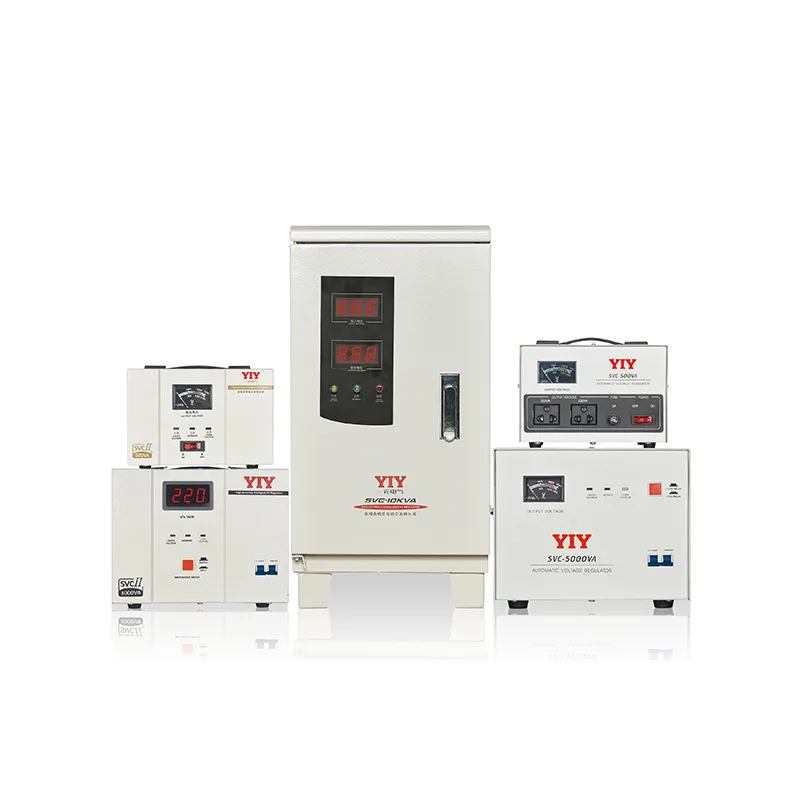
SVC Servo Voltage Stabilizer
High-precision servo motor stabilizer with ±2% accuracy and 1.5% regulation speed, built for sensitive electronics and medical equipment.

TWS Wall-Mounted Single Phase Servo Voltage Stabilizer
Compact wall-mounted servo stabilizer with ±2% output accuracy, ideal for homes and small offices with limited floor space.
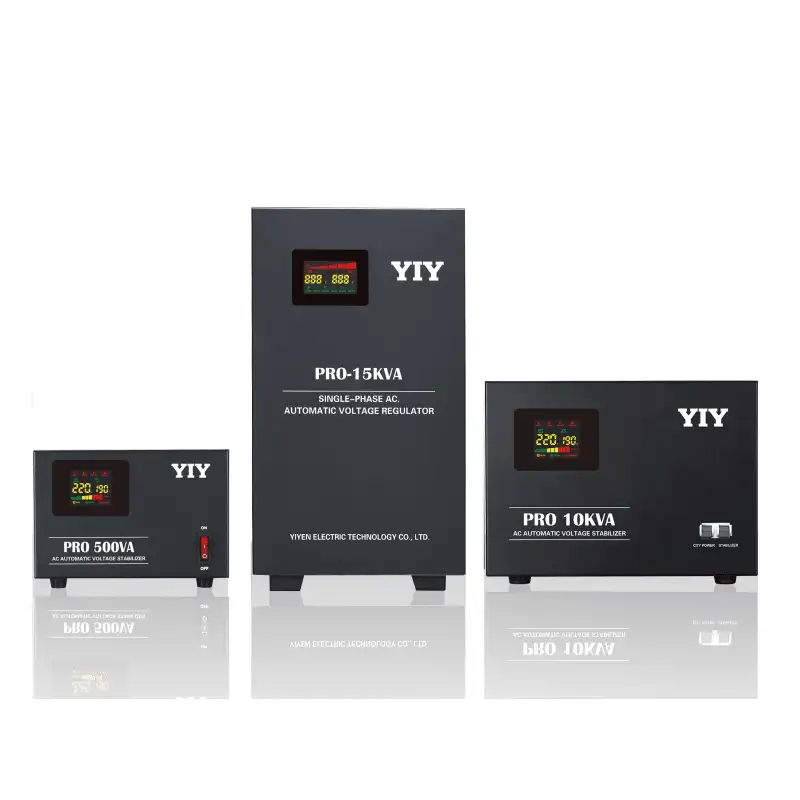
PRO Servo Voltage Stabilizer
Premium single-phase servo stabilizer with intelligent microprocessor control, wide correction range, and silent operation for…

PRO-3 Three-Phase Servo Voltage Stabilizer
Three-phase precision servo stabilizer with independent phase regulation, engineered for factories, CNC machines, and industrial…
IGBT (Static) Series

AVC Active Voltage Conditioner
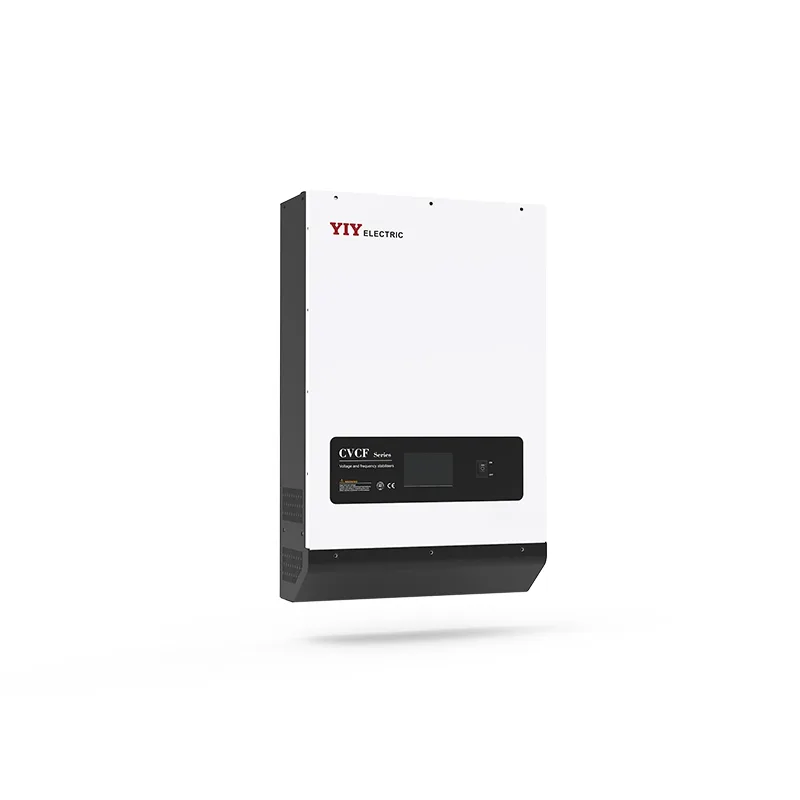
CVCF IGBT Voltage & Frequency Stabilizer
Advanced IGBT-based stabilizer delivering ±1% voltage and ±0.5% frequency accuracy, essential for data centers, telecom, and precision…

TSS Wall-Mounted Voltage Stabilizer
Which Should You Choose?
Choose Servo Motor When…
- Your budget prioritizes lower initial capital expenditure.
- The input voltage fluctuations are moderate and not extremely rapid.
- You require a robust solution for general industrial or commercial applications where minor delays in correction are acceptable.
- You have resources for routine maintenance and can tolerate occasional mechanical noise.
- The application does not involve highly sensitive electronic equipment requiring ultra-fast correction.
Choose IGBT (Static) When…
- Your application demands extremely fast voltage correction, e.g., for sensitive electronic equipment, data centers, or medical devices.
- High precision and tight output voltage regulation (e.g., ±0.5% to ±1%) are critical.
- You prefer a low-maintenance solution with a longer operational lifespan and higher reliability.
- Space and weight are significant considerations for installation.
- The operating environment requires silent operation and minimal vibration.
- Long-term operational costs, including maintenance and energy efficiency, are a primary concern.
Consultation on application-specific needs
Need Assistance with Your Selection?
Our experts are ready to guide you to the optimal voltage stabilization solution.
Request QuoteStabilizer Technology Comparison: Servo vs Relay vs IGBT
| Technology | Output Accuracy | Response Time | Best Application |
|---|---|---|---|
| Servo (motorized) | ±0.5–3% | 3–5 seconds | Precision machinery, medical, laboratory |
| Relay (tap-switching) | ±5–8% | 20–40 ms/step | Offices, retail, general-purpose loads |
| IGBT (solid-state) | ±1% | <10 ms | Critical electronics, data centers, CNC |
Frequently Asked Questions
What is the primary difference in how Servo Motor and IGBT (Static) stabilizers operate?
Which type of stabilizer offers faster voltage correction?
Are Servo Motor stabilizers more affordable than IGBT (Static) models?
Do either of these stabilizers introduce harmonic distortion?
Which stabilizer is better for sensitive electronic equipment?
What kind of maintenance do these stabilizers require?
Can YIY provide both Servo Motor and IGBT (Static) voltage stabilizers?
What is the typical lifespan difference between the two technologies?
Explore More Voltage Stabilizer Solutions
Browse other selection dimensions to find the right fit for your project.
By Industry
By Technology
By Country
Other Comparisons
Get Expert Recommendation
Tell us your application and load profile — our engineers will recommend the right technology for your project.
Error: Contact form not found.